There is a question that Elon Musk has been implicitly asking the American public since the Tesla Cybercab was unveiled at the “We, Robot” event in October 2024, and that he has become progressively more explicit about as the first production Cybercab rolled off the Gigafactory Texas line on 18 February 2026: what if hailing a self-driving car to take you wherever you need to go cost less, across every category of expense, than owning and operating your own vehicle? It is a question whose answer — or rather, whose honest assessment of the available evidence in 2026 — is considerably more nuanced than either the optimists who believe autonomous mobility will render personal car ownership obsolete within a decade or the sceptics who dismiss Tesla’s cost projections as another iteration of “Elon Time” are prepared to acknowledge. This article examines both the real cost of car ownership in the United States in 2026 and the Cybercab’s financial proposition in the most rigorous terms the available data supports — to determine whether the Cybercab genuinely represents a cheaper alternative, for whom that alternative is realistic, and what conditions must be met before the comparison becomes meaningful.
Gallery: Tesla Cybercab


What Car Ownership Actually Costs in the USA in 2026
Before any comparison with the Cybercab’s projected costs can be made with intellectual honesty, the baseline against which those costs are measured must be established clearly and completely — because the majority of American car owners dramatically underestimate what their vehicle actually costs them annually, focusing on the monthly loan payment while excluding the five other significant cost categories that AAA’s annual Your Driving Costs study documents with meticulous precision.
According to AAA’s most recent Your Driving Costs analysis, the average cost of owning and operating a new vehicle in the United States is $11,577 per year — equivalent to approximately $965 per month — assuming 15,000 miles of driving annually. This figure breaks down into six distinct cost categories whose relative contributions reveal precisely where the financial burden of car ownership actually falls. Depreciation is the largest single component, accounting for approximately $4,334 per year — 37 percent of the total — reflecting the difference between a vehicle’s purchase price and its resale value after five years and 75,000 miles. Fuel costs approximately $1,950 per year at current prices, based on 13 cents per mile and 15,000 annual miles. Insurance adds approximately $1,694 per year, a figure that the Insurance Information Institute projects will increase a further seven to nine percent in 2026 as vehicle repair costs, parts inflation and severe weather claims continue to drive premium increases. Maintenance, repairs and tyre replacement account for approximately $1,656 annually. Finance charges on a five-year loan with fifteen percent down at the prevailing average interest rate add $1,131, and registration, licensing and taxes contribute a further $813 per year.
The critical implication of this breakdown is that the majority of American car owners — who focus their financial attention on the monthly payment figure — are, in practice, paying for a service they are not fully accounting for. At 15,000 annual miles, the all-in cost of the average new car is approximately 77 cents per mile. For the SUV and pickup truck buyer, that figure rises to well over a dollar per mile.
The Cybercab’s Cost Proposition: What Tesla Is Actually Claiming
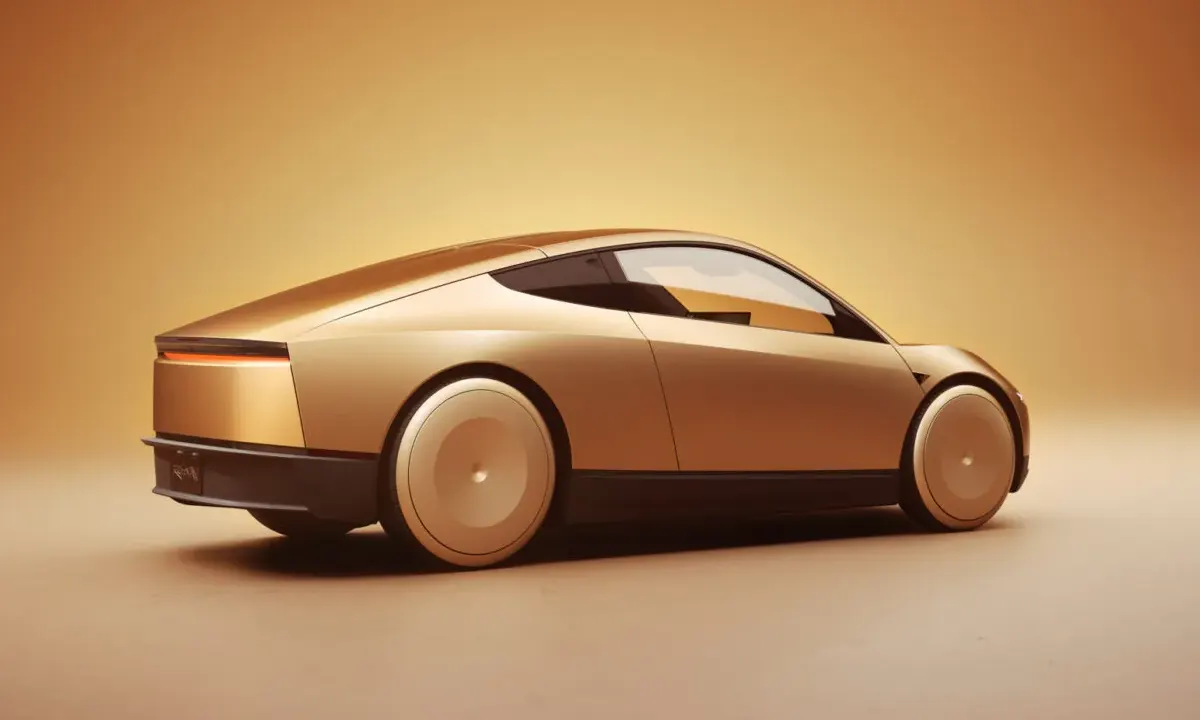
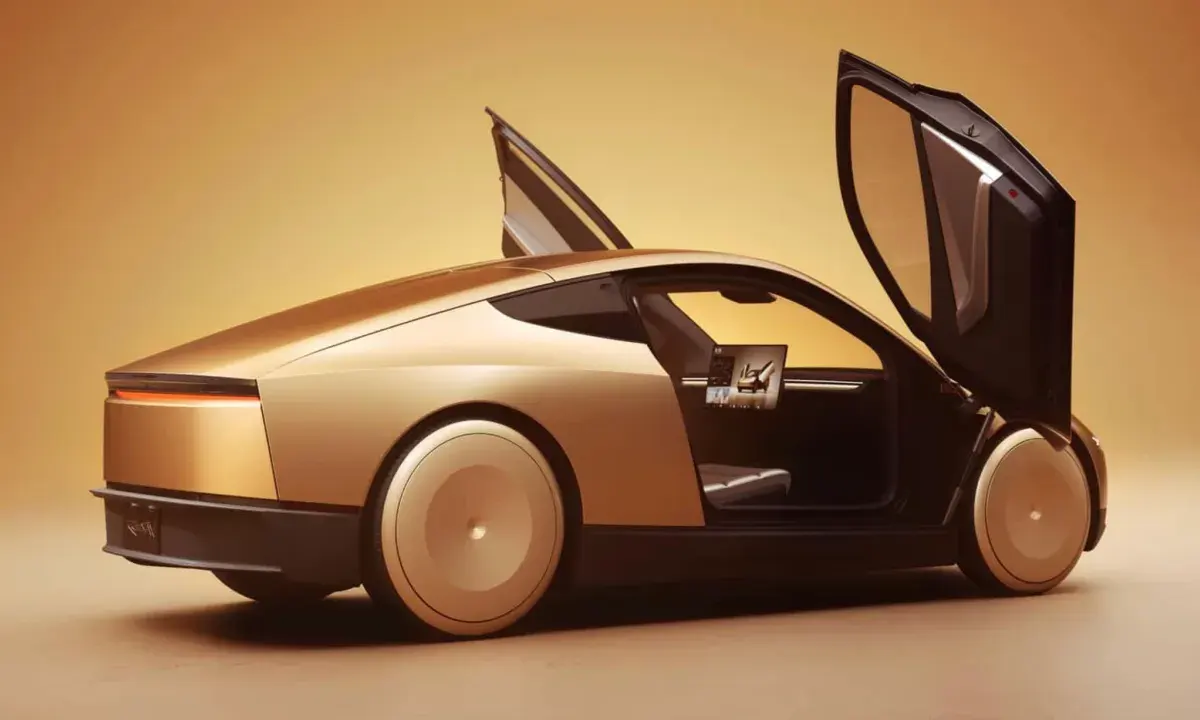
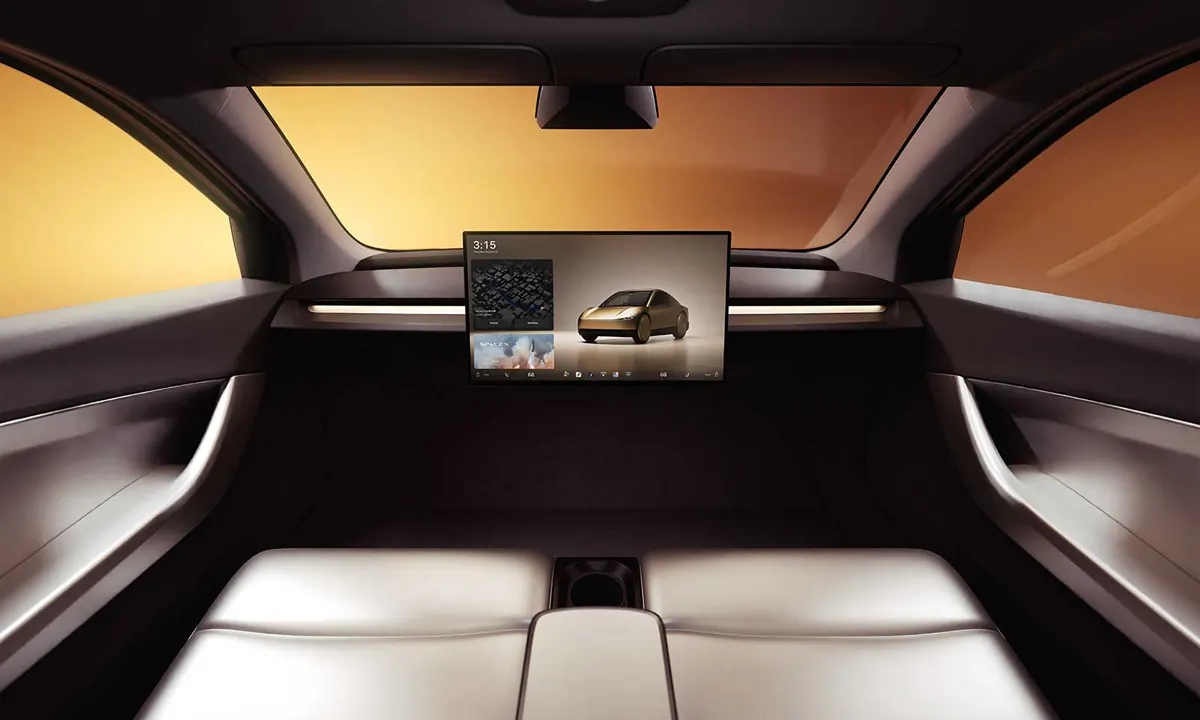
The Tesla Cybercab entered production in February 2026 with a confirmed starting price of $30,000 — making it, at that figure, the most affordable new Tesla vehicle ever sold and one of the least expensive new electric vehicles available in the American market. The vehicle itself is a two-seat, fully autonomous coupe with no steering wheel, no pedals and no provision for human driving in any form — purpose-built for a world where the software handles every aspect of operation and the passenger’s only responsibility is to select a destination.
Elon Musk’s stated ambition for the Cybercab’s operating cost is $0.20 per mile, encompassing charging, insurance and depreciation in that single figure — an all-in cost target that, if achieved at scale, would represent the most dramatic reduction in per-mile transportation expense that the American market has ever seen from a commercially available vehicle. At 15,000 miles of annual use, that figure equates to $3,000 per year in total transportation expenditure — a saving of approximately $8,577 per year against the average cost of new car ownership, or a 74 percent reduction in annual transportation cost. Some analyst projections place the realistic Cybercab operating cost range between $0.15 and $0.20 per mile for Tesla’s own robotaxi network operations — comfortably below the $0.77 per mile all-in cost of conventional new car ownership and dramatically below the $2.00 to $3.00 per mile that Uber and Lyft currently charge in the ride-hailing market.
The Cybercab’s cost advantages relative to conventional vehicles derive from three specific structural factors. The elimination of the human driver — which represents the single largest operational cost in conventional ride-hailing — immediately removes the labour expense that makes Uber and Lyft’s per-mile rates so high. The Cybercab’s minimalist architecture, with fewer than 80 major components compared to the hundreds of assemblies in a conventional automobile, substantially reduces maintenance frequency and cost relative to a typical passenger car. And the electric powertrain’s inherently lower energy cost per mile — the Cybercab’s efficiency is estimated at approximately 5.5 miles per kilowatt-hour from its 35-kilowatt-hour battery — provides a fuel cost advantage over both gasoline and conventional electric vehicles operating at lower efficiency.
Read: Tesla Model 3 Real-World Range at 75 MPH. Road Trip Planning Numbers You Actually Need
The Gap Between Tesla’s Projections and Current Reality
The honest assessment of the Cybercab’s cost proposition in April 2026 requires a clear-eyed acknowledgement of the gap that currently exists between Musk’s projected operating figures and the conditions under which those figures could realistically be achieved — because several of the assumptions embedded in the $0.20 per mile target are not yet validated by real-world operational data at meaningful scale.
The most significant outstanding challenge is regulatory. The Cybercab’s design — with no steering wheel and no pedals — means that its legal operation on public roads in the United States requires a federal exemption from the National Highway Traffic Safety Administration, which currently limits vehicles without manual controls to 2,500 units per year under existing Federal Motor Vehicle Safety Standards. Tesla is petitioning NHTSA for an expanded exemption, but the regulatory timeline for that approval remains uncertain. Without it, the Cybercab’s deployment at the scale required to drive per-mile costs to the projected $0.20 figure is structurally impossible regardless of manufacturing progress.
The software readiness question is equally consequential. Tesla’s Full Self-Driving system, which underpins the Cybercab’s operational capability, has made substantial advances — the company claims its FSD system records a safety rate more than ten times better than human drivers across the billions of miles in its training dataset — but it remains, in its current consumer-facing incarnation on Model 3 and Model Y vehicles, a Level 2 system requiring human supervision rather than the Level 4 or Level 5 autonomy that the Cybercab’s steerless, pedalless design requires for legal operation. The Austin, Texas robotaxi pilot that Tesla launched with Model Y vehicles in 2025 demonstrated that the technology is approaching commercial readiness, but the performance gap between supervised and unsupervised operation in complex urban environments remains a subject of active development rather than resolved engineering.
The insurance cost assumption within the $0.20 per mile figure is also conditional on the Cybercab’s safety record sustaining the claimed advantage over human drivers at population scale — a validation that requires the kind of operational data that only meaningful fleet deployment can generate. If insurance premiums for autonomous vehicles prove higher than Tesla’s projections in the early years of operation, the all-in cost figure rises correspondingly.
Read: Cheapest Electric SUV in the USA With Tax Credit
The Honest Comparison: Who Does the Cybercab Actually Benefit?
Accepting the current uncertainties at face value and asking where the Cybercab’s financial proposition is strongest produces a more useful answer than a binary determination of whether it is cheaper than car ownership for all Americans in all circumstances.
The urban single-occupant commuter driving 15,000 miles per year in a new car costing $35,000 or more is the Cybercab’s most compelling value proposition — because the combination of depreciation, insurance and financing on a vehicle used primarily for solo commuting represents the most expensive per-mile transportation arrangement in the American market, and it is precisely the usage pattern that the Cybercab’s two-seat, autonomous configuration is optimised to replace. At the projected $0.20 to $0.30 per mile Cybercab fare — accounting for Tesla’s network margin above raw operating cost — the urban commuter who does not need to transport cargo, passengers beyond one or access locations outside the Cybercab’s operational coverage area could achieve meaningful annual savings relative to conventional car ownership.
The suburban and rural American, however, presents a far more challenging calculation. The Cybercab’s operational territory in 2026 is limited to specific geofenced areas in Texas and California — the states that have advanced regulatory frameworks for autonomous vehicles — and global expansion to other American states, Europe and beyond is a multi-year process dependent on regulatory approvals that are not within Tesla’s unilateral control. For the approximately 60 percent of the American population that lives outside major urban centres, the Cybercab is not a practical replacement for personal car ownership in 2026, regardless of its cost advantage in principle.
Read: 2026 Best Affordable Electric Cars Under $30,000 in the USA
The Cybercab Versus Car Ownership: A Direct Cost Comparison
| Cost Category | Average New Car (15,000 miles/year) | Cybercab (Projected, at scale) |
| Depreciation | $4,334 per year | Included in per-mile fare |
| Insurance | $1,694 per year | Included in per-mile fare |
| Fuel / Energy | $1,950 per year | Included in per-mile fare |
| Maintenance | $1,656 per year | Minimal (fewer components) |
| Finance Charges | $1,131 per year | None (fare-based access) |
| Registration / Tax | $813 per year | None |
| Total Annual Cost | $11,577 | ~$3,000–$4,500 (projected) |
| Cost Per Mile | ~$0.77 | ~$0.20–$0.30 (projected) |
The Verdict: Cheaper in Theory, Conditional in Practice
The arithmetic of the Cybercab versus conventional car ownership in the United States in 2026 is, at the level of raw numbers, clearly favourable to the autonomous alternative — assuming Tesla’s projected operating costs materialise and the regulatory and software conditions for full deployment are met. An American spending $11,577 per year on car ownership who could replace that vehicle with Cybercab access at $0.20 to $0.30 per mile would save between $7,000 and $8,500 annually — enough to meaningfully alter the financial calculus of transportation for tens of millions of households.
But the conditions that must be met for that saving to be real — regulatory approval for steerless operation at scale, validated FSD performance in unsupervised mode across all weather and traffic conditions, geographic deployment beyond the current Texas and California pilot zones, and the achievement of manufacturing volumes sufficient to drive per-unit cost to the level that supports the $0.20 per mile target — represent a sequence of milestones that are not certain to be resolved within any specific timeframe. For the urban commuter in Austin or the San Francisco Bay Area in late 2026, the Cybercab’s financial advantage is approaching tangible reality. For the majority of the American driving public, it remains a genuinely compelling but not yet practically available alternative to the $11,577 annual cost of owning a car.