Toyota Corolla vs Honda Civic Long-Term Reliability Explained. Reliability Verdict After 500,000 Miles
Decade-Long Ownership Data, Half-Million-Mile Real-World Evidence, Consumer Reports Scores, JD Power Dependability Rankings and the Honest Answer to the Question Every American Compact Car Buyer Eventually Asks — Which Car Actually Lasts Longer and Costs Less to Keep Running, the Toyota Corolla or the Honda Civic
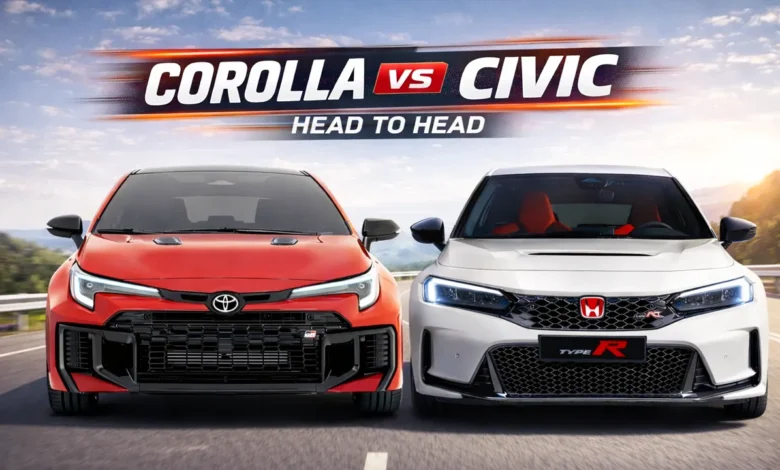
Toyota Corolla vs Honda Civic Long-Term Reliability: There are automotive arguments that resolve themselves quickly — questions of performance, styling or technology where a specification sheet or a test drive delivers a definitive answer within minutes of engagement. And then there are arguments that require time — years, sometimes decades — before the evidence accumulates sufficiently to support a conclusion that holds up against serious scrutiny. The question of whether the Toyota Corolla or the Honda Civic delivers superior long-term reliability in American real-world ownership conditions is emphatically the second kind of argument. It is a question that cannot be answered by a press drive, a first-year ownership survey or a single data point from any source, however authoritative. It requires the aggregated testimony of hundreds of thousands of owners across multiple model generations, multiple powertrain variants and the full spectrum of American driving conditions — from the salt-belt winters of the upper Midwest to the extreme heat cycles of the American Southwest to the stop-and-go urban accumulation patterns of the nation’s largest metropolitan areas.
Both the Corolla and the Civic have earned their positions as the twin pillars of the American compact car segment through decades of consistent delivery on the promise that a reliable, affordable, practical compact sedan or hatchback represents. Both have survived model cycles, corporate restructuring, global financial crises and a fundamental market shift away from sedans toward crossovers that eliminated most of their competitors from the segment entirely. The fact that both cars remain not merely present but genuinely relevant in 2025 and 2026 is itself a reliability statement — a testament to the sustained ownership satisfaction that keeps used examples commanding strong residual values and new examples finding buyers despite the segment pressure from utility vehicles at every price point.
Long-Term Reliability Data: What the Numbers Actually Say
The most authoritative long-term reliability data available for American market vehicles comes from three primary sources — Consumer Reports’ owner satisfaction and reliability surveys, JD Power’s Vehicle Dependability Study which measures three-year-old vehicle problems per 100 units, and the aggregated repair cost and frequency data compiled by platforms tracking real-world ownership expenses across large sample populations of American drivers.
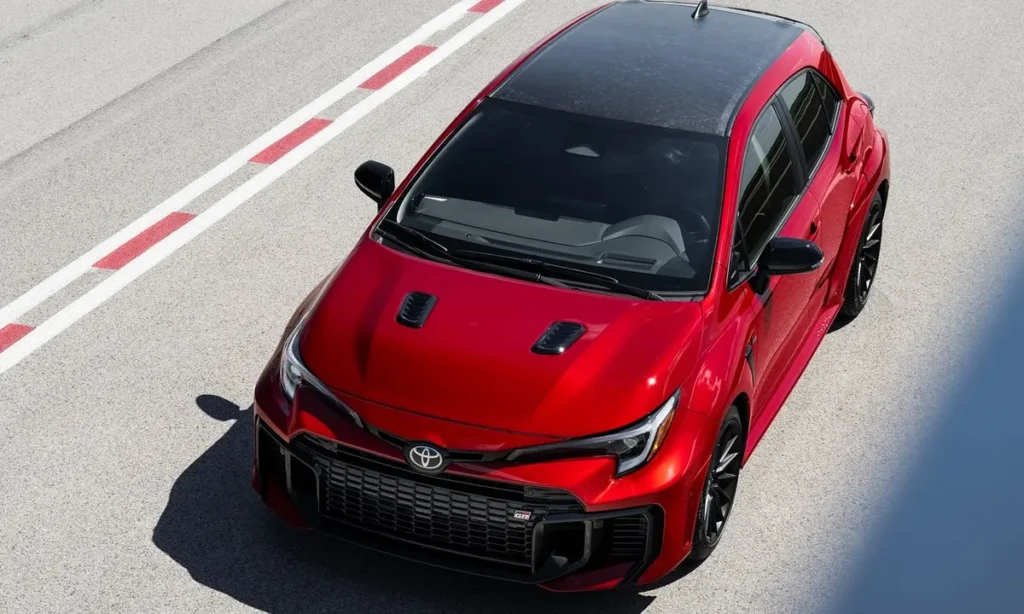
Consumer Reports has awarded the Toyota Corolla its recommended designation consistently across recent model years, with the current generation receiving reliability scores that place it among the top performers in the compact car segment. The Corolla’s historical Consumer Reports reliability record is one of the most consistently positive in the entire American automotive market — not merely within its segment but across all vehicle categories — reflecting a powertrain and chassis engineering philosophy that prioritises proven, conservative technical solutions over innovative approaches whose long-term durability characteristics are less thoroughly established.
The Honda Civic’s Consumer Reports reliability record across the current tenth and eleventh generation models has been strong but less uniformly consistent than the Corolla’s — reflecting the greater technical complexity and more frequent feature updates that Honda has incorporated into the Civic’s successive iterations. The eleventh-generation Civic, introduced for 2022, has established a reliability record that Consumer Reports rates positively, recovering from the mixed reliability performance of certain tenth-generation variants whose turbocharged powertrain integration introduced issues that required owner-affecting warranty interventions at a rate above what the Corolla’s naturally aspirated equivalent produced across the same period.
Powertrain Longevity: The Engine and Transmission Story
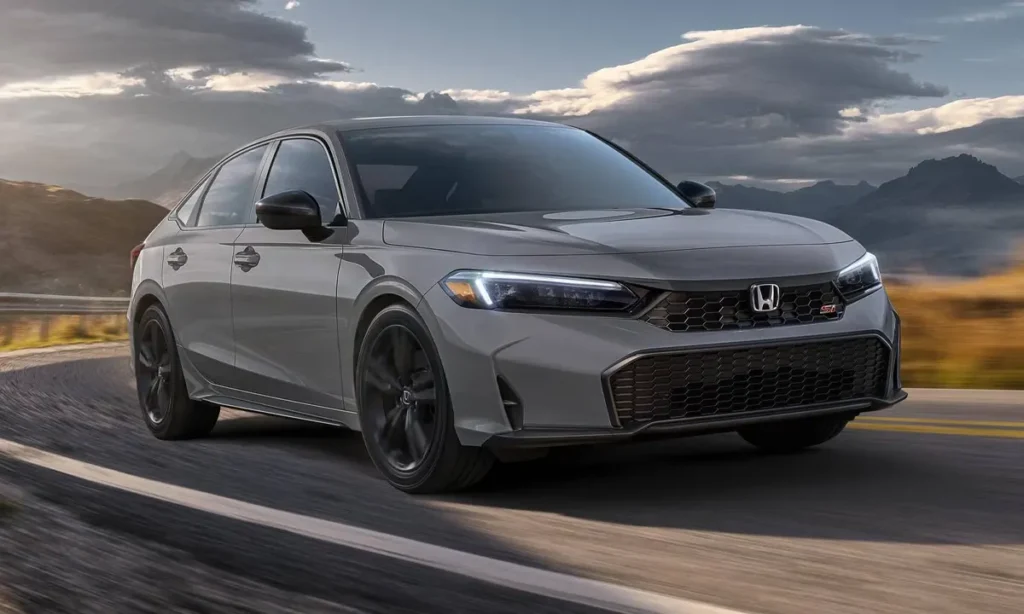
The powertrain comparison between the Corolla and Civic in long-term American ownership is where the reliability narrative becomes most technically substantive and most directly consequential for buyers planning decade-plus ownership timelines.
The Toyota Corolla’s standard powertrain across most American market configurations is a 2.0-litre naturally aspirated four-cylinder engine producing 169 horsepower — a unit whose engineering philosophy reflects Toyota’s consistent preference for mechanical simplicity, conservative thermal management and proven component architecture over the power density advantages that forced induction provides. Naturally aspirated engines carry an inherent long-term durability advantage over turbocharged equivalents in the context of high-mileage ownership — fewer heat-cycle-sensitive components, lower peak cylinder pressures and a lubrication system that does not manage the additional thermal load that turbocharger bearings impose on engine oil. The continuously variable transmission paired with most Corolla configurations has accumulated a real-world reliability record that, despite the category’s historical reputation concerns, has proven acceptably durable in Corolla application across the current generation’s ownership sample.
The Honda Civic’s standard powertrain since 2022 is a 1.5-litre turbocharged four-cylinder producing 158 horsepower — an engine whose power density is impressive for its displacement and whose day-to-day driving character is genuinely engaging, but whose turbocharged architecture introduces the long-term ownership variables that naturally aspirated powertrains avoid. Earlier iterations of Honda’s 1.5-litre turbo in American market Civic applications produced documented oil dilution concerns — a phenomenon where unburned fuel enters the engine oil through the crankcase ventilation system in cold-climate short-trip driving conditions, reducing lubrication effectiveness and accelerating wear. Honda addressed this issue through software and hardware revisions across the production run, and the current eleventh-generation implementation has not reproduced the problem at the scale of earlier occurrences — but the episode established a precedent in the ownership community’s collective awareness that the Corolla’s naturally aspirated alternative does not carry.
Repair Costs and Maintenance Expenses Over 100,000 Miles
Beyond the frequency of mechanical problems, the financial consequence of those problems across a long ownership period determines the true cost differential between the Corolla and Civic as high-mileage propositions. Real-world repair cost data aggregated across large American ownership populations consistently places both vehicles among the least expensive compact cars to maintain over extended periods — a shared characteristic that reflects the depth of the independent repair market’s familiarity with both platforms, the widespread availability and competitive pricing of parts and the mechanical accessibility that both manufacturers have maintained despite increasing vehicle complexity.
The Corolla’s average annual repair cost across its ownership population sits slightly below the Civic’s equivalent figure in most aggregated data sources — a differential that compounds meaningfully across a ten or fifteen-year ownership timeline but that reflects probability distributions rather than certainties for any individual vehicle. The most significant cost events in both vehicles’ long-term ownership profiles — catalytic converter replacement, major suspension component renewal, transmission service — occur at comparable mileage intervals and at comparable parts and labour costs given the depth of both platforms’ aftermarket support.
Where the Corolla demonstrates a measurable cost advantage is in the reduced likelihood of powertrain-related repair events before the 150,000-mile threshold — a reflection of the naturally aspirated engine’s inherent durability advantage and the conservative engineering calibration that Toyota applies consistently across its mainstream product lineup. Civic owners who drive primarily in cold-climate conditions with frequent short trips — the usage pattern most associated with the oil dilution concern in earlier turbocharged variants — have historically faced a higher probability of powertrain attention requirements before that mileage threshold than equivalent Corolla owners in identical conditions.
Real-World Owner Evidence: Half a Million Miles and Beyond
The most compelling long-term reliability evidence available for both vehicles comes not from surveys or aggregate data but from the documented high-mileage examples that American owners have accumulated across decades of Corolla and Civic ownership. Both vehicles are represented prominently among documented 300,000, 400,000 and 500,000-mile examples in American ownership — a distinction that separates them from the vast majority of automotive nameplates and that reflects genuine mechanical durability rather than exceptional maintenance regimens applied to inherently average engineering.
Toyota Corolla examples with documented mileage exceeding 300,000 miles appear with sufficient frequency in the American ownership community to be unremarkable — a testament to the powertrain’s ability to sustain function across accumulated operating hours that most mechanical systems cannot approach. The variables that separate the highest-mileage examples from average-mileage equivalents are almost universally maintenance consistency and driving pattern rather than any inherent mechanical limitation of the platform itself.
Honda Civic examples with comparable documented mileage exist in meaningful numbers as well — reflecting the fundamental soundness of Honda’s engineering approach across the Civic’s long production history. The Civic’s higher-revving engine character and more enthusiastically driven ownership profile historically result in a slightly broader distribution of mileage outcomes than the Corolla’s more uniform high-mileage performance — a reflection of use pattern as much as mechanical capability.
Read: Why Toyota Cars Are Known for Bulletproof Reliability?
The Verdict: Which Car Wins the Long-Term Reliability Argument in America
The honest answer to the Corolla versus Civic long-term reliability question in American ownership conditions is that both cars are exceptional by any objective standard and that choosing either over most alternatives in the compact segment is a sound long-term ownership decision. The differentiation between them is genuine but narrower than the intensity of the debate surrounding it might suggest.
The Toyota Corolla holds a measurable advantage in powertrain longevity probability — particularly for owners in cold-climate American markets, owners whose driving patterns involve frequent short trips and owners whose ownership timeline extends beyond 150,000 miles with minimal professional maintenance investment. The naturally aspirated engine’s inherent durability characteristics, the conservative transmission calibration and Toyota’s historically unmatched consistency of long-term reliability delivery across its mainstream lineup combine to make the Corolla the marginally lower-risk choice for maximum-duration ownership.
The Honda Civic offers a more engaging driving experience, a more technology-forward cabin presentation and a turbocharged powertrain whose real-world fuel efficiency advantage over the Corolla’s naturally aspirated alternative is genuine — with a long-term reliability record that, particularly in the current eleventh-generation implementation, justifies confident consideration for buyers whose ownership priorities include dynamic satisfaction alongside mechanical durability.
For the buyer whose single overriding priority is statistical probability of the lowest lifetime repair cost across the longest possible ownership timeline in American conditions — the Corolla wins. For the buyer who weights driving engagement and technology alongside reliability and accepts a marginally wider probability distribution of long-term outcomes — the Civic makes a compelling and well-evidenced case.
Both cars have earned the reputations they carry. The argument between them is one that the American compact car market is fortunate to have.
Read: 5 Toyota Cars That Last Forever! Myth or Reality?
Toyota Corolla vs Honda Civic Long-Term Reliability Comparison
| Category | Toyota Corolla | Honda Civic |
| Engine Type | 2.0L Naturally Aspirated I4 | 1.5L Turbocharged I4 |
| Horsepower | 169 hp | 158 hp |
| Transmission | CVT (Primary) | CVT / 6-Speed Manual |
| Consumer Reports Reliability | Consistently High | Strong (Current Gen) |
| JD Power Dependability | Above Segment Average | Above Segment Average |
| Known Long-Term Issues | Minimal (Current Gen) | Oil Dilution (Earlier Gen) |
| Avg. Annual Repair Cost | Slightly Below Civic | Slightly Above Corolla |
| 200,000-Mile Probability | Very High | High |
| Cold-Climate Durability | Excellent | Good (Resolved Issues) |
| Parts Availability | Excellent | Excellent |
| Independent Repair Familiarity | Excellent | Excellent |
| Turbocharger Long-Term Risk | None | Minor (Managed) |
| Best Ownership Profile | Maximum Duration / Low Cost | Engagement + Reliability Balance |
| Starting MSRP (2025 US) | Approx. $22,000 | Approx. $24,000 |