800V vs 400V EV Architecture: The Physics Behind the EV Architecture That Changes Everything
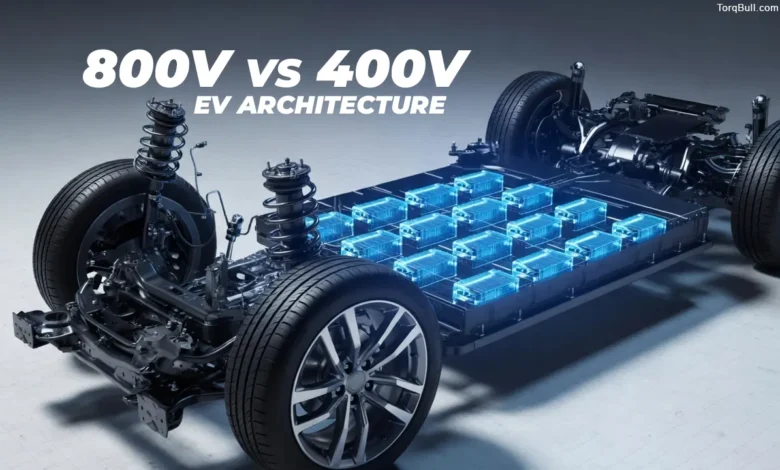
- 800V systems enable faster peak charging than 400V
- Improved thermal efficiency and reduced heat losses
- Thinner cables and lighter electrical architecture
- Higher infrastructure and cost requirements
- Voltage architecture as a key EV performance factor
800V vs 400V EV Architecture: The electric vehicle specification comparison that most buyers encounter focuses on range figures, peak power outputs and charging time estimates — numbers whose marketing-friendly simplicity conceals the architectural decision that determines all three simultaneously. The voltage architecture — whether a platform operates at 400 volts or 800 volts — is the foundational engineering choice whose downstream consequences cascade through every aspect of the vehicle’s charging performance, driving efficiency and long-term durability in ways that the peak charging speed figure alone substantially undersells.
The difference between 400-volt and 800-volt EV architecture is not a linear scaling relationship — it is not simply that 800-volt systems charge twice as fast as 400-volt alternatives because the voltage is double. The relationship between voltage, current, power and heat generation involves the physics of electrical power transmission whose understanding reveals why the voltage architecture choice creates performance differences that the marketing comparison’s peak kilowatt figures represent only partially and whose full implications extend into thermal management, motor efficiency and the daily driving experience dimensions that distinguish the two architectures most meaningfully for the owner whose vehicle encounters both conditions across real-world operation.
The Physics: Why Voltage Matters More Than Power Alone
Electrical power is the product of voltage and current — a relationship expressed as Power equals Voltage multiplied by Current. This fundamental equation’s implication for EV charging architecture is that the same power level can be delivered through different combinations of voltage and current whose thermal consequences are fundamentally different.
A 350-kilowatt charging event delivered through a 400-volt system requires 875 amperes of current. The same 350-kilowatt charging event delivered through an 800-volt system requires only 437.5 amperes. The heat generated in any conductor by electrical current follows the square law relationship — heat is proportional to current squared multiplied by resistance — whose consequence is that the 400-volt system’s 875-ampere current generates four times as much heat in the charging cable, connector and vehicle wiring as the 800-volt system’s 437.5 amperes delivering identical power.
This thermal consequence is not merely an academic observation — it is the engineering constraint that limits 400-volt systems to lower peak charging rates than their marketed specifications suggest is achievable in sustained real-world use. The 400-volt system’s higher current requirement at equivalent power creates thermal limits in the cable, connector contacts and the vehicle’s internal wiring that the battery management system’s thermal protection algorithm addresses by reducing charging power when component temperatures approach limits — producing the charging curve tapering that 400-volt owners experience as the charging rate reduction that occurs before the battery state-of-charge target is reached.
Charging Speed: The Practical Performance Gap
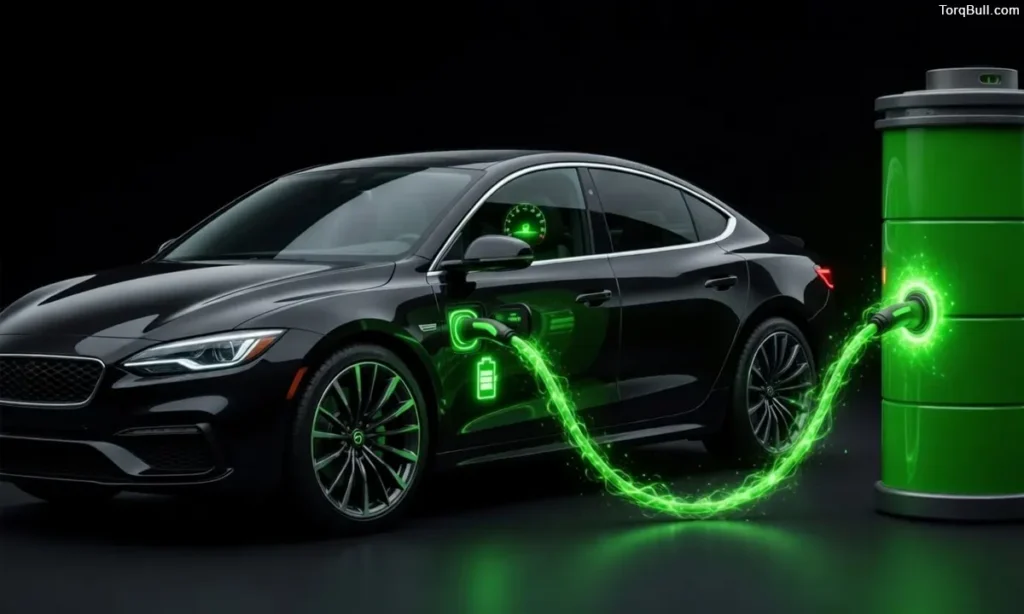
The charging speed advantage that 800-volt architecture provides over 400-volt alternatives represents the most immediately commercially significant performance difference between the two platforms — whose expression in the 10-to-80 percent charging time comparison that manufacturers publish as the primary fast charging performance metric reveals the practical consequence of the thermal physics that the voltage architecture determines.
The Hyundai Ioniq 6 Long Range — whose 800-volt architecture accepts DC fast charging at 350-kilowatt peak rates — completes the 10-to-80 percent charge in approximately 18 minutes under optimal thermal and infrastructure conditions. The Tesla Model 3 Long Range — whose 400-volt architecture accepts DC fast charging at 250-kilowatt peak — completes the equivalent charge cycle in approximately 25 minutes. The 7-minute difference at equivalent battery capacity reflects the voltage architecture’s thermal efficiency advantage rather than any fundamental difference in the battery chemistry or capacity whose impact on charging time is independent of the architecture difference.
The practical consequence for the road trip user whose journey planning incorporates charging stops is that the 800-volt vehicle’s faster charging reduces the stop duration that the journey requires — not by a marginal improvement but by a percentage reduction that transforms the charging stop from a meaningful journey interruption into a rest period whose duration approaches the natural break that driver safety guidelines recommend regardless of powertrain type.
At the extreme end of 800-volt charging capability — the Porsche Taycan’s 270-kilowatt acceptance rate and the Kia EV6 GT’s 350-kilowatt capability — the 10-to-80 percent charge times of 22 minutes and 18 minutes respectively represent the current production technology frontier whose achievement the 400-volt system’s thermal constraints prevent regardless of charger output capability.
Motor Efficiency: The Daily Driving Advantage
The 800-volt architecture’s performance advantages extend beyond the charging event into the daily driving efficiency whose expression in real-world range and energy consumption determines the ownership experience across every journey rather than solely during the charging stops that periodic long-distance travel requires.
The electric motor’s efficiency relationship with its supply voltage reflects the same physics that determines charging performance — with higher voltage operation enabling the equivalent power delivery at lower current, reducing the resistive losses in the motor windings and the power electronics that convert battery DC power into the AC that the motor receives. The lower current requirement in 800-volt motor operation reduces winding heat generation, improves the motor’s efficiency at partial load conditions that everyday driving predominantly involves and reduces the thermal management demand on the cooling systems that maintain the motor and inverter within their optimal operating temperature range.
The real-world efficiency improvement that 800-volt architecture delivers in everyday driving — typically 3 to 5 percent above equivalent 400-volt systems in independent comparison testing — translates into range improvement and energy cost reduction whose compounding value across annual mileage is financially meaningful and whose environmental significance the lower energy consumption per kilometre produces as a direct consequence.
Read: Charge Smarter, Not Longer. EV Charging Time vs Battery Size Explained
Infrastructure Compatibility: The 800V Challenge
The 800-volt architecture’s performance advantages require compatible charging infrastructure whose deployment has progressed at a pace that the architecture’s commercial introduction preceded — creating the transitional period during which 800-volt vehicles encounter the 400-volt chargers that constitute the majority of currently deployed fast charging infrastructure.
The compatibility solution that 800-volt vehicles implement varies between manufacturers — with Hyundai, Kia and Porsche using a DC-to-DC converter whose onboard integration allows the vehicle to accept 400-volt charging input and boost it internally to the 800-volt battery voltage, at the cost of conversion efficiency loss and the 50-kilowatt maximum rate limitation that the converter’s thermal and power rating imposes. The practical consequence for the 800-volt vehicle owner encountering a 400-volt 150-kilowatt charger — the current majority of European and American public DC fast charging infrastructure — is a 50-kilowatt charging rate that the battery management system manages through the internal booster, producing charge times that approach the 400-volt equivalent’s performance rather than demonstrating the 800-volt architecture’s capability.
The charging network’s 800-volt compatible deployment — whose progress across the Ionity, Electrify America and the Tesla Supercharger V4 network is accelerating but whose geographic coverage remains concentrated in major corridors and metropolitan areas — determines how frequently the 800-volt vehicle owner experiences the architecture’s full capability versus the downgraded 400-volt compatibility mode.
Read: Charge While You Drive! Wireless EV Charging Roads – How It Works?
800V vs 400V EV Architecture — Technical Comparison
| Category | 400-Volt Architecture | 800-Volt Architecture | Advantage |
| Peak DC Charging Rate | Up to 250 kW | Up to 350 kW | 800V (+40%) |
| Current at 250 kW | ~625 Amperes | ~312 Amperes | 800V (Lower Heat) |
| Heat Generation (Same Power) | 4× Higher | Baseline | 800V |
| 10–80% Charge Time (Typical) | 23–30 Minutes | 15–22 Minutes | 800V (-8 min) |
| Motor Winding Efficiency | Baseline | +3–5% | 800V |
| Cable Thickness Required | Heavier / Liquid-Cooled | Lighter / Air-Cooled | 800V |
| 400V Charger Compatibility | Native | Via Booster (50 kW Max) | 400V |
| Infrastructure Availability | Widespread | Growing / Limited Routes | 400V |
| System Cost Premium | Baseline | ~$1,500–$3,000 Higher | 400V |
| Real-World Range Benefit | Baseline | +3–5% | 800V |
| Examples (400V) | Tesla Model 3 / VW ID.4 / Chevy Equinox EV | — | — |
| Examples (800V) | — | Ioniq 5 / EV6 / Taycan / Lucid Air | — |