- The 2026 Hyundai Elantra starts at $22,625 with standard wireless Apple CarPlay and advanced safety features.
- Most owners recommend the Elantra, and buyers are currently paying below MSRP in many markets.
- Weak points include modest base-engine performance, lower-grade interior plastics and concerns about long-term IVT durability.
The Hyundai Elantra has spent the last several years completing one of the most comprehensive transformations in the compact car segment — evolving from a budget oriented alternative to a genuinely competitive and increasingly recommended compact sedan that now occupies a position of genuine strength in one of the most crowded and most competitive vehicle categories in the American market. Named one of the Best Compact Cars for 2026 and rated by consumer review platforms at 4.1 out of 5 with 77 percent of owners recommending it, the Elantra enters 2026 with credentials that a decade ago seemed implausible for the brand. The vehicle is an excellent value in a segment that is already value oriented, with a starting price of $22,625, deceptively spacious cabin, user friendly technology and among the highest fuel economy figures in the non hybrid compact sedan class. But the same owner community that delivers a 77 percent recommendation rate also consistently documents specific limitations — interior plastic quality below price expectations, wireless Apple CarPlay reliability issues, limited base engine performance and IVT transmission durability concerns — that any honest 2026 worth it assessment must address with equal rigour.
What Makes the 2026 Elantra Worth Buying: The Case for Yes
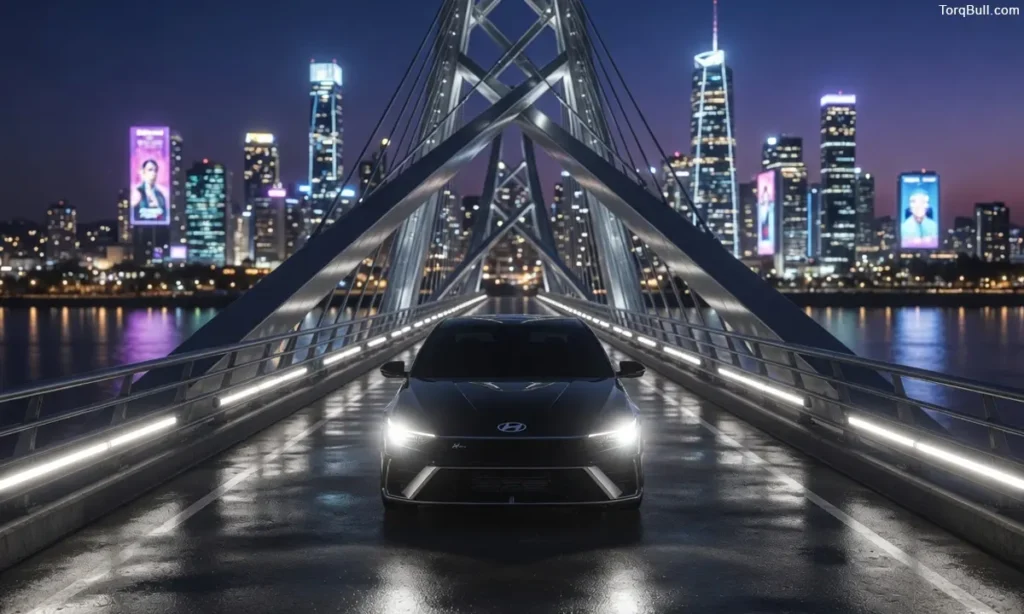
Value That Leads the Compact Segment
The Elantra’s most consistently compelling argument is the breadth of standard equipment it provides at its entry price of $22,625 for the SE trim. At this price point, every 2026 Elantra includes forward collision avoidance assist with pedestrian detection, blind spot collision warning, lane keeping assist, wireless Apple CarPlay and Android Auto, an 8 inch touchscreen and driver attention warning. This suite of standard safety and connectivity features is available without selecting any option package or upper trim — it is the Elantra’s baseline specification.
Buyers are currently paying $370 to $920 below MSRP on average depending on trim level and equipment, making the effective transaction price even more compelling than the already competitive sticker. The SEL Sport trim one step above the base is identified as having strong features for the dollar, adding dual zone automatic climate control and wireless device charging at $23,750. The SEL Sport Premium at $25,075 adds heated front seats and a sunroof. The Limited at $27,175 brings synthetic leather upholstery and the dual 10.25 inch screens for both infotainment and the gauge cluster that transforms the interior’s visual presence. Across every trim level, the Elantra provides more standard content per dollar than most direct compact sedan competitors — a consistent finding across professional compact car evaluations for this generation.
Fuel Economy That Leads the Non Hybrid Compact Class
The base 2.0 litre naturally aspirated four cylinder engine achieves an EPA estimated 31 city, 40 highway and 36 MPG combined — among the highest non hybrid figures available for any compact sedan in the American market. At 15,000 annual miles and $3.08 per gallon, this translates to approximately $1,283 per year in fuel costs — approximately $400 less per year than a 30 MPG compact sedan alternative and approximately $200 less than a 33 MPG competitor. Over five years of ownership, this fuel economy advantage accumulates to $1,000 to $2,000 in real money that stays in the owner’s budget rather than at the fuel pump.
The Elantra Hybrid extends this efficiency advantage substantially further. One repeat Elantra Hybrid buyer sold a 2022 Hybrid and purchased a 2026 model immediately after — citing the excellent gas mileage as the primary repurchase motivation. The same owner documents 41 plus MPG in warmer months and high 30s in winter with winter tyres fitted — real world owner confirmation of efficiency that approaches or exceeds the Hybrid’s EPA combined estimates across most driving conditions.
Interior Space That Surprises Every Owner
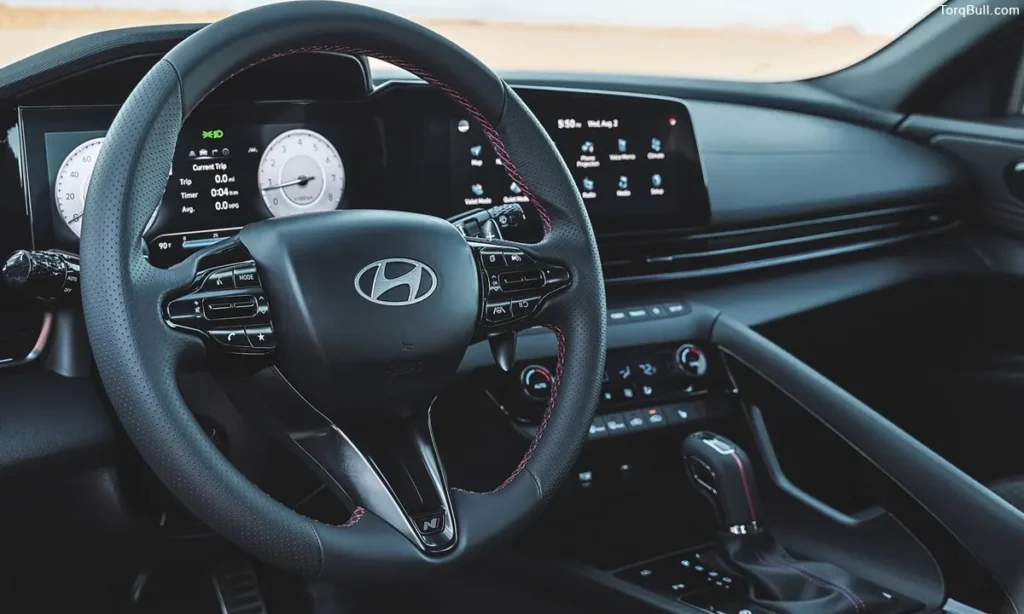
The Elantra is consistently described across professional and owner reviews as deceptively spacious — a vehicle whose exterior proportions do not prepare buyers for the interior volume they discover at delivery. Front seat legroom is ample even for occupants over six feet tall. The rear seat provides a big back seat experience that multiple owner reviews specifically highlight as unexpected and appreciated for a compact sedan. Total passenger volume of 99.4 cubic feet substantially exceeds the Toyota Corolla’s 88.6 cubic feet — 10.8 cubic feet of additional interior volume that determines comfort for the real people who occupy rear seats on every journey.
Technology across every trim level reflects the current generation’s commitment to providing genuine digital sophistication. The Limited trim’s dual 10.25 inch screens for the instrument cluster and infotainment system deliver a premium visual experience that independent reviews describe as upscale and as having high quality presentation — technology inside that feels elegant and logical according to verified owner accounts. Wireless connectivity, intuitive voice controls and the comprehensive SmartSense safety suite complete a technology package that leads the compact segment at equivalent price points.
A 10 Year Powertrain Warranty That Provides Financial Confidence
The Hyundai powertrain warranty of 10 years or 100,000 miles provides the strongest financial safety net in the compact car segment — covering engine and transmission events for the full duration of what most buyers consider a normal vehicle ownership period. The Toyota Corolla’s powertrain warranty covers five years or 60,000 miles — half the Elantra’s coverage. The Honda Civic’s powertrain warranty covers the same five year, 60,000 mile window. For buyers whose ownership planning concerns include what happens if something major goes wrong in years six through ten, the Elantra’s warranty provides twice the coverage of its two most direct competitors at no additional cost.
Read: Hyundai Elantra vs Toyota Corolla: Which Compact Sedan Is the Better Buy In 2026?
Where the 2026 Elantra Falls Short: The Honest Limitations
Base Engine Performance That Underwhelms at Higher Trim Prices
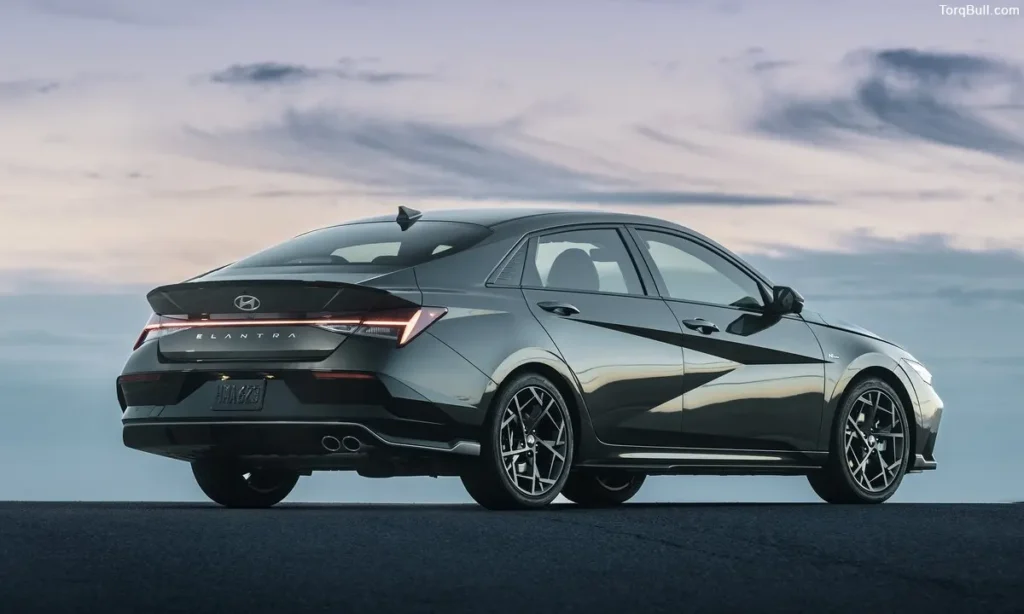
The 147 horsepower naturally aspirated 2.0 litre engine in every non N Line Elantra produces adequate daily commuting performance but limited driving engagement — characterised across professional evaluations as not sporty and delivering handling that is predictable and middle of the road rather than involving or rewarding for drivers who value the act of driving. The CVT transmission’s characteristic behaviour under harder acceleration — where engine revs climb while acceleration builds more gradually — produces a disconnected feeling that owner reviews document as less satisfying than conventional automatic alternatives. For buyers who prioritise the daily driving experience itself, the N Line’s 201 horsepower turbocharged alternative at $30,645 addresses this limitation directly with a sport tuned suspension and more engaging powertrain character.
Interior Plastics and Material Quality Below Price Expectations at Upper Trims
The most consistently documented interior quality complaint across 64 verified owner reviews is the plastic material quality in prominent positions — specifically in a vehicle that reaches $27,175 for the Limited trim, where buyers reasonably expect material quality commensurate with the price. One verified owner who purchased the Limited specifically notes that some interior plastics should be better even for this class, and identifies inadequate armrest padding as a specific and easily correctable limitation that Hyundai has not addressed. The absence of memory seats and ventilated seats on the Limited trim — features that competing vehicles at similar prices provide — is a specific specification gap that professional evaluations and owner reviews both note as inconsistent with the vehicle’s positioning at the top of its mainstream trim range.
Wireless Apple CarPlay Reliability Issues Documented Consistently
Wireless Apple CarPlay connectivity problems appear across multiple verified owner reviews and professional evaluations as a recurring pattern rather than an isolated incident. The specific issues vary across reports — intermittent disconnection, initial pairing difficulties and audio dropouts during connected sessions — but their appearance across different owners, different vehicle build dates and different phone generations indicates an underlying integration reliability concern that a software update history has not fully resolved. For buyers whose daily driving relies on wireless smartphone connectivity for navigation, music and communication, this documented reliability pattern warrants specific evaluation during a test drive using their own device before purchase commitment.
IVT Transmission Long Term Durability Uncertainty
The Intelligent Variable Transmission is a chain belt CVT architecture that avoids the push belt design’s rubber band sensation through a more mechanically direct connection. It functions smoothly in everyday use and its fuel economy contribution is genuine. But verified owner accounts document a specific and recurring concern: long term durability beyond 100,000 miles is not yet as comprehensively established by real world owner data as the conventional automatic transmissions used in the Toyota Corolla and Honda Civic. One first time Hyundai buyer who purchased the Limited specifically cites IVT long term durability concern as their primary ownership anxiety, and plans to follow up with a six month review. The 10 year, 100,000 mile powertrain warranty covers the IVT within the warranty window — but buyers planning ownership beyond this threshold face more uncertain territory than Toyota and Honda transmission owners at equivalent mileage.
Read: Hyundai Elantra Pros and Cons In 2026: 37% Real Owner Saying About Their Daily Frustrations
2026 Hyundai Elantra Worth It Assessment — Complete Chart
| Category | Rating | Evidence |
| Starting price and value | Excellent | $22,625 with comprehensive safety suite; buyers paying below MSRP |
| Fuel economy (base) | Excellent | 36 MPG combined; among highest non hybrid compact figures |
| Fuel economy (Hybrid) | Exceptional | 41 plus MPG real world owner documented |
| Interior space | Very Good | 99.4 cu ft passenger volume; ample front and rear legroom |
| Technology and standard features | Very Good | SmartSense on all trims; wireless CarPlay standard |
| Warranty coverage | Best in class | 10 yr, 100,000 mile powertrain vs 5 yr, 60,000 mi competitors |
| Base engine performance | Below Average | 147 hp; CVT; not sporty; middle of the road handling |
| Interior material quality | Below Expectation | Plastics below price expectation at Limited trim; thin armrests |
| Wireless CarPlay reliability | Documented Concern | Intermittent disconnection across multiple owner accounts |
| IVT long term durability | Uncertain | Less documented beyond 100,000 mi than Toyota and Honda alternatives |
| Overall owner recommendation | 77 percent | 64 percent rate five stars; styling and reliability highest rated |
Read: Honda Civic vs Hyundai Elantra: Which Compact Sedan Is Actually Better in 2026?
The Verdict: Who the Elantra Is Worth It For
The 2026 Hyundai Elantra is worth buying for buyers who prioritise maximum standard feature content at minimum entry price, who value fuel economy leadership in the non hybrid segment, who need a spacious compact sedan interior for regular adult rear seat passengers and who want the financial confidence of a 10 year powertrain warranty that no competing compact sedan provides. At $22,625 to $27,175 for the mainstream trim range, with buyers currently paying below MSRP and fuel economy among the best in the segment, the Elantra’s value proposition is genuine and well supported by the 77 percent owner recommendation rate.
It is a less compelling purchase for buyers who want the most engaging base engine and transmission combination — where the Toyota Corolla and Honda Civic deliver more conventional and more confidence inspiring powertrain character. It is also a less obvious choice for buyers who depend on wireless Apple CarPlay as an essential daily tool and need consistent rather than intermittent connectivity. The N Line’s 201 horsepower turbocharged alternative addresses the performance limitation completely, though at $30,645 it begins to compete with the Honda Civic Si’s territory rather than the mainstream compact sedan market.
The Elantra earns its Best Compact Car designation for 2026 on the strength of value, space, efficiency and feature breadth — a combination that for the majority of compact sedan buyers represents exactly what they need from a daily driver at this price point