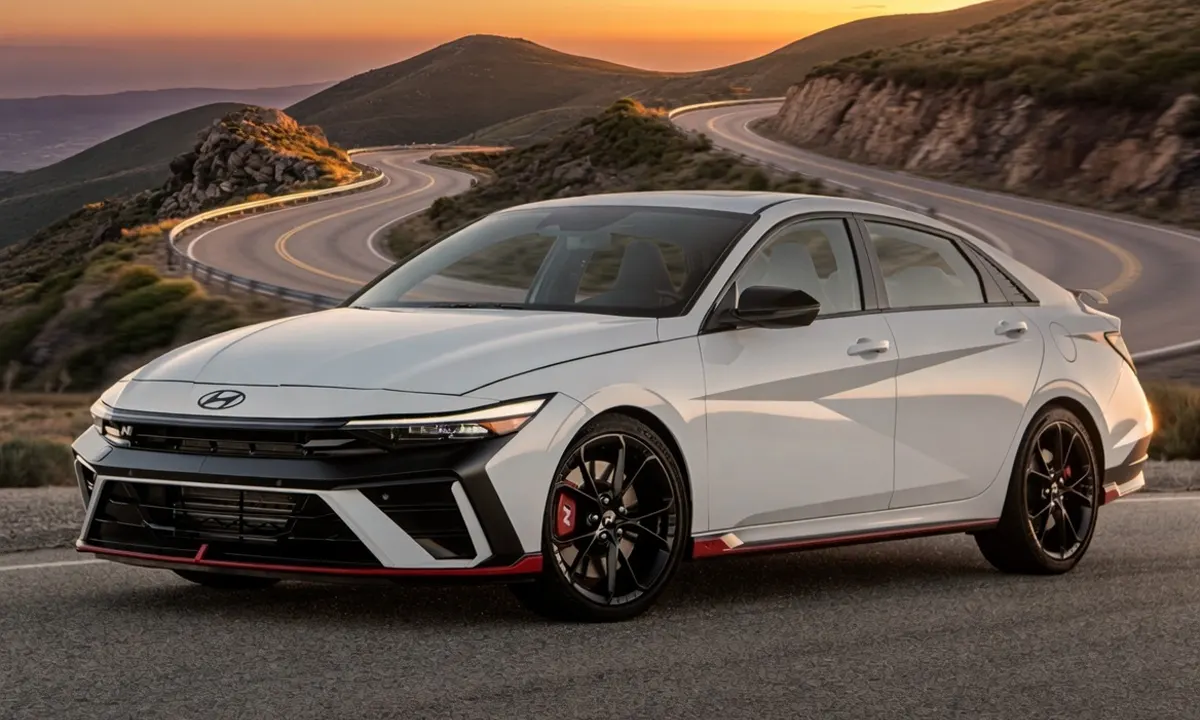
- The 2026 Hyundai Elantra offers engines ranging from 147 horsepower in the base model to 276 horsepower in the high-performance Elantra N.
- The N Line turbo produces 201 horsepower and reaches 60 MPH in about 7 seconds.
- The Elantra N delivers the strongest performance, achieving 0–60 MPH in as little as 4.8 seconds and earning praise for its track-ready driving dynamics.
The 2026 Hyundai Elantra’s engine lineup spans a wider performance range within a single nameplate than most buyers expect when they first encounter the vehicle’s modest base specification — from a 147 horsepower naturally aspirated commuter engine optimised for fuel economy through to a 276 horsepower turbocharged track capable performance sedan that instrumented testing places at 4.8 seconds to 60 MPH in automatic form. Understanding precisely what each engine delivers in real world and professionally tested performance — not just the specification numbers but the character, the driving feel and the specific scenarios where each engine’s strengths and limitations become most apparent — is the most practically useful knowledge for any Elantra buyer comparing configurations. This complete review covers every engine across every trim.
The Base 2.0 Litre Naturally Aspirated Engine: Efficient Above All Else
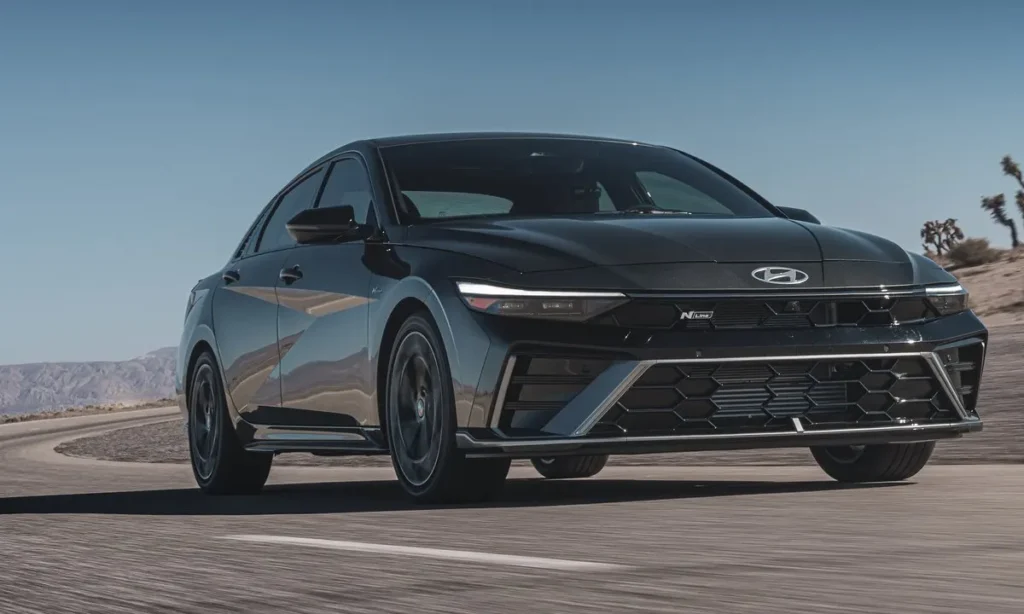
The 2026 Hyundai Elantra SE, SEL Sport, SEL Sport Premium and Limited trims all use the same 2.0 litre naturally aspirated four cylinder engine producing 147 horsepower and 132 pound feet of torque through the Intelligent Variable Transmission. This is the powertrain that defines the Elantra for the majority of buyers who choose the mainstream trim range — and its character reflects its design priorities precisely.
Professional evaluation of the base engine is consistent and honest: the 147 horsepower four cylinder does not rise above the level of workmanlike. The evaluation continues that the base engine is adequate for city driving but produces a slight lag when attempting to pass at freeway speeds. This characterisation is accurate and useful — the base engine is not unpleasant to operate in daily urban commuting where speeds are moderate and acceleration demands are light, but it lacks the reserve power that makes highway driving confident and effortless.
Instrumented testing places the base Elantra at 8.4 seconds to 60 MPH — a figure that positions it at the slower end of the compact sedan segment without being dramatically below the class average. In practical daily driving terms, 8.4 seconds to 60 MPH means adequate acceleration from traffic signals and comfortable pace matching in suburban traffic, but that passing slower vehicles on two lane highways at speed requires deliberate planning and gear management rather than casual throttle application.
The engine’s genuine strength is fuel economy. The 2026 Elantra SE with the 2.0 litre achieves EPA estimates of 31 MPG city, 40 MPG highway and 35 MPG combined — among the highest figures available for a non hybrid compact sedan in the American market. This 35 MPG combined figure is the base engine’s strongest daily ownership credential and the primary reason buyers choose this configuration: reliable, above average efficiency at the lowest available purchase price. For high mileage commuters whose primary ownership cost concern is fuel expenditure, this engine’s efficiency advantage over competitors produces meaningful annual savings.
The IVT transmission avoids the traditional CVT’s rubber band sensation through a chain belt design that better mimics the feel of a stepped automatic — producing a smoother and more predictable driving character than conventional CVT alternatives. Under gentle to moderate acceleration, the IVT is transparent and unobtrusive. Under harder acceleration where the engine must work toward its peak output, the transmission’s programmed simulated gear steps help maintain driver connection without fully replicating the decisive shifts of a conventional automatic or dual clutch.
Read: Is Hyundai Elantra Worth Buying in 2026? Still the Best Value Sedan on the Market?
The N Line 1.6 Litre Turbocharged Engine: Where Daily Performance Begins
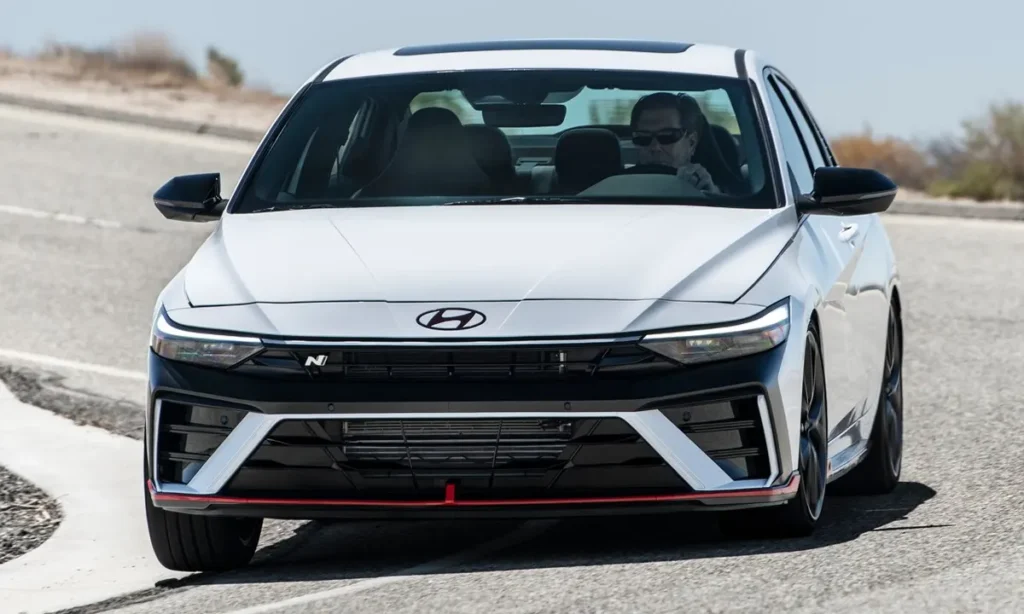
The 2026 Elantra N Line introduces a fundamentally different performance character through the 1.6 litre turbocharged four cylinder engine producing 201 horsepower and 195 pound feet of torque — 54 additional horsepower and 63 additional pound feet over the base engine, representing a 37 percent power increase that transforms the vehicle’s highway and passing capability.
The N Line’s 201 horsepower is available through two transmission choices that produce meaningfully different driving characters and performance outcomes. The seven speed dual clutch automatic paired with the turbo engine achieves instrumented 0-60 MPH times of approximately 7 seconds — a significant improvement over the base engine’s 8.4 seconds and a result that places the N Line automatic in competitive territory with the broader compact sedan performance field. The six speed manual transmission produces a slightly slower but more driver involving 0-60 time in the mid seven second range.
The dual mass flywheel in the N Line’s manual application — specifically calibrated for the turbocharged engine’s power delivery characteristics — provides smoother clutch engagement than a standard flywheel would offer with this powertrain, reducing the drivetrain vibration that turbocharged engines can transmit through the driveline at low speeds. This specific engineering detail reflects Hyundai’s investment in the manual transmission experience rather than treating it as a cost reduced alternative to the automatic.
Fuel economy for the N Line reflects the performance trade: 21 MPG city, 29 MPG highway and 24 MPG combined for the seven speed dual clutch automatic — down from the base engine’s 35 MPG combined. The 11 MPG combined reduction represents an annual fuel cost increase of approximately $680 at 15,000 annual miles and national average fuel prices. This is the performance tax that the N Line’s 54 additional horsepower extracts — a trade off that buyers motivated by driving engagement consistently describe as worthwhile, and that buyers primarily motivated by operating cost find difficult to justify.
The Elantra N 2.0 Litre Turbocharged Engine: The Full Performance Expression
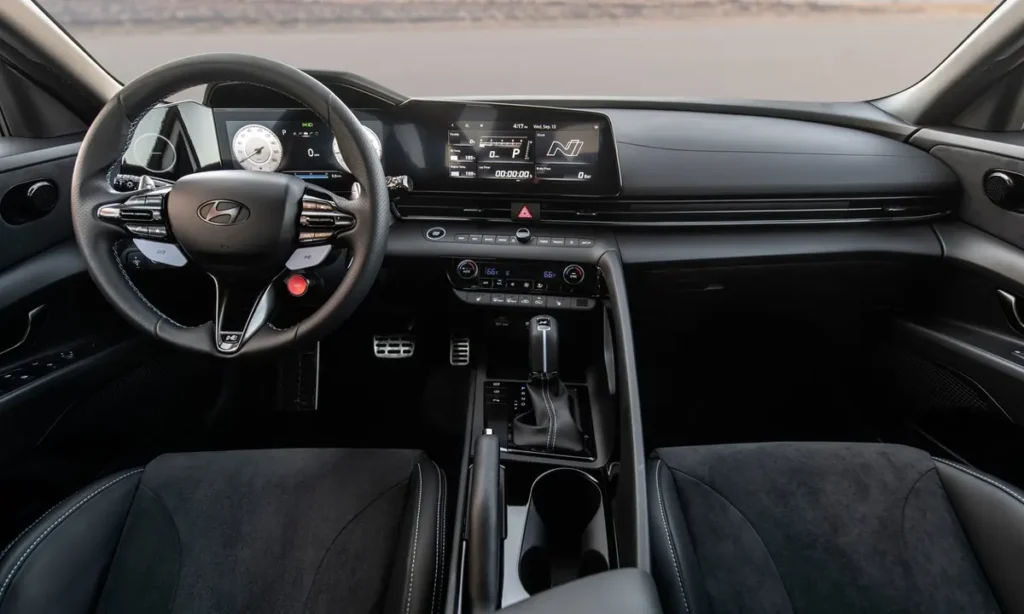
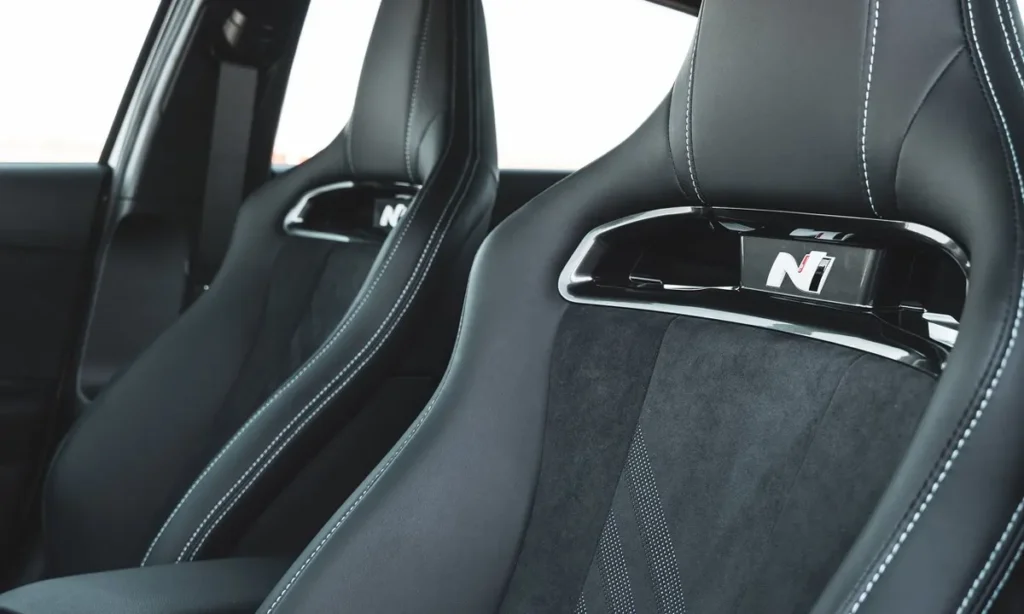
The 2026 Hyundai Elantra N represents the apex of the nameplate’s performance capability — a dedicated performance sedan that shares the Elantra body and passenger cell with the mainstream trims but whose powertrain, chassis, brakes and electronic systems are engineered with a fundamentally different priority structure.
The 2.0 litre turbocharged engine in the Elantra N produces 276 horsepower and 289 pound feet of torque in standard operation. When the N Grin Shift feature is activated — a function available on the eight speed dual clutch transmission equipped variants — output increases to 286 horsepower for 20 second bursts before requiring a 40 second cooldown cycle. The system effectively provides on demand overboost capability for the specific moments where maximum acceleration is required.
Instrumented testing of the Elantra N with the eight speed dual clutch transmission recorded 0-60 MPH in 4.8 seconds and a quarter mile time of 13.4 seconds at 106 MPH — performance figures that place the Elantra N in direct competition with dedicated sports cars rather than merely with other compact sedans. The six speed manual equipped Elantra N achieved 0-60 in 6.4 seconds in professional testing — 1.6 seconds slower than the dual clutch but producing the mechanical engagement that the manual transmission’s connected driving experience provides regardless of outright speed advantage.
Professional evaluation of the Elantra N’s chassis dynamics matches the engine’s performance credentials. The vehicle is described as a track attack delight — charming and fun in the same way as the best sport compacts, powerful enough to blast around without being unsafe or dangerous, and sporting a nimble chassis that does not punish the driver day to day. The front tires handle the turbocharged 2.0 litre well with only mild torque steer at full throttle — a specific engineering achievement for a 276 horsepower front wheel drive vehicle where torque management through the driven wheels is a genuine challenge.
The exhaust note and throttle response characteristics that professional evaluators specifically praise — sharp throttle response, crisp handling and a sonorous exhaust note — represent the elements of the N driving experience that pure acceleration numbers cannot fully communicate. The Elantra N is described as an N division exercise in taking the bland Elantra all the way to eleven — a characterisation that captures both the transformation from mainstream commuter to performance machine and the enthusiasm that professional evaluators express when the N’s specific character is fully engaged.
Read: Hyundai Elantra vs Toyota Corolla: Which Compact Sedan Is the Better Buy In 2026?
2026 Hyundai Elantra Engine Performance — Complete Comparison Chart
| Configuration | Engine | Horsepower | Torque | 0-60 MPH | EPA Combined | Transmission | Character |
| SE, SEL Sport, SEL Sport Premium, Limited | 2.0L NA 4-cyl | 147 hp | 132 lb ft | 8.4 sec | 35 MPG | IVT | Efficient commuter |
| Hybrid Blue | 1.6L NA 4-cyl + electric motor | 139 hp (hybrid system) | Combined output | Not published | 51 MPG | 6 speed auto | Maximum efficiency |
| N Line (7 speed DCT auto) | 1.6L Turbo 4-cyl | 201 hp | 195 lb ft | approx 7.0 sec | 24 MPG | 7 speed DCT | Performance daily driver |
| N Line (6 speed manual) | 1.6L Turbo 4-cyl | 201 hp | 195 lb ft | mid 7 sec | 25 MPG | 6 speed manual | Driver engagement |
| Elantra N (8 speed DCT auto) | 2.0L Turbo 4-cyl | 276 hp (286 NGS) | 289 lb ft | 4.8 sec | 24 MPG | 8 speed wet DCT | Track capable |
| Elantra N (6 speed manual) | 2.0L Turbo 4-cyl | 276 hp | 289 lb ft | 6.4 sec | 25 MPG | 6 speed manual | Maximum engagement |
Read: Hyundai Elantra Pros and Cons In 2026: 37% Real Owner Saying About Their Daily Frustrations
Choosing the Right Elantra Engine: The Buyer Profile Framework
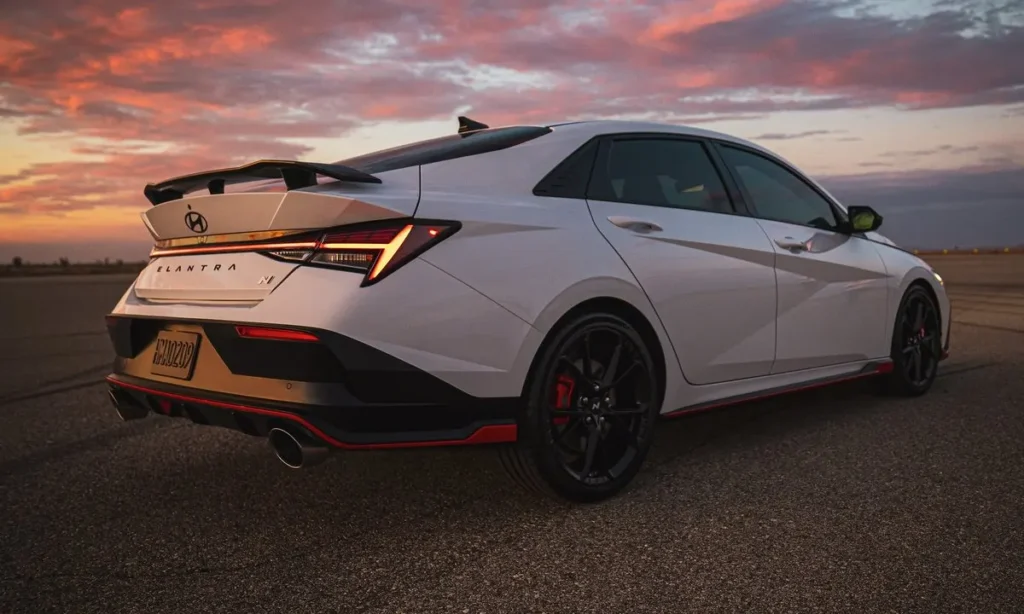
The base 2.0 litre engine is the correct choice for buyers whose primary daily requirement is reliable, efficient commuting transport at the lowest operating cost. The 35 MPG combined EPA figure and the 8.4 second 0-60 time together define the profile of buyer this engine serves — one who commutes predictably, values fuel economy above driving engagement and for whom 147 horsepower represents adequate rather than limiting performance.
The N Line is the correct choice for buyers who want a genuinely more capable daily driving experience without accepting the full performance premium of the Elantra N. The 7 second 0-60 time, 201 horsepower and available six speed manual transmission produce a driving experience that transforms the Elantra’s highway character — passing is confident, highway acceleration is effortless and the turbocharged power delivery makes the vehicle feel alive in a way the base engine cannot replicate — at fuel economy and price concessions that the N line’s buyers accept as reasonable.
The Elantra N is the correct choice for buyers who specifically want the fastest, most dynamically capable front wheel drive compact sedan available at its price point — a vehicle that delivers 4.8 second 0-60 times, track day capability and the specific engineering investment in chassis, brakes and electronic management that transforms the Elantra from a compact sedan into a genuine performance machine.