- The 2026 Subaru Forester Wilderness uses a 180-horsepower 2.5-liter Boxer engine with gearing optimized for improved low-speed off-road performance.
- Upgrades include a rear differential temperature sensor, enhanced transmission cooling and a towing capacity increased to 3,500 pounds.
- A stiffer platform and additional structural adhesives improve durability, refinement and overall capability.
The 2026 Subaru Forester Wilderness is the answer to a question that the Forester’s loyalty base has been asking with increasing urgency: what happens when Subaru takes its already-capable compact crossover and deliberately walks it through an off-road parts store? The result is a vehicle that professional evaluation specifically describes as capable of climbing the kind of steep grades that would stop every direct competitor dozens of feet earlier — while remaining composed, comfortable and genuinely practical for the school run, the highway commute and the family road trip that constitute the other 90 percent of most owners’ actual use. First driven extensively along Oregon’s Columbia River Gorge on a route that combined long highway stretches, mountain roads and deliberate off-pavement trail access, the 2026 Wilderness was found to handle everything from emergency cornering simulation to rocky logging trails with the composed stability that the sixth-generation Forester’s platform upgrade specifically enables.
What Is New for 2026: The Wilderness Joins the Sixth Generation
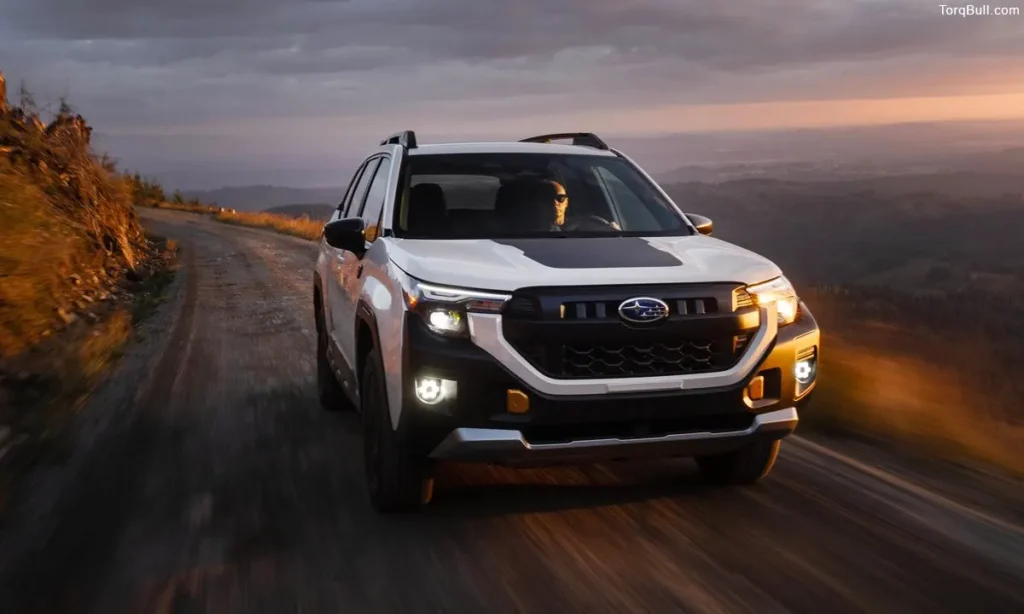
The 2026 Forester Wilderness is the most important model year update in this trim’s production history — because for the first time, the Wilderness configuration is based on the current sixth-generation Forester platform rather than the previous generation that the 2025 Wilderness carried over while the mainstream Forester completed its redesign.
The sixth-generation Forester platform was designed from the beginning knowing a Wilderness version would follow — a deliberate engineering decision that produced a more structurally integrated and more cohesive result than a Wilderness kit applied to a standard platform as an afterthought. The platform uses three times more structural adhesives than the previous generation, creating a stiffer body structure without the weight penalty that additional metalwork would impose. Modern adhesives maintain the curb weight at a level that the suspension and drivetrain can manage effectively while delivering improved torsional rigidity that makes the vehicle more predictable and more communicative across varied terrain.
A revised CVT transmission calibration is the powertrain change that most directly improves the Wilderness’s off-road character. The final drive ratio has been adjusted from 3.70 to 4.11 — a change that provides more mechanical advantage at low vehicle speeds where off-road obstacle navigation requires controlled, measured torque delivery rather than the higher-ratio highway cruising optimisation. The engine output remains at 180 horsepower and 178 pound feet of torque from the 2.5 litre naturally aspirated flat-four, running on standard 87 octane regular fuel. Output from the CVT includes three drive modes and a simulated six-speed manual mode with steering wheel paddles.
A new rear differential temperature sensor monitors heat buildup during extended trail sessions — providing the driver with awareness of the differential’s thermal state and allowing proactive pace management before overheating becomes a performance or reliability concern. An upgraded transmission cooler works alongside this monitoring to sustain the drivetrain’s operating temperature within acceptable ranges during the sustained low-speed operation that technical trail driving demands. The combined result of these thermal management improvements is the most capable Forester Wilderness towing rating ever produced — 3,500 pounds, up from the previous generation’s lower rating.
Read: 2027 Subaru Getaway Review: This Compact Adventure Wagon That Fills the Gap No Other Subaru Could
Off Road Performance: Composed Beyond Its Competitors’ Capability
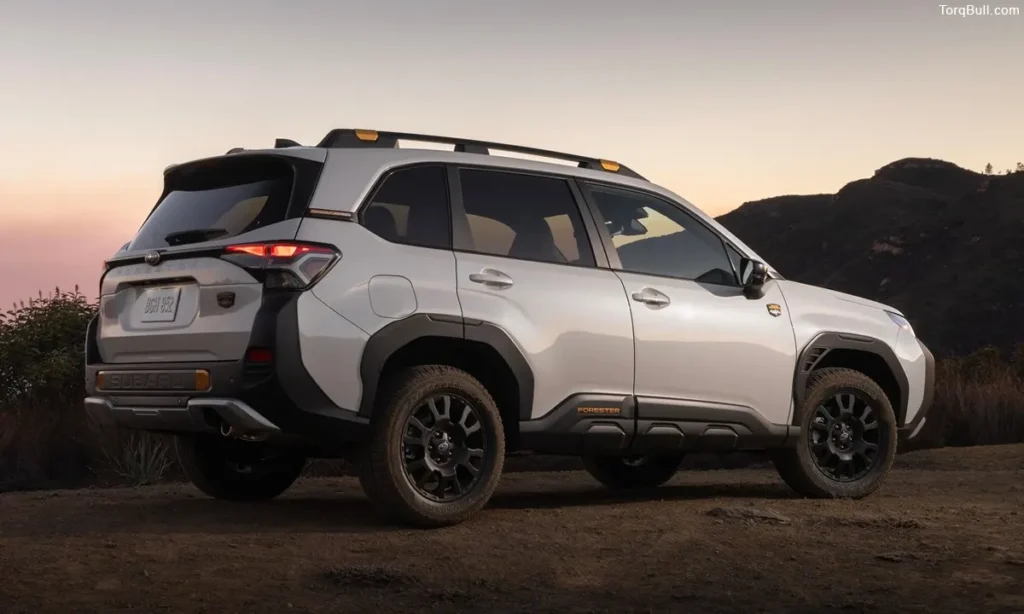
The Forester Wilderness’s off-road performance claim — that it can climb grades that stop direct competitors dozens of feet earlier — was tested specifically on rocky, off-camber logging trails in Washington State. The result confirmed the claim’s validity, with one specific rocky outcrop presenting a surface too vertical to surmount even with X-Mode engaged — but only after the Wilderness had already climbed considerably further up that trail than any comparable competitor-class vehicle had achieved in the same test.
X-Mode is the Wilderness’s off-road traction management system and the feature that most clearly differentiates this trim from the standard Forester lineup. The 2026 Wilderness uses a dual-function X-Mode system that provides two specific terrain calibrations — one for snow and dirt and a second for deep snow and mud — each adjusting throttle response, brake application across individual wheels and centre differential torque distribution for the specific surface physics of its target conditions. The practical consequence is that the driver selects the terrain type rather than managing individual wheel torque through manual differential settings, reducing the cognitive demands of technical trail driving.
Hill Descent Assist activates automatically when X-Mode is engaged — maintaining a controlled descent speed down steep grades without requiring the driver to manage brake pressure manually. This system allows the driver to focus entirely on steering line selection while the vehicle manages its own pace on the descent. The feature is not new for 2026, but its integration into the X-Mode activation rather than as a separate driver-initiated mode makes it more consistently used than when it required separate activation.
The one interface concern that professional evaluation identified is the X-Mode menu navigation — the dual X-Mode function requires accessing a settings menu rather than activating through a dedicated physical button or switch. The previous-generation Forester Wilderness used a physical switch for X-Mode activation that was immediately accessible in off-road situations where distraction-free control is most important. The menu-based activation of the 2026 system is considered a step backward in usability by those who evaluated both systems.
On Road Character: Composed, Comfortable and Familiar
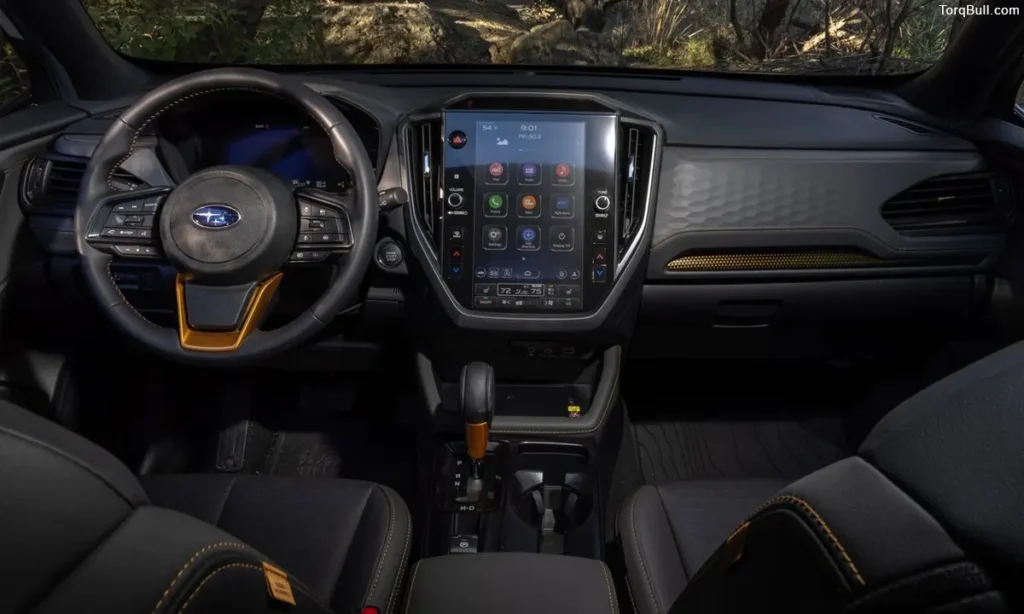
The Wilderness trim’s on-road driving character is described as an appeal that will only grow with the Wilderness option added — confirming that the off-road upgrades do not meaningfully compromise the daily driving experience that Forester owners have valued across multiple generations of the nameplate.
The 2026 Forester Wilderness uses 17-inch wheels with mild all-terrain tyres rather than the all-season tyres and 18 or 19-inch wheels fitted to higher-specification standard Forester trims. The all-terrain tyre specification on 17-inch wheels produces a combination of adequate on-road refinement and genuine off-road traction — the larger sidewall-to-wheel diameter ratio of the 17-inch tyre provides more sidewall cushioning over road surface variations than the lower-profile tyres on standard Forester trims, contributing to a slightly more compliant ride quality over rough pavement.
The suspension tuning is characterised as nicely tuned across the review community — managing cornering body lean efficiently and quickly while maintaining the comfortable daily-commute character that makes the Wilderness a vehicle owners can use as their sole family transportation rather than as a dedicated weekend adventure tool. The dual-pinion steering rack introduced with the sixth-generation platform provides more precise steering response than the previous generation’s setup, contributing to the quicker steering response that trail navigation requires without producing the overly firm steering character that compact SUVs with trail-focused suspension sometimes exhibit on daily-driving roads.
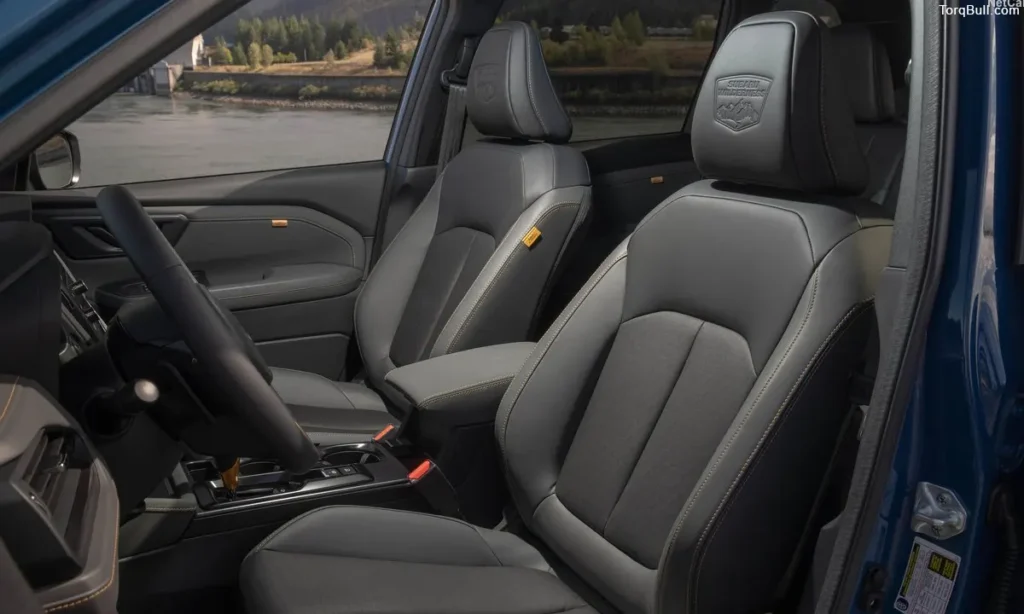
The interior carries over the sixth-generation Forester’s comfort and technology upgrades to the Wilderness trim for the first time — including an updated interior design that is quieter than the previous generation’s cabin. A 12.3-inch optional digital gauge cluster is available on the Wilderness for the first time in this trim’s history, adding Wilderness-specific graphics to the instrument display that acknowledge the trim’s identity within the Forester family. The standard infotainment system connects to the Wilderness’s available technology content.
Read: 5 SUVs That Last Longer Than You Think and Are Worth the Money
Specification and Competitive Context
The Forester Wilderness is not positioned as an extreme off-roader and the professional evaluation community is consistent on this point. It should handle well-marked, mild-adventure trails with ease — not rock crawling. The Wilderness is best understood as the vehicle that closes the gap between everyday crossover capability and serious trail machines — accessing terrain that stops standard crossovers while stopping short of the dedicated body-on-frame off-road hardware that vehicles like the Ford Bronco or Jeep Wrangler carry. This positioning makes it the most appropriate trail-capable daily driver in the compact crossover segment for buyers whose weekend adventures involve forest service roads, hiking access trails, winter mountain approaches and unpaved campsite routes rather than technical rock climbing.
The testing drive route along Oregon’s Columbia River Gorge — combining long highway sections at normal traffic speeds with mountain roads and deliberate off-pavement segments — confirmed that the Wilderness delivers the combination of composed highway comfort and accessible off-road capability that its positioning describes. No single driving condition exposed a significant limitation within the stated capability envelope.
2026 Subaru Forester Wilderness — Complete Specification Chart
| Specification | Detail |
| Engine | 2.5 litre naturally aspirated flat-four Boxer |
| Horsepower | 180 hp |
| Torque | 178 lb ft |
| Fuel Requirement | 87 octane regular unleaded |
| Transmission | CVT with 3 drive modes and 6-speed manual mode |
| Final Drive Ratio | 4.11 (adjusted from 3.70 for off-road) |
| Drivetrain | Symmetrical All-Wheel Drive standard |
| Wheel Size | 17-inch |
| Tyre Type | Mild all-terrain |
| Ground Clearance | Increased over standard Forester |
| Towing Capacity | 3,500 lbs (highest ever for Forester) |
| Off-Road System | Dual-function X-Mode (snow and dirt; deep snow and mud) |
| Hill Descent | Assist automatic with X-Mode activation |
| Rear Differential | New temperature sensor for trail thermal management |
| Transmission Cooler | Upgraded for sustained off-road towing use |
| Platform | Sixth-generation SUBARU GLOBAL PLATFORM (SGP) |
| Structural Adhesives | Three times more than previous generation |
| Starting Price (as tested) | approximately $42,035 (including options and destination) |
| Digital Gauge Cluster | Available (12.3-inch, optional on Wilderness) |
| Safety Rating Basis | 2025 structurally similar generation: NHTSA five-star, IIHS Top Safety Pick |
Read: Six Family SUVs That Earned the Highest Safety Ratings in America
The Honest Verdict: For Whom Does the Wilderness Make Sense?
The 2026 Subaru Forester Wilderness is the correct choice for buyers who fall into a specific and identifiable profile: outdoor enthusiasts whose primary vehicle must serve daily commuting, family transportation and regular off-pavement adventure access — all in a single vehicle. The Wilderness’s ability to climb terrain that stops direct competitors, combined with its composed on-road manners, practical cargo capacity and all-wheel drive confidence in winter conditions, produces a genuinely multi-purpose ownership proposition that few compact crossovers can match across this full range of use cases.
The vehicle is more than the sum of its parts in the way that makes confident recommendations possible — the driving experience is fun for reasons that may not always be obvious, and the combination of off-road capability with daily comfort produces the ownership satisfaction that consistent professional evaluations reflect. Buyers who never leave the pavement will find the standard Forester’s trim hierarchy more appropriate, where the all-terrain tyres’ modest on-road noise penalty and the Wilderness’s higher price are not offset by used capability. Buyers who regularly access unpaved terrain, who live in winter-challenged regions where the all-terrain tyres provide genuine seasonal benefit and who want the peace of mind that a vehicle with genuine off-road capability provides on family adventure trips will find the Wilderness’s value proposition among the most compelling in the compact crossover segment.