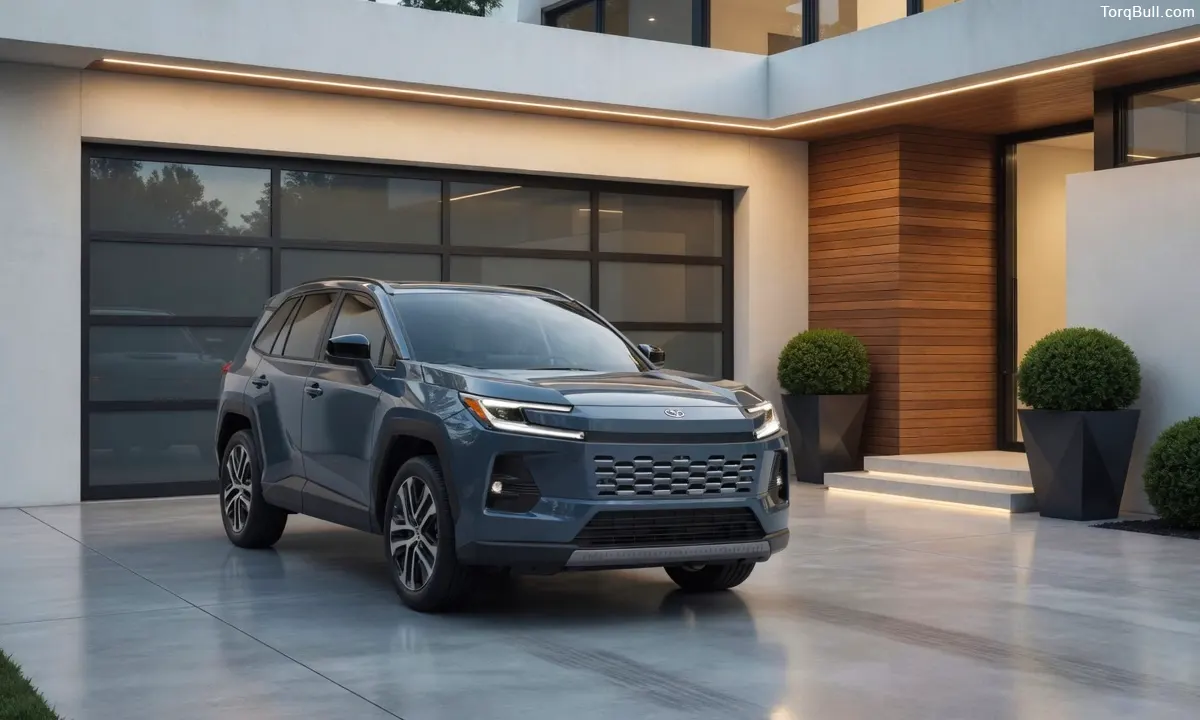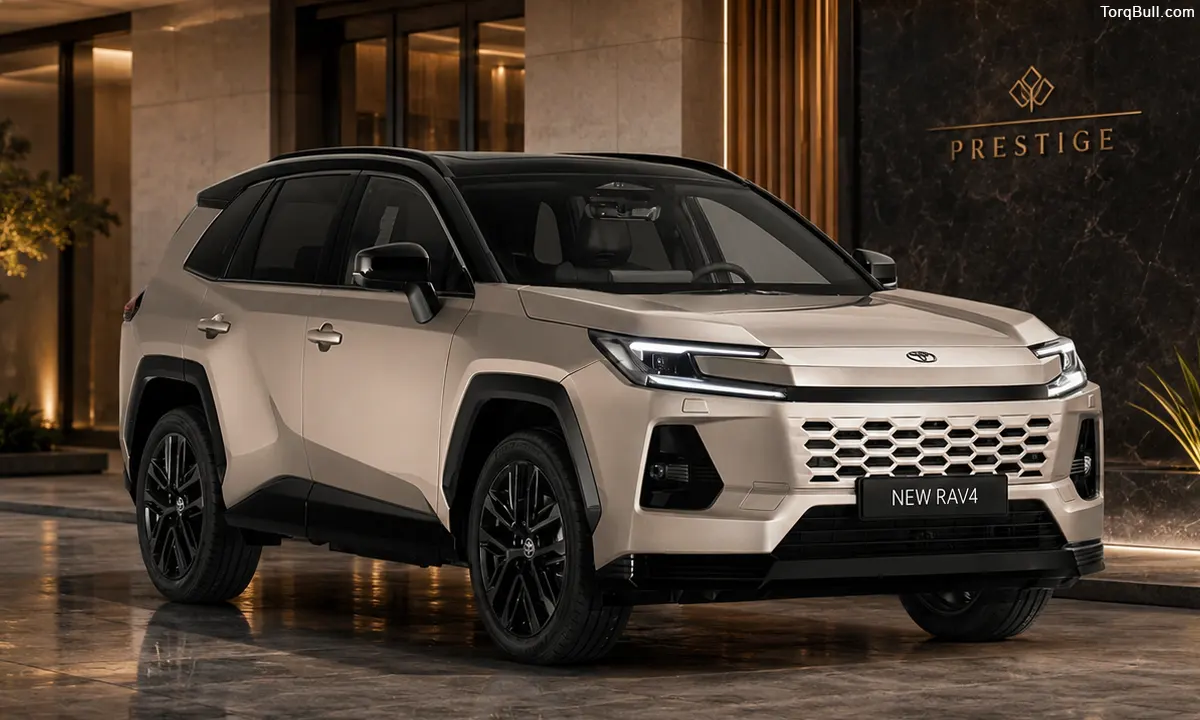
- The 2026 Toyota RAV4 is offered exclusively as a Hybrid or Plug-In Hybrid, delivering up to 44–48 MPG combined and 52 miles of electric-only range.
- The RAV4 is designed for efficiency-focused drivers while maintaining strong everyday practicality.
- Early owner feedback praises the Soft-Tex seats for long-distance comfort and describes the ride quality as comparable to the Honda CR-V.
The Toyota RAV4 has become the most popular passenger vehicle in the United States by any sales measure — 475,000 units sold in 2024 — not by being the most exciting vehicle in its class but by being the most consistently excellent in the specific attributes that daily family ownership and long distance road tripping demand: fuel economy that reduces stop frequency, ride quality that sustains comfort across extended highway hours, cargo space that eliminates packing compromises, driver assistance technology that reduces fatigue and a reliability record that makes the mechanical concerns that cloud long-distance driving with other vehicles effectively irrelevant. The 2026 model year marks the RAV4’s most significant redesign update — transitioning the entire lineup to hybrid and plug-in hybrid powertrains exclusively, improving efficiency across every configuration and reinforcing the suspension mounting points and body structure that determine both ride quality and steering precision. This complete road trip review assesses the 2026 RAV4 across every dimension that matters when the destination is eight hours away.
The 2026 Powertrain Transition: Hybrid Only and Why It Benefits Road Trippers
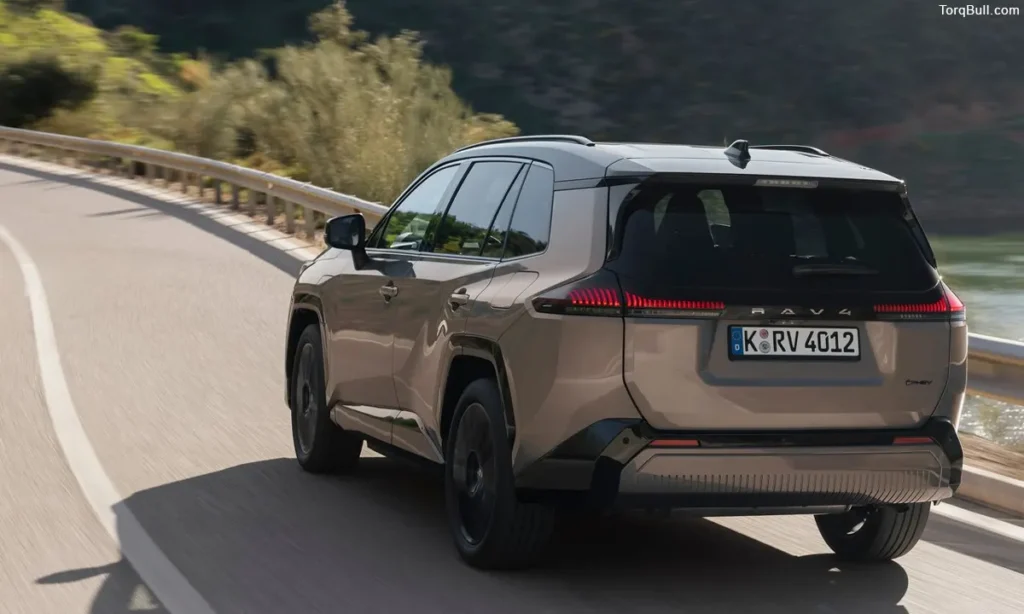
The 2026 RAV4’s transition to hybrid-only powertrains is the most practically significant change for road trip users — because the hybrid system’s efficiency advantage compounds most dramatically across the sustained highway miles that long-distance driving produces, reducing the number of fuel stops required and the total fuel cost of any journey.
Front-wheel drive RAV4 Hybrids now produce 226 combined horsepower — up from 203 in the 2025 model — while all-wheel drive Hybrid configurations produce 236 combined horsepower, up from 219. These power increases improve highway merge confidence and sustained grade climbing that loaded road trip driving regularly demands. The FWD Hybrid achieves an EPA estimate of 48 MPG city, 42 MPG highway and 44 MPG combined — among the best fuel economy figures available in any compact crossover SUV regardless of powertrain type and specifically extraordinary for highway driving where most non-hybrid vehicles achieve their best efficiency.
At 44 MPG combined and a full fuel tank, the RAV4 Hybrid delivers an estimated range of approximately 630 miles before requiring a fuel stop — the most consequential single road trip credential available in the compact crossover segment. A family travelling 400 miles in one day covers the entire distance without stopping for fuel in the RAV4 Hybrid, compared to requiring one or two stops in competing vehicles with lower fuel economy and smaller tanks.
The PHEV variant extends this advantage further for road trippers who begin a journey from a fully charged state. Up to 52 miles of electric-only range on SE and XSE models allows the first portion of any long-distance trip to be covered entirely on electricity — at zero fuel cost — before the gasoline hybrid system activates for sustained highway cruising. PHEV net combined output reaches 324 horsepower in 2026, up 7 percent from 2025, providing the most dynamic road trip performance in the RAV4 lineup.
Read: Toyota RAV4 Ownership Cost Breakdown 2026. Expenses Every Buyer Should Know
Highway Ride Quality: Six Hours Without Fatigue
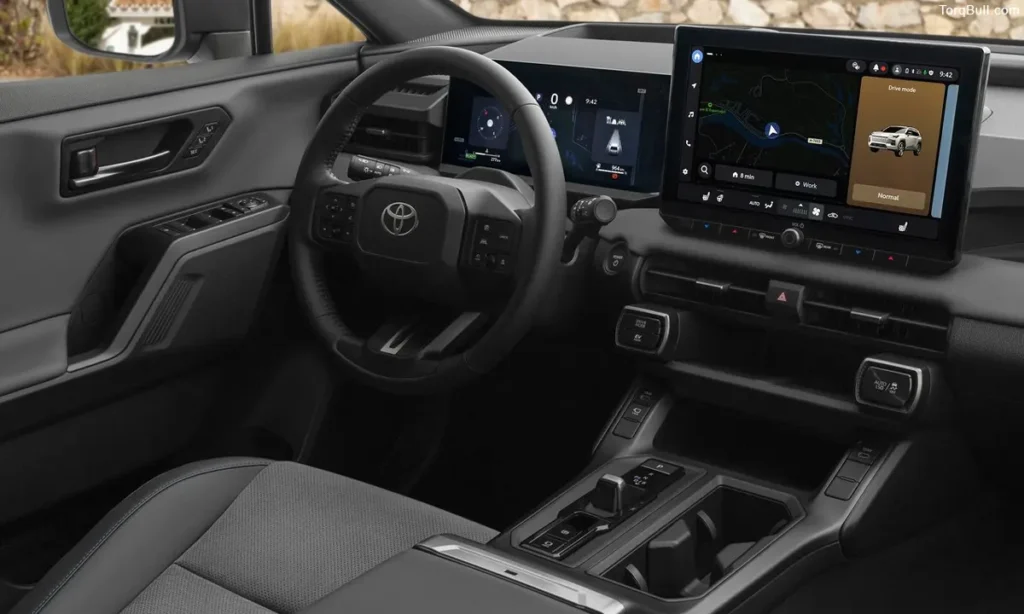
The 2026 RAV4’s ride quality across sustained highway operation is the dimension that road trippers specifically evaluate against the more casual assessment that city driving produces — because ride fatigue accumulates across hours in a way that brief test drives cannot replicate, and the vehicles that feel similar in town often diverge significantly at the four and six hour marks of sustained interstate driving.
All 2026 RAV4s benefit from reinforcements at suspension mounting points and more rigid body structure connecting to the roof pillars, front cowl and rear wheelhouses. These structural improvements produce more linear and predictable responses to driver inputs — the steering remains consistent and accurate across long straight highway sections without the mild vagueness that less structurally rigid bodies develop as occupants, cargo and road inputs stress the platform at speed. Road holding at sustained highway speeds is described as very easy to control lane position with good on-centre response.
An early 2026 owner who drove six hours from the dealership delivery specifically described the ride as close to the Honda CR-V at 95 percent — arriving at the destination comfortably and noting the seats’ SofTex material felt like premium economy airline seating quality. The seat’s adjustability for lumbar, height and reach allowed this owner to customise the driving position across the six-hour journey — the specific ergonomic flexibility that long distance driving requires for fatigue management. Ride quality is described as a bit stiff but very nice — the appropriate characterisation of a compact crossover whose suspension prioritises body control and predictability over the softest possible impact absorption.
The braking system also received a specific 2026 improvement: an electronically controlled booster for the brake system master cylinder produces more linear and smoother pedal response. For highway driving where slowing from 75 MPH requires confident and progressive deceleration modulation, this smoother pedal behaviour is more important than the abrupt on-off braking character that an older master cylinder’s non-linear response can produce.
Cabin Comfort and Passenger Experience: Hours Seven Through Eight
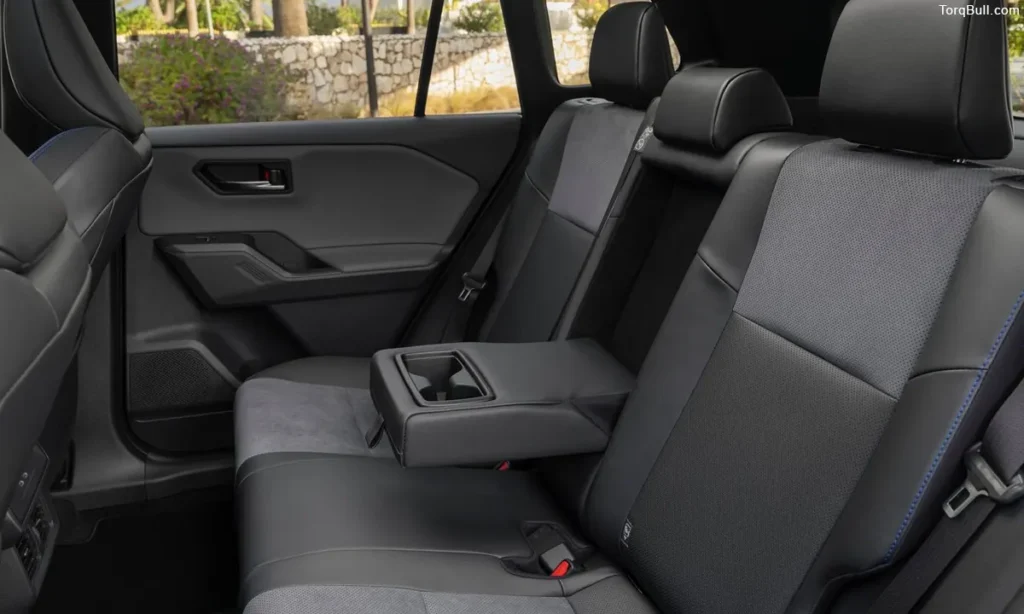
The interior environment that sustains passenger comfort across seven and eight hours of road trip driving is where the RAV4’s specific strengths and honest limitations become most practically relevant.
The cabin is described as purpose-built for family duty, cargo chaos and all the random gear life throws at you — an accurate characterisation that reflects the RAV4’s deliberate prioritisation of functional daily family utility over the interior styling drama that some competing vehicles pursue. The interior material quality, particularly in the XLE Premium trim, is described as hitting a sweet spot with enough polish and materials quality to feel genuinely comfortable without the premium pretension that adds cost without adding occupant satisfaction.
Rear passenger space provides adequate adult legroom for sustained comfortable occupancy — the RAV4’s wheelbase produces rear seat room that accommodates adults on long journeys without the cramped positioning that shorter-wheelbase competitors impose. Second-row adjustability allows rear passengers to optimise their legroom relative to front seat positions — the specific rear seat comfort consideration that matters most when rear passengers include adults who need genuine accommodation rather than nominal rear seating.
The RAV4 is rather quiet for the class in electric mode — the PHEV and Hybrid’s electric operation at lower highway speeds contributes to cabin acoustic tranquillity that makes conversation and audio enjoyment easier. At higher sustained highway speeds where aerodynamic and tyre noise dominate regardless of powertrain, the RAV4’s acoustic treatment provides adequate but not exceptional road noise management — a documented characteristic that owners travelling at 75 to 80 MPH for sustained periods consistently note.
Read: How 2026 Toyota RAV4 GR Sport Competes In Europe’s Compact Performance SUV Segment
Cargo: Road Trip Practicality at Its Most Important
Cargo capacity is the road trip credential that the family SUV buyer feels most immediately at the departure point — when suitcases, sports equipment, camping gear and the accumulated provisions of a week-long vacation must be organised into the available space without leaving items behind.
The RAV4’s cargo area provides 37.6 cubic feet behind the rear seat — the volume that must accommodate a family’s complete road trip luggage — expanding to 69.8 cubic feet with the rear seat folded flat. The flat-fold rear seat geometry allows items of unusual dimensions to be carried without the angled surfaces that some competing crossovers’ fold patterns produce.
The cargo floor’s access height, the tailgate’s opening width and the absence of a load lip that would require lifting heavy items high before sliding them into the cargo space collectively contribute to the practical cargo loading experience that frequently loaded road trip cargo demands. Rooftop cargo carrier compatibility through the standard roof rails extends total carrying capacity for families whose gear volume exceeds the interior cargo area.
Toyota Safety Sense 4.0: Road Trip Driver Assistance at Its Best
The 2026 RAV4 introduces Toyota Safety Sense 4.0 — the latest evolution of Toyota’s driver assistance suite — providing the most comprehensive driver fatigue management system the RAV4 has ever carried as standard across every trim.
Adaptive cruise control with lane centering maintains speed and lane position automatically on designated roads — the specific capability that reduces the sustained mental effort of highway driving by managing the two most constant driver attention demands simultaneously. The RAV4 PHEV’s lane centering specifically keeps the vehicle centred in its detected lane with an appropriate weight to the steering that communicates correction rather than fighting the driver’s inputs. This is the driver assistance system that makes the difference between a seven-hour drive that arrives with the driver feeling alert and the same distance covered in an older vehicle that produces evident fatigue by the fifth hour.
2026 Toyota RAV4 Road Trip Summary Chart
| Road Trip Category | Gas RAV4 (Previous) | Hybrid RAV4 | PHEV RAV4 | Notes |
| Powertrain | 2.5L NA four cyl | 2.5L Hybrid 226 hp (FWD) | 2.5L PHEV 324 hp | 2026 eliminates gas-only |
| Highway MPG | 35 MPG | 42 MPG | 41 MPG (hybrid mode) | Hybrid best for long highway trips |
| Electric-only range | None | Not applicable | Up to 52 miles | PHEV best for mixed long trips |
| Estimated full tank range | approximately 490 miles | approximately 630 miles | approximately 520 miles hybrid | Hybrid longest between stops |
| Ride quality description | Firm and composed | Firm and composed | Firm and composed | 2026 improvements to suspension |
| Rear legroom | 37.5 inches | 37.5 inches | 37.5 inches | Adults comfortable for extended trips |
| Cargo behind rear seat | 37.6 cu ft | 37.6 cu ft | 33.5 cu ft (battery) | PHEV slightly less from battery |
| Highway noise level | Adequate | Quiet (electric mode) | Very quiet (electric mode) | Hybrid quieter at lower highway speeds |
| Driver assistance | Toyota Safety Sense 3.0 | Toyota Safety Sense 4.0 | Toyota Safety Sense 4.0 | 2026 upgrade across lineup |
| 6-hour drive owner report | N/A | Comfortable; 95% of CR-V | Very impressive handling | Early 2026 owner account |
Read: 2026 Toyota RAV4 vs 2026 Honda CR-V Reliability Test. Which Compact SUV Will Last Longer?
The Honest Road Trip Verdict
The 2026 Toyota RAV4 Hybrid is the most practically capable road trip compact crossover in the American market for families who value fuel efficiency, reliability confidence and technology-assisted long-distance driving above all other considerations. The 630-mile theoretical range between fuel stops, the 44 MPG combined that reduces trip fuel cost to approximately $70 for a 1,000-mile round trip at national average prices, the adaptive cruise with lane centering that manages sustained highway focus and the Toyota reliability platform that eliminates the mechanical anxiety that road trips in less proven vehicles can produce collectively create a road trip package that no direct competitor matches as completely.
The vehicle is described honestly as a low-drama blue-collar commuter that quietly does the job — and on road trips, that quality is its greatest strength. Road trips are not enhanced by drama. They are enhanced by the confidence that the vehicle will deliver the family to the destination comfortably, economically and without incident. The 2026 RAV4 Hybrid does this as reliably and as consistently as any compact crossover available at any price.