- The 2023 Nissan Rogue is considered the weakest recent model year, with a lower reliability rating and a high number of owner complaints.
- Reliability improves significantly for the 2025 Rogue, which earns an excellent rating and has relatively few reported issues.
- A 2026 recall affects certain 2024 and 2025 models due to potential electronic throttle body problems in the 1.5-liter VC-Turbo engine.
The Nissan Rogue is the second best-selling SUV in the American market — a vehicle whose sales volume reflects genuine consumer appeal in space, technology and fuel economy that is simultaneously the most widely complained-about compact SUV in specific model years. Understanding which model years carry the most serious documented problems, which problems are systemic versus isolated, which recalls require immediate attention and which model years represent the safest ownership choices is the foundational research that every prospective Rogue buyer needs before committing to a purchase. This complete guide separates the documented evidence from the general reputation — providing the most honest and most practically useful Rogue reliability assessment available for 2026.
The Model Year Reliability Score: A Wide Range Within One Nameplate
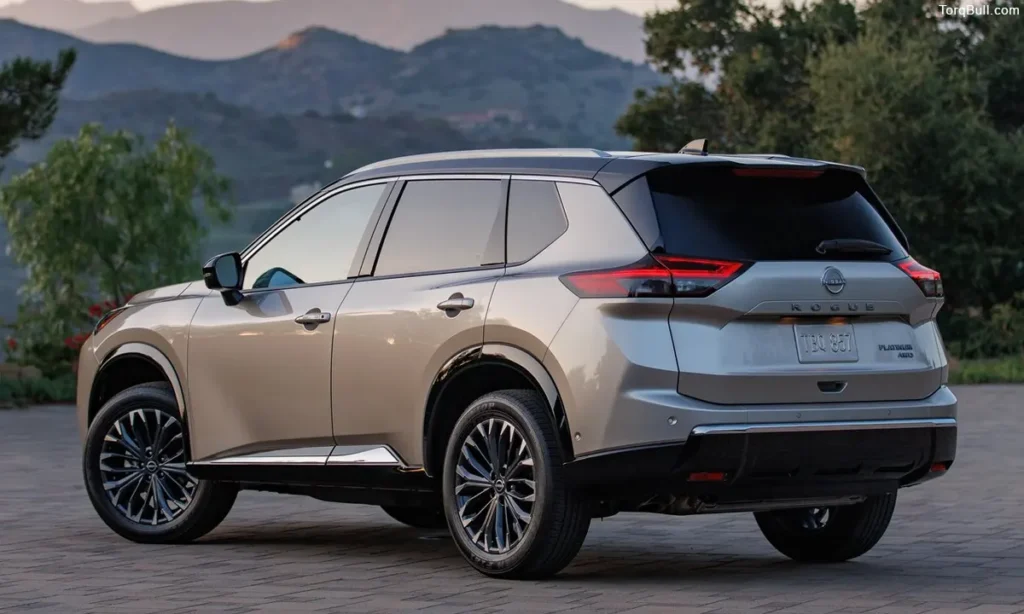
The Nissan Rogue’s reliability history across 2018 through 2026 production produces an average score of 80 out of 100 — a generally good reputation that masks a wide variation between the nameplate’s best and worst production years. Understanding this variation by model year is the most actionable reliability research any Rogue buyer can conduct.
The 2025 model year earns the best reliability score in the Rogue’s production history at 84 out of 100 — rated Excellent — with only 1 recall and 103 owner complaints on file. The 2025 Rogue represents the most mature expression of the third-generation platform’s reliability improvements as Nissan addressed the specific failure modes that plagued the 2021, 2022 and 2023 production years through engineering revisions, component quality improvements and software calibration updates.
The 2024 model year scores 79 out of 100 — Good — with 2 recalls and 116 owner complaints, and an important additional designation as much more reliable than other cars from the same model year in independent survey data. This above-segment-average rating for the 2024 model is a meaningful positive signal for buyers evaluating 2024 used examples.
The 2023 model year is the worst Nissan Rogue production year in the nameplate’s recent history — scoring 68 out of 100, carrying 5 recalls and accumulating 519 owner complaints including 123 engine-specific complaints, 99 unknown or other category complaints and 90 engine cooling complaints. The 2023 model’s specific engine problems will be detailed in the section below.
The 2022 and 2021 model years score 70 out of 100 — below the Rogue’s own average — carrying above-average complaint volumes that reflect the early production challenges of the third-generation VC-Turbo engine introduction.
The 2026 model earns a reliability score of 84 out of 100 — Excellent — with only 1 recall and 9 owner complaints on file at the time of analysis. Early 2026 owner feedback skews toward electrical and accessory glitches rather than the engine-specific complaints that dominated the 2023 generation.
Read: Nissan Rogue Ownership Cost Breakdown 2026. Is It an Affordable Compact SUV to Own?
Problem 1: The VC-Turbo Engine — The Most Consequential Rogue Reliability Issue
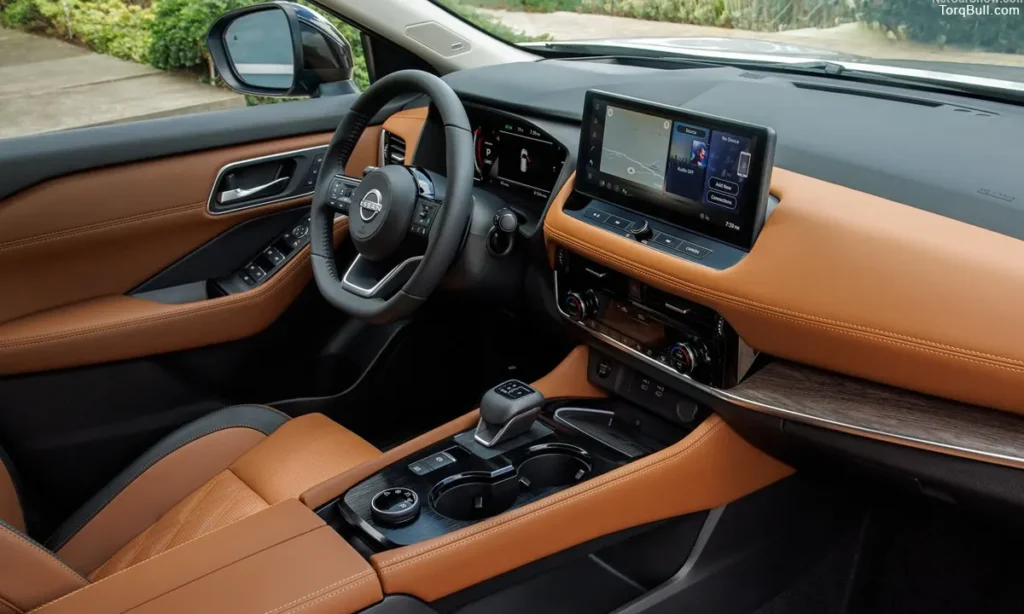
The 1.5-litre Variable Compression Turbo three-cylinder engine introduced with the third-generation Rogue is the powertrain at the centre of the most serious documented Nissan Rogue problems — and understanding its specific failure modes is essential for any prospective third-generation Rogue buyer.
The VC-Turbo engine’s variable compression ratio mechanism — its most technologically innovative feature — introduces mechanical complexity that increases the precision maintenance sensitivity of this engine relative to conventionally aspirated or standard turbocharged alternatives. Oil change interval adherence is more critical for this engine than for most competitors, because the variable compression mechanism’s precision components are lubricated and protected by engine oil quality in a way that tolerates neglect less generously than simpler engine architectures.
The 2023 model year’s 123 engine complaints reflect specific failures including engine heating issues where the 1.5-litre three-cylinder struggles to manage heat under sustained high load conditions — specifically on long highway drives, in hot weather and during sustained uphill grades. One documented owner account describes the engine losing power and being unable to rev above 3,000 RPM under conditions that should not challenge the engine, with the factory recommendation to pull over and allow cooling time before continuing. This thermal management limitation is the specific engineering challenge that the 2021 through 2023 production years encountered and that Nissan has progressively addressed through calibration updates and component revisions in the 2024 and 2025 production.
The active 2026 recall affecting 2024 and 2025 Rogue vehicles equipped with the 1.5-litre VC-Turbo engine is the most immediately safety-relevant current problem for existing owners. The recall addresses electronic throttle body assembly gears that may break — causing loss of drive power and increasing crash risk. A separate expanding recall for the same engine family concerns bearing failure that can cause a breach in the engine block allowing hot oil discharge — creating an engine fire risk. Nissan’s remedy involves ECM software reprogramming, inspection for diagnostic trouble codes, test driving and potential engine replacement for affected vehicles. Owner notification letters were distributed in April 2026. Any 2024 or 2025 Rogue owner should verify whether their VIN is subject to this recall through the NHTSA recall lookup database immediately.
Problem 2: CVT Transmission — The Rogue’s Most Consistent Multi-Generation Complaint

CVT transmission problems are the Nissan Rogue’s most consistent multi-generation reliability complaint — appearing across model years 2014 through 2025 in varying severity and frequency. Owner accounts across multiple model years describe jerking, shuddering, hesitation off the line and occasional stalling that are characteristic of CVT transmission issues when fluid degradation, software calibration concerns or mechanical wear combine.
The third-generation Rogue’s VC-Turbo engine pairs with a specific CVT variant designed for the three-cylinder engine’s torque characteristics. Early production examples exhibited hesitation and jerking under specific driving conditions that owner accounts documented extensively and that Nissan addressed partially through software updates across multiple service bulletins.
The most important preventive maintenance decision for any CVT-equipped Rogue is the transmission fluid change at 60,000 miles — regardless of whether the manufacturer’s service schedule extends this interval further under the severe driving definition. CVT fluid degrades under the heat and load cycling that daily driving produces, and degraded fluid accelerates the internal wear that produces the jerking, shuddering and eventual transmission failure that the most severe CVT complaint accounts document. At approximately $100 to $150 per CVT fluid service, this preventive maintenance is the single most cost-effective investment available to long-term Rogue owners.
Read: Nissan Best Family Vehicle Isn’t Even Sold In USA. Find Out Which Car American Never Got
Problem 3: In-Car Electronics and Android Auto Connectivity
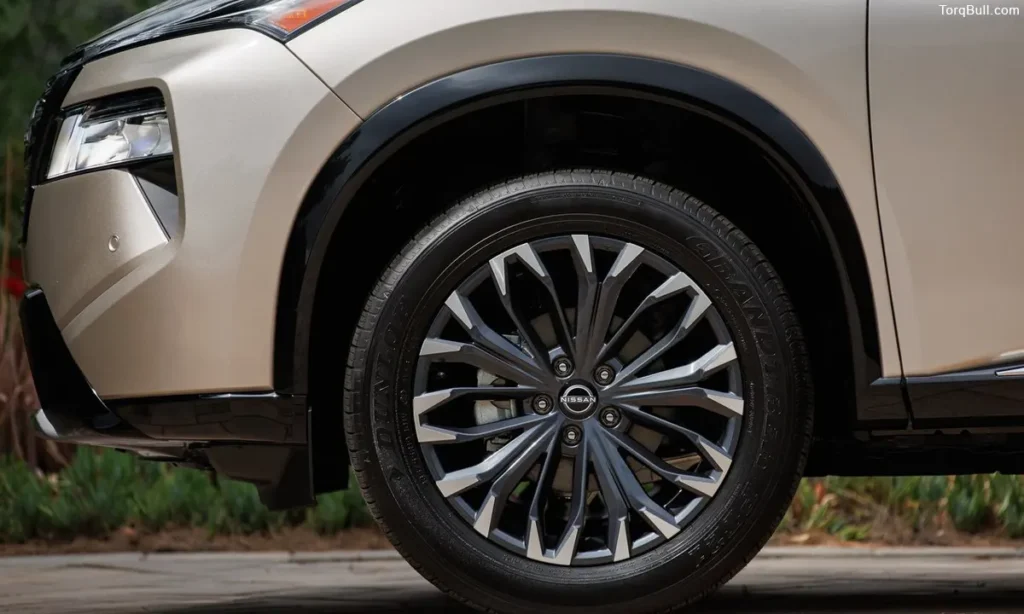
Electronics reliability is the Rogue’s most consistently documented problem across both the 2024 and 2025 model years in owner-reported data — and it represents the complaint category most disproportionate to what the vehicle’s purchase price and technology specification would reasonably suggest.
Android Auto connectivity problems are specifically documented with patterns that owner accounts describe beginning immediately after purchase: Android Auto failing to connect consistently, maps becoming stuck at one location rather than updating in real time and the system requiring repeated reconnection attempts during single trips. This connectivity issue appears across multiple independent owner accounts for both 2024 and 2025 production years — indicating a systematic software integration concern rather than isolated device pairing difficulties.
The 2026 model’s early owner feedback confirms that electrical and accessory glitches remain the most commonly reported concern category in the current production year — with wiper visibility, steering and unknown categories making up the nine complaints on file. While fewer in number than prior year complaint volumes, the pattern of electrical category concerns persisting into 2026 production is worth monitoring as the model year accumulates additional owner data.
Nissan Rogue Common Problems and Reliability — Complete Chart by Model Year
| Model Year | Reliability Score | Active Recalls | Owner Complaints | Primary Problem Area | Recommendation |
| 2026 | 84 out of 100 (Excellent) | 1 | 9 | Electrical and accessory glitches | Recommended; monitor electrical |
| 2025 | 84 out of 100 (Excellent) | 1 | 103 | Unknown and visibility concerns; throttle body recall | Recommended with recall verified |
| 2024 | 79 out of 100 (Good) | 2 | 116 | Engine, electronics, throttle body recall | Good; verify recalls completed |
| 2023 | 68 out of 100 (Worst year) | 5 | 519 | Engine (123), unknown (99), engine cooling (90) | Avoid; highest complaint volume |
| 2022 | 70 out of 100 (Below average) | 6 | Above average | Engine cooling, electronics | Use caution; below-average year |
| 2021 | 70 out of 100 (Below average) | Above average | Above average | Early VC-Turbo complaints | Use caution; initial year issues |
| 2020 | 79 out of 100 (Good) | Lower | Lower | Earlier generation reliability | Good pre-VC-Turbo option |
| Platform Average | 80 out of 100 | Varies | Varies | Service brakes, electrical | Average annual repair cost $467 |
Read: 2026 Nissan X-Trail Brings Hybrid Efficiency and Family Comfort
Which Model Years to Avoid and Which to Buy
The avoid recommendation is unambiguous for the 2023 Nissan Rogue — the combination of 5 recalls, 519 owner complaints and 123 engine-specific complaints produces the worst reliability profile in the third-generation Rogue’s production history and one of the worst single-year reliability records in the compact SUV segment for that model year. Used buyers specifically should bypass 2023 examples regardless of price or mileage, because the underlying engine architecture concerns that produced this complaint volume may persist regardless of the warranty status of the specific example.
The 2021 and 2022 model years are also best avoided for buyers who prioritise reliability confidence — carrying early-generation VC-Turbo concerns that the 2023 most severely expressed and the 2024 and 2025 most significantly addressed.
The 2024 and 2025 model years are the recommended used Rogue purchases — providing the third-generation platform’s most refined and most reliable expression while beginning to accumulate the positive owner experience that independent reliability surveys confirm with above-average designations. Any 2024 or 2025 purchase should verify that the active throttle body recall has been completed through the NHTSA VIN recall lookup before finalising the purchase.
The 2025 Rogue is the best model year in recent production — the Excellent reliability designation, single recall and dramatically reduced complaint volume from 2023’s 519 to 103 represents the most meaningful reliability improvement trajectory in the nameplate’s third-generation history.