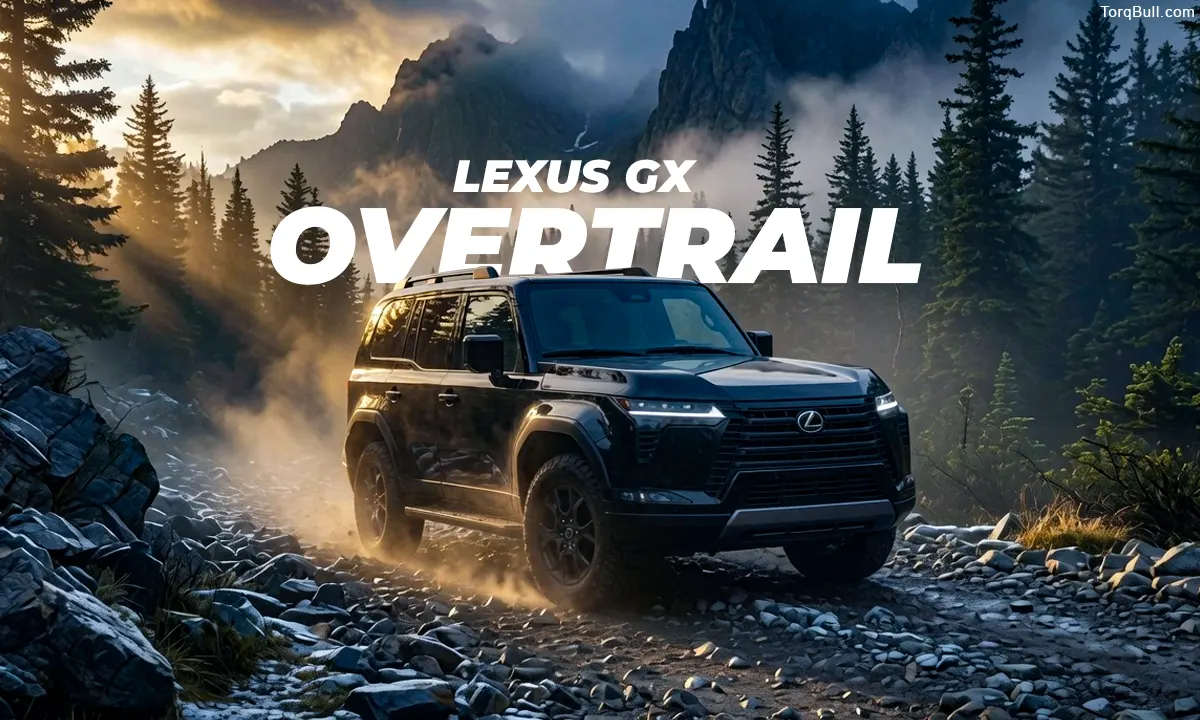
- The 2026 Lexus GX Overtrail delivers 349 horsepower and 479 pound-feet of torque from its twin-turbocharged V6 engine.
- Off-road upgrades include an electronic locking rear differential, E-KDSS suspension, 33-inch all-terrain tires and multiple terrain modes.
- By replacing the third row with additional off-road hardware, the Overtrail becomes the most adventure-focused GX and a top choice for serious trail use.
The Lexus GX Overtrail is a specific and deliberate answer to a question that the standard GX luxury trim hierarchy does not address: what does a Lexus look like when its engineers optimise it specifically for off-road performance rather than for front and rear passenger luxury? The Overtrail’s answer involves removing the third-row seat entirely — a structural decision that allows the suspension, cargo and underbody systems to be configured for maximum trail capability rather than maximum passenger accommodation — and adding the specific hardware that transforms the GX’s already capable body-on-frame platform into a genuinely purpose-built off-road luxury machine. The result is described as a very capable off-road SUV with all the posh features for outdoor and city life — a balance that the Overtrail executes more completely than any competing luxury off-road SUV at its price point. This complete review examines every dimension of the 2026 Overtrail’s capability, design and ownership character.
The Most Important Configuration Decision: Five Seats and Maximum Capability
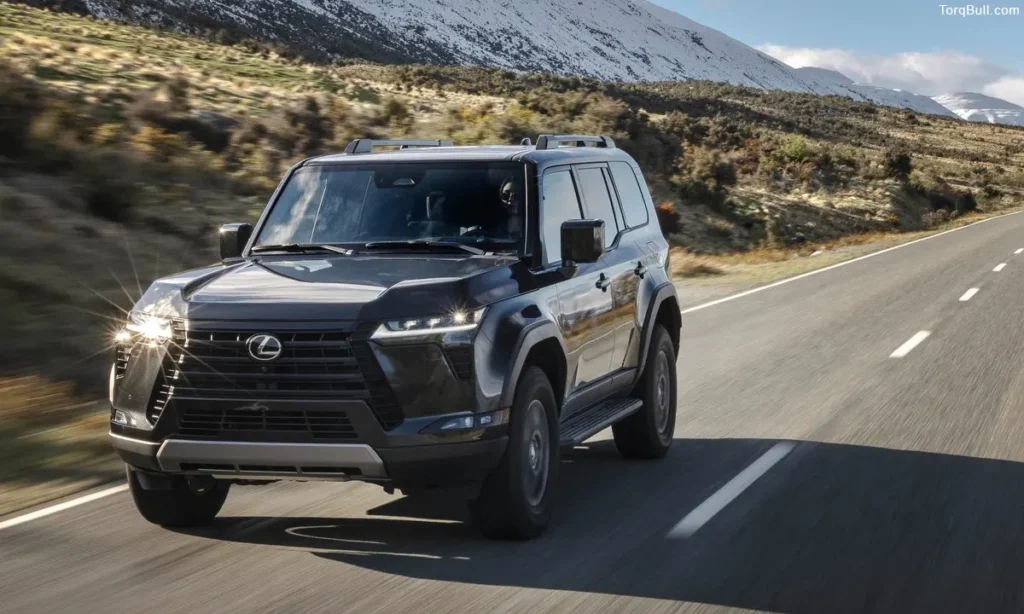
The GX Overtrail’s most immediately distinctive specification is the one it subtracts rather than adds: the third row of seating is absent from every Overtrail configuration. Where the Luxury trim seats up to seven passengers, the Overtrail seats five — two front passengers and a full three-person second row — without any provision for third-row expansion.
This seating reduction is not a cost-cutting measure or a concession to interior dimensions. It is the specific engineering decision that enables the Overtrail’s enhanced suspension architecture, improved cargo space behind the second row and better weight distribution that the removed third-row structure’s absence enables. The space previously occupied by third-row seating and the hardware required to support it becomes additional cargo volume — making the Overtrail the most practical cargo carrier in the GX lineup despite being the least people-carrying configuration.
For buyers who evaluate the GX Overtrail against the Luxury trim and specifically need third-row seating capability, the trim selection resolves clearly toward the Luxury. For buyers who use their SUV for two to five occupants and specifically want maximum off-road hardware alongside the GX’s luxury interior quality, the Overtrail’s seating configuration is not a compromise but a feature — ensuring the vehicle is optimised for the use case that motivated the purchase.
The Off-Road Hardware Package: What Differentiates the Overtrail
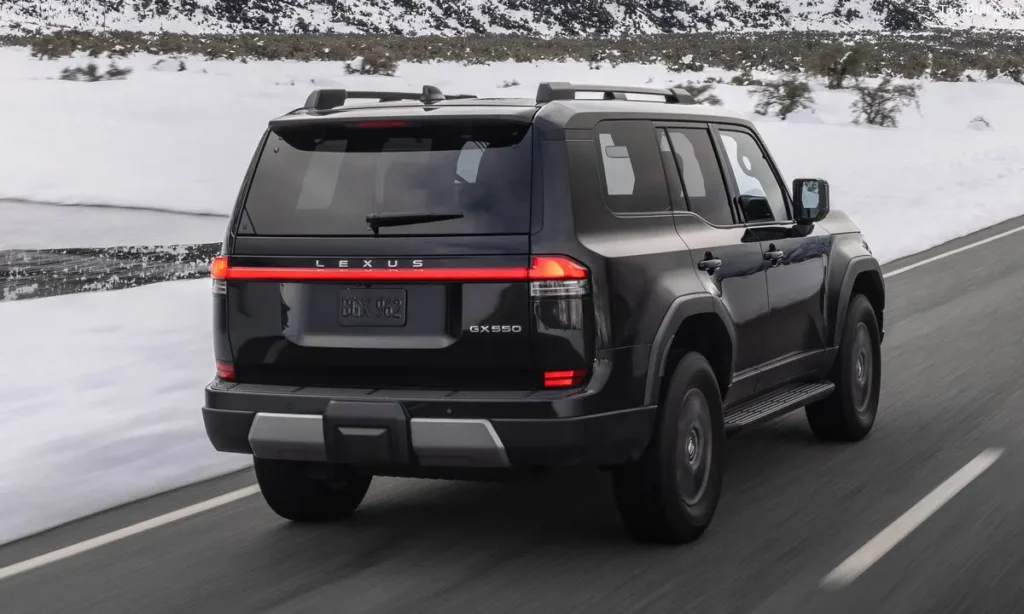
The Overtrail’s off-road hardware additions over the standard GX Premium and Luxury trims constitute a comprehensive capability upgrade rather than a visual styling package with minor functional additions — a distinction that specifically matters for buyers who plan to use the capability regularly rather than simply display it.
The Electronic Kinetic Dynamic Suspension System — commonly referred to as e-KDSS — is the most mechanically significant Overtrail-exclusive hardware. This system can electronically disconnect the front and rear stabiliser bars during off-road driving, allowing maximum independent wheel articulation across uneven terrain where one wheel needs to extend downward into a rut or step up over an obstacle without affecting the opposite wheel’s contact. Stabiliser bars that remain connected during cornering to prevent body roll actively reduce this articulation during off-road use — the e-KDSS system’s ability to disconnect them specifically solves this conflict by providing maximum articulation on trail and reconnecting for highway stability.
The electronic locking rear differential ensures equal torque delivery to both rear wheels regardless of individual wheel traction — the mechanical traction tool that prevents getting stuck when one rear wheel loses contact with the surface. The standard GX’s locking centre differential provides front-to-rear torque management, but the Overtrail’s additional rear axle lock provides complete torque distribution across all four wheels in the most demanding traction situations.
The 9.84 inches of ground clearance — up from 8.6 inches on the Premium and Luxury trims — is provided by the combination of the Overtrail-specific suspension calibration and the 33-inch all-terrain tyre diameter. This increased clearance allows the Overtrail to traverse rock formations, cross embedded terrain transitions and navigate trail obstacles that would contact the undercarriage of the lower-clearance configurations. The aluminium skid plates protect the engine, transfer case and differential from direct rock contact during trail use.
Read: Lexus GX Maintenance Cost 2026. Full Ownership Cost Breakdown
Multi-Terrain Select: Four Specific Mode Calibrations
The Multi-Terrain Select system provides four terrain-specific drive mode calibrations — Deep Snow, Mud, Sand and Dirt — alongside an automatic mode that evaluates surface conditions and selects the most appropriate calibration independently. Each mode adjusts throttle response, traction control intervention thresholds, and differential lock engagement timing for the specific physics of the target terrain.
Sand mode reduces traction control intervention to allow the wheel spin that builds momentum through soft sand surfaces where stopping wheel rotation causes sinking. Deep Snow mode provides more aggressive throttle management at very low speeds where controlled momentum is more important than preventing all wheel motion. Mud mode specifically addresses the alternating grip and slip conditions of clay and deep mud where momentum and timed power application determine whether the vehicle crosses or becomes stuck. Dirt mode provides a balanced calibration for the most common unpaved surface conditions.
This multi-mode calibration system is the driver assistance technology that bridges the gap between a driver with extensive off-road experience who instinctively manages throttle and traction for each surface and a first-time trail driver whose driving technique has not yet developed this instinct. The modes effectively encode experienced off-road technique into the vehicle’s electronic management — allowing the Overtrail to be used confidently by buyers whose adventure ambitions exceed their off-road driving experience.
The Powertrain: 349 Horsepower and 9,096 Pound Towing
The twin-turbocharged 3.4-litre V6 that the Overtrail shares with every GX configuration produces 349 horsepower and 479 pound feet of torque through a 10-speed automatic transmission to standard full-time 4WD with a locking centre differential. This powertrain is not Overtrail-exclusive — it is the standard GX 550 powertrain across all configurations — but it is specifically optimised for the Overtrail’s use case through the trailer brake controller and Tow mode that the Overtrail includes as standard.
Maximum towing capacity of 9,096 pounds makes the Overtrail the most practically capable tower in the GX lineup — a rating that accommodates most recreational trailers, moderate-sized boat trailers and equipment trailers that active outdoor lifestyles regularly require. The 0-60 MPH capability of approximately 6.5 seconds in the 5,700-pound GX platform reflects the twin-turbocharged V6’s specific torque delivery character — strong low-RPM torque from the turbocharger’s boost available at moderate engine speeds that produces confident acceleration from stops and highway entry ramps without requiring high-rev operation.
Fuel economy at 15 MPG city, 21 MPG highway and 17 MPG combined reflects the body-on-frame construction’s aerodynamic and weight characteristics alongside the full-time 4WD drivetrain’s parasitic losses — an honest result for a capable, heavy, AWD-equipped off-road luxury SUV that prioritises performance over efficiency in its design trade-offs.
Read: Lexus GX Ownership Cost 2026. Is This Luxury SUV Worth The Money?
2026 Lexus GX Overtrail — Complete Specification Chart
| Specification | Detail |
| Engine | 3.4L Twin-Turbocharged V6 |
| Horsepower | 349 hp |
| Torque | 479 lb ft |
| Transmission | 10-speed automatic |
| 4WD System | Full-time 4WD with locking centre differential |
| Ground Clearance | 9.84 inches (vs 8.6 inches standard GX) |
| Suspension | Electronic Kinetic Dynamic Suspension System (e-KDSS) |
| Stabiliser Bar | Electronically disconnectable front and rear |
| Rear Differential | Electronic locking |
| Tyres | 33-inch all-terrain |
| Off-Road Modes | Deep Snow, Mud, Sand, Dirt, Auto |
| Crawl Control | Standard |
| Skid Plates | Aluminium underbody protection |
| Maximum Towing | 9,096 lbs |
| Trailer Brake Controller | Standard |
| Seating | 5 passengers (no third row) |
| Exterior Colours | Four available two-tone options |
| Interior | Olive-green suede accents, two motif options |
| Black Fender Flares | Standard |
| Starting Price | approximately $72,000 to $74,000 |
| Professional Recommendation | Pick the Overtrail for going off the beaten path |
The Interior: Adventure Character With Lexus Quality
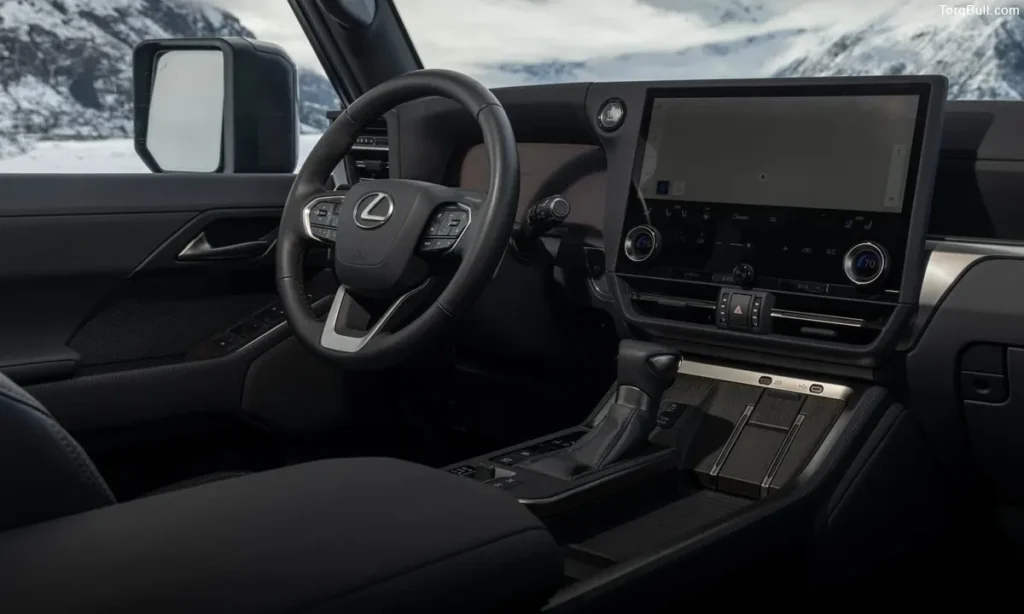
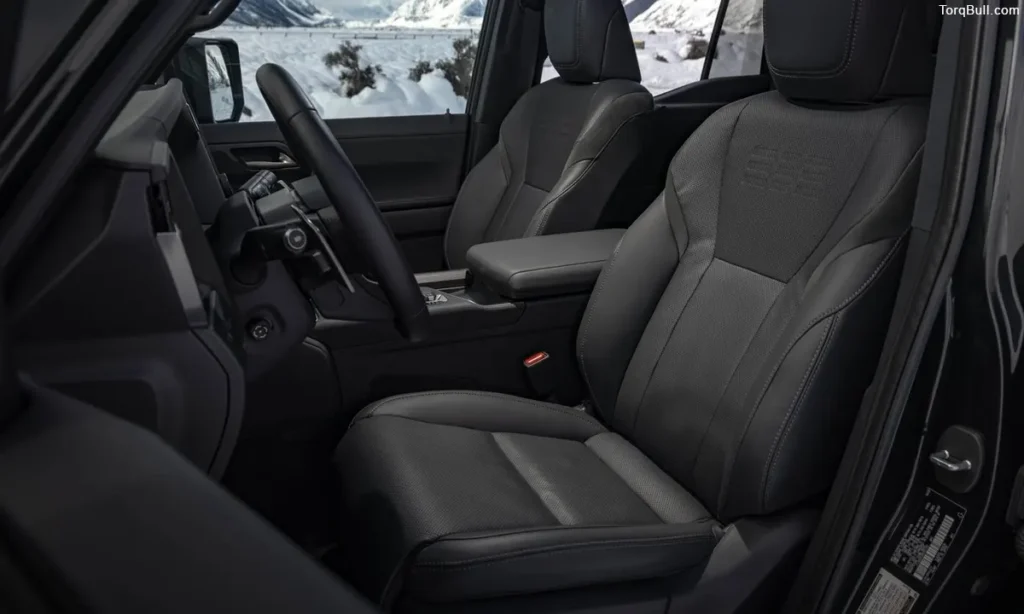
The Overtrail’s interior presentation balances the off-road aesthetic with the material quality standard that Lexus buyers specifically expect — a combination that the Overtrail achieves through two specific interior motif options featuring olive-green suede accents that reference the outdoor orientation without abandoning the luxury material quality that distinguishes Lexus from mainstream off-road alternatives.
The infotainment system with the 14-inch touchscreen provides navigation, media management and vehicle settings access that includes the Multi-Terrain Select mode interface, the crawl control settings and the e-KDSS status display — integrating the off-road hardware control into the same touchscreen environment that manages audio and climate. This integration allows the driver to monitor and adjust off-road settings without reaching for separate physical controls, though dedicated physical controls for the most frequently used off-road functions remain accessible on the centre console.
The cabin delivers the whisper-quiet interior character that the body-on-frame construction’s acoustic treatment and Lexus-standard noise insulation produces — a character that contrasts directly with the aggressive exterior appearance and high-capability hardware in a way that defines the Overtrail’s specific luxury off-road identity. Supportive seating and advanced driver assistance systems make long-distance driving comfortable in a way that pure off-road vehicles with uncompromised off-road suspension calibrations typically do not sustain.
Read: Lexus GX Family SUV Review 2026. Can It Justify Its Luxury Price Tag?
The Honest Verdict: Who the Overtrail Serves
The Lexus GX Overtrail is the Lexus for the serious off-roader — capable of handling just about any terrain without needing a slew of aftermarket upgrades. It packs an almost equal amount of off-road capability to accompany the soft leather seats and whisper-quiet interior — mostly succeeding at the specific balance that its positioning requires.
For buyers who specifically use their luxury SUV for overlanding, trail access, camping in remote locations and the outdoor lifestyle activities that the Overtrail’s hardware is specifically designed to support, the Overtrail is the correct GX trim without a significant caveat. For buyers who need third-row seating for occasional use alongside everyday off-road capability, the Luxury Plus configuration deserves evaluation alongside the Overtrail.
The Overtrail’s most direct competitive challenge comes from the Ford Bronco Outer Banks with Sasquatch Package — more extreme off-road capability at lower cost, with a substantially less refined daily driving character — and the Land Rover Defender 110 at comparable pricing with comparable off-road hardware and comparable luxury credentials but a dramatically lower documented long-term reliability profile than the Toyota-Lexus platform provides.