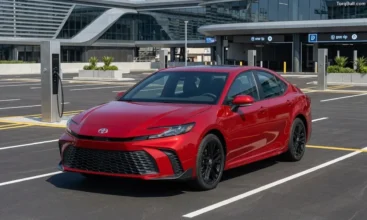
- The 2026 Toyota Tundra’s annual maintenance costs average approximately $375–$606, depending on usage and service requirements.
- Verified ownership data estimates five-year maintenance expenses at about $6,845, which is lower than the full-size pickup average.
- Regular service begins every 5,000 miles or six months, and the Tundra has a lower-than-average likelihood of requiring major repairs over five years.
The Toyota Tundra’s maintenance cost profile reflects the same Toyota reliability philosophy that produces the Corolla’s and Camry’s below-average annual repair costs — applied to a full-size pickup truck whose larger engine displacement, 4WD drivetrain options and twin-turbocharged powertrain introduce specific service requirements beyond what compact car ownership demands. The result is a maintenance picture that sits above compact car annual costs in absolute terms but significantly below the full-size pickup truck average — placing the Tundra in the top 10 percent for cost to own among all full-size pickup trucks according to verified five-year ownership cost data. This complete guide breaks down every service item, every interval and every cost so that any current or prospective Tundra owner can budget accurately for the full ownership period.
The Annual Maintenance Average: Two Figures, Two Datasets
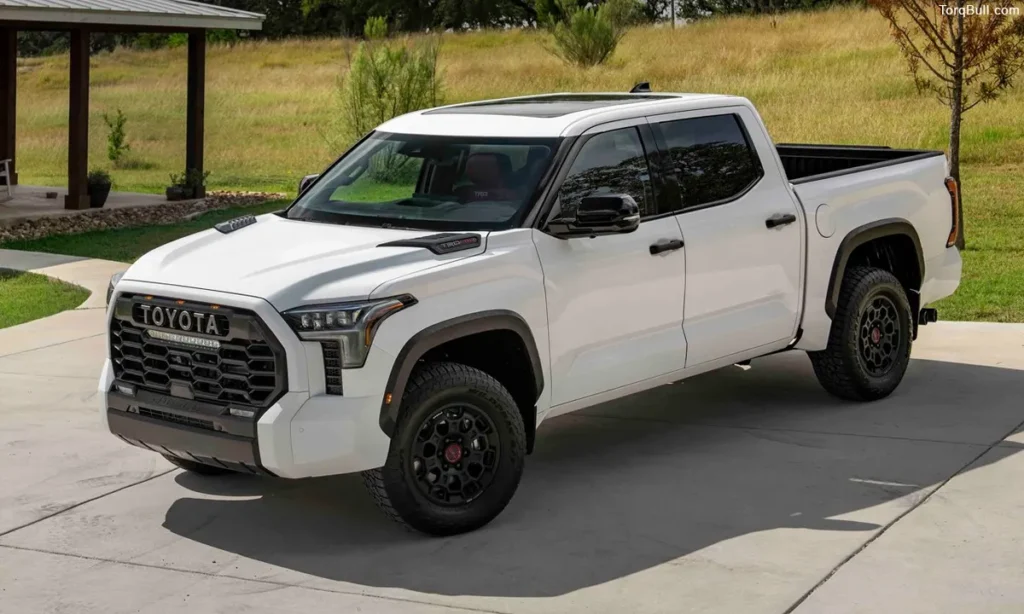
The Toyota Tundra’s annual maintenance cost is documented across two complementary datasets that each measure a different scope of the maintenance picture — producing a $375 figure from one analysis and a $606 figure from another that are both legitimate and represent different cost categories.
The $375 annual average covers routine scheduled maintenance — the oil changes, tyre rotations, fluid checks and filter replacements that constitute the regular recurring service schedule across a typical ownership year without major interval services or unexpected repairs. This figure represents the most common yearly maintenance experience when no major services fall due and no unscheduled repairs occur.
The $606 annual average from independent repair invoice data covers the broader scope of all maintenance and repair events including the occasional unscheduled repairs that contribute to the annual average across the full owner population. This broader figure is more useful for five-year and ten-year budget planning because it incorporates the statistical probability of minor unscheduled events — the sensor replacement, the minor brake system service, the belt inspection that occasionally requires action — alongside the purely scheduled maintenance schedule.
The five-year maintenance total of $6,845 from verified ownership cost data represents the most comprehensive and most practically useful planning figure — covering all scheduled and unscheduled maintenance events across a five-year ownership horizon at typical driving patterns. This $6,845 figure is $2,316 less than the pickup truck segment average — confirming the Toyota Tundra’s specific maintenance cost advantage over typical full-size truck alternatives.
Read: Toyota Tundra TRD Pro Review 2026. Is This the Ultimate Off-Road Full-Size Truck?
The Service Schedule: Every Interval and What It Covers
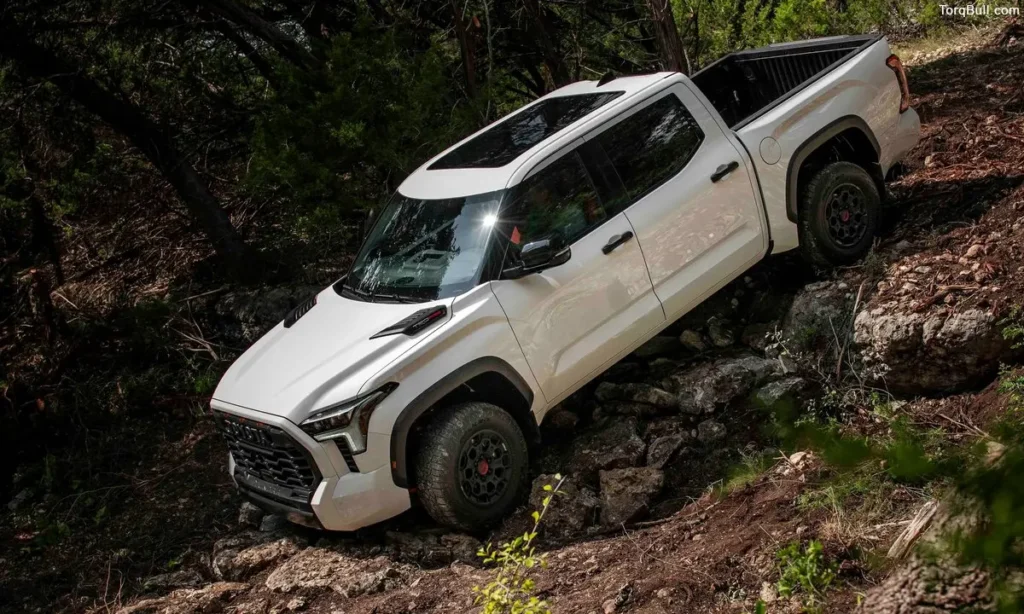
The Toyota Tundra’s service schedule follows a structured interval pattern that Toyota has established around modern oil technology, 4WD drivetrain maintenance requirements and the twin-turbocharged engine’s specific service needs.
5,000 Miles or Six Months: The Most Frequent Service Stop
The 5,000-mile or six-month interval is the Tundra’s most frequent scheduled visit — covering tyre rotation, brake inspection for pad and disc condition, wiper blade inspection, fluid level top-offs and verification of floor mat positioning to ensure no pedal obstruction. This service does not include an oil change at the 5,000-mile visit — the oil change occurs at 10,000 miles — making this a lower-cost inspection and rotation visit rather than a full service event.
Tyre rotation at every 5,000 miles is specifically important for Tundra owners who use the truck for towing or hauling — the additional loading that truck work imposes on tyre wear patterns makes regular rotation more consequential for tyre longevity than for lighter-duty passenger car applications. Allowing uneven tyre wear to develop in a loaded truck produces premature tyre replacement costs that consistent rotation significantly delays.
10,000 Miles or 12 Months: The Primary Maintenance Event
The 10,000-mile or 12-month interval is the Tundra’s primary maintenance event — covering oil and filter change with full-synthetic oil of Toyota’s specified viscosity, comprehensive brake system inspection including brake fluid condition assessment, all fluid level inspections and the multi-point vehicle inspection that confirms component conditions across the full vehicle. Oil change cost at a Toyota dealer ranges from $194 to $233 per service for the twin-turbocharged V6 application — reflecting both the larger oil capacity and premium oil specification the turbocharged engine requires.
15,000 Miles or 18 Months: Expanded Inspection
The 15,000-mile interval adds more detailed component inspections to the 10,000-mile service content — including cabin air filter assessment and replacement when contamination warrants, air induction system inspection and more comprehensive brake system review. For 4WD Tundra owners, front differential oil inspection begins at this interval — confirming fluid condition in the drivetrain components that AWD operation engages more frequently than on-demand 4WD usage patterns allow.
30,000 Miles or 36 Months: The Most Comprehensive Interval
The 30,000-mile service is the most comprehensive standard interval in the Tundra’s schedule — combining the content of the 10,000 and 15,000-mile visits while adding specific inspections of the automatic transmission for leaks and proper function, dust covers, ball joints, engine coolant condition, fuel system lines and connections and vapor vent system hoses. For 4WD Tundra owners, front differential oil, drive shaft boots and transfer case oil are specifically inspected at this interval — a critical maintenance category for owners who use the 4WD system frequently in challenging conditions.
45,000 Miles: Component Replacement Window
At approximately 45,000 miles, specific components may require replacement depending on driving conditions and individual wear rates — tyres for owners who drive regularly in harsh conditions, brake pads and rotors for owners whose towing and hauling use accelerates brake wear beyond the lighter-duty wear rates that passenger car driving produces and spark plugs for owners in severe duty classifications.
Read: Toyota Tundra i-Force MAX Review 2026. Is This Hybrid Truck Worth The Hype?
The i-Force MAX Hybrid: Additional Maintenance Considerations
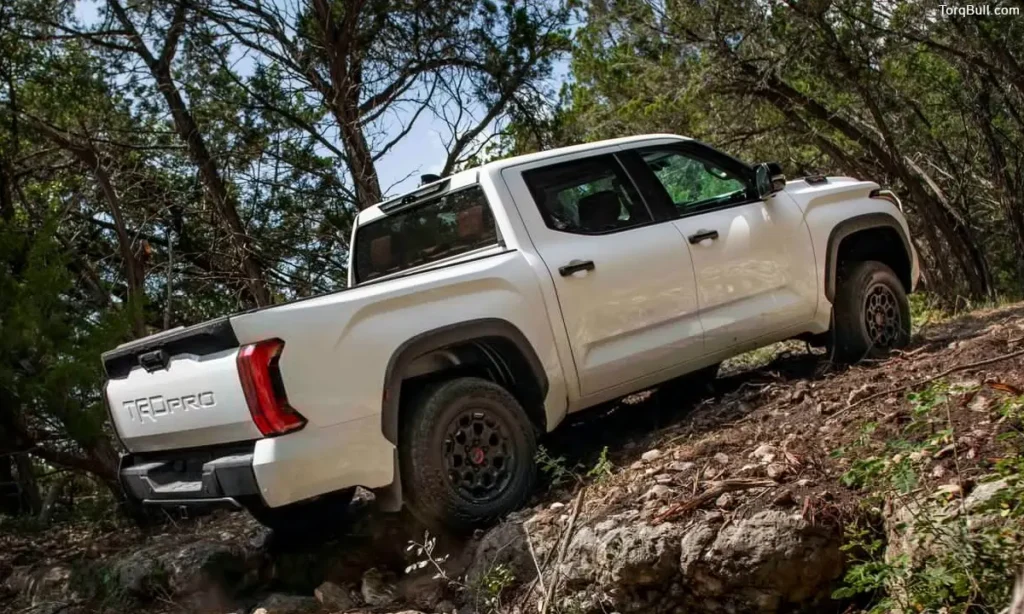
The i-Force MAX hybrid powertrain available on the TRD Pro and Capstone trims introduces specific additional maintenance considerations beyond the standard i-Force twin-turbocharged V6 — because the hybrid battery, electric motor and inverter components require monitoring and periodic inspection that non-hybrid Tundra configurations do not require.
The hybrid battery pack warranty covers the system for 8 years or 100,000 miles in most states — providing financial protection against battery failure within the primary family ownership window. Annual battery capacity monitoring through Toyota diagnostic tools is the recommended preventive approach for i-Force MAX owners — identifying any capacity degradation early rather than discovering it at the point of operational limitation.
The i-Force MAX’s extended brake service intervals from regenerative braking represent a specific maintenance cost advantage over conventional trucks whose brake wear rates are determined entirely by friction braking. The energy recovered during deceleration through the regenerative system reduces the frequency at which brake pads and rotors require replacement — a real and financially meaningful reduction in the brake service category’s annual cost contribution.
Toyota Tundra Annual Maintenance Cost — Complete Service Schedule Chart
| Service Interval | Service Content | Estimated Dealer Cost | Notes |
| Every 5,000 miles or 6 months | Tyre rotation, brake inspection, fluid top-offs, wiper inspection | $65 to $90 | No oil change at this interval |
| Every 10,000 miles or 12 months | Full-synthetic oil and filter change, comprehensive brake inspection, fluid check, multi-point inspection | $194 to $250 | Primary maintenance event |
| Every 15,000 miles or 18 months | Above plus cabin air filter, air induction inspection, front differential oil inspection (4WD) | $250 to $350 | More detailed inspection added |
| Every 30,000 miles or 36 months | All above plus transmission inspection, ball joints, dust covers, fuel system, transfer case (4WD) | $350 to $600 | Most comprehensive standard interval |
| Every 60,000 miles | Spark plug replacement (twin-turbo V6), drive belt inspection, coolant system inspection | $400 to $700 | Major interval; spark plugs primary cost |
| Every 100,000 miles | Coolant flush and replacement, drive belt replacement if not replaced earlier | $350 to $500 | Extended interval; low annual impact |
| Annual maintenance average | $375 to $606 | Depends on interval years | |
| Five-year maintenance total | $6,845 | From verified ownership cost data | |
| Pickup truck average comparison | $9,161 | Tundra saves $2,316 vs segment average |
Read: Toyota Tundra Payload Capacity Test 2026. Is It Built for Serious Work?
How the Tundra Compares to Full-Size Truck Alternatives on Maintenance
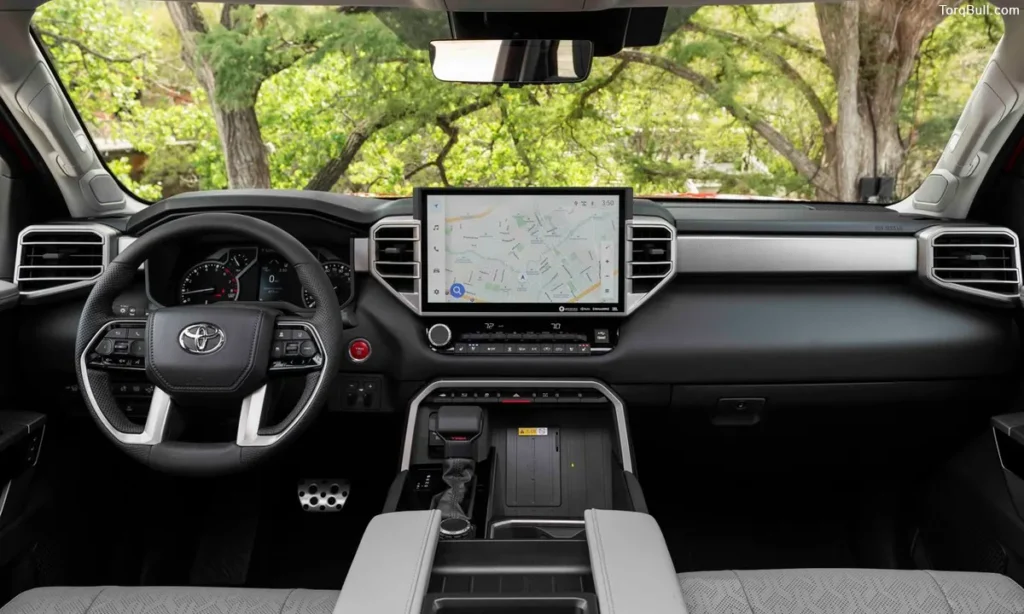
The Tundra’s $2,316 five-year maintenance advantage over the pickup truck average represents a meaningful financial benefit that compounds into significant savings for owners who plan seven to ten or more years of Tundra ownership.
The Ford F-150 with turbocharged EcoBoost engines carries maintenance costs that typically exceed the Tundra’s annual averages — reflecting the turbocharged four and six cylinder applications’ more frequent service demands and the higher probability of complex drivetrain events that independent repair invoice data consistently documents for this nameplate. The Chevrolet Silverado’s 5.3-litre and 6.2-litre V8 engines carry higher spark plug replacement costs — eight plugs in a V8 versus six in the Tundra’s V6 — alongside the documented lifter collapse concerns that older Silverado production years experienced.
The Ram 1500’s maintenance profile is broadly comparable to the Tundra’s in routine service costs, with the Ram’s air suspension system maintenance being a potential additional cost category for buyers who select the available air ride option on upper Ram configurations.
The Tundra’s 19.12 percent probability of requiring a major repair in the first five years — 10.57 percent better than comparable vehicles in the segment — is the most financially consequential maintenance advantage, because a single major repair event of $1,500 to $3,000 substantially offsets any routine service cost savings across the same period. Fewer high-cost events produce a more predictable and more manageable total maintenance budget than equivalent routine costs with higher major repair probability.