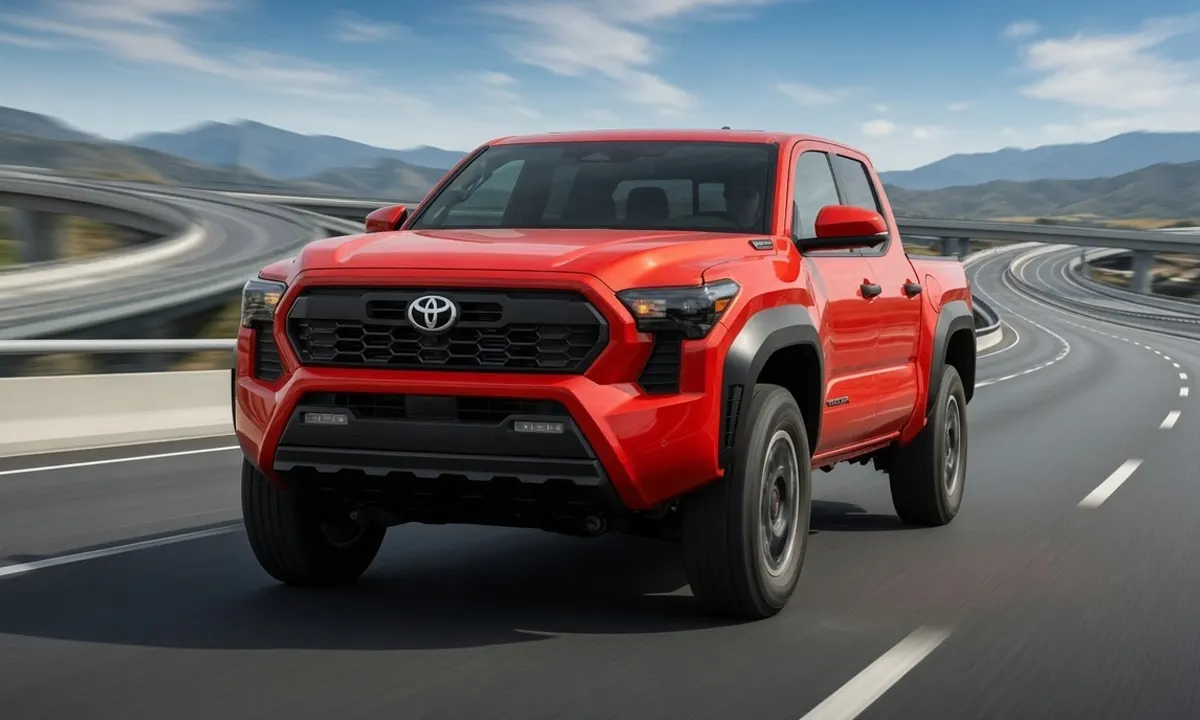
- The 2026 Toyota Tacoma i-Force MAX combines a turbocharged 2.4-liter engine and hybrid motor to produce 326 horsepower and 465 pound-feet of torque.
- Fuel economy is rated at 22–23 MPG city and 24 MPG highway, with real-world testing returning about 22.6 MPG.
- Available on five trims starting around $48,830, the i-Force MAX delivers a strong blend of performance, efficiency and capability.
The Toyota Tacoma i-Force MAX hybrid powertrain is the answer to a question that the midsize truck segment has been asking for most of its modern history: can a midsize truck deliver hybrid efficiency alongside genuine trail capability and genuine towing performance without requiring the buyer to choose between these attributes? The 2026 i-Force MAX specifically answers yes — delivering what independent evaluation describes as the sweet spot in America’s best-known midsize pickup line, blending real truck capability with a punchy turbo-hybrid powertrain, modern technology and the kind of off-road hardware that made the Tacoma nameplate a legend in the outdoor enthusiast community. This complete review examines every dimension of the 2026 i-Force MAX — its powertrain architecture, performance credentials, fuel economy from both EPA testing and real-world evaluation, towing capability and the owner reliability experience that is building across the fourth-generation production run.
The Powertrain: How the i-Force MAX Actually Works
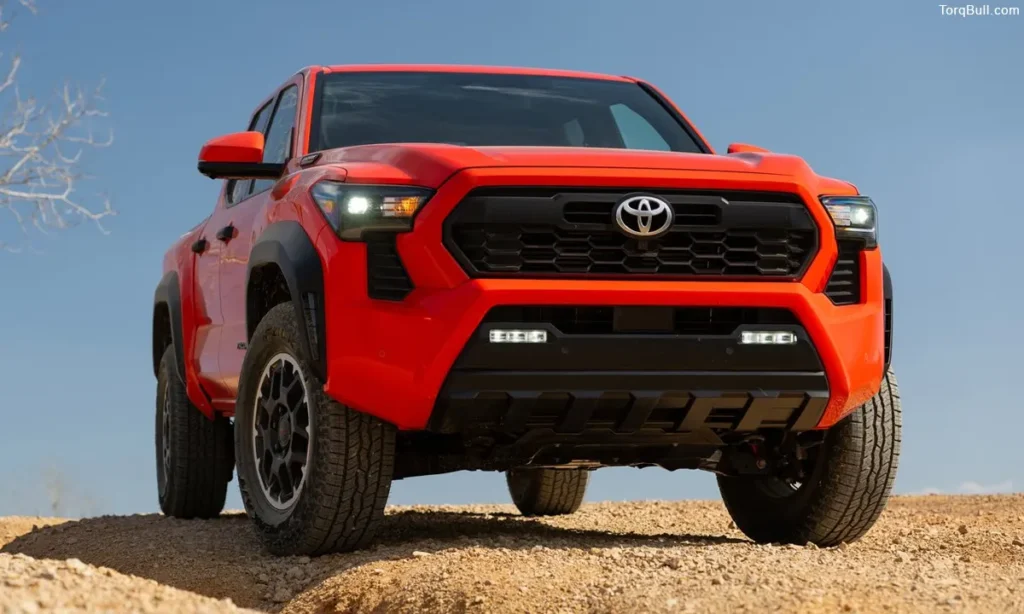
The i-Force MAX is not a bolt-on hybrid kit applied to the standard 2.4-litre turbocharged engine — it is an integrated hybrid system whose electric motor is mounted within the 8-speed automatic transmission housing, providing torque contribution at precisely the moment and RPM range where turbocharged engines historically produce their least satisfying response.
The gasoline component is the same 2.4-litre turbocharged four-cylinder that the standard i-Force engine uses — producing 278 horsepower and 317 pound feet of torque in non-hybrid specification. The i-Force MAX adds an electric motor integrated into the transmission, bringing combined system output to approximately 326 horsepower and 465 pound feet of torque. This torque figure — 465 pound feet — exceeds the standard engine’s output by 148 pound feet and arrives at the wheel from the electric motor’s specific advantage: maximum torque at zero RPM, available the instant throttle is applied without waiting for turbocharger boost pressure to build.
The practical consequence of this electric motor integration for daily driving and trail use is specifically felt during the first moments of acceleration from a standstill — whether that standstill is a traffic signal, a trail obstacle requiring deliberate throttle control or a towing departure from a boat launch ramp. The i-Force MAX’s electric torque fills the gap between initial throttle application and full turbocharger boost with immediate response that the standard engine’s brief turbo spool cannot replicate. Professional evaluation specifically confirms that the more powerful hybrid version offers more power without eating into fuel economy — the specific combination that justifies the hybrid premium in a midsize truck context.
Read: Toyota Tacoma Resale Value. What Owners Can Expect After 5 Years
Fuel Economy: Best in Class for a 4WD Midsize Truck
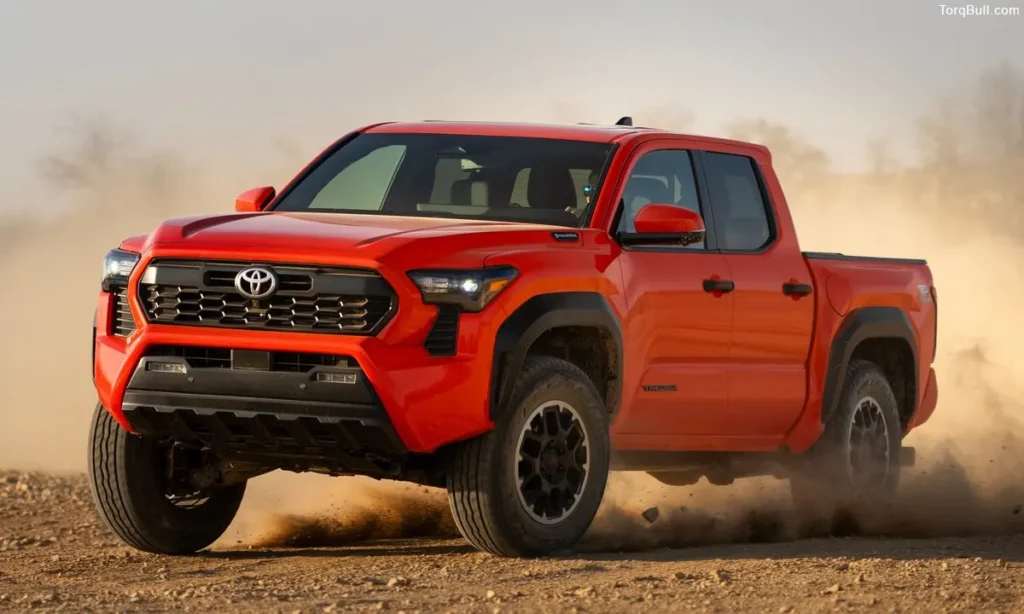
The i-Force MAX hybrid achieves EPA-estimated fuel economy of 22 to 23 MPG city, 24 MPG highway and 23 MPG combined — the figures that establish the Tacoma hybrid as the most fuel-efficient 4WD midsize truck available in the American market, specifically because no competing midsize truck offers a diesel alternative that would otherwise challenge this position.
The Limited i-Force MAX achieves the highest city rating in the lineup at 23 MPG city with 24 MPG highway and 23 MPG combined. The TRD Sport, TRD Off-Road, Trailhunter and TRD Pro i-Force MAX trims achieve 22 MPG city with 24 MPG highway and 23 MPG combined — the modest city figure reduction from the Limited reflecting the off-road tyre specifications and additional hardware weight on these configurations.
Real-world testing confirms fuel economy in the low to mid-20s MPG combined in typical use — consistent with the EPA estimates for mixed driving conditions. A professional evaluation route produced 22.6 MPG on the mixed evaluation course — within 2 percent of the EPA combined figure and confirming that the i-Force MAX’s EPA estimates are achievable in real-world conditions rather than optimistic test-cycle figures. Owner accounts from the Tacoma hybrid community place typical real-world results at approximately 23 MPG combined in mixed city and highway driving — closely matching the EPA combined estimate for the well-established owner driving patterns.
The comparison against the standard i-Force gas engine produces the most financially relevant efficiency finding: in mixed driving, standard 2.4 Turbo Tacomas land around 20 MPG combined while hybrid versions deliver approximately 23 MPG combined — a 15 to 20 percent improvement that at 15,000 annual miles and $3.08 per gallon produces approximately $305 in annual fuel savings. Over five years, this saving accumulates to approximately $1,525 — a meaningful financial return that partially offsets the hybrid premium paid at purchase.
Performance: The Character Difference Beyond the Specification
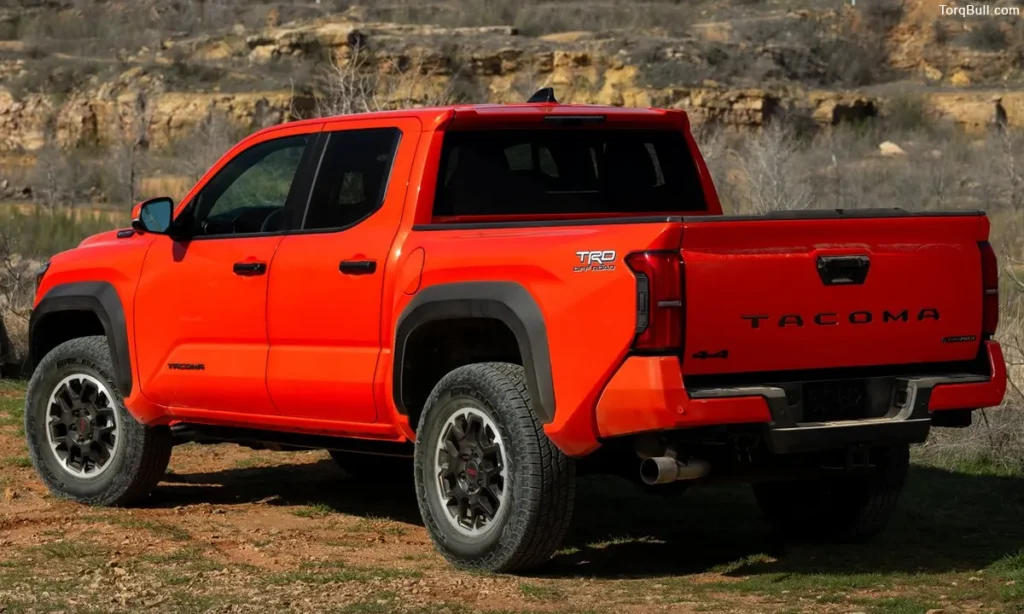
The i-Force MAX’s performance character is not simply a quantitative improvement over the standard engine — it is a qualitatively different daily driving experience whose most distinctive attribute is the electric torque’s immediate response at any speed.
The low-RPM torque that 465 pound feet provides from the combined system is specifically described as the element that makes the hybrid Tacoma feel significantly more capable than the standard engine in the conditions that matter most for real use. Towing departure from stationary positions, trail obstacle negotiation at crawl speed and urban traffic acceleration from stops all benefit from the electric motor’s torque contribution in a way that the standard engine’s torque curve — which builds through the turbocharger’s spool range — does not replicate. The truck that hauls mulch on weekdays and crawls rocky ledges on weekends specifically benefits from this low-speed torque availability in both use cases.
Highway cruising is described as calm — the hybrid system’s ability to operate the engine at its most efficient load point while managing battery state contributes to a settled highway character that avoids the busy engine sound that high-output turbocharged applications can produce at sustained cruise. For owners whose weekly driving includes extended highway commuting alongside weekend adventure use, this highway refinement improvement alongside the fuel economy improvement makes the i-Force MAX the more complete daily ownership choice.
Read: Toyota Tacoma Trailhunter Review. Is This The Ultimate Overlanding Truck?
Towing and Capability: 6,000 Pounds With an Important Context
The i-Force MAX’s maximum towing capacity of 6,000 pounds represents a 500-pound reduction from the standard gas Tacoma’s 6,500-pound maximum — a consequence of the hybrid battery system’s additional weight reducing the Gross Combined Weight Rating available for trailer tongue load.
This 500-pound reduction is the i-Force MAX’s specific capability trade-off — real and worth understanding for buyers whose trailer weights regularly fall in the 6,000 to 6,500-pound range. For buyers whose towing needs fall below 5,500 pounds — which covers most recreational applications including personal watercraft, small pontoon boats and camping trailers — the 6,000-pound hybrid maximum provides ample capability with no operational limitation.
The electric motor’s specific contribution to towing is experienced most clearly during trailer departure from stops — where the immediate torque availability produces smoother, more controlled launches than the standard engine’s boost-dependent power curve allows. Towing evaluators who have driven both powertrains with equivalent trailer loads consistently document the hybrid’s departure confidence as meaningfully superior — an advantage that the torque specification alone does not fully convey.
Payload capacity of approximately 1,300 to 1,600 pounds varies by specific configuration — appropriate for the majority of light-duty truck bed hauling applications that midsize truck owners regularly use.
2026 Toyota Tacoma i-Force MAX — Complete Specification Chart
| Specification | i-Force MAX Hybrid | Standard i-Force Gas | Notes |
| Engine | 2.4L Turbocharged plus Electric Motor | 2.4L Turbocharged only | Same base engine |
| Combined Horsepower | approximately 326 hp | 278 hp | 48 hp hybrid advantage |
| Combined Torque | 465 lb ft | 317 lb ft | 148 lb ft torque advantage |
| Transmission | 8-speed automatic | 8-speed automatic or 6-speed manual | Manual not available on i-Force MAX |
| Drivetrain | 4WD standard | 2WD or 4WD | Hybrid standard with 4WD |
| EPA City MPG | 22 to 23 MPG | 20 to 21 MPG (4WD) | Hybrid 2 to 3 MPG city advantage |
| EPA Highway MPG | 24 MPG | 24 to 26 MPG | Similar at sustained cruise |
| EPA Combined MPG | 23 MPG | 21 MPG (4WD) | Hybrid 2 MPG combined advantage |
| Real World Combined | approximately 22.6 to 23 MPG | approximately 20 MPG | Professional test confirmed 22.6 MPG |
| Maximum Towing | 6,000 lbs | 6,500 lbs | Gas has 500 lb advantage |
| Maximum Payload | approximately 1,300 to 1,600 lbs | approximately 1,705 lbs | Slight payload reduction |
| Available Trims | TRD Sport, TRD Off-Road, Trailhunter, TRD Pro, Limited | SR, SR5, TRD Sport, TRD Off-Road, TRD Pro, Limited | Hybrid on upper trims only |
| Starting Price Range | $48,830 to $63,000+ | From $32,245 | Hybrid on mid-upper trim range |
| Owner Reliability | 4.3 out of 5 above average | Same platform | Fourth generation established |
| Fuel Saving vs Gas (5 yr) | approximately $1,525 | Baseline | At $3.08 per gallon, 15K miles |
Read: Best Toyota Tacoma Trim to Buy 2026. Which One Should You Choose?
Who Should Choose the i-Force MAX: The Honest Recommendation
The i-Force MAX hybrid is the correct Tacoma choice for buyers whose ownership genuinely includes heavy-use patterns that most benefit from the hybrid’s specific advantages — frequent towing at the trailer weights the 6,000-pound rating covers, regular stop-and-go urban commuting where regenerative braking accumulates meaningful energy recovery, frequent off-road use where low-RPM electric torque provides the most precise crawl speed control and high annual mileage that allows the fuel saving to accumulate meaningfully across the ownership period.
Heavy miles, frequent towing, lots of stop and go or regular off-road trips all tilt the calculation toward the hybrid — the honest summary from the most comprehensive comparison analysis available for this specific powertrain decision. The i-Force MAX buyer who tows to trail access points, crawls rock formations with precise electric torque and commutes in urban traffic during the work week receives the hybrid’s benefits in every dimension of their ownership simultaneously — making it the most complete Tacoma available for this specific buyer profile.
The standard gas Tacoma remains the correct choice for buyers who prioritise the lowest possible total ownership cost over five to seven years, who need the maximum 6,500-pound towing capacity, who prefer the available 6-speed manual transmission’s mechanical engagement and who cover lower annual mileage where the fuel saving accumulation takes longer to return the hybrid premium.