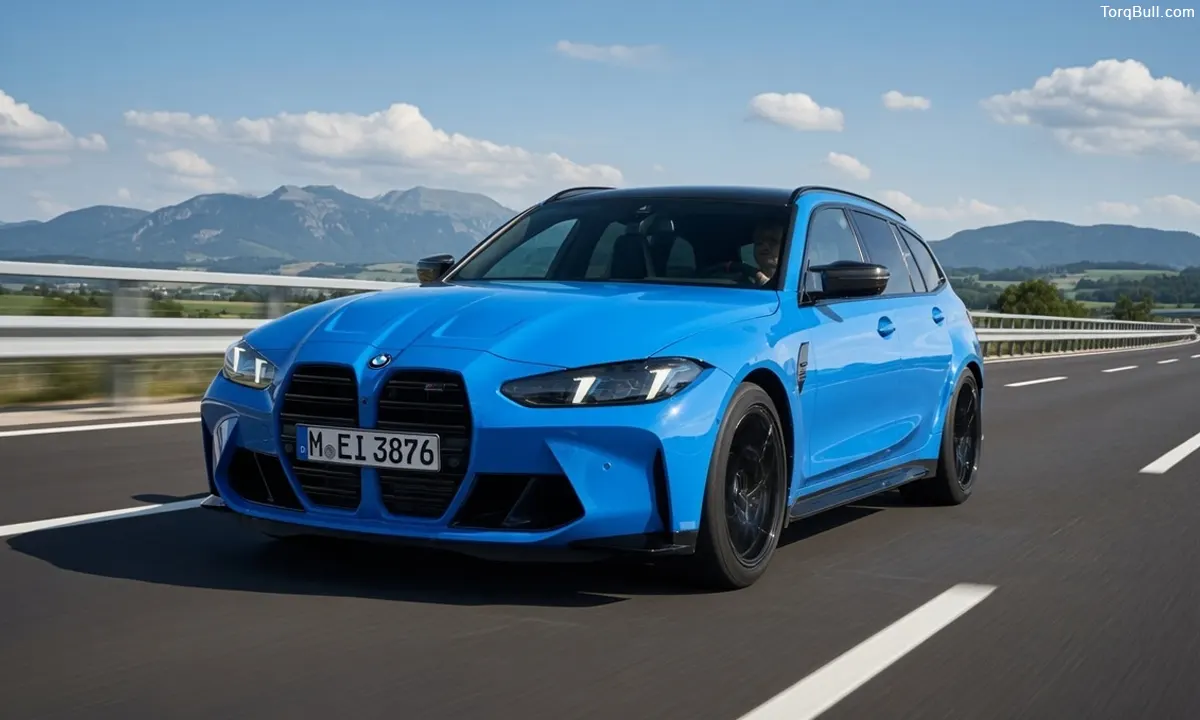
- The 2026 BMW M3 Competition xDrive produces 523 horsepower and accelerates from 0–60 MPH in just 3.4 seconds.
- Its combination of AWD traction and S58 engine performance helped it outperform rivals in independent track testing.
- The M3 CS Touring set a 7:29.5 Nürburgring Nordschleife lap time, making it the fastest production wagon ever recorded on the circuit.
The BMW M3 carries the performance sedan benchmark responsibility that the nameplate has held since the E30 generation established the concept of the track-capable everyday car in the 1980s. Four decades later, the current S58-powered M3 not only continues this tradition but extends it into a performance envelope that would have been difficult to imagine even a decade ago — a 523-horsepower all-wheel-drive sedan that reaches 60 MPH in 3.4 seconds, generates over 1.0 g of lateral grip in professional circuit testing and remains entirely civilised in daily commuting trim when the adaptive dampers are set to their softer calibrations. This complete track performance review examines the M3’s circuit capability from the official lap timing data through the specific handling attributes that make the car both effective and engaging at the limit.
The Powertrain on Track: S58 Turbocharged Six-Cylinder Character
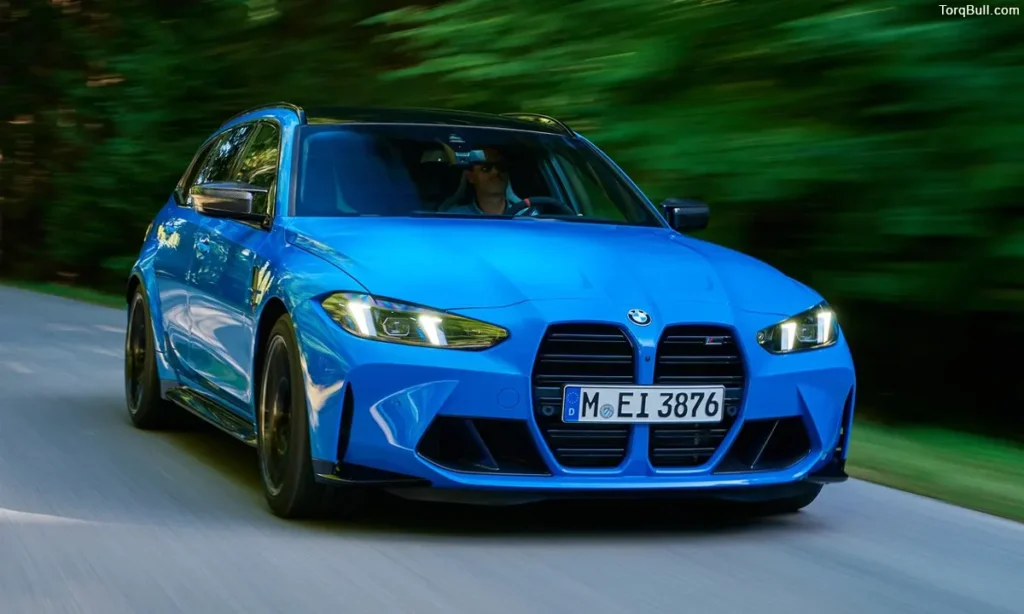
The S58 twin-turbocharged 3.0-litre inline six-cylinder is the engine that defines the M3’s track character — and its specific power delivery profile shapes the driver experience on circuit in a way that numbers alone do not fully communicate.
The Competition xDrive produces 523 horsepower and 479 pound feet of torque. The standard Competition RWD produces 503 horsepower with the same torque figure. Both engines reach their full performance delivery through turbocharger boost that builds progressively from approximately 3,000 RPM and holds through the 7,200 RPM redline — the specific power curve characteristic that professional evaluation describes as arriving around 3,000 RPM and becoming violently rapid as turbos hit their stride, pulling relentlessly to the top of the tachometer.
This power delivery profile is specifically suited to track use — the power is concentrated in the RPM range where the vehicle is most frequently operating during circuit work — mid-corner exits, straight-line acceleration zones and uphill sections where maintaining revs provides consistent power access rather than the hunting that narrow-powerband applications produce at inappropriate gear selection. The 7,200 RPM redline provides sufficient operating range that gear changes are infrequent on most corners, allowing the driver to focus on line and braking points rather than constant transmission management.
The manual transmission available on the standard M3 — a genuine six-speed unit that is increasingly rare among high-performance sedans in 2026 — provides the driver engagement that enthusiasts specifically pursue, with the shift quality described as a potential future classic experience. The eight-speed automatic on Competition models delivers faster cog changes under sustained track conditions where ultimate lap time is the priority over the manual’s engagement quality.
Read: BMW M3 Insurance Cost 2026. Complete Analysis for Performance Car Buyers
Circuit Performance: Grip, Balance and the AWD Advantage
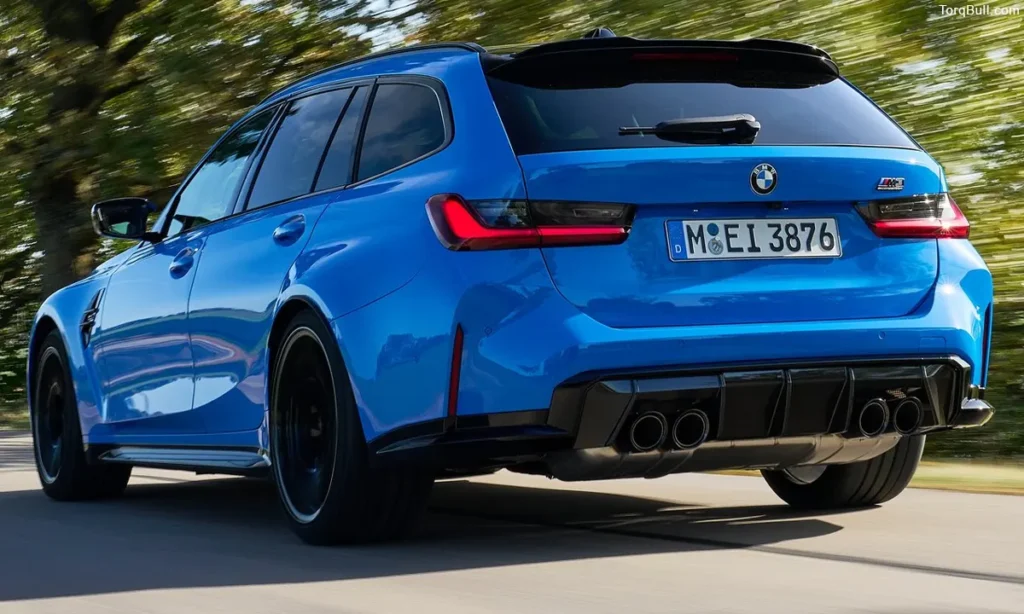
On track, the M3 Competition displays impressive poise and balance — a characterisation from extended circuit evaluation that specifically describes a car whose front-to-rear balance at the limit is better resolved than its power figures alone might suggest.
Turn-in is crisp and immediate — the front end generating tremendous grip from the wide-section Michelin Pilot Sport 4S or Cup 2R tyres that equipped Competition models use. The electronically controlled limited-slip differential on the rear axle manages power delivery at corner exits with the sophistication that prevents the traction loss and instability that simpler open differentials produce under aggressive throttle application from low speeds.
The M3 Competition xDrive’s AWD system provides the specific track advantage that the lightning lap result most directly documents — the ability to apply full power earlier in corner exits than a rear-drive alternative can manage without traction loss. Going into high-speed sections of the VIR Grand Course, the xDrive model arrived doing 134.1 MPH — measurably faster than a rear-drive competitor in the equivalent sector — translating directly to lap time advantage through the faster exit from slower corners that the AWD traction enables.
The optional carbon-ceramic brake package demonstrated remarkable resistance to fade even after multiple hard laps in extended circuit testing — the specific brake performance metric that matters most for track day buyers who plan extended sessions rather than brief demonstration laps. Standard steel brakes are capable for most circuit use, but repeated high-speed stops from 150-plus MPH produce the heat that carbon-ceramic resists more effectively than iron rotors across a full day of track use.
The Nürburgring Result: What the Nordschleife Data Tells Us
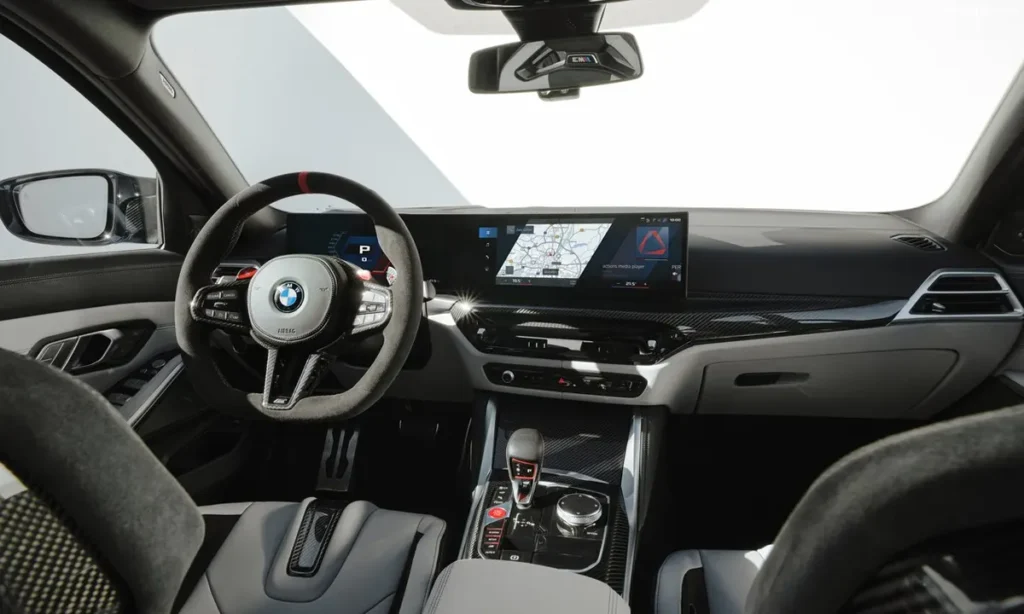
The M3 CS Touring’s 7-minute 29.5-second Nordschleife lap time is the most comprehensively demanding single performance data point available for the M3 family — because the Nordschleife’s 12.9-mile course combines the full spectrum of corner types, gradient changes, surface variations and sustained high-speed sections that no other circuit replicates in one continuous test.
This 7:29.5 result is not just impressive in absolute terms — it carries specific competitive context that defines where the M3 CS Touring sits in the performance universe. The time is half a second quicker than the previous-generation 626-horsepower M5 CS’s Nordschleife result and five seconds faster than the standard M3 Touring on the same circuit. For a production estate vehicle, it is the fastest lap ever recorded — a result that validates the CS package’s suspension, aero and tyre upgrades as producing genuine performance improvement rather than marketing positioning.
The M3 sedan and M4 coupe have previously received the CS treatment, establishing the formula of more power, reduced weight and detailed chassis changes that extract additional performance without reaching the extreme CSL or GTS levels that make track-focused cars impractical for road use. The CS Touring’s ability to set this Nordschleife record while remaining a lovely road car with more grit and precision than a normal M3 but enough compliance to work with road surfaces is the specific achievement that makes it remarkable rather than merely capable.
Read: 2026 BMW M3 Hidden Features You Won’t Find in the Brochure
Adaptive Suspension: The Track-to-Street Transition
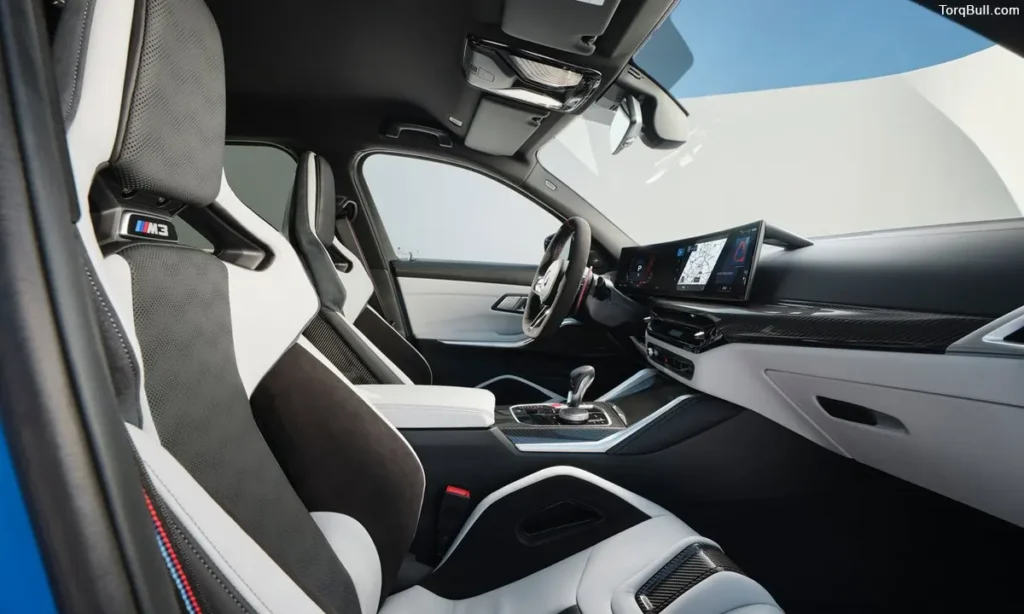
The M3’s adaptive dampers are the component that most directly enables the dual-purpose performance and daily-use mission that defines the car’s appeal — and the transition between track and street settings is genuinely immediate rather than merely nominal.
In Sport Plus mode for track use, the suspension firms to a level that minimises body roll during high-speed direction changes, controls weight transfer under heavy braking and maintains the precise platform stability that fast lap times require. The firmer suspension may be too stiff for the typical driver, but it’s a delight for performance-hungry pilots — the specific characterisation that acknowledges the deliberate daily-use compromise the track setting represents.
Switch the adaptive dampers to their softer settings, and ride quality becomes entirely livable for everyday use — the compression and rebound calibration shifting to absorb road surface variations that track mode transmits directly to the occupants. While never plush in the luxury-sedan sense, the softer setting soaks up road imperfections without jarring occupants, making long motorway journeys surprisingly comfortable given the suspension’s capable track geometry.
This dual capability — genuine circuit performance alongside daily-use refinement — is the specific achievement that the M3’s engineering most consistently validates across professional extended evaluation. It is not a track car that compromises for road use. It is a daily driver that performs at track level when the driver and conditions request it.
2026 BMW M3 Track Performance — Complete Data Reference Chart
| Performance Metric | Standard M3 | M3 Competition RWD | M3 Competition xDrive | M3 CS |
| Engine | S58 3.0L Twin-Turbo | S58 3.0L Twin-Turbo | S58 3.0L Twin-Turbo | S58 3.0L Twin-Turbo |
| Horsepower | 473 hp | 503 hp | 523 hp | 543 hp |
| Torque | 406 lb ft | 479 lb ft | 479 lb ft | 479 lb ft |
| Transmission | 6-speed manual | 8-speed automatic | 8-speed automatic | 8-speed automatic |
| Drivetrain | RWD | RWD | AWD (xDrive) | RWD or AWD |
| 0-60 MPH | 4.1 seconds (manual) | Under 4 seconds | 3.4 seconds | Under 3.5 seconds |
| Track Lateral Grip | Over 1.0 g (Turn 1, VIR) | Similar | Over 1.0 g | Higher |
| VIR Lightning Lap | Not separately tested | Not separately tested | 2:53.5 (established gen) | N/A |
| Nordschleife (CS Touring) | N/A | N/A | N/A | 7:29.5 — fastest production estate |
| Braking System | Standard iron | Standard iron | Standard iron | Optional carbon-ceramic |
| Tyres | Michelin Pilot Sport 4S | Michelin Pilot Sport 4S | Michelin Pilot Sport 4S | Michelin Pilot Sport Cup 2R |
| Adaptive Suspension | Standard | M-specific | M-specific | CS-spec with reduced weight |
| Daily Comfort (soft mode) | Good | Good | Good | Good with more grit |
Read: BMW M3 Fuel Cost Per Year. The Hidden Expense of Performance Car Ownership
The Track Car You Can Drive to Work: The M3’s Specific Achievement
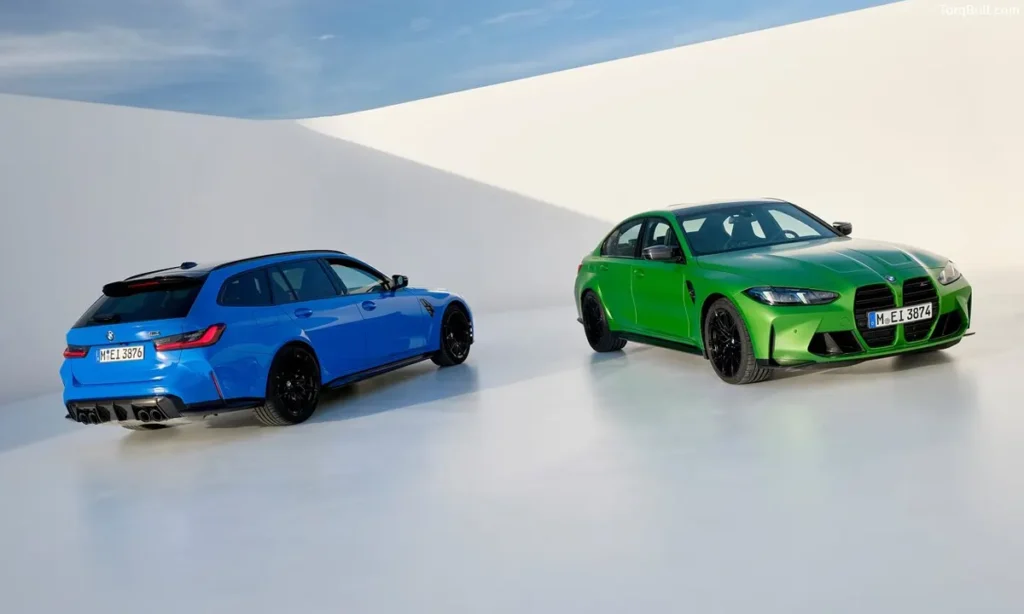
The BMW M3’s most consistently remarkable attribute is not any single performance specification — it is the specific combination of track capability and daily usability that 523 horsepower and AWD traction packaging achieves alongside adaptive dampers that genuinely transition between performance and comfort modes.
Professional evaluation of the M3 Competition xDrive describes it as a remarkable package — one where all-wheel drive delivers heaps of grip for explosive acceleration and wet-weather confidence alongside the ability to direct all power to the rear wheels for the tail-happy antics that rear-drive M3 enthusiasts specifically value in a performance sedan. The combination of these drive character options within one vehicle — at both the performance and comfort ends of the adjustability range — is the engineering achievement that justifies the M3’s position as the benchmark against which all other performance sedans are measured.
The race track worthy performance with reliability to match and every feature you could possibly need inside a luxury package with all the tech is the owner community’s most concise characterisation of what the M3 delivers across its daily and performance use cases — a characterisation that professional circuit evaluation, Nordschleife lap timing and extended real-world assessment collectively validate.