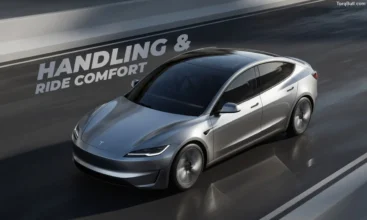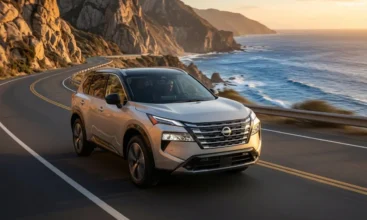
- The 2026 Lexus RZ 350e offers a significantly lower entry price and up to 300 miles of EPA-rated range, making it an appealing value-focused luxury EV.
- The 2026 BMW iX delivers stronger performance and greater available range, but its starting price is roughly $29,000 higher.
- Buyers prioritizing reliability and value will likely favor the Lexus, while those seeking maximum range, acceleration and technology may find the BMW worth the premium.
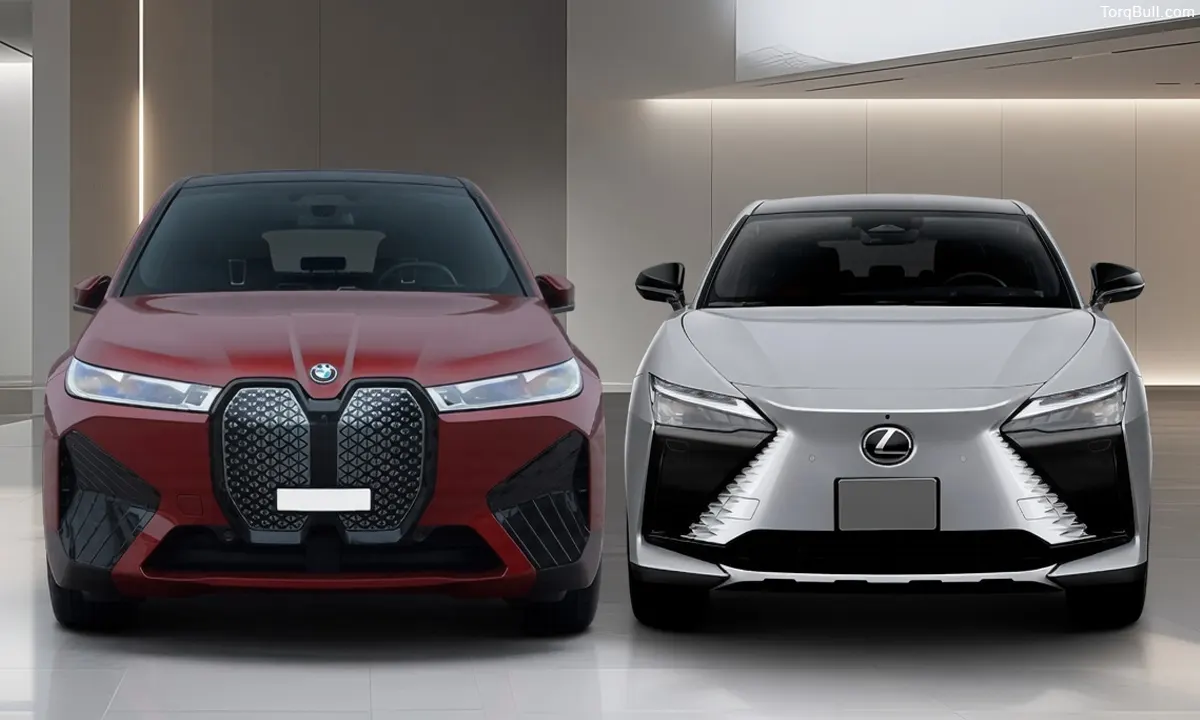
The Lexus RZ versus BMW iX comparison is not a comparison between two equivalently positioned vehicles — it is a comparison between a luxury compact electric SUV and a luxury midsize electric SUV from two brands whose electric vehicle strategy, pricing philosophy and ownership experience character differ as significantly as their vehicle dimensions. The RZ starts at $47,295, does not qualify for the federal tax credit and positions itself as the attainable end of the premium electric crossover market. The iX xDrive45 starts at $76,325 after a substantial 2026 price reduction, offers more range, more power and more performance but at a $29,000 premium above the RZ’s entry point. This complete comparison examines every relevant dimension to determine which vehicle serves each buyer type more specifically.
Price: The Most Significant Comparison Dimension
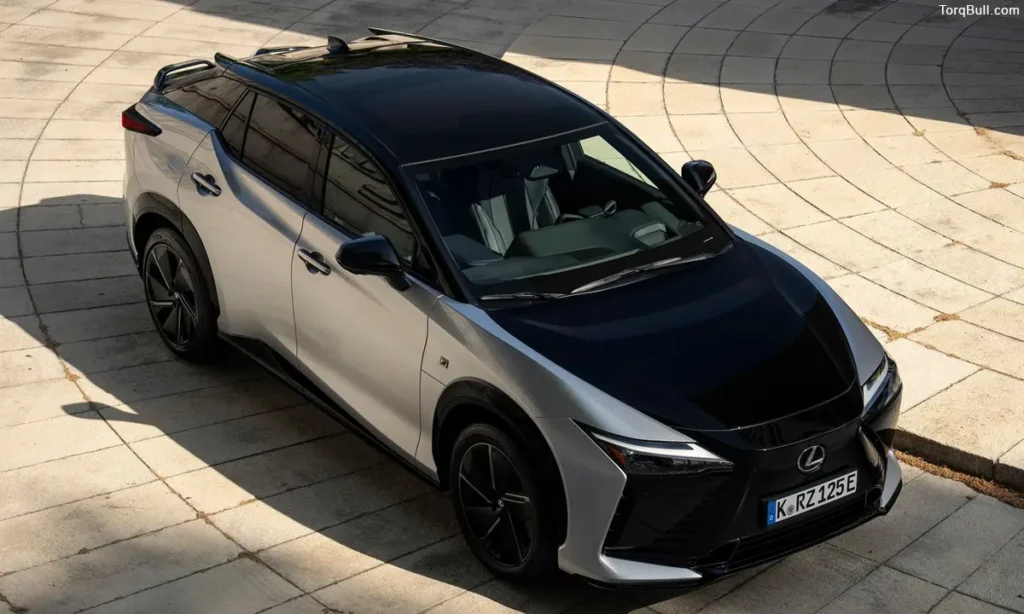
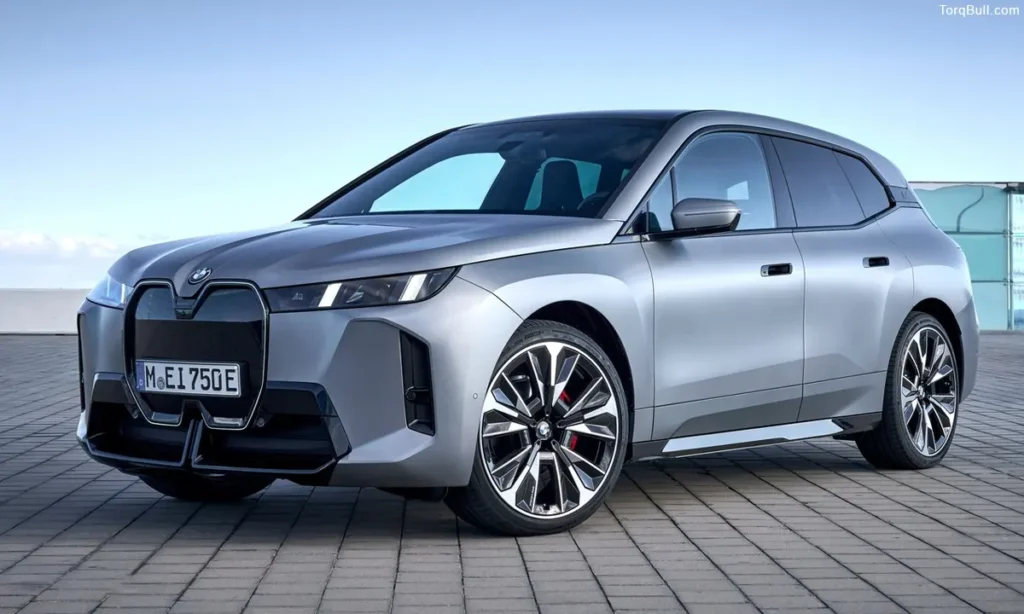
The 2026 Lexus RZ and BMW iX’s price comparison is the most immediately defining dimension — because the $29,030 difference between the RZ 350e’s $47,295 starting price and the iX xDrive45’s $76,325 starting price is not a modest competitive gap but a fundamental positioning difference.
The RZ’s $47,295 entry point places it in the premium compact electric crossover market alongside vehicles like the Audi Q4 e-tron, Volvo EX40 and Mercedes-Benz EQB. The iX’s $76,325 entry point — reduced from the previous year’s $88,245 by a $12,100 price cut for the new xDrive45 base model — places it in the luxury midsize electric SUV market alongside the Mercedes-Benz EQS SUV and Audi Q8 e-tron.
For the 2026 comparison to be relevant, a buyer must be evaluating both vehicles simultaneously — which typically means they are considering whether the iX’s significantly higher price is justified by its additional capabilities, or whether the RZ’s lower price provides sufficient luxury experience without the iX’s premium. This is a legitimate buyer choice for those with flexible budget parameters, but it is not a comparison between competitive equals at equivalent price points.
Neither vehicle qualifies for the federal $7,500 EV tax credit due to their manufacturer origins — the RZ from Japan and the iX from Germany both failing the domestic content requirements. This equivalence eliminates the tax credit as a differentiating financial factor, maintaining the full $29,030 price gap as the relevant comparison figure.
Read: Lexus RZ vs Tesla Model Y Range. The Ultimate Electric SUV Comparison for 2026
Range: The iX’s Most Decisive Technical Advantage
The range comparison between the Lexus RZ and BMW iX is where the iX’s significantly higher price produces its most clearly quantifiable technical advantage — the BMW’s range advantage across all configurations being the most directly relevant specification for long-distance driving confidence.
The 2026 Lexus RZ 350e FWD achieves approximately 300 miles EPA range — the longest range in the RZ lineup and a significant improvement from the previous generation’s best-case figure. The RZ 450e AWD achieves approximately 260 miles and the new 550e F Sport AWD achieves approximately 229 miles.
The 2026 BMW iX xDrive45 achieves approximately 279 miles at its entry level, the iX xDrive60 achieves approximately 324 miles and the iX M70 achieves approximately 297 miles despite its 650-horsepower output. The iX xDrive60’s 324 miles represents the strongest range in the lineup — exceeding the RZ 350e’s 300 miles by 24 miles and exceeding the RZ 450e AWD’s 260 miles by 64 miles.
At a comparative level, the RZ 350e FWD and the iX xDrive45 AWD produce approximately similar range figures — 300 miles versus 279 miles respectively — with the Lexus actually providing slightly more range than the entry-level BMW at a price point that is $29,030 lower. However, the RZ’s 300-mile figure requires the FWD base configuration while the iX’s 279-mile entry figure comes standard with AWD — making the true comparable AWD-to-AWD comparison more relevant: the RZ 450e AWD at 260 miles versus the iX xDrive45 AWD at 279 miles gives the BMW a 19-mile advantage with AWD included.
Performance: The iX’s Substantial Power Advantage
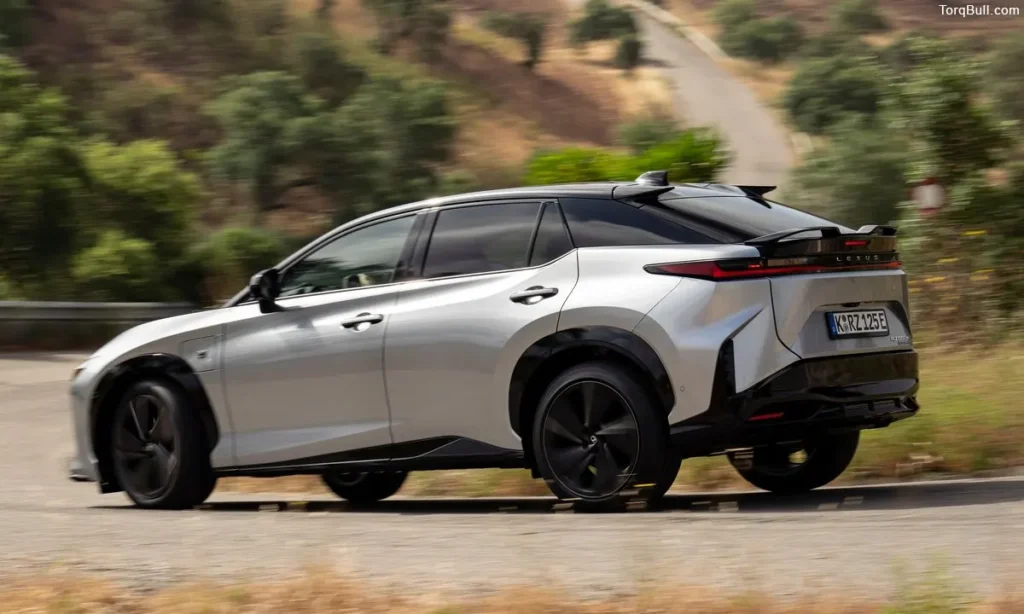
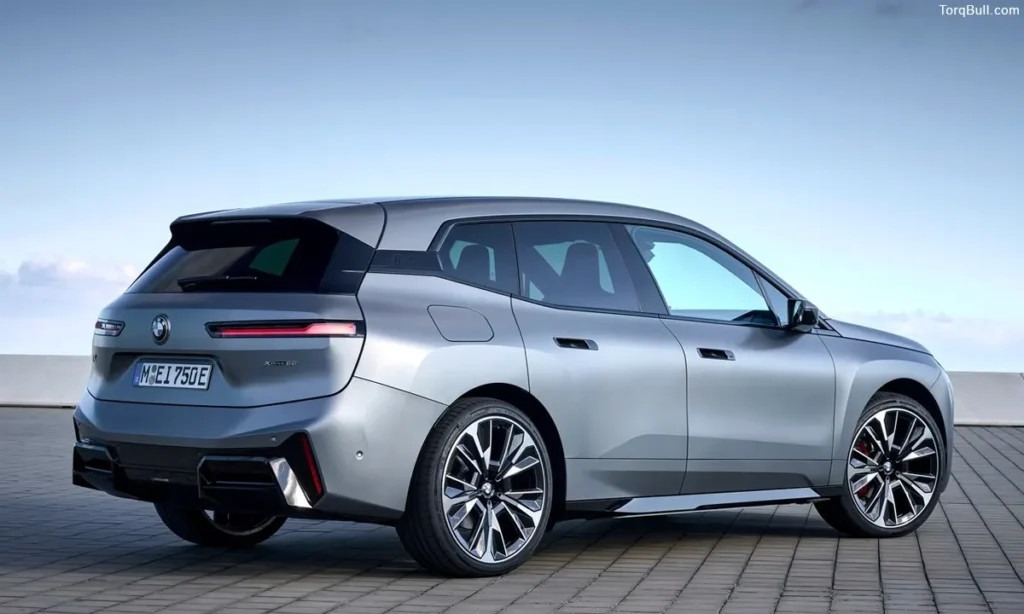
The power and acceleration comparison heavily favours the BMW iX across all configurations — reflecting the larger vehicle’s larger battery, more powerful motor configurations and BMW’s deliberate positioning of the iX as a performance-oriented luxury electric SUV.
The Lexus RZ 350e produces 201 horsepower and reaches 0 to 60 MPH in approximately 7.1 seconds. The RZ 450e AWD produces 308 horsepower and reaches 0 to 60 MPH in approximately 4.9 seconds. The RZ 550e F Sport AWD produces 402 horsepower and reaches 0 to 60 MPH in approximately 4.1 seconds.
The BMW iX xDrive45 produces 402 horsepower and reaches 0 to 60 MPH in 4.9 seconds. The iX xDrive60 produces 536 horsepower and reaches 0 to 60 MPH in approximately 4.2 seconds. The iX M70 produces 650 horsepower and reaches 0 to 60 MPH in 3.6 seconds.
For the most relevant performance comparison, the RZ 450e AWD at 308 horsepower and 4.9 seconds matches the iX xDrive45’s 4.9-second result but at a price that is $29,030 lower. The RZ 550e F Sport at 402 horsepower offers a performance figure that also appears in the iX xDrive45’s specification. For buyers evaluating performance against price, the RZ provides competitive performance capability at a dramatically lower cost.
Read: Lexus RZ Highway Range Test 2026. Does It Meet Expectations on Long Trips?
Reliability: Lexus’s Most Decisive Advantage
The reliability comparison between Lexus and BMW is the dimension where the Japanese manufacturer holds its most significant and most consistently documented competitive advantage — a gap that independent reliability surveys have maintained across multiple years of assessment.
Lexus ranks first for reliability among major vehicle manufacturers. BMW ranks ninth with 49 more problems per 100 vehicles than the average — a specific and consistently documented reliability gap that the Lexus brand’s Toyota engineering foundation directly produces through the manufacturing quality standards that the Toyota-Lexus platform applies across its vehicle lineup.
For buyers considering five or more years of ownership, this reliability gap produces financial implications that the $29,030 initial price difference does not fully capture. Higher reliability translates to fewer unscheduled repair events, lower annual maintenance spending and more predictable ownership costs across the ownership period. Buyers who have previously owned BMW products and experienced the maintenance cost profile that German luxury vehicles carry will find the Lexus reliability advantage particularly compelling in the cost context.
2026 Lexus RZ vs BMW iX — Complete Comparison Chart
| Specification | RZ 350e FWD | RZ 450e AWD | RZ 550e F Sport | iX xDrive45 | iX xDrive60 | iX M70 |
| Starting Price | $47,295 | $52,995 | $58,295 | $76,325 | $89,675 | $112,675 |
| Federal Tax Credit | Not eligible | Not eligible | Not eligible | Not eligible | Not eligible | Not eligible |
| EPA Range | approximately 300 miles | approximately 260 miles | approximately 229 miles | approximately 279 miles | approximately 324 miles | approximately 297 miles |
| Horsepower | 201 hp | 308 hp | 402 hp | 402 hp | 536 hp | 650 hp |
| 0-60 MPH | approximately 7.1 sec | approximately 4.9 sec | approximately 4.1 sec | 4.9 sec | approximately 4.2 sec | 3.6 sec |
| Drivetrain | FWD | AWD | AWD | AWD | AWD | AWD |
| Vehicle Size | Compact luxury | Compact luxury | Compact luxury | Midsize luxury | Midsize luxury | Midsize luxury |
| Reliability Ranking | First (Lexus brand) | First | First | Ninth (BMW brand) | Ninth | Ninth |
| Charging Port | NACS | NACS | NACS | NACS compatible | NACS compatible | NACS compatible |
| Interior Quality | Premium Lexus | Premium Lexus | Ultrasuede exclusive | BMW luxury | BMW luxury | BMW M performance |
Read: Lexus RZ Luxury Features Review 2026. Does This Electric SUV Feel Truly Premium?
Interior and Daily Experience: Different Luxury Philosophies
The Lexus RZ and BMW iX pursue fundamentally different luxury interior philosophies — and which approach a buyer prefers is a matter of personal aesthetic priority rather than a hierarchy of objective quality.
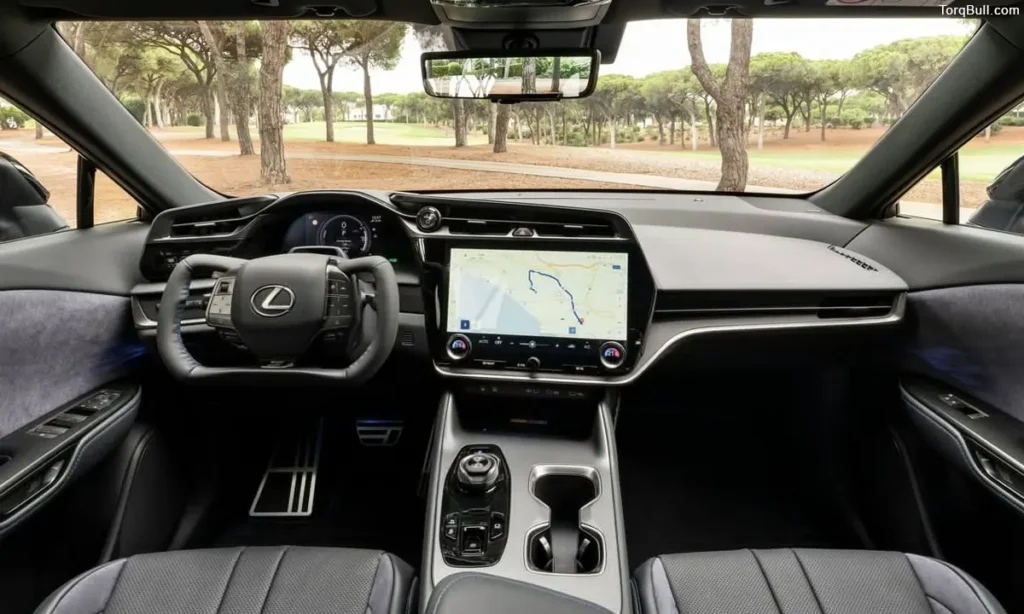
The Lexus RZ’s interior delivers the quiet, unhurried luxury character that Lexus has built its brand identity around — premium NuLuxe or Ultrasuede materials, minimal visual drama, physical controls where daily frequency warrants them and the acoustic treatment that produces cabin tranquillity as the primary sensory characteristic. The cabin is designed for comfort across extended use rather than for the driver-focused performance aesthetic that BMW’s interior design pursues.
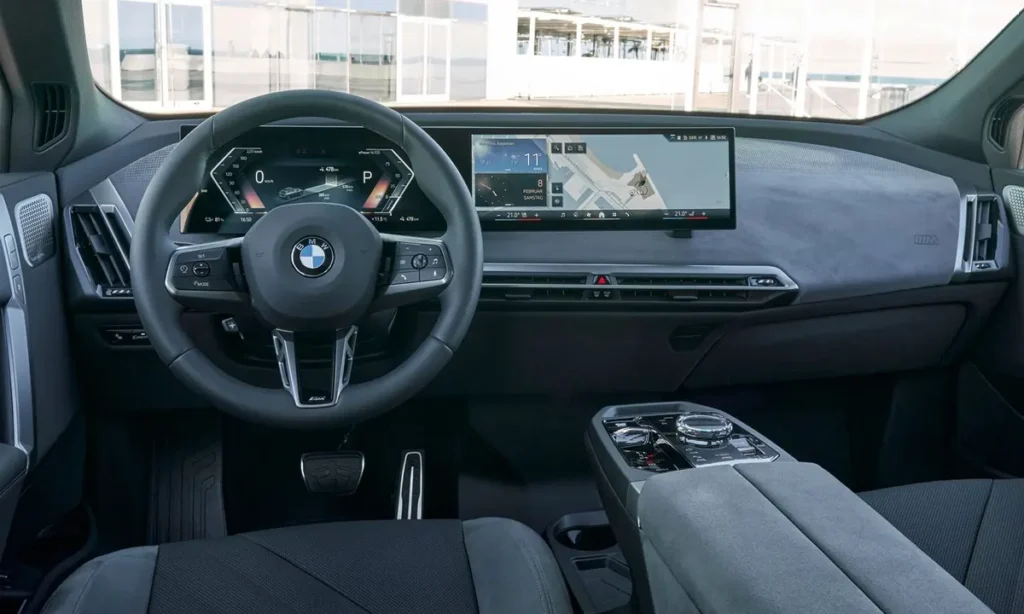
The BMW iX’s interior provides the more driver-centric and technology-forward luxury environment that BMW’s performance brand positioning demands — larger curved displays, the iDrive system’s comprehensive interface and the performance character materials and ergonomics that position the iX as a luxury sports SUV rather than a luxury comfort vehicle. The iX’s cabin dimensions are larger than the RZ’s — consistent with the midsize versus compact positioning difference — providing more interior volume across all passenger positions.
Who Should Choose Each Vehicle
The BMW iX is the correct choice for buyers who specifically need the midsize SUV interior volume, who prioritise maximum range and maximum performance within the luxury electric segment and who can accommodate the $76,325 starting price without the constraint that the $29,030 premium over the RZ represents. For buyers whose requirements specifically include the iX xDrive60’s 324-mile range or the M70’s 650 horsepower, the Lexus RZ cannot serve these requirements regardless of price comparison.
The Lexus RZ is the correct choice for buyers who value the Lexus reliability record’s documented advantage over BMW’s reliability profile, who find the $47,295 entry point more appropriate for a compact luxury electric crossover and who prefer the Lexus interior philosophy over BMW’s performance-oriented approach. The 2026 RZ’s 300-mile range for the FWD 350e specifically closes the gap with the iX entry model’s 279-mile figure — making the RZ’s value case stronger in 2026 than in any previous year.