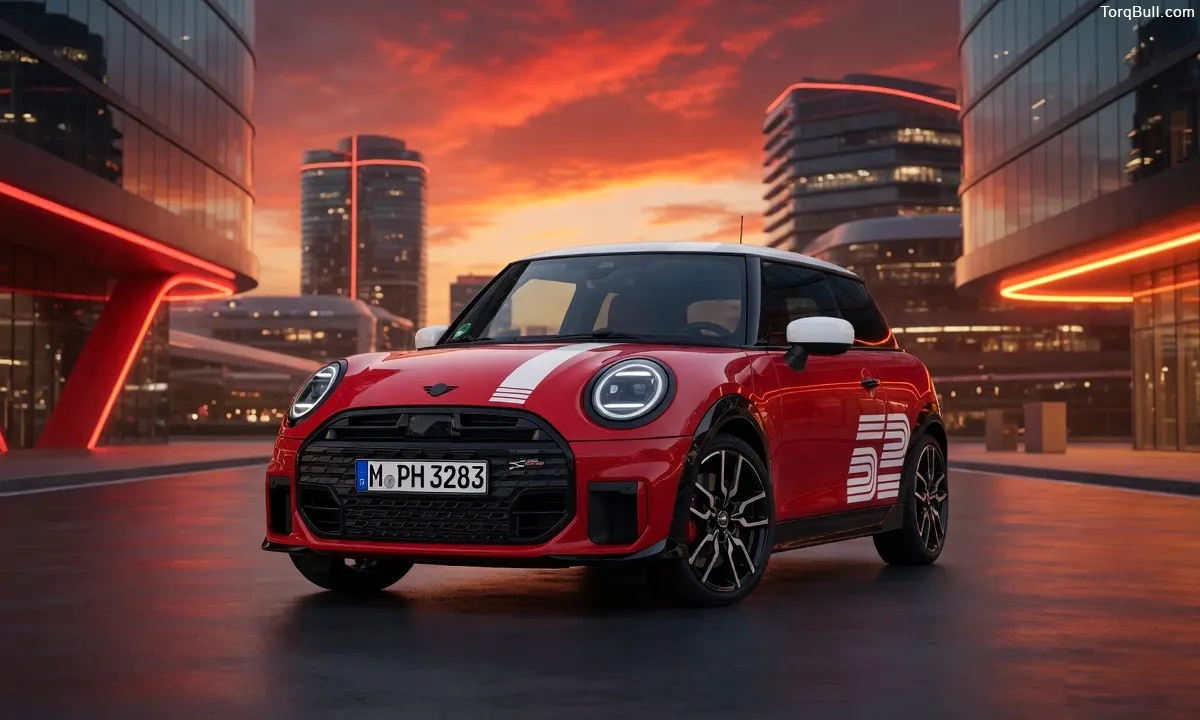
On January 21, 1965, a little British car with 75 horsepower won the Rallye Monte-Carlo against bigger, more powerful machines through pure handling genius and driver skill. Six decades later, MINI launched the JCW 1965 Victory Edition to honor that historic win, and it arrives with 228 horsepower, JCW Sport Brakes, 18-inch alloy wheels, a Chili Red body with full-length white racing stripes, the number 52 on both flanks, and the same spirit of giant-killing performance that made this nameplate legendary. At $46,220 before destination, American buyers get the top JCW variant exclusively. Here Are Five Reasons This Is the Coolest Go-Kart on Sale Today
Let me tell you something I genuinely believe. The best cars are the ones that have a reason to exist beyond filling a market segment gap on a spreadsheet. They stand for something. They carry a story you can feel in the steering wheel. The 2026 MINI JCW 1965 Victory Edition is absolutely one of those cars. It celebrates one of the most dramatic underdog victories in motorsport history, wraps that heritage in a genuinely capable hot hatch package, and delivers it in limited numbers at a price that makes it feel special without requiring a second mortgage. Let me break down five specific reasons this thing earns the go-kart title honestly.
Reason 1: The Story Behind It Is Genuinely One of the Best in Motorsport
Most special editions come with a backstory that reads like marketing copy. The 1965 Victory Edition comes with actual history that still gives enthusiasts goosebumps.
In January 1965, Finnish driver Timo Mäkinen and co-driver Paul Easter piloted a Cooper S numbered 52 through treacherous Alpine mountain stages at the Rallye Monte-Carlo, one of the most demanding rally events on earth. Winter conditions were brutal. The competition included far more powerful machines from established European manufacturers. The tiny British car beat every single one of them through superior handling, precise engineering, and the audacity to believe a small front-wheel-drive hatchback could out-corner the entire field.
It was not a fluke. MINI crossed the finish line first at Monte Carlo three consecutive times from 1964 through 1966, and though a controversial headlamp disqualification stripped them of the official 1966 title, it cemented a giant-killer reputation that no amount of marketing dollars could manufacture. This victory, this specific car, and this specific number are why John Cooper’s name still appears on every JCW badge produced today.
The 1965 Victory Edition also carries a second layer of meaning. It simultaneously celebrates the modern MINI’s 25th anniversary, marking BMW’s revival of the brand that brought the small performance car back from obscurity in 2001. Two celebrations in one limited-edition package is not something many vehicles can legitimately claim.
Every time you look at the 52 graphic on the door and the 1965 sticker on the C-pillar, you are looking at history that actually happened. That changes how driving the car feels.
Reason 2: The Styling Earns Attention Without Screaming for It
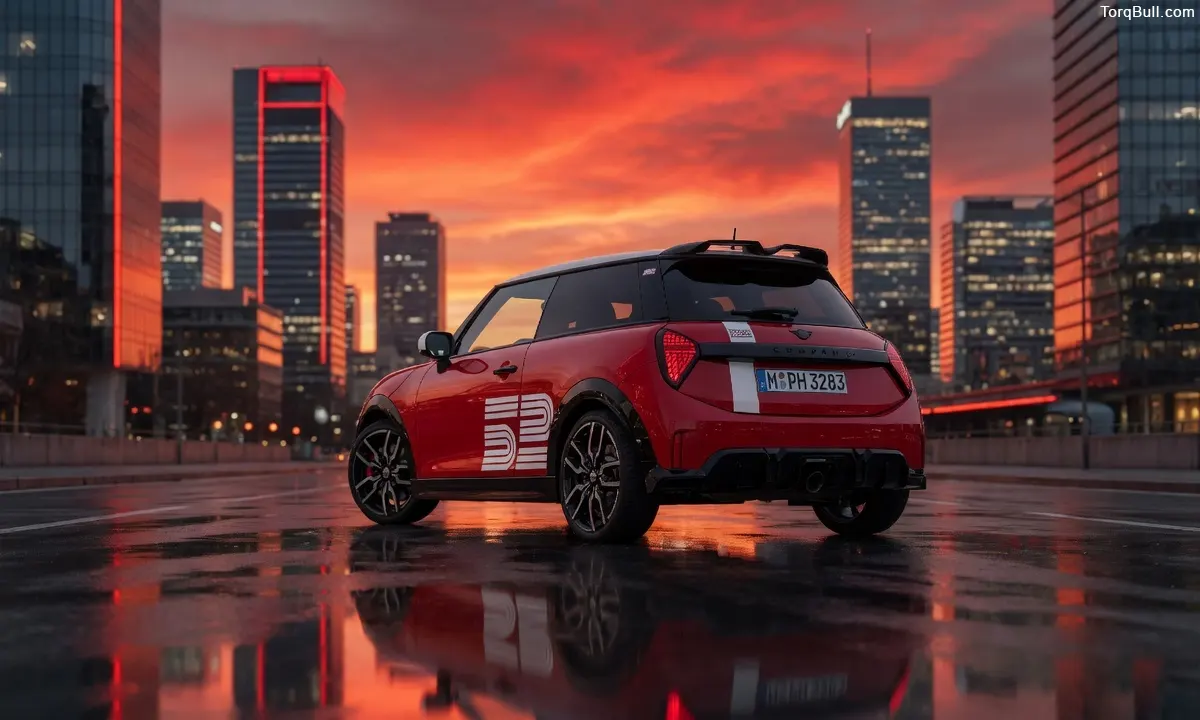
There is a very specific skill in designing a special edition that looks genuinely special without becoming a caricature of itself. Too subtle and nobody notices. Too aggressive and you look desperate. The 1965 Victory Edition gets the balance exactly right.
Chili Red is the signature body color, and it is the correct choice. Bold, warm, and historically appropriate for a car celebrating a rally victory from an era when bright colors were standard competition practice. Running from the hood over the roof and continuing to the rear hatch, a full-length white racing stripe follows the car’s roofline in the classic MINI tradition that has worked visually since the 1960s originals.
The number 52 appears prominently on both sides, rendered in white as a direct reference to the competition car. The 1965 graphic on the C-pillar subtly anchors the heritage narrative for anyone who leans in close enough to read it. White roof panels and white mirror caps are exclusive to this edition. The 18-inch JCW Lap Spoke 2-tone wheels carry Chili Red floating center caps that echo the body color in a detail most people will not notice until their third look, which is exactly the kind of design discipline that separates thoughtful special editions from lazy ones.
Inside, door sills carry white 1965 lettering on a red and black background that greets every entry and exit. The anthracite and red JCW theme runs through the cabin, reinforcing the performance character while layering in commemorative touches that feel earned rather than applied.
American buyers should know one more thing. In the United States, the 1965 Victory Edition is exclusive to the top-performance JCW variant. Global markets offer Cooper S and JCW Electric versions as well, but if you are in America shopping for this car, you are automatically getting the most capable powertrain available. That is a genuinely good outcome.
Reason 3: The Performance Genuinely Honors the Legacy
The original Cooper S that won Monte Carlo was not the most powerful car at that rally. It was the best handling one. The modern JCW 1965 Victory Edition maintains that exact priority order, and the result is a car that delivers what the badge promises.
The 2.0-litre TwinPower Turbo four-cylinder produces 228 horsepower and 280 pound-feet of torque, driving through a 7-speed dual-clutch automatic gearbox to the front wheels. Zero to 62 miles per hour takes 6.1 seconds, which is not a number that will intimidate a supercar, but in a car this compact and this light, it feels considerably more urgent than the stopwatch suggests.
The JCW Sport brakes haul things down with a confidence that matches the acceleration, creating a performance envelope that feels balanced and complete rather than biased toward straight-line speed at the expense of stopping ability. The JCW sport suspension tunes the chassis for the kind of dynamic character that best honors the competitive spirit of the 1965 original, a car whose entire success was built on exploiting superior handling rather than power advantages.
The result is a car one professional reviewer described as quick, nimble and delightfully unique in a world increasingly filled with angular, aggressive-looking hot hatches. Those words could have described Mäkinen’s Cooper S in 1965. They apply just as well to the 2026 edition honoring it.
Reason 4: The Daily Usability Makes It a Car You Can Actually Live With
Go-karts are fun at the kart track. They are considerably less fun on a 45-minute highway commute or a Saturday morning grocery run. The JCW 1965 Victory Edition walks the line between focused driver’s car and genuine daily companion better than its performance credentials might suggest.
The 9.4-inch round OLED infotainment screen runs wireless Apple CarPlay and Android Auto. Climate control, connectivity, and the expected modern amenities are all present. The cabin is compact but purposeful, with seats that one extended review described as feeling right for long drives despite the performance positioning of the overall package.
Fuel economy in real-world mixed driving comes in at approximately 29 to 31 miles per gallon depending on how aggressively you drive. For a 228-horsepower performance car, this is a genuinely reasonable figure that makes weekly fuel costs a non-issue rather than a constant financial reminder of your enthusiasm.
The MINI’s compact dimensions that make it so entertaining to drive on interesting roads also make it genuinely easy to park in urban environments, easier to thread through traffic, and more manageable in tight parking structures than the larger hot hatches it competes against. The Go-Kart feeling and the daily usability are not in opposition here. They coexist in a package that works five days a week for the commute and pays off fully on the weekend when the road opens up.
Reason 5: The Limited Numbers Make It Genuinely Collectible
Here is the part of the conversation that separates a car worth buying at full price from one worth buying because it is the best option available at any price.
MINI describes the 1965 Victory Edition as a limited run without specifying exact US production figures publicly. Markets like Canada received allocations of only 45 units. The American allocation is expected to be similarly tight. Production began in March 2026, meaning inventory is arriving at dealers right now rather than in the abstract future.
Limited production, a specific documented historical reference, a 25th anniversary marker, and exclusive US availability only in the top JCW specification combine into the profile of a vehicle that will be genuinely sought after in the enthusiast community for years. This is not just a car to drive. It is a car to own at a particular moment in MINI’s history that will not repeat itself.
At $46,220 before destination, the total delivered price lands around $47,395 including the destination and handling charge. The premium over a standard JCW model reflects the exclusive design content, the commemorative detailing, and the limited production reality rather than any mechanical upgrades. If you value heritage and exclusivity alongside genuine performance, this premium is entirely justified. If you want maximum horsepower per dollar, there are other options. But none of them have the 52 on the door or the story that put it there.
Read: BMW X3 M50 xDrive Packs Serious Sports Car Speed in a Family SUV
2026 MINI JCW 1965 Victory Edition Complete Specification Chart
| Specification | Detail | Notes |
| US MSRP | $46,220 (before destination) | $47,395 including destination and handling |
| Premium Over Standard JCW | Approximately $7,320 | Reflects limited edition content |
| Engine | 2.0L TwinPower Turbo four-cylinder | BMW-developed inline-four |
| Horsepower | 228 hp | JCW exclusive to US market for this edition |
| Torque | 280 lb-ft | Available low in the rev range |
| Transmission | 7-speed dual-clutch automatic | Manual available in European markets only |
| Drivetrain | Front-wheel drive | Consistent with original Monte Carlo winner |
| Zero to 62 MPH | 6.1 seconds | |
| Brakes | JCW Sport brakes | Matched to performance capability |
| Wheels | 18-inch JCW Lap Spoke 2-tone | Floating red center caps exclusive to this edition |
| Signature Paint | Chili Red with full-length white stripe | Hood, roof, and rear hatch |
| Heritage Graphic | Number 52 on both sides | Tribute to Mäkinen and Easter’s Monte Carlo car |
| Historic Marker | 1965 C-pillar graphic | Documents the year of the Monte Carlo victory |
| Exclusive Trim | White roof and mirror caps | Not available on standard JCW |
| Interior | Anthracite and red JCW theme, 1965 door sills | Commemorative touches throughout |
| Infotainment | 10.2-inch touchscreen | Wireless Apple CarPlay and Android Auto |
| Production Status | Limited run, March 2026 onward | Exact US allocation not publicly specified |
| US Variant | JCW only | Cooper S and JCW Electric not offered in US |
| Anniversary | Modern MINI 25th anniversary | Dual celebration with Monte Carlo tribute |
The 2026 MINI JCW 1965 Victory Edition is a car that respects where it came from, delivers where it matters today, and does it all in a package that is genuinely rare rather than artificially scarce. The go-kart reputation this nameplate carries is not marketing mythology. It is the direct descendant of a philosophy that won one of the world’s toughest rally events with a small car, a talented driver, and a chassis that made the most of every corner. The 2026 version carries that philosophy forward with 228 horsepower and a red body that you will recognize from three blocks away, which is exactly as it should be.