2025 BMW M3 vs M4: Speed, Style, and Street Smarts Compared
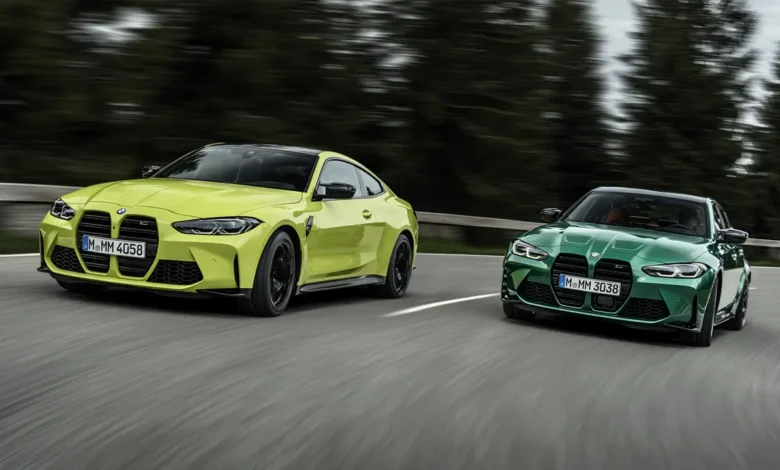
BMW’s M Division has always been a symbol of pure driving passion — a perfect blend of precision engineering, power, and daily usability. And nowhere is that philosophy more evident than in its two most iconic performance models: the BMW M3 and the BMW M4.
Both vehicles represent the best of what BMW has to offer — razor-sharp performance, luxury refinement, and unmistakable German engineering — but they do so in slightly different ways. The M3 arrives as a practical four-door sports sedan, while the M4 takes the same formula and wraps it in a sleek two-door coupe design.
But when it comes to choosing between the two, which one truly delivers the better experience — on the street and on the track? Let’s take a closer look at how these two titans of performance compare in speed, style, specs, and soul.
Power and Performance: Shared DNA, Different Character
At their core, both the 2025 BMW M3 and BMW M4 are powered by the same heart — BMW’s legendary S58 twin-turbocharged 3.0-liter inline-six engine. It’s the same powertrain that has earned BMW’s M lineup a reputation for delivering both explosive performance and incredible reliability.
In their base “standard” versions, both cars produce 473 horsepower and 406 lb-ft of torque, paired with a 6-speed manual transmission and rear-wheel drive — a nod to traditional driving enthusiasts. For those seeking even more performance, the Competition models take things up a notch, producing 503 horsepower and 479 lb-ft of torque, paired exclusively with an 8-speed M Steptronic automatic transmission.
Both cars offer xDrive all-wheel-drive as an option, allowing for even faster acceleration and greater traction. With this setup, the BMW M3 Competition xDrive and M4 Competition xDrive sprint from 0 to 60 mph in just 3.4 seconds, placing them squarely in supercar territory.
On paper, the numbers are nearly identical — but behind the wheel, the sensations are subtly different.
The M3: Power with Poise
The M3 feels perfectly balanced — aggressive when pushed hard but composed in everyday driving. The extra weight from the four-door design gives it a slightly steadier footprint, particularly at higher speeds or during long-distance cruising.
The M3’s chassis tuning leans toward stability and confidence, making it a great all-rounder. Whether you’re attacking corners or simply driving through the city, the M3 feels like it can do it all with grace.
The M4: Sharper, Louder, Wilder
The M4, by contrast, feels a touch more playful. Thanks to its slightly lower center of gravity and tighter body rigidity, the coupe delivers a more connected and engaging driving feel. It’s lighter on its feet, turning in more aggressively and communicating every nuance of the road.
While both vehicles share the same mechanical DNA, the M4’s coupe structure gives it a performance edge in tight corners and at high speeds. It’s the purist’s choice — the one that feels closest to BMW’s racing heritage.
Design: Power in Proportion
The M3 — Bold and Purposeful
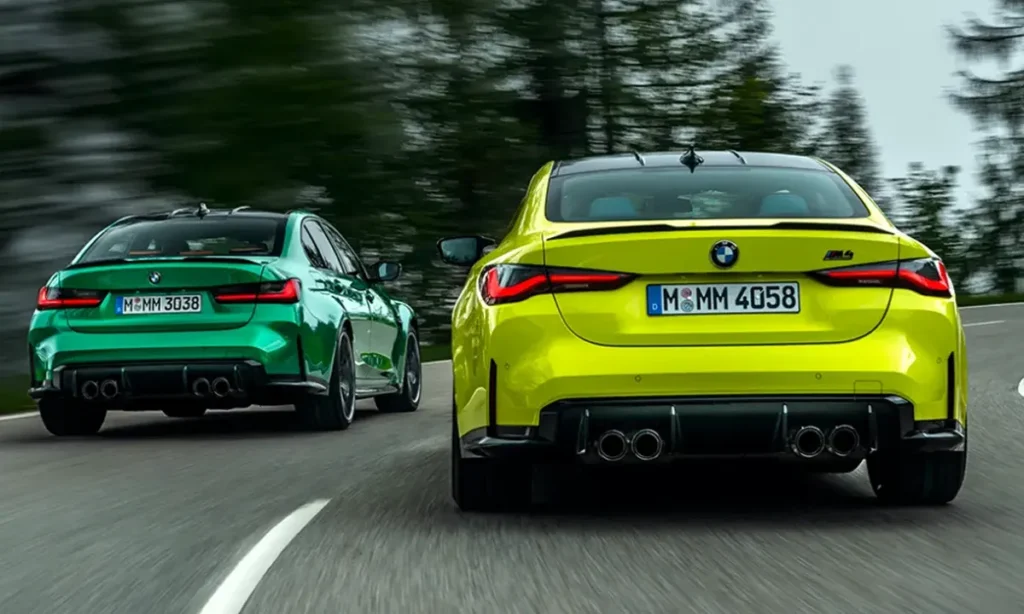
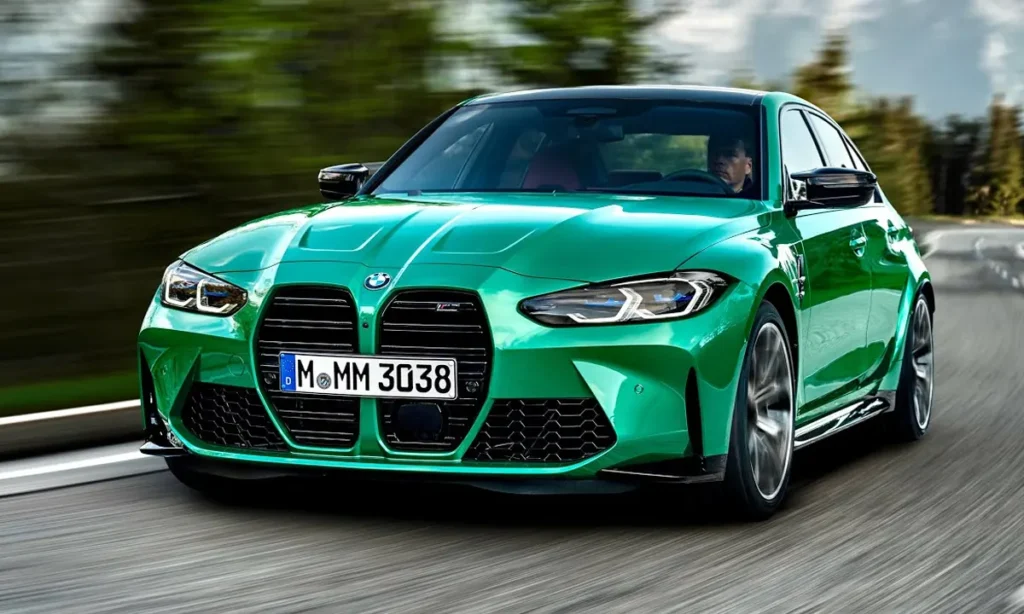
The BMW M3 carries a muscular and assertive stance, with flared fenders, quad exhaust pipes, and the signature large kidney grilles. It’s a four-door sedan that doesn’t pretend to be subtle — every inch screams performance.
Its design language is modern and functional. Aerodynamic lines channel airflow efficiently, while the aggressive front fascia and sculpted hood showcase its performance intent. The M3’s overall look is that of a street fighter in a tailored suit — elegant enough for business, ferocious enough for the track.
The M4 — Sleek and Sophisticated
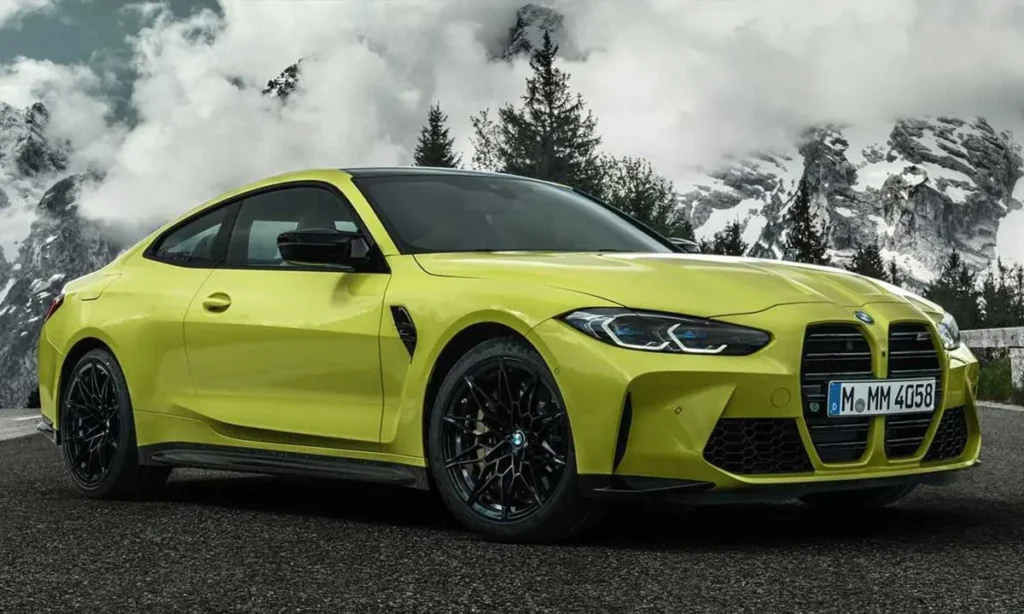
The BMW M4 takes a more artistic approach to aggression. As a two-door coupe, its silhouette is lower, wider, and more aerodynamic. The long hood and short rear deck evoke the proportions of classic sports cars, while the bold grille design and muscular wheel arches emphasize modern performance.
From the side, the M4 exudes motion even when standing still. Its flowing lines and coupe roofline make it look faster, more exotic, and unmistakably premium. For those who prioritize aesthetics and presence, the M4 easily wins the style showdown.
Interior: Modern, Digital, and Driver-Focused
Both the M3 and M4 share a nearly identical interior design — minimalist yet luxurious, futuristic yet distinctly BMW.
Cockpit Layout
Dominating the dashboard is BMW’s Curved Display, which merges a 12.3-inch digital instrument cluster with a 14.9-inch infotainment screen under a single glass panel. It’s powered by BMW’s latest iDrive 8.5 software, which features intuitive voice control, real-time navigation, wireless connectivity, and customizable performance displays.
Materials and Comfort
Inside, both cars are wrapped in Merino leather, with carbon-fiber trim, ambient lighting, and M-specific seats that provide exceptional support during spirited driving. Optional M Carbon bucket seats reduce weight and add track-ready aesthetics.
Where the two differ most is practicality.
- The M3, being a sedan, offers more rear-seat legroom and easier access, making it a more practical daily driver or family-friendly performance car.
- The M4, while equally luxurious, trades some rear space for style. The coupe’s rear seats are tighter, and getting in or out requires more effort — typical of a two-door performance car.
If usability and comfort matter, the M3 wins. If emotion and design come first, the M4 takes the crown.
Driving Dynamics: Precision Engineering Meets Emotion
Steering and Handling
BMW’s engineering brilliance shines through in both cars. The M Servotronic variable steering system offers precise control, adapting automatically to speed and driving conditions. The result is a steering feel that’s sharp and communicative — though the M4 feels slightly more responsive due to its coupe geometry.
Suspension and Ride Quality
Both cars use BMW’s Adaptive M Suspension, which continuously adjusts damping for optimum balance between comfort and performance. In Comfort mode, the ride is surprisingly refined, soaking up bumps without losing composure. Switch to Sport or Sport+, and both transform into track-ready weapons — stiff, precise, and full of feedback.
Braking and Control
The standard M Compound Brakes deliver tremendous stopping power, while optional Carbon Ceramic Brakes further reduce fade during extended track use. Paired with BMW’s M Traction Control System and xDrive AWD, both cars offer confidence-inspiring control even in challenging conditions.
Whether you’re carving through mountain passes or sprinting on a highway, both cars are intoxicating to drive — precise, powerful, and unmistakably BMW M.
Practicality and Daily Living
While both vehicles are designed with performance as a priority, BMW has ensured they can handle the demands of daily driving.
The M3, with its four doors and larger trunk, is the logical choice for those who need everyday practicality. It comfortably seats four adults and has enough luggage space for road trips or errands.
The M4, while less practical, offers a more emotional experience. It’s the kind of car you buy not just to drive — but to feel. The coupe body, low stance, and cabin layout make it an experience every time you hit the road.
For daily use, the M3 is the smarter choice. For weekend thrills, the M4 wins hearts.
Technology and Safety
BMW equips both cars with a comprehensive suite of technology and safety features, ensuring they’re as advanced as they are fast.
Standard features include:
- Adaptive Cruise Control
- Lane Departure and Blind Spot Warning
- Parking Assistance with 360° Camera
- Head-Up Display
- Gesture and Voice Control
- Harman Kardon Surround Sound System
Optional upgrades include a Driving Assistance Professional Package, adding semi-autonomous capabilities for long highway drives.
On the tech front, both cars are identical — BMW doesn’t play favorites.
Performance Comparison Chart
| Specification | BMW M3 Competition xDrive (2025) | BMW M4 Competition xDrive (2025) |
| Engine | 3.0L Twin-Turbo Inline-6 | 3.0L Twin-Turbo Inline-6 |
| Horsepower | 503 hp | 503 hp |
| Torque | 479 lb-ft | 479 lb-ft |
| Transmission | 8-Speed M Steptronic | 8-Speed M Steptronic |
| Drivetrain | AWD (xDrive) | AWD (xDrive) |
| 0–60 mph | 3.4 sec | 3.4 sec |
| Top Speed | 180 mph (limited) | 180 mph (limited) |
| Body Style | Sedan (4-Door) | Coupe (2-Door) |
| Starting Price (US) | ~$76,000 | ~$78,000 |
As the chart shows, the differences are minimal — performance is virtually identical, with design and practicality being the true deciding factors.
Verdict: M3 or M4 — Which One Wins?
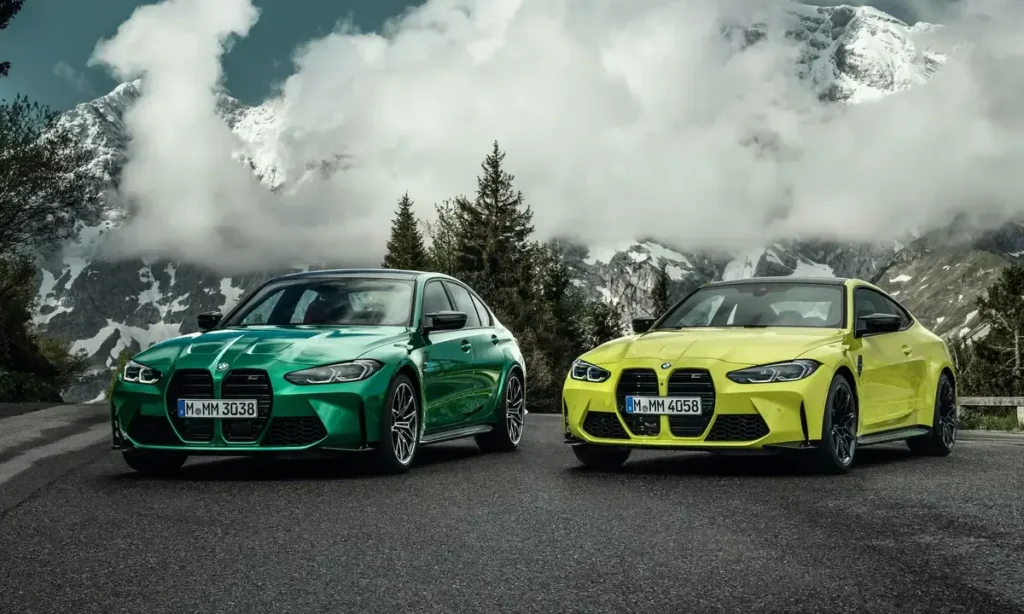
Choosing between the 2025 BMW M3 and BMW M4 comes down to one question: what kind of driver are you?
If you value daily usability, comfort, and subtle aggression, the M3 is the better all-rounder. It’s the car that balances family duties with performance thrills — the ultimate sleeper that can conquer the racetrack by day and school runs by night.
But if you crave style, emotion, and the purest expression of BMW’s driving DNA, the M4 is irresistible. It’s sharper, sleeker, and just that little bit more daring — perfect for enthusiasts who see driving as an art form.
Ultimately, both cars represent BMW M’s unwavering commitment to performance excellence. The M3 is the heart, and the M4 is the soul — two sides of the same legendary coin.
Read: 2026 Rolls-Royce Phantom Centenary Private Collection: A Century of Timeless Luxury
Frequently Asked Questions (FAQs)
Q1: Do the BMW M3 and M4 have the same engine?
Yes. Both use the S58 3.0L twin-turbo inline-six engine, producing up to 503 hp in Competition trims.
Q2: Which is faster — the M3 or M4?
Performance is nearly identical. The M4 feels slightly sharper due to its coupe body and lower center of gravity.
Q3: Is the M3 more practical than the M4?
Yes. With four doors and more cabin space, the M3 offers better usability for families or daily driving.
Q4: How much do they cost?
The 2025 M3 starts around $76,000, while the M4 starts around $78,000, depending on options and drivetrain.
Q5: Which is better for track use?
Both excel, but the M4’s stiffer chassis and coupe design make it slightly more track-oriented.