Mercedes S-Class Goes Self-Driving — BMW’s Next Big Challenge
In the long-standing rivalry between Mercedes-Benz and BMW, innovation has always been the sharpest weapon. For decades, both brands have battled for supremacy in performance, comfort, and technology. But in 2025, the playing field is shifting — from horsepower to software.
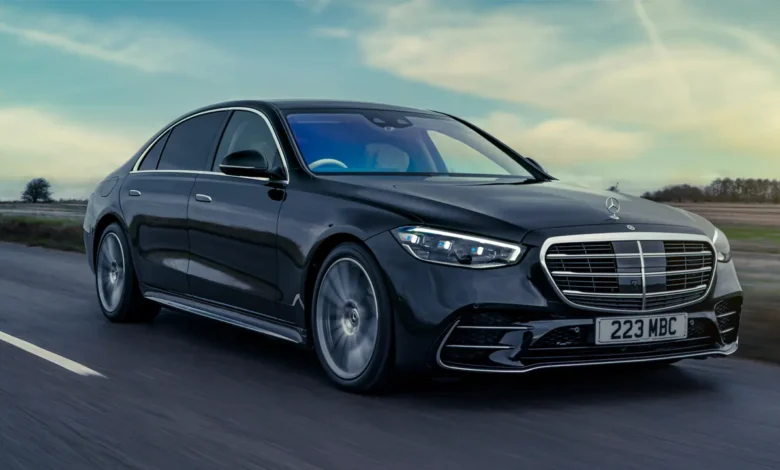
At the forefront of this change stands the self-driving Mercedes-Benz S-Class, an engineering masterpiece that pushes the boundaries of autonomy and luxury. With its Level 3 autonomous system, Mercedes has become the first automaker to bring true hands-free, eyes-off driving to public roads — a feat that even BMW, the “Ultimate Driving Machine,” cannot afford to ignore.
This isn’t just a battle between two carmakers. It’s a preview of the future of luxury mobility, where artificial intelligence, driverless technology, and digital ecosystems define prestige more than leather upholstery or horsepower.
The S-Class Reinvents Itself as the Smartest Car on the Road
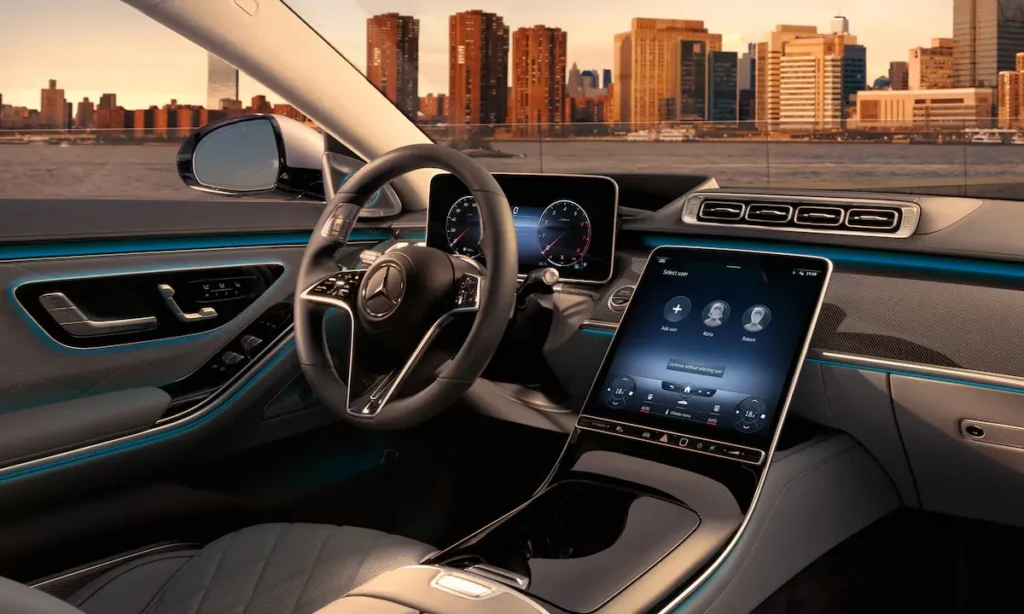
Since its debut in the 1950s, the Mercedes-Benz S-Class has been more than just a flagship sedan — it has been an innovation incubator. Nearly every major automotive advancement, from anti-lock brakes to adaptive cruise control, has first appeared on the S-Class before becoming mainstream.
Now, it’s making history again — this time by introducing Drive Pilot, the world’s first SAE Level 3 autonomous driving system approved for use in the United States and Europe.
That means, under specific conditions, the S-Class can take full control of driving — accelerating, steering, and braking — without the driver needing to pay attention to the road. Mercedes has achieved something no other automaker has yet delivered at scale: the ability to legally “let go.”
In an era where Tesla’s Autopilot still operates at Level 2 (requiring constant driver supervision), this leap gives Mercedes a massive technological and marketing advantage.
What Exactly Is Level 3 Autonomy?
The term “self-driving” gets thrown around often, but it’s crucial to understand what Level 3 really means.
In automotive autonomy, systems are ranked from Level 0 to Level 5:
- Level 0–2: Driver assistance only. The human must always stay alert.
- Level 3: Conditional autonomy — the car can drive itself under specific conditions, and the driver can temporarily disengage.
- Level 4–5: Full autonomy — no human involvement required.
Mercedes’ Drive Pilot operates at Level 3. That means on approved highways, at speeds up to 40 mph (65 km/h), and in well-mapped regions like California and Nevada, the system can handle all aspects of driving — while the driver watches a movie or checks emails.
It’s not science fiction anymore. It’s certified, road-legal luxury technology.
How Mercedes Did It: The Tech Behind the Magic
The self-driving S-Class isn’t just about adding more sensors; it’s about integrating intelligence with precision engineering. Mercedes has fused its hardware, AI software, and mapping ecosystem into one seamless system.
1. A Multi-Layer Sensor Network
The car uses an array of cutting-edge sensors, including:
- Lidar (Light Detection and Ranging) for precise 3D mapping.
- Radar for object detection at long distances.
- Cameras that read traffic signs, lane markings, and nearby vehicles.
- Ultrasonic sensors for close-range awareness.
This data is processed in real time by high-performance onboard computers capable of making split-second driving decisions.
2. High-Definition Mapping and Cloud Updates
Mercedes’ HD mapping system constantly syncs with satellite data, providing centimeter-level accuracy. This allows the car to anticipate road curvature, lane merges, and construction zones — far beyond what cameras alone can see.
3. Redundant Safety Systems
Mercedes has doubled up every critical system — from steering actuators to brake controls — ensuring the car can continue safely even if one component fails. This redundancy is what allows regulatory bodies to trust the system with true hands-free operation.
4. Integration with Digital Ecosystem
Through Mercedes’ MBUX (Mercedes-Benz User Experience) interface, Drive Pilot connects seamlessly with the car’s infotainment and driver monitoring systems. Once Drive Pilot is active, the driver can stream Netflix, attend video calls, or browse the internet — legally.
This blend of autonomy and digital entertainment sets a new standard for luxury mobility.
BMW’s Dilemma: The Ultimate Driving Machine Meets the Autonomous Era
For decades, BMW’s brand identity has been built on driving pleasure — precision handling, rear-wheel balance, and driver engagement. The slogan “The Ultimate Driving Machine” isn’t just marketing — it’s a philosophy.
But the automotive world is shifting toward one where driving itself may no longer define prestige.
When the Mercedes S-Class can handle rush-hour traffic while the driver relaxes, BMW risks looking old-fashioned if it can’t keep up technologically.
BMW’s Current Autonomy Efforts
BMW has made strides in driver-assist tech, with its Highway Assistant offering hands-free driving at up to 85 mph on mapped highways. However, it remains a Level 2+ system, requiring the driver’s constant attention.
That’s a far cry from the S-Class’s “eyes-off” capability.
Even though BMW has gained regulatory approval for limited hands-free driving in Europe and the U.S., it’s still one step behind. The difference between “hands-off” and “mind-off” is enormous — and Mercedes owns that upper ground.
The Brand Challenge
BMW’s strength — the joy of driving — could become its weakness in the autonomous age. As one analyst put it, “When driving is optional, the brand built on driving faces an existential question.”
The company must now navigate a delicate balance: advancing autonomy without betraying its identity.
Why Mercedes’ Advantage Is More Than Just Technology
This isn’t just about sensors and software. Mercedes has always understood that luxury is emotional, and it has positioned the self-driving S-Class as an extension of that experience.
Luxury Through Relaxation
In the S-Class, autonomy becomes a luxury feature, not just a convenience. Imagine commuting while watching a movie in silence, cocooned in leather, with the car handling everything. Mercedes isn’t selling autonomy — it’s selling freedom and serenity.
Regulatory Leadership
Mercedes also took a bold approach by working hand-in-hand with regulators in Germany and the U.S. to get its Drive Pilot legally approved. It became the first automaker to meet strict legal standards for Level 3 autonomy.
This proactive regulatory engagement gives Mercedes a multi-year head start — one that competitors will find hard to match quickly.
Safety as a Brand Pillar
Safety has always been central to Mercedes’ image. By ensuring multiple redundancies and transparent operation parameters, Mercedes has made its self-driving tech trustworthy — an essential step for public acceptance.
The Broader Impact: The Autonomous Arms Race in Luxury Cars
The rise of the self-driving S-Class is just the beginning. The implications ripple across the entire industry:
1. Redefining What “Luxury” Means
Luxury used to mean power, silence, and craftsmanship. Now it means intelligence, connectivity, and autonomy. The brand that perfects effortless, intelligent motion will dominate the next decade.
2. Changing Customer Behavior
Executives, professionals, and long-distance commuters — the traditional S-Class audience — increasingly value time. The ability to reclaim driving hours for productivity or relaxation is a priceless benefit.
3. Economic Pressure on Rivals
Developing Level 3 autonomy costs billions. Brands that fail to invest quickly risk losing market share. BMW, Audi, and even Tesla must now accelerate their R&D cycles.
4. The Road to Level 4 and Beyond
While Mercedes leads with Level 3, the next frontier — Level 4 autonomy — is already on the horizon. The company’s collaboration with Google and NVIDIA hints at deeper AI integration and potential city-driving capabilities by 2027.
Challenges Ahead: The Road Isn’t Entirely Smooth
Even with its head start, Mercedes faces significant challenges.
- Limited Coverage: Drive Pilot only functions on specific mapped highways and below certain speeds.
- Cost: The system adds thousands to an already premium vehicle.
- Public Trust: Many consumers remain skeptical of handing control to software, especially after past controversies involving semi-autonomous systems.
- Legal Complexity: Different countries — and even U.S. states — have different rules governing autonomous vehicles.
Still, Mercedes’ willingness to lead, take risks, and push regulatory boundaries gives it a strategic advantage few competitors can match.
The Bigger Picture: From Drivers to Digital Nomads
The self-driving Mercedes S-Class isn’t just about cars — it’s about how humans interact with machines.
Mercedes is quietly transforming its vehicles into mobile digital living spaces. With ultra-fast connectivity, 5G streaming, and integration with smart homes, the S-Class becomes an office, theater, and lounge on wheels.
This vision aligns with a broader societal trend: the blurring line between mobility, technology, and lifestyle. The car is no longer a tool; it’s an intelligent companion.
BMW, Audi, and others now face a crucial decision — join the revolution or risk being left behind.
Final Thoughts: Mercedes Is Driving the Future — Literally
The self-driving Mercedes-Benz S-Class represents a paradigm shift. For decades, luxury meant comfort and craftsmanship. Now, it means autonomy and intelligence.
By becoming the first automaker to deliver a legal, real-world Level 3 self-driving system, Mercedes has redefined what a flagship sedan can be. It’s not just about being driven — it’s about being freed from driving.
For BMW, this moment is a wake-up call. The brand that built its empire on the thrill of driving must now adapt to a world where driving might soon be optional.
The road ahead belongs not to those who build faster cars, but to those who build smarter ones.
And right now, Mercedes-Benz is leading that road — hands-free.
Read: Mercedes-Benz Vision Iconic: A Retro-Futuristic Masterpiece Redefining Luxury Electric Mobility
Frequently Asked Questions (FAQ)
Q1: What makes the Mercedes-Benz S-Class self-driving system unique?
Its Level 3 Drive Pilot system allows fully autonomous driving under approved conditions, letting drivers legally take their eyes off the road.
Q2: Where can the system be used?
Currently, Drive Pilot is approved for use on designated highways in Germany, California, and Nevada.
Q3: How does it compare to Tesla’s Autopilot?
Tesla’s Autopilot is Level 2, requiring constant driver supervision. Mercedes’ Drive Pilot is Level 3, allowing the driver to disengage attention temporarily.
Q4: Will BMW launch a similar system?
BMW is developing its own higher-level autonomy systems but remains at Level 2+ as of 2025.
Q5: What’s next for Mercedes?
Mercedes plans to expand Drive Pilot to more markets and models, moving toward Level 4 capabilities in the next few years.