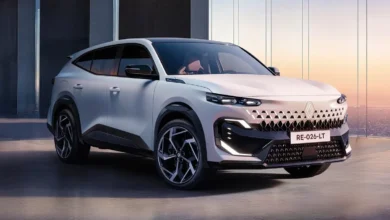
Mazda Vision X-Coupe: Rotary Power Meets Electric Innovation
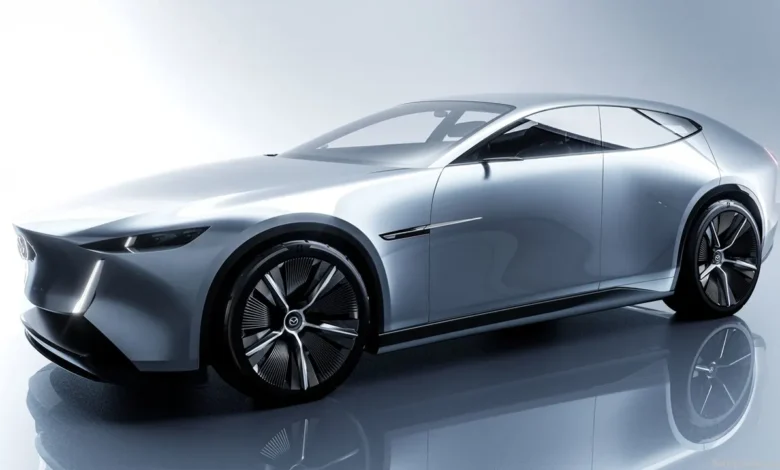
When Mazda first revealed the Vision X-Coupe at the 2025 Japan Mobility Show, the global automotive community paused for a moment. Here was a car that wasn’t merely futuristic for the sake of spectacle — it was soulful, elegant, and distinctly Mazda.
The Vision X-Coupe isn’t just a concept car; it’s a manifesto for Mazda’s next chapter — a bold statement that driving pleasure, design purity, and sustainability can coexist in one breathtaking machine.
As the automotive world rushes toward electrification, the Vision X-Coupe stands apart. It isn’t a soulless EV drone — it’s a car built to remind us that the joy of driving still matters.
Gallery: Mazda Vision X-Coupe
A Vision Born from Soulful Engineering
Mazda’s legacy has always revolved around emotional design and driver connection. Since the early 1960s, the brand has built its reputation on passion — from the iconic MX-5 Miata to the revolutionary rotary-powered RX-7.
The Mazda Vision X-Coupe continues that tradition. It’s a stunning four-door coupe concept that fuses Kodo design philosophy with advanced hybrid technology.
At first glance, it feels like a vision of what the Mazda6 successor might look like — sleek, muscular, yet graceful. But beneath its sculpted exterior lies something far more ambitious: a new hybrid rotary powertrain that bridges Mazda’s past with its sustainable future.
Design: Art in Motion
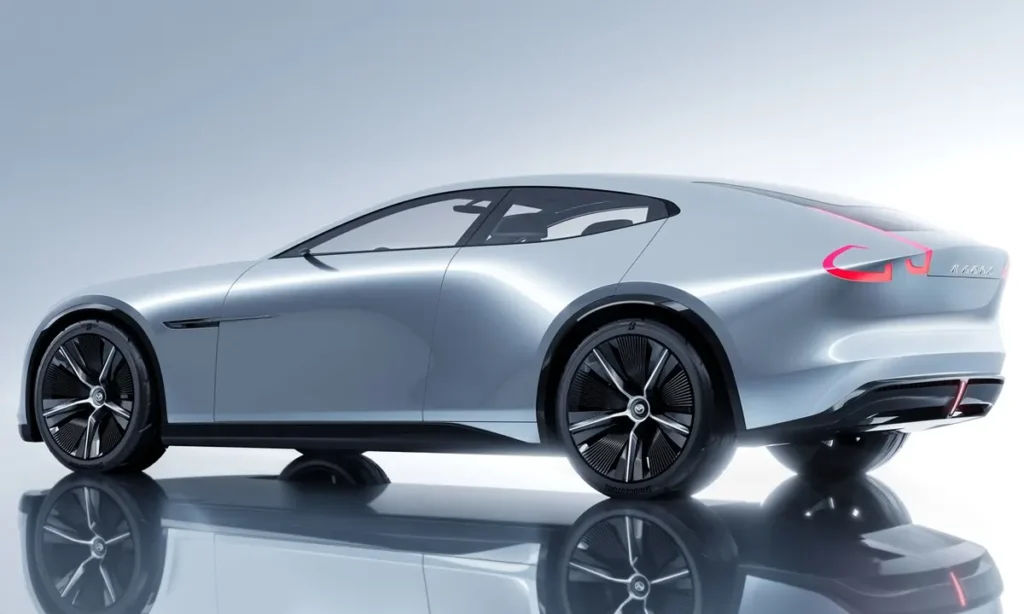
Mazda calls its design language “Kodo – Soul of Motion”, and the Vision X-Coupe embodies that mantra perfectly. Every curve and contour of this car speaks of movement — even when standing still.
Exterior: Sculpted Perfection
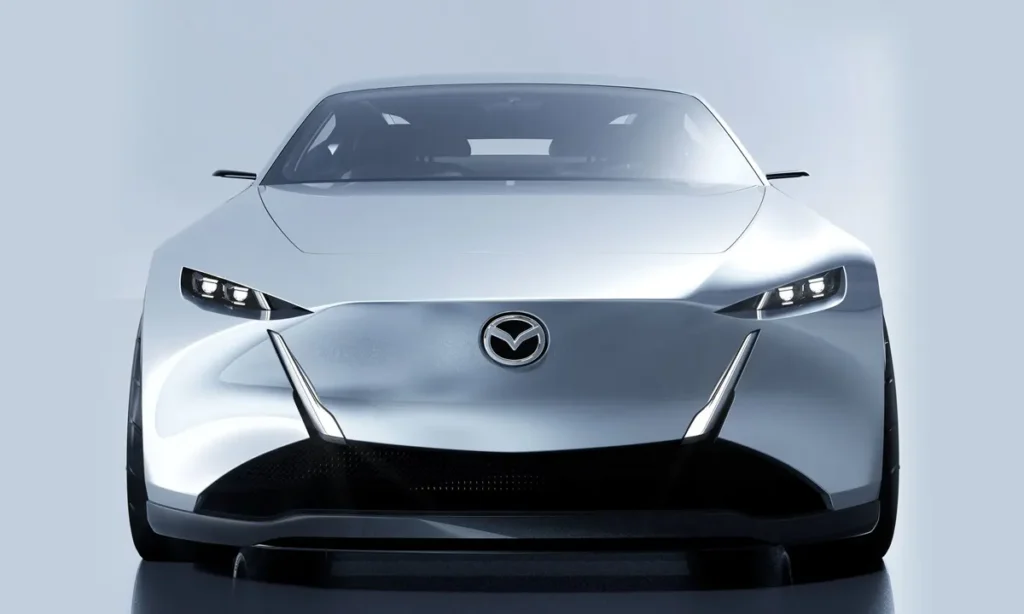
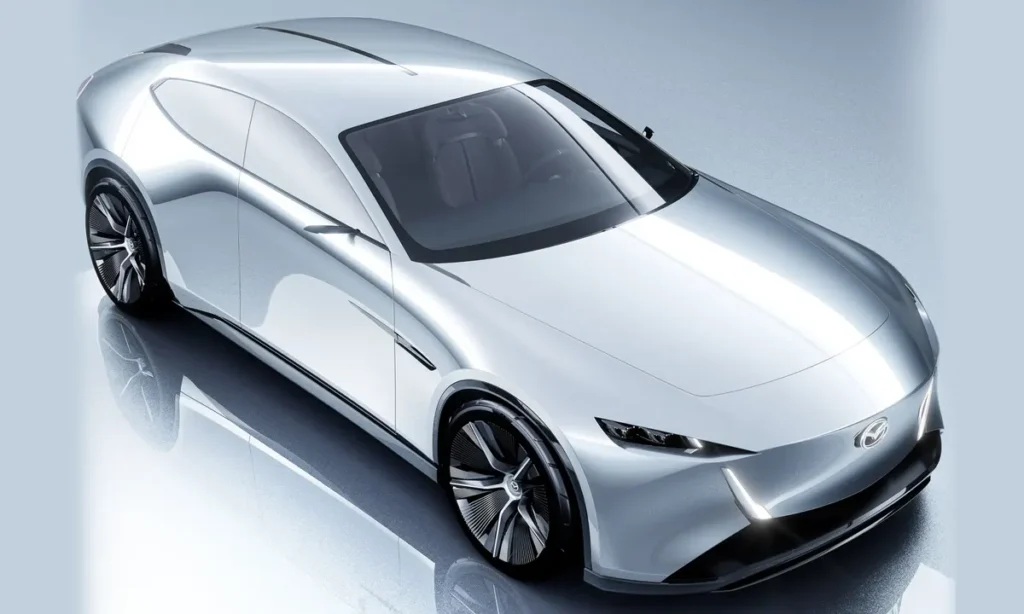
At the front, the Vision X-Coupe features a minimalist grille framed by slender LED headlamps, integrated seamlessly into its flowing bodywork. The hood stretches long and low, giving it a front-engine, rear-drive proportion reminiscent of Mazda’s sports coupes.
Its profile tells a story of balance — a long wheelbase, muscular haunches, and a roofline that tapers elegantly into a sculpted rear. The result is a silhouette that’s as aerodynamic as it is captivating.
At the rear, thin horizontal taillights, a subtle spoiler, and a bold rear diffuser hint at its performance pedigree. The stance is wide and confident, emphasizing agility and stability.
Mazda designers describe the car as a blend of Japanese minimalism and athletic elegance, capturing both serenity and power — a hallmark of Kodo design at its most mature form.
Interior: Craftsmanship Meets Future Technology
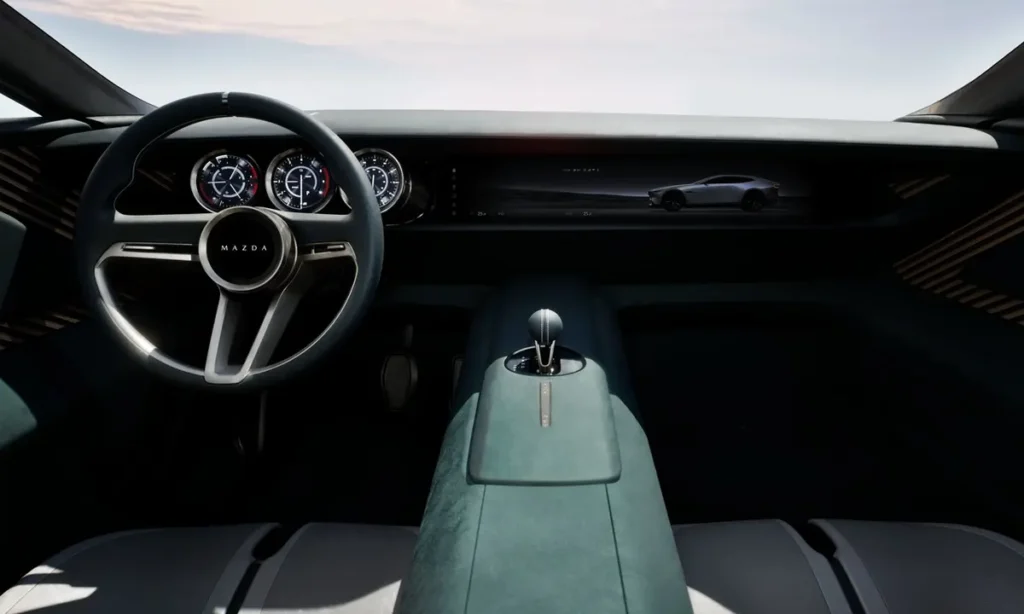
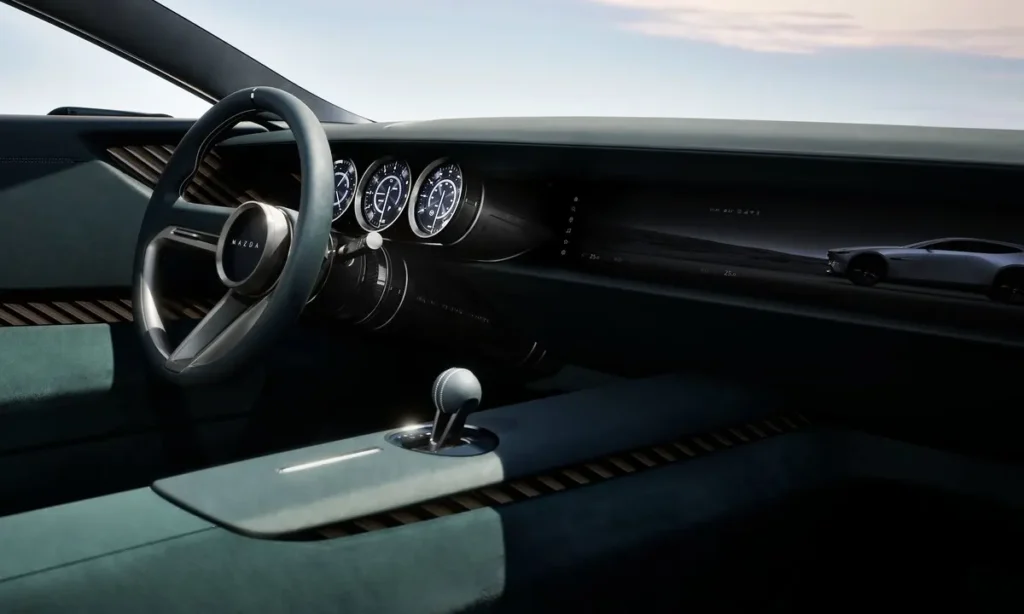
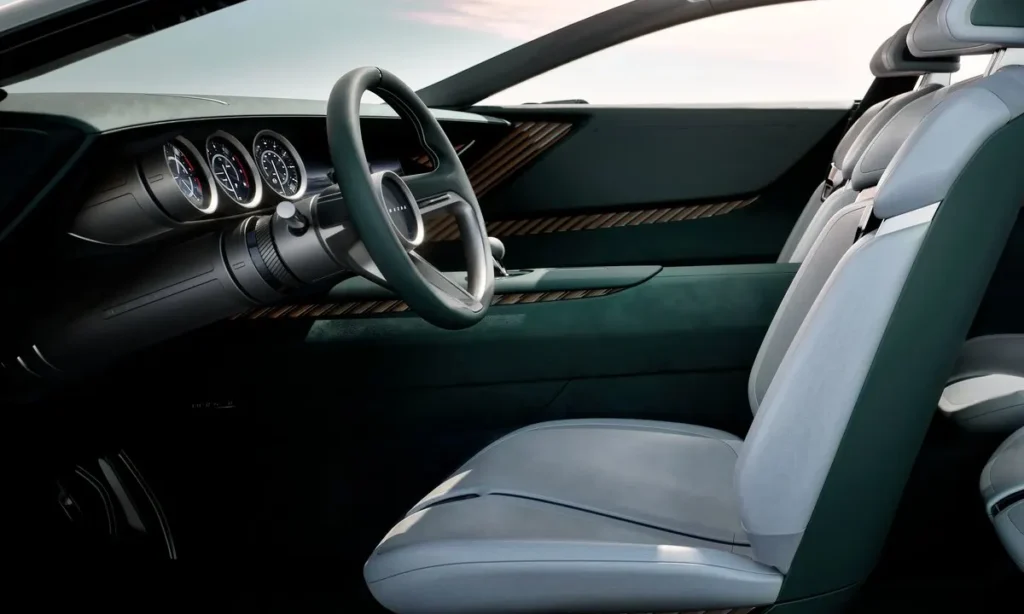
Step inside the Vision X-Coupe, and you enter what Mazda calls a “driver’s sanctuary.” It’s an environment designed to stimulate the senses, not overwhelm them with unnecessary screens or distractions.
Driver-Centric Philosophy
The cabin revolves around Mazda’s philosophy of “Jinba Ittai” — the Japanese term for harmony between horse and rider. Every control, dial, and surface feels intuitively placed to connect driver and machine seamlessly.
The minimalist dashboard houses a floating digital display with haptic feedback controls, blending analog tactility with digital precision. Materials are natural and sustainable — think hand-stitched leather, brushed aluminum, and eco-friendly textiles.
Even with its futuristic character, the Vision X-Coupe avoids cold sterility. It’s warm, inviting, and unmistakably human — exactly what Mazda intended.
The Power Within: Hybrid Technology with a Rotary Heart
The soul of the Vision X-Coupe lies beneath its elegant skin. Mazda has resurrected one of its most beloved engineering marvels — the rotary engine — and reimagined it for the 21st century.
Rotary Revival
Yes, the legendary Wankel engine returns — not as a sole power source, but as part of a sophisticated plug-in hybrid system.
Mazda confirmed that the Vision X-Coupe uses a twin-rotor turbocharged rotary engine, paired with an electric motor and high-capacity battery pack. Together, this setup produces a jaw-dropping 510 PS (503 hp) — performance figures that rival luxury grand tourers from Europe.
Range and Efficiency
The car can travel up to 160 km (100 miles) on pure electric power, making it perfectly capable of zero-emission urban driving. When combined with its hybrid range, the Vision X-Coupe can achieve an impressive 800 km (497 miles) total range.
Mazda has also hinted at the use of carbon-neutral fuels — synthetic blends derived from captured CO₂ and algae — to ensure its rotary engine contributes minimally to emissions.
In essence, the Vision X-Coupe doesn’t just promise performance; it represents a blueprint for sustainable excitement.
Read: 2026 Lexus RZ Review: Lexus’ Electric SUV Just Got Serious
Performance and Dynamics: Crafted for Driving Enthusiasts
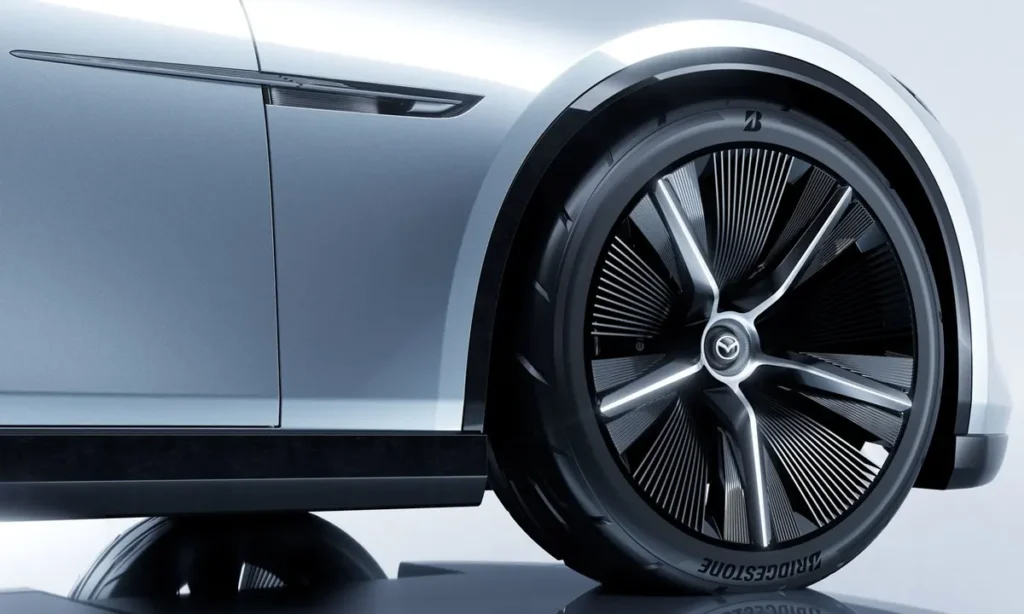
Mazda has always prioritized handling feel and driver engagement over raw speed — and the Vision X-Coupe is no exception.
Its long hood and rear-wheel-drive configuration ensure perfect weight distribution, while the electric motor’s instant torque complements the rotary engine’s high-revving character.
The Joy of Driving, Redefined
Mazda engineers describe the car’s performance philosophy as “emotion before numbers.” It’s not about achieving the fastest lap time; it’s about the feel of the drive — the responsiveness, the connection, and the seamless blend of power sources.
The Vision X-Coupe’s adaptive suspension and intelligent torque vectoring system deliver stability without compromising agility. Every input — from steering to throttle — feels deliberate and natural.
This is driving in its purest modern form: analog emotion powered by digital intelligence.
Mazda’s Sustainability Vision: A Cleaner Tomorrow
Mazda’s approach to sustainability differs from many automakers chasing fully electric lineups. Instead, the company seeks carbon neutrality through diverse technology — combining EVs, hybrids, and biofuels.
The Vision X-Coupe showcases that strategy. The brand’s engineers are experimenting with microalgae-derived biofuels and mobile carbon capture systems, which theoretically reduce CO₂ in the air as the vehicle operates.
Mazda’s tagline for the concept — “The joy of driving fuels a sustainable tomorrow” — encapsulates this perfectly.
Rather than erasing driving pleasure in the name of environmentalism, Mazda’s message is simple: sustainability and emotion can coexist.
Design Meets Responsibility
The Vision X-Coupe’s eco-conscious ethos extends beyond its powertrain. The car’s body uses lightweight carbon-composite materials, reducing energy consumption without sacrificing strength or safety.
Recycled aluminum and bio-based plastics are integrated throughout the cabin, while low-impact paint processes minimize environmental harm during production.
Mazda’s design team describes this as “responsible artistry” — every element designed to look beautiful and act responsibly.
Technology and Intelligence
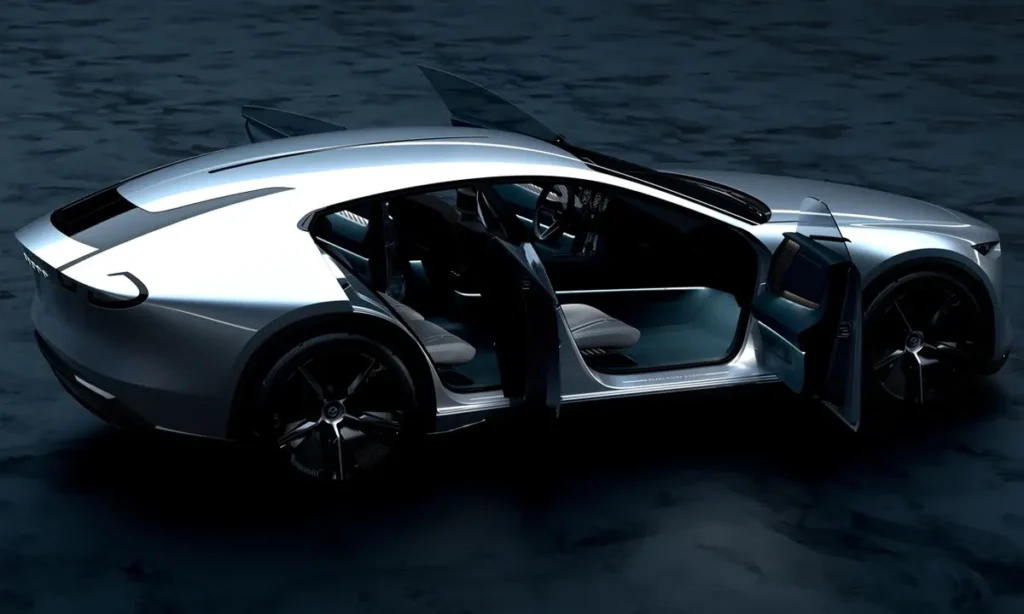
The Vision X-Coupe isn’t overloaded with technology — instead, it focuses on human-centric intelligence.
A streamlined interface powered by Mazda’s next-generation AI system adapts to driver behavior, learning preferences over time. The car’s software monitors energy use, driving style, and even road conditions to optimize performance and efficiency automatically.
Mazda envisions future vehicles that communicate with the driver intuitively — not through intrusive alerts, but through subtle feedback mechanisms that keep focus on the road.
Comparison Chart: Mazda Vision X-Coupe vs Competitors
| Model | Powertrain | Total Output | Electric Range | Combined Range | Notable Feature |
| Mazda Vision X-Coupe | Rotary PHEV | 503 hp | 160 km | 800 km | Twin-rotor turbo hybrid |
| BMW i8 (legacy) | Plug-in hybrid | 369 hp | 55 km | 500 km | Carbon-fiber body |
| Polestar 1 | Plug-in hybrid | 609 hp | 125 km | 600 km | Performance GT design |
| Lexus LC Hybrid | Self-charging hybrid | 354 hp | N/A | 700 km | Naturally aspirated V6 hybrid |
| Audi e-tron GT | All-electric | 523 hp | 472 km | 472 km | Dual-motor EV |
The Vision X-Coupe fits neatly into this high-performance, eco-luxury segment — delivering similar power and range but with Mazda’s signature design and driving philosophy.
Why the Vision X-Coupe Matters
The Mazda Vision X-Coupe isn’t just a concept car; it’s a symbol of balance in an automotive industry at a crossroads.
While competitors rush to go fully electric, Mazda dares to chart its own path — one that honors emotion, craftsmanship, and connection.
This car redefines what sustainability looks like. It’s not about giving up driving joy; it’s about redefining it responsibly.
If the Vision X-Coupe inspires the next generation of Mazda sedans, it could mark the rebirth of grand touring — cars that look incredible, feel alive, and tread lightly on the planet.
Final Verdict: Emotion Electrified
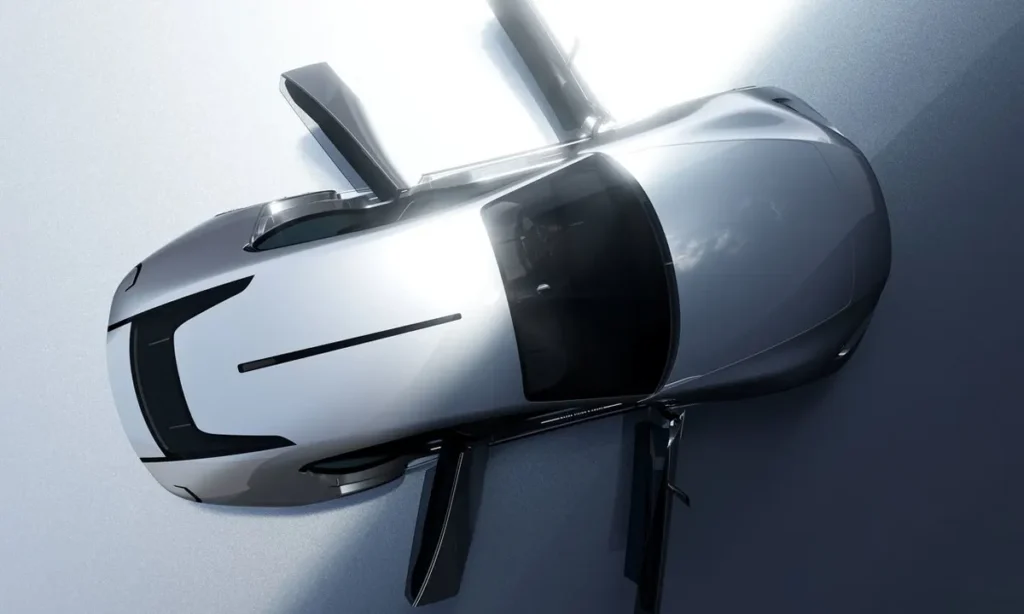
The Mazda Vision X-Coupe is more than a futuristic design study — it’s a promise that performance and responsibility can coexist.
It captures everything that makes Mazda special: the artistry of Kodo design, the ingenuity of rotary engineering, and the warmth of human-focused craftsmanship.
In an era where cars are becoming computers on wheels, the Vision X-Coupe reminds us that a vehicle can still stir emotion, inspire creativity, and celebrate the pure joy of driving.
It’s not just Mazda’s vision — it’s a glimpse into what the future of automotive passion looks like.
Read: Chevrolet Corvette E-Ray vs Porsche 911 GTS T-Hybrid: Hybrid Supercar Showdown of 2025
Frequently Asked Questions (FAQ)
Q1: What is the Mazda Vision X-Coupe?
The Vision X-Coupe is a four-door concept car unveiled by Mazda, showcasing hybrid technology with a revived rotary engine and Kodo design philosophy.
Q2: How much power does it produce?
It generates around 510 PS (503 hp) through a hybrid system combining a twin-rotor turbo rotary engine and electric motor.
Q3: Is the Vision X-Coupe all-electric?
No. It’s a plug-in hybrid, capable of up to 160 km (100 miles) of electric driving before the rotary engine extends its range.
Q4: Will Mazda produce the Vision X-Coupe?
Mazda hasn’t confirmed production yet, but design and technology elements may appear in future models.
Q5: What’s unique about the Vision X-Coupe’s sustainability concept?
It uses carbon-neutral biofuels and features lightweight, recyclable materials, promoting sustainable mobility without sacrificing performance.