Polestar 5: The Luxury Electric GT Reinventing Scandinavian Performance
The Polestar 5 represents one of the most ambitious and transformative projects from Polestar, the Swedish performance-EV brand born out of Volvo and fueled by progressive design philosophy. Positioned as an all-electric luxury grand tourer, the Polestar 5 is the production evolution of the acclaimed Polestar Precept concept—an embodiment of sustainability-driven engineering, advanced aerodynamics and future-focused digital innovation. As the EV landscape undergoes rapid intensification, Polestar aims for the 5 to serve as a defining halo model, showcasing what the brand envisions for its future in high-performance electrified mobility. The model stands as a symbolic shift for Polestar, capturing its growth from a niche performance engineering outfit into a full-fledged electric luxury marque capable of going head-to-head with industry titans.
Entering a segment dominated by premium electric grand tourers such as the Porsche Taycan, Tesla Model S Plaid, Mercedes-Benz EQE/EQS Sedan and Lucid Air, the Polestar 5 takes a bold position. Rather than pursuing a singular direction focused solely on outright speed or maximum range, Polestar engineered the 5 to harmonize performance, sustainability, emotional design and advanced intelligence. These pillars reflect the company’s Scandinavian design roots and commitment to minimalism, purity and environmental consciousness. The Polestar 5 is designed not just as a mode of transportation, but as a holistic experience—a futuristic symbol of how luxury and sustainability can coexist without compromise. This article explores the Polestar 5 in extensive detail, covering its design philosophy, platform engineering, performance capabilities, aerodynamics, interior technology and its greater strategic importance for the Polestar brand.
Gallery: Polestar 5
Exterior Design: The Evolution of Precept into a Road-Ready Vision
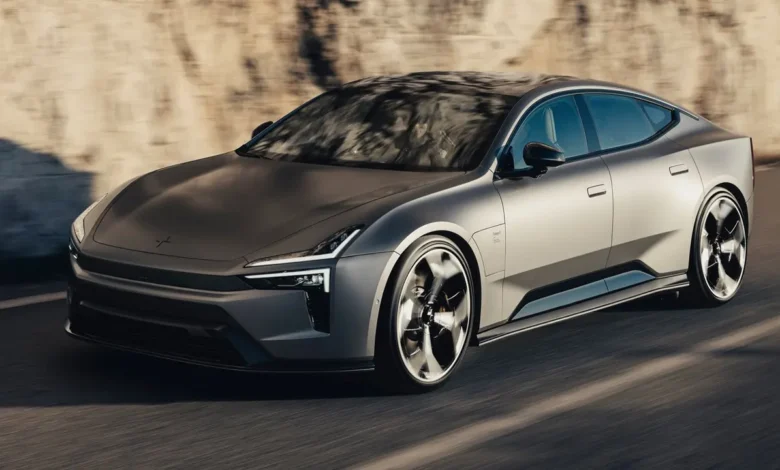
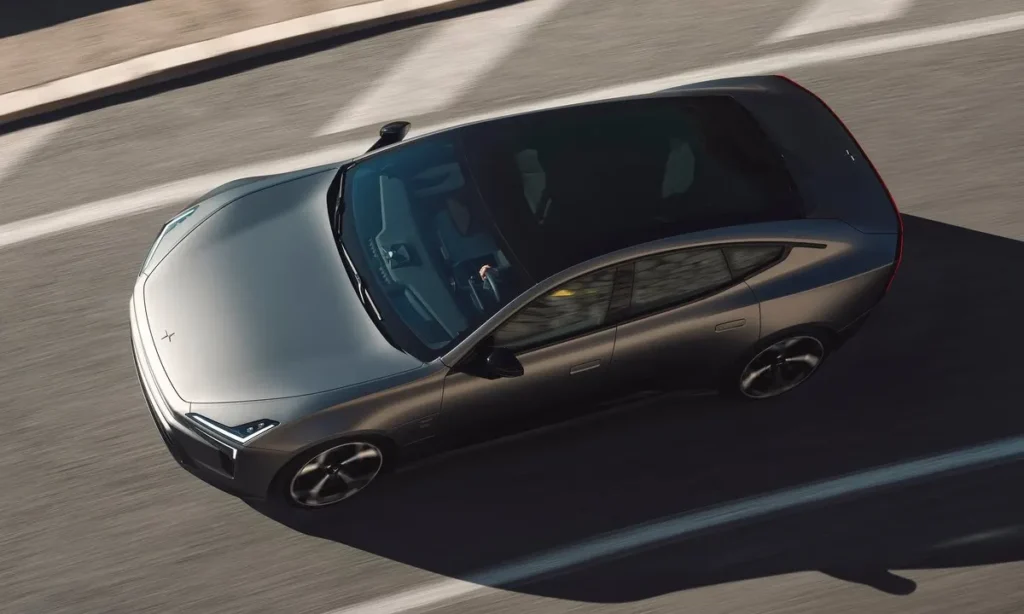
The design of the Polestar 5 draws heavily from the Precept concept, a dramatic and sculptural study in progressive luxury. Unlike many concept-to-production transitions that compromise originality for practicality, the Polestar 5 maintains the distinctive silhouette, low-slung proportions and futuristic surface language that thrilled enthusiasts when the Precept was unveiled. The exterior presents a visually pure, aerodynamically refined form, characterized by a sleek roofline, long wheelbase and bold stance reminiscent of a high-performance grand tourer.
The front fascia adopts a closed “SmartZone” panel in place of a traditional grille, containing an array of sensors, cameras and radar technologies integral to the car’s advanced driver-assistance systems. Flanking the SmartZone are revised “Thor’s Hammer” LED light signatures, now sharper and more segmented, emphasizing the car’s modern identity. The LED modules integrate complex optical structures that enhance night-time illumination while contributing to the vehicle’s futuristic aesthetic.
The side profile emphasizes fluidity and aerodynamic precision. Narrow greenhouse proportions taper into the rear quarter, creating a dynamic tension across the body. Frameless doors, flush handles and minimized body cuts further optimize airflow, while the long wheelbase improves both cabin comfort and stability. The bodywork utilizes sculpted surfaces that play with light and shadow, delivering an elegant yet athletic presence.
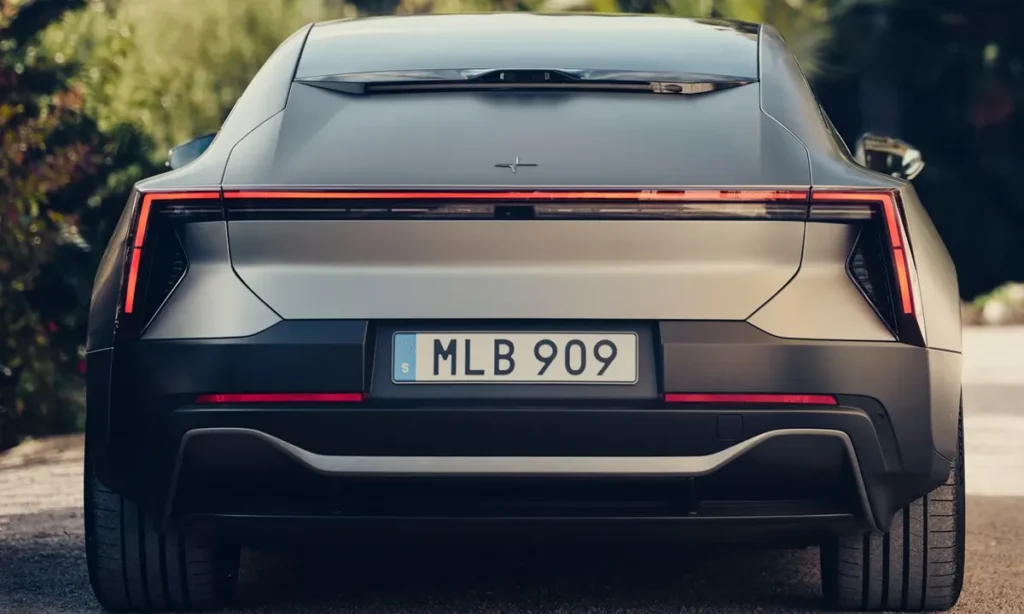
At the rear, the hallmark full-width LED light bar spans the tailgate, incorporating adaptive illumination patterns that adjust during braking and signaling. The rear deck adopts a floating wing-like architecture, enhancing aerodynamics without resorting to exaggerated spoilers. Every design decision reflects Polestar’s minimalistic philosophy, where visual drama arises not from ornamentation, but from clean geometry and calculated restraint.
Platform and Engineering: Lightweight Strength with Advanced Battery Integration
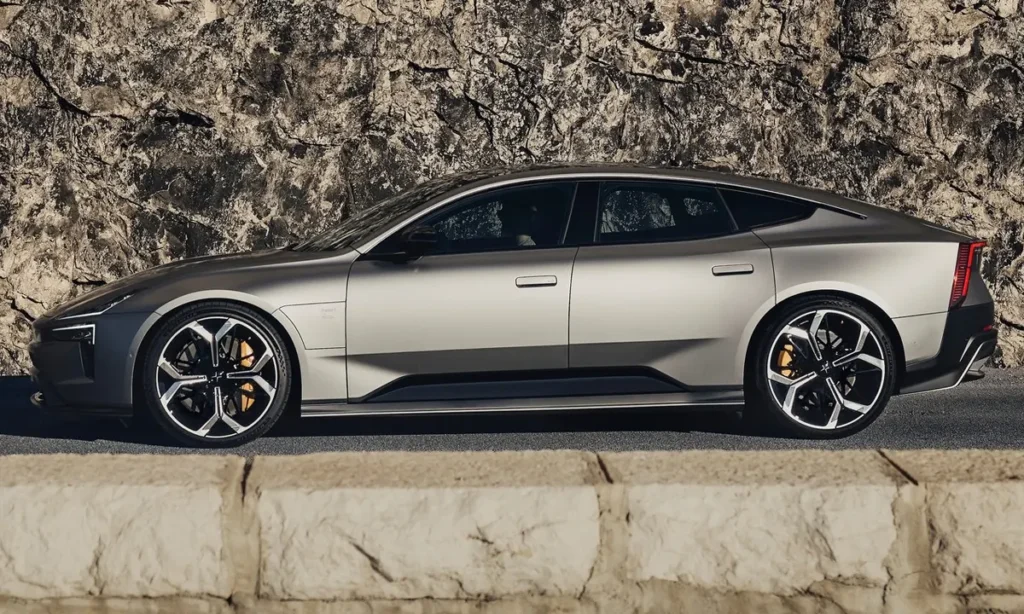
One of the most significant engineering achievements of the Polestar 5 is its bonded-aluminum architecture, developed in-house by Polestar’s UK engineering team. This structure is both extremely rigid and remarkably lightweight, delivering sports-car-grade chassis stiffness that enhances handling precision, safety performance and overall driving dynamics. The adoption of bonded aluminum—commonly found in high-end supercars—allows Polestar to craft a body that combines strength with reduced mass, an essential balance for maximizing EV efficiency.
Battery placement beneath the floor provides low center of gravity and balanced weight distribution. The dedicated EV platform supports optimal packaging for high-capacity energy modules, electric motors and cooling systems. Engineers focused on structural harmony between the battery housing and aluminum frame to ensure robust crash performance and minimal vibration transfer to the cabin. This advanced platform symbolizes Polestar’s transition away from shared Volvo architectures toward independent innovation, allowing more expressive design and higher performance thresholds.
Thermal management is another key engineering strength of the 5. The battery pack incorporates advanced liquid-cooling strategies, enabling sustained power output during aggressive driving without thermal degradation. Motor efficiency and power delivery benefit from precisely tuned cooling circuits that maintain component longevity. These enhancements give the Polestar 5 the credentials of a grand tourer engineered for long-distance performance at high speed.
Performance: Dual-Motor Power with Scandinavian Precision
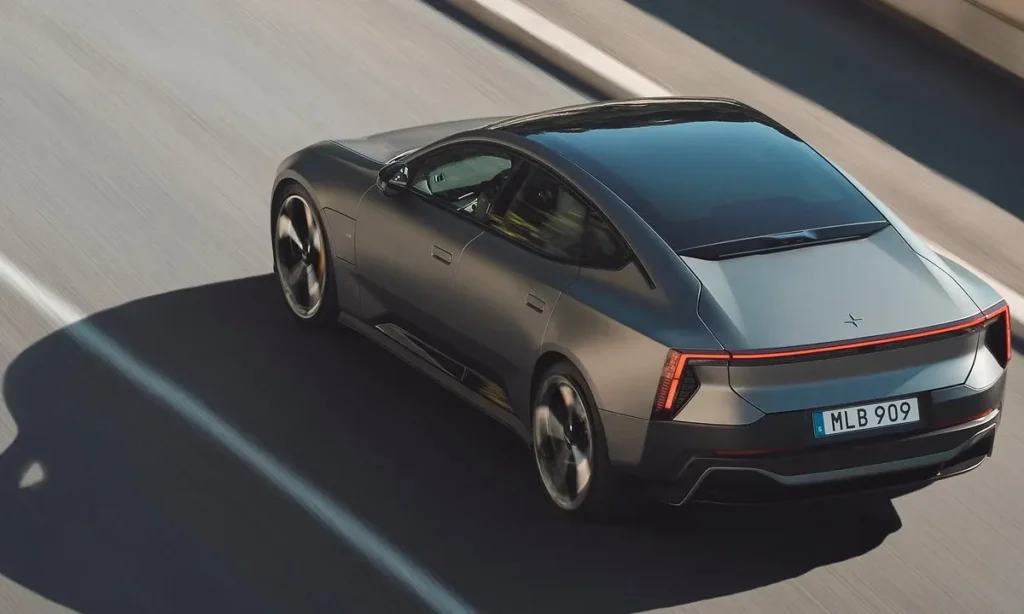
The Polestar 5’s dual-motor AWD powertrain delivers high-output performance that positions it firmly among premium electric performance sedans. Polestar announced that the 5 would debut an in-house developed electric motor configuration producing approximately 884 horsepower and 900 Nm of torque in its highest-spec configuration. This power matches or exceeds many competitors in the luxury EV space, while benefiting from Polestar’s torque-vectoring algorithms to achieve greater driving precision.
Acceleration is expected to be dramatic yet controlled, with 0–100 km/h performance rivaling high-performance electric flagships. While the Polestar 5 focuses on delivering powerful straight-line performance, its true engineering advantage lies in chassis engagement. Thanks to its bonded-aluminum platform and refined suspension tuning, the car promises sports-car responsiveness rarely found in electric sedans of similar size.
Regenerative braking systems have been refined to deliver smoother transitions between regen and mechanical braking, providing a natural pedal feel. The dual-motor system’s calibration supports balanced handling, ensuring the car remains composed during high-speed transitions, corner exits and weight-shifting maneuvers. The Polestar 5 does not chase extreme aggression; instead, it provides controlled, sophisticated and confident performance—consistent with Scandinavian engineering values.
Aerodynamics: Efficiency by Design
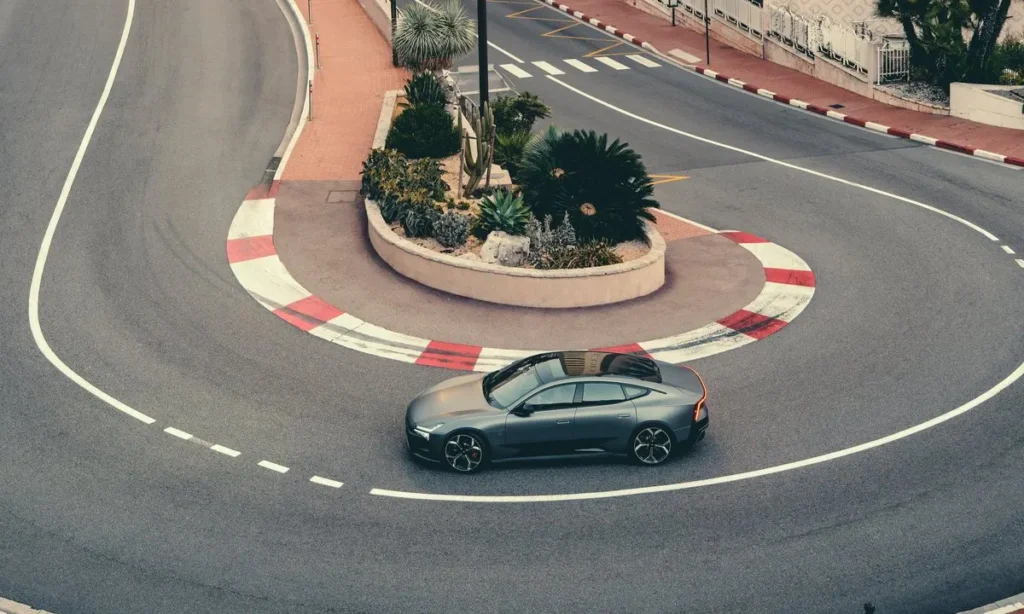
Aerodynamic refinement plays a central role in the Polestar 5’s design. The car’s smooth surfaces, tapered roofline and minimized frontal disruption reduce drag significantly, improving efficiency and high-speed stability. Hidden air channels within the front bumper guide airflow either around the body or through cooling tunnels, reducing turbulence at higher speeds.
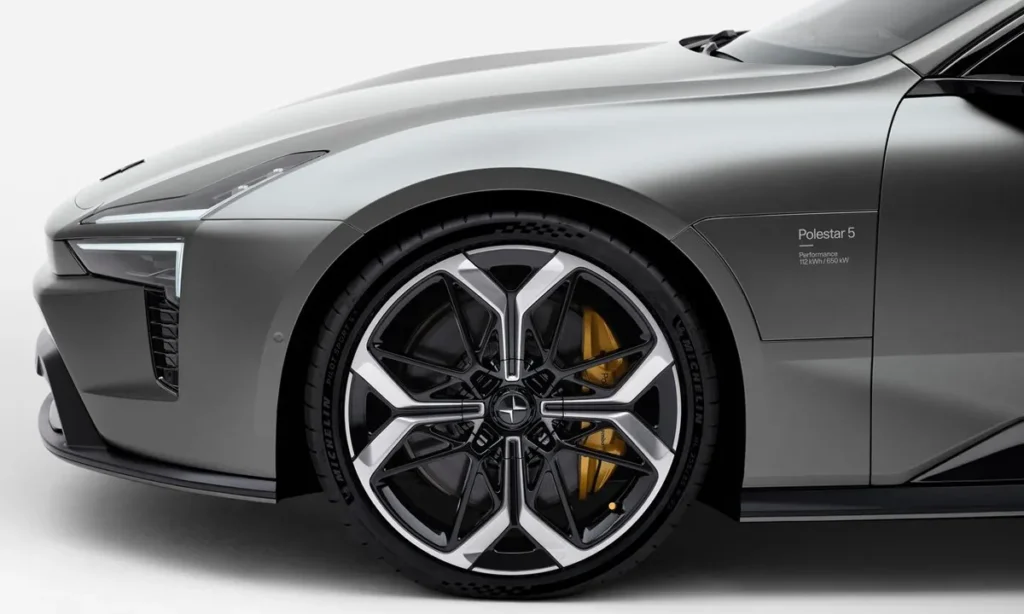
The rear light blade doubles as an aerodynamic spoiler that manages airflow separation, reducing lift and improving directional stability. Underbody panels have been engineered with minimal airflow disruption, channeling air efficiently beneath the vehicle to reduce resistance. Even wheel designs contribute to aerodynamic optimization, balancing cooling needs for the braking system with turbulence reduction.
Aerodynamics and engineering operate symbiotically, showcasing Polestar’s holistic design approach: beauty shaped by efficiency, not ornamentation.
Interior Design: Minimalistic Luxury with Smart Human-Machine Interaction
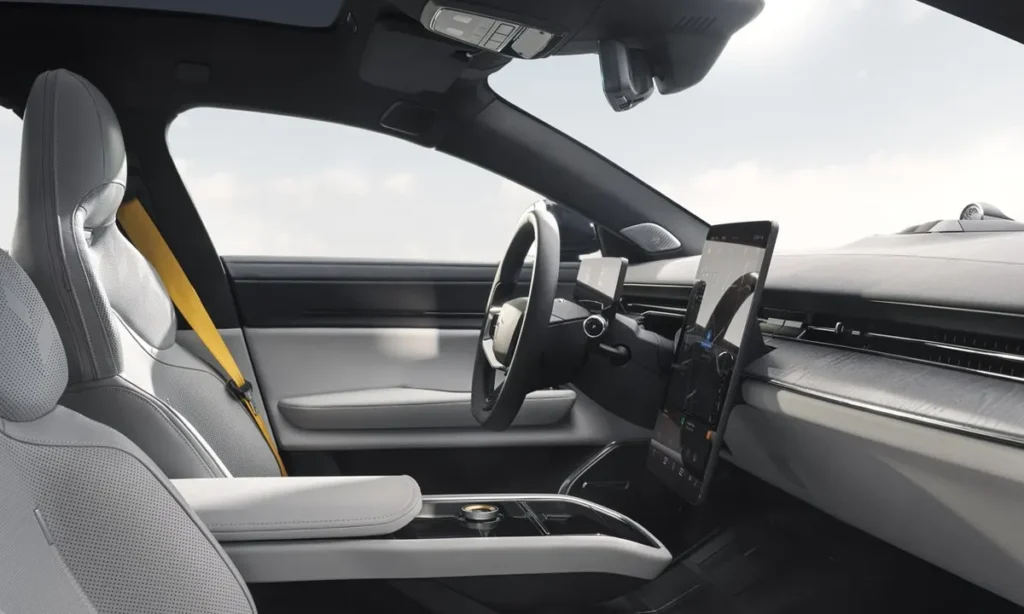
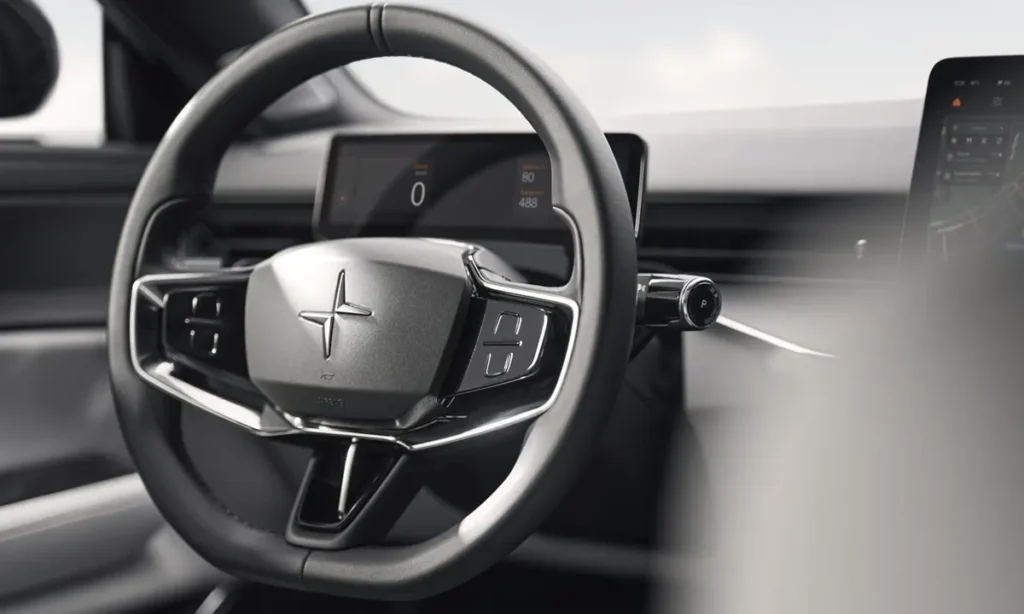
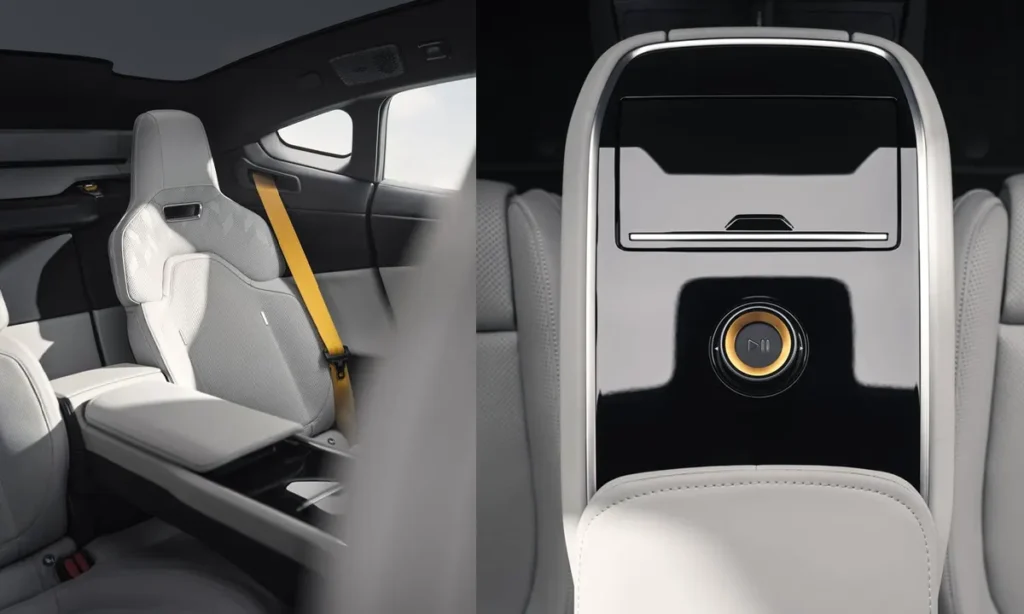
The interior of the Polestar 5 is a testament to Scandinavian design principles: pure, functional, sustainable and serene. The cabin blends high-end materials with innovative digital interfaces to create an atmosphere that feels futuristic yet warm. The dashboard architecture emphasizes horizontal lines that visually widen the cabin, while a floating center console divides driver and passenger zones without imposing on space.
Recycled and bio-based materials are central to Polestar’s sustainable luxury mission. The interior incorporates woven flax fiber composites, recycled PET fabrics, responsibly sourced leather and Alcantara, and sustainable aluminum trims. These materials are chosen not only for sustainability but also for tactile refinement, capturing a harmonious balance between environmental responsibility and luxury craftsmanship.
The infotainment system is powered by Google’s Android Automotive OS, delivering seamless integration of Google Maps, Google Assistant and app-based connectivity. A large vertical touchscreen manages essential controls, but Polestar carefully limits touchscreen dependency by integrating physical, intuitive controls for high-frequency functions. The driver benefits from a digital instrument panel offering customizable views, real-time efficiency data and advanced driver-assistance alerts.
The seating position emphasizes comfort and long-distance usability, with supportive bolstering and heating/ventilation features. The rear seating area benefits from the long wheelbase, providing ample legroom and headroom despite the car’s coupe-like silhouette. The cabin’s acoustic engineering ensures silence even at high speeds, further enhancing the GT character of the Polestar 5.
Technology and Driver Assistance: Intelligent Safety for the Electric Age
The Polestar 5 integrates cutting-edge safety and driver-assistance systems through a complex sensor suite housed within the SmartZone. LiDAR, high-resolution cameras, radar modules and ultrasonic sensors contribute to advanced perception capabilities. Polestar aims to offer semi-autonomous driving features through OTA updates, reflecting the brand’s commitment to software-driven evolution.
Adaptive cruise control, lane-centering, predictive collision avoidance, 360-degree vision, and driver-monitoring technology work cohesively to reduce fatigue and increase safety. Polestar’s software architecture supports continuous improvements, ensuring the Polestar 5 evolves long after leaving the factory.
Range, Charging and Long-Distance Capability
With its advanced battery architecture and aerodynamic efficiency, the Polestar 5 is expected to deliver competitive range figures suitable for long-distance travel. Fast-charging capabilities support high-voltage charging infrastructure, enabling rapid battery replenishment during extended journeys. Polestar’s thermal management and battery conditioning systems further optimize fast-charging performance by maintaining ideal battery temperature profiles.
As a grand tourer, the Polestar 5 aims to provide consistent long-range performance, minimal fade under heavy use and efficient highway cruising characteristics.
Market Position and Strategic Importance
The Polestar 5 occupies a premium position within the electric GT category, competing with established EV leaders while carving out its own design-driven niche. Its focus on balanced performance, emotional design, sustainability and advanced engineering distinguishes it from brands solely pursuing maximum power or range statistics. The 5 symbolizes Polestar’s intent to expand its presence globally and deepen its identity as a progressive luxury EV manufacturer.
Read: 2025 Kia EV6 Sets New Standard for Long-Range EV Performance
Conclusion
The Polestar 5 represents a landmark moment for Polestar. As a production realization of the Precept, it brings futuristic design, sustainable engineering, next-generation performance and Scandinavian luxury into one cohesive package. It is more than an electric grand tourer—it is a manifesto for Polestar’s future. With its bonded-aluminum architecture, high-output dual-motor performance, refined aerodynamics, sustainable materials and intelligent digital ecosystem, the Polestar 5 positions itself as one of the most advanced electric luxury sedans of its generation. It symbolizes the convergence of artistry, technology and environmental responsibility in a rapidly evolving automotive landscape.
Polestar 5 – Specifications Chart
| Specification | Detail |
| Platform | Bonded Aluminum EV Architecture |
| Powertrain | Dual-Motor All-Wheel Drive |
| Power Output | Approx. 884 hp |
| Torque | Approx. 900 Nm |
| Battery | High-Capacity Lithium-Ion Pack |
| 0–100 km/h | ~3 seconds (Projected) |
| Top Speed | Electronically Limited (High-Performance GT Range) |
| Range | Competitive Long-Range Capability (Projected 480–570 km) |
| Charging | High-Speed DC Fast Charging |
| Suspension | Adaptive Performance Suspension |
| Interior | Sustainable Luxury with Digital Displays |
| Driver Assistance | Advanced LiDAR-Based Semi-Autonomous Systems |
| Body Style | 4-Door Electric Grand Tourer |