Toyota vs Honda: Here’s the Most Reliable Hybrid SUV for 2025
Hybrid SUVs have become one of the fastest-growing segments in the global automotive market. As consumers increasingly prioritise fuel efficiency, environmental responsibility, and long-term dependability, major automakers are racing to deliver hybrid SUVs that strike the right balance between performance and reliability. Among these brands, Toyota and Honda remain the most trusted names in the hybrid space. Both manufacturers have decades-long reputations for engineering excellence, powertrain longevity, low maintenance demands, and robust resale value. However, the growing popularity of hybrid SUVs in 2025 raises a critical question for buyers: between Toyota and Honda, which brand builds the most reliable hybrid SUV for the 2025 model year? The answer requires a deep dive into engineering maturity, powertrain evolution, battery durability, software reliability, maintenance ecosystems, and real-world driving performance. This comprehensive article evaluates every factor in detail to determine which automotive giant leads the reliability race in the hybrid SUV segment.
Hybrid Technology Leadership and Brand Reliability Background
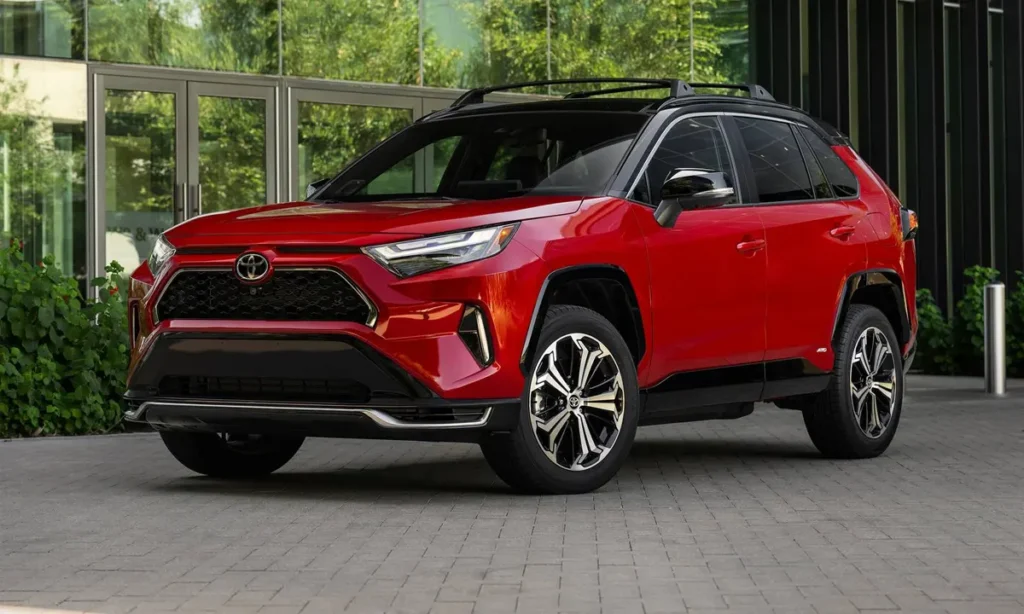
Reliability begins with engineering philosophy and historical performance. Toyota stands at the forefront of hybrid innovation, having developed and refined its hybrid systems for more than 25 years. The introduction of the Toyota Prius marked the company’s entry into electrified mobility, and Toyota has since applied hybrid technology to nearly every segment, including SUVs. The brand’s approach emphasises incremental upgrades, component standardisation, and long-term refinement rather than drastic redesigns. This strategy ensures that Toyota’s hybrid systems undergo continuous improvement and accumulate millions of real-world test miles before major changes are introduced.
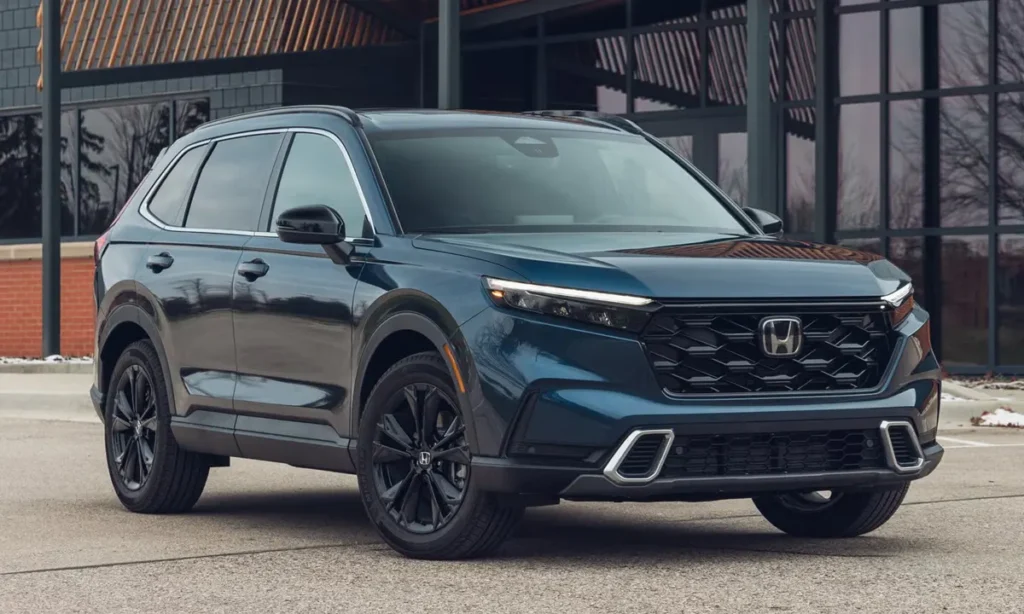
Honda’s history of reliability is equally noteworthy, particularly in its internal-combustion powertrains. Honda engines have famously lasted hundreds of thousands of kilometres with minimal issues. The brand adopted hybrid technology later than Toyota but has spent the last decade significantly improving its electrified systems. Honda’s hybrid SUVs, especially the CR-V Hybrid, showcase strong engineering, precise motor control, responsive acceleration, and efficient energy distribution. While Honda’s hybrid journey is relatively younger, its consistent innovation has positioned it as a major competitor to Toyota in the hybrid-SUV reliability discussion for 2025.
However, when comparing the number of hybrid SUVs sold globally, Toyota has a substantial volume advantage, offering billions of operational data points accumulated over decades. This extensive dataset directly translates into improved long-term durability forecasting and hybrid-system reliability.
Evaluating the 2025 Hybrid SUV Models from Both Brands
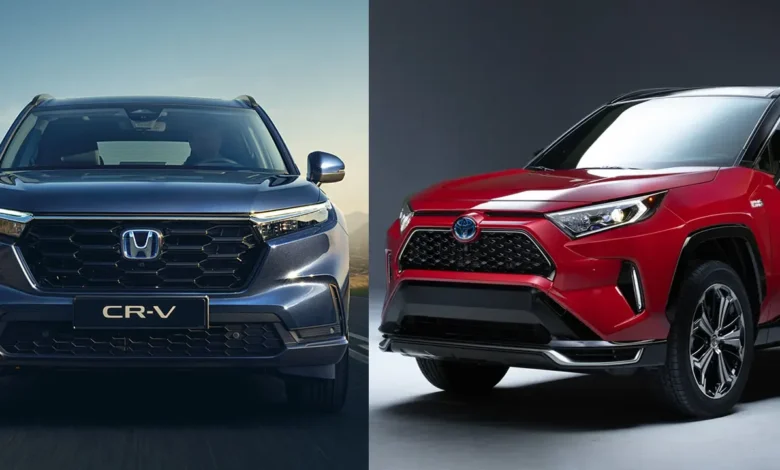
For 2025, the flagship hybrid SUV models representing each brand include the Toyota RAV4 Hybrid and the Honda CR-V Hybrid. Both vehicles combine refined gasoline engines, efficient electric motors, advanced battery systems, and sophisticated software coordination. The Toyota RAV4 Hybrid has established itself as one of the world’s most popular hybrid SUVs, thanks to its rugged dependability and consistent performance. It has been praised for its predicted reliability, with data showing an 80/100 score in certain reliability projections.
Honda’s CR-V Hybrid also performs exceptionally well in professional tests, earning strong ratings for efficiency, handling, and build quality. Although its reliability score for 2025 is not published in the same detail as Toyota’s, experts consider it a highly dependable model with a slightly smaller data history than Toyota. Honda’s systematic improvements and battery-management upgrades have made the 2025 CR-V Hybrid a compelling option, though Toyota’s hybrid lineage gives it a measurable edge.
Hybrid Powertrain Maturity and Long-Term Durability
The maturity of the hybrid powertrain is one of the strongest predictors of future reliability. Toyota’s hybrid system is a finely tuned combination of a gasoline engine, electric motors, regenerative braking, and continuously variable transmission (eCVT). Its Hybrid Synergy Drive architecture has remained structurally consistent for years, undergoing refinements in each generation rather than complete redesigns. This ensures long-term component durability, smooth power delivery, and predictable wear patterns.
Honda’s hybrid system, known for its enjoyable driving dynamics, uses a two-motor system that operates differently than Toyota’s synergy-based approach. Honda’s tuning prioritises both power and efficiency, creating a more engaging driving feel. While Honda’s hybrid powertrain is technologically advanced and robust, it has a shorter development timeline with fewer generational cycles than Toyota’s. The lack of long-term global mileage data means Toyota’s system is more time-proven.
Battery Performance and Thermal Management
Battery reliability is a core pillar of hybrid SUV dependability. Toyota’s hybrid SUVs use nickel–metal hydride (NiMH) and lithium-ion batteries, depending on the trim and market. Toyota’s conservative battery-management strategy limits extreme charging patterns, prolonging battery life. Toyota hybrids have consistently proven that their battery packs can last well over a decade with minimal degradation.
Honda also employs lithium-ion battery packs with effective cooling technology. Honda’s hybrid SUVs maintain excellent battery stability, even in varied climates. However, Honda’s hybrid batteries have fewer total global test miles compared to Toyota’s, which affects long-term durability certainty. Toyota’s battery systems benefit from years of testing in extreme climates—from desert heat to freezing winters—giving them an edge in meeting reliability expectations for 2025.
Software Reliability and System Integration
Modern hybrid SUVs rely heavily on software integration to balance gasoline power, electric propulsion, regenerative braking, and power distribution. Toyota’s software is famously conservative, prioritising smooth transitions, low-stress operation, and stable patterns that reduce wear on mechanical and electrical components. This conservative calibration enhances reliability over time.
Honda’s system offers more dynamic response behaviour, improving driving feel. The upside is enhanced performance; the downside is slightly more complex load management, though still reliable. Toyota’s mature calibration gives it an advantage in long-term predictability, especially in high-mileage usage scenarios.
Maintenance Ecosystem and Global Support Network
Even the most reliable hybrid SUV requires a strong after-sales ecosystem. Toyota’s hybrid-support infrastructure is one of the world’s largest, covering service centres across numerous countries with technicians trained specifically in hybrid maintenance. This extensive network reduces service delays, ensures parts availability, and minimises long-term ownership risks. Toyota also offers strong warranty coverage and predictable maintenance costs.
Honda’s hybrid service network is strong but still expanding in several markets. Honda technicians are highly skilled, but geographical gaps may exist in some hybrid-specific service availability. In markets where Honda hybrid training is fully implemented, maintenance reliability is excellent. However, Toyota’s scale advantage provides a stronger safety net for the average buyer, especially in regions with extreme weather or rough driving conditions.
Resale Value and Ownership Longevity
A hybrid SUV’s long-term reliability is often reflected in its resale value. Toyota hybrid SUVs consistently rank among the highest in residual value charts, owing to their proven durability and trusted reputation. This strong resale value lowers total cost of ownership and reinforces Toyota’s reputation for building long-lasting hybrids.
Honda hybrid SUVs also maintain strong resale value, but their long-term hybrid-specific performance data is still developing. While the CR-V Hybrid holds value well, Toyota’s hybrid-SUV portfolio commands market conditions that favour even higher resale returns.
Comparison Chart: Toyota vs Honda Reliability for 2025
| Brand | 2025 Hybrid SUV Model | Long-Term Reliability Rating | Hybrid Powertrain Maturity | Battery Durability | Service Network Strength | Predicted Overall Reliability |
| Toyota | RAV4 Hybrid | Extremely High | Very Mature | Excellent | Extensive Global Network | Outstanding |
| Honda | CR-V Hybrid | Very High | Mature but Newer | Very Strong | Growing Global Network | Excellent but Slightly Lower |
Real-World Driving Conditions and Reliability Impact
Reliability in hybrid SUVs depends not only on engineering but also on environmental and usage conditions. Toyota’s hybrid systems have been tested extensively in extreme climates. Whether in regions with blistering heat or intense cold, Toyota hybrids maintain battery stability and consistent performance. Honda hybrids also perform well in varied conditions, but the smaller dataset creates slightly less certainty for high-stress environments.
Urban users who experience constant stop-start driving may find Toyota’s smoother hybrid switching to be more beneficial for long-term component health. Those who prioritise a more energetic drive may prefer Honda’s engaging power delivery. Both systems are highly capable, but Toyota’s is inherently more conservative and long-lasting.
Read: 2026 Toyota Highlander vs Volkswagen Atlas: Which SUV Wins the Battle?
Final Verdict: Which Brand Offers the Most Reliable Hybrid SUV in 2025?
After evaluating powertrain maturity, battery durability, software stability, maintenance ecosystem, resale value, and real-world performance, the conclusion becomes clear. Toyota holds a measurable lead as the most reliable hybrid SUV manufacturer for 2025. With decades of hybrid refinement, unmatched global support, and proven long-term durability, Toyota provides buyers with a lower-risk, higher-confidence ownership experience.
Honda’s hybrid SUVs are also excellent choices that deliver remarkable efficiency, enjoyable driving performance, and strong reliability. For many consumers, the difference between Toyota and Honda in reliability terms will be small enough that personal preference, pricing, features, and driving feel will be the determining factors. However, when compared purely on the basis of reliability and longevity, Toyota retains the crown for 2025.
Toyota remains the benchmark for hybrid-SUV dependability, while Honda stands close behind as a strong and competitive alternative.