Ferrari 488 Challenge Evo Dominates the Circuit with Pure Racing Power
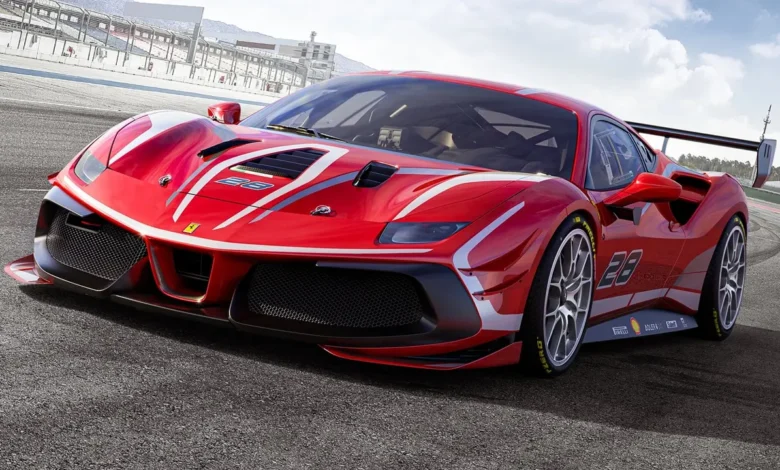
The Ferrari 488 Challenge Evo represents one of the most significant advancements in the history of Ferrari’s one-make racing machines. Developed as the enhanced evolution of the already formidable 488 Challenge, the Evo version brings refinements in aerodynamics, handling, power management and driver confidence that elevate it into a category of its own. Built exclusively for the Ferrari Challenge series, the 488 Challenge Evo demonstrates how far Ferrari’s motorsport division can push a race car engineered for amateur competition yet capable of delivering performance that rivals professional GT machinery. For Ferrari, the Evo name is not a marketing tag—it signifies a systematic upgrade in every critical area of performance, reflecting lessons learned from GT racing, Formula 1 aerodynamics and feedback from Challenge drivers around the world.
Since the launch of the Ferrari Challenge series in the early 1990s, Maranello has created a lineage of dedicated race cars intended to democratize motorsport without diluting the purity of competition. These machines, while engineered primarily for gentlemen drivers, are full-bred weapons capable of lap times that astonish experienced professionals. The 488 Challenge Evo continues this tradition, but with a modern technological layer that makes it more responsive, more predictable and significantly faster. Ferrari used advanced computational fluid dynamics, track telemetry from over a decade of data, and direct consultation with Challenge pilots to shape a car that retains the ferocity of its predecessor yet offers unprecedented control.
Gallery: Ferrari 488 Challenge Evo
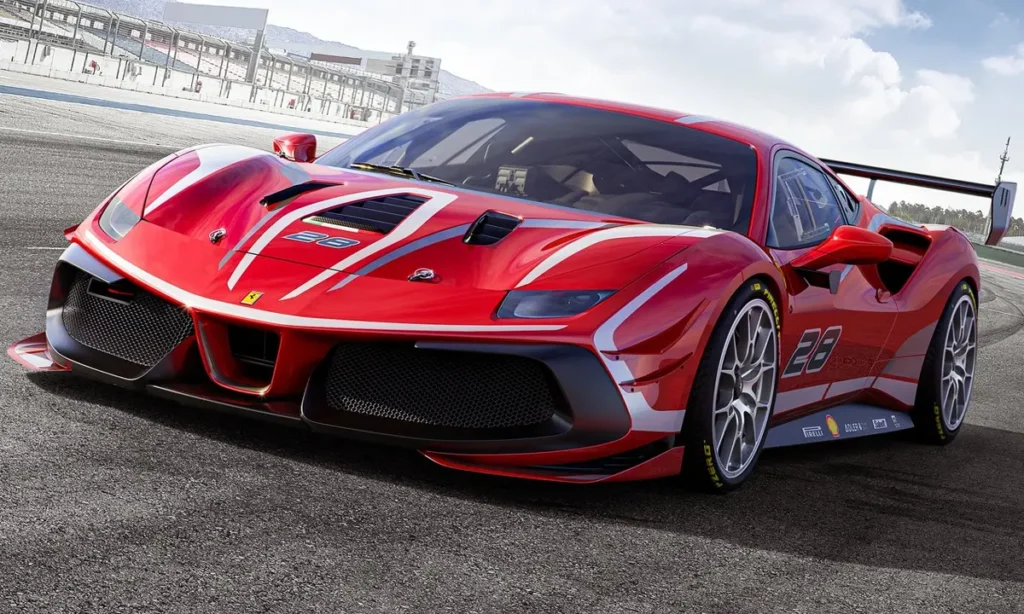
Unlike the street-legal 488 GTB, the 488 Challenge Evo is designed with a specific mission: maximize performance in the controlled environment of a race circuit. This clarity of purpose allows Ferrari engineers to push boundaries in ways simply not possible on road-homologated models. The result is a pure racing instrument—razor sharp in its handling, profoundly aggressive in its aerodynamic profile, and unmistakably Ferrari in its emotional and mechanical presence.
Design Evolution: Aerodynamic Intelligence and Racing Precision
The design of the Ferrari 488 Challenge Evo is a masterclass in aerodynamic engineering. Ferrari’s engineers approached the project with a detailed analysis of the 488 Challenge’s performance envelope, identifying opportunities to increase downforce, minimize drag and improve stability under braking and cornering loads. The Evo version introduces a redesigned front fascia, a profoundly revised front bumper and splitter assembly, and updated air-channeling structures that allow for more aggressive airflow management around the car.
At the front, the new bumper design incorporates a more pronounced lower lip, expanded side canards and deeper air intakes. These design changes significantly increase downforce over the front axle, resulting in improved turn-in grip and enhanced precision when entering high-speed corners. Ferrari reports roughly a 50% increase in front-end downforce compared to the earlier 488 Challenge configuration, giving the Evo a far more planted and stable feel during turn-in.
The side profile introduces revised vortex generators, reshaped vents and new sculpting around the wheel arches, all calibrated to reduce turbulence and direct airflow toward key aerodynamic elements. The goal was to ensure the Evo’s downforce does not compromise straight-line efficiency, a balancing act achieved through intense computational simulations and track-based testing.
At the rear, the Evo incorporates one of the most visually striking upgrades: a fully redesigned rear wing with adjustable flaps. This aerodynamic package works in harmony with a more aggressive rear diffuser, creating the ideal combination of stability during high-speed braking and corner exit traction. Ferrari engineers ensured that the aerodynamic balance of the car remains consistent across speed ranges, allowing drivers to push harder without sudden shifts in handling behavior.
The Ferrari 488 Challenge Evo is therefore not simply a restyled version of the 488 Challenge—it is a reengineered racing tool, shaped by airflow science and track-derived intelligence.
Engine and Power Delivery: The Most Powerful Challenge Car in History
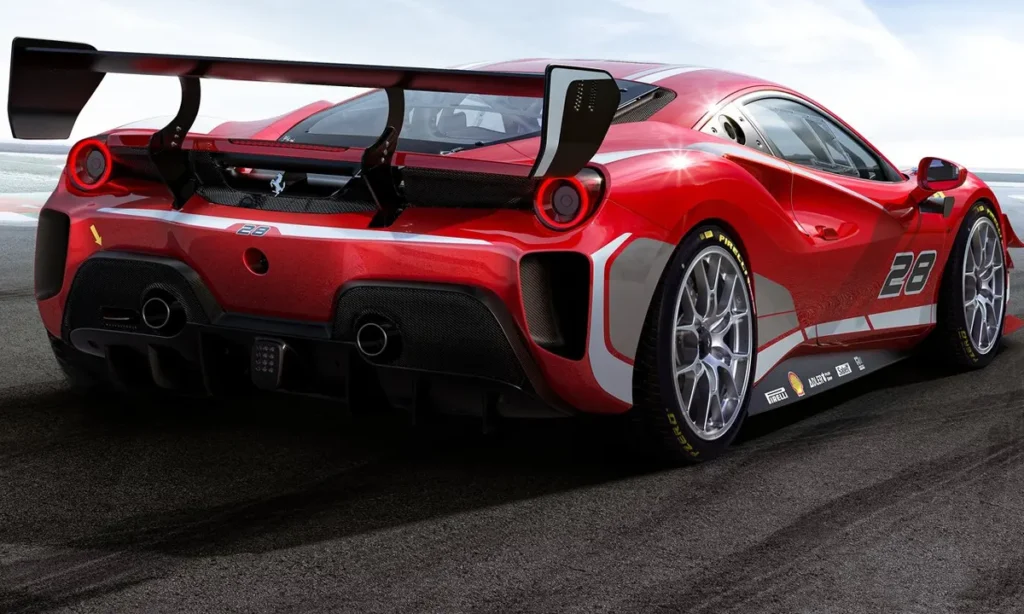
At the heart of the 488 Challenge Evo lies the spectacular 3.9-liter twin-turbocharged V8, part of Ferrari’s award-winning F154 engine family. Producing 670 horsepower, this engine stands as the most powerful powerplant ever fitted to a Ferrari Challenge car. While the Evo does not increase horsepower beyond the original 488 Challenge, it significantly improves how that power is delivered.
Ferrari engineers refined the throttle mapping, turbo response and torque distribution algorithms to offer more precise control over acceleration, especially during corner exit. This is crucial in a racing environment where applying too much power too early can induce wheelspin, extend braking distances or compromise the racing line. The Evo feels sharper, smoother and more predictable throughout its rev range.
The 3.9-liter V8 remains a masterpiece of engineering. Its rapid spool-up characteristics, efficient combustion processes and ultra-responsive delivery create an engine that feels instinctual and intimately connected to the driver. The sound profile—raw, mechanical, turbocharged and unmistakably Ferrari—adds a level of emotional connection that further supports the car’s track performance.
While the Evo retains the same output as its predecessor, its improved drivability translates directly into faster lap times. On multiple circuits, Ferrari’s test data shows measurable improvements in mid-corner exit speed, braking stability and consistency across multiple racing laps. The engine’s durability also remains unmatched, critical for long Challenge weekends that demand high reliability.
Handling, Chassis and the Art of Control
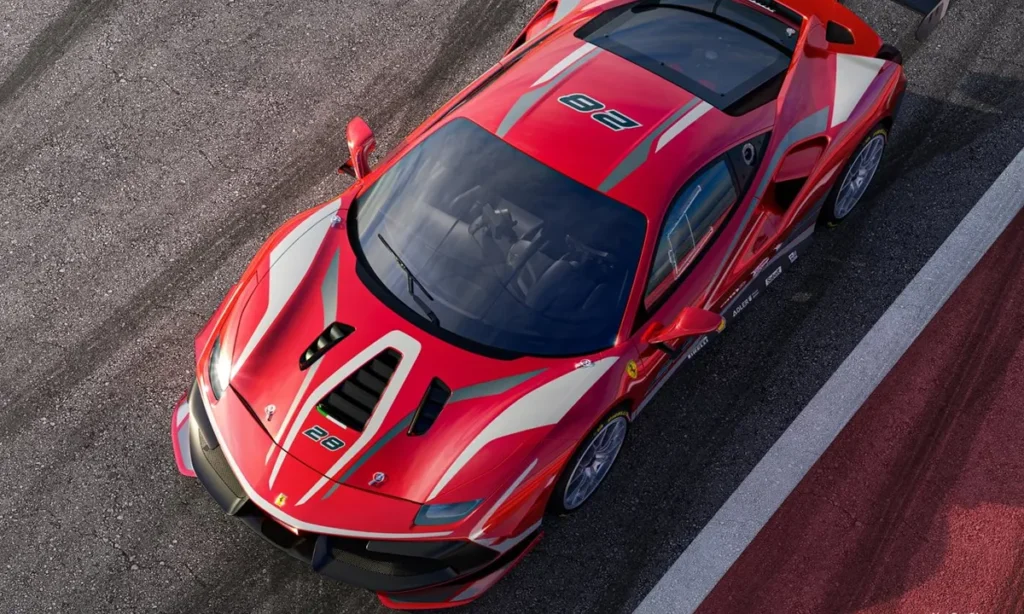
One of the defining achievements of the 488 Challenge Evo is its vastly improved handling dynamics. Ferrari put immense focus on giving drivers—many of whom are not professional racers—the confidence to extract maximum performance from the car. The result is a chassis that feels more communicative, easier to control at the limit and more consistent across varying conditions.
The Evo features revised suspension geometry, updated spring rates and new shock absorber calibrations designed to improve mid-corner balance. Working in conjunction with the aerodynamic upgrades, the mechanical grip has been enhanced significantly. Drivers report that the Evo feels far less nervous at high speeds and delivers more predictable feedback under braking, allowing them to dive deeper into corners with greater confidence.
One of the most important improvements is the introduction of Ferrari’s latest Side Slip Control (SSC) system for race applications. This version of SSC interprets yaw rate, steering angle, throttle position and lateral acceleration to help the driver maintain maximum grip without suppressing the car’s natural agility. Unlike traction systems in road cars, Ferrari’s SSC for the Challenge Evo is designed not to correct mistakes but to support optimal performance.
The braking system also receives significant upgrades, including new ABS calibrations that provide smoother modulation and shorter braking distances. The endurance of the braking components has improved, meaning the car remains consistent during long stints, even under repeated heavy-load braking scenarios.
Interior Environment: Functional Precision and Driver Focus
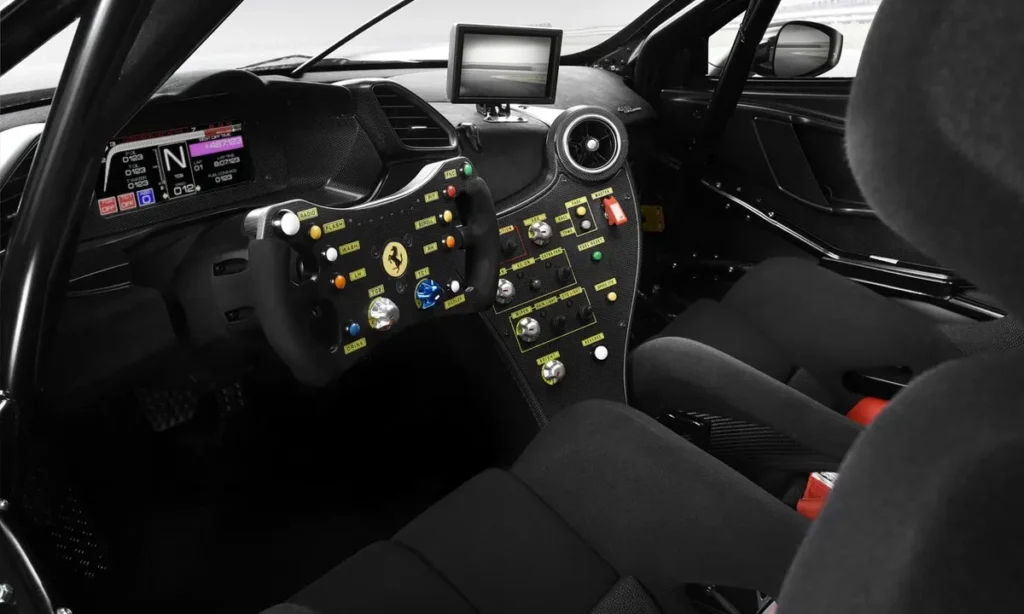
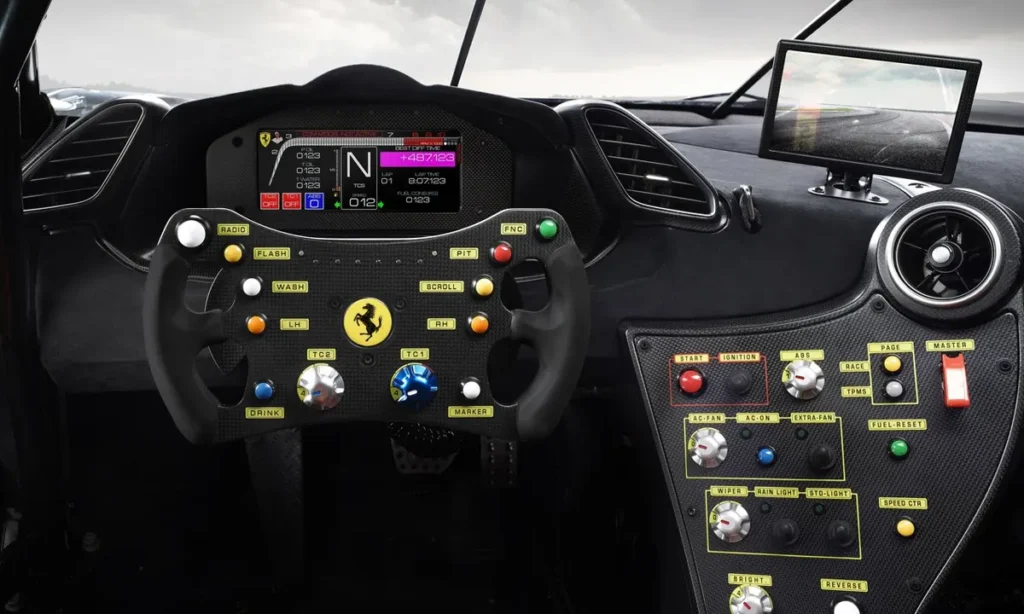
The interior of the Ferrari 488 Challenge Evo is defined entirely by function. Every control surface, display interface and ergonomic detail is designed to enhance driver performance on the circuit. The stripped-back cabin focuses purely on racing essentials: lightweight materials, direct access to race-critical functions and an environment tailored for driver concentration.
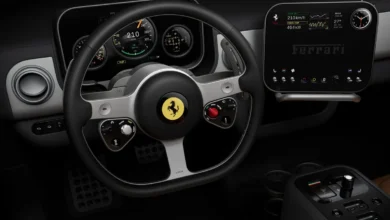
The steering wheel in the Evo features updated tactile controls, improved paddle shifters and quick-access knobs for adjusting traction control, braking distribution and engine modes. Ferrari’s integrated digital display provides critical real-time data, including lap times, tire pressures, brake temperatures and power-delivery metrics.
The racing seat is constructed from lightweight composites and shaped to provide stability under high g-forces. Safety remains paramount, with FIA-approved harnesses, reinforced structural protection and integrated crash-mitigation systems supporting the driver at all times.
While stripped of luxury features, the Evo’s interior remains unmistakably Ferrari, featuring meticulous craftsmanship, high-grade materials and a cockpit layout refined through decades of competition experience.
Read: Mercedes-AMG G63: The Ultimate Blend of Luxury and Twin-Turbo V8 Power
Track Performance: A Race Car for Experts and Enthusiasts Alike
On the track, the Ferrari 488 Challenge Evo is an uncompromising weapon. Its ability to carve corners with precision, accelerate with turbocharged urgency and maintain stability under the most extreme dynamic conditions sets it apart from nearly every car in its class. Ferrari Challenge drivers report that the Evo feels more approachable than earlier models, thanks to its improved aero balance and refined electronic aids.
Lap times across major circuits show the Evo outperforming the standard 488 Challenge by measurable margins, especially in technical sections characterized by rapid direction changes and heavy braking. The improved aerodynamics allow for faster corner entry speeds, while the refined power delivery offers quicker acceleration during corner exit.
This is a race car that rewards skill yet supports driver development. For Ferrari, that balance is the essence of the Challenge program: giving enthusiasts a machine with the soul of a GT race car and the responsiveness needed to help them improve as competitive drivers.
Ferrari 488 Challenge Evo – Specifications & Performance Chart
| Category | Specification |
| Engine | 3.9-Liter Twin-Turbocharged V8 |
| Power | 670 hp |
| Torque | 760 Nm (approx., depending on tune) |
| Transmission | 7-Speed Dual-Clutch Race Calibration |
| Drivetrain | Rear-Wheel Drive |
| 0–100 km/h | ~2.9 seconds (track dependent) |
| Top Speed | ~320 km/h (gear-limited) |
| Weight | Reduced vs. 488 Challenge (varies by configuration) |
| Aerodynamics | Revised Splitter, Wing, Diffuser, Vortex Generators |
| Tires | Pirelli Slicks (Challenge-specific compound) |
| Brakes | Carbon-Ceramic with Updated ABS |
| Chassis | Aluminum Spaceframe with Racing Upgrades |
| Electronics | Ferrari Side Slip Control (SSC) Race Version |
| Production | Dedicated for Ferrari Challenge Series |