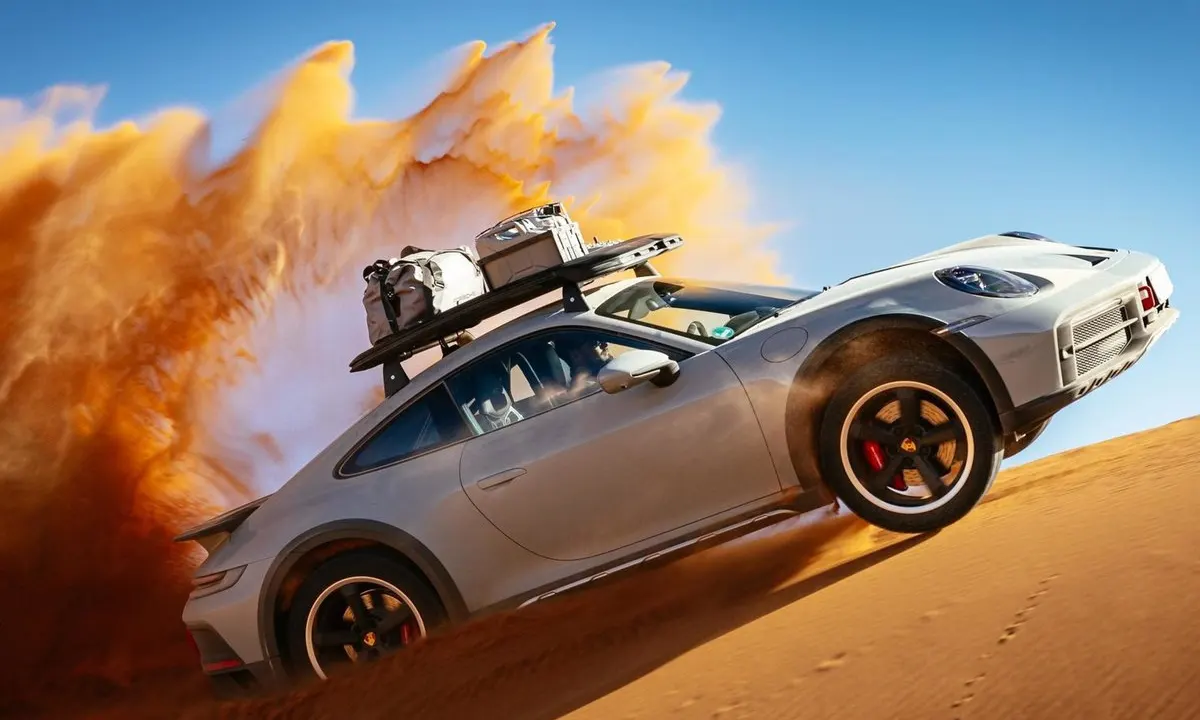
Every generation produces one automobile that breaks the accepted rules of its category so completely and so convincingly that the automotive world is forced to reconsider not merely its assumptions about the specific car but its assumptions about the entire category it belongs to. The Porsche 911 Dakar is that car for the current era of sports car development. It should not exist. It defies every logical principle that decades of sports car engineering have established about the relationship between ride height and handling, between tyre choice and lap time, between ground clearance and centre of gravity and between the serious, focused, driver-centric character of the Porsche 911 and anything that could reasonably be described as going off-road. It exists anyway, and it is extraordinary — not despite the contradictions at its heart but because of them, and because Porsche’s engineers resolved those contradictions with a completeness and a conviction that has produced one of the most genuinely surprising and most instantly beloved special-edition road cars of the past decade. This is the full story of why the 911 Dakar is breaking the internet, breaking all the rules and breaking the hearts of every enthusiast who discovers it is already sold out.
Gallery: Porsche 911 Dakar
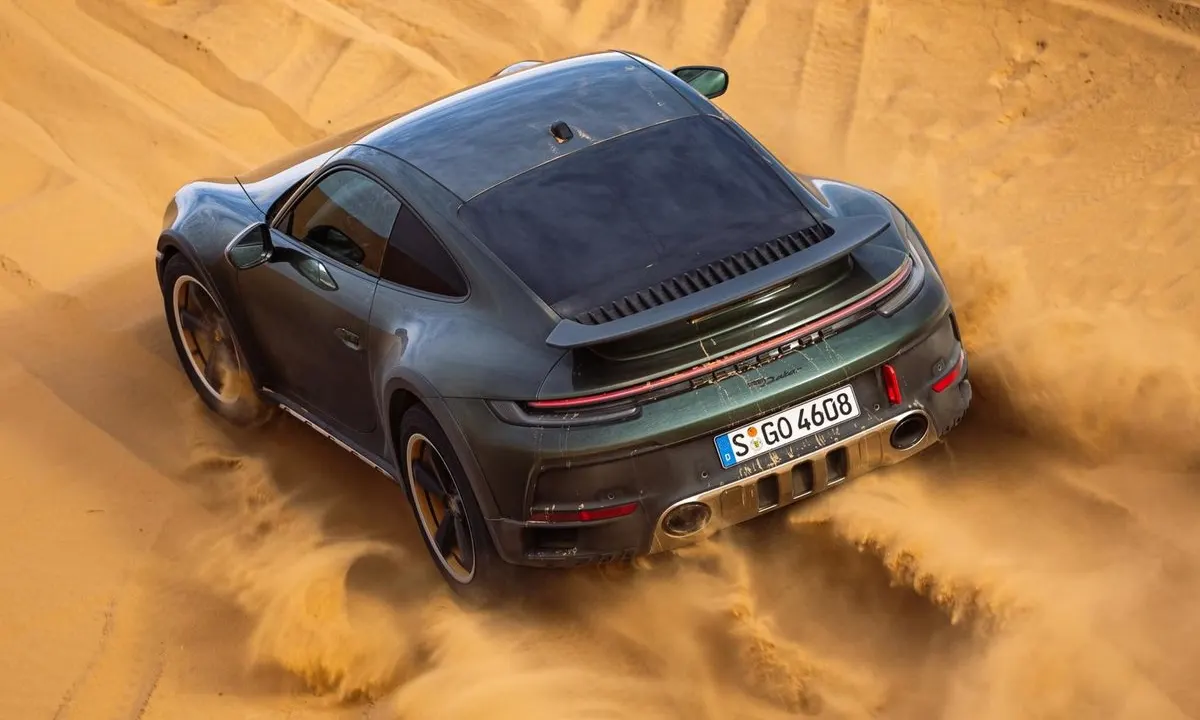
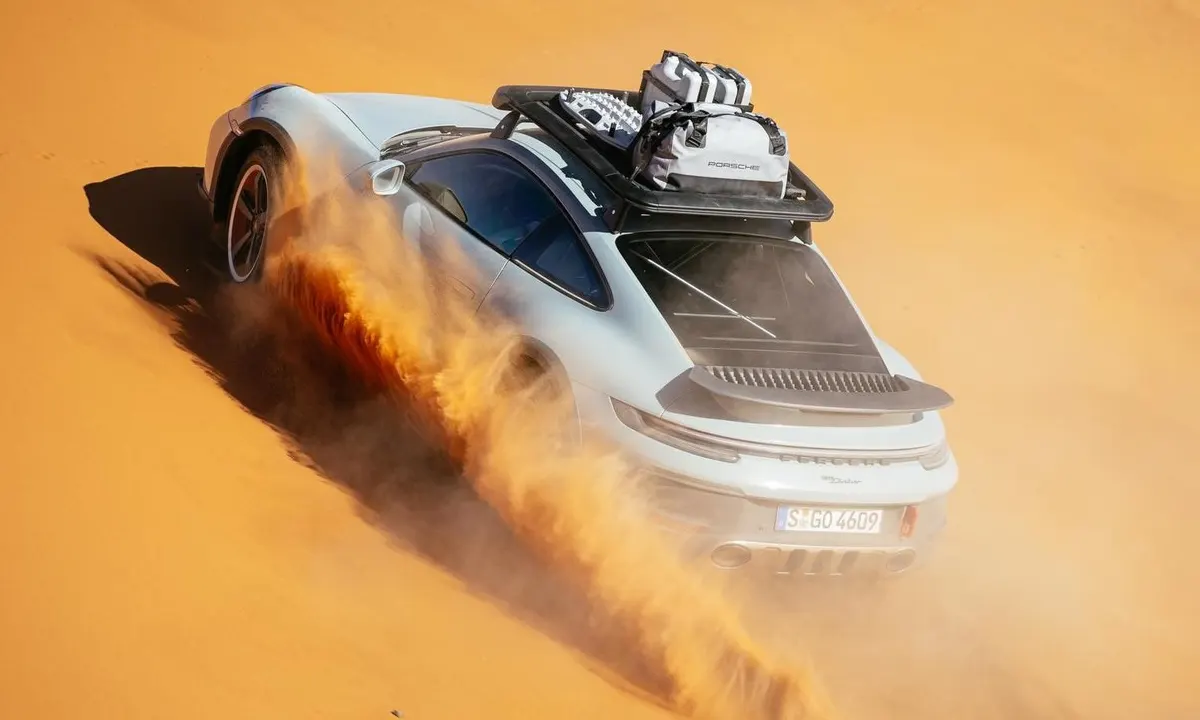
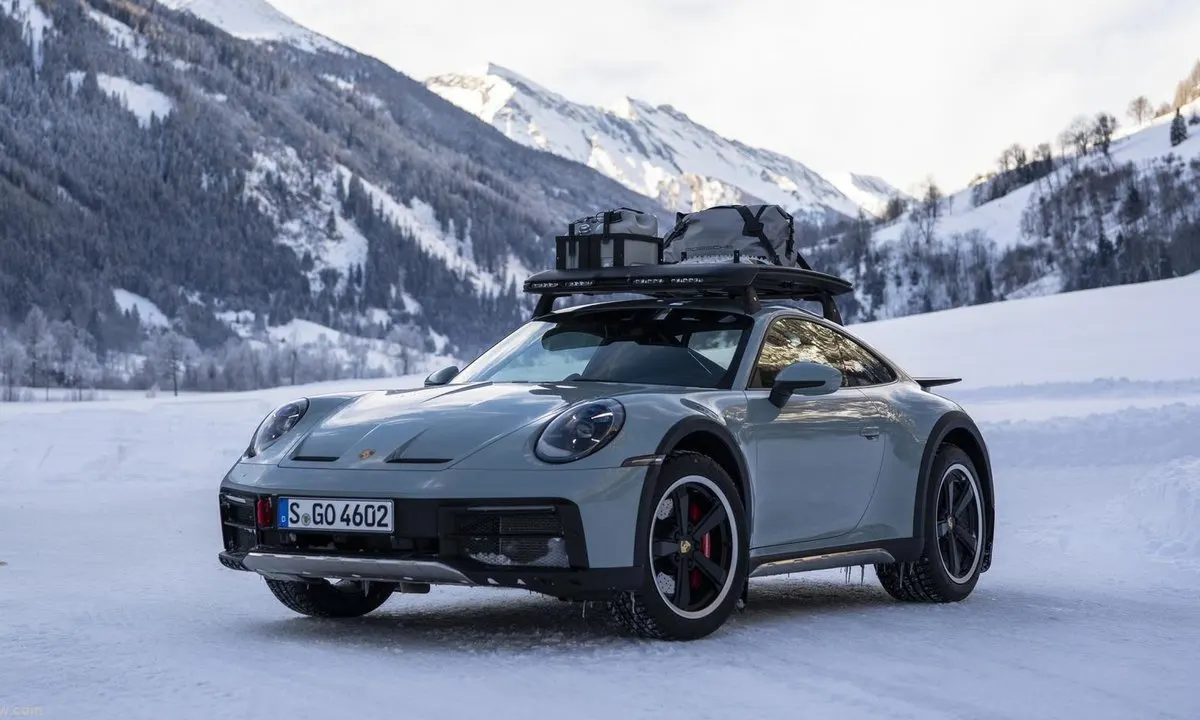
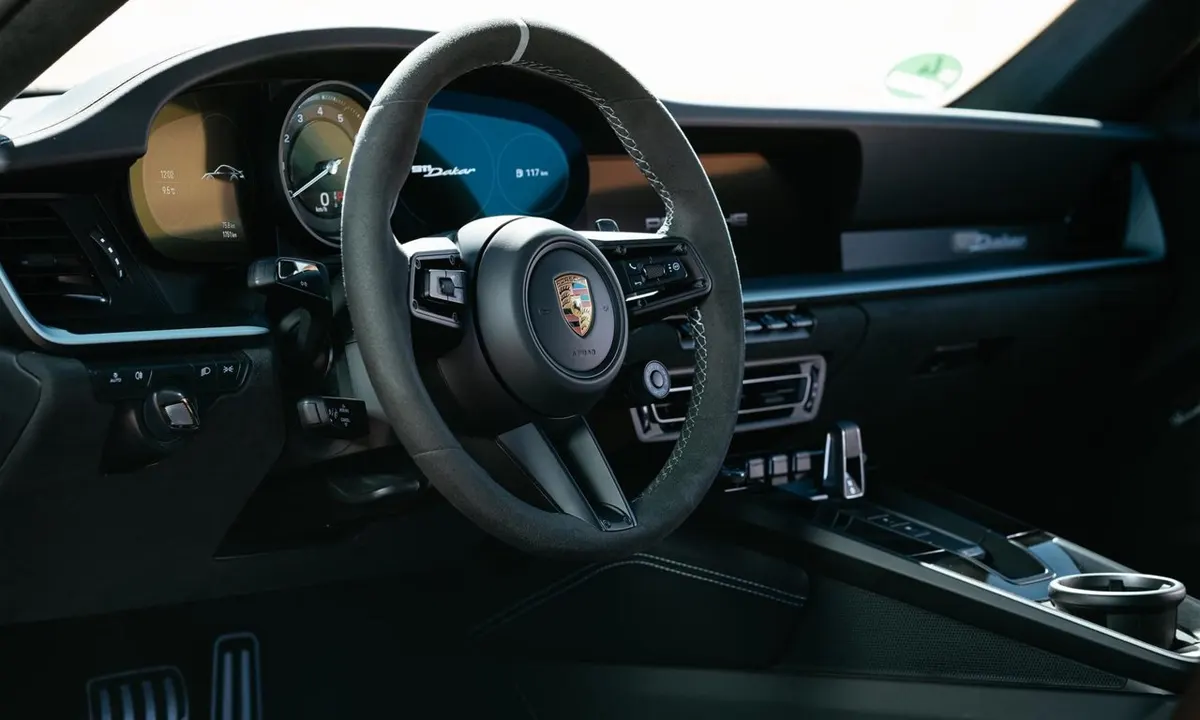
The Heritage: 1984, the Paris-Dakar Rally and the Legend That Made This Possible
To understand the 911 Dakar’s significance, it is essential to understand the historical moment that made its existence both plausible and emotionally resonant rather than merely eccentric. In 1984, at one of the most demanding and most gruelling motorsport events in the world — the Paris-Dakar Rally, a 7,500-mile endurance race across the deserts and mountain passes of North Africa — a heavily modified Porsche 911, designated the 953, completed the course ahead of all dedicated off-road competition machinery and won outright. The 953 was not a purpose-built desert racer. It was a Porsche 911, recognisable in its fundamental architecture despite the modifications that extended its suspension travel, expanded its fuel capacity to 270 litres and fitted a manually locking centre differential to manage the extreme traction demands of Saharan sand dunes and North African mountain tracks. It was, by any reasonable definition, an absurd vehicle for an absurd purpose — and it succeeded so completely and so memorably that Porsche’s victory that year remains one of the most celebrated and most improbable moments in the brand’s extraordinary motorsport history.
The 2023 to 2025 production 911 Dakar is the direct spiritual and mechanical successor to that 1984 legend, and the depth of the connection between the two vehicles — in engineering philosophy, in visual aesthetic and in the fundamental conviction that a sports car engineered for the world’s most demanding road conditions can simultaneously be faster, more capable and more exciting than anyone who has not driven one can reasonably imagine — is the source of the production Dakar’s extraordinary emotional resonance. This is not a car that references a historical achievement for marketing purposes. It is a car that takes the historical achievement as its engineering brief, its design language and its performance aspiration, and then delivers on all three with a completeness that the most sceptical reviewer who has driven it in the conditions it was designed to conquer — and journalist reports from Morocco’s Saharan sand dunes, from alpine forest tracks and from Austrian mountain passes confirm this unanimously — has found genuinely and completely convincing.
The Engineering: What Porsche Actually Changed and Why It Works
The 911 Dakar is based on the Carrera 4 GTS — the highest-specification naturally all-wheel-drive 911 in the standard lineup — and the modifications applied to create the Dakar are more extensive, more carefully considered and more deeply integrated into the car’s fundamental character than a simple ride height and tyre specification change would suggest. Understanding each modification individually, and understanding why each has been made, reveals the coherent engineering vision that separates the Dakar from the lesser conception of an off-road 911 as a marketing exercise.
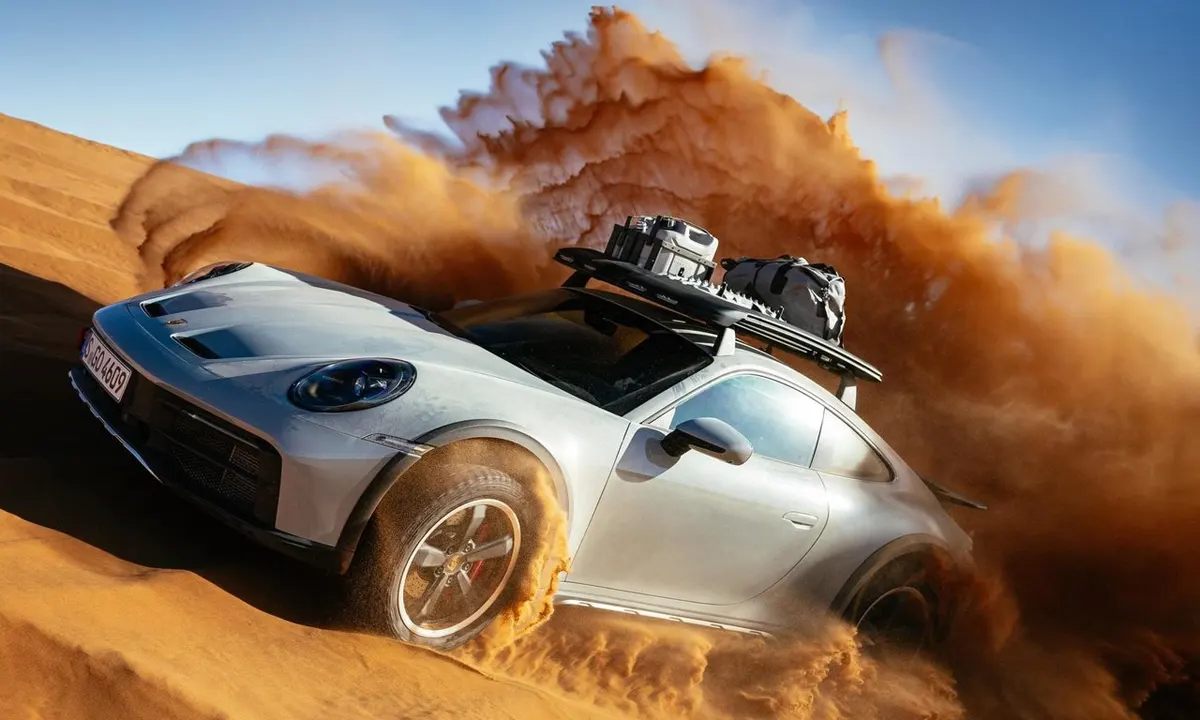
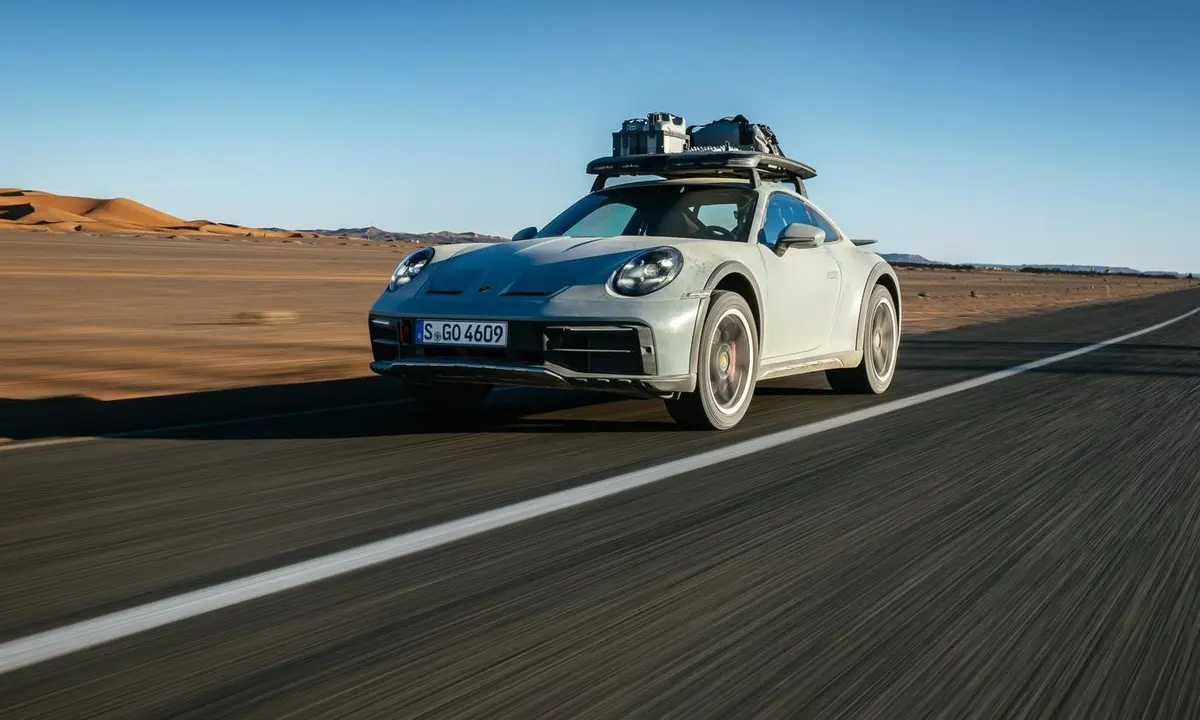
The most immediately apparent change is the 50-millimetre increase in ride height compared to the standard Carrera 4 GTS — a figure that, combined with the additional 30-millimetre hydraulic lift available through the car’s electronic raise function, gives the Dakar a maximum ground clearance that overlaps with SUV territory and enables approach and departure angles appropriate to genuine off-road terrain. To achieve this ride height increase without compromising the 911’s fundamental handling character — a challenge whose difficulty should not be underestimated, because ride height and handling balance are intimately related through the geometry of the suspension system — Porsche’s engineers developed longer suspension springs with softer spring rates that preserve the damper travel necessary for controlled, progressive wheel movement over rough surfaces without allowing the body motion in corners to degrade the car’s directional accuracy on the paved roads where most owners will drive it most of the time.
The central radiator of the standard GTS was removed entirely and replaced with the larger-diameter side-mounted cooling fans from the 911 Turbo — a modification that serves the dual purpose of improving cooling performance during the sustained low-speed, high-load operation that off-road driving imposes and creating a steeper front approach angle that allows the car’s nose to engage with steep descents and climbs without grounding on its frontal surfaces. This is not a casual engineering change — it required complete redesign of the front fascia’s cooling architecture and represents a level of commitment to genuine off-road capability that distinguishes the Dakar from a purely cosmetic interpretation of the off-road 911 concept.
Stainless steel skid plates cover the front and rear bumper undersides and the side sills — genuine off-road protection hardware whose material specification reflects Porsche’s understanding that the Dakar will be driven into situations where contact with rocks, boulders and significant surface irregularities is not merely possible but intended. The carbon fibre reinforced polymer bonnet — shared with the GT3 in its production specification — reduces the nose’s contribution to overall vehicle mass, partially compensating for the weight added by the skid plates, the longer suspension components and the more robust air filtration system required by sustained desert driving. The net weight premium over the Carrera 4 GTS is just 10 kilograms — an engineering achievement of considerable significance given the breadth and the heaviness of the components added.
473 Horsepower and a 3.2-Second 0-60: The Sports Car That Never Forgot What It Was
The 911 Dakar’s powertrain specification is one of the clearest demonstrations of Porsche’s commitment to the car’s dual personality — genuinely capable off-road hardware in an authentic sports car package. The twin-turbocharged 3.0-litre flat-six engine produces 473 horsepower and 420 pound-feet of torque, with peak torque available across a broad rev range from 2,300 to 5,000 rpm that provides the sustained, confident pulling power that off-road terrain demands without the narrow powerband of engines optimised solely for high-rpm performance. This is the same engine specification used in the Carrera GTS — a unit whose performance credentials are entirely beyond question and whose reputation for mechanical reliability across Porsche’s GTS application is comprehensively established.
The eight-speed PDK dual-clutch transmission manages power delivery to all four wheels through Porsche’s all-wheel-drive system, and the result is a zero to 60 miles per hour time of 3.2 seconds on asphalt — a figure that makes the Dakar, despite its all-terrain tyres and raised suspension, one of the quickest accelerating production Porsches available. The GT3-specification engine mounts fitted to the Dakar — reportedly doubling the stiffness of the engine’s connection to the chassis compared to the standard GTS specification — reduce the risk of engine housing contact with the chassis floor during the severe vertical chassis movements that off-road driving produces and contribute to the car’s dynamic precision on road by maintaining the engine’s positional consistency relative to the chassis under the lateral and longitudinal loads that spirited road driving imposes.
Two driving modes exclusive to the Dakar — Rallye and Off-road — expand the car’s dynamic repertoire into territory that no other production 911 has previously occupied. Rallye mode redirects the all-wheel-drive system’s torque distribution strongly toward the rear axle, creating a handling balance appropriate to loose gravel, wet grass and dirt roads where rear-biased power delivery enables the driver to adjust the car’s attitude through throttle modulation in the manner of a rally driver managing oversteer on a loose surface. Rally Launch Control, available within Rallye mode, permits 20 percent additional wheel slip over the standard launch control’s more conservative slip tolerance — enabling the Dakar to achieve the kind of dramatic, dirt-slinging standing start that its visual character demands and its emotional character rewards. Off-road mode configures the suspension, traction control and torque distribution for the low-speed, high-articulation demands of genuine off-road terrain — dunes, rocky pathways and steep gradient ascents and descents where calculated traction management rather than outright speed is the decisive factor.
The Pirelli Scorpion All-Terrain Tyres: The Detail That Changes Everything
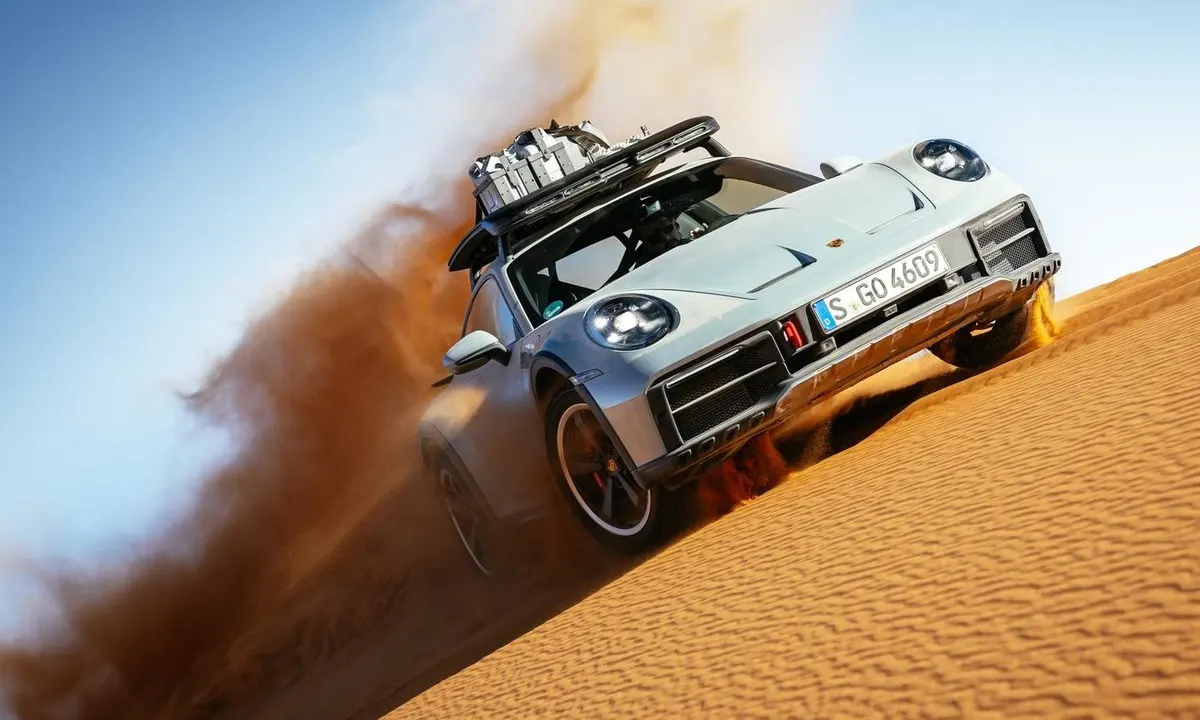
No single component of the 911 Dakar’s specification has generated more discussion, more debate or more genuine surprise among automotive journalists and enthusiasts encountering it for the first time than its standard fitment Pirelli Scorpion All-Terrain Plus tyres — semi-knobbly, heavily siped rubber of a kind that no production 911 has ever worn before and that transforms the car’s visual character and its dynamic capability over unpaved surfaces more completely than any other single specification decision. The tyres are mounted on staggered 19-inch front and 20-inch rear forged aluminium wheels whose light alloy construction partially compensates for the Scorpion All-Terrain’s greater unsprung mass compared to the lightweight performance rubber of the standard 911 range, and their tread pattern — deep, directional and designed for maximum self-cleaning capability in mud and sand — is as far from the Michelin Pilot Sport Cup 2 of the GT3 RS as any tyre specification can be while remaining attached to a vehicle that shares the same flat-six engine family.
On paved roads, the Scorpion All-Terrain tyres introduce a modest increase in road noise — reported consistently by every journalist who has assessed the car on public roads as noticeable but entirely tolerable given the breadth of capability the tyre specification enables. They compromise absolute lateral grip compared to performance-optimised summer tyres in the manner that physics requires — the all-terrain tread pattern’s greater tread void ratio and softer compound provide less contact patch rigidity under high lateral load than a pure road tyre. They provide, in return, a traction capability over wet grass, gravel, sand and loose dirt that no standard 911 tyre could approach, and they cut through standing water on sealed roads with a composure and a confidence that the Evo magazine’s extended real-world drive through stormy Austrian conditions confirmed as genuinely impressive in a practical and measurable sense.
The Interior: Rally Specification Without Racing Discomfort
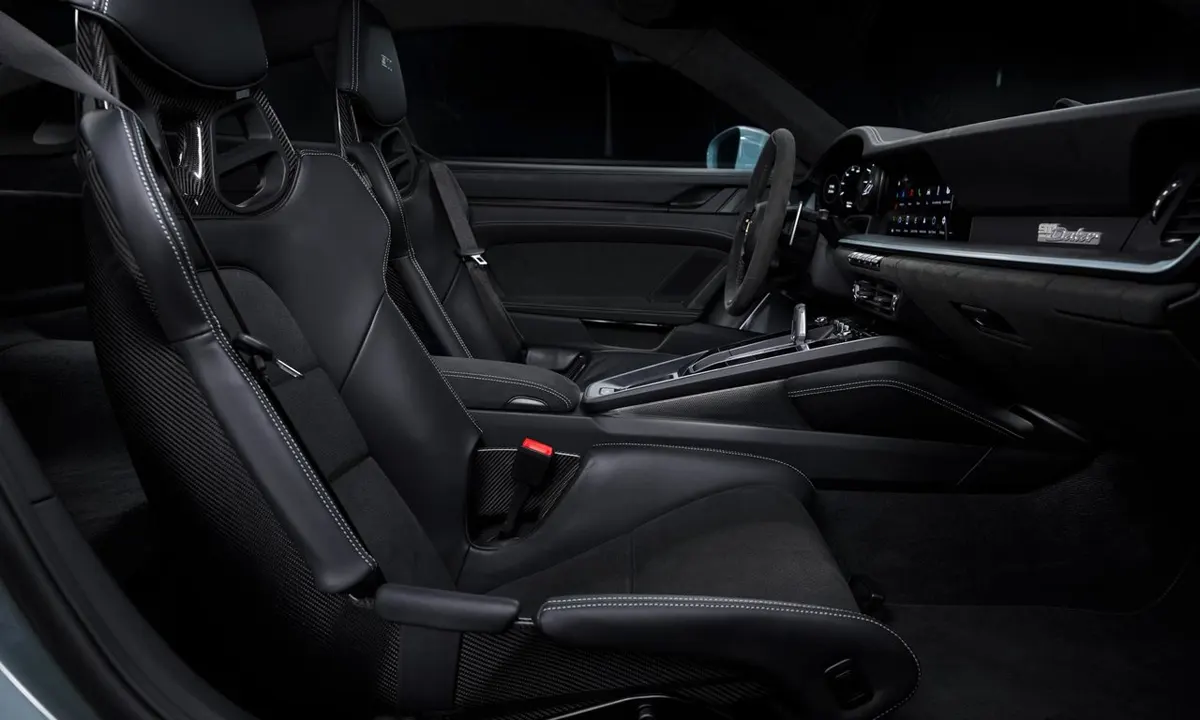
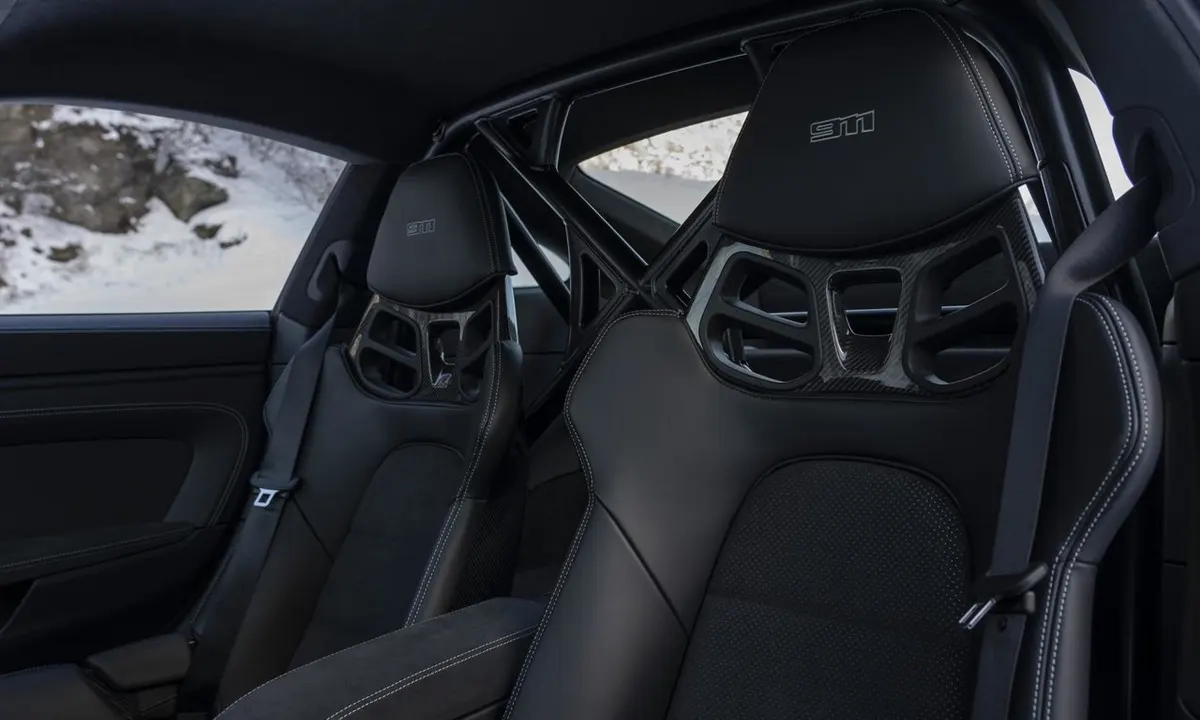
Step inside the 911 Dakar and the motorsport narrative continues in a cabin that removes the standard Carrera 4 GTS’s rear seats entirely and replaces them with a lightweight cargo shelf — a decision that reduces weight, improves the car’s interior functionality for adventure equipment and signals clearly that this is a vehicle designed for two dedicated occupants rather than occasional rear passenger accommodation. Carbon-fibre-shell bucket seats trimmed in Race-Tex — Porsche’s Alcantara-equivalent performance fabric — provide lateral support appropriate to enthusiastic driving in both on-road and off-road conditions, while contrast stitching and Dakar-specific embroidery identify the car’s unique specification at a glance. An optional roll cage and rally-specification seatbelts extend the car’s motorsport credentials further for buyers whose use of the Dakar includes competitive rallying or track day events.
The standard technology provision is entirely consistent with the broader 911 family’s current specification — the PCM touchscreen infotainment system with navigation, wireless Apple CarPlay, dual-zone climate control and a premium audio system ensure that the Dakar’s interior technology is appropriately current regardless of the terrain its occupants have most recently traversed. Several reviewers noted that the interior’s ambition could have been taken further given the car’s price point and its limited-edition status — a criticism that reflects the genuinely extraordinary nature of the exterior and the chassis engineering rather than any deficiency in the interior’s quality. What Porsche has provided is a focused, purposeful, genuinely motorsport-inspired cabin that rewards the driver’s attention without demanding unnecessary complexity.
2,500 Units: The Rarity That Guarantees the Legend
The Porsche 911 Dakar’s global production allocation of 2,500 units ensures that its commercial rarity is proportionate to its engineering exclusivity — a figure that is, as Auto Express noted during the car’s introduction, already sold out before the automotive world had fully processed the significance of what Porsche had created. The available Rally Design Pack — whose paint scheme reproduces the Rothmans-inspired livery of the 1984 Paris-Dakar winning 953 in blue, white and gold tones whose emotional resonance for Porsche enthusiasts of any age is immediate and profound — has become one of the most photographed and most shared automotive visual elements of the past three years, contributing directly to the car’s internet-breaking cultural presence and generating an enthusiasm for the Dakar among people who would never have considered themselves Porsche devotees before encountering it. Additional heritage livery options inspired by East African Safari Rally participants of the early 1970s extend the car’s visual storytelling further, and the optional roof rack with Porsche-branded water canisters, folding spades, traction boards and an available roof tent creates a lifestyle accessory package of such thematic coherence and such photogenic appeal that the Dakar’s status as the most Instagram-ready and most internet-viral Porsche ever produced is as much a product of deliberate creative vision as of organic social media enthusiasm.
Read: Toyota Supra Without BMW Parts. Game Changer or Big Risk?
Porsche 911 Dakar – Specifications & Performance Chart
| Category | Specification |
| Vehicle Type | Off-Road Sports Car / Limited Edition 911 |
| Base Platform | Porsche 911 Carrera 4 GTS (992 Generation) |
| Engine | 3.0-Litre Twin-Turbocharged Flat-Six |
| Horsepower | 473 hp |
| Torque | 420 lb-ft (Fully Available 2,300–5,000 rpm) |
| Transmission | 8-Speed PDK Dual-Clutch Automatic |
| Drivetrain | Porsche All-Wheel Drive |
| Engine Mounts | 911 GT3 Specification (Double Standard Stiffness) |
| 0–60 mph | 3.2 Seconds (on Asphalt) |
| Quarter Mile | 11.6 Seconds |
| Top Speed | 149 mph (Limited by All-Terrain Tyres) |
| Ride Height vs Carrera 4 GTS | +50mm Standard |
| Additional Hydraulic Lift | +30mm (Available up to 105 mph) |
| Total Max Ground Clearance Gain | +80mm (3.14 inches over Standard 911) |
| Tyres | Pirelli Scorpion All-Terrain Plus (Bespoke) |
| Front Wheels | 19-Inch Forged Aluminium |
| Rear Wheels | 20-Inch Forged Aluminium |
| Front Track | +28mm vs Carrera 4 GTS |
| Rear Track | +15mm vs Carrera 4 GTS |
| Suspension | Longer Springs / Softer Rates / Semi-Active Dampers |
| Standard Equipment | Rear-Axle Steering / Active Anti-Roll Bars / Sport Chrono |
| Cooling System | Twin Side Radiators (911 Turbo Spec – Replaces Central Unit) |
| Air Filtration | Uprated (Desert Dust Resistant) |
| Underbody Protection | Stainless Steel Skid Plates (Front / Rear / Sills) |
| Exterior Carbon Fibre | CFRP Bonnet / Rear Spoiler |
| Weight vs Carrera 4 GTS | +10 kg (Net – After Lightweighting Measures) |
| Exclusive Drive Modes | Rallye / Off-Road (Both Dakar-Exclusive) |
| Rally Launch Control | Yes (+20% Wheel Slip vs Standard) |
| Interior Seats | Carbon-Shell Bucket Seats in Race-Tex |
| Rear Seats | Removed – Replaced by Lightweight Cargo Shelf |
| Roll Cage | Optional |
| Roof Rack | Optional (88 lb / 40 kg Capacity) |
| Liveries | Rally Design Pack (Rothmans Tribute) / East African Safari Wrap |
| Optional Roof Tent | Yes |
| Starting MSRP (US) | $223,000 (Approx., Excl. Options and Destination) |
| Global Production | 2,500 Units (Limited Run – Now Sold Out) |
| Production Period | 2023–2025 |
| Assembly | Zuffenhausen, Stuttgart, Germany |