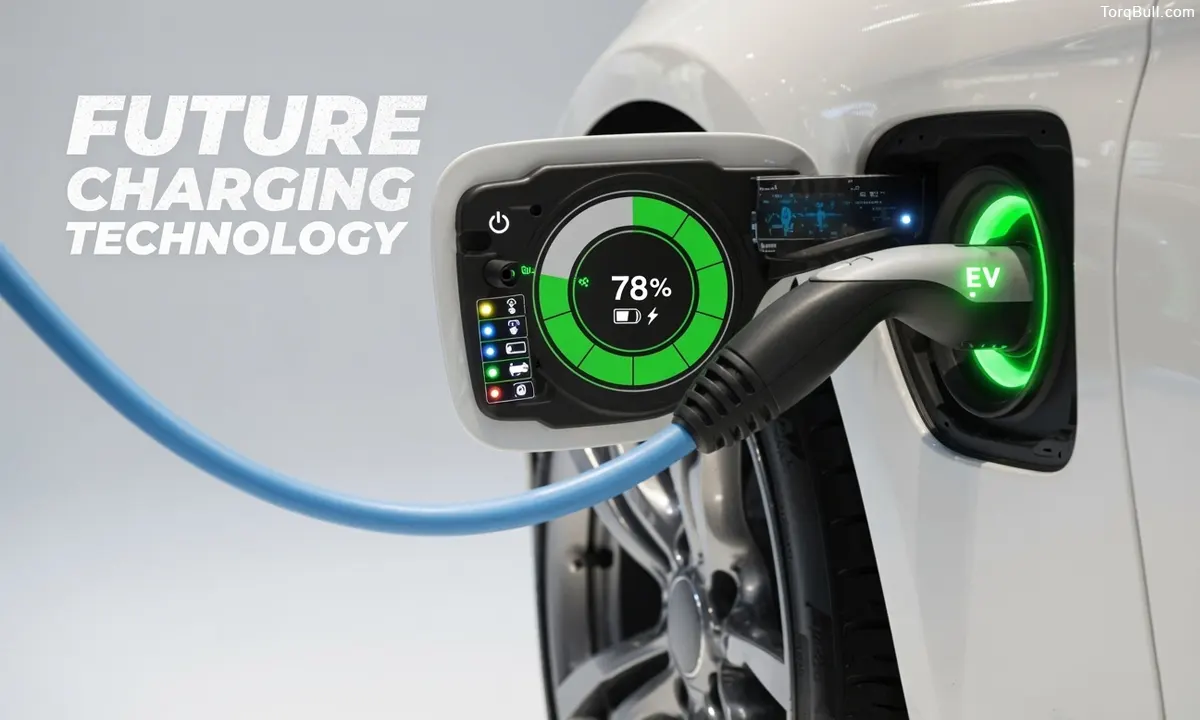
Here is the question every EV-curious American eventually asks: what is this thing actually going to cost me to charge every month? And here is the frustrating but honest answer: it depends entirely on how and where you plug in.
I do not mean a little wiggle room. I mean the difference between roughly $35 and roughly $170 a month for the exact same car driving the exact same miles. The difference between an owner who charges at home overnight and one who relies primarily on public DC fast charging is, in many scenarios, the difference between spending about $35 per month on the energy equivalent of 1,000 miles and spending closer to $169 for the same distance. That gap is wide enough to make or break the entire financial case for going electric.
So let’s cut through the confusion and break down what charging an EV really costs per month in 2026, across every method, so you know exactly what you would be signing up for. Quick note: these are averages and estimates, your actual costs depend on your car, your rates, and your habits, and I am sharing data here, not personalized financial advice.
Home Charging: The Cheap and Easy Default
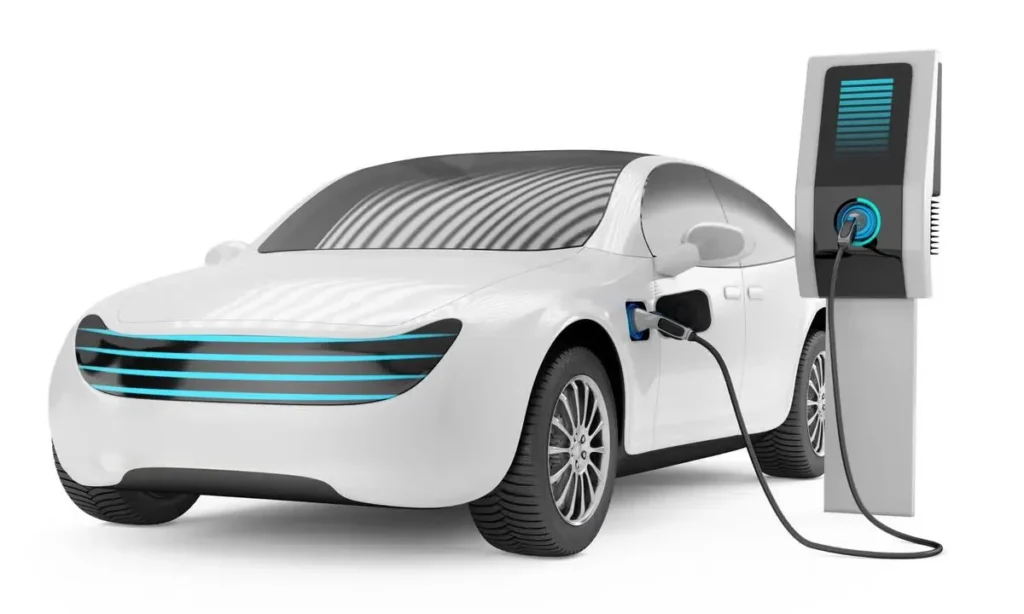
Let’s start where the vast majority of charging actually happens. As much as 90 percent of electric car charging is done overnight at home, and the cheapest way to charge is almost always at home, overnight. This is the number that matters most, because it is the one you will live with daily.
The math is simple. You pay your home electricity rate, and the national average sits in a tight band. U.S. households paid an average of about 19.32 cents per kWh in April 2026. Apply that to a typical driver and the monthly cost is genuinely modest. Driving about 1,015 miles per month, an EV uses roughly 338 kWh, which works out to about $65 per month charging at home. Other 2026 estimates land even lower. Most EV owners spend $35 to $60 per month on home charging compared to $120 to $180 monthly on gasoline for equivalent vehicles.
Per individual fill-up, it is almost laughably cheap. On average, small EVs cost about $6, mid-size EVs about $10, and large EVs about $15 per full charge at home, which works out to just 4 to 5 cents per mile. That is the EV value proposition in a nutshell.
The State Electricity Lottery
Now here is the wrinkle that throws off the national average: where you live swings your costs dramatically. Electricity rates are not uniform, and the spread is enormous. State electricity rates vary by a factor of nearly four times from the cheapest to the most expensive, which has a larger impact on your monthly bill than almost any other variable.
The extremes are stark. In states like North Dakota, Nebraska, and Missouri, where residential rates are around 11 cents per kWh, a full charge costs about $7. In Massachusetts or Maine, the same charge costs over $18, and in Hawaii it’s nearly $24. So a Washington or Texas resident charging at home is living the EV dream, while a Hawaii or California owner pays two to four times more for the identical electrons. Residential rates can range from $0.12 in Washington to $0.32 in California and as high as $0.41 in Hawaii. Your zip code is doing heavy lifting here.
Public Charging: Paying for Speed
Now for the expensive end of the spectrum, and the part that trips up new buyers. Public charging, especially the fast kind, costs a lot more than home charging. There are two flavors. Public Level 2 is the slower, cheaper public option. Public Level 2 charging runs about $0.25 to $0.40 per kWh and still offers significant savings versus gas, around $1,190 per year.
DC fast charging is the convenient but pricey one. Public DC fast charging averages around 45 cents per kWh, with Tesla Superchargers near 36 cents and Electrify America around 48 cents, working out to roughly 13 cents per mile, about 2.5 times more expensive than home. Per session, that adds up fast. Charging a standard 60 to 80 kWh EV at home costs $10 to $15, while using public DC fast chargers for the same energy typically costs $30 to $45. Lean on fast charging for all your miles and your monthly cost balloons toward, or past, what you would have paid for gasoline.
Read: Say Goodbye to Plugs: The Porsche Cayenne Electric Gets Wireless Home Charging
How the Methods Compare
Here is the monthly picture for a typical driver covering about 1,000 miles, by charging method.
| Charging Method | Approx. Cost per kWh | Est. Monthly Cost (~1,000 mi) | Best For |
| Home (off-peak/TOU) | $0.08 to $0.13 | $25 to $40 | Daily charging, max savings |
| Home (standard rate) | $0.16 to $0.19 | $35 to $65 | Daily charging |
| Public Level 2 | $0.25 to $0.40 | $85 to $135 | Top-ups while parked |
| Public DC fast | $0.45 to $0.56 | $134 to $169 | Road trips, emergencies |
The story that table tells is everything. Most EV owners do 80 to 90 percent of their charging at home and treat public charging as a backup, not their main source of power. That is the financially smart pattern, and it is why the home number is the one that defines EV ownership for most people.
EV Charging vs Gasoline
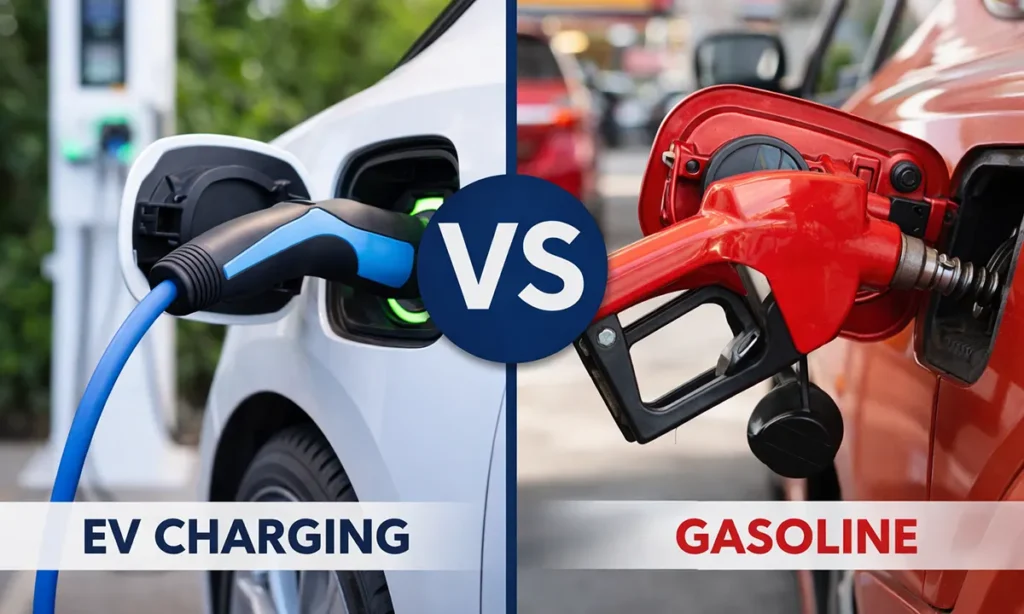
So how does all this stack up against the gas pump? For home chargers, the savings are real and substantial. With gas around $3.98 per gallon, a 30 mpg car covering 1,015 miles costs about $134 per month, while a compact EV charged at home costs about $47, a monthly saving of $87 and over $1,040 per year.
But here is the crucial catch that honest comparisons must include. That same EV charged exclusively on public DC fast chargers at 50 cents per kWh costs approximately $134 per month, exactly matching the gasoline expenditure and eliminating the financial rationale for choosing electric entirely. Read that twice. If you cannot charge at home and rely on fast chargers, the headline EV savings can completely evaporate. The fuel-cost advantage of an EV is overwhelmingly a home-charging advantage.
How to Slash Your Monthly Charging Bill
If you want to push your costs to the floor, a few moves make a real difference. The biggest is charging overnight on a special rate. Most U.S. utilities offer time-of-use plans where electricity costs 30 to 60 percent less during off-peak hours, typically midnight to 6 AM. Set your car to charge then and you can dramatically undercut even the standard home rate.
Beyond that, pick your public chargers wisely. Tesla Superchargers often offer the most competitive DC fast rates, sometimes as low as 25 cents per kWh off-peak, and frequent road trippers can save with subscriptions like Electrify America’s Pass+. And one genuinely time-sensitive note worth knowing today: a 30 percent federal tax credit on home charger equipment and installation, worth up to $1,000, is available only until June 30, 2026. If you have been weighing a home charger install, that incentive is expiring right now.
Let Me Be Honest About the Catches
I am bullish on the home-charging math, but a few honest caveats matter. First, the naive battery-times-rate calculation slightly understates reality. Level 2 home charging runs at about 88 percent efficiency, so if your EV uses 50 kWh of battery energy, you pay for about 57 kWh from the utility. Those charging losses are real and often ignored by simple calculators.
Second, there is an upfront cost to unlock the cheap home rate. Most homeowners spend somewhere between $700 and $2,000 for a complete Level 2 charger installation, and homes needing panel upgrades pay more. It pays for itself fast in fuel savings, but it is real money up front. Third, and most important, this entire rosy picture assumes you can charge at home. Apartment and condo dwellers without a driveway plug are the ones for whom the math gets genuinely tricky, since relying on public charging can erase the savings. And finally, every study uses slightly different rates and assumptions, so treat all these figures as well-informed estimates, not a precise quote for your situation.
Here is my read, though. None of these caveats undo the core truth. For the homeowner who can plug in overnight, an EV is dramatically cheaper to fuel than a gas car, full stop. The caveats mostly define who benefits most, not whether the benefit exists.
Verdict: Your Charging Habits Are the Whole Story
So what does it really cost to charge an EV per month in the USA? The honest answer is that you largely get to decide, based on how and where you plug in.
If you own your home, install a Level 2 charger, and charge overnight on a time-of-use rate, you are looking at roughly $25 to $50 a month to drive 1,000 miles, a fraction of what gasoline costs, saving you well over $1,000 a year. That is the EV dream, and for the majority of owners who charge at home, it is very real. The cheaper your state’s electricity and the more you lean on off-peak rates, the better that number gets.
But if you cannot charge at home and you lean on public DC fast charging for your daily miles, brace yourself, because your monthly cost can climb to $130 or more and wipe out the savings that make EVs attractive in the first place. For you, the math is genuinely closer to a wash with gas, and that is a critical thing to understand before you buy. So before you go electric, ask yourself the one question that determines everything: can I reliably charge at home? If yes, the monthly costs are fantastic and an EV will save you real money. If no, run the public-charging numbers carefully, because the answer changes the entire equation. The car is the same either way. Your charging setup is what writes the monthly check. Figure that out first, and you will know exactly what an EV will cost you.