Autonomous Driving Level 3 vs Level 4 Difference. The Line Between Assistance and Independence

- SAE Levels 0–5 defining autonomous driving capabilities
- Key difference between Level 3 (driver fallback) and Level 4 (full system control)
- Legal responsibility shift from driver to system
- Automakers currently operating at each level
- Level 3 to Level 4 as the biggest leap in autonomy
The autonomous driving conversation suffers from a terminology problem whose practical consequence is that buyers, legislators and media commentators regularly misrepresent the capability of deployed systems — attributing Level 4 characteristics to Level 2 systems, describing Level 3 limitations as Level 2 adequacy and generally creating the impression that the autonomous driving technology landscape is either more advanced than it is or less progressed than the genuine achievements of the past five years justify. The SAE International classification framework — whose six levels from 0 to 5 define the specific human-machine responsibility division at each automation stage — provides the vocabulary whose precise application resolves the confusion and whose distinction between Level 3 and Level 4 reveals the most commercially and legally significant boundary in the entire autonomous driving development pathway.
Understanding the specific difference between Level 3 and Level 4 is not a technical exercise relevant only to engineers — it is the knowledge that determines whether a driver is legally responsible for what happens during automated operation, whether insurance liability rests with the driver or the manufacturer and whether the vehicle can operate without a human occupant capable of resuming control. These are consequential distinctions whose misunderstanding has produced regulatory confusion, insurance uncertainty and the genuine safety concern that imprecise terminology about autonomous capability creates in drivers who trust their vehicle to a level of automation its architecture cannot support.
Level 3: Conditional Automation — The Human Must Remain Available
SAE Level 3 automation — classified as Conditional Automation — represents the first level at which the automated system performs the complete dynamic driving task rather than merely assisting the human driver performing it. The Level 3 system manages steering, acceleration, braking and the environmental monitoring that responds to road conditions without requiring continuous human attention to those specific tasks — enabling the driver to redirect their attention to secondary activities including reading, using a phone or watching entertainment content that Level 1 and Level 2 systems’ legal requirements prohibit.
The critical limitation that defines Level 3 and distinguishes it from the higher automation levels is the system’s requirement for human takeover when the operational design domain — the specific conditions within which the automated system can operate — is exceeded or when the system requests intervention. The Level 3 system monitors its operational conditions continuously and generates a takeover request when it detects conditions that exceed its capability envelope — and the human driver must respond to this request within a specified transition time, whose adequate length the system’s design must provide but whose adequacy depends on the driver’s readiness to assume control from an attentional state that the secondary activity engagement has altered from the continuous monitoring that manual driving requires.
The legal significance of Level 3’s human availability requirement is profound — because the conditional automation’s commercial deployment requires regulatory frameworks that define whose liability applies during automated operation, whose liability applies during the takeover transition and whose liability applies when the driver fails to respond adequately to the takeover request within the specified time. Germany’s amendment to the Road Traffic Act — the first national legislation to explicitly permit Level 3 operation on public roads — established that the vehicle manufacturer bears liability during automated operation and the driver bears liability following the takeover request’s acceptance, creating the legal framework whose replication other jurisdictions are progressing at varying speeds.
Honda’s Traffic Jam Pilot deployed in the Legend sedan in Japan in 2021 represents the world’s first commercially available Level 3 system — operating on motorways at speeds below 50 kilometres per hour in congested traffic conditions whose low-speed, structured environment represents the most tractable operational design domain for conditional automation. Mercedes-Benz’s DRIVE PILOT system — certified for Level 3 operation in Germany and several US states at speeds up to 60 kilometres per hour on mapped motorway sections — represents the most geographically deployed Level 3 commercial implementation currently available and the system whose operational experience is accumulating the real-world data that subsequent development builds upon.
Level 4: High Automation — The System Is Fully Accountable
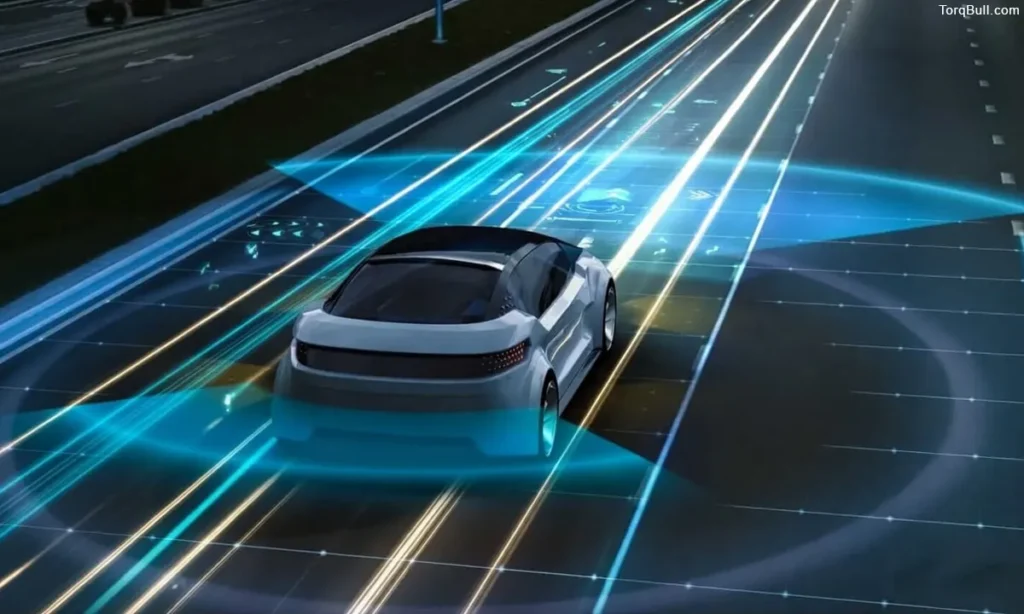
SAE Level 4 automation — classified as High Automation — removes the human availability requirement that defines Level 3’s fundamental limitation, establishing that the automated system can complete any journey within its operational design domain without human intervention, takeover or availability. The Level 4 system does not generate takeover requests — it manages its own operational limitations by slowing, stopping safely or routing around conditions that exceed its capability rather than delegating the response to a human occupant whose attention and readiness cannot be guaranteed after extended automated operation.
The distinction between Level 3 and Level 4 is therefore not merely quantitative — a more capable Level 3 system — but qualitatively different in its accountability architecture. Level 3 uses automation to assist a human who remains responsible. Level 4 uses automation to replace the human’s operational role within the defined domain — accepting complete system accountability for every driving decision, response to hazards and the vehicle’s safety management throughout the automated operation period.
The operational design domain constraint that Level 4 shares with Level 3 — both levels operate within specific geographic, weather, speed and road type boundaries whose definition determines the system’s commercial applicability — is managed differently at Level 4 through the system’s own capability management rather than the human’s takeover responsibility. A Level 4 system operating on mapped urban roads that encounters an unmapped construction zone does not request human intervention — it stops safely and awaits remote operator guidance, support vehicle assistance or the operational design domain’s restoration through updated mapping, each representing system-managed responses that maintain safety without human occupant involvement.
Waymo’s commercial robotaxi operations in Phoenix, San Francisco and other expanding markets represent Level 4 deployment at commercial scale — providing passenger transportation without safety drivers in defined geographic zones whose operational design domain the Waymo system’s mapping and sensor architecture supports with the reliability that commercial operation without human backup requires. GM Cruise’s Level 4 deployment experience — whose operational pause following a serious incident demonstrated the accountability consequence of Level 4 commercial deployment — illustrates the specific liability and regulatory implications that operating without human backup creates at the commercial scale.
Read: AWD vs RWD Performance Track Comparison. The Track Tells The Truth
The Critical Gap: Why Level 3 to Level 4 Is the Hardest Step
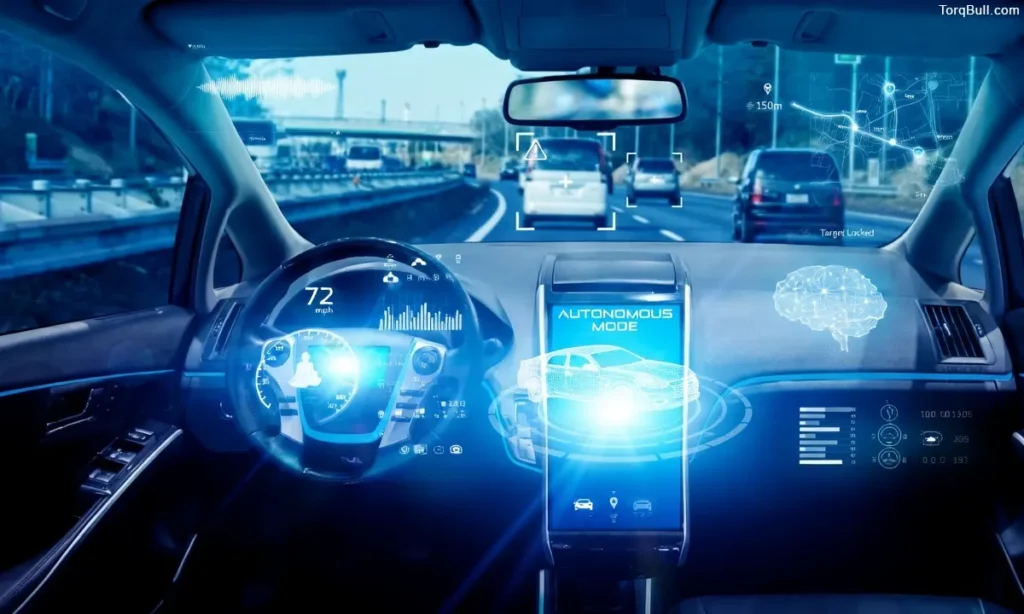
The transition from Level 3 to Level 4 represents the autonomous driving development pathway’s most technically and commercially challenging single step — whose difficulty exceeds the aggregate challenge of the Level 0 to Level 3 progression in several important dimensions that the step’s apparent incremental nature obscures.
Level 3’s human availability requirement provides a safety backstop that Level 4 must replace with system-internal capabilities whose reliability standard must match or exceed the human driver’s intervention capability across the full range of edge cases that the operational design domain’s boundary conditions present. The long-tail distribution of rare but safety-critical driving scenarios — the child running into the road between parked vehicles, the debris-covered motorway at night in heavy rain, the emergency vehicle approaching from an unexpected direction — whose low individual probability but catastrophic consequence potential determines the safety standard that Level 4 must achieve in aggregate across millions of operational hours.
The validation challenge whose scale reflects this requirement — demonstrating Level 4 system safety to the statistical confidence level that regulatory approval requires without exposing the public to the testing risk that insufficient safety evidence would create — is the specific bottleneck that has constrained Level 4 commercial deployment to the geographically limited operational design domains where the scenario variety is most comprehensively mapped and most thoroughly validated.
Read: Charge Smarter, Not Longer. EV Charging Time vs Battery Size Explained
Level 3 vs Level 4 Autonomous Driving Key Differences
| Category | Level 3 (Conditional) | Level 4 (High Automation) |
| SAE Classification | Level 3 | Level 4 |
| Dynamic Driving Task | System Performs | System Performs |
| Human Monitoring Required | No (During Automation) | No |
| Takeover Request Generated | Yes (When Needed) | No |
| Human Must Be Available | Yes (Response Required) | No |
| System Manages Own Limits | Partially | Fully |
| Operational Design Domain | Defined / Limited | Defined / Broader |
| Commercial Examples | Mercedes DRIVE PILOT / Honda Legend | Waymo / GM Cruise (Limited) |
| Legal Liability (During Auto) | Manufacturer | Manufacturer / Operator |
| Speed Limit (Current Deploy) | Up to 60 km/h | Up to City Speed |
| Geographic Restriction | Mapped Motorways | Mapped Urban / Motorway |
| Driverless Operation Possible | No | Yes (Within ODD) |
| Regulatory Framework Status | Germany / Some US States | Limited Jurisdictions |
| Remote Operator Required | No | Sometimes (Fallback) |