Size Isn’t Everything! Compact Sedan vs SUV, Which Is Actually Better for You?
- Real-world fuel economy differences over long-term ownership
- Cargo space and passenger practicality comparison
- Insurance and maintenance cost variations
- Total cost of ownership beyond purchase price
- SUV vs sedan: which truly fits your lifestyle
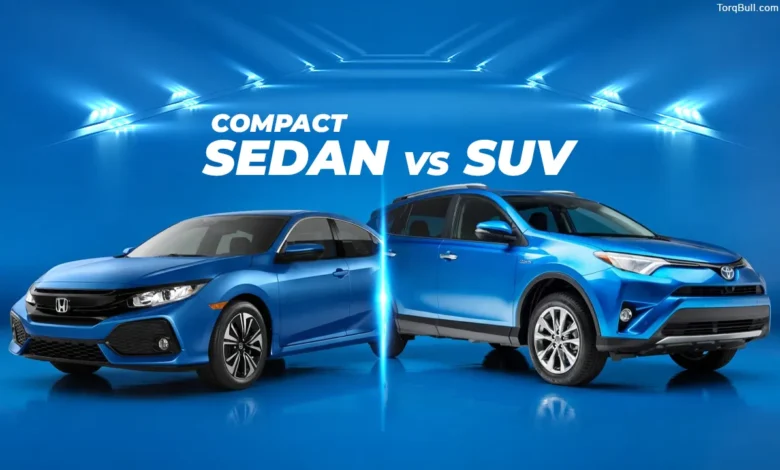
Compact Sedan vs SUV: The compact sedan versus SUV debate is the automotive market’s most commercially consequential buyer decision — a choice that determines not merely what vehicle a buyer drives but what the automotive industry builds, how manufacturers allocate engineering resources and what the roads of every major market look like decade by decade as the cumulative effect of millions of individual purchase decisions reshapes the vehicle population. The SUV’s dominance in this specific comparison — whose market share expression in the United States shows compact and mid-size SUVs collectively capturing approximately 45 percent of new vehicle sales against the compact sedan’s declining 15 percent — reflects genuine preference shifts whose drivers are real but whose universal application to every buyer’s specific circumstances is far less defensible than the market share data’s implication of settled consensus suggests.
The compact sedan’s decline is not the story of a product whose quality deteriorated — the Honda Civic, Toyota Corolla, Mazda3 and Volkswagen Jetta of 2026 are more capable, more refined and more technologically sophisticated than any previous generation of compact sedans. It is the story of a product whose genuine advantages have been systematically underweighted in the market’s collective assessment while the SUV’s genuine advantages have been proportionally overweighted — a misallocation of buyer priority whose correction begins with the honest comparison that the market’s fashion momentum makes difficult to conduct without consciously accounting for the social influence that peer purchasing patterns exert on individual decisions.
Fuel Economy: The Compact Sedan’s Sustained Financial Advantage
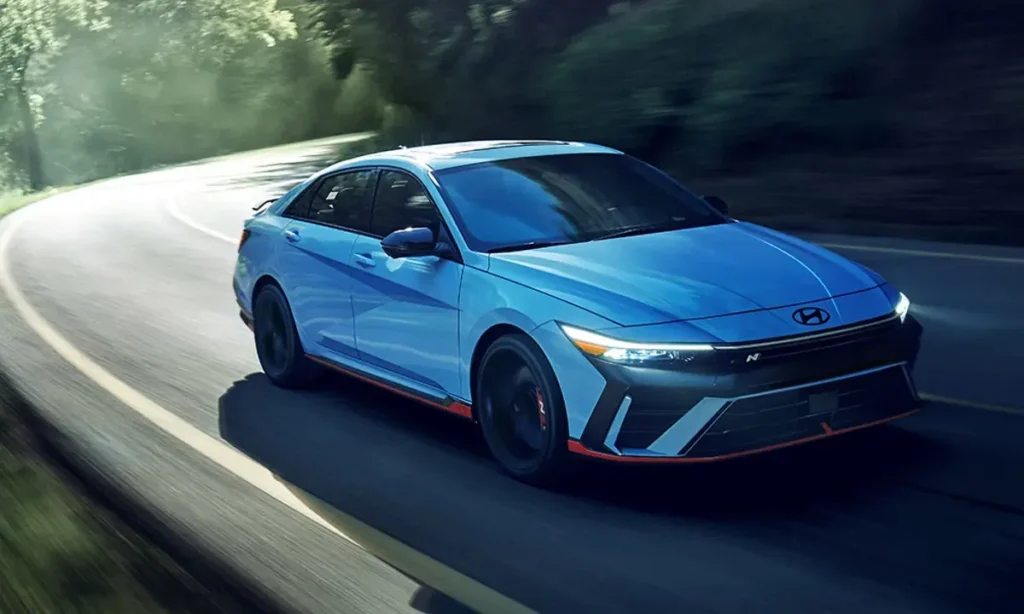
The compact sedan’s fuel economy advantage over the equivalent compact SUV — whose magnitude reflects the aerodynamic efficiency of the lower roofline, reduced frontal area and the weight saving that the sedan’s more compact structure enables — represents the most immediately quantifiable and most financially significant sustained advantage that the body style comparison produces across a realistic ownership timeline.
A Honda Civic’s EPA combined rating of 36 miles per gallon against the Honda HR-V’s 30 miles per gallon in equivalent powertrain specification — a 20 percent fuel economy advantage whose expression in annual fuel cost at 15,000 miles annually and $3.50 per gallon produces a saving of approximately $490 per year — compounds across a five-year ownership period into a cumulative fuel cost advantage of approximately $2,450 that the sedan’s lower purchase price in equivalent specification typically amplifies rather than offsets. The Toyota Corolla’s 33 combined MPG against the Toyota Corolla Cross’s 29 combined MPG produces a comparable percentage differential whose absolute magnitude varies with fuel pricing but whose directional consistency across every powertrain comparison between equivalent compact sedan and compact SUV alternatives reflects the physics of aerodynamic drag and vehicle mass that body style choice determines.
The fuel economy advantage’s financial significance increases proportionally with annual mileage — making the compact sedan’s efficiency case most compelling for high-mileage commuters whose 20,000 to 25,000 annual miles amplify the per-gallon saving into an annual cost differential of $700 to $900 whose five-year value exceeds $4,000 in a comparison that the purchase price alone rarely captures with equivalent financial weight.
Cargo and Practicality: Where the SUV’s Advantage Is Real but Overstated
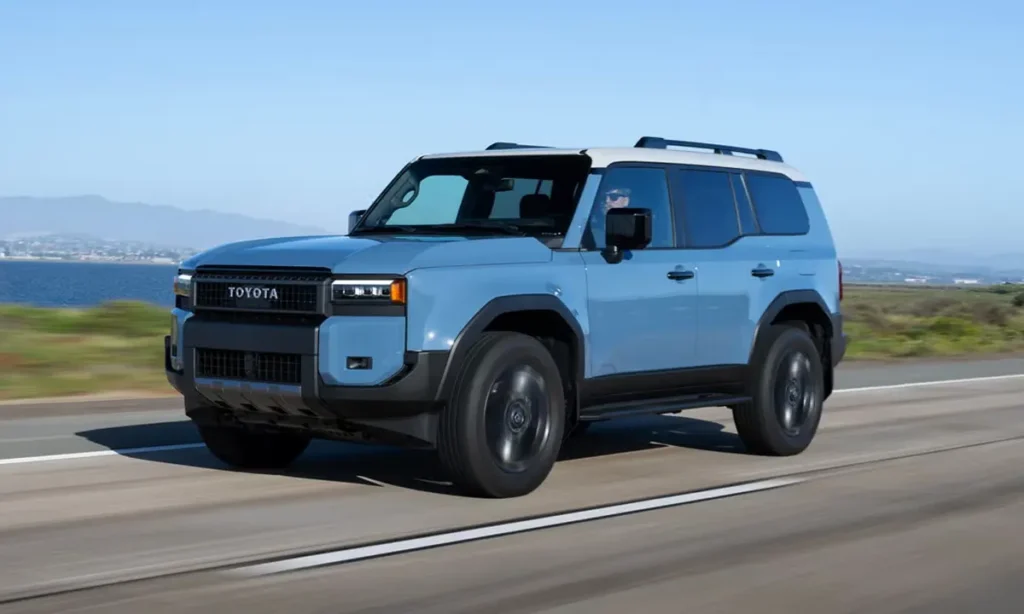
The compact SUV’s cargo advantage over the equivalent compact sedan is the most frequently cited justification for the body style’s premium — a genuine practical benefit whose magnitude and daily relevance the individual buyer’s specific usage pattern determines with a specificity that generic market analysis cannot replicate.
The Honda HR-V’s 24.4 cubic feet of cargo space behind the rear seats — compared to the Honda Civic sedan’s 14.8 cubic feet — represents a 65 percent cargo volume advantage whose practical significance for the buyer whose regular cargo needs include push chairs, sporting equipment, large shopping loads and the material accumulation of family life with young children is genuine and daily. For the buyer whose cargo loading regularly involves the large, awkward items that the SUV’s square loading aperture and flat floor access manages more easily than the sedan’s smaller boot opening — whose lower lip height, narrower aperture and separated passenger compartment create practical loading constraints that the cargo volume comparison alone understates — the SUV’s practical advantage represents a sustained daily quality-of-life improvement whose value genuinely justifies the efficiency cost.
The honest qualification of this advantage requires acknowledging the specific cargo uses for which the sedan’s 14.8 cubic feet is entirely adequate — the weekly grocery shop, the laptop and overnight bag of the business traveller, the personal items of the single buyer whose daily cargo needs the sedan’s boot accommodates without the regular constraint that the SUV’s additional volume alleviates. iSeeCars survey data consistently finds that the majority of SUV owners use their vehicle’s cargo advantage for the activities that the marketing imagery depicts — outdoor lifestyle, family transport, large item loading — less than once per week on average, while the daily driving whose efficiency the sedan optimises accounts for the majority of actual vehicle use in most owners’ real operational patterns.
Cost of Ownership: The Compact Sedan’s Comprehensive Financial Advantage
The total cost of ownership comparison between compact sedans and compact SUVs — whose components include purchase price, fuel cost, insurance, maintenance and depreciation across a five-year ownership period — produces a financial picture whose consistent advantage for the compact sedan reflects the combination of lower purchase price, superior fuel economy, marginally lower insurance costs and the maintenance cost similarity that the shared platform engineering increasingly enables between sedan and SUV variants of the same model family.
The purchase price differential between equivalent compact sedan and compact SUV models — typically ranging from $2,000 to $5,000 in favour of the sedan at equivalent specification levels — provides the initial financial advantage whose compounding with the fuel economy saving produces a five-year total cost of ownership differential of $5,000 to $8,000 between the Honda Civic and Honda HR-V, the Toyota Corolla and Corolla Cross and the Volkswagen Jetta and Taos at equivalent specification levels. This differential represents a meaningful financial consequence of the body style choice whose significance the monthly payment comparison — whose difference of $40 to $80 per month feels less dramatic than the five-year total — can obscure in the purchase decision psychology that the dealer environment’s present-focus encourages.
Insurance cost differentials between compact sedans and equivalent compact SUVs — whose magnitude reflects the SUV’s higher repair cost from the elevated ride height’s different accident profile, the greater frontal mass that frontal impact repairs involve and the premium that the higher replacement cost creates — typically range from $150 to $300 per year in favour of the sedan, adding a further $750 to $1,500 to the five-year sedan financial advantage that the fuel and purchase price savings establish.
Driving Dynamics: The Sedan’s Underappreciated Daily Reward
The compact sedan’s driving dynamics advantage over the equivalent compact SUV — whose expression in more precise steering response, lower body roll in cornering, more linear braking behaviour and the aerodynamic stability at highway speeds that the lower centre of gravity enables — represents the daily driving quality dimension that the purchase decision’s practical focus frequently underweights relative to the cargo and visibility considerations that the SUV advocates most effectively.
The daily experience of driving a Honda Civic versus a Honda HR-V — identical platform DNA, shared engineering philosophy and comparable electronic assistance — produces perceptibly different dynamic experiences whose quality difference reflects the centre of gravity height’s effect on body motion control and the aerodynamic efficiency’s contribution to highway stability and wind noise management. The Civic’s more planted, more communicative cornering behaviour, its more linear response to steering input and the reduced wind noise intrusion at highway speeds that the lower roofline’s aerodynamic advantage provides collectively create the daily driving quality that compact sedan advocates describe as the genuine ongoing reward of their body style choice.
Read: Manual vs Automatic Transmission Guide: The Real Performance Difference Explained
Which Is Better: The Honest Verdict
Neither body style is universally better — the compact sedan and compact SUV serve different buyer profiles with genuine excellence, and the correct choice emerges from honest assessment of the specific buyer’s actual daily use rather than the market’s generational momentum.
The compact sedan is better for the buyer whose daily cargo needs fit within 15 cubic feet, whose driving enthusiasm values dynamic precision, whose annual mileage makes the fuel economy saving financially significant and whose budget benefits from the lower purchase price and insurance cost. The compact SUV is better for the buyer whose regular cargo and passenger requirements genuinely exceed the sedan’s capability, whose preference for elevated visibility and effortless entry and exit reflects daily functional rather than aspirational benefit and whose lifestyle genuinely includes the all-weather and light off-road capability that the SUV’s higher ride height enables.
Read: Luxury SUV vs Luxury Sedan: Pros, Cons and The Honest Verdict. Two Ways To Travel In Style
Compact Sedan vs Compact SUV — 2026 Key Comparison
| Category | Compact Sedan (Civic/Corolla) | Compact SUV (HR-V/Corolla Cross) | Advantage |
| EPA Combined MPG | 33–36 mpg | 29–32 mpg | Sedan (+15–20%) |
| Cargo Space (Rear Seats Up) | 14–15 cu ft | 23–25 cu ft | SUV (+60%) |
| Purchase Price (Base) | ~$23,000–$25,000 | ~$26,000–$30,000 | Sedan ($3–5K Less) |
| 5-Year Fuel Saving | — | — | Sedan (~$2,000–$3,000) |
| Annual Insurance | ~$1,400–$1,800 | ~$1,600–$2,100 | Sedan (~$200 Less) |
| Dynamic Handling | Excellent | Good | Sedan |
| Ride Height / Visibility | Lower | Higher / Better | SUV |
| Ingress and Egress | Moderate | Easy | SUV |
| Highway Wind Noise | Lower | Moderate | Sedan |
| 5-Year Total Cost Advantage | — | — | Sedan (~$5,000–$8,000) |
| Best Buyer Profile | Efficiency / Driving Focus | Family / Cargo / Visibility | Depends on Use |