How Long Do EV Batteries Last in Real Life. What American Drivers Are Actually Experiencing
From Early Industry Anxieties About Seven-Year Lifespans to Stanford University Research Demonstrating That Real-World Driving Extends Battery Life by Up to 38 Percent Beyond Laboratory Predictions — The Data on EV Battery Longevity Has Fundamentally Shifted the Conversation, and What It Reveals Should Reframe Every Prospective Buyer's Understanding of the Technology's Most Debated Variable
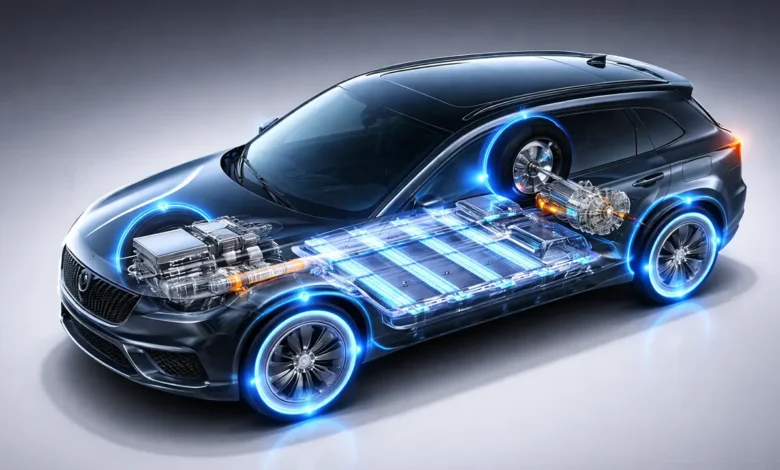
There is no question in the electric vehicle ownership conversation that generates more anxiety, more misinformation and more consequential misunderstanding than the one about battery longevity. It is the question that has shadowed the EV industry from its modern beginnings — the suspicion, rooted in every consumer’s daily experience of the smartphone battery that barely survives two years of regular use, that the expensive lithium-ion pack powering a $50,000 automobile must be subject to the same rapid and ruinous decay. In the early years of the modern EV era, estimates of battery pack lifespan hovered cautiously around seven years — a projection that, combined with the five-to-twenty-thousand-dollar replacement cost that became the technology’s most cited financial nightmare, constructed a powerful psychological barrier to adoption that persisted long after the underlying data ceased to support it. What the accumulated real-world evidence from hundreds of thousands of American electric vehicles now demonstrates — drawn from fleet telematics programmes, national laboratory research, university studies and the lived experience of early adopters who have been driving the same battery packs for more than a decade — is that EV batteries are lasting significantly longer than early predictions suggested, that the degradation process is gradual and manageable rather than catastrophic and sudden, and that for the overwhelming majority of American drivers, battery replacement during a normal ownership period is an outcome whose probability is low enough to be functionally negligible.
The Early Fear and What the Data Now Shows
The anxiety about EV battery longevity was not irrational in the technology’s early years. The automotive application of lithium-ion chemistry at scale was genuinely without precedent, the track record was by definition nonexistent, and the only reference framework most buyers possessed was the consumer electronics battery — a component engineered for a two-to-three-year product cycle rather than a fifteen-year vehicle lifespan. What nobody knew then, and what fifteen years of continuous real-world operation has since made clear, is that automotive battery management systems are engineered to an entirely different standard than consumer electronics. Thermal management circuits that actively heat and cool the pack, charge-level buffers that prevent the chemistry from ever reaching the top or bottom extremes of its range, and software systems that continuously monitor cell health and adjust charging behaviour accordingly — these are engineering interventions with no equivalent in a smartphone, and their cumulative effect on long-term degradation is profound.
The most comprehensive current picture of real-world EV battery health in America comes from large-scale fleet telematics analysis spanning tens of thousands of vehicles and multiple model years. The data from these programmes consistently shows modern EV batteries degrading at an average rate of approximately 2.3 percent per year — a figure that projects to the average battery retaining around 81 to 82 percent of its original capacity after eight full years of use. To translate that into the terms that matter most to a working driver: an electric vehicle originally rated for 300 miles of range would, after eight years of average American use, deliver approximately 245 miles — a reduction that the majority of owners, whose daily commutes average well under 50 miles, would experience as essentially inconsequential to the vehicle’s practical utility. The same fleet data projects a battery lifespan of 13 years or more before degradation reaches 75 percent of original capacity — a number that exceeds the average American vehicle ownership period of approximately eight years by a margin wide enough to make the replacement question largely academic for most buyers who purchase new.
What Real-World Driving Does to a Battery, And Why the Science Is More Reassuring Than Expected
Perhaps the most important and most counterintuitive finding to emerge from recent EV battery research is the discovery, published in late 2024 in the peer-reviewed journal Nature Energy by researchers at Stanford University and the SLAC National Accelerator Laboratory, that real-world driving is substantially less damaging to lithium-ion battery chemistry than the laboratory testing protocols that produced the industry’s earlier, more pessimistic longevity estimates. The research team tested 92 commercial lithium-ion battery cells across a range of discharge profiles — from the standard constant-current cycling that laboratory protocols have historically used to simulate vehicle use, to dynamic profiles constructed directly from real driving data. The result was striking and unexpected: the more realistically the discharge profile reflected actual driving behaviour, the longer the battery lifespan climbed.
The mechanism behind this finding is rooted in the nature of real driving itself. Stop-and-go city traffic, regenerative braking that returns small amounts of energy to the pack, brief periods of rest while parked at a store or school, and the variable discharge rates inherent to navigating real roads all conspire to produce a gentler electrochemical environment than the relentless full-rate cycling that laboratory testing inflicts on a cell in the name of accelerated life assessment. The Stanford team concluded that batteries could last up to 38 percent longer than laboratory predictions implied — a margin that, applied to a battery conservatively rated for 150,000 miles, adds tens of thousands of additional miles of usable life. For the American driver whose EV is primarily a daily commuter making short trips, parking for hours between uses and charging gently at home each evening, this finding offers a degree of reassurance that was not available from the scientific literature even five years ago.
The Factors That Accelerate Degradation, And the Habits That Protect Against It
Understanding which behaviours genuinely stress an EV battery and which are benign is among the most practically valuable knowledge an American EV owner can possess, because the gap between a well-managed battery and a poorly managed one compounds meaningfully across a decade of ownership. The most consistently identified accelerant of degradation in every major real-world study is heavy reliance on DC fast charging — the high-power public charging infrastructure capable of delivering 150 to 350 kilowatts that can refill a battery in 20 to 40 minutes. The elevated current rates and thermal loads involved in DC fast charging impose measurably greater electrochemical stress on battery cells than the slower Level 2 AC charging that most American EV owners use for daily home charging. Fleet analyses have found that consistent use of very high-power DC fast chargers produces the highest annual battery degradation rates of any single operational variable — a finding with particular relevance as the public charging network expands and fast chargers become more accessible to everyday drivers who might otherwise treat them as their primary charging source.
Climate is the second significant variable in real-world American battery longevity, and its importance is directly tied to geography in ways that create meaningfully different ownership experiences across the country. Sustained high ambient temperatures accelerate the calendar aging of lithium-ion chemistry — the degradation that occurs as a function of time and heat rather than charging cycles. American EV owners in Arizona, Nevada, Florida and the Gulf Coast states operate in thermal environments whose effects on battery aging are materially different from those experienced by owners in the Pacific Northwest, New England or the upper Midwest. Most modern EVs address this through active thermal management systems that maintain the battery pack within its optimal operating temperature window regardless of ambient conditions — but these systems consume energy, and their protection is not absolute in vehicles that spend extended periods parked outdoors in sustained summer heat without active conditioning. National laboratory and government modelling estimates that EV batteries in moderate American climates can expect a functional lifespan of 12 to 15 years before reaching 70 to 80 percent of original capacity, while those operating in consistently extreme thermal environments should plan on an 8 to 12-year window to the same degradation threshold.
The charging habits that most consistently protect battery longevity are well established, repeatedly validated across manufacturers and simple enough to implement without technical knowledge. Keeping the daily charge level between approximately 20 and 80 percent of total capacity — rather than routinely charging to 100 percent and depleting to near zero — substantially reduces the electrochemical stress that accelerates the degradation process. The one meaningful exception to this guidance applies to vehicles equipped with lithium iron phosphate battery chemistry, an increasingly common formulation in standard-range variants of several popular American EV models, which can be charged to full capacity regularly without incurring the same degradation penalty. Confirming which battery chemistry a specific vehicle uses — information available in the owner’s manual — is therefore a genuinely worthwhile step for any new EV owner whose current charging habits involve routine full charges.
What the Warranty Structure Tells American Buyers About Manufacturer Confidence
The federal minimum requirement for EV battery warranty coverage in the United States is eight years or 100,000 miles — a baseline that in California and the states that align with California’s emissions standards extends to ten years or 150,000 miles. Most major manufacturers operating in the American market meet or meaningfully exceed this baseline, and the specific terms of their capacity guarantees are themselves a form of manufacturer confidence statement about the technology they are selling. The industry-standard capacity guarantee — the commitment that a battery will retain at least 70 percent of its original capacity within the warranty period — is offered by Ford, Tesla, Rivian, Volkswagen, Nissan, Hyundai, Kia and most other mainstream EV manufacturers. Hyundai and Kia have distinguished themselves with 10-year, 100,000-mile coverage that is among the most generous available to American buyers. Rivian’s eight-year, 175,000-mile mileage allowance addresses the needs of high-usage drivers more comprehensively than most. Tesla’s coverage varies by model, spanning eight years with mileage thresholds between 100,000 and 150,000 miles depending on the vehicle, with the same 70 percent capacity retention guarantee applied across the range.
The practical significance of these warranty terms for an American buyer who intends to keep their vehicle for a typical ownership period of seven to ten years is considerable. A battery that degrades to below the guaranteed capacity threshold within the warranty period is the manufacturer’s financial responsibility — meaning the scenario that generates the most buyer anxiety, the mid-ownership battery replacement costing thousands of dollars, is precisely the scenario the warranty is structured to prevent. Real-world replacement data confirms how rarely that scenario materialises in practice. Outside of manufacturer-initiated recalls — including two notable battery recalls involving the Chevrolet Bolt and Hyundai Kona that were covered entirely by their respective manufacturers — battery replacements across all years and models tracked by insurance and fleet analysts represent fewer than four percent of the total EV population. For modern EVs manufactured from 2022 onward, the replacement rate falls to approximately 0.3 percent — a figure that places the probability of an unwarranted, out-of-pocket battery failure in the same statistical neighbourhood as other low-probability vehicle failures that informed car buyers do not generally factor into their purchasing calculations.
The Real-World Evidence: A Decade of American EV Ownership Speaks
The most compelling testimony for EV battery durability is not found in fleet studies or academic papers but in the documented experience of drivers who bought first-generation electric vehicles in 2012 and 2013 and have been operating them ever since. Early Tesla Model S owners who took delivery of some of the first examples ever built have accumulated in excess of 200,000 miles on their battery packs — some on original packs, some on replacements installed under warranty — and consistently report degradation in the range of 15 to 20 percent from original capacity after more than a decade of regular use. A vehicle originally rated for 265 miles of range that now delivers 220 miles has retained 83 percent of its original capacity across a distance and time period that exceeds what most American drivers will ask of any vehicle they purchase. The subjective experience of these long-term owners — that their vehicles remain entirely satisfying for daily use, that the degradation is perceptible in measured data but rarely felt in the texture of ordinary driving — is itself a meaningful data point that no amount of laboratory projection could have provided before the cars accumulated those miles.
Large-scale analysis of intensively operated EVs has reinforced these individual accounts with statistical rigour. Studies examining thousands of high-mileage electric vehicles operated across three-to-five-year intensive commercial duty cycles found that most battery packs retained more than 80 percent of their original capacity even after propelling vehicles well beyond 200,000 kilometres of hard use. The conclusion that the battery is, in most realistic ownership scenarios, among the most durable components in the modern electric vehicle rather than its most vulnerable — a reversal of the assumption that dominated the technology’s early public perception — is now supported by enough real-world data from enough American roads and enough American drivers to constitute something approaching settled evidence.
The Battery Replacement Reality, And Why It Matters Less Than Early Fears Suggested
For the minority of American EV owners who do eventually require a battery replacement outside warranty coverage, the financial picture — while genuinely significant — is more nuanced than the alarming top-line figures that have circulated in mainstream coverage. Replacement costs vary substantially by vehicle, pack size and whether the replacement uses a new original-equipment unit, a refurbished pack from an independent specialist or a salvage unit sourced from a totalled vehicle. Smaller EVs with more compact battery packs typically fall in the $6,000 to $13,000 range for a complete replacement including labour. Larger vehicles with 75 to 100 kilowatt-hour packs occupy a higher cost tier. Battery pack costs are declining as manufacturing capacity expands and chemistry matures — a trajectory that makes the replacement cost for a battery that reaches end of useful vehicle life a decade from now meaningfully lower than current out-of-warranty prices suggest. Batteries that no longer meet driving range requirements also retain substantial value for stationary energy storage applications, creating a secondary market that is beginning to develop the economic infrastructure to partially offset the cost of automotive replacement.
Read: EV Charging Cost Per Month in the USA. A Complete Comparison
EV Battery Lifespan At a Glance
| Factor | Early Prediction | Real-World Outcome |
| Average annual degradation rate | 3–5% per year | 1.8–2.3% per year |
| Expected lifespan (moderate US climate) | 7–8 years | 12–15+ years |
| Expected lifespan (extreme US climate) | 5–7 years | 8–12 years |
| Capacity retained after 8 years | ~65–70% | 80–82% average |
| Miles before significant degradation | ~100,000 miles | 150,000–300,000+ miles |
| Battery replacement rate (2022+ EVs) | Unknown / feared high | ~0.3% |
| Standard US federal warranty | 8 years / 100,000 miles | Up to 10 years / 175,000 miles (select brands) |
| Out-of-warranty replacement cost | $15,000–$20,000 feared | $6,000–$20,000, declining over time |
The Answer American Buyers Actually Need
The question of how long an EV battery lasts in real American life has, by 2025, an answer that is both more reassuring and more empirically grounded than the fears that surrounded it when the technology first appeared on American roads. For the overwhelming majority of American drivers — those who charge primarily at home on Level 2 equipment, maintain daily charge levels between 20 and 80 percent, drive in moderate climates and keep their vehicles for the national average of approximately eight years — the battery will in all likelihood outlast their ownership of the car. The degradation that does occur will be gradual, linear and measurable rather than sudden or catastrophic, reducing range in a way that is almost certainly to remain comfortably within the requirements of daily driving even at the end of a full decade of regular use. The Stanford University finding that real-world driving is inherently gentler on battery chemistry than laboratory testing assumed adds a further layer of scientific reassurance that was simply unavailable to buyers even five years ago. The data now exists — drawn from hundreds of thousands of American vehicles, accumulated across more than a decade of real roads and real ownership — to answer the question that nobody could answer in 2010. The answer is that EV batteries, managed sensibly and protected by the warranty structures that federal regulation and competitive market pressure have combined to produce, are among the most durable and most confidently engineered components in the modern automobile. The anxiety was understandable. The evidence, at this point, has largely dissolved its basis.