Why Manual Transmission Cars Are More Reliable Than Automatics. Three Pedals, Fewer Problems!
- Mechanical simplicity with fewer components than automatics
- No reliance on complex hydraulics, solenoids or cooling systems
- Lower failure rates and proven long-term durability
- Reduced maintenance and repair costs over time
- Manuals remain the most reliable transmission choice
The manual transmission’s gradual disappearance from the new vehicle market — whose commercial expression in the United States sees fewer than 2 percent of new cars sold with a manual gearbox, down from approximately 35 percent in the 1980s — has proceeded in inverse proportion to the attention paid to the reliability argument that the manual’s advocates have consistently made and whose validity the accumulated long-term ownership data consistently supports. The convenience revolution that the automatic transmission delivered to the driving public — whose legitimate appeal in the urban stop-and-go conditions that constitute the majority of American daily driving is genuine and not trivially dismissed — has been accepted at a reliability cost that the industry’s marketing materials do not quantify and that the individual buyer’s purchase decision rarely incorporates with adequate weight.
The manual transmission’s reliability advantage over automatic alternatives is not the sentimental claim of enthusiasts mourning the loss of a beloved mechanical interaction — it is an engineering reality whose foundation in mechanical simplicity, reduced thermal stress and the absence of the electronic control dependency that modern automatic transmissions carry as inherent architectural characteristics produces measurable, documented differences in repair frequency, repair cost and long-term drivetrain durability that the objective comparison of real-world ownership data consistently validates.
The Mechanical Simplicity Argument: Fewer Components, Fewer Failures
The manual transmission’s mechanical architecture — whose core components consist of gears, synchronisers, shift forks, bearings and the clutch assembly whose wear is the primary consumable replacement requirement across the manual’s operational life — achieves its function through a mechanical elegance whose component count is dramatically lower than the automatic transmission’s equivalent architecture. A typical six-speed manual transmission contains approximately 800 components. A comparable six-speed conventional automatic transmission contains approximately 1,200 components — and a modern eight-speed automatic’s component count approaches 1,400, with each additional ratio requiring additional planetary gear sets, clutch packs and the solenoid-controlled hydraulic circuits whose function the transmission control module manages through thousands of calibrated decisions per driving minute.
The reliability implication of this component count differential is the engineering principle that every additional component represents an additional failure opportunity — a principle whose application to transmission reliability produces the directional prediction that simpler mechanical systems fail less frequently than more complex ones, which the long-term ownership data consistently validates in practice rather than merely predicts in theory. The specific components that automatic transmissions add beyond the manual’s equivalent — the torque converter whose lockup clutch fails in a percentage of high-mileage automatics, the valve body whose hydraulic circuit solenoids develop stiction and failure after extended operation, the electronic transmission control module whose failure renders the automatic inoperable in a manner whose roadside recovery implication the manual’s mechanical simplicity avoids — each represent failure modes whose absence from the manual transmission’s architecture directly contributes to its long-term reliability advantage.
The Thermal Management Reality: Heat Is the Automatic’s Enemy
The automatic transmission’s most significant long-term reliability vulnerability is the thermal stress that its operation continuously imposes on the hydraulic fluid whose degradation under heat exposure determines the transmission’s long-term health more directly than any other operational variable. Automatic transmission fluid operating above 200 degrees Fahrenheit — a temperature that towing, mountain driving, urban stop-and-go operation in hot climates and the sustained low-speed high-load conditions that the automatic’s torque converter slip generates — degrades at an accelerating rate whose consequences include varnish deposits in the valve body, clutch pack wear acceleration and the solenoid contamination that premature shifting problems reflect as a symptom of fluid quality deterioration.
The manual transmission’s thermal exposure is fundamentally different — whose gear oil operates at lower temperatures under equivalent driving loads because the mechanical gear engagement’s direct efficiency exceeds the automatic torque converter’s hydraulic coupling efficiency, generating less heat from an equivalent power transfer. The manual transmission oil’s lower operating temperature produces a degradation rate that extends service intervals beyond the automatic’s equivalent requirement and whose long-term effect on component wear is the sustained lubrication quality that lower-temperature operation maintains across extended mileages that higher-temperature alternatives cannot approach with equivalent consistency.
The practical consequence of this thermal difference in real-world ownership is documented in the repair frequency data that long-term vehicle ownership surveys produce — with automatic transmission fluid degradation and the failure modes it precipitates representing one of the most common and most expensive unscheduled repair events in high-mileage vehicle ownership, while manual transmission oil degradation and its consequences appear in the equivalent data at frequencies that reflect the lower thermal stress the architecture imposes on the lubricant throughout its service life.
Real-World Reliability Data: What the Numbers Show

The most credible source of real-world transmission reliability comparison is the aggregated repair frequency and cost data that owner-reported maintenance tracking platforms collect across large vehicle populations — whose statistical significance provides the evidence base that small-sample anecdote cannot replicate and whose consistency across multiple data collection methodologies suggests genuine underlying reliability differences rather than sampling artefacts.
RepairPal’s aggregated transmission repair data consistently places manual transmission repair events at lower frequency and lower average cost than automatic transmission equivalents across comparable vehicle ages and mileages — with manual transmission repairs occurring at approximately 60 to 70 percent of the frequency of automatic transmission repairs in vehicles beyond 100,000 miles, and with the average manual transmission repair cost running approximately 40 to 50 percent below the automatic equivalent when repair events do occur. The cost differential reflects both the simpler diagnosis that the manual’s mechanical transparency enables and the lower parts cost that the fewer components require for repair or replacement.
The specific high-mileage ownership evidence that the manual transmission’s reliability advocates cite most effectively is the documented distribution of 200,000-mile and higher odometer vehicles in the used vehicle market — whose manual transmission representation at extreme mileages consistently exceeds the automatic’s equivalent proportion, reflecting the greater probability that a manual-equipped vehicle reaches extreme mileages with its original transmission intact versus the automatic whose fluid service history, solenoid wear and valve body deposits create a higher probability of transmission-related intervention before comparable mileage accumulation.
Read: Boost or Breathe Free! Turbo vs Naturally Aspirated Performance Comparison
The Clutch Counterargument: The Manual’s Primary Wear Component
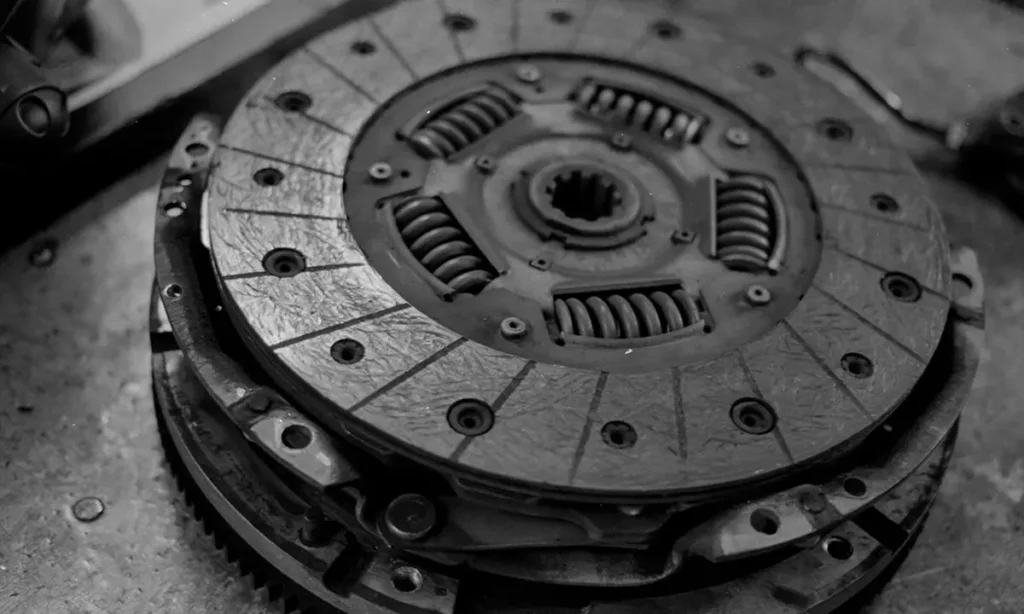
The honest reliability comparison between manual and automatic transmissions requires acknowledging the clutch assembly’s wear characteristic — the manual’s primary consumable component whose replacement represents the most frequent manual-specific maintenance event and whose cost provides the automatic’s most credible counter-argument in the total ownership cost comparison.
A clutch replacement at dealer rates — whose cost range of $800 to $1,500 for most front-wheel-drive applications and $1,200 to $2,500 for rear-wheel-drive performance applications reflects the labour intensity of the access that clutch replacement requires — represents a meaningful maintenance cost whose frequency depends on the driver’s clutch management skill and the driving conditions that the vehicle predominantly encounters. An aggressive driver whose urban use involves frequent clutch slipping at junctions may replace a clutch at 60,000 to 80,000 miles, while a skilled highway driver whose smooth clutch engagement and minimal slip reduces wear may achieve 150,000 to 200,000 miles from the original clutch assembly.
The honest assessment is that a single clutch replacement across 150,000 miles of ownership represents a lower total drivetrain maintenance cost than the automatic transmission fluid services, solenoid replacements and the full transmission rebuild that the long-term data suggests the automatic requires with greater probability across equivalent mileage accumulation. The specific comparison depends on the individual vehicles’ transmission design quality, the owner’s maintenance discipline and the driving pattern’s thermal demands — but the direction of the long-term cost comparison, across the ownership population’s aggregate experience, consistently favours the manual.
Read: AWD vs RWD Performance Track Comparison. The Track Tells The Truth
Manual vs Automatic Transmission — Reliability Comparison
| Category | Manual Transmission | Automatic Transmission | Advantage |
| Core Component Count | ~800 parts | ~1,200–1,400 parts | Manual (Simpler) |
| Electronic Control Dependency | None | Transmission Control Module | Manual |
| Hydraulic Fluid Complexity | Basic Gear Oil | ATF (Heat-Sensitive) | Manual |
| Primary Wear Component | Clutch Assembly | Torque Converter / Solenoids | Manual |
| Clutch Replacement Cost | $800–$2,500 | N/A | Automatic (No Clutch) |
| Solenoid Failure Risk | None | Moderate–High (100K+ miles) | Manual |
| Valve Body Issues | None | Common (High Mileage) | Manual |
| Repair Frequency (100K+ mi) | Lower (~60–70% of Auto) | Baseline | Manual |
| Average Repair Cost | 40–50% Below Automatic | Baseline | Manual |
| Fluid Service Interval | 30,000–60,000 miles | 30,000–60,000 miles (more critical) | Manual |
| 200K Mile Survival Rate | Higher | Moderate | Manual |
| Driver Skill Dependency | High (Clutch Management) | Low | Automatic |
| Best Long-Term Reliability | Yes | Less Consistent | Manual |