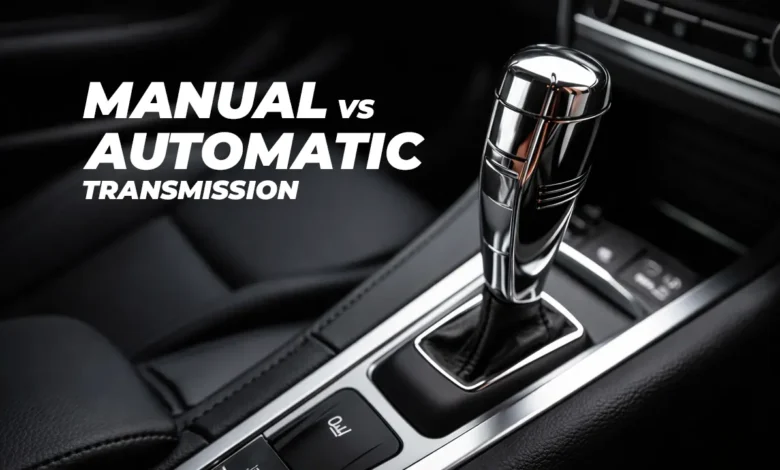
Manual vs Automatic Transmission Guide: The Real Performance Difference Explained
- Shift speeds measured in milliseconds
- Launch control and acceleration efficiency
- Torque converter losses vs dual-clutch precision
- Real-world driving engagement beyond specs
- Which transmission truly performs better
Manual vs Automatic Transmission: The debate between manual and automatic transmissions has outlasted carburetor vs fuel injection, cassette vs CD, and film vs digital — yet it refuses to settle itself. Every decade reframes the argument as the technology on both sides evolves. In 2025, the question is more nuanced than ever, because the automatic transmission of today bears almost no resemblance to the “slushbox” it was once dismissed as. The honest answer to which transmission performs better depends entirely on how you define performance, what type of vehicle you are driving and, critically, what type of driver you happen to be.
What Changed: Why Automatics Became Competitive
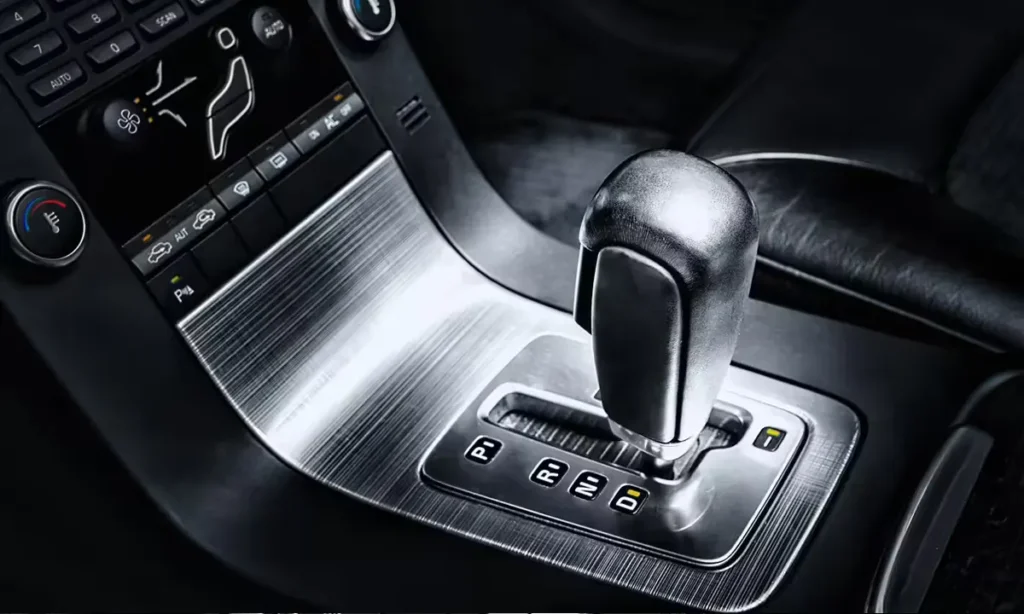
For the better part of the twentieth century, the performance answer was straightforward — manual transmissions were faster. Early automatic transmissions used torque converters whose inherent fluid coupling meant a continuous, unavoidable degree of power loss between the engine and the wheels. They offered fewer gear ratios, shifted at conservative rev points to protect the drivetrain and prioritised smoothness over speed. A skilled manual driver who understood their engine’s power band, who could execute a clean launch and who could chain gearchanges without breaking traction operated a mechanically superior system.
That advantage eroded rapidly after approximately 2010, and for a specific technical reason: the dual-clutch transmission. A DCT operates two clutch packs simultaneously — one engaged for the current gear, one pre-selected and ready for the next. A shift therefore requires no interruption of power delivery, occurring in as little as 80 to 100 milliseconds. The fastest human gearchange achievable by a highly practised driver takes approximately 200 milliseconds at absolute minimum, and that figure assumes perfect heel-toe technique, ideal conditions and zero traffic variables. The mathematics are unambiguous: a DCT changes gear twice as fast as the most skilled human operator under optimal circumstances.
For straight-line acceleration — the 0 to 60 time that automotive journalists and manufacturers use as their primary performance benchmark — a DCT-equipped vehicle simply cannot be matched by its manual equivalent unless the manual variant carries meaningfully less weight, which in practice it rarely does. The weight penalty of a modern dual-clutch unit is real, typically adding 80 to 130 pounds compared to a manual gearbox, but that disadvantage is absorbed by faster shifts across multiple gearchanges in any real-world acceleration run.
Where the Manual Still Wins
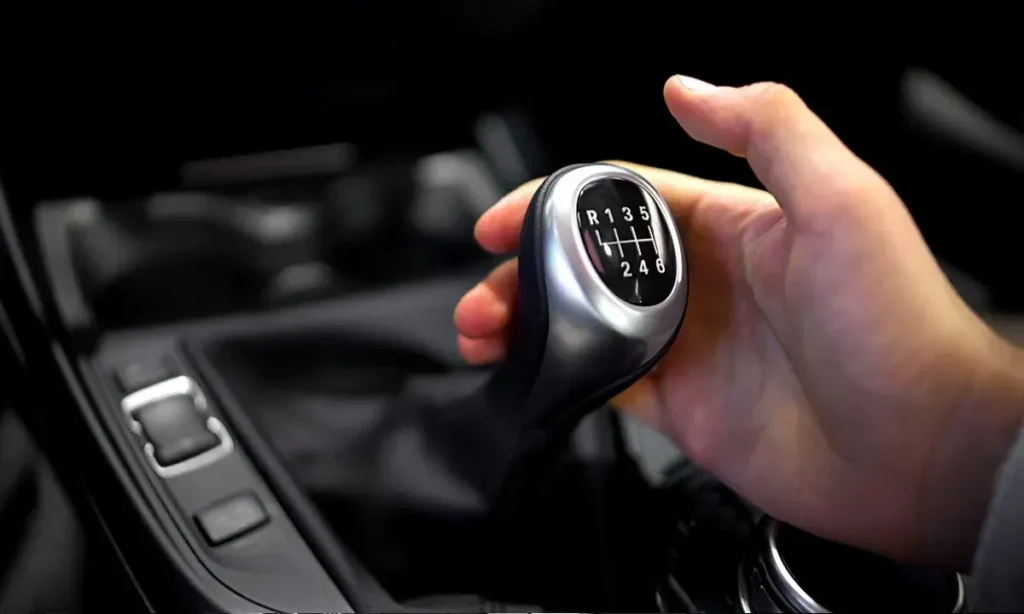
The performance conversation does not end with shift speed. A manual transmission provides one performance advantage that no automatic replicates: the direct mechanical connection between the engine and the driven wheels. There is no torque converter, no slip, no hydraulic fluid absorbing energy. When a manual driver opens the throttle in gear, the mechanical connection is immediate and precise — 100 percent of the clutch’s engagement can be felt through the left foot, communicating grip levels, engine load and traction status with a fidelity that steering wheel paddle shifters and paddle-activated modes cannot replicate.
This translates into a specific and measurable advantage in demanding driving situations: technical roads, circuit driving in the wet, and any scenario where the driver needs to actively manage wheelspin or traction through the mechanical interface rather than relying on electronics. A skilled driver using engine braking, heel-toe downshifts and deliberate ratio selection on a challenging mountain road is managing chassis balance with a tool that automatics — however sophisticated — provide only a digital approximation of.
There is also the consistency of gear ratios within the driver’s control. Many modern automatics, however advanced their shift logic, will upshift under partial throttle at moments the driver would not choose, interrupting corner exit momentum or breaking the rhythm of a hard-charging run through a sequence of bends. A manual driver retains absolute authority over ratio selection, using the gearbox as actively and precisely as the throttle and brakes in a way that automated systems, regardless of their Sport or Track modes, do not always match.
Read: Boost or Breathe Free! Turbo vs Naturally Aspirated Performance Comparison
The Transmission Comparison at a Glance
| Category | Manual | Automatic (DCT/Modern) |
| Shift Speed | ~200ms (skilled driver) | 80–100ms |
| Launch Consistency | Variable (driver-dependent) | Consistent with launch control |
| Driver Control | Complete | Limited — paddle shifters help |
| Mechanical Efficiency | Direct, no converter loss | Minor losses in traditional units |
| Engine-Feel Communication | Maximum — felt through clutch pedal | Reduced — filtered by electronics |
| Gear Count (Typical) | 5–6 speeds | 7–10 speeds |
| Weight | Lighter (typically 80–130 lbs less) | Heavier |
| 0–60 Performance | Slower than DCT in most tests | Faster — measured in tenths |
| Fuel Economy | Comparable or slightly better | Comparable or slightly better |
| Maintenance Cost | Lower — simpler mechanically | Higher — more components |
| Learning Curve | Significant | Minimal |
| Driving Engagement | Very high | Lower — even with paddles |
| Best Application | Technical roads, driver enjoyment | Drag strip, daily driving |
Read: Hybrid vs Gasoline Savings Calculator. How to Work Out Exactly When a Hybrid Pays for Itself
The Honest Verdict in 2025
For raw, measurable, stopwatch-verified performance on a straight road, the modern dual-clutch automatic wins — unambiguously, consistently and regardless of driver skill. This is why every manufacturer of genuinely serious performance machinery, from Porsche and McLaren to Ferrari and Lamborghini, has moved its flagship models to automated gearboxes. The data does not leave room for sentiment.
For the performance that involves the driver rather than measuring them — the feedback, the engagement, the sense of agency over the machine — the manual remains unmatched. The clutch pedal is a sensor that no electronic system currently provides. The satisfaction of a perfectly executed downshift under braking is not a measurable performance metric, but it is real, it is meaningful, and it is the reason a significant number of performance car buyers continue to choose three pedals over two in 2025 despite the objective speed disadvantage that choice carries.
The performance difference between manual and automatic is not, ultimately, purely a question of which one is faster. It is a question of what you mean by performance — and whether your answer includes the experience of driving or only the result of the clock.