Used Electric Cars Reliability Question Answered. What You Need to Know Before Buying an Used EV
- Battery degradation trends across major EV platforms
- Real-world reliability data from owner reports and surveys
- Common failure points in used electric vehicles
- Maintenance comparison vs combustion cars
- EV vs ICE reliability at similar age and mileage
Used Electric Cars Reliability: The used electric vehicle market has matured sufficiently in 2026 that the reliability question — whose answer in 2019 required speculation dressed as analysis because insufficient real-world data existed to support genuine conclusions — can now be addressed with the accumulated evidence of millions of miles of owner-documented real-world operation across multiple EV platforms whose oldest examples have reached the age and mileage at which reliability patterns become statistically meaningful rather than anecdotally suggestive.
The used EV reliability conversation is simultaneously simpler and more complex than the equivalent combustion vehicle discussion — simpler because the electric powertrain’s fewer moving parts eliminate entire categories of mechanical failure that combustion vehicle ownership accepts as inevitable across high-mileage ownership timelines, and more complex because the battery pack’s degradation trajectory introduces a reliability dimension with no combustion equivalent whose assessment requires understanding specific to the electric vehicle platform being considered.
What the Data Actually Shows: Used EVs Are Significantly More Reliable
The Consumer Reports reliability data accumulated across used electric vehicle ownership consistently demonstrates that battery-electric vehicles experience fewer mechanical problems per 100 vehicles than combustion equivalents across comparable age and mileage ranges — a finding whose consistency across multiple survey cycles and multiple EV platforms reflects the genuine mechanical advantage of eliminating the engine oil system, the transmission’s mechanical complexity, the exhaust system and the numerous ancillary components whose failure modes combustion vehicle reliability surveys document with predictable frequency.
The specific reliability advantage that used EVs demonstrate most consistently is in powertrain-related problems — the category that represents the most expensive and most significant reliability events in any vehicle’s ownership history. Electric motors have demonstrated exceptional durability across the used EV ownership population — with documented examples of Nissan Leaf, Tesla Model S and Chevrolet Bolt electric motors accumulating 150,000 to 200,000 miles without intervention across their ownership histories. The motor’s absence of the reciprocating motion, combustion pressure, thermal cycling and lubrication system dependency that combustion engines require as continuous operational prerequisites creates a mechanical environment whose durability the accumulated evidence consistently validates.
The reliability advantage is not universal across all used EV components — with the non-powertrain electrical systems, the infotainment hardware and the charge port components representing reliability vulnerabilities that used EV buyers should examine specifically during the pre-purchase inspection process.
Battery Degradation: The Used EV Reliability Question That Matters Most
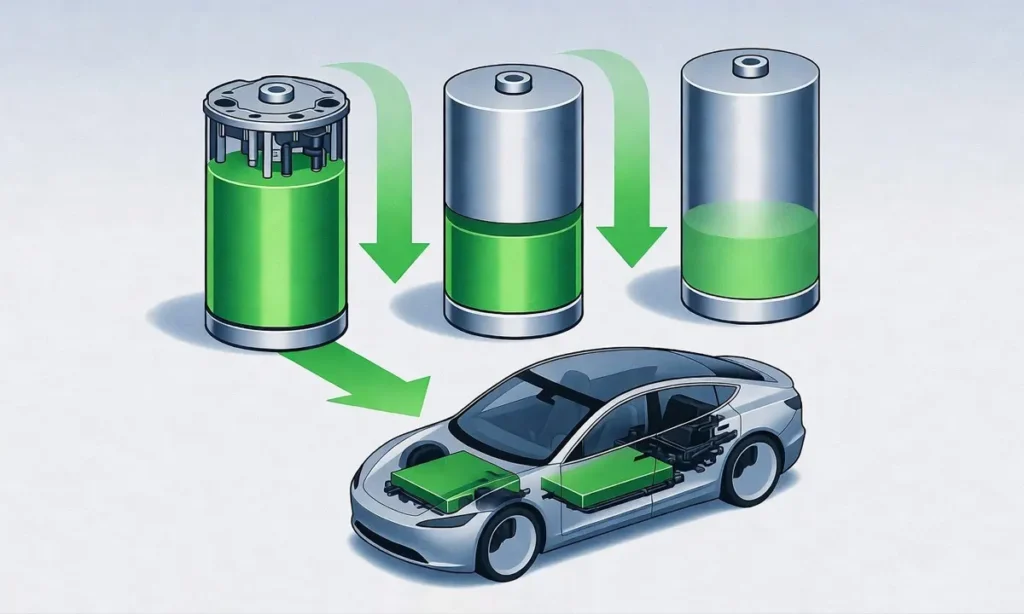
The battery pack’s state of health — whose assessment requires specific tools or manufacturer diagnostic access that the standard pre-purchase inspection process does not automatically include — is the single most important reliability consideration in any used electric vehicle purchase and the dimension of used EV ownership whose honest assessment the combustion vehicle equivalent’s simple oil check cannot parallel.
Battery degradation in real-world used EV ownership follows a pattern whose specific trajectory varies between chemistries, manufacturers and usage histories — with lithium iron phosphate cells demonstrating superior long-term capacity retention compared to nickel manganese cobalt alternatives, and with thermal management quality representing the most significant manufacturer-to-manufacturer variation in long-term battery health outcomes.
Real-world battery degradation data from the largest used EV ownership communities — whose members have documented state-of-health measurements across high-mileage examples with a consistency that provides statistically meaningful conclusions — demonstrates that well-maintained used EVs from manufacturers with active thermal management systems typically retain 85 to 90 percent of original battery capacity at 100,000 miles. Less well-managed alternatives — particularly earlier generation Nissan Leaf examples whose passive thermal management allows greater temperature exposure during charging and operation — demonstrate more variable degradation trajectories whose worst-case outcomes at equivalent mileage reach 70 to 75 percent capacity retention.
The practical consequence of battery degradation for the used EV buyer is reduced real-world range rather than mechanical unreliability in the failure sense — a distinction whose importance is significant. A used Tesla Model 3 whose battery retains 88 percent of original capacity delivers approximately 268 miles of EPA-equivalent range rather than the 358 miles of the original specification — still an entirely practical range figure for the majority of daily driving patterns but a meaningful reduction from the new vehicle specification that the purchase price should reflect.
Platform-Specific Reliability: Which Used EVs Hold Up Best
The used EV reliability landscape is not uniform across platforms — with meaningful differences between manufacturers whose battery thermal management philosophy, software update support and build quality consistency create distinct ownership outcomes that used EV buyers can assess through the platform-specific data whose accumulation the used EV market’s maturation has enabled.
Tesla’s used EV reliability profile reflects the contradiction between the brand’s powertrain excellence — whose motor and battery durability data across high-mileage examples is among the strongest in the segment — and the non-powertrain component quality concerns whose frequency in Consumer Reports surveys has consistently placed Tesla below average in overall reliability despite the powertrain’s exceptional durability. Panel gaps, trim quality inconsistencies and the touchscreen hardware failures that affected pre-2021 Model S and Model X examples represent the specific non-powertrain reliability considerations that used Tesla buyers should examine during pre-purchase inspection.
The Chevrolet Bolt EV’s used reliability profile was significantly affected by the battery recall whose large-format LG Energy Solution cells’ fire risk required software limitations and eventual physical replacement across the affected production years. Post-recall Bolt examples — whose replacement battery packs carry the new ownership warranty and whose fire risk has been addressed — represent significantly more attractive used purchases than the recall’s reputation damage initially suggests to buyers whose awareness of the resolution is incomplete.
The Nissan Leaf’s used reliability profile divides sharply between the 24-kilowatt-hour and 30-kilowatt-hour passive thermal management early examples — whose battery degradation variability in warm climate markets represents a genuine purchase risk — and the 40-kilowatt-hour and 62-kilowatt-hour e+ variants whose improved chemistry demonstrates better long-term capacity retention across comparable mileage.
Read: Used Car Inspection Checklist For USA buyers
The Non-Powertrain Reliability Considerations
The used EV’s reliability advantage over combustion equivalents in powertrain-related events does not extend uniformly across all vehicle systems — with several non-powertrain components representing reliability considerations whose frequency in used EV ownership surveys warrants specific attention during the purchase evaluation.
The DC fast charge port — whose repeated high-power connector engagement across the vehicle’s ownership history creates wear on the connector contacts, the locking mechanism and the thermal management connections whose degradation produces charging reliability concerns — represents the most practically significant non-powertrain reliability item in high-mileage used EV evaluation. Charge port inspection during the pre-purchase process should include connector condition assessment, locking mechanism function verification and the charging test that confirms full-rate DC fast charging capability rather than merely Level 2 AC charging function.
The 12-volt auxiliary battery — whose function in EVs differs from its combustion vehicle role but whose failure consequences are equally disruptive — represents the most commonly overlooked used EV maintenance item and the most frequent cause of the non-starting events that used EV owners report as unexpected reliability concerns. The 12-volt battery’s replacement at 3 to 5-year intervals — whose cost of approximately $200 to $400 represents the most straightforward used EV preventive maintenance investment — addresses the reliability risk whose ignoring produces the stranding events that the main traction battery’s excellent reliability record would not predict.
Read: Real Cost of Owning an Electric Car for 5 Years
Used EV Reliability by Platform — Summary Guide
| Platform | Powertrain Reliability | Battery Retention (100K mi) | Key Concern | Overall Used Rating |
| Tesla Model 3 / Y | Excellent | ~88–92% | Non-powertrain trim quality | Very Good |
| Tesla Model S / X (Pre-2021) | Very Good | ~85–90% | Touchscreen hardware | Good |
| Chevrolet Bolt EV (Post-Recall) | Excellent | ~85–90% | Recall awareness | Very Good |
| Nissan Leaf (40/62 kWh) | Very Good | ~82–88% | Passive thermal management | Good |
| Nissan Leaf (24/30 kWh) | Good | ~70–80% | Battery degradation variability | Fair (Warm Climates) |
| Hyundai Ioniq Electric | Excellent | ~90–93% | Limited used market supply | Excellent |
| Hyundai Kona Electric | Very Good | ~88–92% | Early battery recall awareness | Very Good |
| BMW i3 | Good | ~80–85% | High repair cost specialist parts | Good |
| Volkswagen ID.4 | Good | ~85–90% | Software maturity early examples | Good |
| Ford Mustang Mach-E | Good | ~83–88% | Charging software early examples | Good |