Ferrari 488 Pista Brings Formula 1 Technology And Aerodynamics Into A Street Legal Supercar
Race-Derived Aerodynamics, a Track-Honed 710-Horsepower Twin-Turbocharged V8, Radical Weight Reduction and Side Slip Control 6.0 Technology Make the 2020 Ferrari 488 Pista the Definitive Expression of Maranello's Mid-Engine V8 Special Series Lineage
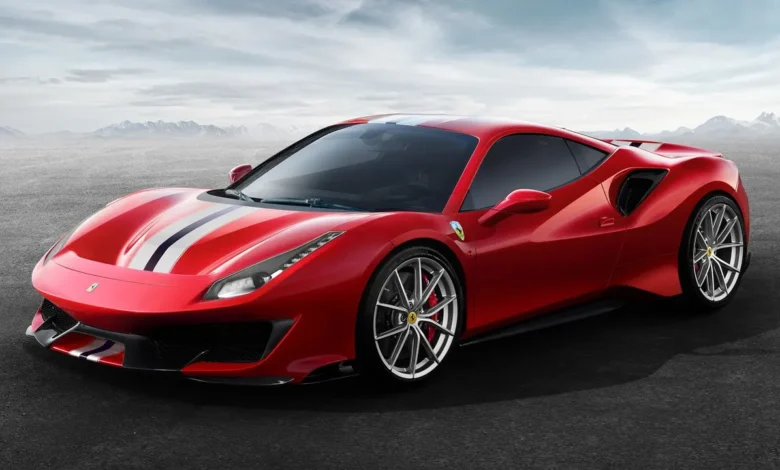
The word “Pista” means track in Italian, and Ferrari chose it with complete deliberateness when naming the most focused, most powerful and most technologically advanced road-going evolution of the 488 platform. The 2020 Ferrari 488 Pista is not a cosmetically enhanced version of the 488 GTB with a more aggressive body kit and a revised marketing narrative. It is a thoroughbred performance machine developed from first principles using the direct technical knowledge gained from Ferrari’s championship-winning 488 GTE endurance racing program and the customer racing 488 Challenge — cars that compete on the world’s most demanding circuits against the most extreme conditions that professional motorsport can produce. The result is a supercar that represents the absolute pinnacle of Ferrari’s special series V8 lineage, following a tradition of focused, track-inspired road cars that began with the 360 Challenge Stradale and continued through the legendary 430 Scuderia and the celebrated 458 Speciale.
Gallery: Ferrari 488 Pista
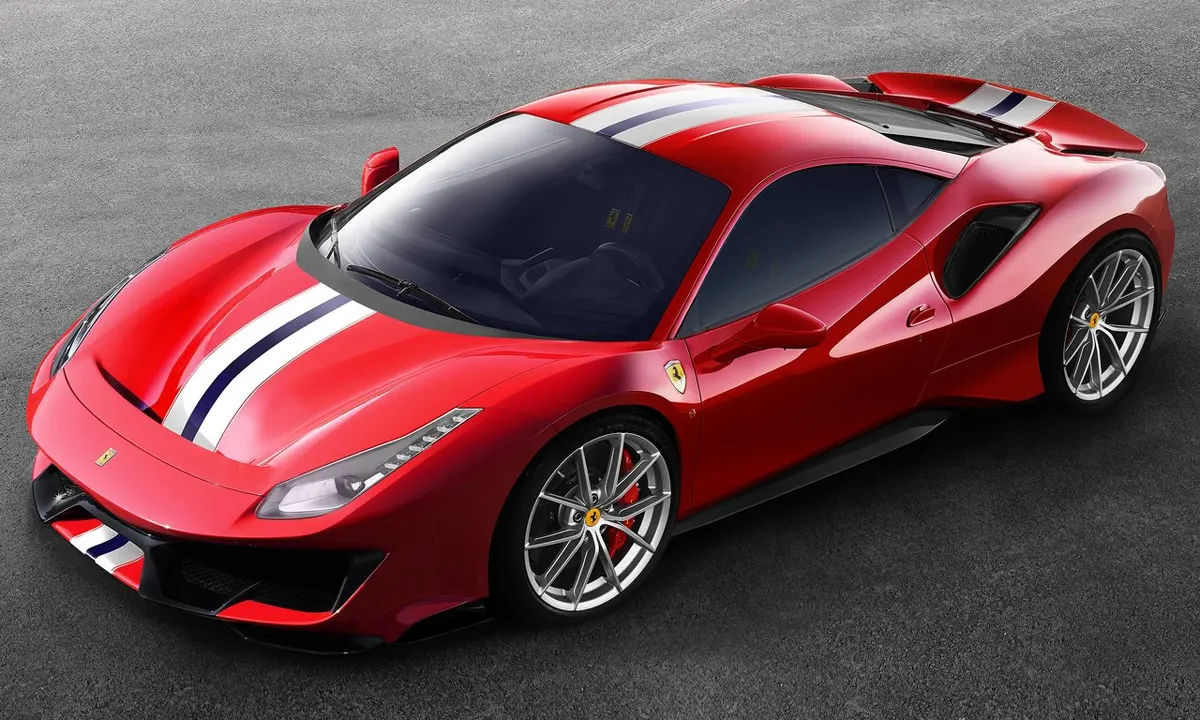
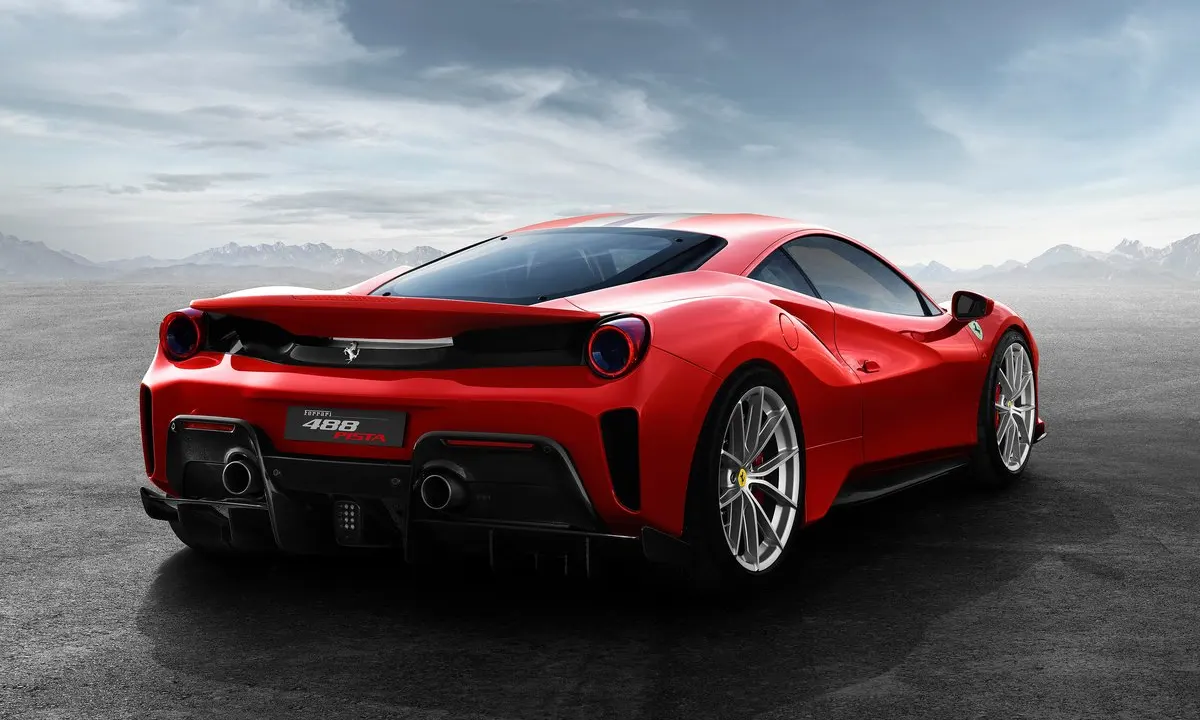
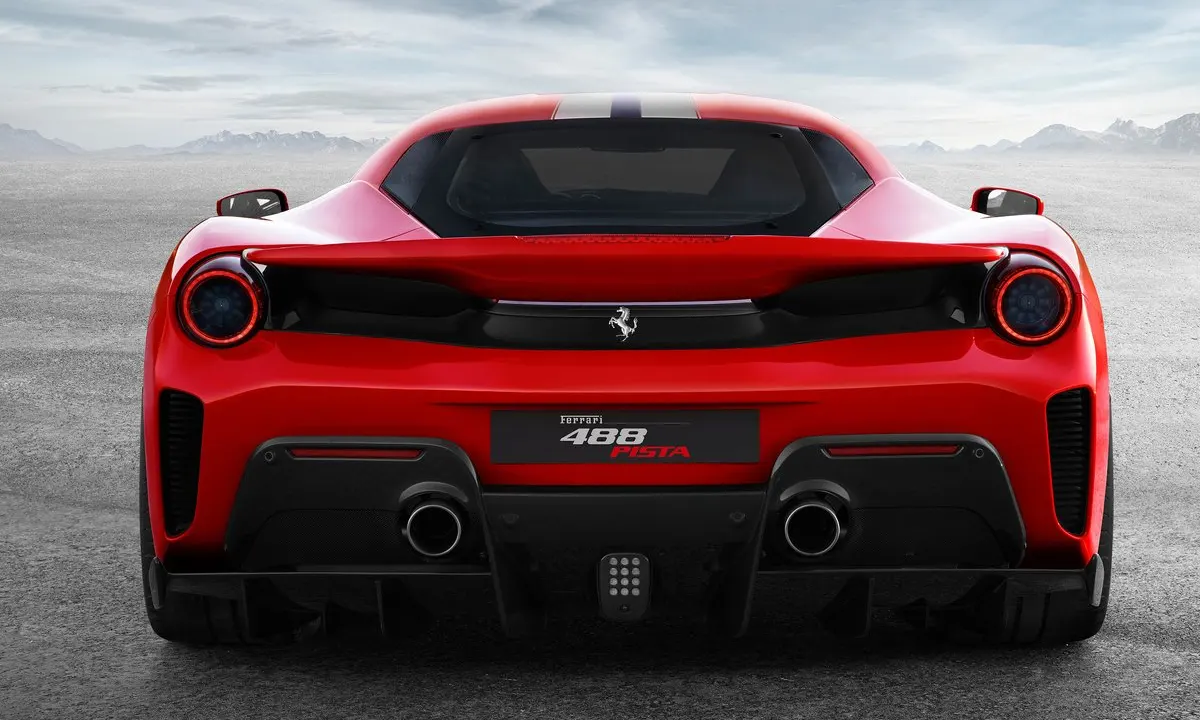
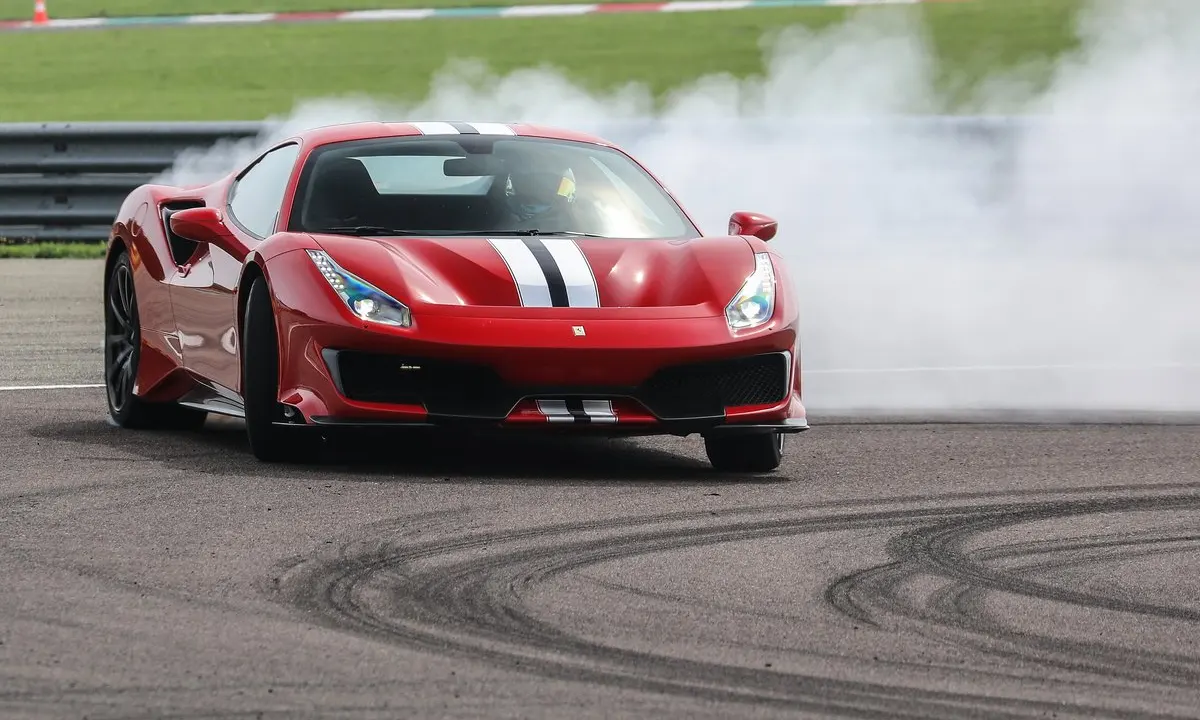
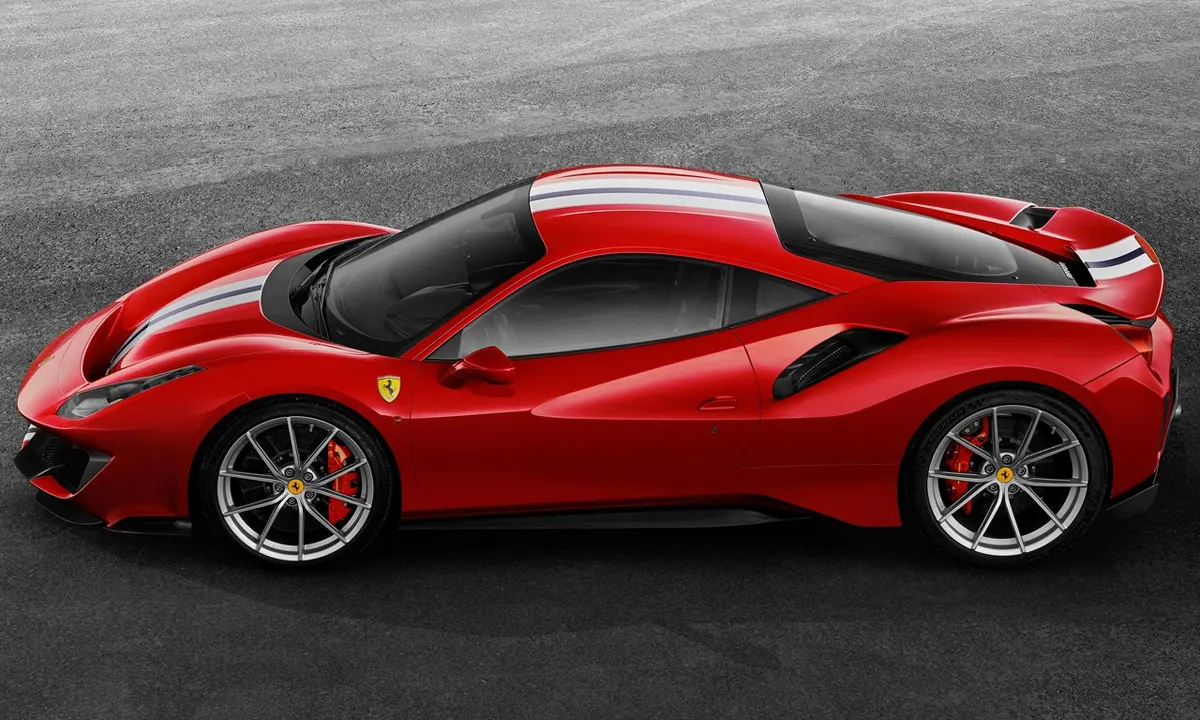
Unveiled at the 2018 Geneva Motor Show and carried forward with refinement into the 2020 model year as Ferrari’s ultimate mid-engine V8 road car before the arrival of the F8 Tributo, the 488 Pista occupies a singular position in the modern Ferrari catalogue. It is not a daily driver. It is not designed to cosset its occupants with every available luxury or to prioritize comfort over capability. It is designed to deliver the most visceral, technically sophisticated and emotionally consuming driving experience that Maranello’s engineers could extract from the 488 platform — and in that mission, it succeeds with a totality that its rivals in the same performance bracket find extraordinarily difficult to match. Available in both Berlinetta coupe and open-air Pista Spider convertible configurations, the 488 Pista is offered at a base MSRP of $759,000 for the coupe — a figure that reflects the extraordinary level of motorsport technology and hand-crafted precision contained within every unit produced.
A Design Sculpted Entirely by Aerodynamic Purpose
The exterior design of the 2020 Ferrari 488 Pista is one of the most honest and purposeful in the brand’s recent history — a body shaped not by the competing pressures of fashion, marketing trends or the desire to be merely beautiful, but almost entirely by the requirements of aerodynamic performance. Every surface, every aperture, every duct, every vent and every bodywork edge has been developed in close collaboration between Ferrari’s design centre and its aerodynamic engineering team, ensuring that the visual language of the 488 Pista reflects the mechanical function of the car beneath it with complete fidelity.
The most significant and visually distinctive element of the 488 Pista’s aerodynamic identity is the S-Duct integrated into the front bumper — Ferrari’s first application of this Formula 1-derived solution on a road car. Air enters through the front bumper and is directed through a large duct that exits through a sculpted vent cut into the bonnet, creating powerful suction downforce over the front axle at speed. The effect on aerodynamic balance is profound and measurable: the S-Duct’s contribution is central to the Pista’s ability to generate 20 percent more total downforce than the 488 GTB on which it is based, translating into meaningfully greater high-speed stability and more confident cornering capability. The visual consequence of this engineering solution is equally dramatic — the front end of the 488 Pista has a raw, functional urgency that is immediately distinguishable from the cleaner, more conventional nose of the standard 488.
The black omega-shaped edgings on the front bumpers and the aerodynamic side flicks at the rear reference the prominent underbody aerodynamic philosophy of the 488 GTE race car directly, confirming the lineage between the road car and its track-bred inspiration. Along the flanks, the engine air intakes have been relocated from the side body positions used on the 488 GTB to the upper rear spoiler area, a change inherited directly from the 488 Challenge race car. This repositioning dramatically reduces fluid-dynamic losses in the intake path, delivering a higher volume of cleaner, faster-moving air directly to the engine’s plenums and contributing materially to the power increase over the standard model.
At the rear, the dolphin-tail spoiler design that connects the upper body surfaces to the trailing edge works in aerodynamic concert with the front end to balance downforce generation across both axles. The rear diffuser — redesigned and inspired directly by the 488 GTE — works with underbody vortex generators to extract airflow efficiently from beneath the car, contributing to the overall downforce increase. The twin exhaust outlets sit centrally within the rear bumper, framed by the wide rear haunches that emphasize the 488 Pista’s planted, muscular stance. Optional 20-inch single-piece carbon fibre wheels — the first such items ever offered in the Ferrari road car range — are produced with an aerospace-grade coating applied to the channel and spoke surfaces specifically to dissipate the heat generated by repeated heavy braking, and are approximately 40 percent lighter than the standard 488 GTB’s forged alloy wheels, producing a significant reduction in unsprung rotational mass with direct benefits for ride quality and handling precision.
The F154CD V8: The Most Powerful Production Ferrari V8 in History
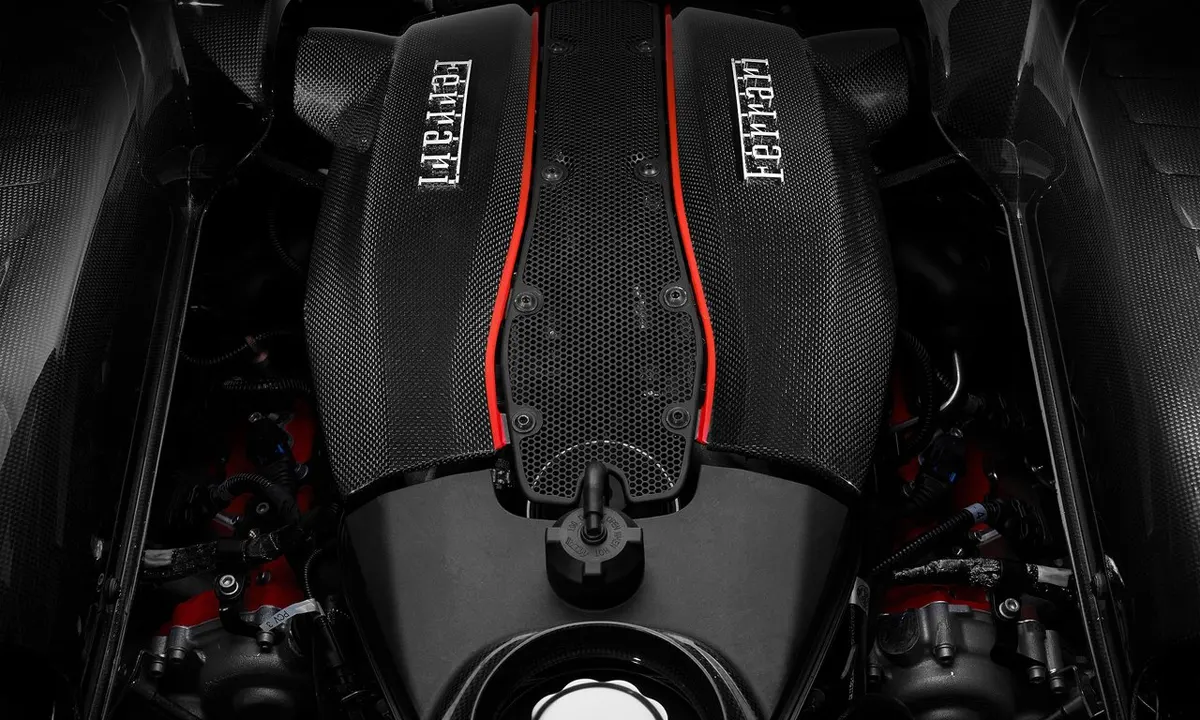
The engine fitted to the 2020 Ferrari 488 Pista represents the most extreme road car development of the F154 turbocharged V8 family — a 3.9-litre twin-turbocharged unit that, in Pista specification, produces 710 horsepower at 8,000 rpm and 568 lb-ft of torque at 3,000 rpm. These figures, impressive as they are as raw numbers, tell only a fraction of the engine’s story. The 710-horsepower output represents a 50-horsepower increase over the already formidable 488 GTB and is the largest single power increase ever achieved between a standard Ferrari production car and its special series derivative. To achieve this leap, Ferrari’s engineers rebuilt the engine with more than 50 percent new components compared to the GTB unit — a level of transformation that makes the Pista’s V8 effectively a different engine wearing a familiar displacement figure.
The engineering changes within the F154CD are extensive and reflect the depth of knowledge transferred from Ferrari’s active racing programs. New camshafts with more aggressive timing profiles increase the valve lift and duration characteristics to suit the higher power and rev targets. Stronger, lighter pistons withstand the increased combustion pressures generated by the elevated boost levels, while titanium connecting rods reduce reciprocating mass and allow the engine to spin through its rev range with greater mechanical authority. A larger intercooler reduces the temperature of the compressed intake air entering the plenums by approximately 15 degrees Celsius compared with the 488 GTB’s setup — a reduction that directly increases charge density and contributes to the power gain with meaningful thermodynamic precision. An Inconel exhaust manifold — a material chosen for its outstanding resistance to high-temperature corrosion and fatigue — weighs approximately 20 pounds less than the 488 GTB’s stainless steel item while simultaneously allowing the exhaust gases to exit with lower back-pressure, further improving engine efficiency and power delivery.
The turbine wheels within each of the twin-scroll turbochargers are manufactured from a low-density titanium aluminide alloy widely used in jet engine construction — a material selected specifically for its combination of extreme temperature resistance and low inertia that allows the turbines to spool and respond with a sharpness more commonly associated with naturally aspirated engines. The result is a throttle response that, by the demanding standards of forced-induction performance cars, is exceptionally immediate and linear. The power builds in a seamless, progressive surge from the moment the throttle opens, with the torque available at 80 percent of its peak from as low as 3,000 rpm while the upper rev range delivers the full 710 horsepower with a sound that is unapologetically raw, deeply mechanical and intensely rewarding to exploit. Ferrari’s F154 family won the International Engine of the Year award for three consecutive years, a recognition of engineering excellence that the F154CD takes to its ultimate road car expression.
The seven-speed F1 dual-clutch transmission manages the engine’s power delivery with the precision and immediacy that the car’s character demands. In Race mode, shift times are reduced to just 30 milliseconds — a figure that places the gearbox’s responsiveness in the same realm as the transmissions used in contemporary Formula 1 machinery. Carbon fibre paddle shifters inherited directly from the 488 Challenge race car provide a tactile, precise and lightweight interface with the transmission, while the shift logic is calibrated to hold gears deeply into the rev range during sustained hard acceleration and to deliver each downshift with the accompanying throttle blip that maintains the engine’s rev-matched engagement with the driveline. The combination of engine and transmission creates a powertrain that feels both meticulously engineered and intensely alive — two qualities that very rarely coexist at such extreme levels of performance.
90 Kilograms Lighter: The Art and Science of Weight Reduction
One of the most significant engineering achievements of the 2020 Ferrari 488 Pista is the systematic, comprehensive and intelligently targeted weight reduction program that resulted in a dry weight of 1,280 kilograms — 90 kilograms less than the 488 GTB from which it is derived. This is not simply a matter of removing equipment or specifying lighter materials as a cost-neutral substitution. Ferrari’s engineers approached the weight reduction with the same strategic discipline applied to a factory racing car, concentrating the mass savings where they would produce the greatest dynamic benefit — in the unsprung masses, the rotating components, and the elements positioned furthest from the vehicle’s centre of gravity, where the leverage effect of mass change on handling dynamics is most pronounced.
The bodyshell employs carbon fibre extensively as a structural and cosmetic material. The engine cover, front and rear bumpers, rear spoiler and numerous interior trim elements are all produced in carbon fibre, with the material chosen not as a styling exercise but as the most weight-efficient solution for each specific component. The rear window is manufactured from Lexan polycarbonate rather than glass, saving additional mass from a location that sits far behind the car’s centre of gravity and therefore has a disproportionately positive effect on polar moment of inertia. The carbon fibre wheel option, available as an upgrade over the already lightweight 20-inch diamond-finish alloy units, reduces wheel mass by approximately 40 percent per corner — a reduction in unsprung and rotating mass that delivers measurable improvements in ride compliance, steering precision and braking performance simultaneously.
The Ferrari 488 Pista Spider presents a fascinating footnote in this weight reduction narrative. Rather than being heavier than the coupe — as virtually every convertible supercar is compared to its closed counterpart — the 488 Pista Spider achieves a dry weight of approximately 1,380 kilograms, making it the first Ferrari Spider in the brand’s history to be lighter than the equivalent coupe. This remarkable achievement required an entirely independent approach to the Spider’s body engineering and material specification, and it speaks to the depth of Ferrari’s commitment to ensuring that the open-air experience does not come with the dynamic penalty that typically accompanies it.
Side Slip Control 6.0 and the Electronics of Engaged Performance
The 2020 Ferrari 488 Pista’s dynamic electronics platform represents the most advanced chassis management system Ferrari had deployed on a road car at the time of its introduction, centered on the sixth-generation Side Slip Control system that integrates every active chassis technology on the car into a single, unified control architecture. SSC 6.0 monitors the vehicle’s instantaneous slip angle continuously, comparing the actual dynamic state against the ideal target with extraordinary speed, and intervenes through a combination of targeted electronic differential management, F1-Trac traction control modulation and magnetorheological adaptive damper adjustment to maintain the optimal balance between performance and control at all times.
The magnetorheological dampers employed in the Pista’s suspension system respond to SSC 6.0’s commands with a speed and precision that conventional hydraulic dampers cannot match. By altering the viscosity of the magnetic fluid within the damper through electrical current, the system can adjust individual corner stiffness in milliseconds — faster than any mechanical system, and fast enough to respond to road surface changes and dynamic load transfers before the driver has consciously registered them. The result is a chassis that manages the competing demands of high cornering speed, accurate turn-in response, stable mid-corner composure and progressive limit behaviour with a coherence that makes the 488 Pista’s 710 horsepower feel accessible and exploitable rather than merely overwhelming.
The 488 Pista Spider introduces an additional dynamic technology that makes its world debut on this model: the Ferrari Dynamic Enhancer, a lateral dynamics control system that operates through independent modulation of brake pressure at the outer rear wheel during cornering to manage oversteer tendency with greater precision than a conventional stability system. The Ferrari Dynamic Enhancer effectively allows the car’s rear-end balance to be adjusted through brake-based torque vectoring rather than through throttle reduction alone, enabling drivers to maintain higher corner entry speeds with more confidence while the system manages the resulting dynamic demands with fine-grained precision. The combined effect of SSC 6.0 and the Ferrari Dynamic Enhancer creates a car that is simultaneously more forgiving of driver error and more rewarding for drivers confident enough to explore its considerable limits.
Michelin Pilot Sport Cup 2 tyres, developed in close collaboration with Ferrari’s engineers specifically for the 488 Pista’s dynamic requirements, provide the final layer of the car’s performance system. These are not standard road tyres in any meaningful sense — they are track-capable semi-slick compounds housed in road-legal construction, providing grip levels that approach those of dedicated competition rubber while retaining sufficient thermal operating range to function effectively from cold in everyday driving conditions.
Driving Dynamics: Blistering, Balanced and Deeply Rewarding
The performance figures of the 2020 Ferrari 488 Pista establish its credentials with absolute authority. The coupe reaches 62 mph from rest in 2.85 seconds — matching the Lamborghini Huracán Performante and placing it fractionally behind the McLaren 765LT in the intense competitive hierarchy of this price and performance segment. The journey from rest to 124 mph occupies just 7.6 seconds, and the top speed exceeds 211 mph — the same barrier that has historically defined the absolute upper tier of road car performance. These numbers are the product of the engine’s power density, the car’s aggressive weight reduction, the traction management of the SSC 6.0 system’s launch control calibration, and the Michelin Pilot Sport Cup 2 tyre’s ability to convert that power into forward motion rather than tyre slip.
Yet the 488 Pista’s driving character is defined far more by its quality of dynamic engagement than by its acceleration statistics. The combination of the lighter weight, the revised suspension tuning and the SSC 6.0 system’s ability to manage the car’s balance with near-instantaneous precision creates a mid-engine supercar that feels remarkably approachable for a car of this capability — not because it has been electronically neutered or artificially tamed, but because every system has been calibrated to communicate clearly with the driver and to respond predictably to deliberate inputs. The steering is accurate and well-weighted, the brakes are firm and fade-resistant under sustained track use, and the chassis maintains its composure through rapid direction changes and varying surface conditions with the kind of stability that builds driver confidence progressively rather than all at once.
The Brembo carbon-ceramic braking system plays a critical role in the overall dynamic picture. The front rotors measure 398mm in diameter, the rears 360mm, and both ends are gripped by six-piston callipers at the front and four-piston units at the rear. These dimensions and the thermal properties of the carbon-ceramic disc material allow the system to deliver strong, fade-free stopping power through repeated hard applications — the kind of sustained braking performance that conventional steel discs cannot maintain under the thermal loads generated by repeated track use. The pedal feel is firm and linear, supporting confident threshold braking and precise modulation during the kind of trail-braking techniques that the 488 Pista’s balance and chassis dynamics actively reward.
Interior: Race-Focused Craftsmanship With Ferrari’s Signature Touch
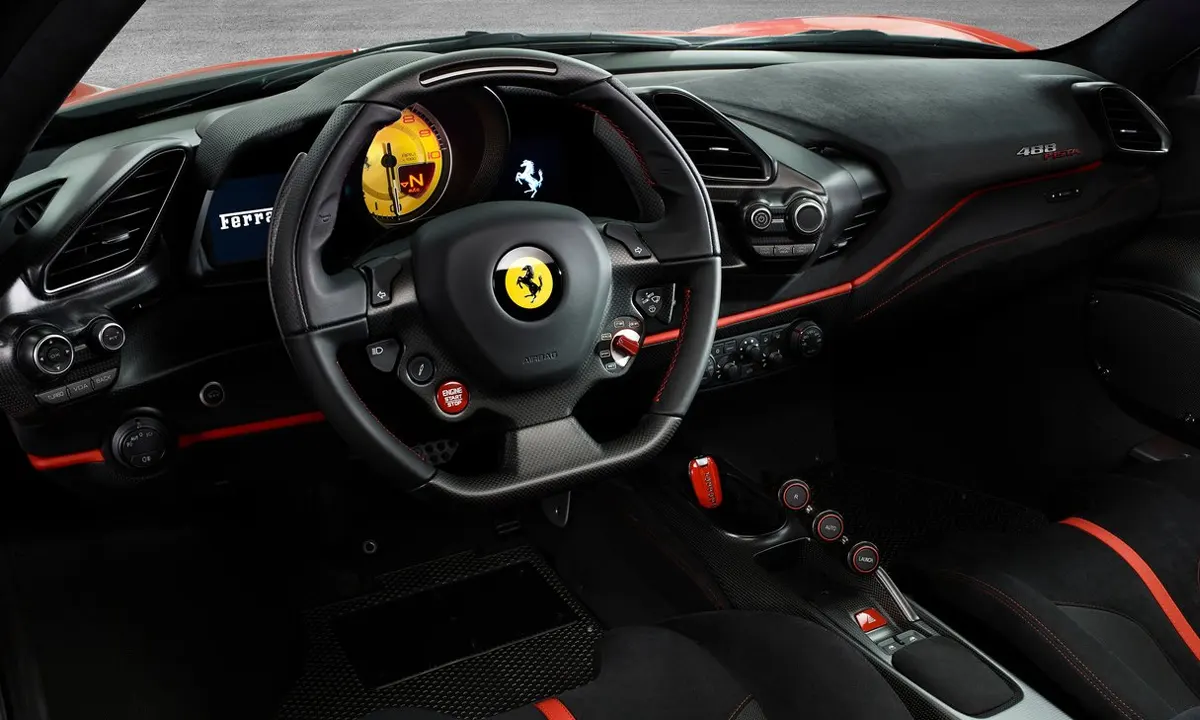
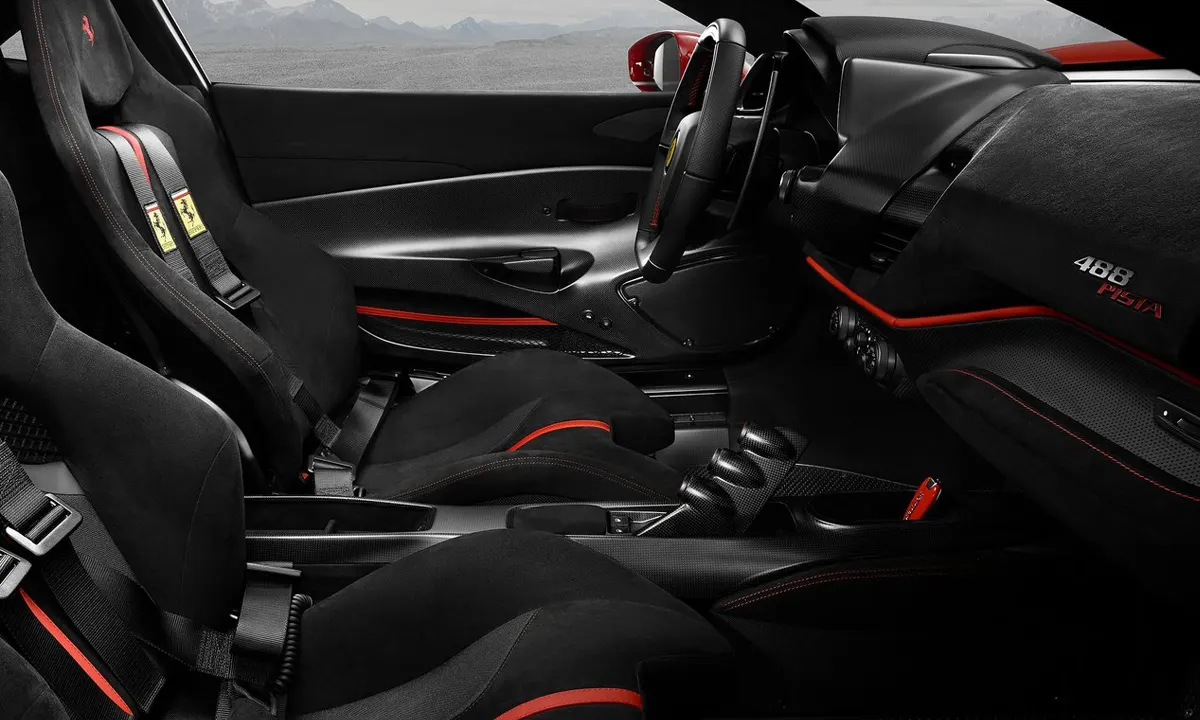
Step inside the 2020 Ferrari 488 Pista and the intent of every interior decision is immediately apparent. This is a cabin designed and built around the driver’s relationship with the car during performance driving — a space where weight has been consciously minimized, driver-critical controls are positioned for instinctive access, and the materials chosen reflect both the car’s racing heritage and the extraordinary craftsmanship standards that distinguish a Ferrari interior from every rival’s attempt to replicate it.
The interior architecture eliminates the glove compartment entirely, replacing it with a cleaner, more visually open under-dashboard area that emphasizes the cockpit’s racing character while saving additional mass. Door panels are sculpted with a purity and fluidity that reflects the Ferrari Design Centre’s meticulous attention to the quality of every visible surface, while door pull straps — rather than conventional handles — provide the most direct, lightweight means of closing the door while contributing a distinctly motorsport-flavoured detail to the interior’s overall aesthetic. Triangular-pattern aluminium tread plates and heel rests add purposeful texture to the floor surfaces, while contrasting hand-stitching threads through the Alcantara and leather upholstery with the kind of precision that only skilled human hands can achieve consistently.
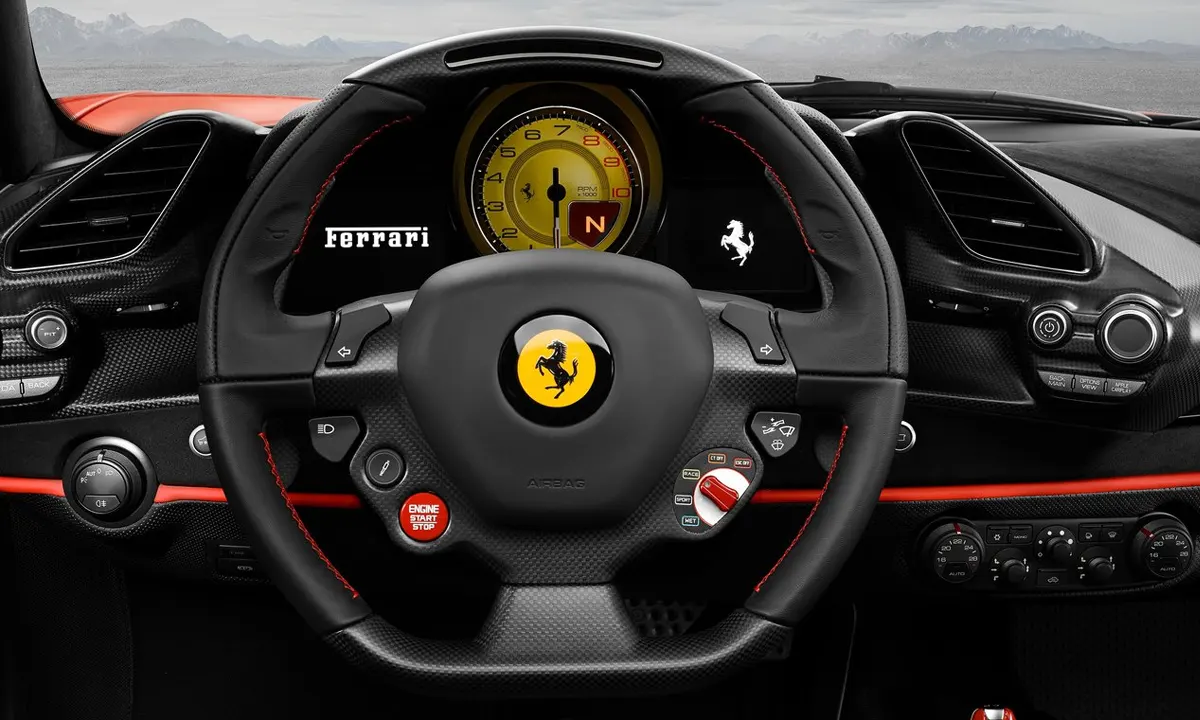
Standard carbon racing seats provide firm, well-shaped lateral support that holds the driver securely during the hard cornering the 488 Pista is engineered to deliver, while the optional Daytona carbon racing seats offer an alternative aesthetic character that references the Ferrari racing heritage more explicitly through their specific upholstery and stitching patterns. The steering wheel carries the full complement of Ferrari’s performance electronics controls — manettino mode selector, turn signals, wipers, drive mode adjustments and launch control activation — allowing the driver to manage every dynamic parameter without removing hands from the wheel. The flat-bottom profile and carbon fibre shift paddles provide a tactile quality that complements the mechanical directness of the driving experience they help facilitate.
Two all-carbon fibre instrument cowlings flanking the central tachometer are available as an optional upgrade, creating an instrument panel environment of extraordinary material quality and visual focus. The large central tachometer dominates the driver’s visual field, flanked by auxiliary displays that present the car’s vital data in a format optimized for at-a-glance legibility during hard driving. Climate control and an audio system are available as options — Ferrari makes no apology for their absence as standard equipment, reflecting the Pista’s racing priorities with complete transparency while acknowledging that buyers can specify them at will.
The 488 Pista Spider: The Convertible That Defies Convention
The Ferrari 488 Pista Spider extends the Pista’s performance philosophy into the open-air segment with the same uncompromising commitment to capability that defines the coupe, while adding the unique sensory dimension of top-down driving at genuinely extraordinary speeds. The Spider’s achievement of a lighter weight than the coupe — historically unprecedented in Ferrari’s road car history — required a fundamental reimagining of the convertible body structure’s material and construction approach. It also marks the world debut of the Ferrari Dynamic Enhancer, making the Spider not merely a convertible version of the coupe but a technically distinct model with its own unique contribution to Ferrari’s dynamic technology development.
With the retractable hardtop stowed, the Spider exposes the F154CD V8’s soundtrack to the occupants and the surrounding environment with a rawness and immediacy that the coupe’s fixed bodywork cannot replicate. Every acoustic frequency of the engine’s output — the deep resonance at low revs, the mechanical surge through the midrange and the extraordinary, layered scream as the revs approach 8,000 rpm — reaches the driver’s ears with a directness and richness that transforms the experience of extracting the engine’s performance into something that engages multiple senses simultaneously. For buyers who regard the 488 Pista’s engine soundtrack as among its most compelling attributes, the Spider delivers that soundtrack in its purest and most immersive form. It also carries the distinction of Ferrari’s highest power-to-weight ratio ever achieved in a production convertible at the time of its introduction — 1.92 kilograms per horsepower — confirming that the open-air experience in this car comes entirely without dynamic compromise.
The 2020 Ferrari 488 Pista’s Legacy in the V8 Special Series Tradition
The 2020 Ferrari 488 Pista holds a position in the history of the Ferrari V8 special series that is unique and unlikely to be revisited in precisely the same form. It represents the absolute apex of what Ferrari’s engineers achieved with the naturally turbocharged V8 mid-engine platform before the introduction of hybrid assistance transformed the performance and character of its successors. It is the car that defined the limits of the 488 architecture’s potential, that applied the most comprehensive and focused transfer of racing technology in the special series tradition’s history, and that delivered a driving experience of sufficient intensity and reward to earn legendary status among enthusiasts from the moment of its introduction.
Jeremy Clarkson named it his 2019 Supercar of the Year — a distinction that sits alongside the International Engine of the Year titles won by its powerplant and the universal critical acclaim that has followed the 488 Pista consistently through its production life and into its growing status as a collector’s vehicle of genuine long-term significance. For those who drove the 2020 Ferrari 488 Pista when it was new, and for those who seek it today in the collector market, it represents something that cannot be manufactured by specification or replicated by a more modern successor — the distilled, uncompromised essence of Ferrari’s V8 special series tradition at its most focused, most powerful and most honest peak.
2020 Ferrari 488 Pista — Specifications and Performance Chart
| Category | Specification |
| Body Styles | Berlinetta Coupe / Pista Spider Convertible |
| Engine | 3.9-Litre Twin-Turbocharged V8 (F154CD) |
| Displacement | 3,902 cc |
| Engine Configuration | 90-Degree V8, Mid-Mounted, Dry Sump |
| Horsepower | 710 hp (720 cv / 530 kW) at 8,000 rpm |
| Torque | 568 lb-ft (770 Nm) at 3,000 rpm |
| Maximum Engine Speed | 8,000 rpm |
| Specific Power Output | 185 cv per litre |
| Transmission | 7-Speed F1 Dual-Clutch |
| Race Mode Shift Time | 30 milliseconds |
| Drivetrain | Rear-Wheel Drive |
| 0–62 mph | 2.85 seconds |
| 0–124 mph | 7.6 seconds |
| Top Speed | 211+ mph (340+ km/h) |
| Dry Weight (Coupe) | 2,822 lbs (1,280 kg) |
| Dry Weight (Spider) | 3,042 lbs (1,380 kg) |
| Weight Reduction vs 488 GTB | 90 kg (198 lbs) |
| Power-to-Weight (Spider) | 1.92 kg/hp |
| Downforce Increase vs 488 GTB | +20% |
| Chassis Control | Side Slip Control 6.0 (SSC 6.0) |
| Spider Exclusive Technology | Ferrari Dynamic Enhancer |
| Suspension | Magnetorheological Adaptive Dampers |
| Brakes (Front) | 398mm Carbon-Ceramic |
| Brakes (Rear) | 360mm Carbon-Ceramic |
| Front Callipers | Six-Piston Brembo |
| Rear Callipers | Four-Piston Brembo |
| Tyres | Michelin Pilot Sport Cup 2 (Ferrari-Specific) |
| Standard Wheel Size | 20-inch Diamond-Finish Alloy |
| Optional Wheels | 20-inch Single-Piece Carbon Fibre |
| Carbon Fibre Wheel Weight Saving | ~40% vs Standard GTB Wheels |
| Rear Window Material | Lexan Polycarbonate |
| Key Weight Saving Materials | Carbon Fibre Bodywork, Inconel Exhaust, Titanium Rods |
| Seating | Two Seats |
| Wheelbase | 104.3 inches (2,650 mm) |
| Length | 181.3 inches (4,605 mm) |
| Width | 77.8 inches (1,976 mm) |
| Fuel Economy (City / Highway) | 15 / 20 mpg (EPA) |
| Standard Seats | Carbon Racing Seats with Alcantara |
| Optional Seats | Daytona Carbon Racing Seats |
| Base MSRP (Coupe) | $759,000 |
| Engine Awards | International Engine of the Year — Three Consecutive Years |
| Critical Recognition | Jeremy Clarkson 2019 Supercar of the Year |
| Production Period | 2018–2020 |
| Assembly | Maranello, Italy |