518 Horsepower, 9,000 RPM and No Apologies, The 2025 Porsche 911 GT3 RS Is Pure Racing Joy
A 518-Horsepower Naturally Aspirated 9,000 RPM Flat-Six, Active Aerodynamics Generating Race-Car Levels of Downforce and a Nürburgring Lap Time of 6:44.84 Make the 2025 GT3 RS the Definitive Expression of What the 911 Platform Can Achieve
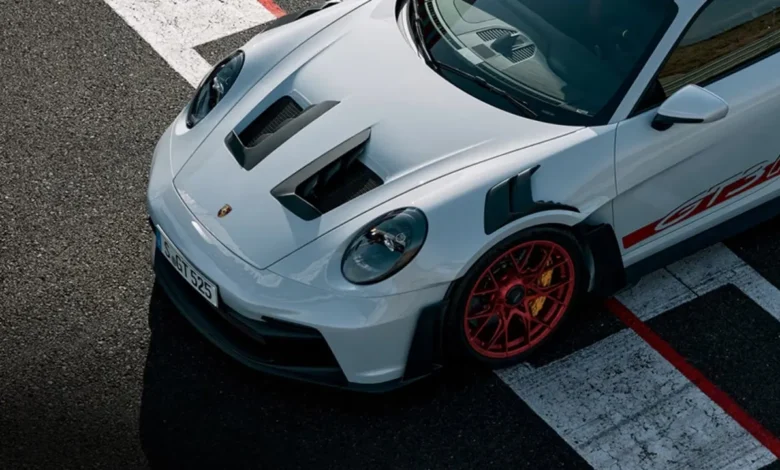
There is a version of the Porsche 911 for almost every kind of driver — the elegant Carrera for the grand touring enthusiast, the turbocharged S for the power-focused commuter, the GTS for the driver who wants a single car capable of everything. And then, at the very apex of the range, existing in an entirely different dimension of purpose and intensity, there is the GT3 RS. It does not exist to be versatile. It does not exist to be comfortable. It does not exist to carry luggage, impress a valet or function gracefully in city traffic. The 2025 Porsche 911 GT3 RS exists for one purpose and one purpose alone — to be the fastest, most aerodynamically sophisticated, most dynamically rewarding road-legal 911 that Porsche’s Motorsport division is permitted by road certification requirements to produce. Everything that is not in direct service of that purpose has been removed, lightened or repurposed. The result is one of the most remarkable and most uncompromising automobiles available at any price in the current supercar landscape.
Gallery: 2025 Porsche 911 GT3 RS
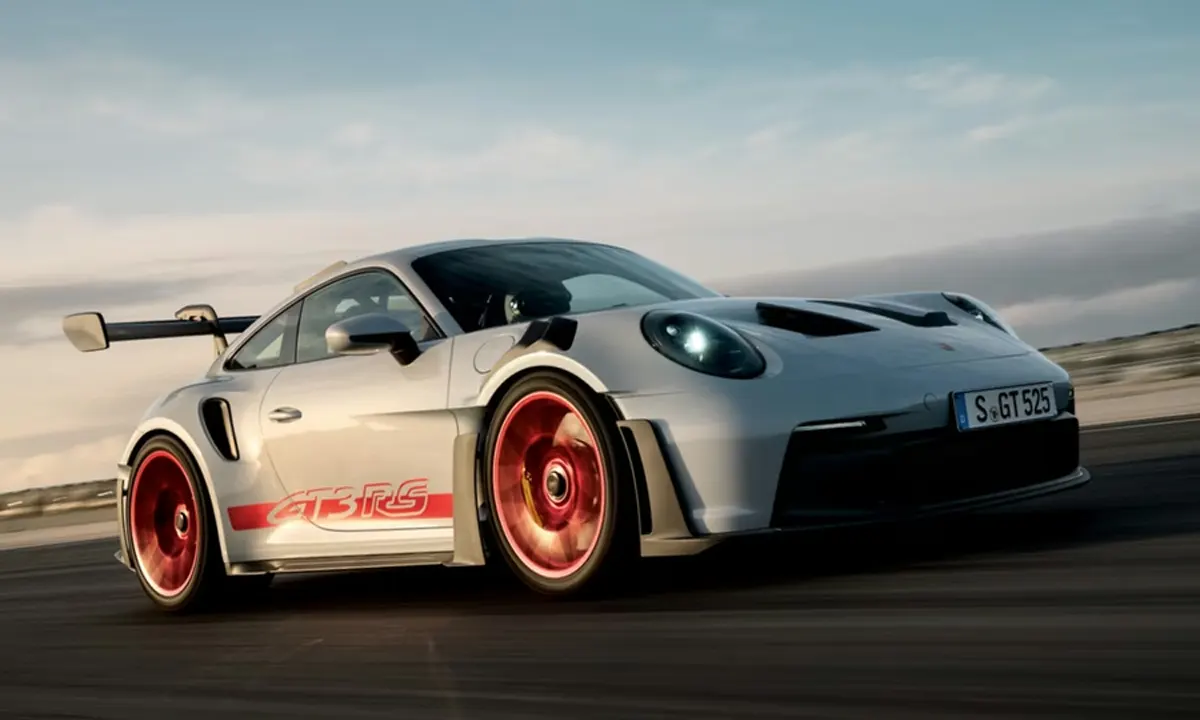
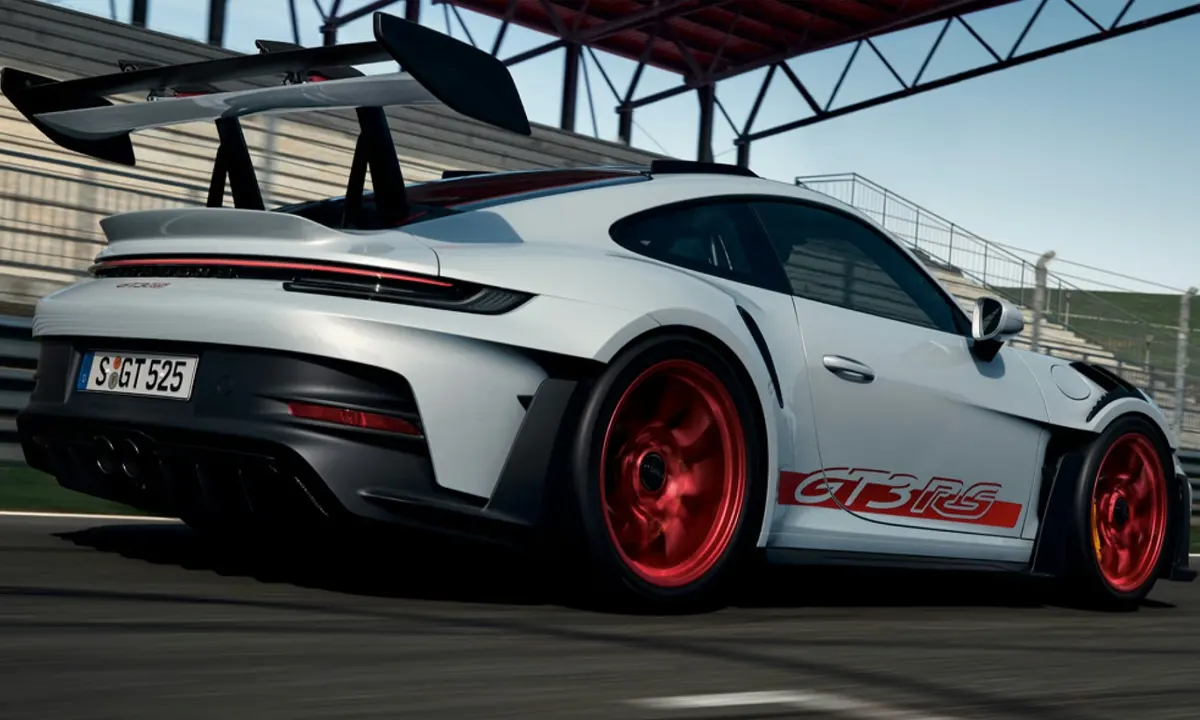
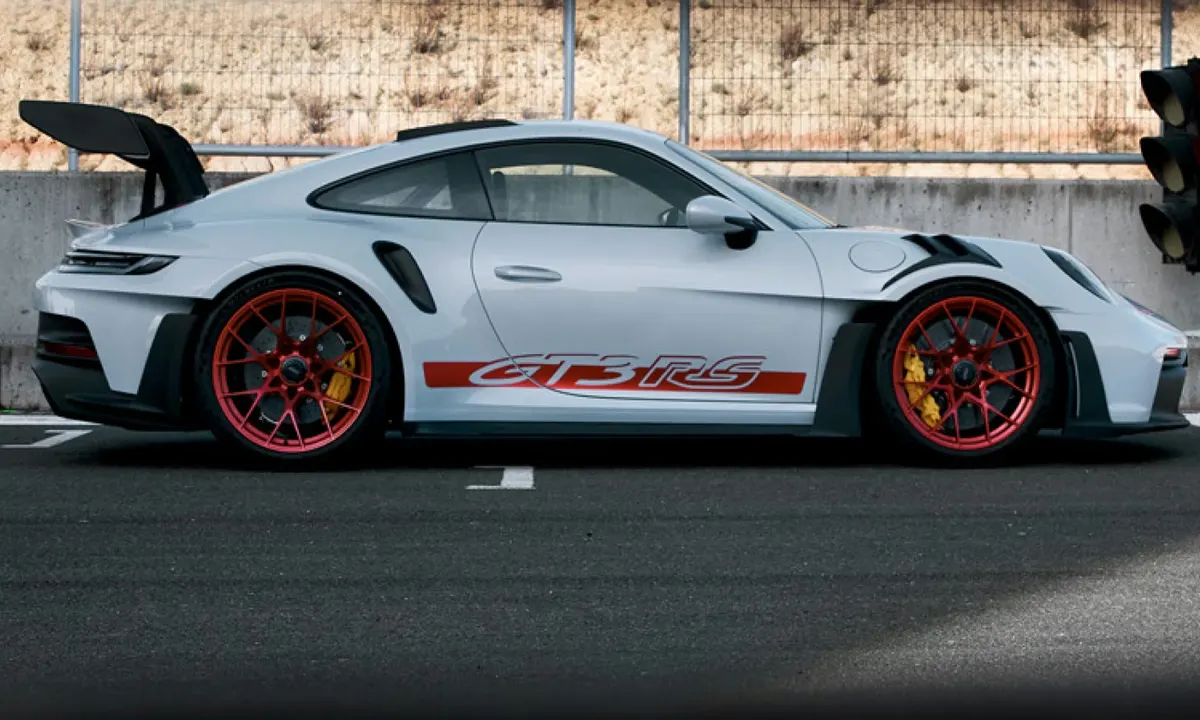
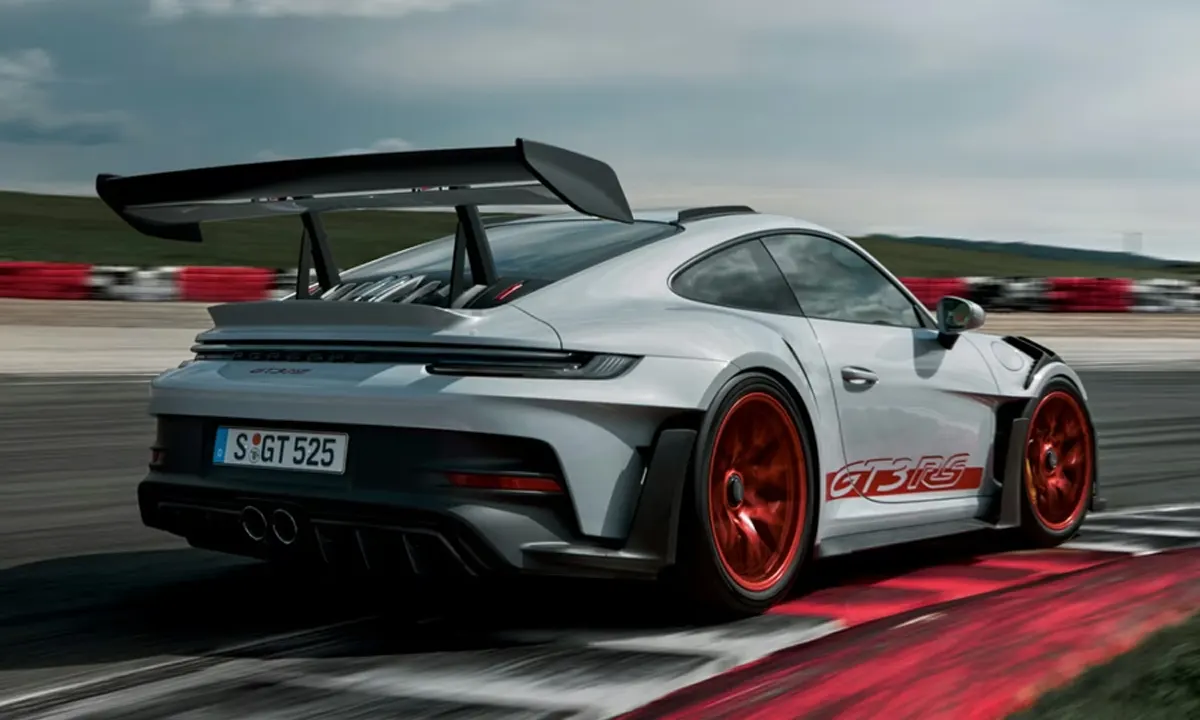
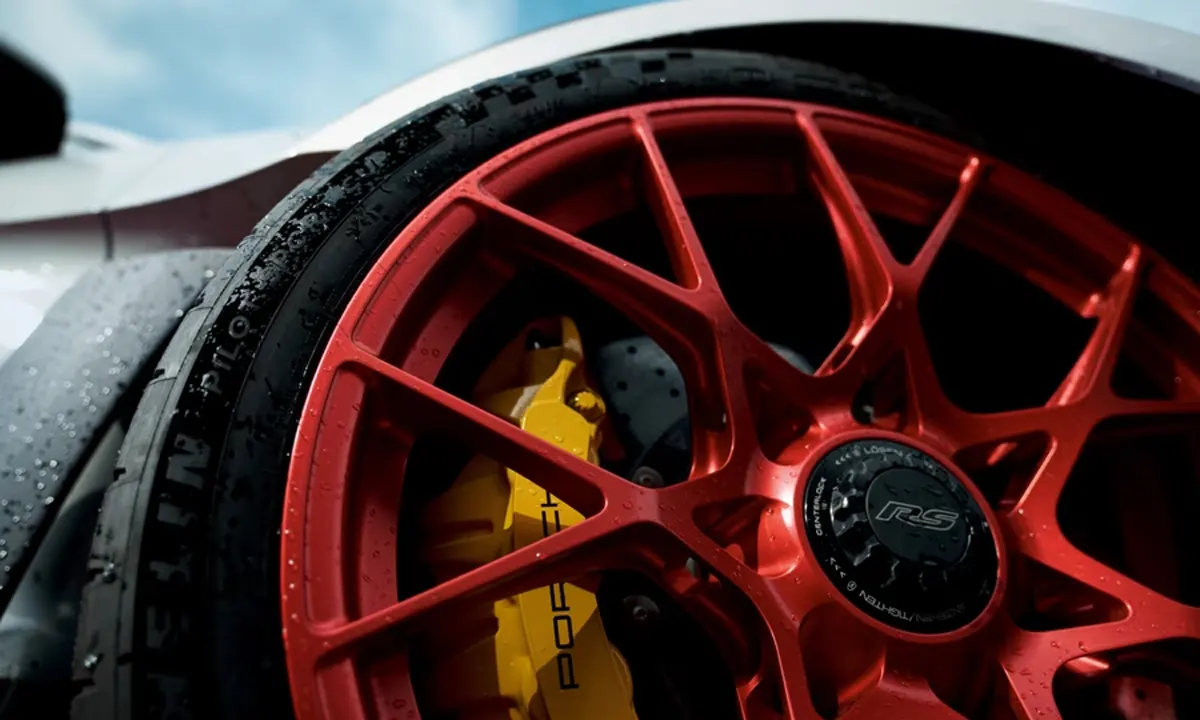
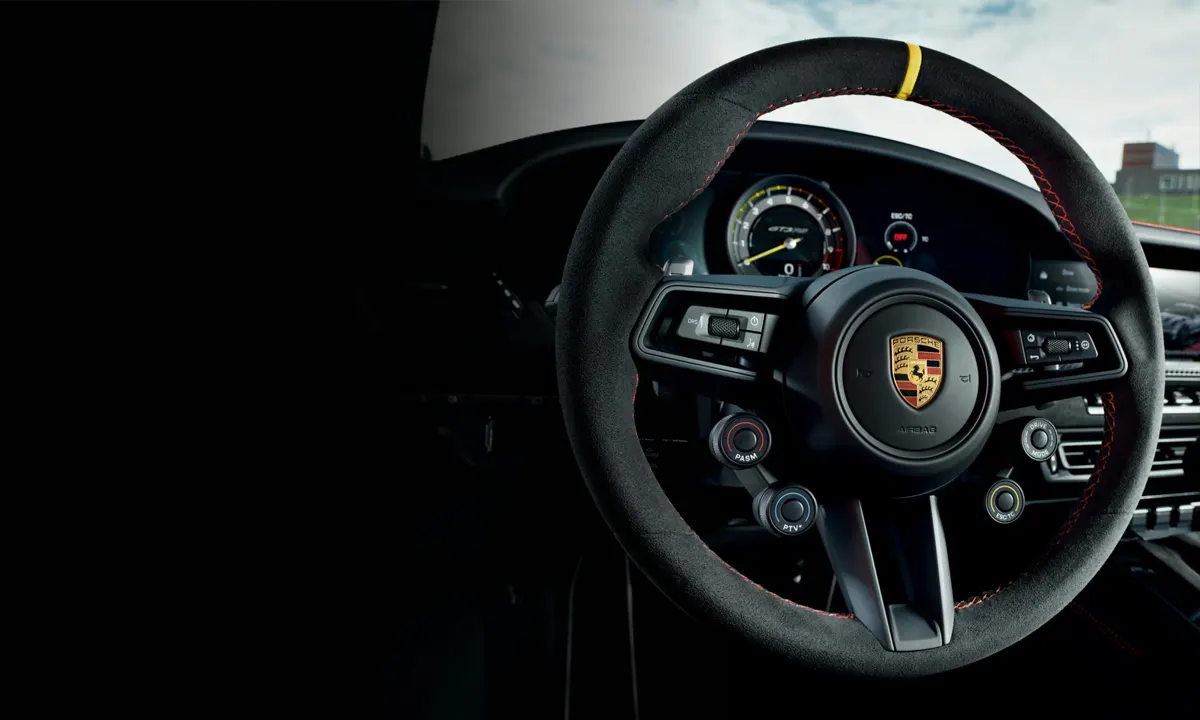
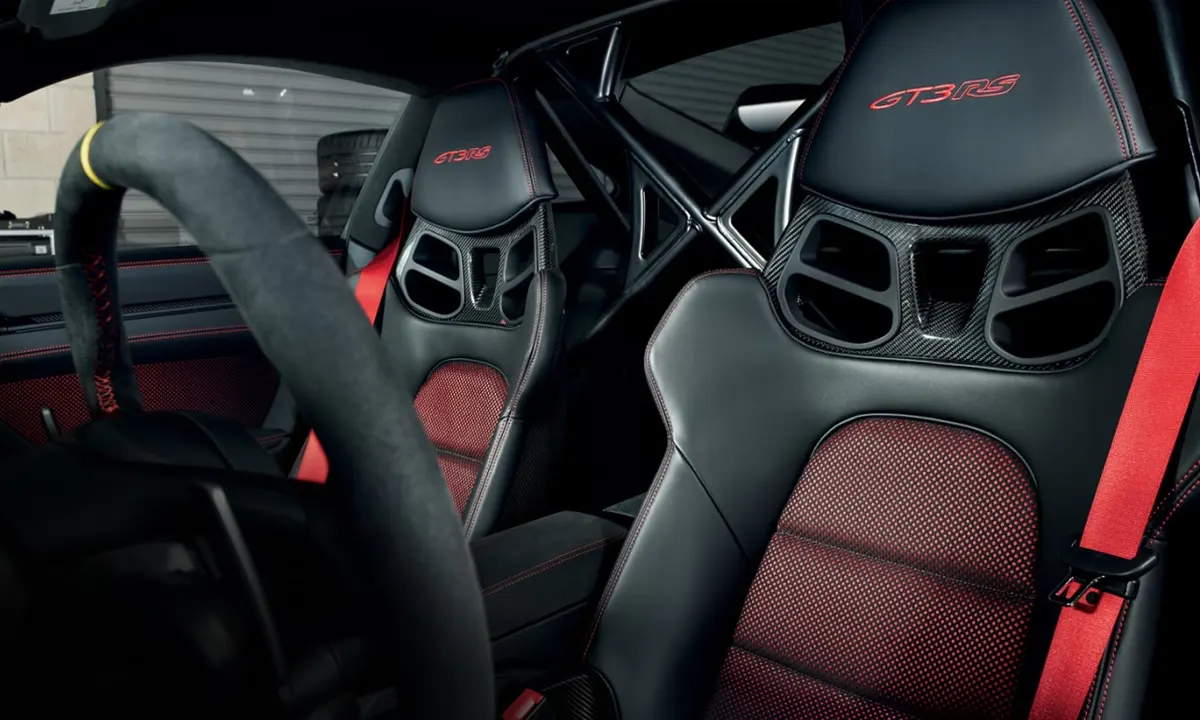
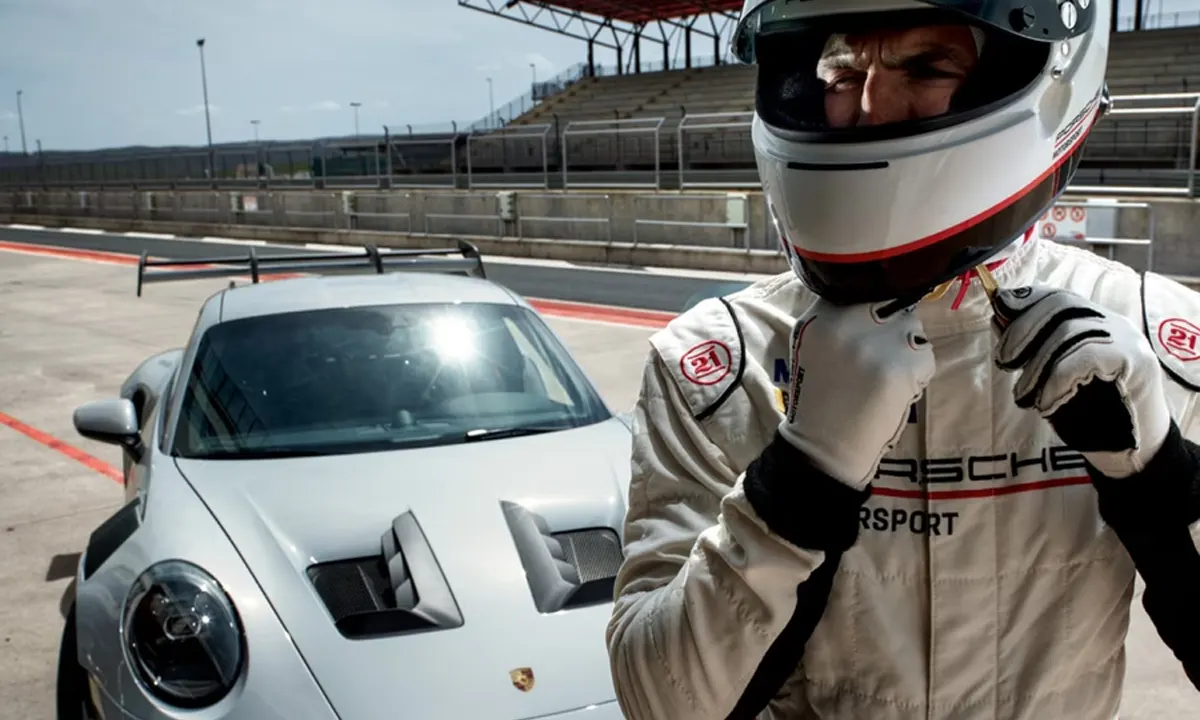
The GT3 RS occupies the position at the very top of the naturally aspirated 911 hierarchy, positioned above the already-exceptional GT3 and distinguished from it by a level of aerodynamic and dynamic development that transforms the character of the car from an extraordinary sports car into something that is genuinely, authentically and measurably a racing machine that has been granted conditional road clearance. With a starting price of approximately $241,300 including destination charges, the GT3 RS demands an extraordinary financial commitment — and rewards it with an ownership and driving experience that no other road car at this price point can replicate or approach.
A Design Defined by Aerodynamic Function, Not Stylistic Ambition
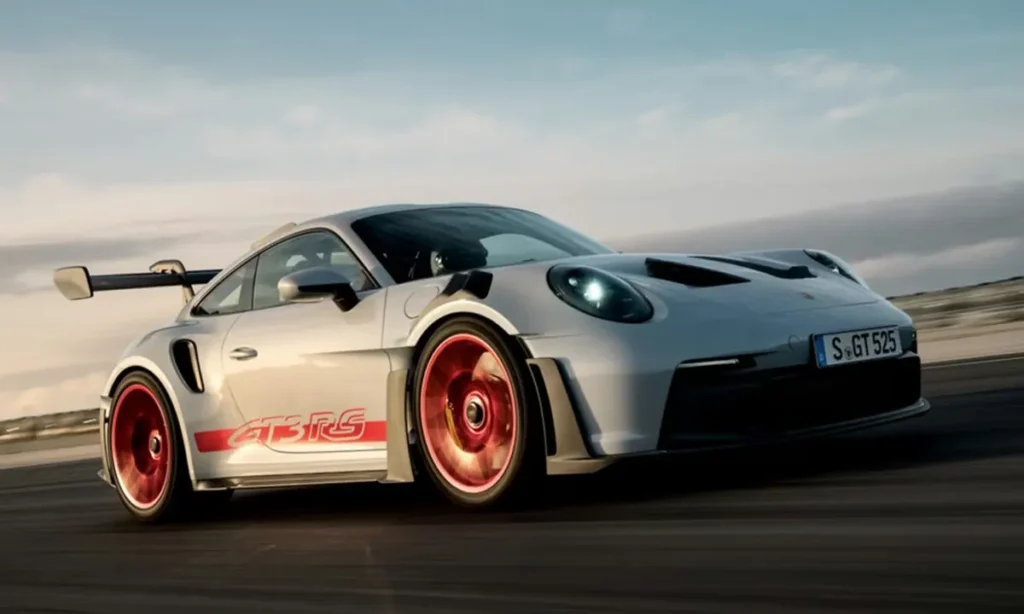
The exterior design of the 2025 Porsche 911 GT3 RS does not seek beauty in the conventional sense. It seeks downforce, cooling efficiency and aerodynamic balance with an absoluteness of purpose that makes the car immediately and unmistakably distinguishable from every other 911 variant in the range. To stand beside a GT3 RS is to understand, visually and intuitively, that this is a vehicle whose form was determined by engineering requirements rather than design studio preferences — and that understanding deepens profoundly when the specific function of each aerodynamic element is examined.
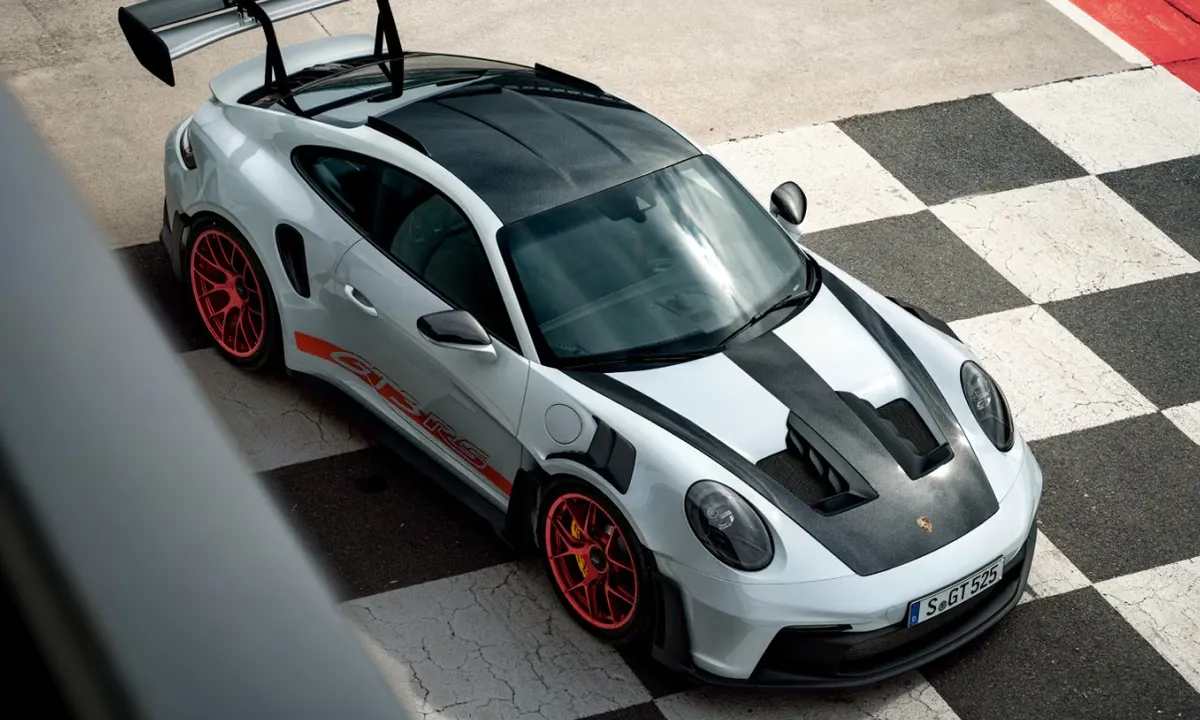
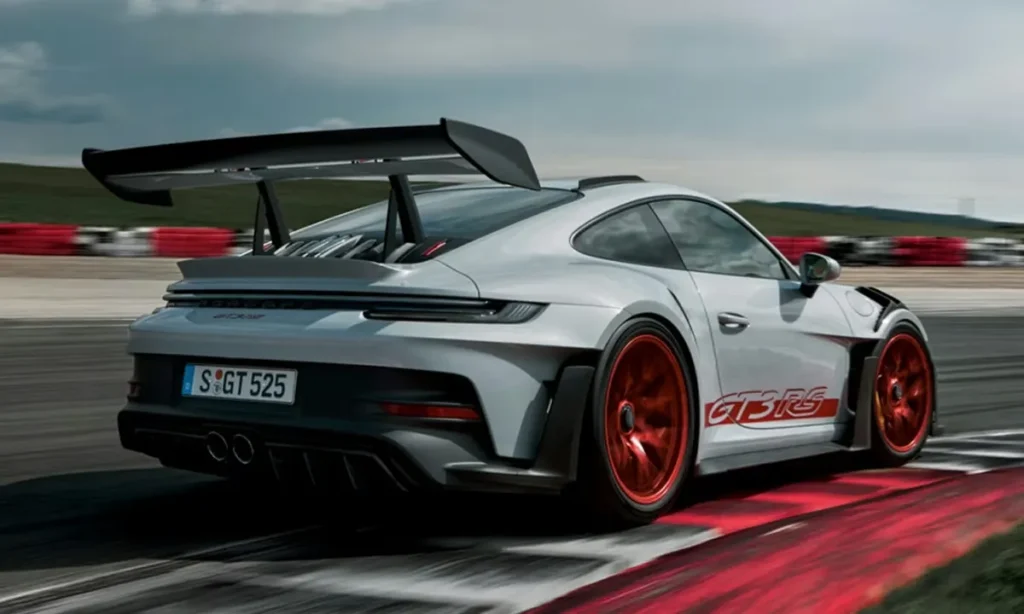
The most dramatic and most visually defining element of the GT3 RS is its fixed swan-neck rear wing — a massive biplane structure mounted on swan-neck supports that attach to the wing from above rather than below, a configuration that allows undisturbed airflow beneath the wing element to maximise its downforce generating efficiency. This wing is not a styling gesture. It is a precision aerodynamic component capable of generating levels of downforce that fundamentally alter the car’s high-speed dynamics, pressing the rear tyres onto the track surface with a force that increases rear grip and enables cornering speeds that would be impossible with conventional road car aerodynamics. The wing’s angle is adjustable across multiple positions, allowing drivers to configure the aerodynamic balance between maximum downforce for circuit driving and reduced drag for higher top speed on faster circuits.
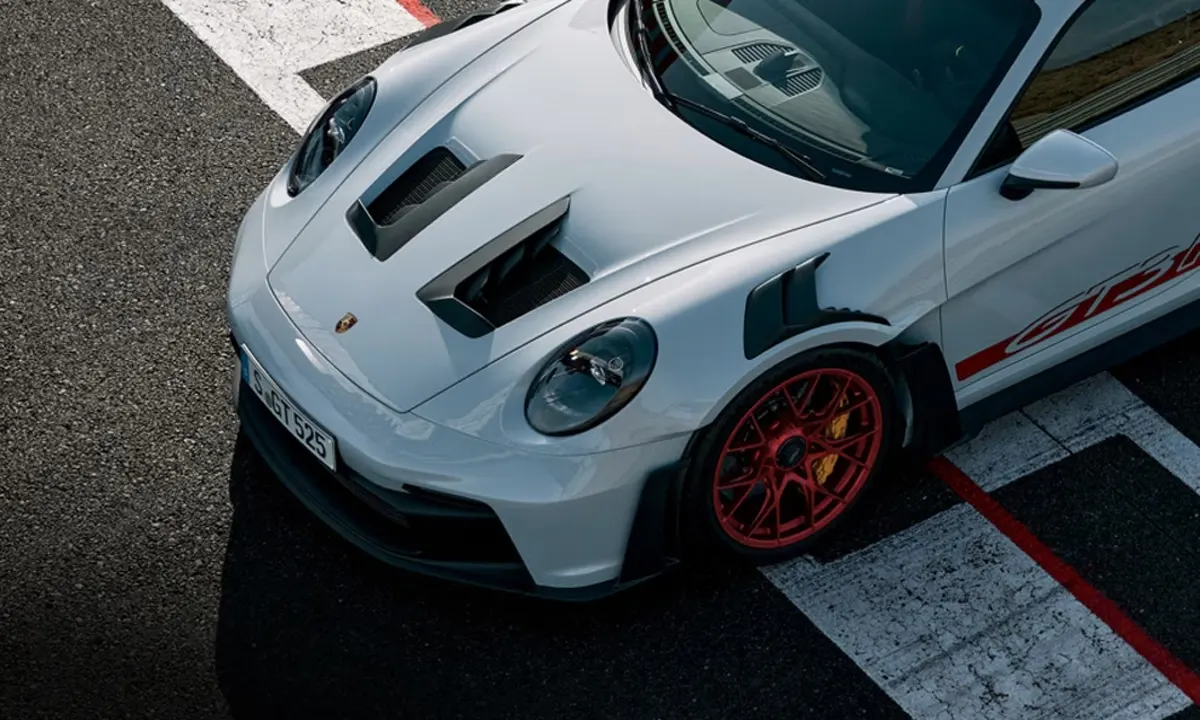
At the front, a prominent splitter manages airflow beneath the car and directs it through a set of front diffusers mounted within the wheel arches, while large front fender louvers vent the aerodynamically pressurised wheel arches to reduce lift and improve stability. The bonnet incorporates an additional air extraction outlet that serves both aerodynamic and thermal management functions. Large side intakes ahead of the rear wheels are significantly more prominent than those of the standard GT3, providing the increased airflow required by the RS’s more aggressively cooled powertrain and braking systems. The roof, bonnet, doors and front lid are constructed from carbon fibre reinforced plastic — an extensive use of lightweight composite material that reduces the car’s overall mass and concentrates weight savings in the locations most beneficial for dynamic balance. The Weissach Package, available as a factory option, adds further carbon fibre elements and magnesium wheel centres, reducing overall weight by approximately 33 pounds compared to the standard GT3 RS specification and bringing the car closer still to the GT3 Cup race car that shares its fundamental architecture.
The 9,000 RPM Flat-Six: Naturally Aspirated Perfection in a Turbocharged World
The engine at the centre of the 2025 Porsche 911 GT3 RS is a 4.0-litre naturally aspirated flat-six of the type that automotive enthusiasts have celebrated for decades — a high-revving, immediate-responding, mechanically pure powerplant of the kind that the automotive industry’s accelerating transition toward forced induction and electrification is rapidly making obsolete. In an era when turbocharging has become the dominant performance paradigm and electrification is reshaping every segment of the market, the GT3 RS’s refusal to compromise its naturally aspirated character reads as a principled and deeply consequential decision — one that Porsche Motorsport has made explicitly and consciously, understanding that the engine’s character is as important as its output figures.
This 3,996cc flat-six produces 518 horsepower at 8,500 rpm and 342 pound-feet of torque, numbers that are accompanied by a 9,000 rpm redline that represents the absolute upper limit of what naturally aspirated reciprocating engine technology can currently sustain in a road car context. The significance of that redline extends far beyond its numerical value. An engine that revs to 9,000 rpm with the willingness and mechanical precision of this flat-six delivers a sensory experience — of sound, of throttle response, of the physical sensation of revving through each gear — that is qualitatively different from any turbocharged engine, regardless of that turbocharged engine’s output figures. The power delivery is linear and continuous from idle to redline, with no hint of the surge that turbocharging introduces at boost onset and no attenuation of response at any point in the rev range. The throttle is directly, instantaneously connected to the combustion event in a manner that communicates the engine’s behaviour to the driver with a transparency and immediacy that has become extraordinarily rare.
The exhaust note that accompanies this engine’s progression from idle to the upper reaches of its rev range is one of the defining acoustic experiences available from any production vehicle currently sold. Beginning as a mechanical, purposeful idle and building through successive registers of intensity to a high-frequency, full-throated howl at the approach to the redline, it is the sound of precision mechanical engineering operating at the boundary of what naturally aspirated technology can achieve — and it is extraordinary. Porsche chose a lightweight stainless steel sport exhaust system with dual central black tailpipes, a configuration that optimises both the weight and the acoustic character of the exhaust in a manner that complements the engine’s mechanical song rather than suppressing or artificially amplifying it.
Power is managed exclusively through Porsche’s seven-speed PDK dual-clutch transmission — there is no manual gearbox option for the GT3 RS, a decision that reflects the reality that the PDK’s shift speed is simply too significant a dynamic advantage to sacrifice for manual engagement on a car of this track-focused intent. The PDK executes full-throttle upshifts in a matter of milliseconds, maintaining the engine’s acceleration continuity through gear changes in a manner that no mechanical manual gearbox can replicate, and the paddle-mounted gear selectors allow the driver to manage gearchanges with the immediacy and precision that the car’s character demands. Rear-wheel drive is the sole drivetrain configuration — a decision that reflects Porsche Motorsport’s commitment to delivering the purest possible driving experience and the highest possible reward for driver skill, placing the responsibility for managing 518 horsepower through two rear contact patches entirely and correctly in the hands of the person behind the wheel.
Active Aerodynamics and Dynamic Engineering at the Racing Limit
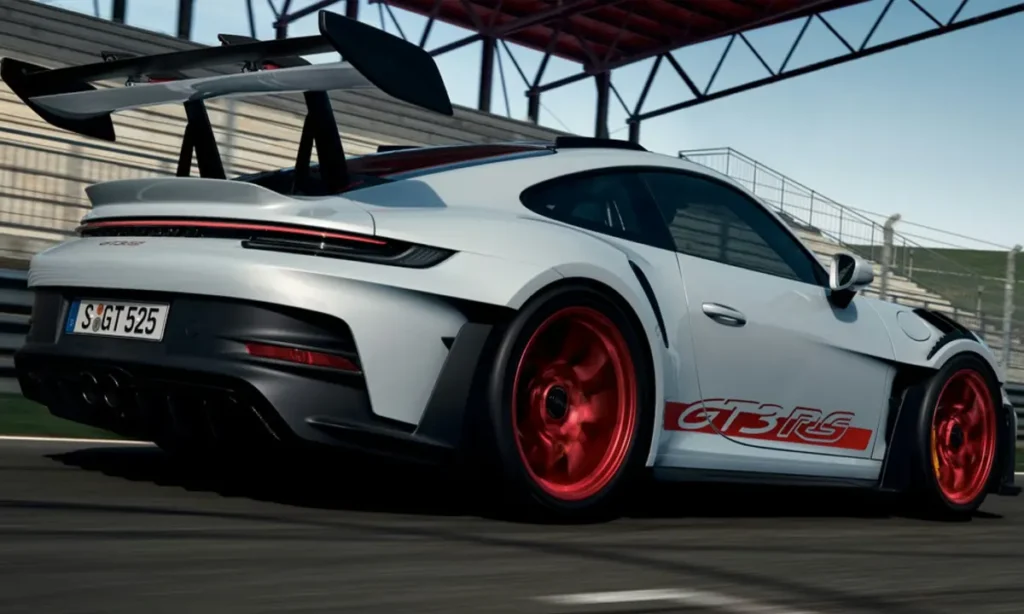
The 2025 Porsche 911 GT3 RS’s aerodynamic system extends far beyond the visual drama of its wing and splitter into a sophisticated active management system that continuously adjusts aerodynamic configurations to optimise downforce and drag balance across the full range of driving speeds and cornering situations. The Porsche Active Aerodynamics system manages multiple moveable aerodynamic elements simultaneously — adjusting the rear wing angle, the front spoiler lip extension and the position of the front diffuser blades in response to vehicle speed, lateral acceleration and driver inputs — to maintain optimal aerodynamic balance across conditions that change continuously and rapidly during circuit driving.
Under heavy braking, the front splitter extends and the rear wing increases its angle simultaneously, generating additional front and rear downforce during the braking zone to compress the tyres against the track surface and maximise braking force. In high-speed straight-line driving, the wing reduces its angle to lower drag and improve acceleration efficiency. In cornering, the system adjusts to maintain the ideal aerodynamic balance for the corner’s radius and speed. The integration of these adjustments occurs with complete transparency to the driver — the car simply behaves with greater composure, greater precision and greater confidence than passive aerodynamics would permit, without requiring any conscious management of the aerodynamic system by the driver.
The suspension system carries equal engineering ambition, with Porsche Active Suspension Management Sport dampers providing multi-level adjustment of both compression and rebound characteristics directly from the steering wheel — a functionality that allows the driver to configure the suspension character for road or circuit use without leaving the cockpit. The suspension geometry is fully adjustable for toe, camber, anti-roll bars and ride height, enabling precise configuration for specific circuit characteristics in a manner more commonly associated with dedicated race car preparation than road vehicle setup. Rear axle steering enhances agility at low speeds and stability at high speeds through variable rear wheel deflection that reduces the turning radius in low-speed manoeuvres while adding stability during high-speed cornering — a system that makes the GT3 RS feel significantly more manageable in tight environments than its track-focused character might suggest while simultaneously improving its high-speed cornering capability.
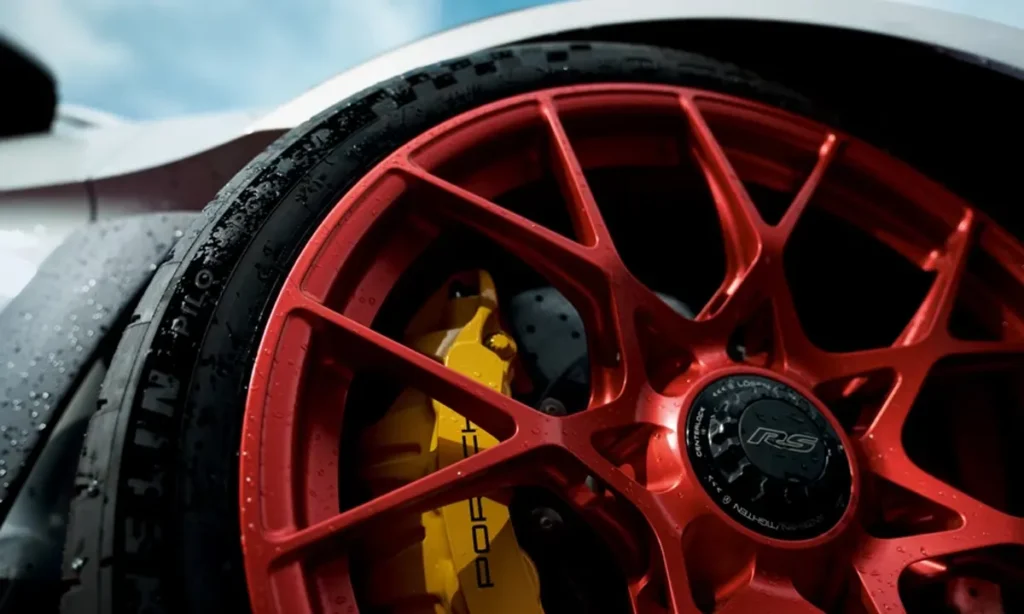
The braking system is one of the most capable fitted to any road car. Six-piston aluminium monobloc fixed calipers gripping 408mm internally vented and dimpled front discs, paired with four-piston aluminium monobloc calipers on 380mm rear discs, deliver stopping power of exceptional consistency and resistance to fade under the sustained thermal loads of repeated circuit braking. Porsche Carbon Ceramic Brake discs are available as a cost option — and for buyers intending regular track use, their dramatically reduced fade resistance and lower unsprung weight make them a highly advisable addition. The braking system’s pedal feel is progressive, firm and deeply communicative, providing the feedback that drivers at the limit require to brake as late and as deeply as the tyres and track conditions permit.
The Weissach Package: When Standard Is Not Extreme Enough
For buyers whose appetite for performance, lightness and racing intensity extends beyond what the already-extreme standard GT3 RS provides, the Weissach Package represents the factory-sanctioned path to a specification that approaches the GT3 Cup race car more closely than any other road-legal Porsche. The package takes its name from Porsche’s research and development centre in Weissach, Germany — the engineering facility where the GT3 RS was conceived and developed — and it brings a collection of weight-saving and performance-enhancing measures that collectively reduce the car’s mass by approximately 33 pounds.
The Weissach Package adds a carbon fibre rear roll cage, magnesium wheel centres replacing the standard aluminium items, carbon fibre anti-roll bars at both axles, exposed carbon fibre composite shear panels and a revised interior specification with carbon weave visible surfaces throughout the cabin. The exterior receives unique Weissach RS badging and the option of distinctive livery finishes that identify the specification visually. The steering wheel gains three additional mode switches that allow independent adjustment of rebound, compression, traction control sensitivity and differential behaviour without requiring the driver to remove their hands from the wheel — a functionality that is directly analogous to the steering wheel controls of a GT3 racing car. For buyers planning regular circuit events and track days, the Weissach Package represents the most complete and most uncompromising specification that the factory will produce for road registration — and it is, consequently, one of the most coveted optional packages available on any production sports car.
Interior: Function Over Comfort, Drama Over Luxury
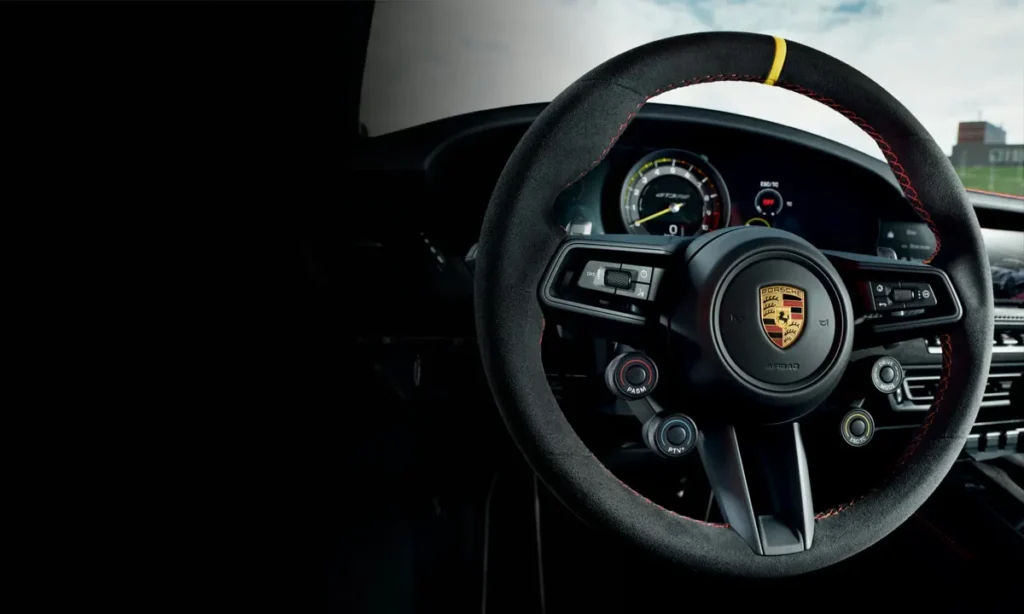
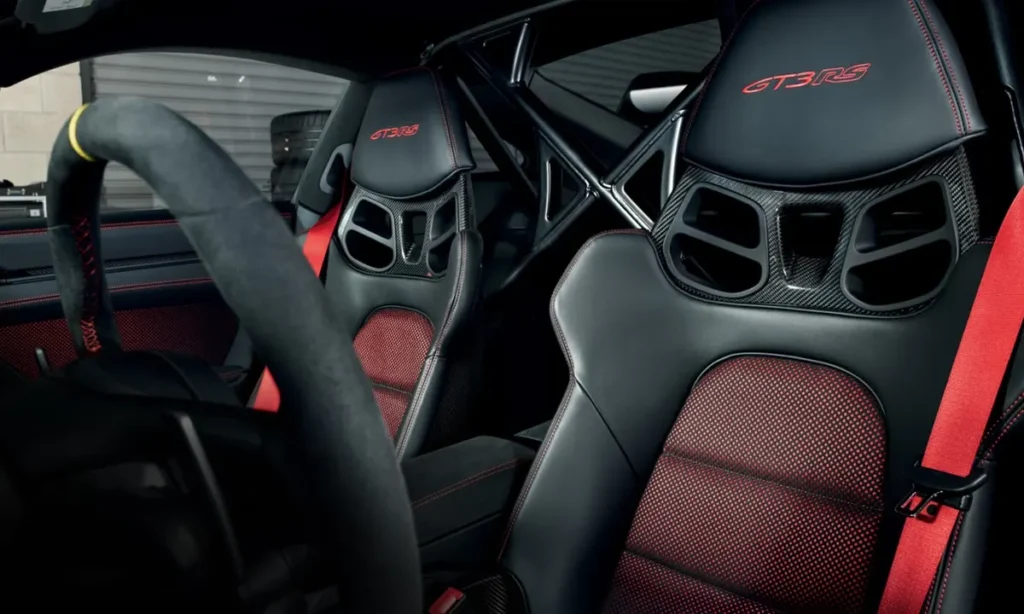
To open the door of a 2025 Porsche 911 GT3 RS and settle into the driver’s seat is to experience the most unambiguous and the most deliberate statement of purpose available in any road car currently in production. The door itself is a communication — the pull strap in place of a conventional door handle is not a styling exercise but a weight-saving measure, removing the mass and mechanism of a conventional door handle and replacing it with a functional alternative that eliminates unnecessary complexity. The bucket seats, constructed from carbon fibre reinforced plastic with Race-Tex centre inserts and perforated leather bolsters, are fixed structures that position the driver in a low, firm, race-car-appropriate seating position with integrated thorax airbags and the GT3 RS logo embroidered into the headrest fabric. They provide virtually no cushioning beyond what the seat structure itself offers — and that is entirely appropriate for a car whose dynamics demand that the driver feel every communication the chassis and tyres provide.
The steering wheel is a 360mm flat-bottom unit trimmed in leather and Race-Tex, incorporating the GT3 RS’s four-dial chassis setup interface that allows direct adjustment of suspension rebound, compression, traction control intervention level and differential locking character. The digital instrument cluster presents essential performance information — speed, gear, engine data, lap timing through the optional Sport Chrono Package — in a clean and readable format appropriate to a car that demands the driver’s complete attention be directed toward the road or circuit ahead. The central display provides access to navigation, media and vehicle information with a simplicity of operation that is appropriate to a car designed primarily for performance rather than technology demonstration.
Sound insulation has been systematically minimised throughout the GT3 RS cabin — a deliberate decision that ensures the flat-six’s mechanical symphony reaches the driver’s ears with the minimum of attenuation, creating an acoustic environment of extraordinary drama and intensity. Road noise, wind noise and mechanical sounds that would be considered unacceptable in any other 911 variant are not merely tolerated in the GT3 RS — they are an integral and intentional part of the car’s character, communicating the intensity of its operation to the driver in a direct and visceral manner. This is a car that talks constantly and insistently, demanding engagement and rewarding the attentive driver with information of real dynamic value.
Track Performance and Nürburgring Validation
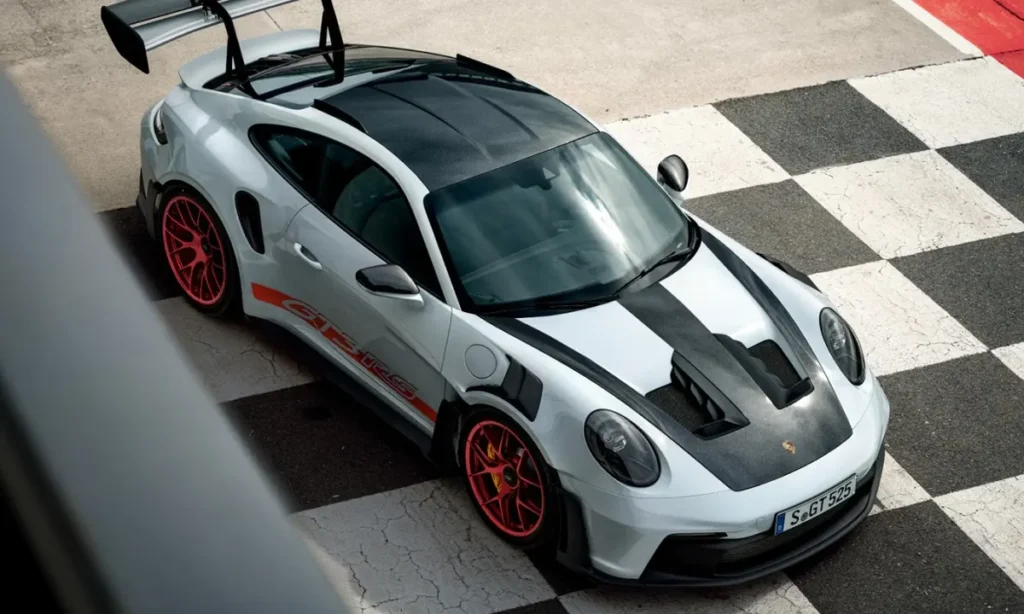
The 2025 Porsche 911 GT3 RS accelerates from zero to 60 miles per hour in 3.0 seconds and reaches a top speed of 184 miles per hour — performance figures that are respectable but that tell only a partial story of what the car can actually do. The GT3 RS’s true performance domain is not straight-line acceleration but sustained, high-load cornering at speeds that demand everything the car’s aerodynamics, tyres, suspension and brakes can collectively provide. The car’s Nürburgring Nordschleife lap time of 6:44.84 is the number that most accurately reflects its dynamic capability — a benchmark that places it among the fastest road-legal cars ever to complete the world’s most demanding and most respected circuit, surpassed only by turbocharged hypercars and dedicated track-day specials costing multiples of the GT3 RS’s price.
This lap time was achieved on road-legal Michelin Pilot Sport Cup 2R tyres — a specification that is available to any owner who purchases the car and selects the appropriate tyre option — meaning that the Nürburgring performance is reproducible by any GT3 RS owner who develops the skill and the track knowledge to approach the car’s dynamic limits with appropriate respect and patience. That accessibility of genuine, validated high performance is one of the GT3 RS’s most significant and most frequently cited qualities — and it is one that distinguishes Porsche’s approach to track-capable road cars from that of virtually every other manufacturer currently producing vehicles in this category.
A Road Car That Exists at the Racing Boundary
The 2025 Porsche 911 GT3 RS is not a car for everyone, and it makes no attempt to be. It is too loud, too firm, too aerodynamically dramatic and too single-mindedly focused on dynamic performance to function as a comfortable daily driver or a practical long-distance tourer. Its value proposition is entirely concentrated in the quality and intensity of the experience it delivers in its natural environment — on a racing circuit or a challenging mountain road — and in that environment, it is without peer at its price point. For drivers who understand what it is, who have the skill and the opportunity to use it appropriately and who are prepared to accept its considerable compromises in exchange for its extraordinary rewards, the 2025 Porsche 911 GT3 RS represents the closest approximation to a genuine racing car that the public road will currently permit — and that is a genuinely rare and genuinely precious thing.
Read: 2026 Lexus ES Is Fully Electrified, Dramatically Redesigned and the Best ES Ever Built
2025 Porsche 911 GT3 RS – Specifications & Performance Chart
| Category | Specification |
| Vehicle Type | Rear-Engine, Rear-Wheel Drive Sports Coupe |
| Engine | 4.0-Litre Naturally Aspirated Flat-Six (Boxer) |
| Displacement | 3,996cc |
| Horsepower | 518 hp @ 8,500 rpm |
| Torque | 342 lb-ft |
| Redline | 9,000 rpm |
| Transmission | 7-Speed PDK Dual-Clutch (Exclusive) |
| Drivetrain | Rear-Wheel Drive |
| 0–60 mph | 3.0 Seconds |
| Top Speed | 184 mph |
| Nürburgring Lap Time | 6:44.84 (Production 911 Record) |
| Aerodynamics | Active Porsche Active Aerodynamics (PAA) System |
| Rear Wing | Fixed Swan-Neck Biplane Wing (Adjustable Angle) |
| Front Suspension | Double-Wishbone with PASM Sport Adaptive Dampers |
| Rear Suspension | Multi-Link with Rear Axle Steering |
| Ride Height | Approx. 20mm Lower Than 911 Carrera |
| Suspension Adjustability | Toe, Camber, Anti-Roll Bars, Ride Height |
| Front Brakes | 6-Piston Monobloc / 408mm Vented Discs |
| Rear Brakes | 4-Piston Monobloc / 380mm Vented Discs |
| Brake Caliper Finish | Red (Standard) |
| Front Wheels | 20-Inch Forged Aluminium Centre-Lock |
| Rear Wheels | 21-Inch Forged Aluminium Centre-Lock |
| Tyres | Michelin Pilot Sport Cup 2R (Standard) |
| Body Materials | CFRP Doors, Bonnet, Roof, Front Lid |
| Seats | Carbon Fibre Reinforced Bucket Seats (CFRP) |
| Weight Reduction (Weissach Pkg) | Approx. 33 lbs vs Standard GT3 RS |
| Exhaust | Stainless Steel Sport / Dual Central Black Tailpipes |
| Fuel Economy | 15 MPG City / 19 MPG Highway |
| Starting MSRP (US) | $241,300 (incl. destination) |
| Warranty | 4-Year / 50,000-Mile Bumper-to-Bumper |
| Assembly | Stuttgart-Zuffenhausen, Germany |