2026 Fiat 500 Hybrid Is The Charming City Car Returns to Petrol With Italian Flair, Urban Efficiency and Timeless Style
A 64-Horsepower 1.0-Litre Mild-Hybrid FireFly Engine, Six-Speed Manual Gearbox, 53 MPG Official Economy, 10.25-Inch Uconnect 5 Touchscreen and Sub-£19,000 Pricing Make the Iconic Fiat Cinquecento a City Car Worth Celebrating All Over Again
There are very few automobiles in the history of the European city car market that carry the emotional weight, the cultural identity and the generational loyalty of the Fiat 500. Since the original Nuova 500 appeared on Italian streets in 1957 as a symbol of post-war optimism, personal freedom and accessible mobility, the cinquecento has represented something that most city cars cannot aspire to — a genuine emotional connection between car and owner that transcends the purely functional relationship most small vehicles cultivate. The third-generation 500, relaunched in 2007 with a retro-modern design that captured the spirit of the original without slavishly reproducing it, sold in enormous volumes across European markets for seventeen years and accumulated one of the most devoted owner communities of any small car in the modern automotive era. When Fiat discontinued petrol power entirely in August 2024 and committed to the 500e as the sole available model, the brand’s leadership believed the all-electric future was sufficiently established to sustain the 500’s commercial momentum. What followed was, by the frank and honest admission of Fiat’s own senior management, one of the most commercially painful miscalculations in the brand’s recent history.
Gallery: 2026 Fiat 500 Hybrid
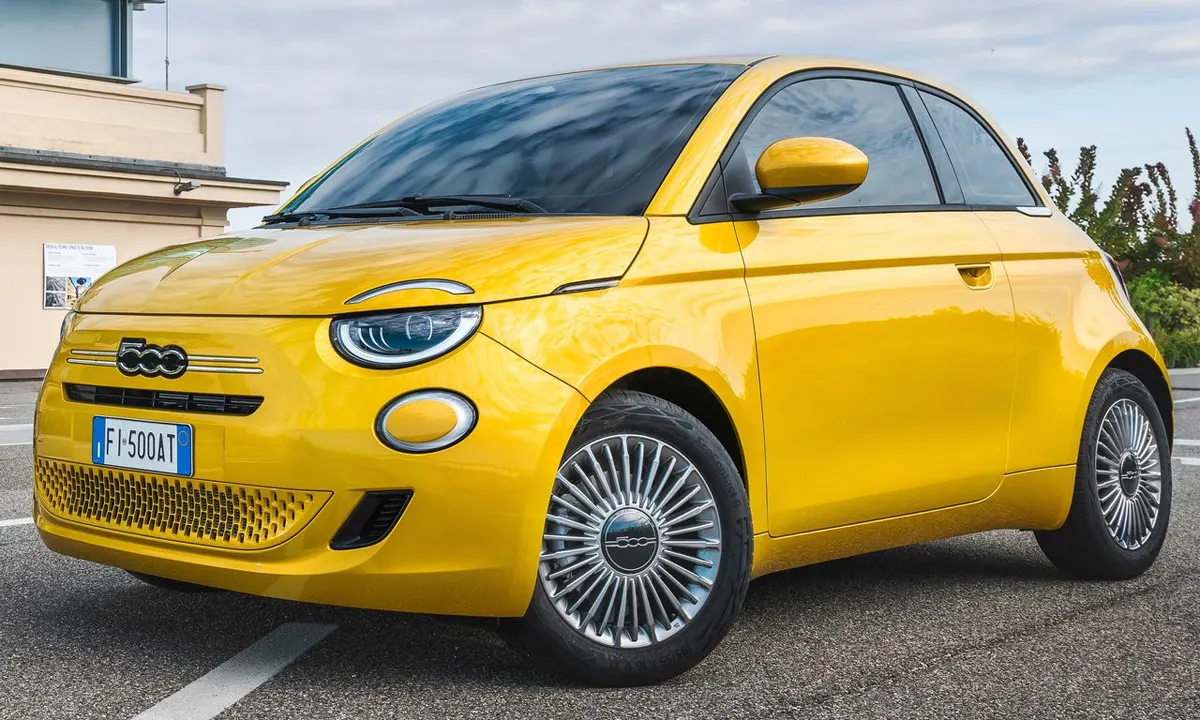
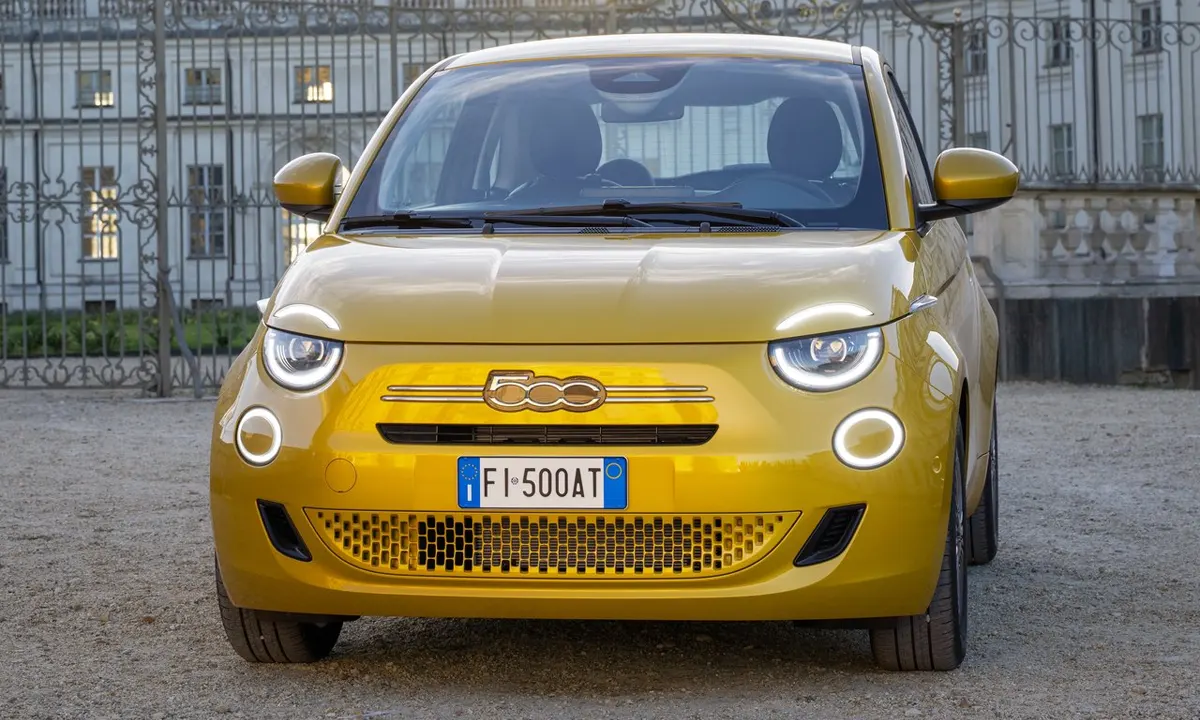
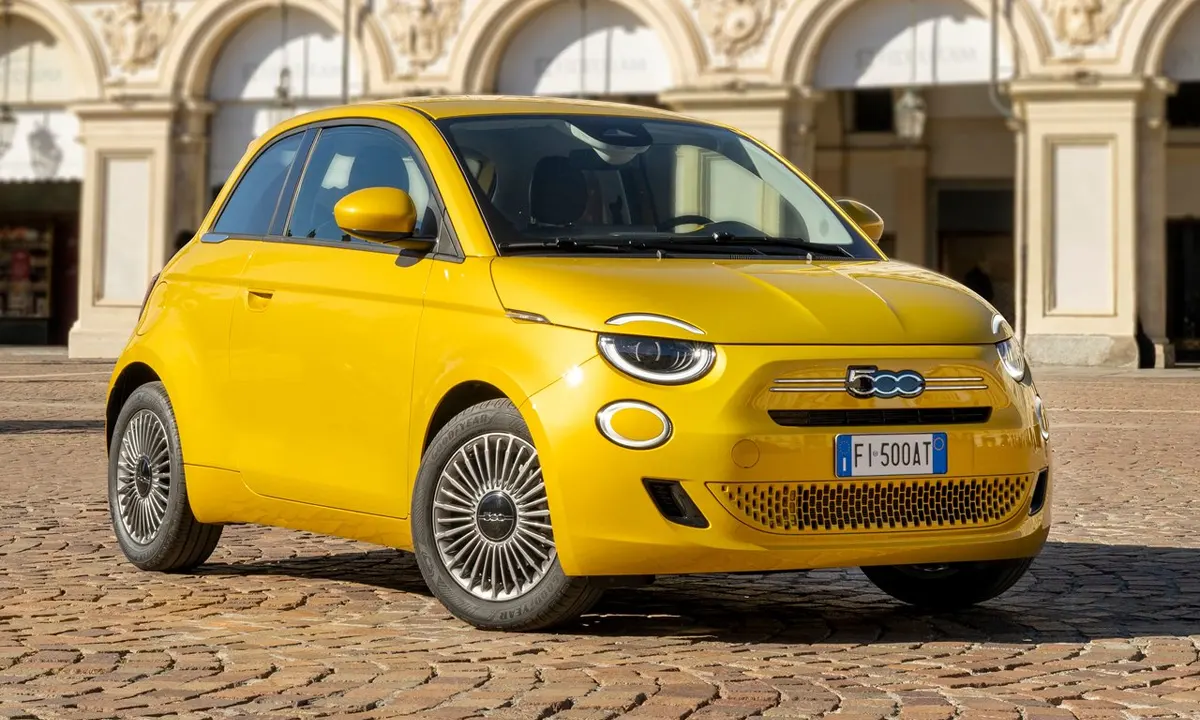
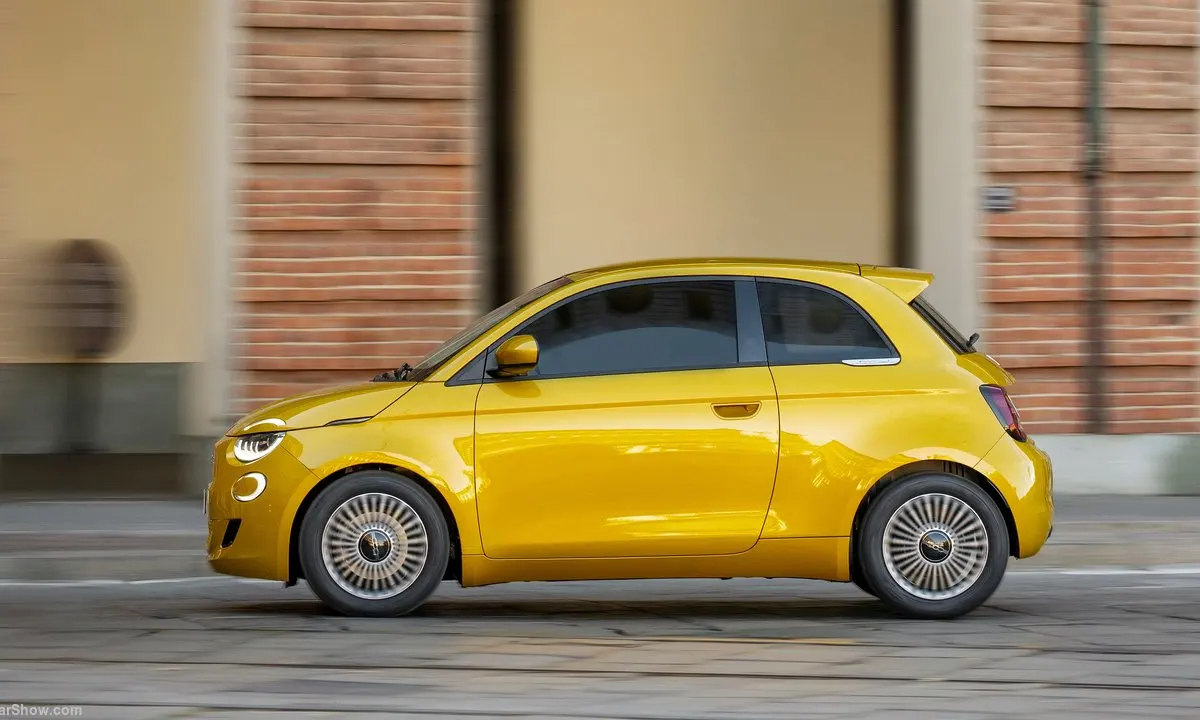
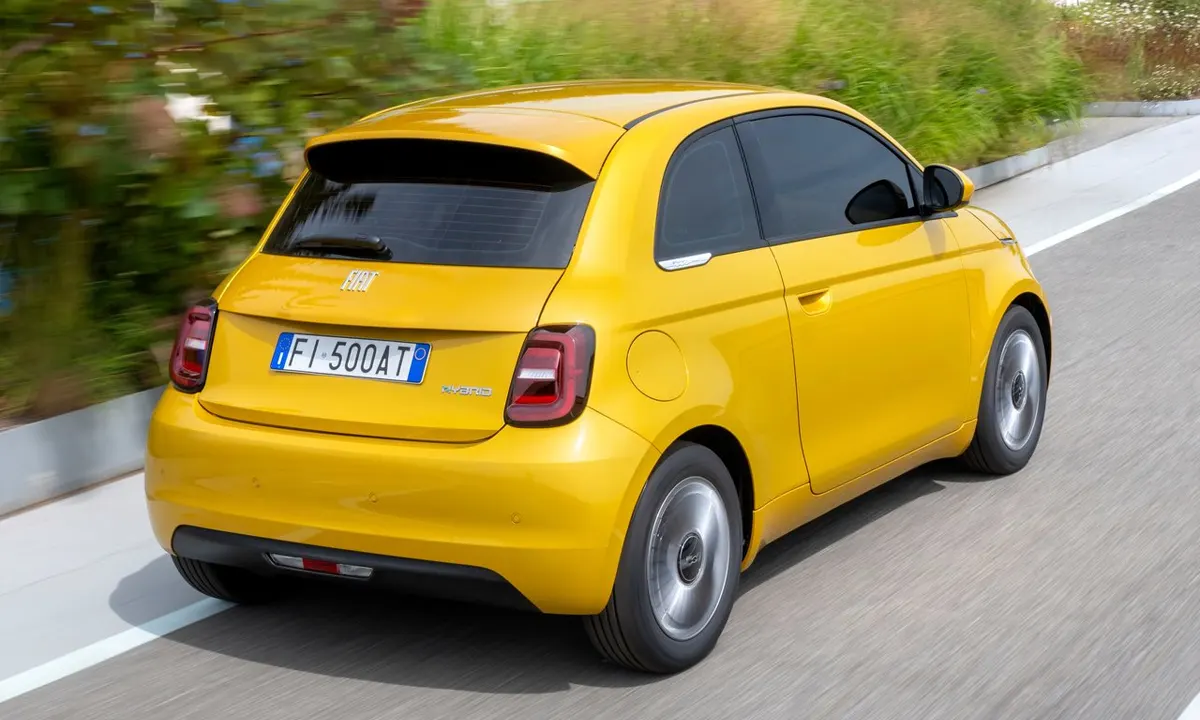
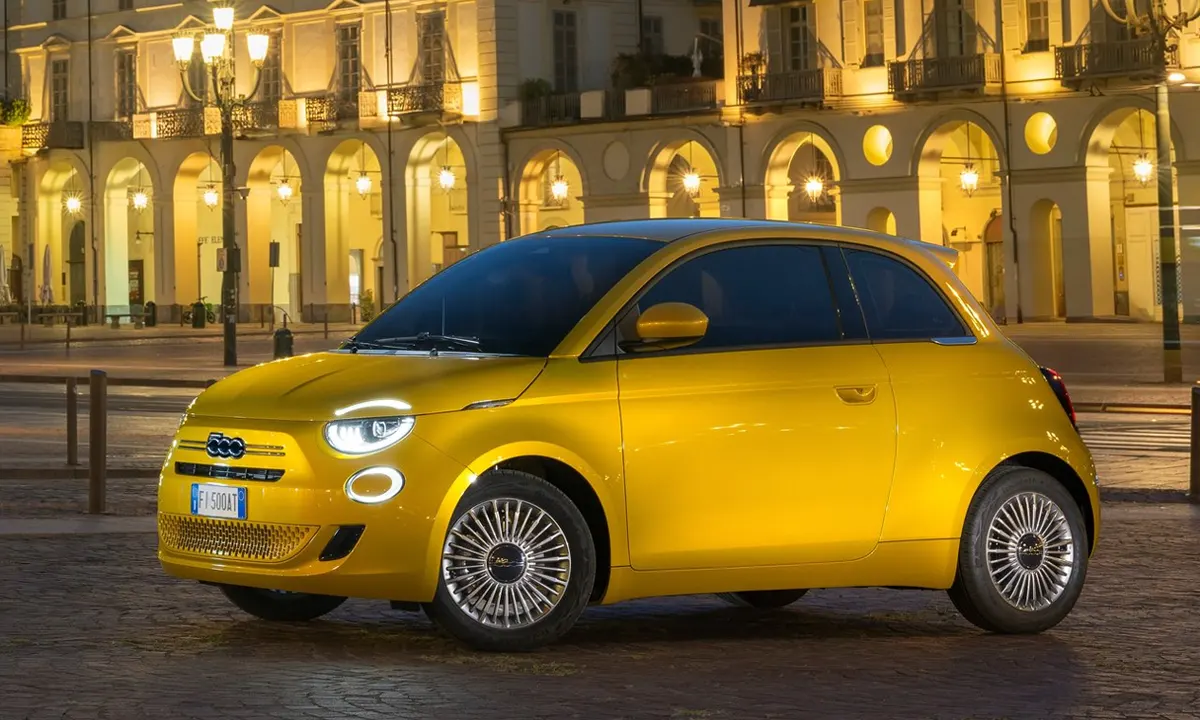
Sales of the 500e declined by 40 percent in the first quarter of 2025 alone. The Mirafiori plant in Turin — Fiat’s most historically significant and symbolically important manufacturing facility — was forced to idle for months, producing no vehicles and furloughing workers while dealers processed their surplus of unsold electric models. In a moment of remarkable candour, Fiat’s European chief executive described the all-electric-only strategy as commercial suicide. The response was swift, decisive and unprecedented in automotive engineering terms — Fiat converted a vehicle designed from its fundamental architecture as a pure electric car into a petrol mild-hybrid model in a development programme of remarkable speed and determination. The result is the 2026 Fiat 500 Hybrid — a car that Fiat itself acknowledges should probably have been developed alongside the 500e from the beginning, and one whose arrival has been greeted with genuine enthusiasm by the hundreds of thousands of traditional 500 buyers who were never willing or able to make the full electric transition. Starting from approximately £18,995 in the United Kingdom and from €17,000 in key European markets, the 500 Hybrid returns the world’s most charming city car to a powertrain format that the majority of its natural buyers can live with every day — and it does so without sacrificing a single element of the design, the character or the personality that made the 500 so universally and so enduringly beloved in the first place.
A Design That Age Cannot Diminish and Fashion Cannot Reduce
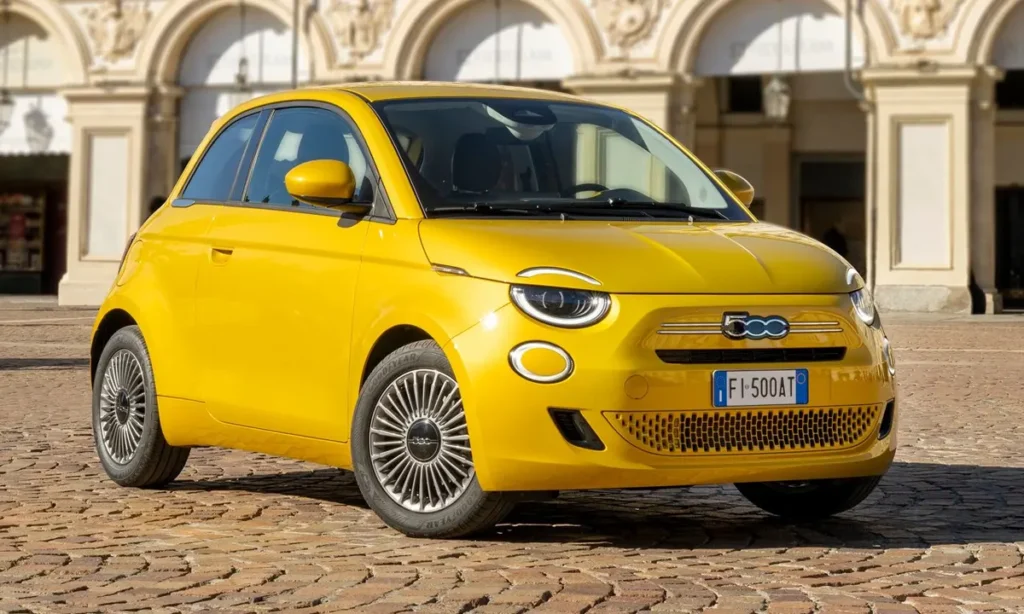
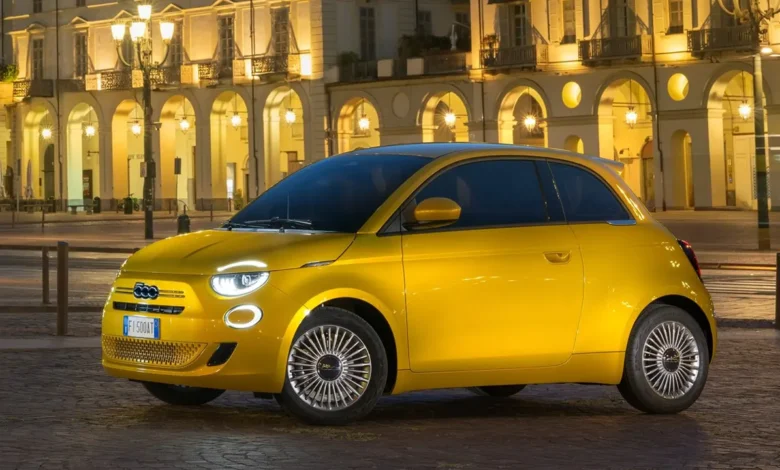
The exterior of the 2026 Fiat 500 Hybrid is, with one modest but meaningful addition, essentially identical to the 500e that preceded it — and that is not a criticism but one of the most straightforward compliments available to make about any automotive design in the current market. The contemporary 500’s silhouette is one of the most successfully resolved city car designs produced since the turn of the millennium, combining the fundamental proportional language of the 1957 original — a compact, rounded, confident form whose visual cheerfulness is inseparable from its dimensional honesty — with the detail sophistication and surface quality of a genuinely modern automobile. It manages to feel simultaneously retro and contemporary, nostalgic and fresh, instantly recognisable and never derivative — a combination of design qualities that no amount of contemporary automotive styling resource can manufacture without the foundation of a genuinely great original to reference.
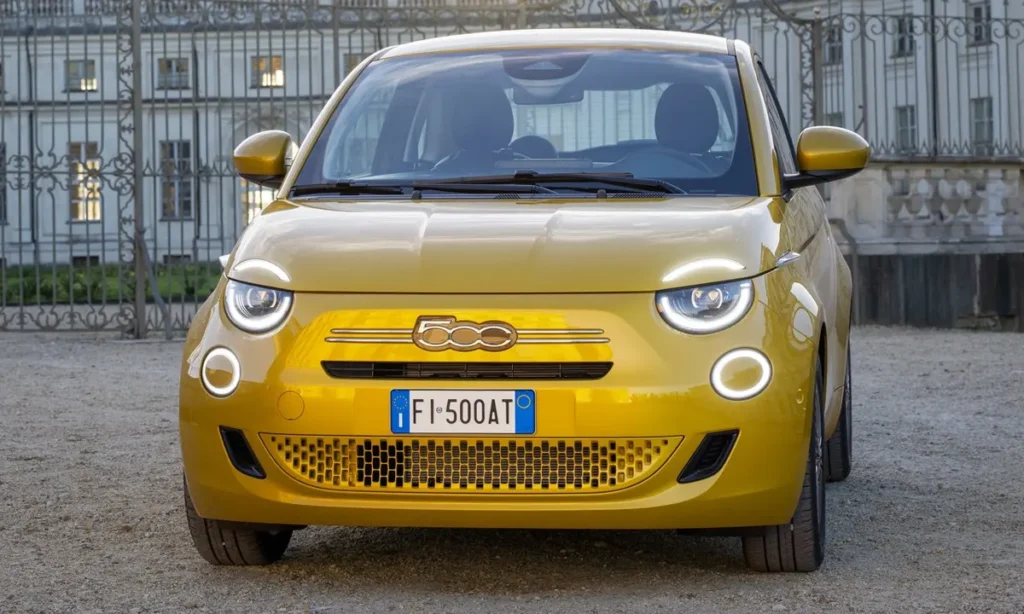
The single visual distinction between the 500 Hybrid and its electric sibling is the addition of a small grille opening — described with characteristic Italian charm by Fiat’s designers as a moustache — positioned in the lower front fascia to provide the combustion engine with the cooling airflow it requires. This grille is modest in its proportions, well-integrated into the front design’s rounded character and entirely without the visual aggression that traditional combustion car grilles often carry. It is a practical addition that the car’s fundamental character absorbs without complaint, and in most lighting conditions and at any reasonable distance, the 500 Hybrid is visually indistinguishable from the 500e. The fuel filler flap, positioned on the driver’s side where the 500e’s charging port is located, completes the conversion’s physical signature — an elegant detail that reflects the engineering team’s determination to maintain visual coherence between the two models wherever the engineering constraints permitted.
Seven exterior colours are available across the 500 Hybrid range — Ice White, Onyx Black and Passione Red in solid finishes, alongside Celestial Blue, Ocean Green, Rose Gold and Sun of Italy Yellow in metallic options. The colour palette is one of the 500’s most enduring commercial strengths, providing buyers with genuine chromatic expression in a segment where colour has long been one of the primary purchase decision factors. The brighter options — particularly Sun of Italy Yellow and Passione Red — transform the 500 Hybrid into a genuinely joyful urban presence, while the more restrained tones of Celestial Blue and Ocean Green offer a sophistication appropriate to buyers who prefer their personality communicated more subtly. Standard 16-inch alloy wheels are fitted on Icon trim, while the range-topping La Prima upgrades to 17-inch alloys — a size that gives the upper-specification 500 a road presence that its compact dimensions alone cannot achieve and that rewards buyers willing to invest in the additional specification with a visually more impactful car.
The FireFly Mild-Hybrid: Honesty, Character and Urban Competence
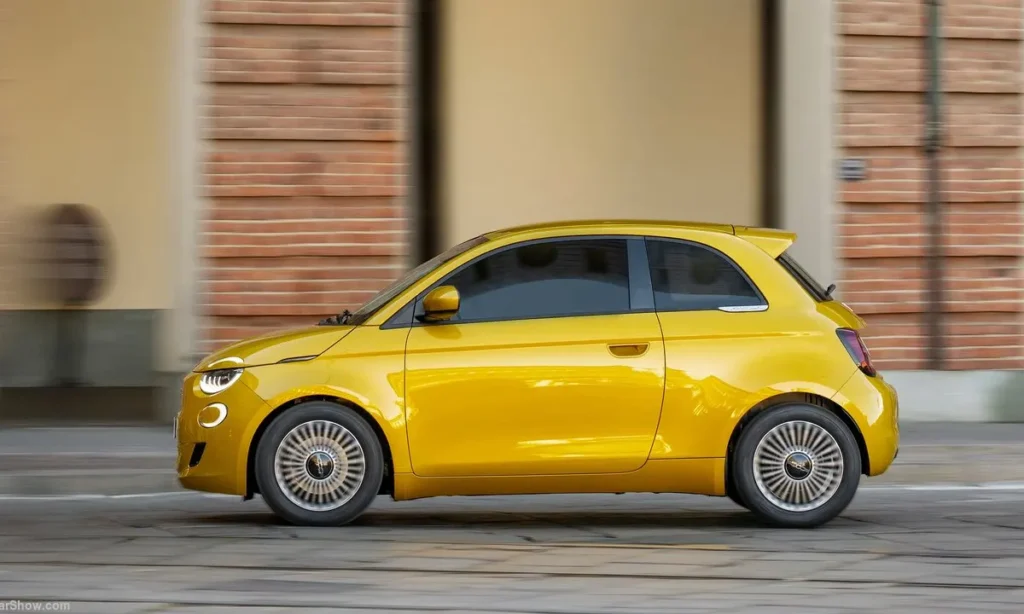
The powertrain at the heart of the 2026 Fiat 500 Hybrid is the 1.0-litre three-cylinder FireFly mild-hybrid engine — a unit transplanted from the Italian-market Pandina city car and adapted for installation within the 500e’s bodyshell in a process that Fiat’s engineering team completed with a speed and pragmatism that reflects the commercial urgency the project carried. It produces 64 horsepower and 68 pound-feet of torque, assisted by a 12-volt starter-generator that provides a modest degree of electrical energy recuperation during deceleration and a small contribution of additional torque during acceleration from rest — sufficient to smooth the engine’s low-speed character without meaningfully altering its fundamental performance character in the manner that more sophisticated belt-integrated starter-generator systems achieve on more expensive vehicles. The six-speed manual gearbox that transmits power to the front wheels is the sole transmission option — Fiat concluded that developing an automatic transmission for this application would have been prohibitively expensive for a vehicle at this price point, and buyers who require automatic convenience are directed toward the 500e.
The performance figures require honest assessment rather than promotional qualification. The official zero to 62 miles per hour time of 16.2 seconds is not a number that any car at this price could be described as proud of in 2026 — the Toyota Aygo X’s 114-horsepower hybrid system dispatches the same benchmark in under 10 seconds, and even the Kia Picanto’s modest naturally aspirated engine offers considerably more responsive urban performance. The Fiat 500 Hybrid is demonstrably, measurably and unambiguously not a quick car by any modern standard. However, the urban driving context for which the 500 Hybrid has been explicitly and unambiguously designed requires something rather different from outright acceleration capability than the zero to 62 figure implies. In city traffic — accelerating from rest to 30 miles per hour, maintaining flow between junctions and filtering through congestion with the nimble, compact dimensions that the 500’s footprint enables — the mild-hybrid powertrain provides adequate responsiveness that the majority of urban drivers, particularly those whose previous experience includes the original petrol 500’s similarly modest performance credentials, will find entirely livable and occasionally characterful. At motorway speeds, the engine is strained and somewhat vocal — a characteristic that several independent reviewers noted as a genuine limitation for drivers who regularly use the 500 for longer journeys beyond its intended urban environment.
The fuel economy figures are the powertrain’s most straightforwardly impressive credentials. An official WLTP figure of 53 to 54 miles per gallon represents genuine running cost efficiency in the context of the city car segment, and independent road test results from multiple European publications have confirmed figures consistently falling between 42 and 50 miles per gallon in mixed driving conditions — with the higher end of that range achievable during steady motorway cruising and the lower end reflecting more spirited urban use. These figures translate to genuinely low fuel costs in the driving environment for which the 500 Hybrid is designed, and they compare favourably with all city car rivals except the Toyota Aygo X’s considerably more sophisticated full-hybrid system. Real-world fuel costs for a driver covering 8,000 miles annually in typical urban conditions — a reasonable estimate of the average 500 Hybrid owner’s annual mileage — will be meaningfully lower than those of a comparable naturally aspirated city car and dramatically lower than the charging costs of the 500e for any owner without convenient access to home charging infrastructure.
Chassis, Handling and the Art of Urban Agility
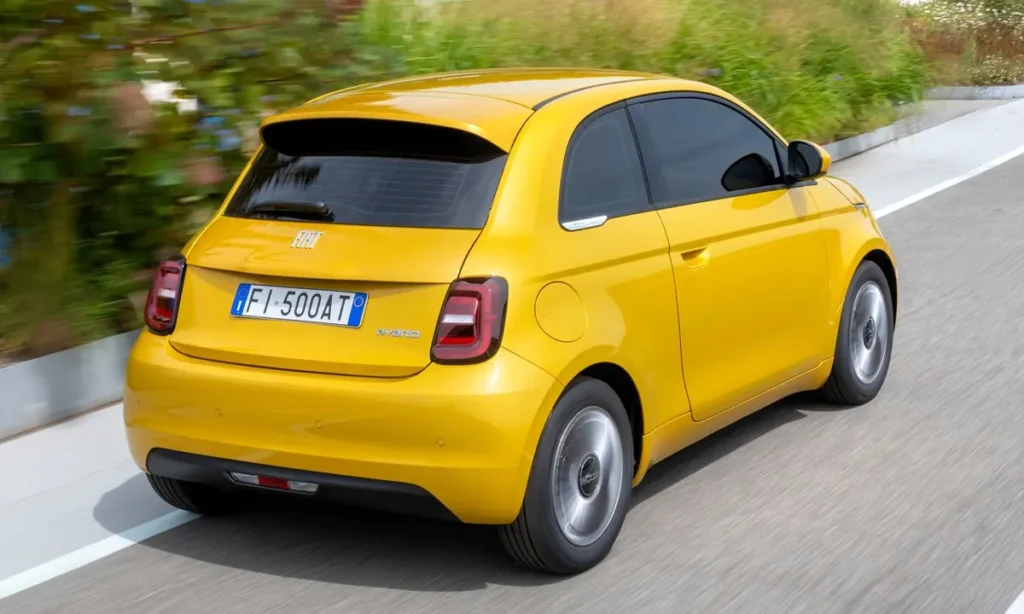
The 2026 Fiat 500 Hybrid inherits the chassis architecture of the 500e entirely unchanged — and given that the electric model’s platform was designed from inception as a dedicated electric architecture rather than a conversion of a pre-existing combustion chassis, the engineering challenge of integrating a combustion engine and its associated cooling, exhaust and fuel systems within this package was considerably greater than it would have been in a conventional conversion programme. Fiat’s engineers resolved these packaging challenges with commendable effectiveness, and the result is a car that drives with the same fundamental urban character as its electric counterpart — light, agile, easy to place with precision in tight urban spaces and genuinely enjoyable to manoeuvre through the kind of dense city traffic for which it was conceived.
The steering is light and direct — appropriately so for a city car whose primary operational environment involves frequent direction changes, tight turning radii and the kind of low-speed manoeuvring that demands minimal steering effort. The 500 Hybrid sits its occupants noticeably higher and more upright than many city car rivals, a characteristic inherited from the 500e’s body structure that provides excellent forward visibility and a commanding sense of the car’s relationship to surrounding traffic that urban drivers consistently value. Ride quality over the varied and often deteriorated surfaces of European city roads is compliant and comfortable — the suspension absorbs the sharp-edged imperfections of urban infrastructure with a smoothness that reflects the 500e platform’s attention to ride quality as a quality measure — and the car’s compact dimensions mean that parking, lane filtering and general urban navigation involve none of the anxiety that larger vehicles impose on city drivers. On motorway journeys, the light body structure and the relatively modest aerodynamic development of the 500’s rounded silhouette introduce wind noise at speeds above 60 miles per hour at a level that several reviewers found notable — a characteristic that becomes more relevant as journey distance increases and that reinforces the 500 Hybrid’s essential identity as a city car rather than a long-distance tourer.
An Interior of Charm, Colour and Contemporary Convenience
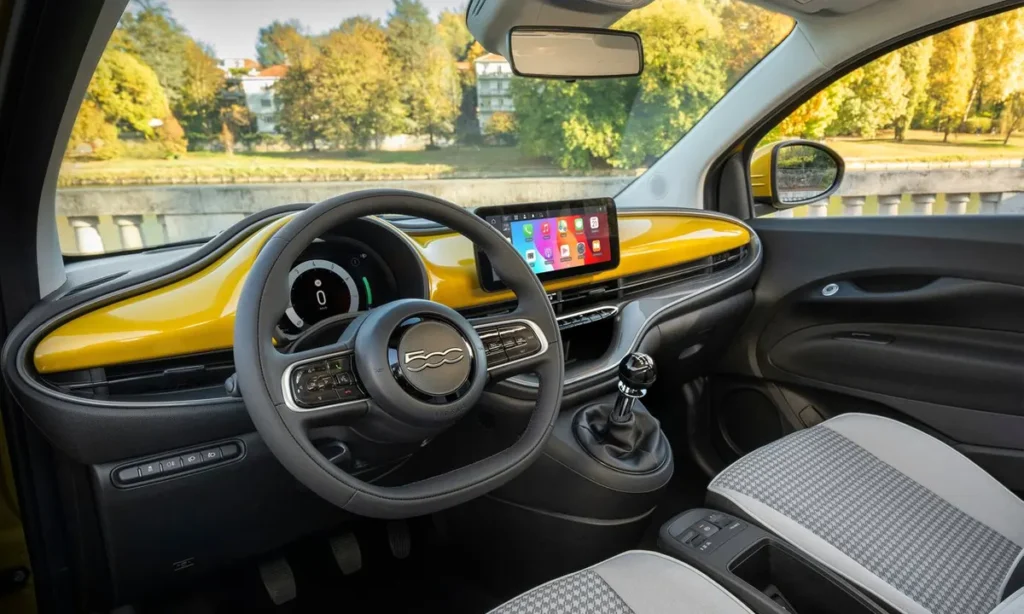
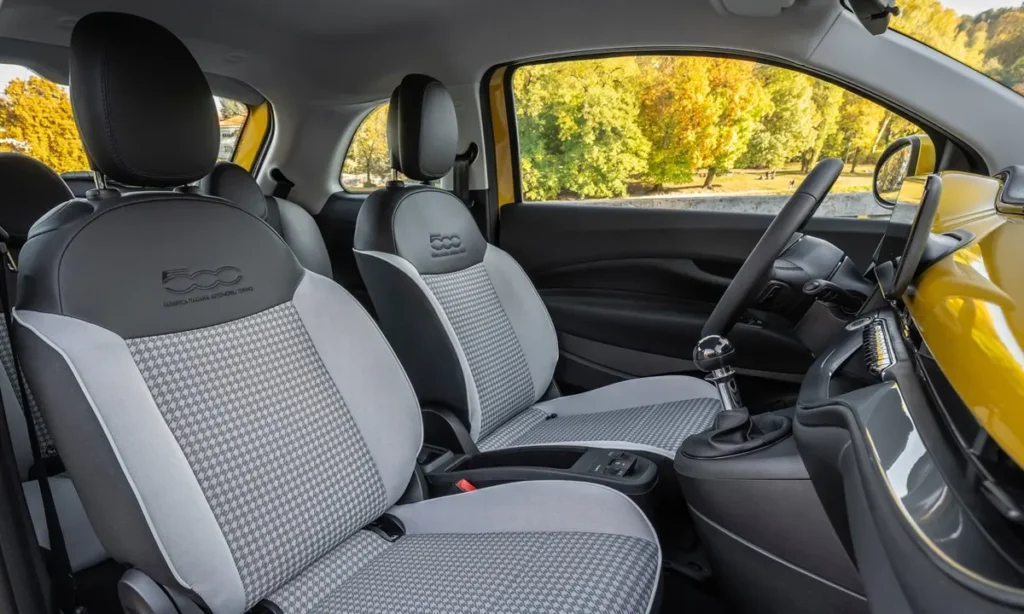
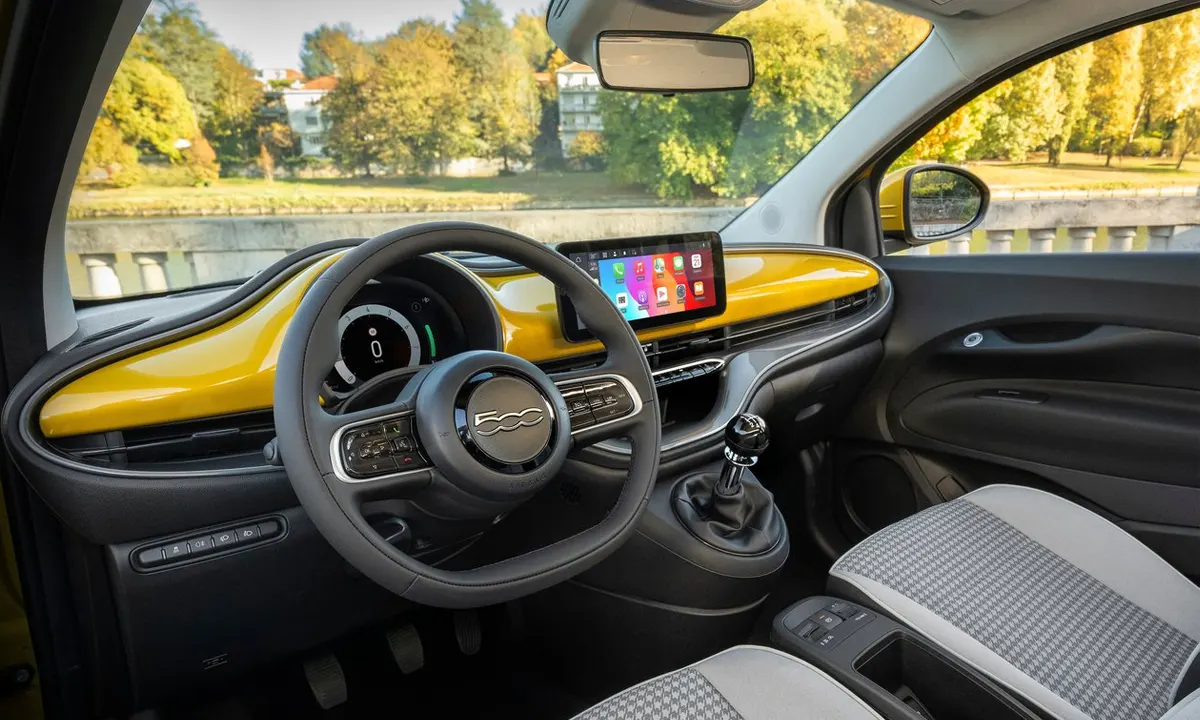
The cabin of the 2026 Fiat 500 Hybrid is one of the most genuinely charming and most consistently appealing interiors available in the city car segment — a space whose retro-modern design language, body-coloured dashboard trim and carefully chosen details create a sense of occasion and personalisation that cars at this price point very rarely achieve. The design is closely related to the 500e’s interior, differing primarily in the addition of a conventional gear lever and the repositioned controls necessary to accommodate the manual transmission — changes that the dashboard’s fundamental architecture absorbs without significantly disrupting the visual coherence of the cabin’s design. The body-coloured dashboard trim panel that is standard across all variants directly reflects the exterior colour chosen, ensuring that the interior carries the same chromatic personality as the car’s exterior and creating a cohesiveness of visual identity between inside and outside that is one of the 500’s most distinctive and most commercially effective design decisions.
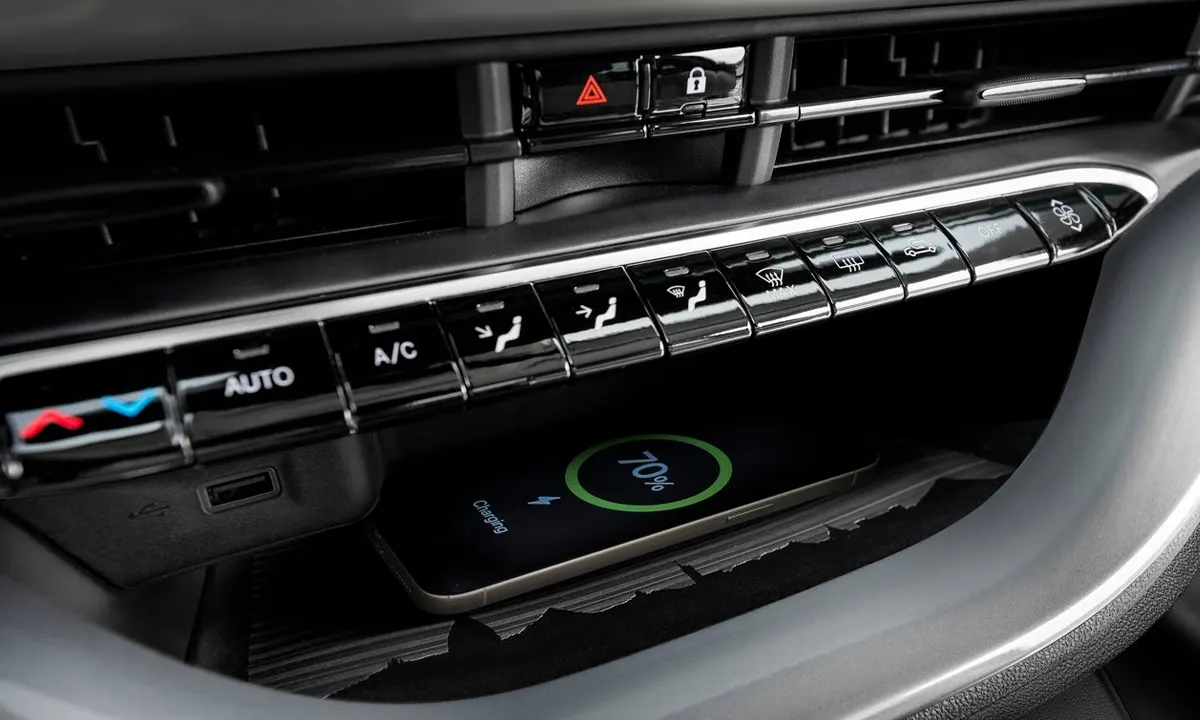
The infotainment system centres on a 10.25-inch Uconnect 5 touchscreen — one of the more capable and more visually impressive systems available in this segment — running software that represents a significant generational improvement over the previous petrol 500’s infotainment provision. Wireless Apple CarPlay and Android Auto are standard across all variants, and the system’s menu structure and response speed are well-calibrated for a city car’s typical usage patterns. A seven-inch digital driver’s display behind the steering wheel presents essential vehicle information with the clarity and legibility appropriate to urban driving. Physical piano-key controls for the air conditioning system, positioned immediately below the central air vents, allow climate adjustment without requiring interaction with the touchscreen — a pragmatic decision that reflects genuine understanding of how drivers use in-car technology during the stop-and-go rhythms of city driving. The overall infotainment quality is meaningfully above what the 500 Hybrid’s price point and city car segment position would conventionally suggest, reflecting the benefit of inheriting software and display hardware developed for the considerably more expensive 500e.
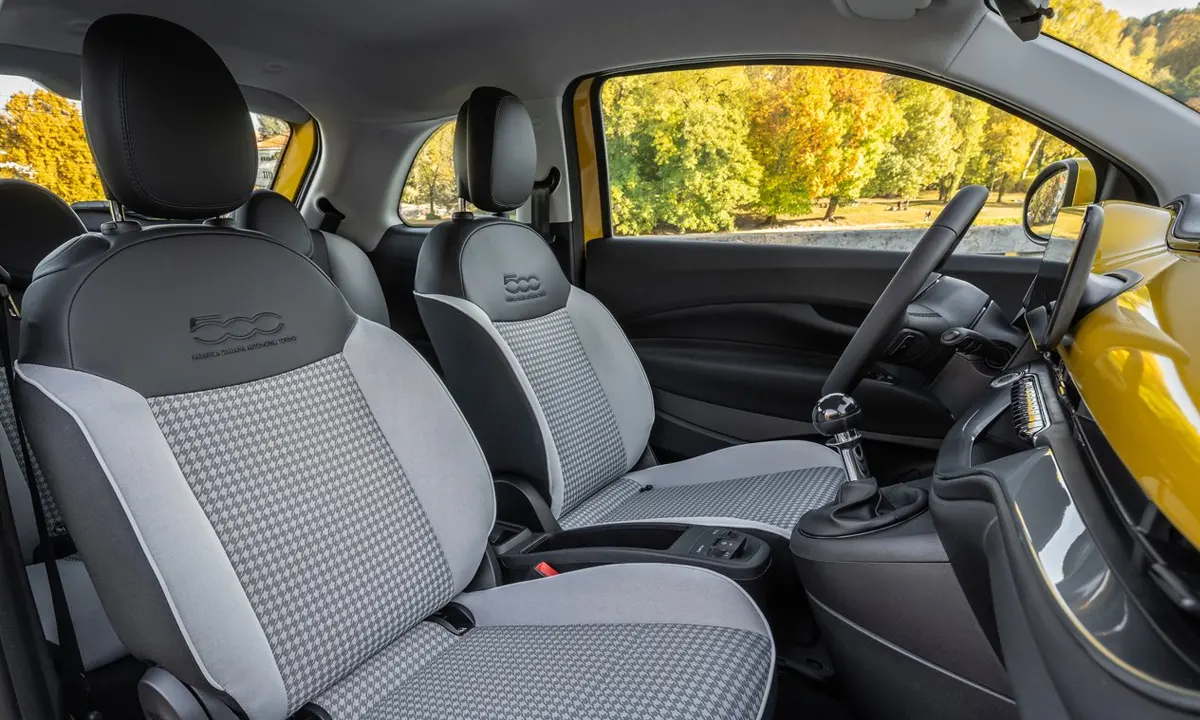
Interior material quality is calibrated appropriately for the 500 Hybrid’s accessible price — scratchy plastics predominate on the dashboard and door cards, and the centre console’s piano-black gear knob has attracted criticism from reviewers for the contrast between its visual appearance and its tactile quality. However, the quality of the switchgear, the consistency of panel fitting and the overall structural solidity of the interior construction are genuinely competitive with class rivals, and the flashes of colour provided by the body-coloured dashboard and the quality of the steering wheel’s leather-effect material covering provide quality highlights that elevate the cabin’s overall impression above its purely functional specification would suggest. La Prima specification introduces vegan leather seating with distinctive cannelloni stitching patterns, a bi-colour steering wheel and a matt pearl dashboard finish that transform the upper-specification 500 Hybrid into a cabin of genuinely premium character within the city car class.
Practicality is frankly limited by the 500’s compact dimensions and three-door body structure — both of which are central to the car’s essential character and neither of which represents a legitimate criticism given what the car is and what it is designed to do. Front occupants of up to approximately six feet in height are accommodated with reasonable comfort. Rear passengers are largely dependent on the front seat occupants’ willingness to compromise their own legroom — a constraint that limits genuine four-person usability to shorter urban journeys. The 183-litre boot capacity is modest but workable for city shopping and commuting, expanding to 440 litres with the rear seats folded. In selected European markets, Fiat offers a three-plus-one bodystyle with a small rear-hinged passenger-side door that dramatically improves rear seat access — a practically valuable feature that is not available in UK right-hand-drive specification due to the cost of developing a reversed bodyshell for a single market.
Safety Technology and Standard Equipment
The 2026 Fiat 500 Hybrid arrives with a standard safety equipment specification that reflects the GSR2 General Safety Regulation requirements now mandated across European markets — a regulatory framework that has elevated the safety technology baseline of every new European market vehicle launched from 2025 onward. Standard across all variants are autonomous emergency braking with pedestrian and cyclist detection, lane departure warning, traffic sign recognition with audible speed limit alerts, driver attention monitoring and front and side airbag protection. These systems collectively ensure that the 500 Hybrid meets a safety technology standard meaningfully above what its price point and segment position might historically have suggested, and they provide a protective foundation that appropriately reflects the urban environment in which the car operates — where pedestrian and cyclist interactions are frequent and where the attentiveness of driver monitoring systems carries particular practical value.
Icon trim, which forms the entry point to the UK range, provides a well-considered standard equipment specification that includes the 10.25-inch touchscreen with wireless Apple CarPlay and Android Auto, the seven-inch digital driver display, LED headlights, 16-inch alloy wheels, rear parking sensors and adaptive cruise control — a feature suite whose generosity relative to the car’s starting price reflects Fiat’s commercial determination to make the 500 Hybrid’s value proposition as compelling as possible against city car rivals whose standard equipment levels have improved substantially in recent years. The Torino launch edition, available for a limited production period, adds special badging and enhanced interior upholstery. La Prima, the range-topping variant, adds 17-inch alloy wheels, heated front seats, heated windscreen, reversing camera, a fixed glass roof panel on hatchback variants and built-in satellite navigation — a specification that transforms the 500 Hybrid’s ownership experience from adequate to genuinely premium within its class context.
The Convertible: Open-Air Charm at an Accessible Premium
The 2026 Fiat 500 Hybrid is available in both hatchback and Cabrio convertible body styles — the latter carrying a price premium of approximately £3,000 over the equivalent hatchback specification and providing access to one of the most characterful open-air city car experiences available at any price. The Cabrio’s fabric roof operates through a folding mechanism that opens fully rearward rather than deploying as a conventional soft-top, creating an open-air experience closer to a large sunroof than a traditional convertible in its fully open configuration. The Cabrio’s additional weight — bringing the convertible to approximately 1,102 kilograms compared to the hatchback’s 1,055 kilograms — extends the zero to 62 miles per hour time to 17.3 seconds, a number that reflects the additional load imposed on the mild-hybrid powertrain without meaningfully affecting the car’s urban driving character. For buyers whose priority is the emotional experience of open-air city driving in one of the world’s most recognisable and most beloved small car designs, the Cabrio’s premium over the hatchback is a genuinely reasonable investment — particularly given the scarcity of affordable convertible options in the current new car market and the additional desirability that the open-top body style confers upon an already characterful automobile.
An Honest Assessment: What the 500 Hybrid Is and What It Is Not
The 2026 Fiat 500 Hybrid is not the most technologically sophisticated mild-hybrid system in its class — the Toyota Aygo X’s full-hybrid powertrain is meaningfully more capable in terms of fuel economy and low-speed performance. It is not the most powerful city car available — the same Aygo X and several competitors offer substantially more responsive acceleration. It is not the most spacious city car in its class — the five-door Renault Twingo E-Tech offers greater interior versatility, and the Hyundai i10 provides comparable rear passenger accommodation in a slightly more practically accessible body structure. And it is, by the frank admission of Fiat’s own engineering team, something of an unprecedented engineering exercise — a combustion engine integrated into an electric car bodyshell through a process that no manufacturer had previously attempted and that carries the compromises its unusual genesis inevitably implies.
What the 500 Hybrid is, however, is something that none of its more technically capable rivals can replicate — the most charming, most visually distinctive, most personality-rich and most emotionally engaging city car available at its price point, now equipped with a powertrain that the overwhelming majority of its natural buyers can live with every day without the range anxiety, charging infrastructure dependency or higher purchase price that the 500e imposes. It is the Fiat 500 that the brand should have offered alongside the 500e from the beginning, and its belated arrival at a price that makes genuine 500 ownership accessible to the buyers for whom the name has always carried the greatest emotional resonance is an occasion worth celebrating. For drivers who want a new city car that makes them smile every time they approach it, every time they park it and every time a passer-by turns to look at it on an Italian-inspired yellow, the 500 Hybrid is still, in 2026, the most compelling answer the market provides.
Read: Toyota C-HR+: 10-Year Battery Warranty, 338 HP, Meet Toyota’s Most Ambitious Electric SUV Yet
2026 Fiat 500 Hybrid – Specifications & Performance Chart
| Category | Specification |
| Vehicle Type | Mild-Hybrid City Car / Convertible |
| Engine | 1.0-Litre Three-Cylinder FireFly Mild-Hybrid |
| Hybrid System | 12-Volt Starter-Generator |
| Power Output | 64 hp (70 PS) |
| Torque | 68 lb-ft (92 Nm) |
| Transmission | 6-Speed Manual (Only Option) |
| Drivetrain | Front-Wheel Drive |
| 0–62 mph (Hatchback) | 16.2 Seconds |
| 0–62 mph (Cabrio) | 17.3 Seconds |
| Top Speed | Approx. 99 mph |
| Official Fuel Economy (WLTP) | 53–54.3 MPG |
| Real-World Economy (Tested) | 42–50 MPG (Mixed Driving) |
| CO2 Emissions | Approx. 118 g/km |
| Kerb Weight (Hatchback) | 1,055 kg |
| Kerb Weight (Cabrio) | 1,102 kg |
| Length / Width / Height | 3,631 mm / 1,684 mm / 1,532 mm |
| Wheelbase | 2,322 mm |
| Body Styles | 3-Door Hatchback / Cabrio |
| Optional Body (Europe Only) | 3+1 Layout (Rear Passenger-Side Door) |
| Standard Wheels | 16-Inch Alloy (Icon) |
| La Prima Wheels | 17-Inch Alloy |
| Exterior Colours | 7 (3 Solid / 4 Metallic) |
| Infotainment | 10.25-Inch Uconnect 5 Touchscreen |
| Driver Display | 7-Inch Digital Cluster |
| Connectivity | Wireless Apple CarPlay / Android Auto |
| Climate Controls | Physical Piano-Key Switches (Standard) |
| Standard Safety | AEB, Lane Departure Warning, Traffic Sign Recognition, Driver Attention Monitoring |
| Boot Capacity | 183 Litres (Seats Up) / 440 Litres (Seats Folded) |
| Available Trims | Icon / Torino (Limited) / La Prima |
| La Prima Additions | Heated Seats, Heated Windscreen, Reversing Camera, Navigation, Glass Roof Panel |
| Starting Price (UK) | From Approx. £18,995 (Icon) |
| La Prima Premium | Approx. +£1,500 |
| Cabrio Premium | Approx. +£3,000 |
| Starting Price (Europe) | From €17,000 |
| UK Market Launch | Spring / April 2026 |
| Assembly | Mirafiori Plant, Turin, Italy |