2026 Jeep Recon Reinvents the Electric Off-Road SUV
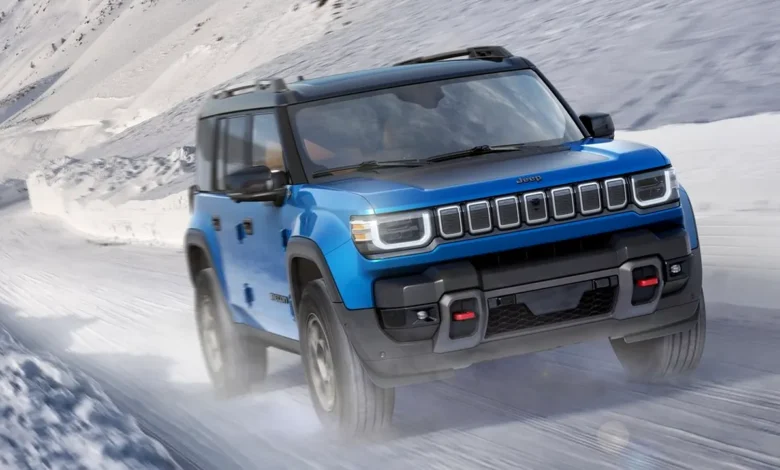
The 2026 Jeep Recon represents one of the most transformative vehicles in Jeep’s modern history. As the brand moves confidently into the fully electric future, the Recon arrives as a bold statement of what electrified adventure can look like. Rather than merely electrifying an existing nameplate, Jeep developed the Recon as an all-new model born from a clean-sheet EV platform while preserving the rugged spirit that has defined the company’s off-road heritage for more than eight decades.
The Recon is not intended to replace the Wrangler or Grand Cherokee. Instead, it fills a new space in the Jeep lineup—one that blends the capability of a traditional body-on-frame off-roader with the efficiency, silence, torque delivery and technological sophistication of a modern electric SUV. While many EVs prioritize on-road refinement or futuristic styling, the Recon breaks from conformity with a design approach that is unapologetically rugged, square-jawed and trail-ready. It is engineered to excel where paved roads end and uncharted terrain begins.
Gallery: 2026 Jeep Recon
Jeep envisions the 2026 Recon as a vehicle that honors its past while embracing what off-roading will mean in the decades ahead. It is a bridge between generations of Jeep enthusiasts: those who grew up with gasoline-powered adventure and those who expect vehicles to be all-electric, connected, sustainable and technologically intelligent. This article explores the Recon from every angle—including its design philosophy, electric powertrain, driving dynamics, off-road capability, interior technology, safety systems and market positioning—while concluding with a detailed specifications chart that outlines its technical DNA.
Exterior Design: Rugged Identity Meets EV-First Aerodynamics

One of the most striking aspects of the 2026 Recon is its bold exterior styling. Jeep has resisted the urge to make its first global electric off-roader look overly futuristic; instead, the design pays homage to iconic Jeep proportions with a boxy silhouette, upright stance and functional details that prioritize capability over aesthetics. The front fascia features a reinterpretation of the seven-slot grille, now enclosed due to the EV architecture but illuminated for visual continuity. The closed grille matches the aerodynamic needs of an electric platform, while the LED lighting signature provides modernity without losing the Jeep identity.
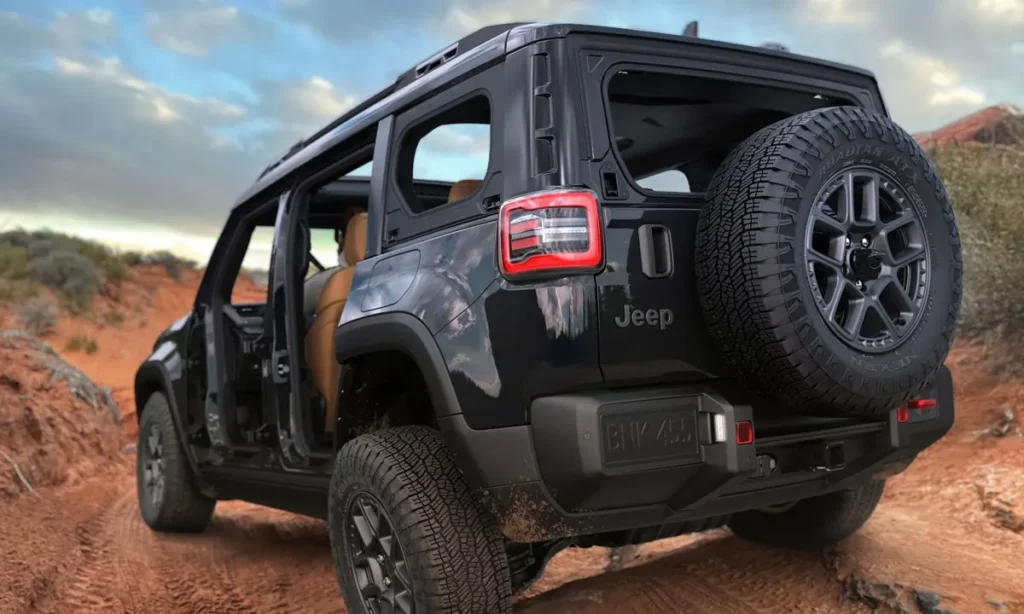
The Recon embraces removable doors, a fold-flat windshield and a retractable roof system—features long associated with open-air Jeep adventure. Despite being an EV, Jeep wanted the Recon to offer the same visceral outdoor experience as its traditional off-road vehicles. Lightweight composite doors assist with ease of removal, while structural rigidity is maintained due to the EV platform’s battery-integrated frame.
Along the sides, the Recon features muscular fender arches, high ground clearance and squared wheel wells that visually communicate durability and clearance capability. The design incorporates strong horizontal lines that convey stability and strength, while black cladding and metallic trim reflect Jeep’s traditional off-road design cues. The aero-optimized wheels and side body sculpting help reduce drag, improving range without sacrificing the rugged aesthetic.
The rear design includes LED taillights with a geometric signature, a swing-gate mount for all-terrain spare wheels, and a robust rear bumper engineered for trail departure angles. The Recon’s styling merges classic Jeep cues with modern EV touches, resulting in a vehicle that looks every bit the adventurer it is built to be.
Electric Powertrain: Torque-Rich Performance for Off-Road Demands
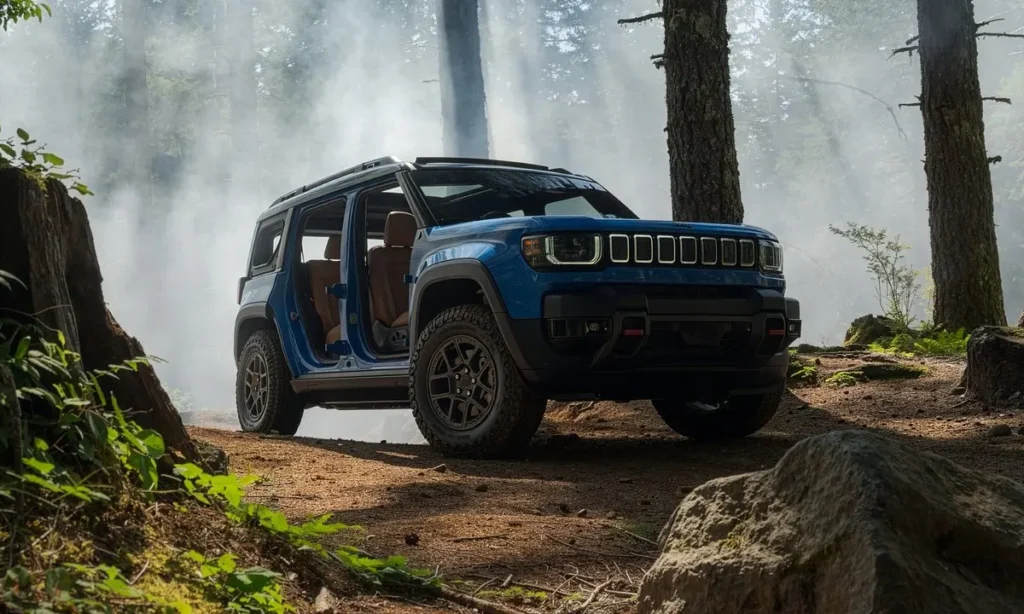
At the heart of the 2026 Jeep Recon lies a fully electric powertrain engineered to deliver the unique torque characteristics required for technical off-roading. The dual-motor all-wheel drive system provides instantaneous torque to all four wheels, enhancing crawling capability, hill-climbing confidence and low-speed precision. Jeep’s engineers focused on creating a powertrain that mimics the controllability of traditional 4×4 systems while adding the benefits of electric propulsion.
Although final output figures may vary depending on production specifications, early engineering expectations suggest the Recon will produce between 375 and 450 horsepower, with torque levels significantly exceeding those of comparable gasoline engines. Electric motors inherently deliver peak torque from zero rpm, allowing the Recon to navigate uneven surfaces, deep inclines and technical obstacles without the need for transmission gearing.
The 2026 Recon is built on the STLA Large EV platform, which offers advanced thermal management, rapid charging capability and strong structural integrity. Battery sizes for the model are expected to offer between 90 and 110 kWh, providing a targeted range of approximately 400–500 km depending on driving conditions, terrain and tire configuration. Jeep’s focus has not been solely on maximizing range on highways but ensuring the EV architecture performs equally well on trails where regenerative braking and variable load usage affect consumption.
Fast-charging capability supports up to 350 kW DC charging, enabling the battery to replenish most of its capacity within half an hour under optimal conditions. Jeep also includes an intelligent energy management system that strategically distributes power during demanding off-road activities, ensuring consistent performance without overheating the battery pack.
Off-Road Capability: Trail-Rated Engineering for the EV Era

For Jeep, building an electric SUV is not simply about adding motors and batteries. It is about redefining what off-roading feels like when driven by electricity. The 2026 Recon is designed to meet or exceed Jeep’s Trail Rated standards, incorporating robust underbody protection, high-strength skid plates, specialized suspension geometry and advanced traction systems tailored for electric propulsion.
The dual-motor AWD system supports electric torque vectoring, allowing the Recon to intelligently shift motor power between axles and even between sides of the vehicle. This provides precise control in situations where tire grip varies significantly, such as rock crawling or navigating mud pockets. The Recon also features a selectable one-pedal off-road mode that uses aggressive regenerative braking to maintain low-speed control on steep descents and technical terrain.
Ground clearance is expected to exceed 280 mm, along with competitive approach, breakover and departure angles reflective of Jeep’s off-road priorities. Advanced all-terrain tires, low-range software modes, electronically controlled locking differentials and a reinforced underbody tailored for EV protection contribute to its trail performance. Jeep has incorporated trail-mapping software linked to the infotainment system, enabling drivers to access off-road navigation, torque distribution displays and personalized route logs.
Perhaps the most impressive aspect of Recon’s off-road ability is the quietness of its electric powertrain. The absence of engine noise allows drivers to better sense wheel placement, grip levels and the environment around them. This quiet operation—paired with electric torque control—creates an off-road experience that is both more serene and more precise than traditional combustion-based 4x4s.
Driving Dynamics: Balanced Handling, Stability and Urban Comfort
The 2026 Jeep Recon delivers a driving experience that is both adventurous and refined. Thanks to the battery pack’s low mounting position along the floor, the vehicle benefits from a significantly lower center of gravity than comparable ICE-based off-road SUVs. This enhances stability on highways, reduces body roll and improves handling across uneven terrain.
Suspension tuning prioritizes both comfort and off-road toughness. The adaptive dampers and long-travel suspension design allow the Recon to absorb trail imperfections with composure while maintaining a smooth ride during urban commuting. Electric power steering provides consistent feedback regardless of the driving surface, and the instantaneous torque gives the driver a level of control difficult to achieve with conventional drivetrains.
On paved roads, the Recon feels surprisingly nimble for a rugged utility vehicle. Noise levels are minimized thanks to both the electric powertrain and Jeep’s advanced sound-insulation materials. The result is a dual-purpose SUV equally capable of daily errands and weekend adventures.
Interior: Utility, Technology and Open-Air Freedom
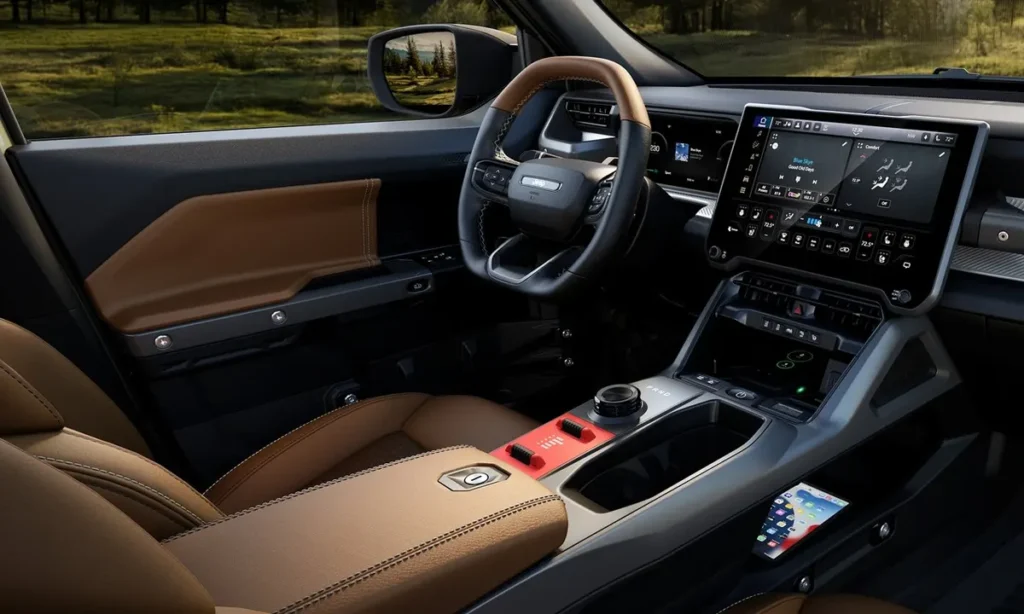
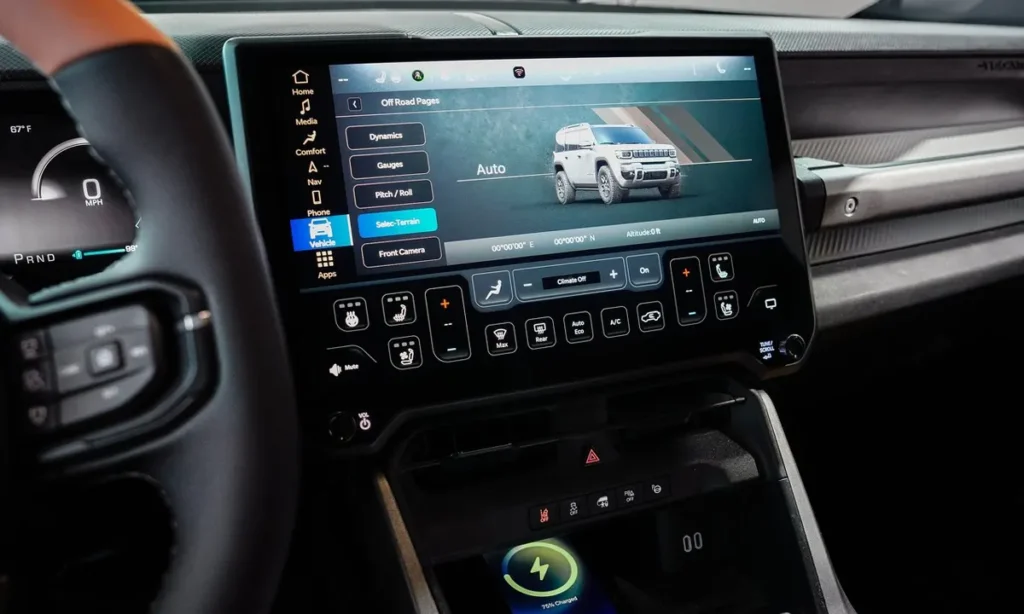
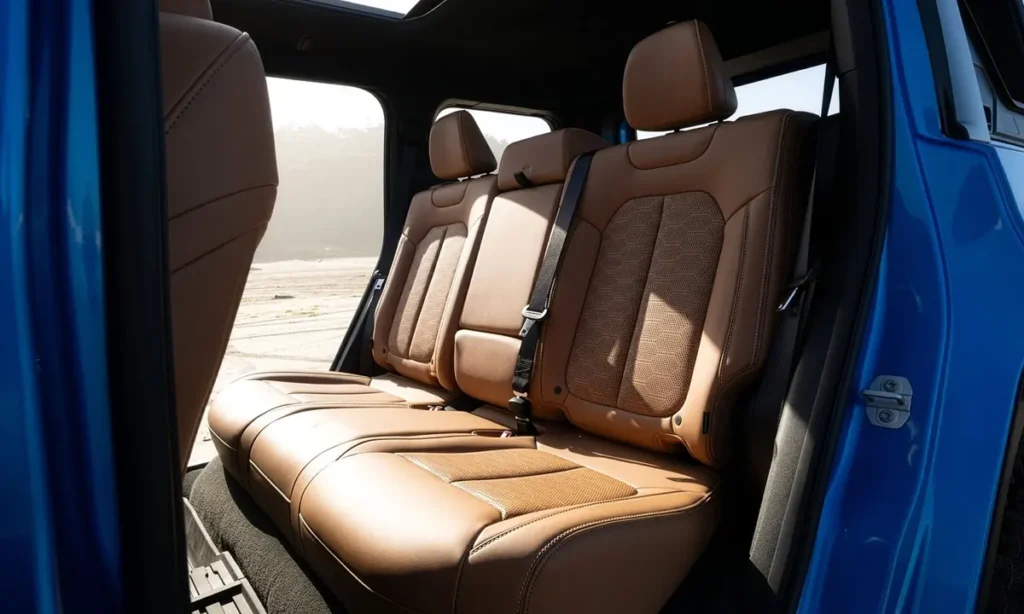
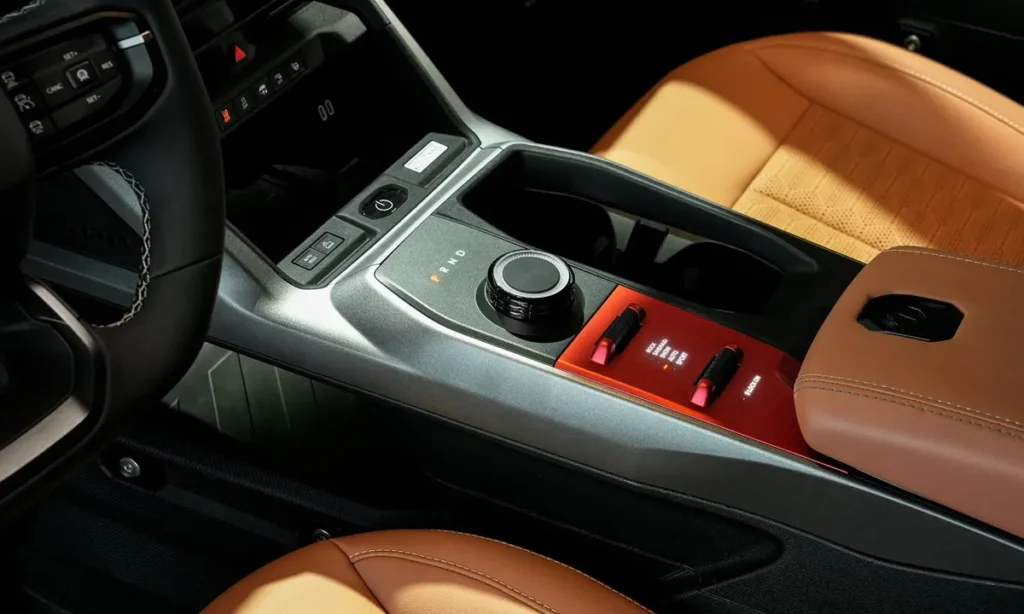
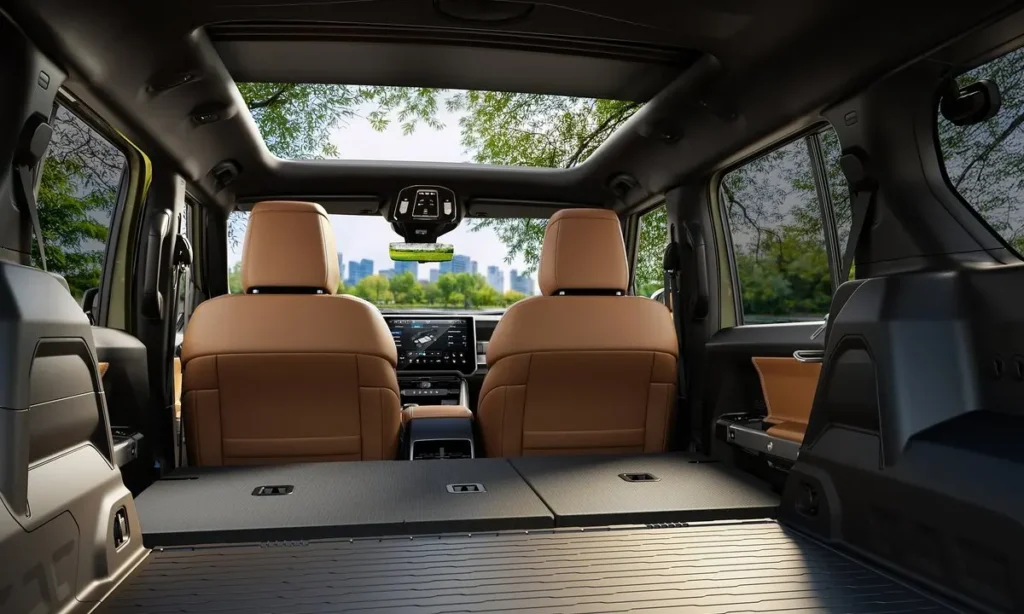
Inside the 2026 Jeep Recon, Jeep has seamlessly blended technology with durability. The cabin embraces a modern, utilitarian aesthetic with rugged materials, water-resistant upholstery and durable surfaces designed to withstand outdoor lifestyles. The open-air design philosophy continues inside, with removable roof panels and a fold-down windshield enhancing the feeling of freedom.
The digital cockpit includes a large central infotainment display paired with a fully digital driver cluster. Jeep’s latest software ecosystem provides trail mapping, off-road camera views, charging station navigation and wireless smartphone compatibility. The interface is optimized for quick off-road access, displaying torque vectoring performance, energy regeneration details and wheel articulation metrics.
Front and rear seating prioritize comfort and support, while the cargo area offers expandable storage options for camping gear, equipment and accessories. The interior lighting system adapts to trail driving, offering adaptive brightness for nighttime navigation without compromising visibility.
Overall, the interior strikes a balance between modern technology and purposeful simplicity, reflecting Jeep’s philosophy of building vehicles that serve adventure.
Safety, Connectivity and Autonomous Systems
Safety remains a central focus of the 2026 Recon. Jeep includes its latest suite of driver-assistance systems, enhanced for electric platforms. These systems leverage multi-camera arrays, radar sensors and ultrasonic modules to provide forward collision warnings, adaptive cruise control, lane-keep assist, blind-spot detection and off-road specific safety features such as crawl-detection cameras and obstacle proximity alerts.
The Recon also supports over-the-air software updates, allowing Jeep to improve performance, refine off-road modes and introduce new autonomous functions over time. Jeep’s commitment to connected services ensures that drivers can stay informed about battery health, energy consumption, route planning and vehicle diagnostics via a dedicated mobile app.
For off-road safety, the Recon includes a multi-angle camera system designed to give drivers a view beneath the vehicle and around critical trail obstacles. These visibility enhancements significantly reduce risk when traversing complex terrain.
Read: 2026 Jeep Wrangler Moab 392: The Ultimate Desert-Bred V8 Off-Roader
Market Positioning: A Unique Contender in the Electric SUV Landscape
The 2026 Jeep Recon positions itself as a rugged electric SUV unlike anything currently available. While Rivian’s R1S, the Ford Explorer EV, the Tesla Cybertruck and other upcoming electric SUVs offer strong performance, few are engineered with the Recon’s uncompromised off-road focus. Jeep is targeting both loyalists seeking an electrified successor to their beloved 4x4s and new EV adopters looking for something more adventurous than typical electric crossovers.
The Recon is expected to attract outdoor-oriented buyers, overland enthusiasts and sustainability-minded consumers who also value mechanical durability and authentic capability. With Jeep’s global brand strength and iconic heritage, the Recon is poised to become a major player in the premium electric SUV segment once production begins.
Jeep Recon (2026) – Specifications & Performance Chart
| Category | Specification |
| Platform | STLA Large Electric Architecture |
| Powertrain | Dual-Motor Electric AWD |
| Horsepower | 375–450 hp (est.) |
| Torque | Instant Electric Torque (exact values TBD) |
| Battery Capacity | 90–110 kWh (est.) |
| Charging | 350 kW DC Fast Charging (10–80% in ~30 min) |
| Range | 400–500 km (est.) |
| Drivetrain | AWD with Electric Torque Vectoring |
| Ground Clearance | ~280 mm (est.) |
| Off-Road Features | Removable Doors/Roof, Skid Plates, Locking Diffs |
| Suspension | Adaptive Long-Travel Suspension |
| 0–100 km/h | ~4.5–5.0 seconds (est.) |
| Top Speed | ~180 km/h (limited) |
| Interior | Digital Cockpit, Trail Mapping, Open-Air Design |
| Seating | Five-Passenger Configuration |
| Body Style | Mid-Size Electric Off-Road SUV |