2026 Toyota HiLux BEV: The Electric Pickup Tougher Than You Expect
For decades, the Toyota HiLux has stood as one of the world’s most dependable pickup trucks — a machine known for its durability, rugged capability, and no-nonsense engineering. Whether navigating remote Australian outback roads, serving in military fleets, or supporting small businesses in developing nations, the HiLux built its reputation on unbreakable reliability. Now, as the automotive industry pivots toward electrification, Toyota prepares to rewrite the HiLux story for a new era. The arrival of the 2026 Toyota HiLux BEV, Toyota’s first fully electric HiLux, represents more than just a new model — it symbolizes a shift in how the world’s most trusted workhorse adapts to the demands of a sustainable, zero-emission future.
The HiLux BEV is designed to bring the characteristics drivers love — toughness, practicality, and long-term dependability — into the electric age. As governments push cleaner transportation goals and businesses seek lower running costs, the electric HiLux promises to deliver the strength of a traditional pickup combined with the efficiency and silence of EV power. With Toyota’s decades of experience in hybrid and battery technologies, the HiLux BEV enters the market with tremendous expectations.
Gallery: 2026 Toyota HiLux BEV
A Bold Step Forward: Toyota’s Electric Vision for the HiLux
The decision to electrify the HiLux wasn’t taken lightly. For Toyota, the HiLux is one of its most respected global nameplates, particularly in regions where infrastructure variations and extreme weather play a major role. Electrifying such a machine requires engineering that can withstand rugged terrains, unpredictable climate conditions, and heavy- duty commercial use. The 2026 HiLux BEV emerges from years of testing and development, including pilot programs in Australia, Thailand, and South Africa where electric prototypes have already proven their capability in real-world conditions.
This next-generation HiLux represents Toyota’s commitment to offering multiple powertrain solutions — hybrid, hydrogen, and battery-electric — tailored to regional needs. The BEV variant aims primarily at urban fleets, mining operations, utility companies, and lifestyle buyers who want the benefits of electric power without sacrificing function.
Exterior Design: Familiar Toughness with Futuristic Details
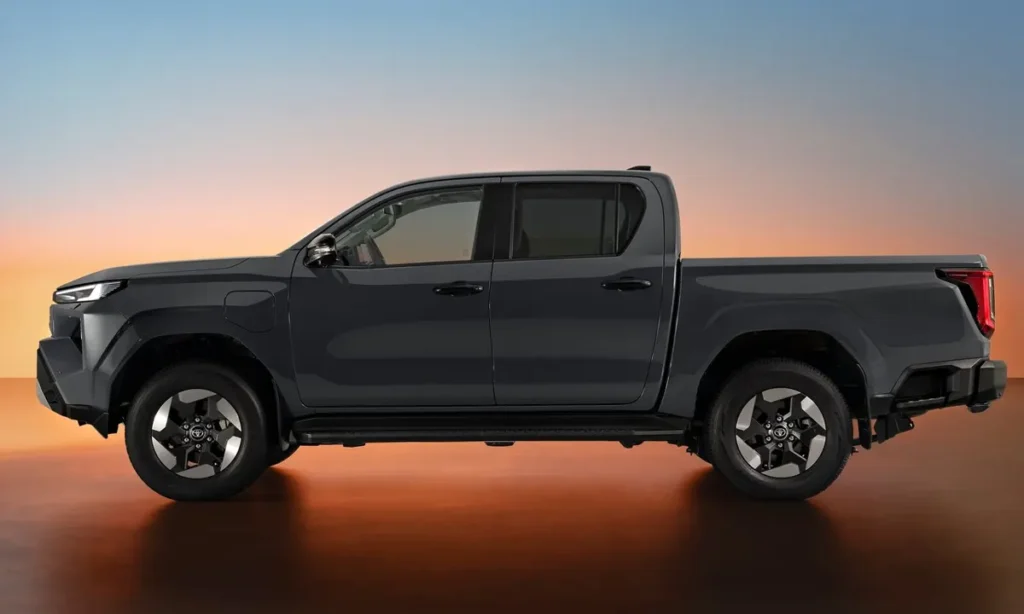
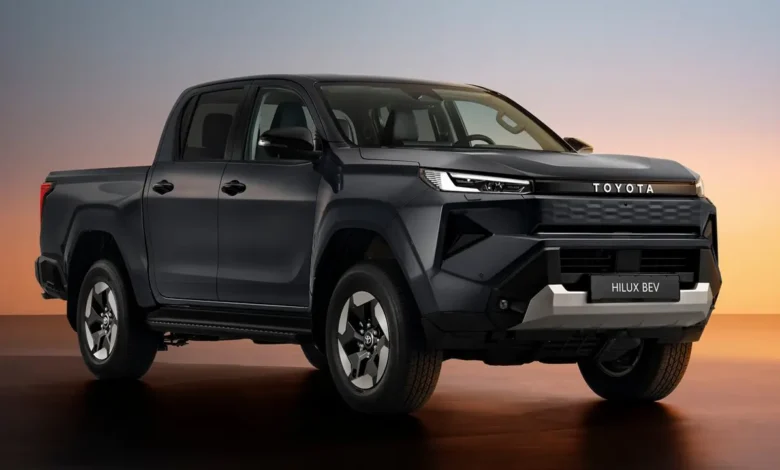
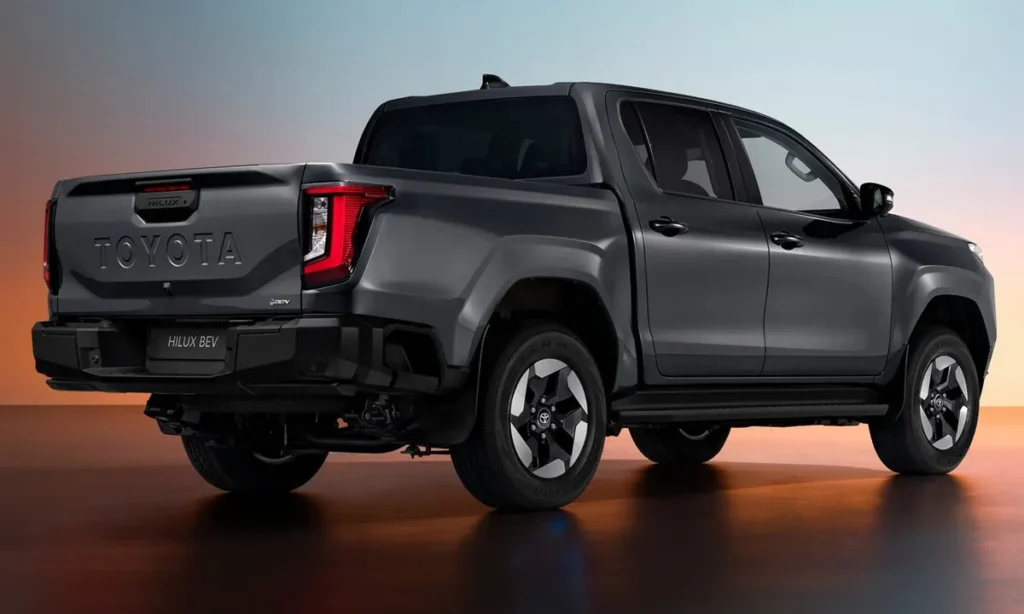
At first glance, the 2026 HiLux BEV retains the recognizable silhouette that has become synonymous with strength and reliability. Its upright stance, muscular wheel arches, and commanding presence continue the HiLux legacy. But the BEV introduces a fresh layer of modernity through refined aerodynamics and EV-specific styling enhancements.
The front grille area, traditionally one of the HiLux’s most dominant features, adopts a closed-off design — a signature of electric vehicles that no longer require large air intakes for cooling. Sleek LED light bars stretch across the front fascia, giving the truck a high-tech identity without compromising its tough demeanor. The sculpted body panels, sharper character lines, and redesigned rear lighting further elevate the futuristic look.
Toyota also improves underbody protection and smooths airflow channels to increase efficiency and reduce wind noise. While many electric trucks chase dramatic reinvention, the HiLux BEV blends new-age technology with the familiar rugged aesthetic that buyers trust.
Interior Comfort and Utility: Modern, Connected, and Purpose-Built
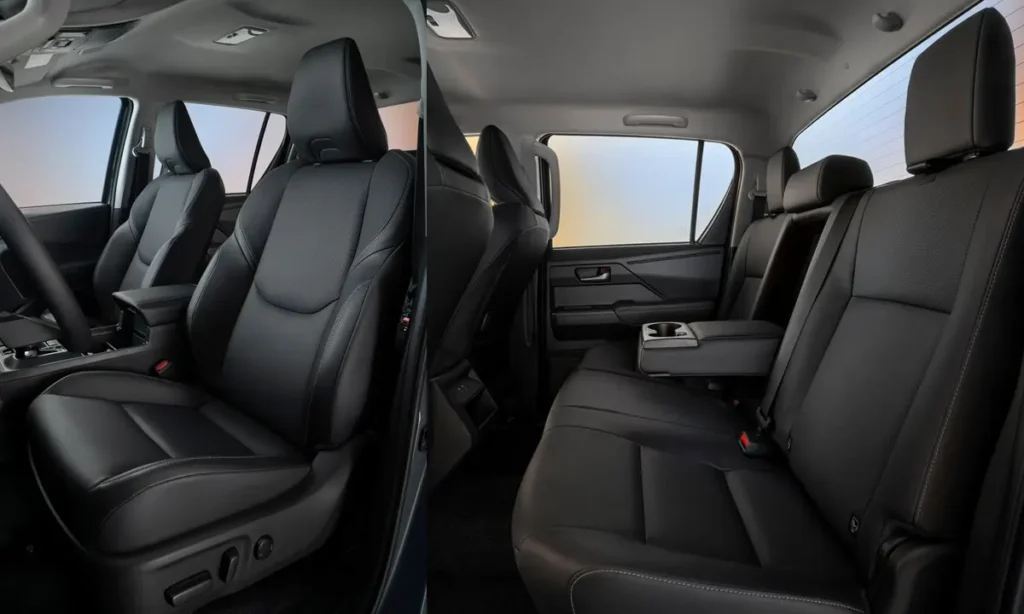
Inside, the 2026 HiLux BEV embraces a significant technological leap. Toyota introduces a more refined cabin layout featuring high-quality materials, improved ergonomics, and a cleaner dashboard design. A large central touchscreen integrates Toyota’s next-generation multimedia system, now supporting wireless smartphone connectivity, over-the-air updates, and enhanced vehicle management controls. Behind the wheel, the digital instrument cluster provides real-time insights into battery range, drive modes, energy consumption, and terrain response systems.
Practicality remains at the heart of the HiLux BEV’s design. Storage compartments are more generous, the seats offer better lumbar support, and rear passengers enjoy improved space thanks to optimized cabin packaging. The elimination of a traditional transmission tunnel allows for a flatter floor, increasing comfort during long trips or workday commutes.
Toyota ensures the cabin maintains a durable character. Rubberized surfaces, hard-wearing materials, and rugged switchgear remain essential elements, ensuring the BEV version is ready for worksites, farms, mines, or harsh outdoor conditions.
Performance: Electric Torque Transforming the Pickup Experience
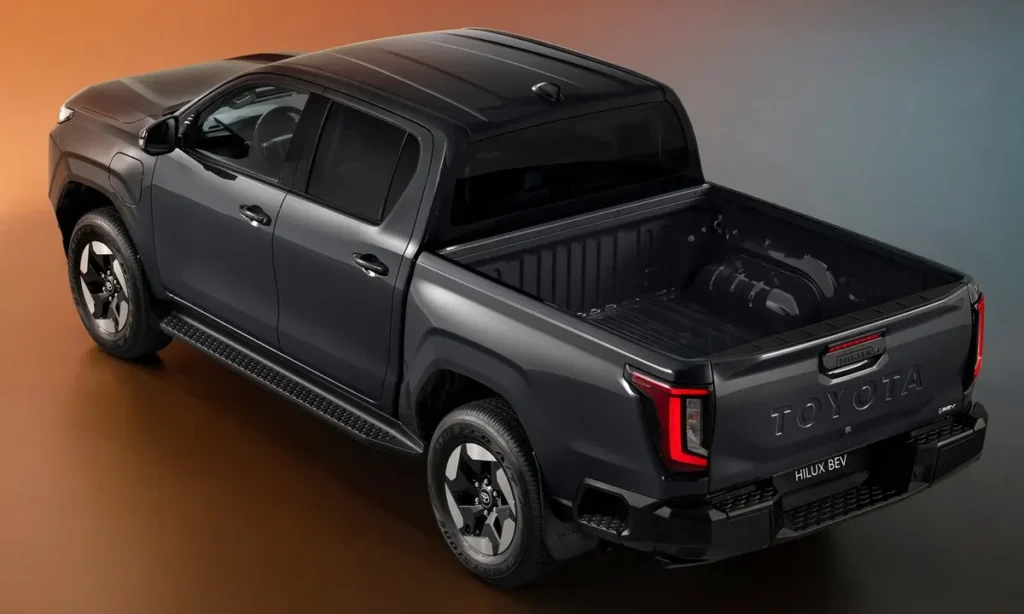
Performance expectations for electric pickups are high, and the HiLux BEV aims to deliver. While final specifications may vary by market, early engineering insights reveal a powerful electric motor setup delivering instant torque — one of the key advantages of EVs. Instant torque provides stronger low-speed pulling power, ideal for hauling equipment, towing trailers, or navigating steep inclines.
The single-motor or dual-motor configurations (depending on region) offer balanced power delivery for both highway cruising and off-road exploration. With output estimates ranging between 180–250 horsepower and torque potentially exceeding 350 Nm, the HiLux BEV promises a driving experience that feels stronger and smoother than its diesel counterpart.
The shift to electric power also improves driving refinement. The BEV operates silently, reducing noise fatigue during long workdays. The absence of gear shifts creates a seamless acceleration profile, while advanced traction systems ensure stability on various terrains.
Battery, Range, and Charging: Built for Real-World Utility
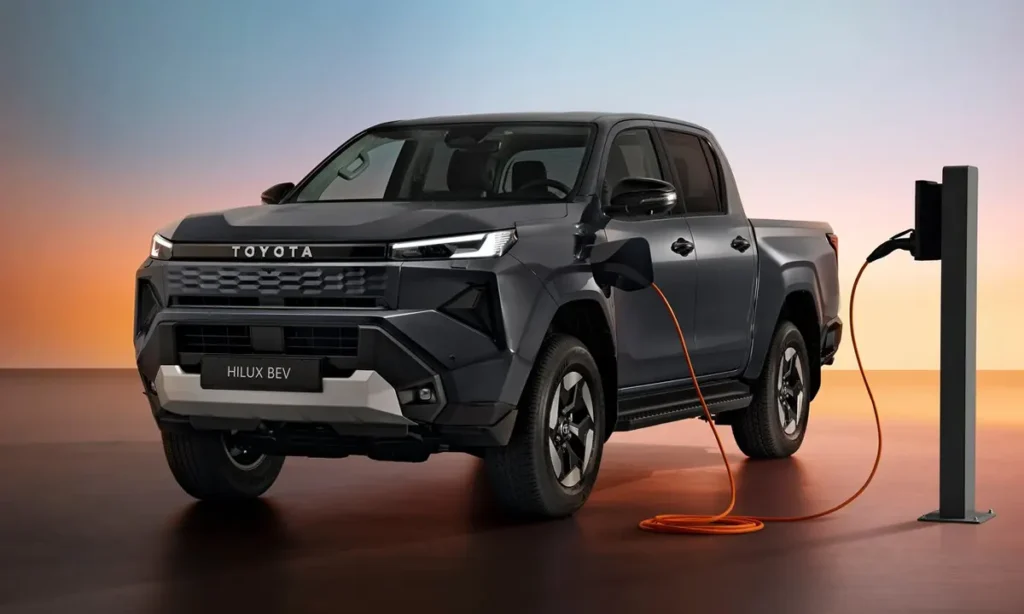
Toyota engineers developed the HiLux BEV with a focus on practicality. The battery pack, expected to range between 60 kWh and 80 kWh, is designed to provide enough driving range for urban operations, rural deliveries, and medium-distance commutes. Preliminary projections estimate a range of 320–400 km (198–250 miles) depending on load, terrain, and configuration.
Fast-charging capability allows the HiLux BEV to replenish significant range within 30 minutes, making it compatible with modern charging networks. Toyota also integrates regenerative braking technology to recover energy during downhill driving — a feature particularly beneficial for commercial users.
Importantly, the battery is engineered with thermal protection and durability that suit harsh climates, ensuring reliability in both scorching heat and freezing conditions.
Towing and Payload: An Electric Pickup That Keeps Its Strength
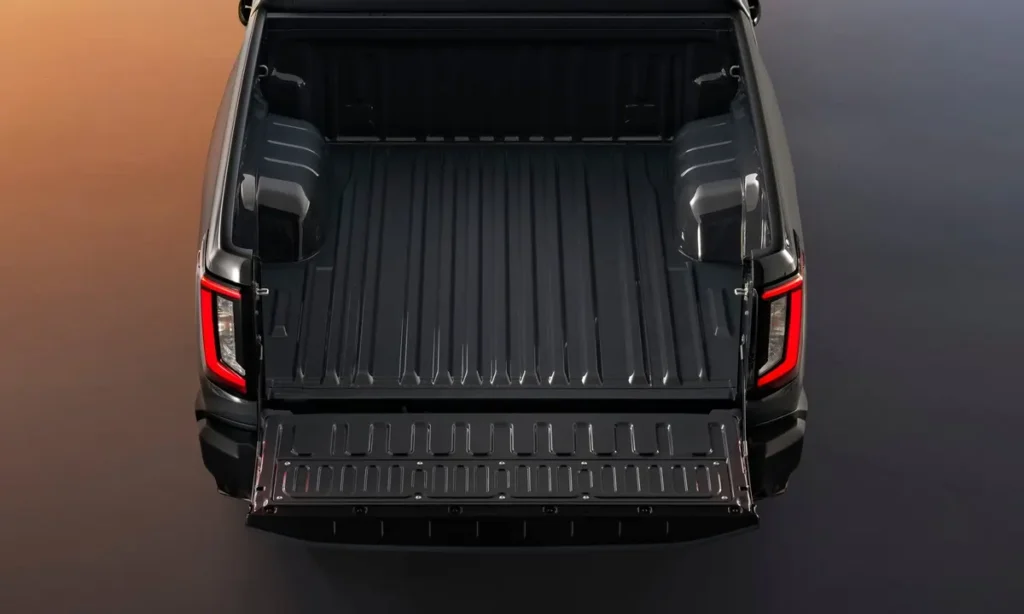
The electric HiLux remains true to its utility roots. With payload capacity expected to exceed 1,000 kg and towing capacity estimated at 2.5–3.0 tons, the BEV variant offers capability comparable to — if not stronger than — traditional diesel models.
Electric torque provides a significant advantage when towing heavy loads, especially during low-speed maneuvers such as reversing trailers or climbing hills.
Off-Road Capability: EV Power Meets HiLux Ruggedness
Toyota ensures the 2026 HiLux BEV maintains genuine off-road capability. High ground clearance, reinforced underbody plating, and smart torque distribution help the truck tackle challenging terrains. Selectable drive modes allow drivers to transition between Eco, Normal, Gravel, Sand, and Rock settings, optimizing performance based on the environment.
The weight distribution of the battery pack improves stability during off-road adventures, while instant torque enhances crawling capability. Toyota’s proven 4×4 engineering ensures the electric HiLux is more than just a city-friendly EV — it’s a vehicle ready for real exploration.
Safety and Driver Assistance: Advanced Protection for Modern Environments
Toyota equips the 2026 HiLux BEV with its latest Toyota Safety Sense suite. This includes adaptive cruise control, lane-keeping assist, pre-collision braking, blind-spot monitoring, and driver attention alerts. Additional features such as a surround-view camera and advanced parking assist help drivers navigate tight worksites or urban parking lots.
Safety remains a pillar of Toyota’s engineering philosophy, ensuring the BEV version offers robust protection for families, workers, and fleet operators.
Comparison Chart: Toyota HiLux BEV vs Rivals
| Feature | 2026 Toyota HiLux BEV | Ford Ranger EV (Expected) | Isuzu D-Max Electric |
| Power Output | 180–250 hp | 200–260 hp | 180–200 hp |
| Torque | 350+ Nm | 400+ Nm | 350 Nm |
| Range | 320–400 km | 350–450 km | 300–350 km |
| Payload | 1,000+ kg | 1,000+ kg | 1,000 kg |
| Towing | 2.5–3.0 tons | 3.0 tons | 2.5 tons |
| Drivetrain | RWD / 4×4 | 4×4 | 4×4 |
| Fast Charging | Yes | Yes | Yes |
Final Verdict
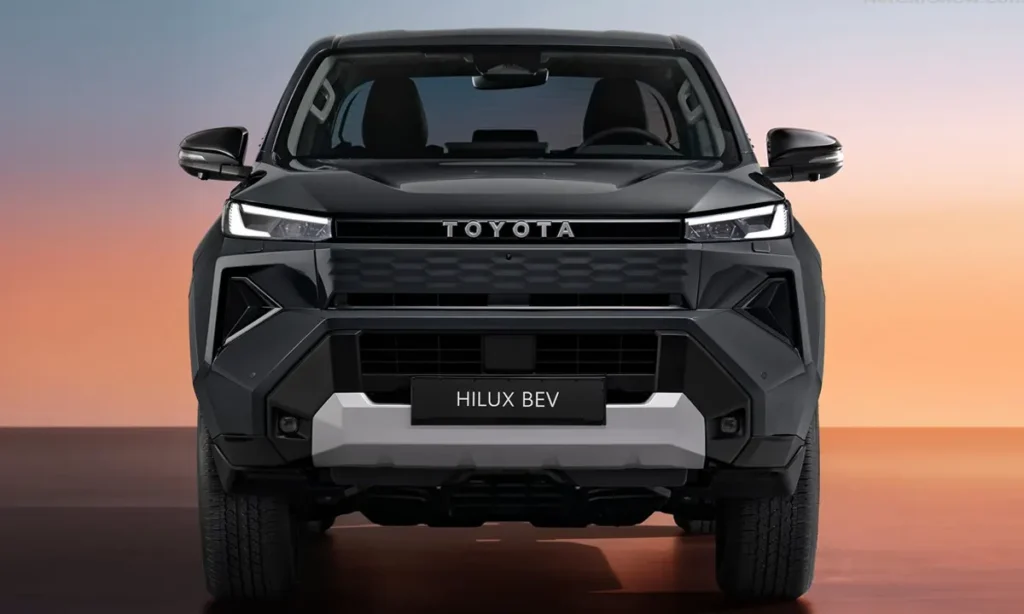
The 2026 Toyota HiLux BEV marks a defining moment in Toyota’s global strategy. It brings electrification to one of the world’s most important and iconic pickup trucks, merging legendary toughness with modern sustainability. For businesses, workers, and lifestyle buyers looking for a reliable electric utility vehicle, the HiLux BEV stands as a promising contender.
Toyota’s thoughtful approach — focusing on durability, capability, and real-world range — ensures the electric HiLux is not just an EV experiment but a meaningful evolution of a trusted nameplate. As the world transitions toward cleaner transportation, the HiLux BEV positions itself as a future-proof truck ready to take on new challenges.
Read: The 2025 Toyota Hilux 9th Gen Reinvents Toughness for the Future
Frequently Asked Questions (FAQ)
Q1: What is the expected range of the 2026 Toyota HiLux BEV?
Estimated driving range is 320–400 km, depending on load and configuration.
Q2: Will the HiLux BEV have strong towing capability?
Yes, towing capacity is expected to be 2.5–3.0 tons, making it competitive with diesel models.
Q3: Is the HiLux BEV suitable for off-road use?
Absolutely — it includes 4×4 capability, terrain modes, and reinforced underbody protection.
Q4: Does the HiLux BEV support fast charging?
Yes, fast-charging technology enables quick battery replenishment for fleet and commercial use.
Q5: When will the HiLux BEV be available?
Global availability is expected to begin in late 2025 to early 2026, depending on the region.