Toyota Supra Without BMW Parts. Game Changer or Big Risk?
A Four-Cylinder Hybrid Engine, a New Toyota Platform, the Loss of the Iconic Inline-Six and the Weight of Forty-Five Years of Sports Car Legacy Make the 2027 GR Supra Mk6 the Most Debated, Most Anticipated and Most Consequential New Toyota in a Generation
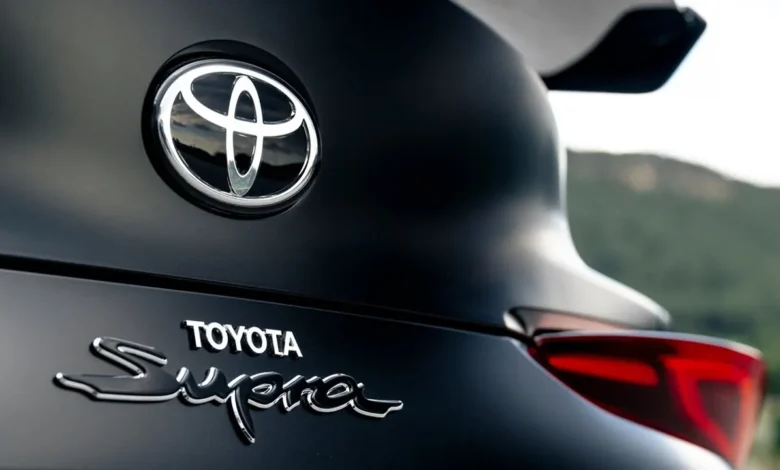
Every generation of the Toyota Supra has had to prove itself. The A60 had to prove it was more than a stretched Celica. The A70 had to prove it could compete with the rising tide of European sports cars at a time when Japanese performance was still fighting for credibility. The A80 had to prove that a front-engined Japanese grand tourer could carry a twin-turbocharged inline-six that would become the most celebrated, most tuned and most culturally mythologised engine in the history of Japanese motoring. And the A90 had to prove that a car sharing its bones, its engine and its production facility with a BMW roadster could still claim the Supra name with integrity — a task that generated more debate per unit sold than perhaps any sports car launch of the modern era. Now the A90 is gone, production concluded in March 2026, and the 2027 GR Supra Mk6 faces the most interesting and most genuinely consequential version of the same challenge: proving that a four-cylinder hybrid Supra, built entirely in-house by Toyota without a single German component, can not only survive the expectations of the most passionate and most critical sports car fanbase in the world — but exceed them.
Gallery: Toyota Supra
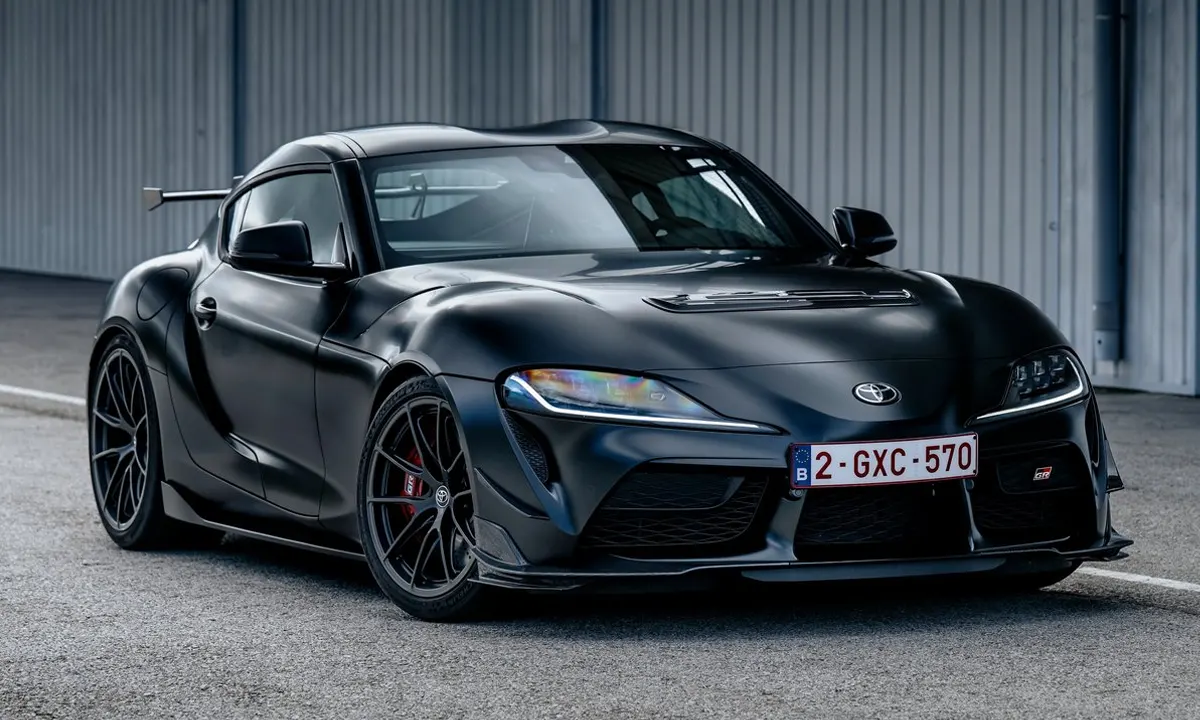
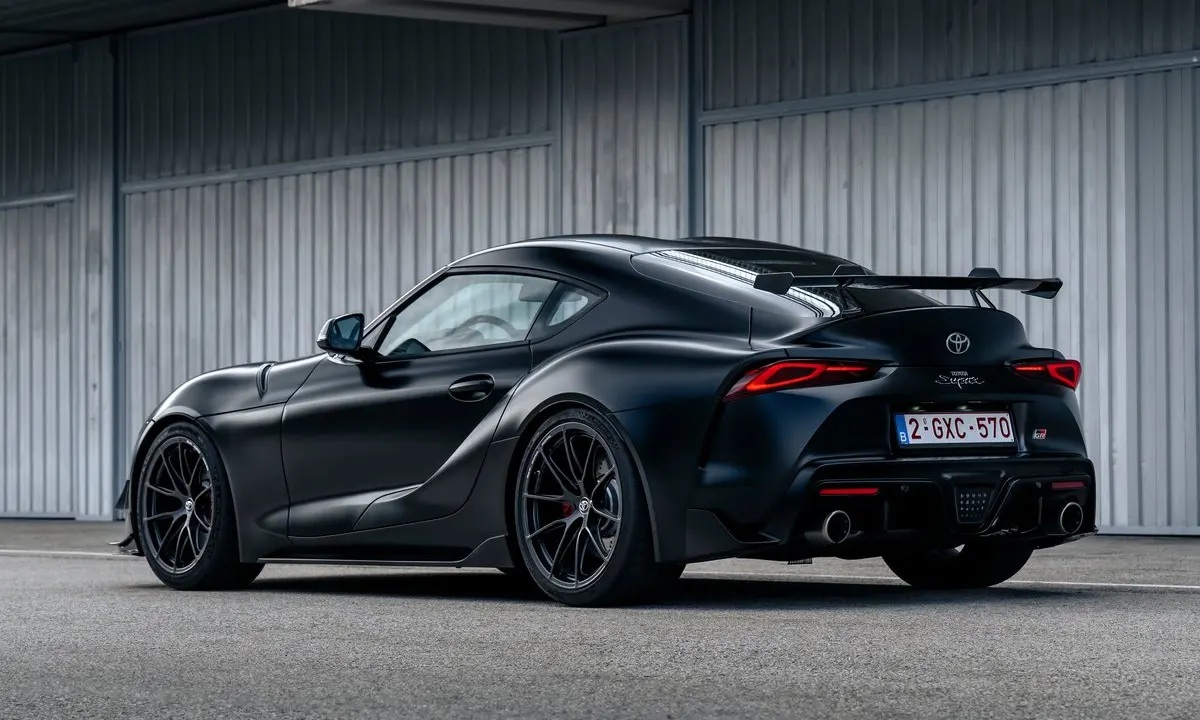
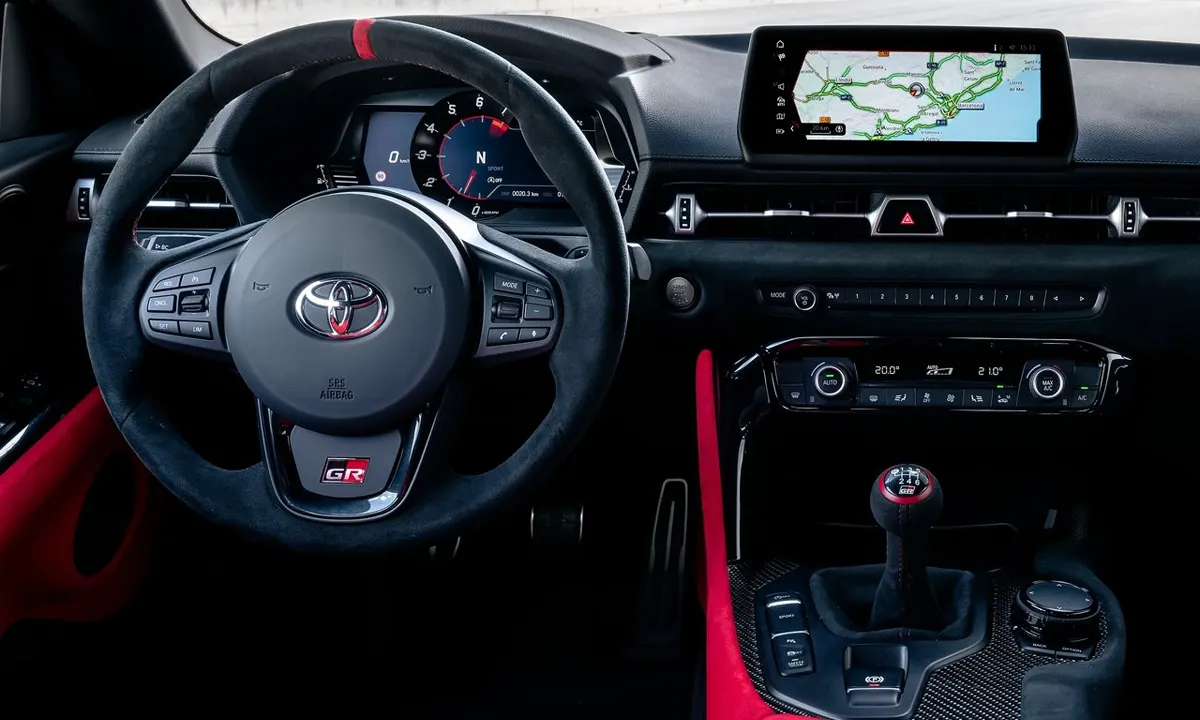
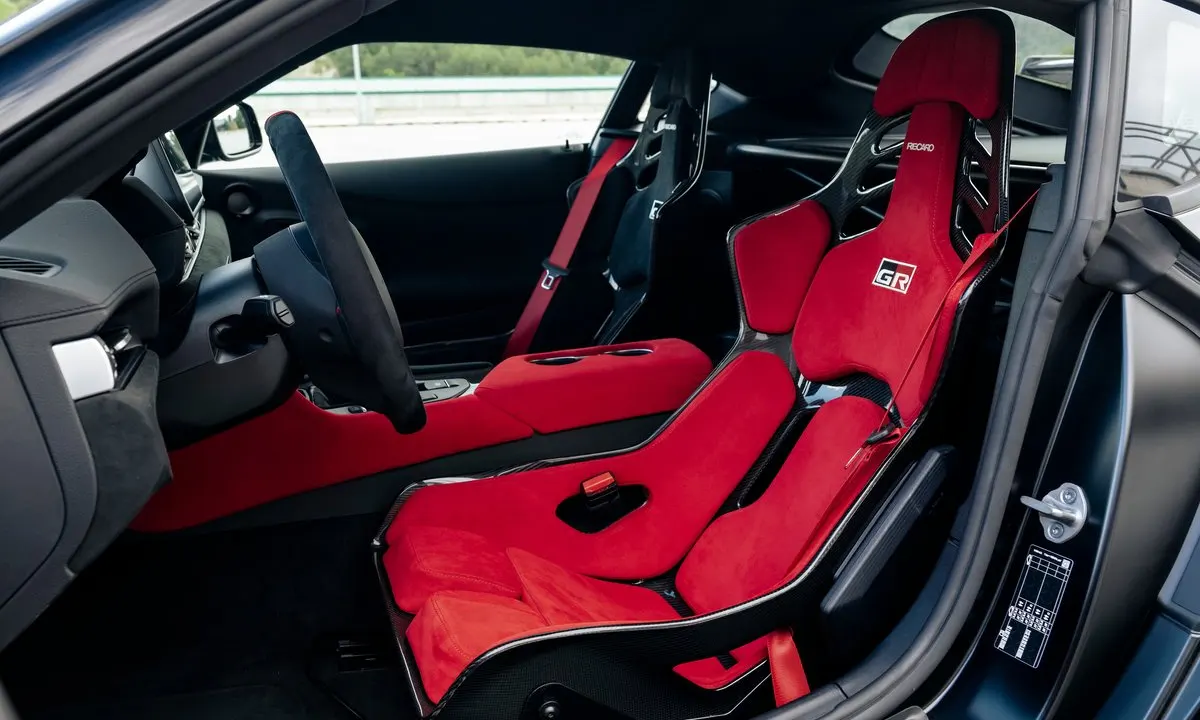
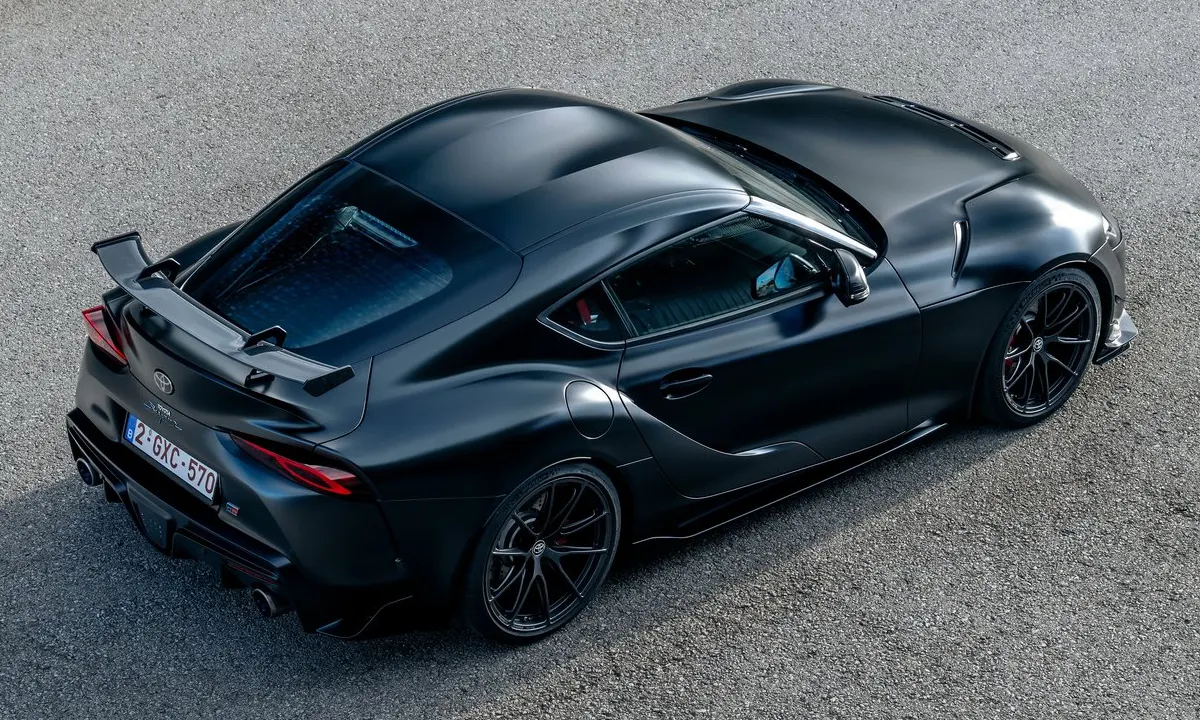
The honest answer is that nobody knows yet. And that uncertainty is precisely what makes this the most fascinating new car story in the performance world right now.
Understanding What Toyota Is Actually Building
To assess whether the 2027 Supra Mk6 is a game changer or a calculated risk, it helps to understand clearly what Toyota is reportedly building, based on what the most credible Japanese industry sources have published. According to Best Car — the Japanese automotive magazine whose Supra reporting has proven consistently reliable since the A90’s pre-launch period — Toyota is developing the Mk6 on an entirely new rear-wheel-drive platform created in-house by Gazoo Racing, with no shared architecture, no shared components and no shared production facility with any external manufacturer. The proposed powertrain is a 2.0-litre turbocharged four-cylinder engine paired with hybrid assistance, with a combined output expected to approach 400 horsepower in road specification.
In motorsport application — where the engine was briefly and extraordinarily revealed by Toyota at the 2025 Tokyo Auto Salon in concept form — the same basic unit produces an extraordinary 592 horsepower with full racing preparation and electrification. Toyota’s engineers have also confirmed, through public statements rather than rumour, that the engine’s bore spacing has been deliberately designed with sufficient room to accommodate a meaningful displacement increase in the future — a direct hint that higher-powered road car derivatives are part of the long-term product plan rather than an afterthought. The racing variant’s output confirms that the fundamental engine architecture is neither conservative nor limited. Four cylinders does not mean modest ambition when the same cylinder count can support 592 horsepower in race trim.
What is also reported, with somewhat less certainty, is the possibility that Toyota is simultaneously developing a second Mk6 prototype using a Mazda-sourced 3.3-litre mild-hybrid turbocharged inline-six — the same basic engine family deployed in Mazda’s CX-60 and CX-90 crossovers and widely praised as one of the finest new inline-six designs produced by any Japanese manufacturer in the current era. The presence of two different engine prototypes in Toyota’s development program is itself revealing: it suggests that the engineering team has not yet committed irrevocably to the four-cylinder path and is keeping the inline-six option alive as an alternative until a definitive production decision is made. The four-cylinder is expected to win that internal competition, primarily on the basis of weight, agility and fuel efficiency advantages. But the fact that an inline-six option exists is important for enthusiasts to understand, because it means Toyota has not dismissed the configuration that has defined the Supra’s character across every generation of its production life.
The Game Changer Case: Why This Could Be the Best Supra Ever
The case for the Mk6 as a genuine game changer begins with the thing that was most fundamentally missing from the A90’s identity: the freedom to make every decision on Toyota’s terms. When the A90 was being developed, Toyota’s engineers were working within the structural, dimensional and geometric constraints of a platform designed by BMW for a family of products that included everything from the CLAR-based sedans to the 5 Series. Those constraints were not trivial. The suspension pickup points, the wheelbase geometry, the weight distribution targets and the electronic integration architecture were all BMW decisions that Toyota’s Gazoo Racing engineers adapted to rather than established. The result was an excellent sports car whose dynamic character reflected the intersection of Toyota GR’s tuning ambitions and BMW’s fundamental engineering decisions — which is not the same as a pure expression of what GR would have built given a blank sheet of paper.
The Mk6 gives Gazoo Racing that blank sheet for the first time in the modern Supra’s history. The team that produced the GR Yaris — a 268-horsepower all-wheel-drive hot hatch built around a three-cylinder engine that became one of the most critically acclaimed driver’s cars of the last decade — and the GR Corolla that followed it, has demonstrated comprehensively that it understands how to build a sports car with genuine driver engagement regardless of cylinder count or displacement. The GR Yaris’s three-cylinder engine was a choice that generated enormous scepticism before the car launched and universal admiration afterward. It is not impossible that the Mk6’s four-cylinder hybrid will follow the same trajectory.
The hybrid powertrain’s specific architecture also provides a dynamic advantage that has nothing to do with power output: instant torque delivery from the electric motor, available from zero revolutions per minute, fills the exact mid-range gap that has historically been the turbocharged four-cylinder’s most significant competitive disadvantage relative to a larger naturally aspirated or turbocharged six. The combination of a high-revving turbocharged four with hybrid torque assist at low and middle speeds could produce a power delivery characteristic that is both broader and more linear than the BMW B58 straight-six’s already excellent throttle response. That is a meaningful performance engineering achievement, not a compromise.
The weight implications are equally significant. Removing the BMW B58’s considerable mass from the front of the car and replacing it with a lighter four-cylinder hybrid unit shifts the weight distribution in a direction that benefits handling balance, reduces the polar moment of inertia and makes the car more responsive to directional changes — the qualities that separate genuinely engaging sports cars from merely powerful ones. If GR’s engineers can design the Mk6 to come in below 3,400 pounds with the hybrid system included, they will have created a car with better power-to-weight characteristics than the outgoing A90 despite producing similar total output.
The Risk Case: Why This Could Divide the Supra Community Permanently
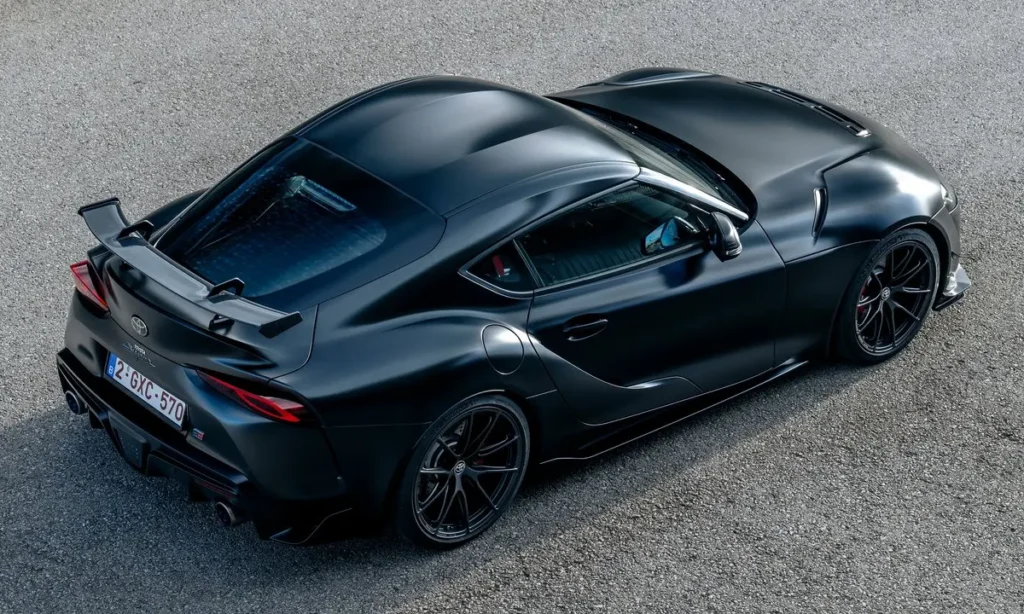
The case against the Mk6 as a risk — the argument that Toyota is making decisions that could alienate the core enthusiast audience the Supra has always served — rests on three specific concerns that are genuine, serious and deserve honest engagement rather than dismissal.
The first concern is the engine configuration. The Supra nameplate has been associated with inline-six engines across five of its six generations, from the 5M-GEU that powered the original A60 to the legendary 2JZ-GTE that made the A80 culturally immortal, to the BMW B58 that powered the A90. The inline-six’s smooth power delivery, its long-stroke torque character and its distinctive acoustic signature are all properties that four-cylinder engines — regardless of their output or sophistication — cannot replicate. Enthusiasts who regard the six-cylinder as fundamental to the Supra’s identity will not be reassured by power figures that match the B58’s output, because they are not primarily concerned with horsepower. They are concerned with character. A four-cylinder hybrid Supra may be faster, lighter and more technically sophisticated than its predecessor, but it will sound different, feel different through the throttle and carry different cultural associations. Whether those differences constitute progress or regression is a matter of values rather than engineering, and the Supra community’s values on this specific point are firmly established.
The second concern is the manual transmission. The A90 eventually gained a manual gearbox option after its initial launch with an eight-speed automatic only — and the manual’s availability was widely celebrated as validation of Toyota’s willingness to listen to enthusiast feedback. The Mk6’s hybrid powertrain makes a conventional clutch-pedal manual gearbox mechanically very difficult to implement, as the motor-generator positioned between the engine and the transmission must manage complex torque integration that the driver’s clutch operation would interrupt unpredictably. Toyota is reportedly developing a simulated manual gearbox — a technology that provides shift interaction and mechanical feedback without actual clutch engagement — as a potential solution. The question of whether the Supra community will accept a simulated manual as a genuine substitute for the real thing is one that can only be answered after drivers experience the system in the car, but the expectation of scepticism is entirely reasonable.
The third concern is weight. The hybrid system’s battery, power electronics and motor-generator assembly add mass that a non-hybrid four-cylinder cannot avoid, and multiple industry observers project that the Mk6 could weigh in the 3,700-pound range when fully equipped — heavier than the A90’s 3,400-pound kerb weight and potentially heavier than any previous Supra generation. A heavier Supra is a dynamically compromised Supra unless the chassis engineering compensates through improved aerodynamics, revised suspension geometry and more sophisticated traction management. Whether GR’s in-house platform can make 3,700 pounds feel lighter than the A90’s 3,400 is an engineering challenge without a guaranteed answer before the car reaches reviewers’ hands.
The Competitive Reality: Rivals Are Not Standing Still
The timing of the Mk6’s development and the sports car landscape it will enter in 2027 adds a further layer of complexity to the game-changer-versus-risk question. The Nissan Z NISMO, with its 420-horsepower twin-turbocharged V6 and newly available six-speed manual gearbox for 2027, has outsold the A90 Supra in the United States in recent years and will be a firmly established competitor with a proven enthusiast following by the time the Mk6 arrives. The BMW M2, which shares a DNA connection with the A90 in the minds of many observers who noted the two cars’ common heritage, offers 473 horsepower from a turbocharged inline-six in a rear-wheel-drive coupe that starts below $65,000 and offers a manual gearbox as standard. The Alpine A110, which will be the Mk6’s most direct weight and dynamics rival, offers an analogue, naturally engaging driving experience that contrasts sharply with the electrified, hybrid-assisted direction Toyota is pursuing.
In this competitive landscape, the Mk6’s success will depend on whether it can offer something that none of these cars provides. The GR Yaris and GR Corolla demonstrated that Gazoo Racing’s answer to that question is typically found not in raw power but in a combination of precision, driver engagement and the kind of complete dynamic character that makes a car feel like an extension of its driver rather than a vehicle controlled by one. If the Mk6 delivers that quality — if it feels as involving and as rewarding to drive quickly as the GR Yaris felt in its category — the four-cylinder hybrid configuration will ultimately be irrelevant to buyers’ satisfaction. History suggests that Gazoo Racing is capable of exactly that outcome. The risk is real. But so is the potential.
Read: 10 Quickest Four-Cylinder Cars Ever Made: That Rewrote the Rules of Performance
Toyota GR Supra — A90 vs Expected Mk6 Comparison Chart
| Category | A90 GR Supra (2019–2026) | Mk6 GR Supra (2027 — Projected) |
| Platform | BMW CLAR (Shared with Z4) | New Toyota/GR In-House RWD Platform |
| Engine Configuration | BMW B58 3.0L Turbo Inline-Six | Toyota 2.0L Turbo Hybrid Four-Cylinder |
| Alternative Engine Possibility | BMW B46 2.0L Four-Cylinder (Some Markets) | Mazda 3.3L Mild-Hybrid Inline-Six (Rumoured) |
| Road Car Horsepower | 382–429 hp (Market Dependent) | ~394–400 hp (Projected) |
| Racing Variant Horsepower | GR Supra GT4 — ~500 hp | Up to 592 hp (Racing Configuration) |
| Hybrid System | None | Yes — Motor-Generator Between Engine and Gearbox |
| Carbon-Neutral Fuel Compatible | No | Yes — Designed-In Compatibility |
| Transmission | 8-Speed Auto (Manual Added Later, Select Markets) | 8 or 10-Speed Auto / Simulated Manual (Likely) |
| Conventional Manual | Yes (Late Addition, Select Markets) | Unlikely — Hybrid Architecture Complicates |
| Drivetrain | Rear-Wheel Drive | Rear-Wheel Drive |
| Expected Kerb Weight | ~3,400 lbs (1,542 kg) | ~3,600–3,750 lbs (Projected with Hybrid) |
| Weight Distribution (A90) | 50.3% Front / 49.7% Rear | TBD — New Platform |
| Production Facility | Magna Steyr — Graz, Austria (With BMW Z4) | Toyota In-House (Location TBD) |
| BMW Shared Components | Platform, Engine, ZF Gearbox, Electronics, Some Interior | None |
| Body and Design | Shared Architecture Constraints | Fully Independent Toyota/GR Design |
| Design May Change | Constrained by Shared Platform | “It might change. It might morph, shape-wise.” — Toyota VP |
| Cylinder Count | 6 (Inline) | 4 (Inline) — Primary Rumour |
| U.S. Annual Sales (2024) | 2,615 Units | TBD |
| Production End / Start | March 2026 | Late 2027 (Expected) |
| Price Gap (Years) | 17 Years (A80 to A90) | ~1.5–2 Years (A90 to Mk6) |
| Key Domestic Rival | Nissan Z NISMO, BMW M2 | Nissan Z NISMO, BMW M2, Alpine A110 |
| GR Division Pedigree | GR86, GR Yaris, GR Corolla | Same — Extended Development |
| Simulated Manual Option | No | Possible — In Development |