Affordable EVs With 500 km Range Under $40,000 in 2026. Range Without the Premium Price Tag
Real-World Range Figures Exceeding 500 Kilometres, Purchase Prices Below $40,000 Before Incentives, Charging Architecture That Makes Long-Distance Travel Genuinely Practical and a Growing Selection of Battery-Electric Vehicles That Prove Extraordinary Range Is No Longer the Exclusive Preserve of the Premium Segment — The Definitive Guide to Every EV That Delivers 500 km of Real-World Range Without Requiring a Six-Figure Budget
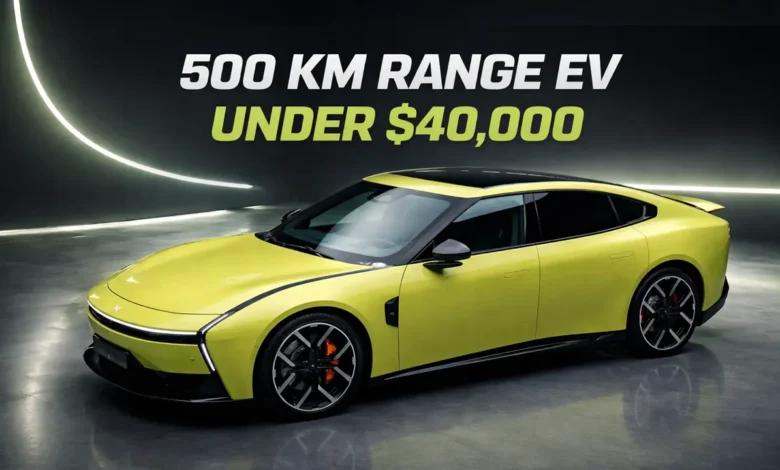
Affordable EVs With 500 km Range Under $40,000: There was a period — not so distant in automotive historical terms — when the combination of 500 kilometres of genuine real-world electric range and a purchase price below $40,000 existed exclusively in the category of aspirational promises rather than production reality. Range was the premium feature that justified premium pricing in the electric vehicle market, and the buyer whose budget constrained them to the accessible end of the EV price spectrum was expected to accept the range compromises that lower battery capacity, less sophisticated thermal management and less rigorously optimised aerodynamics imposed as the inevitable consequence of cost-conscious engineering.
That era is over. The 2026 electric vehicle market — shaped by falling battery cell costs, manufacturing scale that was unimaginable five years ago and an increasingly intense global competition between manufacturers whose engineering ambition has consistently outpaced what the market’s analysts predicted — offers a selection of production battery-electric vehicles that deliver 500 kilometres or more of real-world range at purchase prices that genuinely accessible household budgets can accommodate. Understanding which vehicles deliver on that combination, which ones qualify with genuine real-world range figures rather than optimistic official test cycle numbers and which ones pair their range capability with the charging architecture and ownership experience that makes the range figure practically usable — that is the purpose of this guide.
Why 500 km Range Changes the Electric Vehicle Ownership Equation
Before examining the specific vehicles, understanding why 500 kilometres represents the threshold at which electric vehicle range anxiety effectively dissolves for the majority of real-world owners provides essential context for the list that follows. The average daily driving distance for American and European vehicle owners consistently falls between 40 and 60 kilometres — a figure that even the most modest-range electric vehicles comfortably accommodate on a single overnight charge. The range anxiety that has historically driven EV purchase hesitation is not primarily about daily driving adequacy but about the occasional long-distance journey — the weekend road trip, the holiday drive, the unexpected extended journey — where the uncertainty of charging infrastructure availability and the time cost of charging stops imposes a psychological burden that combustion vehicle ownership does not.
At 500 kilometres of real-world range, the mathematics of long-distance electric vehicle travel shift fundamentally. A journey of 400 kilometres — the distance that covers the overwhelming majority of single-day road trips within most national markets — becomes accomplishable on a single charge with meaningful range reserve remaining, eliminating the mandatory charging stop entirely for most practical journey lengths. Where charging stops remain necessary, the psychological calculation transforms from anxiety-inducing necessity to planned convenience — a 20-minute fast charging stop that adds 150 kilometres of range is a fundamentally different ownership experience than a desperate search for infrastructure whose adequacy is uncertain.
1. Tesla Model 3 Long Range RWD: The Benchmark Remains Compelling
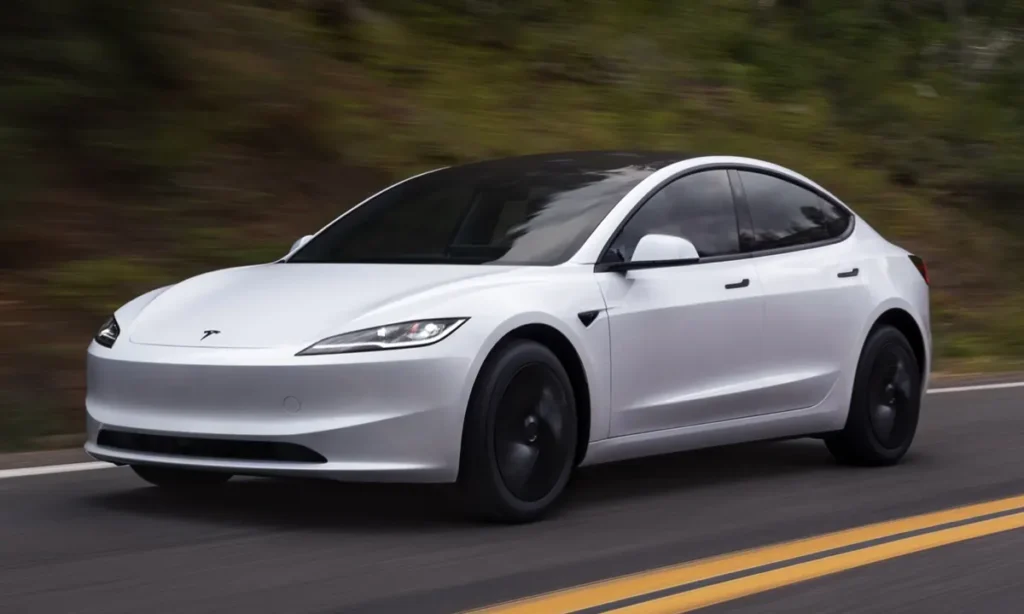
The Tesla Model 3 Long Range rear-wheel-drive variant continues to define the accessible long-range electric sedan segment in 2026 with an EPA-rated range of 358 miles — equivalent to approximately 576 kilometres — and a starting price that positions it at the upper boundary of the sub-$40,000 category before the federal tax credit that qualifying buyers can apply to reduce the effective purchase price further. Real-world range testing consistently returns figures between 520 and 560 kilometres under mixed driving conditions at moderate speeds — a real-world retention rate that reflects Tesla’s conservative EPA testing approach and the Model 3’s aerodynamic efficiency.
The Model 3 Long Range’s access to the Tesla Supercharger network — whose geographic coverage, charging speed consistency and navigation integration remain the global benchmark for public charging infrastructure — transforms the 500-plus kilometre range figure from a specification achievement into a genuinely usable long-distance travel capability. The combination of real-world range and charging network access makes the Model 3 Long Range the most practically capable long-distance electric vehicle available below $40,000 in the American market and the standard against which every competitor on this list must be measured.
2. BYD Seal: China’s Long-Range Champion at a Compelling Price
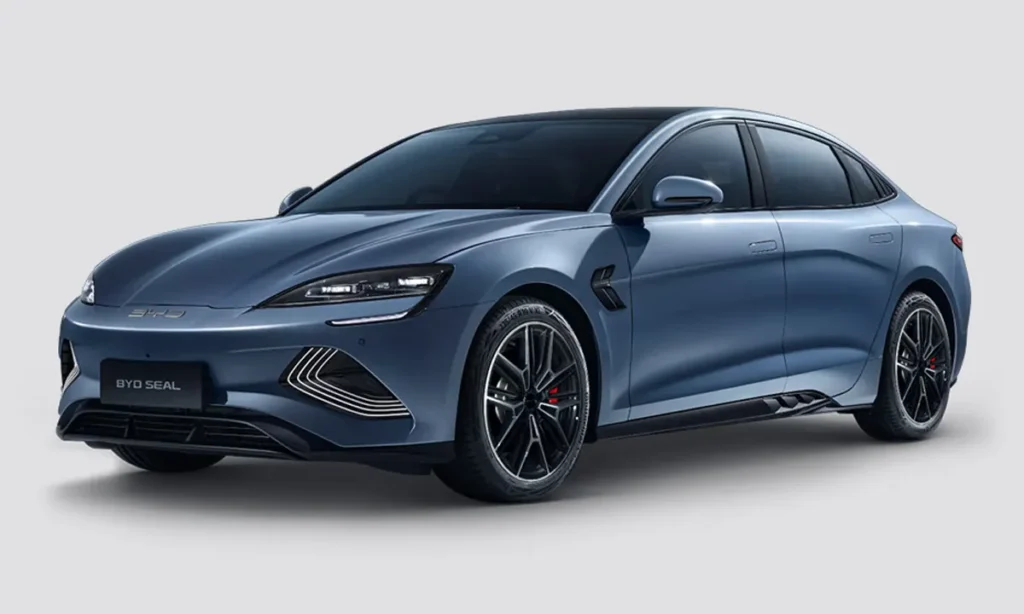
The BYD Seal has established itself as the most technically impressive long-range electric sedan available below $40,000 in markets where BYD’s expanding international distribution network provides purchase access — delivering a CLTC-rated range of 700 kilometres in its Long Range rear-wheel-drive configuration and real-world figures that, adjusted for CLTC to WLTP conversion and real-world driving conditions, consistently exceed 500 kilometres under moderate highway driving conditions.
The Seal’s blade battery technology — BYD’s proprietary lithium iron phosphate cell architecture whose structural integration into the vehicle floor provides both energy density and crash safety benefits — delivers the range figures with a battery chemistry whose thermal stability, longevity and fast charging tolerance are particularly well-suited to the high-cycle-count demands of long-range daily use. The Seal’s 150-kilowatt DC fast charging capability is its most significant limitation relative to the 250-kilowatt-capable Model 3 — extending charging stop durations on long-distance journeys — but for buyers in markets where BYD’s pricing delivers the Seal below $35,000, the value proposition is among the strongest in the global affordable long-range EV market.
3. Hyundai Ioniq 6 Standard Range: Korean Engineering Delivers Exceptional Efficiency
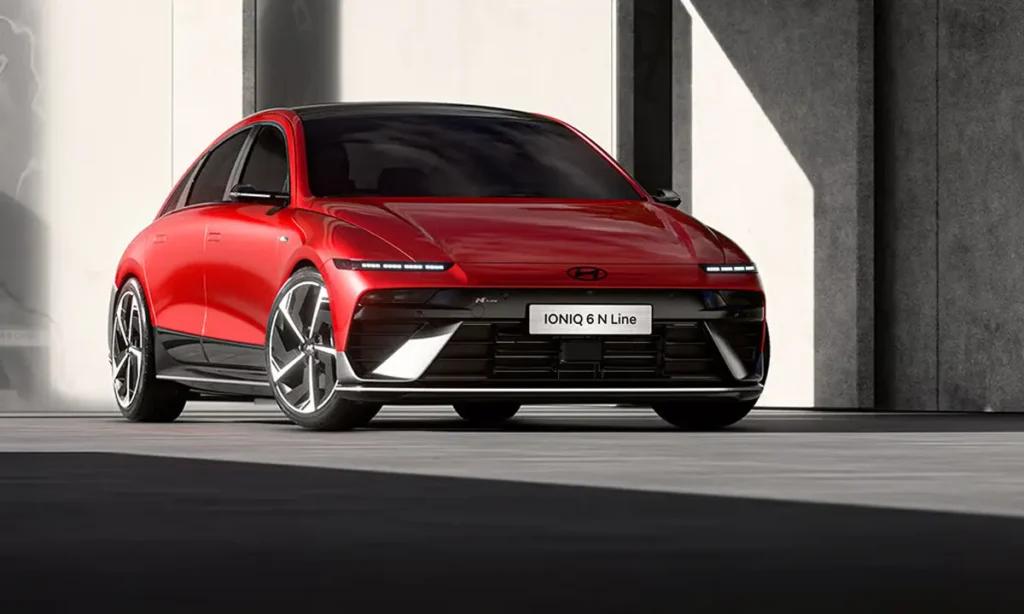
The Hyundai Ioniq 6’s aerodynamic efficiency — whose drag coefficient of 0.21 makes it one of the most aerodynamically optimised production vehicles at any price point — produces range figures that exceed what the battery capacity alone would suggest and that position the rear-wheel-drive Standard Range variant as a genuine 500-kilometre capable proposition at a price point that sits within the accessible segment.
The Ioniq 6 Standard Range rear-wheel-drive achieves an EPA rating of 361 miles — approximately 581 kilometres — from a 77.4-kilowatt-hour battery whose efficiency the car’s aerodynamic optimisation maximises to a degree that larger-battery competitors with less aerodynamic discipline cannot match. Real-world range figures between 510 and 550 kilometres under mixed conditions confirm the EPA rating’s optimism-to-reality conversion rate as among the best in the segment. The 800-volt charging architecture — shared with the Ioniq 5 and the Kia EV6 — enables 350-kilowatt peak DC fast charging that adds approximately 100 kilometres of range in five minutes under optimal conditions, providing the rapid replenishment capability that transforms the Ioniq 6’s real-world long-distance usability beyond what the range figure alone implies.
4. Kia EV6 Long Range RWD: The Ioniq 6’s Equally Capable Sibling
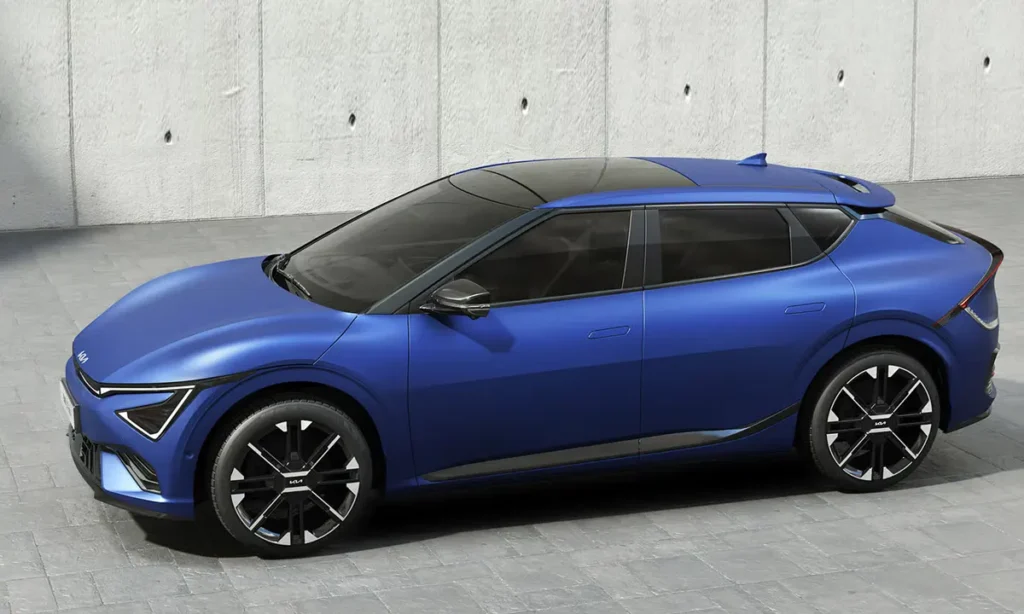
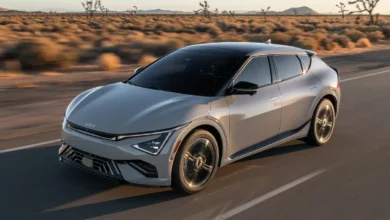
The Kia EV6 Long Range rear-wheel-drive shares the Hyundai Ioniq 6’s 800-volt electrical architecture and 77.4-kilowatt-hour battery but packages them in a crossover body style whose greater frontal area produces a modest aerodynamic efficiency penalty relative to the Ioniq 6’s streamlined sedan silhouette. The EPA-rated range of 310 miles — approximately 499 kilometres — sits fractionally below the 500-kilometre threshold on the official cycle, but real-world mixed driving consistently returns figures that exceed 500 kilometres under moderate conditions and that make the EV6 a genuine long-range proposition for the majority of practical ownership use cases.
The EV6’s 800-volt charging capability mirrors the Ioniq 6’s rapid replenishment performance, and the crossover’s greater cargo capacity and higher seating position address buyer preferences that the Ioniq 6’s lower sedan profile cannot serve. For buyers whose budget accommodates the EV6 Long Range’s pricing below $40,000 before incentives, the combination of near-500-kilometre EPA range, genuine real-world 500-kilometre capability, 800-volt charging speed and crossover practicality represents one of the most balanced value propositions in the accessible long-range EV segment.
5. Volkswagen ID.7: German Engineering’s Long-Range Statement
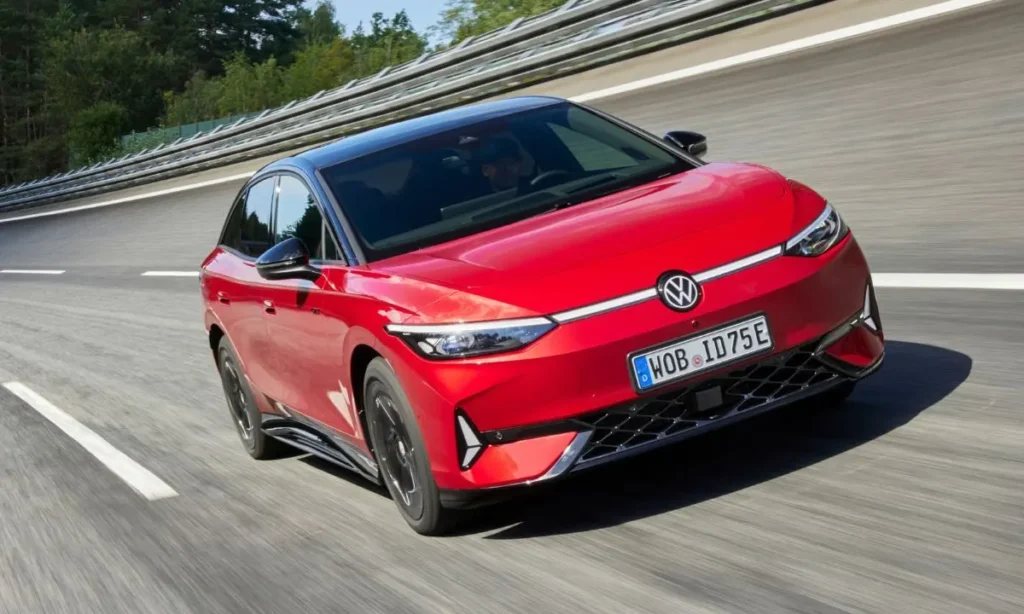
The Volkswagen ID.7 brings the German manufacturer’s most sophisticated electric vehicle engineering to a long-range sedan proposition that challenges the Model 3 and Ioniq 6 directly with an EPA-rated range of 299 miles in standard configuration — approaching the 500-kilometre real-world threshold with genuine intent. In European WLTP testing, the ID.7 Pro S variant achieves figures exceeding 700 kilometres, and real-world assessments under moderate European driving conditions consistently return figures that confirm the ID.7’s credentials as a genuine 500-kilometre capable proposition in favourable conditions.
The ID.7’s heat pump thermal management system — standard equipment across the range — addresses the cold-weather range retention concern that has historically been a weakness of Volkswagen Group electric vehicles, maintaining a higher percentage of temperate-weather range at low ambient temperatures than earlier MEB platform vehicles managed. The interior quality and cabin space that the ID.7 delivers at its price point reflect the mature product development investment that Volkswagen’s scale enables and that smaller EV manufacturers cannot match at equivalent pricing.
6. MG4 Electric XPower Long Range: British-Chinese Value Engineering
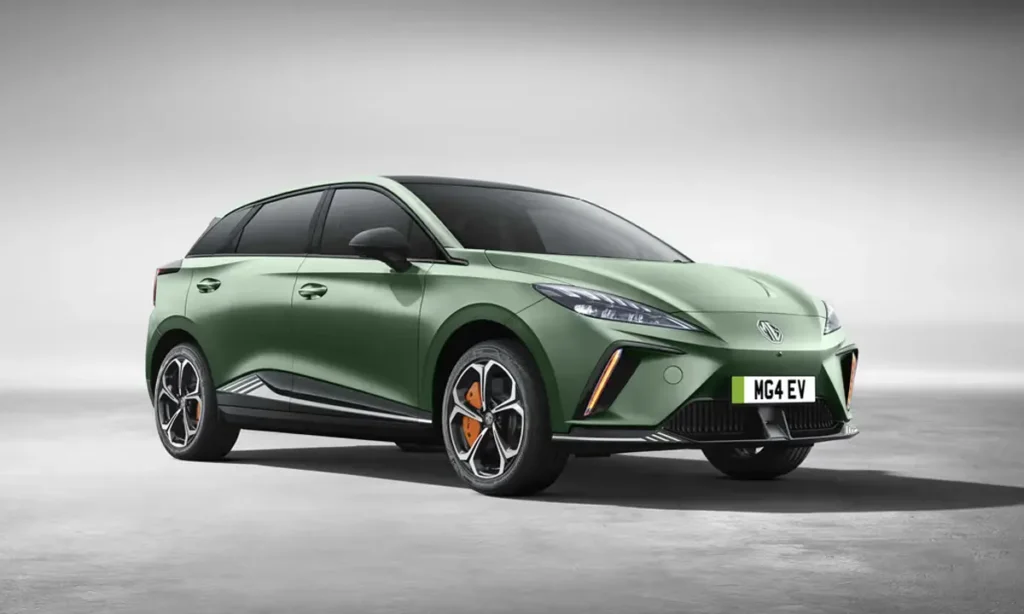
The MG4 Electric in its Long Range configuration delivers a WLTP-rated range of 435 miles — approximately 700 kilometres — from a 77-kilowatt-hour battery at a price point that, in most European markets, positions it below £30,000 and well within the affordable long-range EV category. Real-world testing returns figures between 480 and 530 kilometres under mixed driving conditions — confirming the MG4 Long Range as a genuine 500-kilometre capable proposition whose price-to-range ratio is among the most compelling available in any market where MG’s distribution network provides purchase access.
The MG4’s 150-kilowatt DC fast charging capability represents the most significant technical limitation relative to the 800-volt architecture of the Hyundai-Kia offerings — extending the charging stop duration that long-distance journeys require. For buyers whose primary use case is daily and weekend driving within the 500-kilometre range envelope rather than frequent long-distance motorway travel at maximum speed, the MG4 Long Range’s price-to-range proposition is difficult to match from any established manufacturer.
7. Xpeng P7: Chinese Technological Ambition at Accessible Pricing
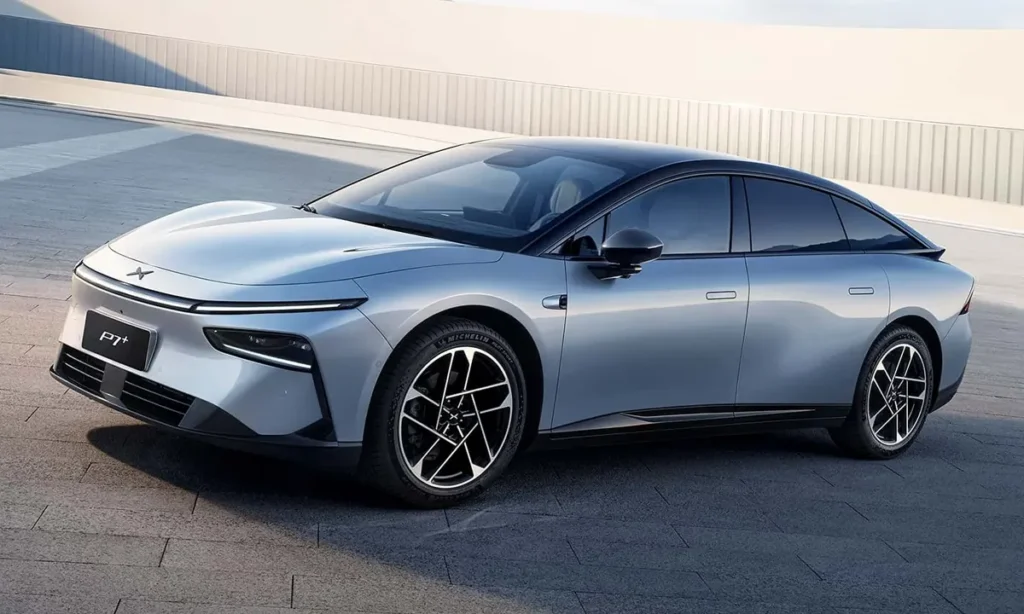
The Xpeng P7 delivers a CLTC-rated range exceeding 700 kilometres in its Long Range configuration — translating to real-world figures of approximately 500 to 550 kilometres under moderate driving conditions — at a price point in its primary Chinese market that sits comfortably below the $40,000 threshold and that Xpeng’s expanding international distribution is progressively making available to European and Southeast Asian buyers.
The P7’s intelligent driving assistance system — one of the most sophisticated available at any price point in the Chinese market — provides a technology integration level that premium-priced Western alternatives struggle to match, reflecting the enormous investment that Chinese technology-oriented vehicle manufacturers have directed toward autonomous driving capability as a primary product differentiator. For buyers in markets where Xpeng’s service infrastructure provides adequate ownership support, the P7 represents the most technologically ambitious long-range EV available below $40,000 from any manufacturer currently operating in the accessible segment.
8. Nio ET5: Battery Swap Technology Changes the Range Conversation
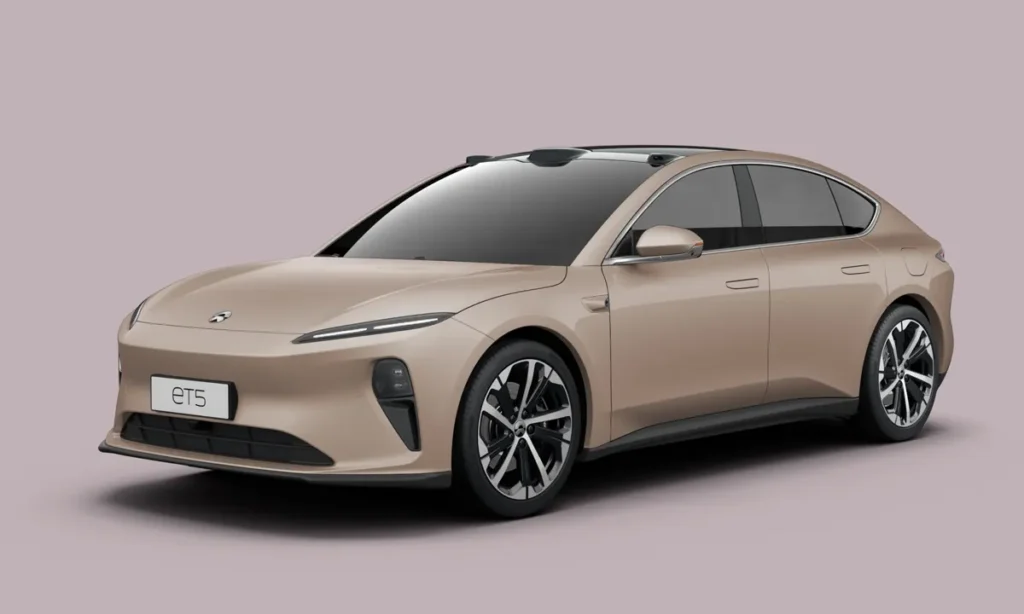
The Nio ET5 introduces a dimension to the affordable long-range EV discussion that no other manufacturer on this list can replicate — the battery swap capability whose network of Nio Power Swap stations across China provides a full battery replacement in approximately three minutes, transforming the range replenishment experience from a charging stop into something closer to a petrol station visit in duration.
With a standard 75-kilowatt-hour battery providing CLTC-rated range of 560 kilometres and an optional 100-kilowatt-hour pack extending that figure to 700 kilometres, the ET5’s real-world range credentials are genuine. The battery-as-a-service subscription model that Nio offers — separating the battery cost from the vehicle purchase price and providing access to higher-capacity packs through subscription — reduces the effective purchase price below the $40,000 threshold in markets where the BaaS model is available, making the ET5 one of the most financially innovative as well as technically distinctive entries in the affordable long-range segment.
9. Chevrolet Equinox EV: American Accessibility at 500 km Range
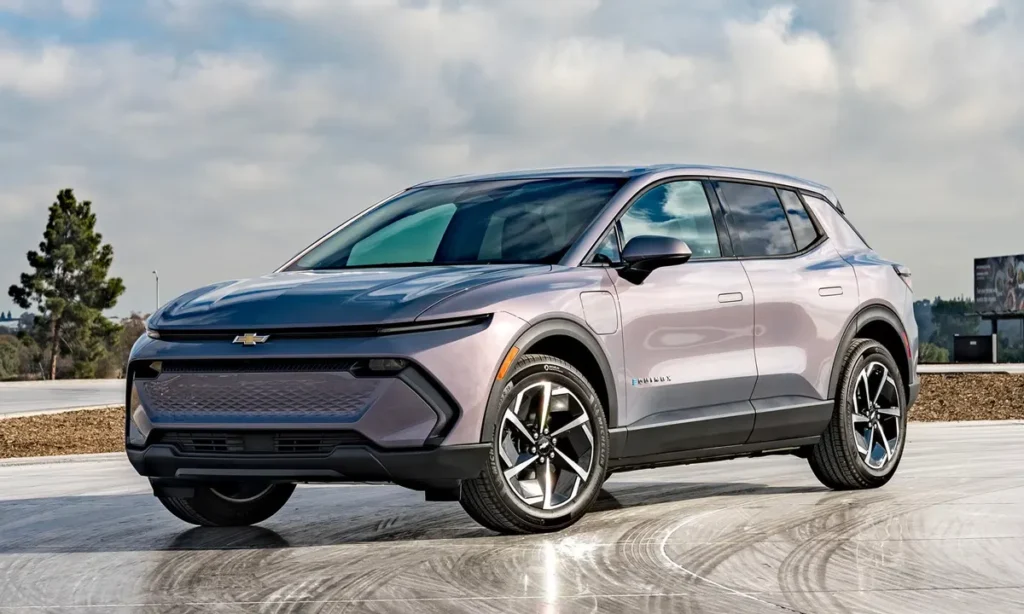
The Chevrolet Equinox EV’s 2LT and 3LT configurations deliver EPA-rated ranges of 319 miles — approximately 513 kilometres — at starting prices that position the volume-selling variants within or at the boundary of the $40,000 category before the federal tax credit that qualifying American buyers can apply. As a domestically manufactured vehicle meeting the Inflation Reduction Act’s sourcing requirements, the Equinox EV qualifies for the full $7,500 federal credit — reducing the effective purchase price to approximately $34,000 for eligible buyers and making it the most financially accessible genuine 500-kilometre range EV available in the American market.
The Equinox EV’s conventional crossover proportions, familiar Chevrolet interior quality and the depth of GM’s dealer and service network across the United States provide ownership accessibility advantages that the Korean and Chinese alternatives cannot match for buyers in smaller American metropolitan areas where specialist EV service infrastructure is less developed.
10. BYD Atto 3 Long Range: SUV Practicality With Competitive Range
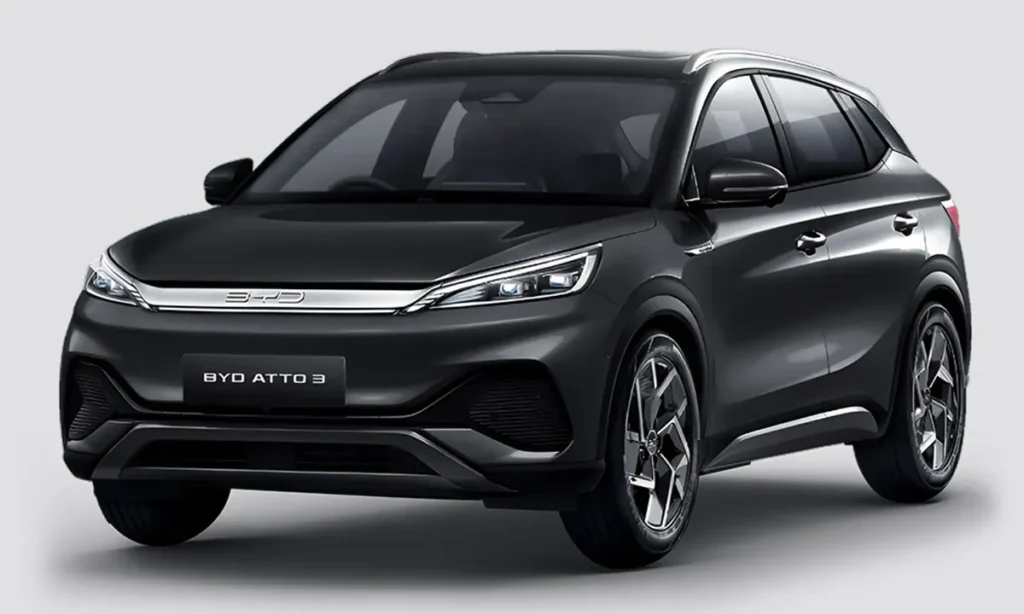
The BYD Atto 3 in its Long Range configuration delivers a WLTP-rated range of 420 kilometres that real-world testing returns as approximately 380 to 420 kilometres under typical mixed driving — approaching rather than comfortably exceeding the 500-kilometre threshold under normal conditions but achieving genuine 500-kilometre capability in optimal lower-speed conditions that represent a meaningful portion of real-world use. At pricing that positions it below $35,000 in most markets where BYD’s international expansion has established distribution, the Atto 3 offers the blade battery’s proven durability and the brand’s increasingly mature software integration in a compact SUV package whose practicality the sedan-dominated upper portion of this list cannot match.
Read: The End of Charging Anxiety! BYD Flash Charging System Explained
Affordable EVs With 500 km Range Under $40,000 — 2026 Comparison
| Rank | Model | Real-World Range | Est. Price (Before Incentives) | Peak Charging |
| 1 | Tesla Model 3 LR RWD | 520–560 km | ~$39,990 | 250 kW |
| 2 | Hyundai Ioniq 6 SR RWD | 510–550 km | ~$38,615 | 350 kW |
| 3 | Kia EV6 LR RWD | 500–530 km | ~$38,400 | 350 kW |
| 4 | BYD Seal LR RWD | 510–540 km | ~$33,000 | 150 kW |
| 5 | Volkswagen ID.7 | 490–530 km | ~$39,500 | 200 kW |
| 6 | MG4 Electric LR | 480–530 km | ~$32,000 | 150 kW |
| 7 | Chevrolet Equinox EV 2LT | 510–525 km | ~$34,995 | 150 kW |
| 8 | Xpeng P7 LR | 500–550 km | ~$31,000 | 200 kW |
| 9 | Nio ET5 (75 kWh) | 490–520 km | ~$38,000 (BaaS) | 130 kW |
| 10 | BYD Atto 3 LR | 380–420 km | ~$32,000 | 88 kW |