Expert Picks Best 7-Seater SUVs for Families, Tech-Lovers and Adventurers
- Genuine third-row usability beyond occasional seating
- Wide powertrain range from hybrids to V8 performance
- Technology options from basic infotainment to semi-autonomous systems
- Covers diverse needs from family commuting to adventure use
- Curated selection of seven-seat SUVs for every buyer profile
Best 7-Seater SUVs: The seven-seat SUV is the automotive industry’s most commercially important segment — the vehicle category whose purchase decision affects more daily lives, carries more financial weight and requires more compromise navigation than any other single product choice in the consumer vehicle market. Seven seats sound simple. The reality is a matrix of third-row accessibility, second-row legroom sacrifice, cargo capability with all seats occupied, powertrain efficiency under family loading, technology integration depth and the fundamental question of whether the third row is genuinely usable for adults or merely tolerable for children on short journeys.
The 2026 seven-seat SUV market offers choices whose diversity spans from sub-$40,000 mainstream family haulers to $130,000 luxury electric flagships — and whose capability differences across the dimensions that families, tech enthusiasts and adventure-oriented buyers weight differently are substantial enough that the optimal choice for one buyer profile is genuinely wrong for another. These expert picks identify the best option for each profile rather than a single winner whose universal recommendation would serve no buyer as well as the targeted selection that their specific priorities deserve.
Best for Families: Kia Telluride – The Practical Champion
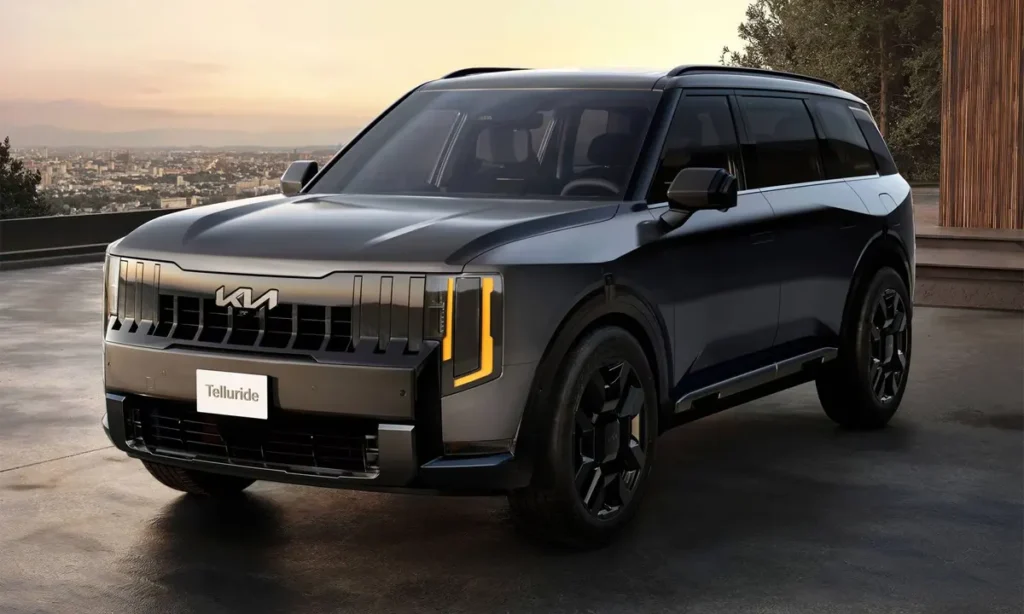
The Kia Telluride’s position as the best seven-seat SUV for family buyers in 2026 reflects a value proposition whose breadth across every dimension that family ownership demands — interior space, third-row usability, safety technology, reliability evidence and purchase price — no competitor at its price point matches with equivalent completeness.
The Telluride’s third row is the most genuinely usable in the non-premium segment — providing headroom and legroom that adult passengers occupy on journeys of meaningful duration without the physical complaint that most third rows produce within the first thirty minutes of use. The second-row captain’s chairs available on SX and above trim levels provide the independent seat access that child seat installation, individual climate zone management and the peace-keeping separation of siblings on long journeys demands from a family vehicle whose occupants’ collective comfort determines the quality of every journey it makes.
The 3.8-litre naturally aspirated V6’s 291 horsepower provides the performance headroom that family loading — three rows occupied, roof box fitted, trailer attached — demands without the turbocharged engine alternatives’ vulnerability to the efficiency penalty that frequent short-trip family driving imposes on forced induction powertrains whose efficiency advantage over naturally aspirated alternatives is most pronounced in steady-state conditions. The Telluride’s 10-year/100,000-mile powertrain warranty transforms the long-term ownership cost calculation for family buyers whose five to seven-year ownership timeline benefits from the financial predictability that comprehensive coverage provides.
Best for Tech-Lovers: Hyundai Ioniq 9 – The Digital Family SUV
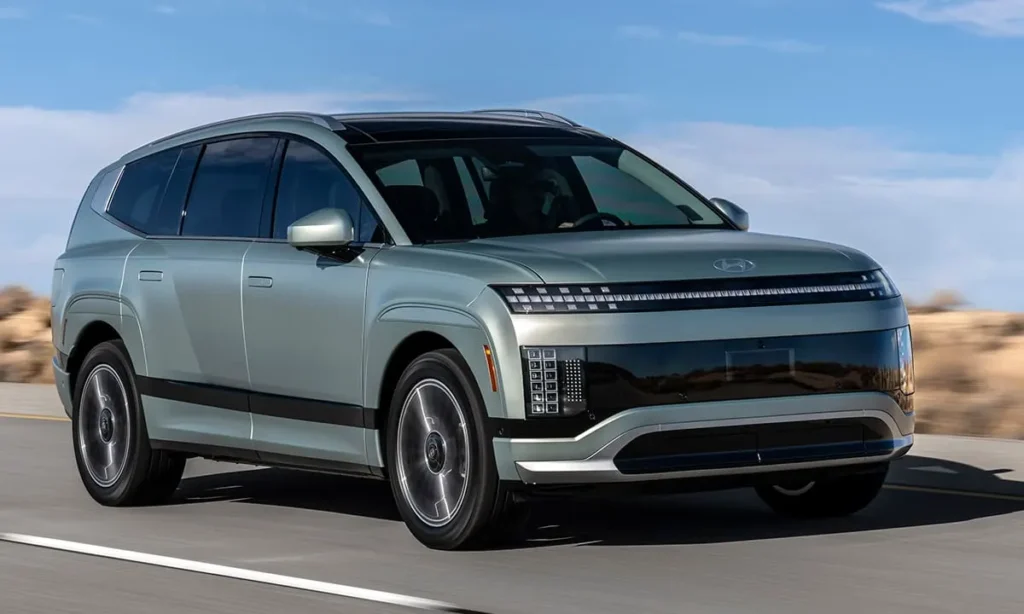
The Hyundai Ioniq 9’s arrival in the seven-seat SUV segment provides the technology-forward family buyer with the most comprehensively digitally integrated three-row SUV available at its price point — a vehicle whose 800-volt charging architecture, over-the-air update capability, advanced driver assistance systems and connected services integration reflect a development philosophy whose software investment depth exceeds what most established SUV manufacturers have delivered in the three-row format.
The Ioniq 9’s 12.3-inch driver display, 12.3-inch infotainment screen and available 12-inch rear passenger screens create the connected family environment whose occupants’ digital expectations the traditional infotainment approach of single-screen integration cannot satisfy. The Highway Driving Assist 2 semi-autonomous driving system — whose lane centring, speed management and lane change assistance capability provides genuine driver fatigue reduction on long family journeys — reflects the technology integration whose safety benefit extends beyond convenience into the family road trip’s most practically valuable dimension.
The 800-volt charging architecture’s ability to replenish from 10 to 80 percent state of charge in approximately 24 minutes addresses the technology-oriented buyer’s expectation that charging convenience should approach petrol station stop efficiency — with the additional benefit of the vehicle-to-load capability whose 3.6-kilowatt export power transforms the Ioniq 9 into a mobile power station for camping, outdoor events and the power export applications that the technology-forward buyer’s lifestyle encompasses.
Best for Adventurers: Toyota 4Runner – The Overlanding Standard
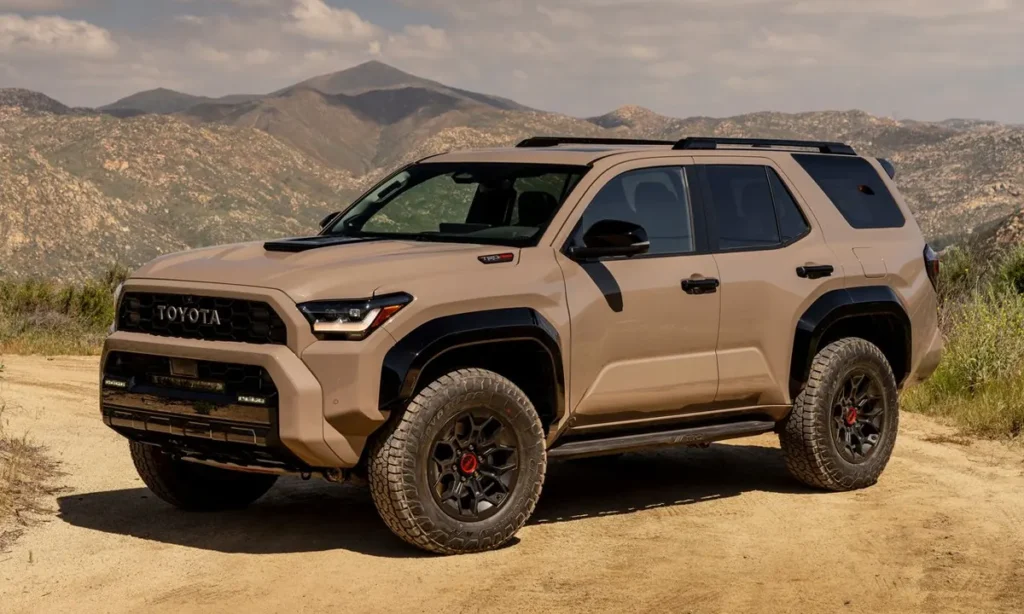
The Toyota 4Runner’s body-on-frame construction, solid rear axle, available crawl control and Multi-Terrain Select system — whose off-road capability credentials reflect genuine engineering intent rather than the marketing positioning that softer unibody alternatives adopt — make it the definitive choice for the seven-seat SUV buyer whose family adventures include the terrain that the category’s name implies but that most of its members cannot safely navigate.
The 4Runner’s 270-horsepower 2.4-litre turbocharged four-cylinder engine — introduced for the current generation as the replacement for the previous V6 — provides the torque delivery that technical off-road terrain requires at low speeds and the highway performance that long-distance overlanding demands at the upper end of its rev range. The available KDSS kinetic dynamic suspension system’s ability to disconnect the front and rear anti-roll bars for maximum off-road articulation — while reconnecting them for on-road cornering stability — provides the suspension flexibility that mixed-terrain adventure touring demands without the compromise that a static suspension setup serving both contexts moderately well would impose.
The third row’s accommodation in the 4Runner is the most honest concession on this list — providing space that children and shorter adults use comfortably while requiring adult passengers to accept constraints that the vehicle’s adventure-oriented architecture prioritises less than its off-road capability. For the family whose primary adventure vehicle use involves genuine trail capability with occasional seven-seat requirements, this trade-off reflects the correct priority weighting.
Best Luxury Pick: Cadillac Escalade – American Flagship Presence
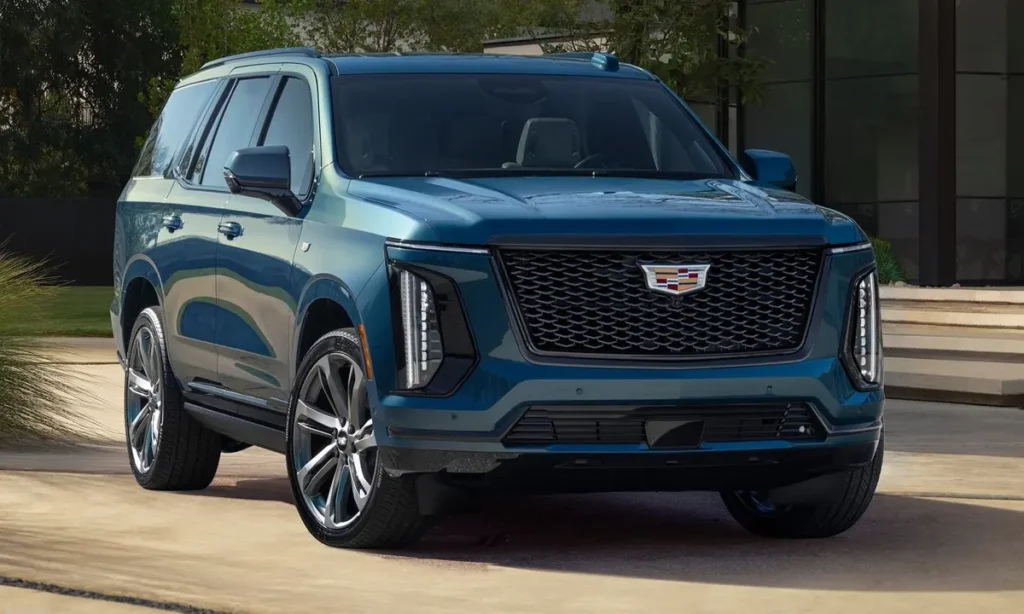
The Cadillac Escalade’s position as the best luxury seven-seat SUV for buyers whose priority includes the prestige, interior volume and powertrain drama that the premium segment’s most established nameplate provides reflects the continuing commercial and experiential relevance of a vehicle whose 6.2-litre V8 — producing 420 horsepower with the specific acoustic and mechanical character that no turbocharged or electrified alternative replicates — serves the luxury SUV buyer whose emotional relationship with their vehicle includes the powertrain experience alongside the passenger comfort and technology integration that the Escalade’s interior comprehensively provides.
The Super Cruise hands-free highway driving system — whose geofenced capability on mapped highway networks provides the most seamlessly integrated semi-autonomous driving experience available in the segment — combined with the AKG studio reference audio system, the curved 38-inch OLED display and the available Executive Second Row’s reclining captain’s chairs whose legroom exceeds first-class airline seating create the luxury environment that justifies the Escalade’s premium positioning against smaller, less theatrically appointed alternatives.
Best Value: Volkswagen Atlas – German Engineering at Accessible Pricing
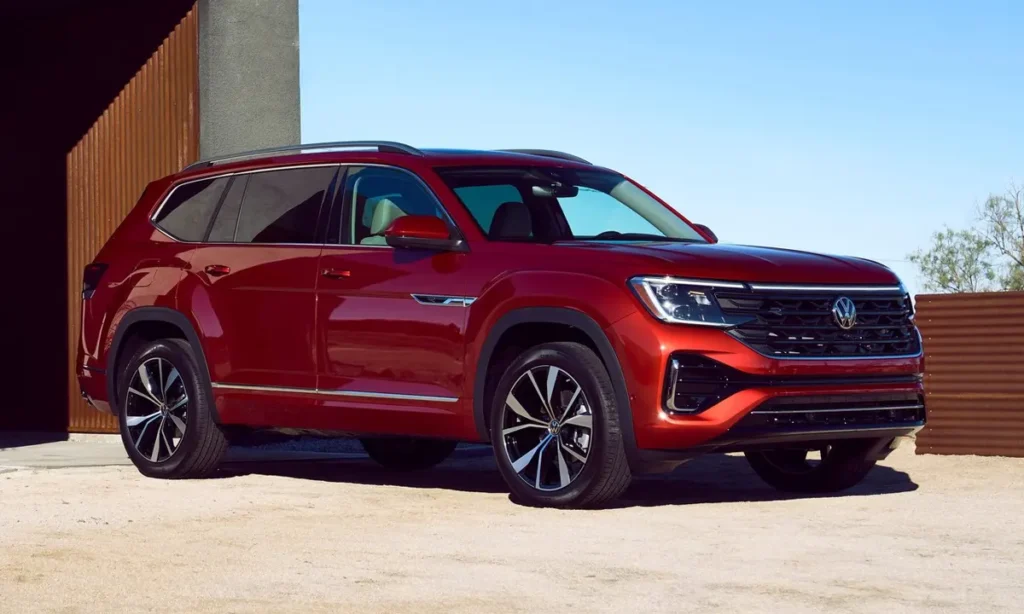
The Volkswagen Atlas’s third-row accommodation — whose adult-usable dimensions reflect the vehicle’s American market development brief and whose accessibility through the second row’s straightforward tumble-forward mechanism provides the practical entry that family loading demands — combined with the German manufacturer’s build quality consistency and the 2.0-litre turbocharged four-cylinder’s real-world efficiency make it the best value proposition in the seven-seat segment for buyers whose budget ceiling sits below $45,000.
The Atlas’s technology integration — whose 12-inch infotainment display, available Harman Kardon audio and digital cockpit instrument cluster provide the connected specification that mainstream family buyers expect — reflects the Volkswagen MQB platform’s mature electronics architecture whose over-the-air update capability and wireless connectivity integration exceed what domestic American alternatives at equivalent pricing consistently deliver.
Read: Is The 2026 Infiniti QX60 The Best Family Luxury SUV You Can Buy Right Now?
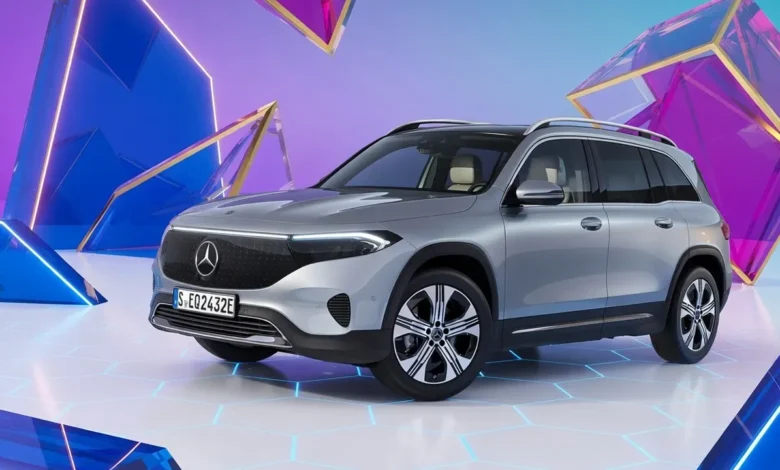
Best Electric: Mercedes-Benz EQB – Premium Compact Electric Seven-Seater
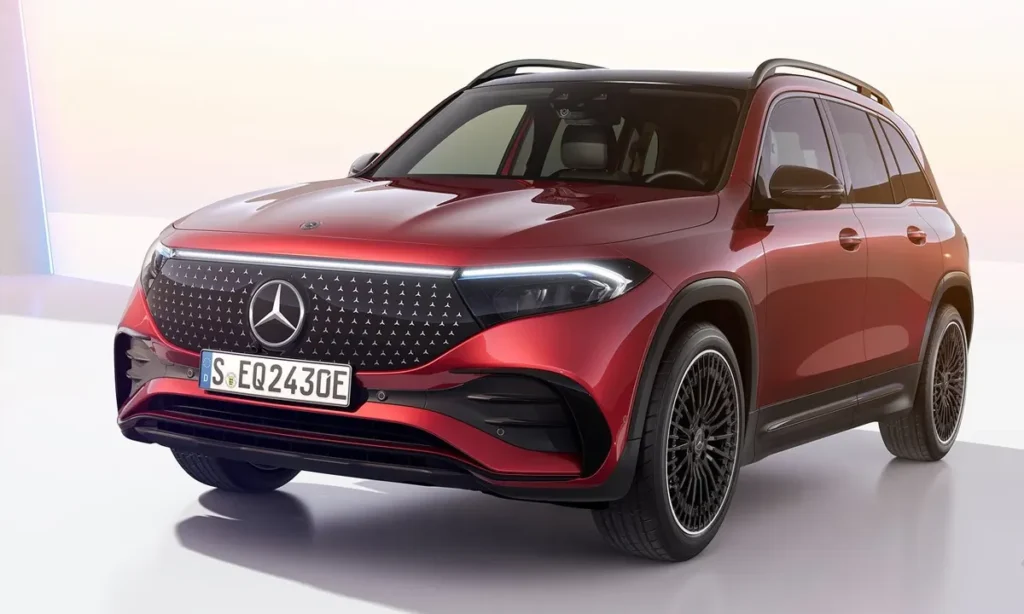
The Mercedes-Benz EQB’s seven-seat configuration — achieved within a compact SUV footprint whose exterior dimensions suit urban environments that larger seven-seat alternatives navigate with less confidence — provides the premium electric seven-seat option for buyers whose family size occasionally requires the third row’s supplementary accommodation without the full-size SUV dimensions that dedicated seven-seat alternatives impose on daily driving practicality.
The EQB’s 288-horsepower dual-motor configuration, 260-mile EPA range and the MBUX infotainment system’s established software maturity — whose voice control, navigation integration and connected services depth reflect Mercedes-Benz’s sustained software investment — provide the premium electric family vehicle specification that the seven-seat segment’s electric alternatives are only beginning to populate with credible options.
Read: How 2026 Toyota RAV4 GR Sport Competes In Europe’s Compact Performance SUV Segment
Best 7-Seater SUVs 2026 Expert Comparison Chart
| Category | Best Pick | Engine / Power | Starting Price | Key Strength |
| Best for Families | Kia Telluride | 3.8L NA V6 / 291 hp | ~$36,000 | Third-row usability / 10yr warranty |
| Best for Tech | Hyundai Ioniq 9 | Dual Motor EV / 310 hp | ~$54,000 | 800V charging / Semi-autonomous |
| Best for Adventure | Toyota 4Runner | 2.4L Turbo I4 / 270 hp | ~$40,000 | Body-on-frame / Trail capability |
| Best Luxury | Cadillac Escalade | 6.2L V8 / 420 hp | ~$80,000 | OLED display / Super Cruise |
| Best Value | Volkswagen Atlas | 2.0L Turbo I4 / 235 hp | ~$36,000 | Adult third row / German quality |
| Best Electric | Mercedes EQB | Dual Motor EV / 288 hp | ~$55,000 | Premium EV / Compact footprint |