2026 Best Affordable Electric Cars Under $30,000 in the USA
From a Revived American Icon That Starts Below $29,000 to the Third-Generation Pioneer That Delivers Over 300 Miles on a Single Charge — Here Is the Complete, Uncompromised Case for Why 2026 Is the Most Consequential Year in the History of Affordable Electric Vehicles in the United States
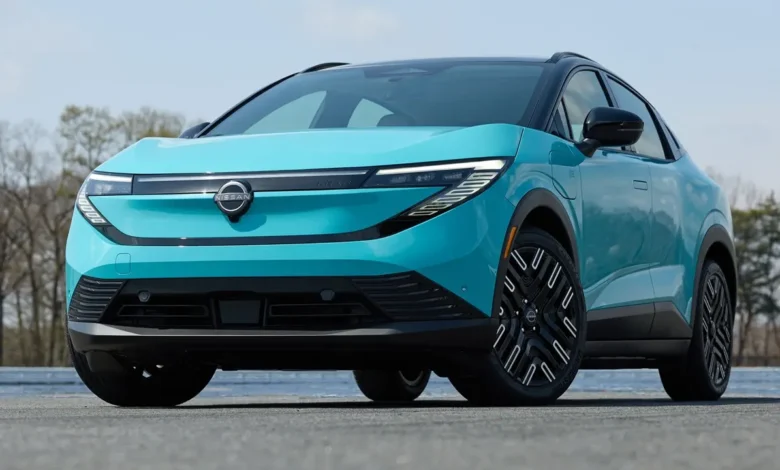
Best Affordable Electric Cars: There is a moment in any emerging technology’s history when cost, capability and consumer confidence converge sufficiently to transform that technology from a specialist product into a mainstream one. The affordable electric vehicle segment in the United States is living through that moment in 2026. The barriers that kept battery-electric transportation out of reach for the average American car buyer — prohibitive sticker prices, insufficient real-world range, inadequate charging infrastructure and the lingering anxiety of committing to an unfamiliar powertrain — have not disappeared entirely. But they have receded to the point where, for the first time in the short history of the mass-market EV, a buyer with a $30,000 budget can walk into a dealership and drive home in a new all-electric vehicle that offers more than 260 miles of EPA-rated range, access to the largest fast-charging network in North America, a modern infotainment system with wireless smartphone integration and a full suite of active safety technology as standard equipment. That buyer has, in 2026, a small but genuinely compelling set of options — and two of them stand clearly above the rest.
Why 2026 Is the Year the Affordable EV Argument Finally Closes Itself
The significance of the current sub-$30,000 EV market is not simply the existence of vehicles in that price bracket. It is the combination of factors that have converged simultaneously to make those vehicles genuinely competitive with their gasoline-powered equivalents across multiple dimensions of the ownership experience. Battery production has scaled sufficiently — and lithium-iron-phosphate chemistry has matured sufficiently — that manufacturers can now offer usable energy capacity at entry-level price points without the thermal management complexity or long-term degradation concerns that attended earlier budget EV designs. The North American Charging Standard has consolidated what was previously a fragmented public charging ecosystem, meaning that a buyer of an affordable electric vehicle in 2026 has access, through a single native port, to the Tesla Supercharger network and the broader NACS-compatible public infrastructure that collectively represent the most extensive fast-charging coverage the American market has ever offered.
The federal $7,500 Clean Vehicle Tax Credit, where it applies to qualifying models and qualifying buyers under the income and vehicle price thresholds established by current federal legislation, can reduce the effective purchase cost of a sub-$30,000 EV to a figure that places it in direct competition with compact sedans and economy crossovers that have historically dominated the volume segment of the American new-car market. The total cost of ownership argument — which the EV industry has made consistently but which has historically required optimistic assumptions about fuel prices and charging behaviour to remain persuasive — has become substantially more straightforward as vehicle prices decline and electricity costs remain stable relative to gasoline. An electric vehicle buyer in 2026 who charges primarily at home pays a per-mile energy cost that is, under almost any reasonable electricity rate assumption, significantly lower than the equivalent figure for a gasoline-powered vehicle of comparable size and capability. Add the reduced maintenance demands of a powertrain with no oil changes, no transmission service, no timing belt, no exhaust system and significantly fewer friction brake interventions due to regenerative braking — and the case for the affordable EV becomes one that does not require optimistic assumptions to sustain itself.
The 2026 Chevrolet Bolt EV: America’s Most Affordable New Electric Car, Rebuilt With Purpose
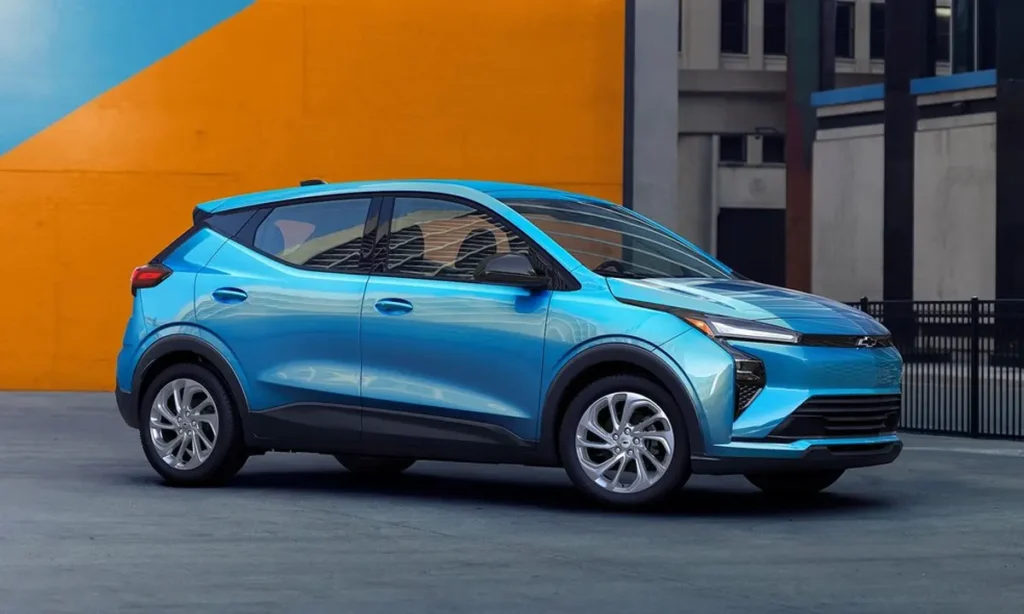
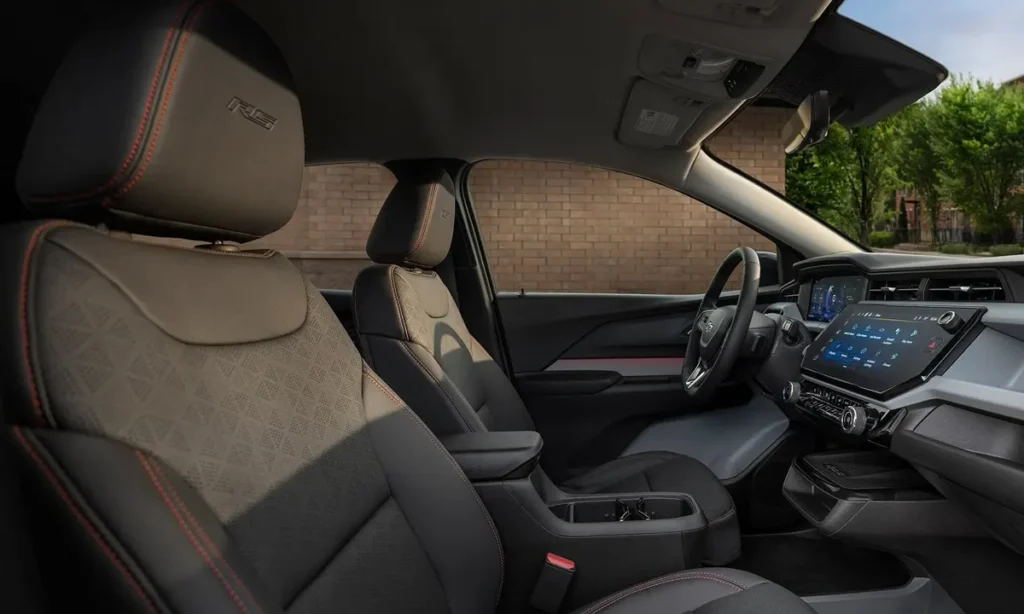
The Chevrolet Bolt occupies a unique position in the American automotive landscape — a vehicle that pioneered accessible long-range electric transportation, was discontinued after 2023 amid a painful and costly battery recall, and has returned for 2026 in a comprehensively redesigned form that addresses every substantive criticism ever levelled at its predecessor while retaining the fundamental value proposition that made the original model matter. The 2026 Bolt EV starts at $28,995 including destination charges, making it the most affordable new electric vehicle available at an American dealership in this model year — and that price is not achieved through meaningful compromise on the features that sub-$30,000 buyers need most.
The powertrain at the centre of the new Bolt is General Motors’ latest electric drive unit, producing 210 horsepower through a front-mounted permanent-magnet motor engineered with a focus on efficiency, thermal stability and long-term durability rather than peak power output. The battery pack — a 65-kilowatt-hour unit built on lithium-iron-phosphate chemistry — delivers an EPA-estimated 262 miles of range, a figure that exceeds what the 2023 model achieved from a comparable energy capacity and that covers the real-world daily driving requirements of the overwhelming majority of American commuters with charge capacity to spare. Lithium-iron-phosphate chemistry is a deliberate and significant choice at this price point: it costs less to produce than the nickel-manganese-cobalt alternatives used in more expensive EVs, it is more thermally stable under charging stress, and it degrades more slowly over an extended cycle life — characteristics that translate directly into lower long-term ownership costs and greater confidence for buyers making their first commitment to electric mobility.
Charging capability represents one of the most consequential improvements the 2026 Bolt delivers over the model it replaces. DC fast charging capability of up to 150 kilowatts — more than double what the previous generation could accept — combined with a native North American Charging Standard port gives Bolt drivers access to Tesla’s Supercharger network and the broader NACS-compatible public fast-charging infrastructure without adapters or workarounds. A charge from 10 percent to 80 percent state of charge takes approximately 26 minutes at a compatible DC fast-charging station, transforming longer highway journeys from logistical exercises into straightforward multi-stop trips. Level 2 home charging at up to 19.2 kilowatts — available as an option — means that a full overnight charge from a dedicated home wallbox takes well under four hours, and a standard 7.2 kilowatt onboard charger provides adequate overnight replenishment for the vast majority of daily driving scenarios.
The interior of the 2026 Bolt represents a generational step forward from the utilitarian cabin of its predecessor. An 11.3-inch central touchscreen with Google built-in provides integrated navigation, voice control and real-time charging station information. Wireless Apple CarPlay and Android Auto, a digital instrument cluster, wireless device charging and a standard suite of active safety technology that includes automatic emergency braking, lane-keeping assist, rear cross-traffic alert and blind-spot monitoring complete an equipment list that positions the Bolt competitively against not just its EV rivals but the broader compact car segment it increasingly competes with on total cost terms.
The 2026 Nissan Leaf: The EV That Taught America to Charge, Now in Its Most Capable Form
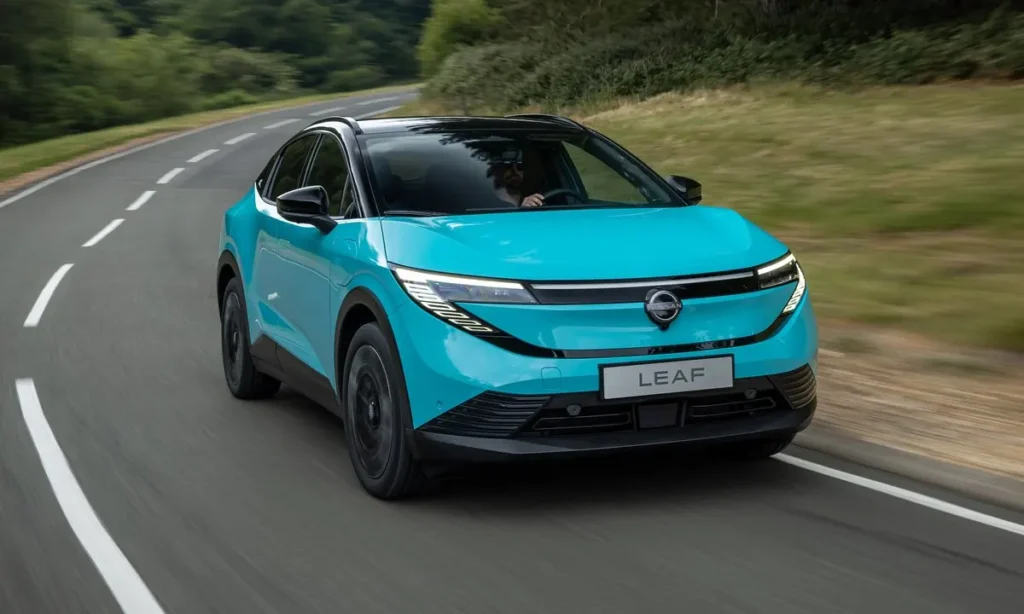
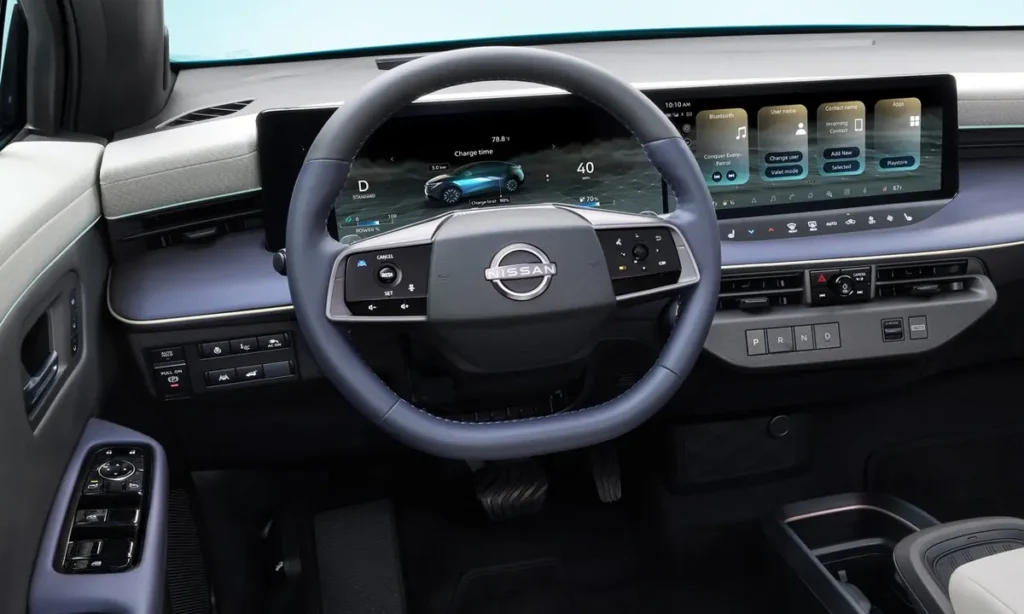
If the Chevrolet Bolt is the best value proposition in the sub-$30,000 EV segment in 2026, the Nissan Leaf is its most historically significant competitor — the vehicle that, more than any other single model, normalised electric vehicle ownership for American consumers across more than fifteen years of continuous production. The 2026 Leaf starts at $29,140 for the base 40-kilowatt-hour variant and delivers 149 miles of EPA-estimated range, a figure that serves urban and suburban commuters with predictable, moderate daily mileage but that requires careful planning for longer journeys. The more significant specification is the Leaf Plus — the 62-kilowatt-hour variant available for $33,040 before incentives — which, after application of the $7,500 federal tax credit for buyers who qualify under the income and filing thresholds, brings the effective cost to $25,540, placing it firmly within the sub-$30,000 bracket and delivering 212 miles of EPA-rated range alongside meaningfully stronger performance from its 214-horsepower motor.
The Leaf’s accumulated real-world reliability record across more than fifteen years and 650,000 units sold globally is the single most compelling argument for the model that no competitor can yet replicate — not through engineering achievement, but simply through the passage of time and the accumulation of evidence. Nissan has had the longest of any mainstream manufacturer to understand how real American buyers use an electric vehicle, how their battery packs behave across extended ownership periods and varying climate conditions, and how to engineer the support infrastructure to maximise long-term customer satisfaction. That institutional knowledge is embedded in the 2026 model in ways that are not visible in a specification sheet but that manifest in ownership experience, in dealer service familiarity and in the comprehensiveness of Nissan’s EV support ecosystem.
The Leaf’s most frequently cited limitation — its CHAdeMO DC fast-charging standard, which has been superseded by CCS and NACS in North America — remains a genuine consideration for buyers who rely on public fast-charging infrastructure. CHAdeMO-compatible stations are less numerous and less consistently maintained than their CCS and NACS counterparts, and the availability gap will only widen as the industry continues its consolidation around NACS. Buyers who charge primarily at home and use public infrastructure occasionally rather than routinely will find this a minor practical concern. Buyers who depend on public fast charging for regular long-distance travel should weigh it carefully against the Bolt’s native NACS compatibility.
The Verdict: Which Affordable EV Deserves Your $30,000 in 2026
The sub-$30,000 EV market in 2026 does not offer the breadth of choice available at higher price points, but what it does offer is genuine, uncompromised value in two vehicles that approach the same fundamental problem — accessible electric mobility for mainstream American buyers — from meaningfully different directions. The Chevrolet Bolt EV is the stronger overall proposition for most buyers: more range, faster charging, native NACS access, a more modern interior and a lower base price than any competitor in the segment. It is the choice for buyers who want the most capable and most future-proof affordable EV that American dealerships currently offer, and it delivers that capability without requiring the buyer to accept meaningful compromise in daily usability, charging convenience or feature content.
The Nissan Leaf remains the right choice for a specific and clearly defined buyer — one who values the accumulated reliability evidence of an established platform, charges primarily at home, drives moderate daily distances and places confidence in a known quantity above the specification advantages of a newer design. After federal tax credit application, the Leaf Plus delivers 212 miles of range and 214 horsepower at an effective cost that undercuts the Bolt’s already competitive pricing, and for buyers who meet the qualifying criteria, that arithmetic is genuinely compelling.
What both vehicles confirm, together, is the broader argument that the affordable EV segment is making in 2026 with greater conviction than it has ever been able to muster before: that the decision to go electric no longer requires a premium budget, an optimistic tolerance for range limitations or a willingness to accept a lesser vehicle in exchange for lower running costs. It requires, instead, only the recognition that the moment the industry has been building toward for fifteen years has arrived — and that a $30,000 budget, applied to the right vehicle in 2026, buys a genuinely excellent electric car.
Read: From Aston Martin to Denza Z9 GT, Could 007 Switch to Electric?
2026 Affordable Electric Cars Under $30,000 — Comparison Specifications
| Category | 2026 Chevrolet Bolt EV | 2026 Nissan Leaf Plus |
| Base Price (Before Incentives) | $28,995 | $29,140 (base) / $33,040 (Plus) |
| Effective Price (After $7,500 Credit) | $21,495 | $25,540 (Plus) |
| EPA Range | 262 miles | 212 miles (Plus) / 149 miles (base) |
| Motor Output | 210 hp | 214 hp (Plus) |
| Battery Chemistry | Lithium-Iron-Phosphate | Lithium-Ion NMC |
| Battery Capacity | 65 kWh | 62 kWh (Plus) |
| DC Fast Charge Port | NACS (Native) | CHAdeMO |
| Max DC Fast Charge Speed | 150 kW | 100 kW (Plus) |
| 10–80% Charge Time | ~26 minutes | ~40 minutes |
| Level 2 Onboard Charger | Up to 19.2 kW | 6.6 kW standard |
| Infotainment Screen | 11.3-inch | 8-inch |
| Wireless CarPlay/Android Auto | Standard | Standard |
| Digital Instrument Cluster | Standard | Standard |
| Wireless Charging | Standard | Available |
| Active Safety Suite | Standard | Standard |
| Blind-Spot Monitoring | Standard | Standard |
| Supercharger Network Access | Yes — Native NACS | No — CHAdeMO only |
| Drivetrain | FWD | FWD |
| 0–60 mph | ~6.5 seconds | ~6.5 seconds (Plus) |
| Cargo Volume | 16.6 cu ft | 23.6 cu ft |
| Federal Tax Credit Eligible | Yes | Yes |
| Production Location | Kansas City, Kansas | Smyrna, Tennessee |
| Years in Production | Relaunched 2026 | Since 2010 |