Top 5 Off-Road Pickup Trucks Ranked by Real Terrain Performance Not Marketing Claims
- Ground clearance and suspension travel comparison
- Locking differentials and drivetrain capability
- Approach and departure angles for real off-road performance
- Factory-engineered trucks ranked by true terrain ability
- Focus on capability over marketing claims
The off-road pickup trucks market has never been more contested, more technically sophisticated or more commercially significant than it is in 2026 — a reflection of the cultural shift that has elevated genuine off-road capability from a niche enthusiast requirement to a mainstream purchasing priority whose influence on the full-size and mid-size pickup segments’ product development decisions is now fundamental rather than peripheral. Every major pickup manufacturer offers off-road variants whose specification depth, electronic terrain management sophistication and suspension engineering investment have reached levels that would have been unimaginable from production vehicles a decade ago.
The challenge for the buyer navigating this landscape is distinguishing genuine off-road engineering from the marketing aspiration that surrounds it — separating the pickup trucks whose factory specification delivers real-world trail capability from those whose off-road imagery conceals standard suspension geometry, modest ground clearance and electronic systems whose sophistication substitutes for the mechanical hardware that genuine terrain demands. The pickups on this list have earned their positions through capability evidence rather than marketing investment — vehicles whose ground clearance, suspension travel, approach angles and real-world trail performance make the strongest case for genuine off-road leadership in 2026.
1. RAM 1500 TRX: The Benchmark of Brute Force Off-Road
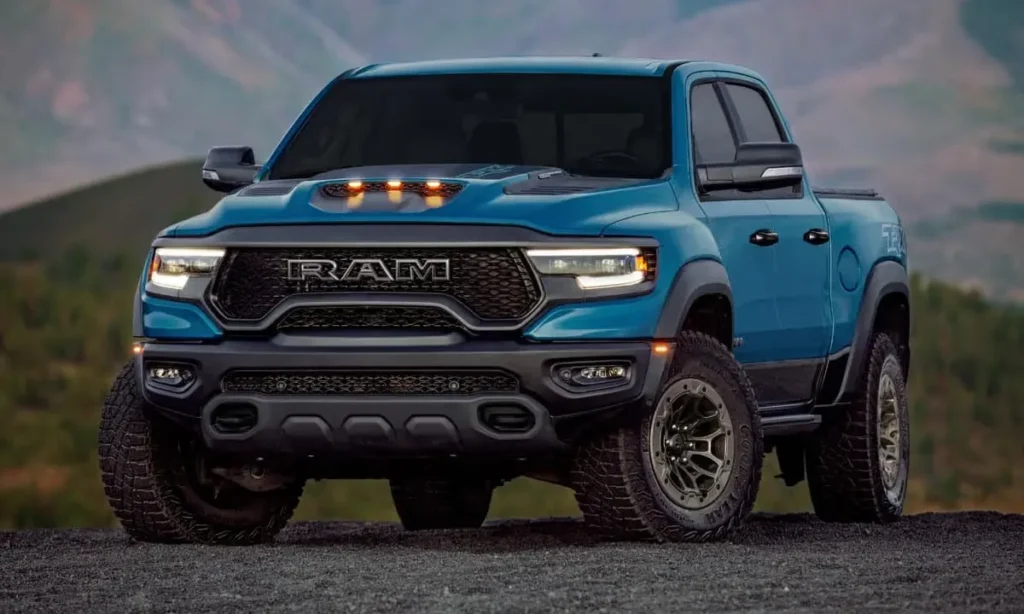
The RAM 1500 TRX’s 702-horsepower supercharged 6.2-litre V8 — combined with Fox 2.0-inch coilover shocks, 13 inches of front suspension travel and the full-size truck platform whose structural integrity withstands the repeated high-speed desert impacts that maximum-performance off-road use imposes — establishes the TRX as the off-road pickup whose outright capability ceiling exceeds every competitor in the segment regardless of price.
The TRX’s approach angle of 30.2 degrees and departure angle of 23.5 degrees — achieved through the combination of the suspension geometry’s height contribution and the front bumper architecture designed for trail rather than styling — provide the obstacle clearance geometry that technical trail use demands. The 11.8 inches of ground clearance beneath the lowest underbody point provides the rock and obstacle clearance that the TRX’s capability ambitions require.
The TRX Launch Control system — whose management of the supercharged V8’s 881 Newton-metres of torque at launch produces consistent, repeatable desert acceleration — and the Terrain Select system’s Sand, Mud, Rock, Snow and Sport modes provide the electronic framework that organises the TRX’s extraordinary mechanical capability into accessible operational configurations. For the buyer whose off-road ambition includes sustained high-speed desert running at the level that the Baja 1000 professionals operate, the TRX is the only production pickup whose factory specification genuinely supports the aspiration.
2. Ford Ranger Raptor: The Precision Off-Road Engineering Standard
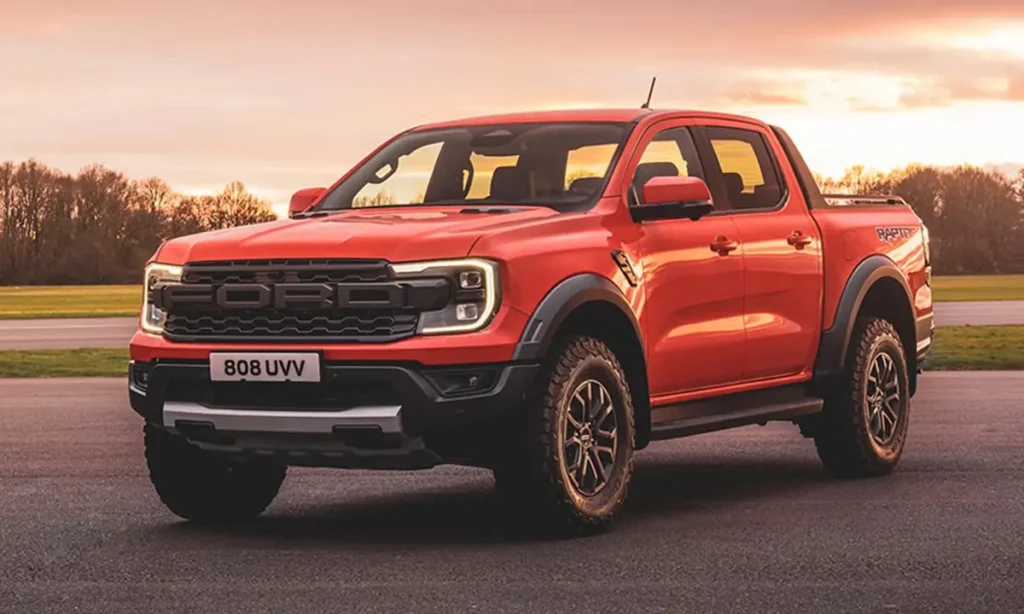
The Ford Ranger Raptor’s 2.5-inch Fox Racing Shox internal bypass dampers — whose bypass zone calibration was developed specifically for the Raptor’s weight and desert use case — provide the suspension sophistication that the TRX’s greater power and the Raptor’s more precise mid-size engineering philosophy express differently but equally legitimately as off-road capability at the segment’s highest level.
The Ranger Raptor’s 283 millimetres of front wheel travel and 310 millimetres of rear wheel travel — managed by suspension hardware whose internal bypass architecture provides progressive resistance that prevents harsh bottoming-out while maintaining supple initial compliance — produces a controlled, confident high-speed off-road experience whose precision reflects the Baja racing engineering philosophy that the Raptor’s development referenced throughout its programme. The 226-millimetre ground clearance, the 32.5-degree approach angle and the 24-degree departure angle provide the geometry that technical trail use requires alongside the desert speed capability that the suspension hardware enables.
The seven terrain management modes — including the Baja-specific calibration that no other production pickup offers — and the Trail Control low-speed crawl system’s independent wheel braking provide the electronic breadth that covers the Raptor’s capability spectrum from technical rock sections to sustained high-speed desert running. In the mid-size pickup category, no competitor approaches the Raptor’s off-road engineering depth from the factory.
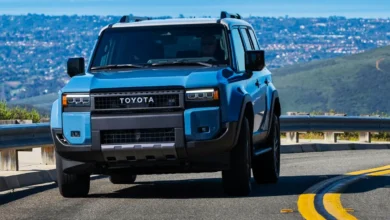
3. Toyota Tacoma TRD Pro: The Reliability Standard for Trail Enthusiasts
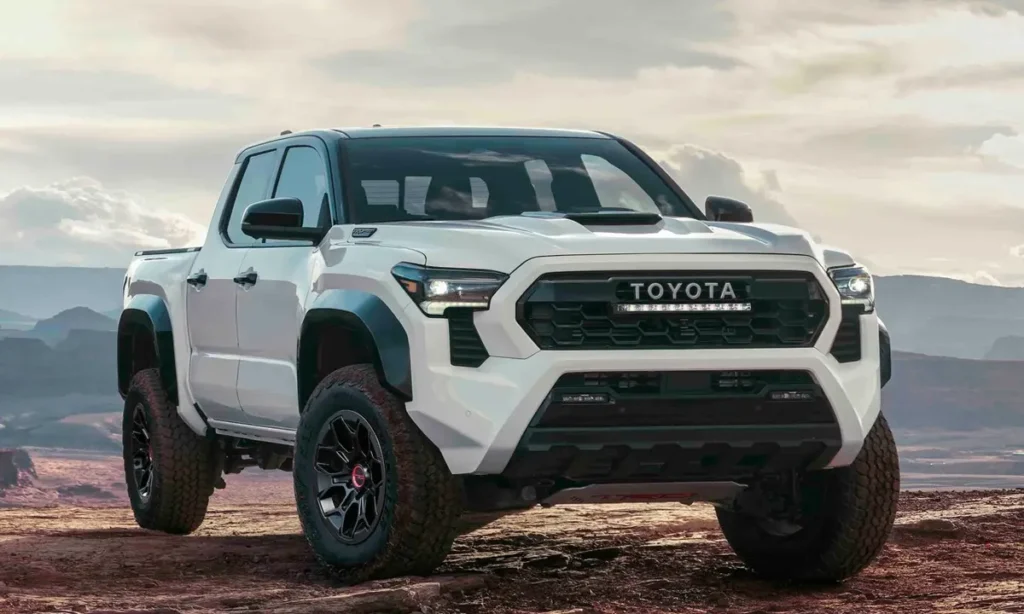
The Toyota Tacoma TRD Pro’s Fox 2.5-inch internal bypass shocks — standard equipment rather than an option package — combined with the Crawl Control system, Multi-Terrain Select’s five surface modes and the 9.4-inch ground clearance provide the off-road capability package that Toyota’s engineering conservatism delivers with the reliability confidence that Tacoma’s ownership community has accumulated across decades of high-mileage, high-use evidence.
The Tacoma TRD Pro’s specific off-road engineering strength is the combination of genuine mechanical capability and the Toyota reliability record whose real-world validation across the most demanding ownership conditions provides the confidence that newer, more powerful competitors cannot yet match in accumulated high-mileage evidence. The front suspension’s 9 inches of wheel travel and the rear’s 10 inches — managed by the Fox shocks whose initial travel compliance and progressive end-stroke resistance mirror the suspension philosophy that the Raptor and TRX express at greater travel numbers — provide the trail capability that the Tacoma’s mid-size proportions and trail-focused ownership community demands.
The locking rear differential — standard on the TRD Pro — provides the mechanical traction security that electronic limited-slip alternatives cannot match on the specific surface conditions where the electronic system’s assumptions about wheel speed differential produce delayed or insufficient response. The Tacoma’s departure angle of 26 degrees and the approach angle of 36 degrees reflect a body geometry whose off-road optimisation the lifestyle-oriented competitors in the mid-size segment cannot match without compromising the on-road character that their broader market positioning requires.
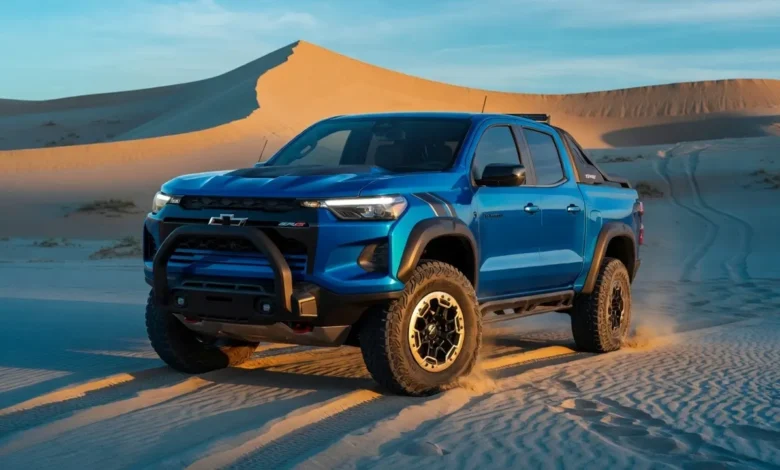
4. Chevrolet Colorado ZR2: Multimatic DSSV Technology at Production Prices
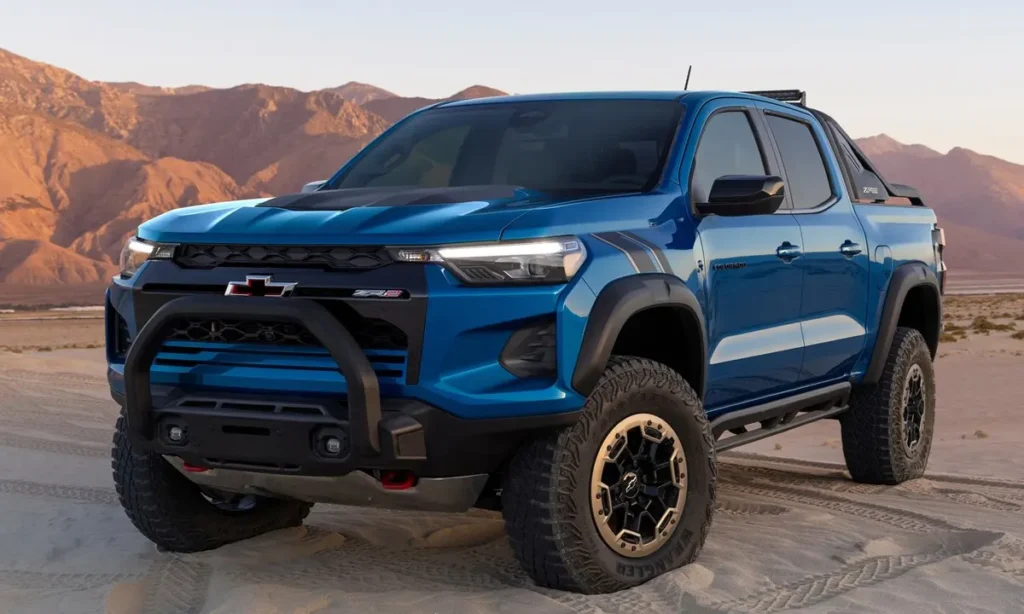
The Chevrolet Colorado ZR2’s Multimatic DSSV — Dynamic Suspension Spool Valve — dampers represent the most technically sophisticated production shock absorber available in any pickup truck at any price point, whose spool valve architecture provides instantaneous response to changing terrain inputs without the bypass zone delay that conventional shock absorbers and even the Fox internal bypass units exhibit at the precise moment of impact.
The DSSV system’s ability to provide low-speed compression resistance for body motion control, high-speed compression compliance for terrain input absorption and independent rebound management — simultaneously and without compromise between these competing requirements — produces a suspension performance whose technical sophistication the Raptor’s Fox units approach from a different engineering direction with equivalent real-world effectiveness. The ZR2’s 8.9-inch ground clearance, 32-degree approach angle and front and rear locking differentials — combined with the rock rails that protect the frame from trail contact — provide the technical trail capability that the DSSV dampers’ sophisticated response enables the driver to exploit confidently.
The ZR2’s smaller footprint relative to the full-size TRX — a mid-size truck whose trail manoeuvreability in tight, technical terrain the full-size alternatives cannot match — combined with the DSSV technology’s mechanical sophistication creates an off-road capability that technical trail enthusiasts whose priority is precision rather than maximum power find more directly relevant to their specific use case than the TRX’s greater displacement and higher power output.
Read: Fuel Economy Fight That Matters Most. Ford F-150 vs Ram 1500 Compared
5. Ford F-150 Raptor R: Full-Size Desert Performance With V8 Fury
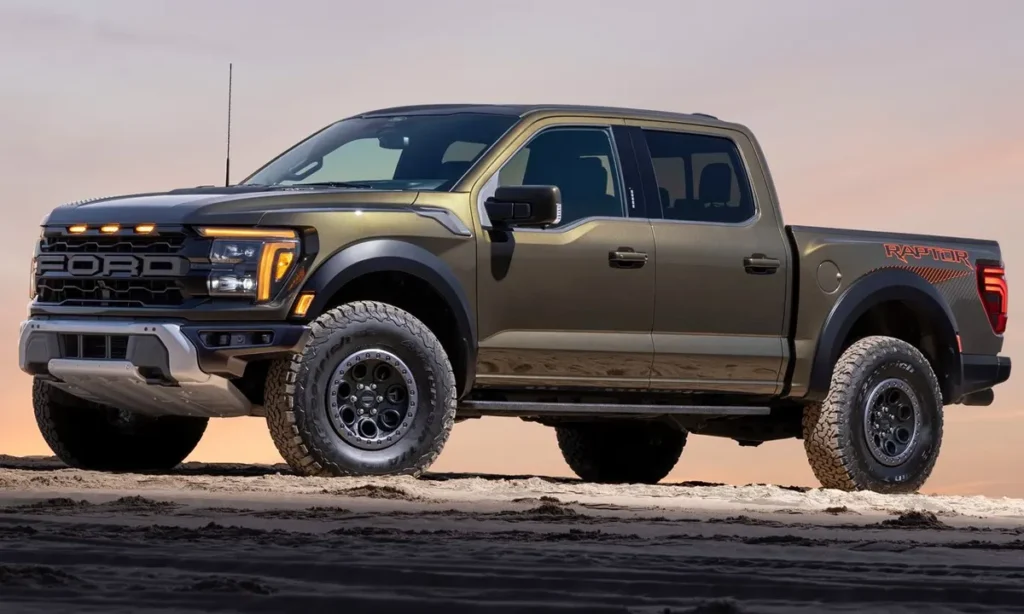
The Ford F-150 Raptor R — whose 700-horsepower supercharged 5.2-litre V8 responds directly to the RAM TRX’s competitive challenge with the most powerful factory Ford ever produced — provides the full-size Raptor formula with the V8 power that the twin-turbocharged V6 Raptor’s competitors cited as its most significant performance gap. The Raptor R’s Fox 3.1-inch Live Valve internal bypass shocks — larger than the standard Raptor’s 3.0-inch units and incorporating the electronic Live Valve technology that adjusts damping in real time based on terrain sensor inputs — represent the most sophisticated production damper system available in any pickup truck.
The Live Valve system’s ability to pre-emptively adjust damping based on the terrain sensors’ anticipation of the input that the wheel is about to receive — rather than reacting to the impact after it has occurred — provides a suspension response quality whose refinement at high desert speeds exceeds what purely reactive damper systems can achieve regardless of their mechanical sophistication. Combined with the 13 inches of front wheel travel, the 13.9 inches of rear travel and the supercharged V8’s immediate, linear torque delivery, the Raptor R’s desert performance capability genuinely competes with the TRX across the high-speed performance dimension while maintaining the Ford engineering philosophy’s precision orientation.
Read: Most Fuel Efficient Trucks In USA 2026. Real MPG Numbers, Real Rankings, No Compromises
Best Off-Road Pickup Trucks 2026 — Capability Comparison
| Model | Engine / Power | Ground Clearance | Front Travel | Suspension | Terrain Modes | Starting Price |
| RAM 1500 TRX | 6.2L SC V8 / 702 hp | 11.8 inches | 13.0 inches | Fox 2.0-Inch Coilover | 6 Modes | ~$80,000 |
| Ford Ranger Raptor | 3.0L TT V6 / 392 hp | 226 mm | 283 mm | Fox 2.5-Inch IBP | 7 Modes (Baja) | ~£52,000 |
| Toyota Tacoma TRD Pro | 2.4L TT I4 / 278 hp | 9.4 inches | 9.0 inches | Fox 2.5-Inch IBP | 5 Modes | ~$52,000 |
| Chevrolet Colorado ZR2 | 2.7L TT I4 / 310 hp | 8.9 inches | N/A | Multimatic DSSV | 6 Modes | ~$47,000 |
| Ford F-150 Raptor R | 5.2L SC V8 / 700 hp | 13.1 inches | 13.0 inches | Fox 3.1-Inch Live Valve | 7 Modes | ~$109,000 |