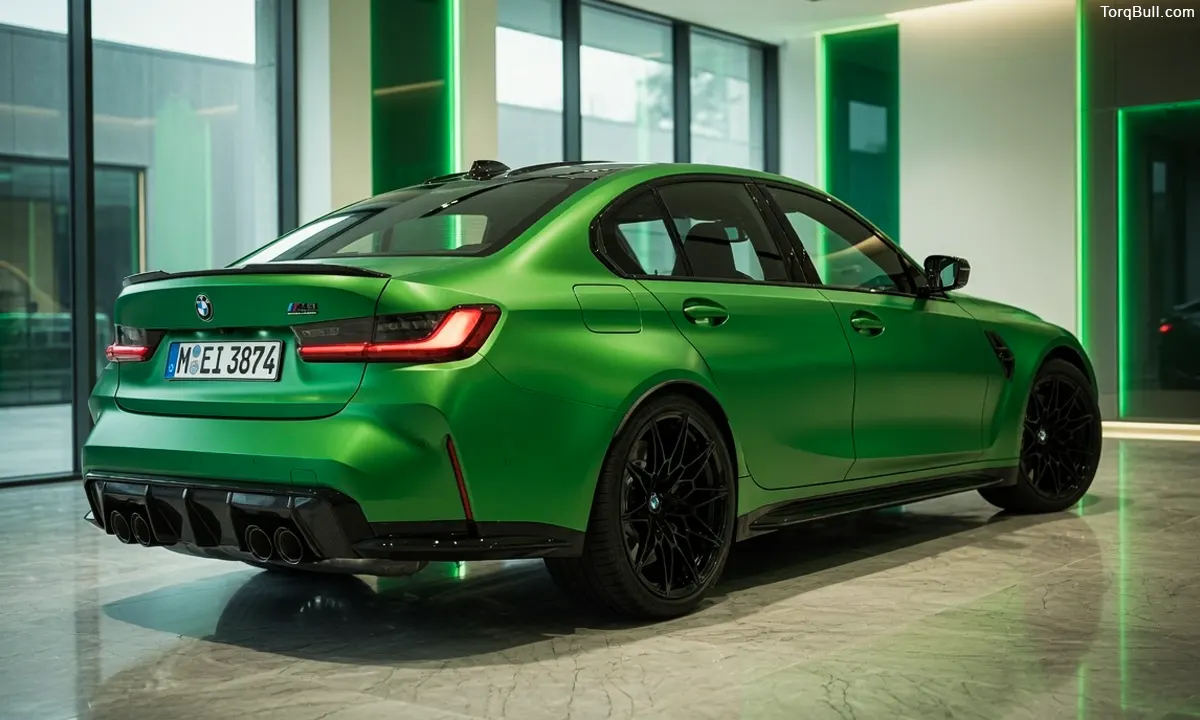
- The 2025 BMW M3 Competition xDrive produces 523 horsepower and reaches 60 MPH in approximately 3.4 seconds, making it the quickest M3 currently available.
- The rear-wheel-drive M3 Competition delivers 503 horsepower, costs about $4,300 less and remains the only Competition model available with a six-speed manual transmission.
- Choose the xDrive for maximum performance, traction and all-weather capability, while the RWD version offers a purer, more traditional sports-sedan driving experience.
The BMW M3 xDrive versus RWD decision is the most passionately debated specification choice in the performance sedan segment — and the answer has shifted more definitively toward xDrive in recent professional evaluation than the traditional purist narrative might suggest. Where the conventional performance car wisdom holds that rear-wheel drive provides the purest driving connection and that all-wheel drive is a concession to all-weather practicality rather than a performance benefit, the current-generation BMW M3’s xDrive implementation challenges this assumption directly. Professional evaluation of the two variants driven back to back found no meaningful everyday driving difference between them while the xDrive delivered measurable lap time advantages at the circuit and an unexpectedly greater capacity for controlled oversteer in track-mode configuration. This complete guide examines every dimension of the comparison across performance, daily usability, price and the specific buyer profile that each variant most specifically serves.
The Powertrain: 503 HP vs 523 HP After the 2025 Update
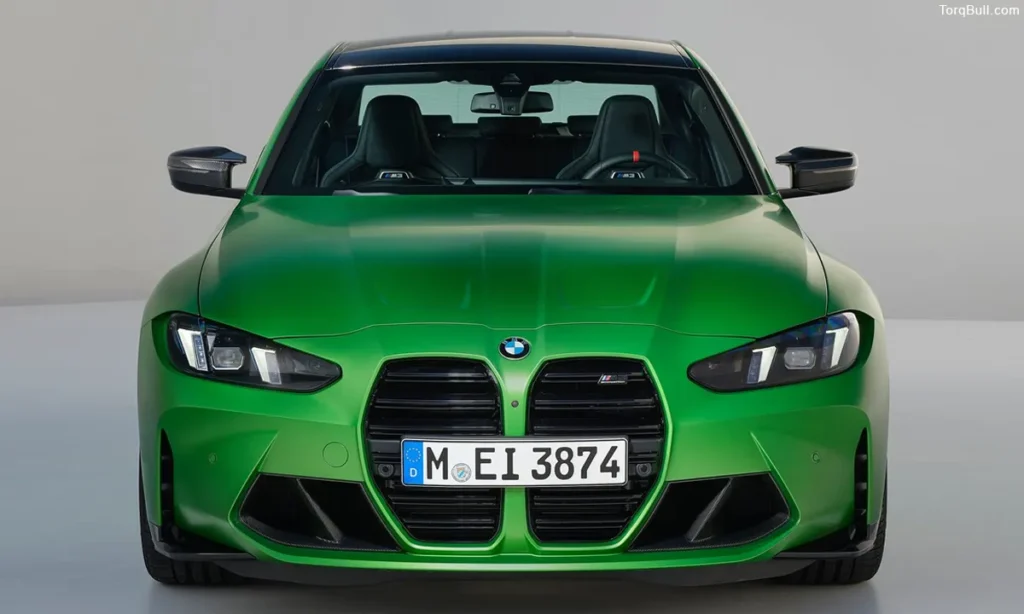
Both the M3 Competition RWD and xDrive use the identical S58 3.0-litre twin-turbocharged inline-six engine paired with the 8-speed M Steptronic automatic transmission. The engines share the same fundamental architecture, the same turbocharger specification and the same combustion management approach — producing near-identical power character at equivalent RPM points.
The 2025 update specifically gave the xDrive an exclusive 20-horsepower increase, raising its output from 503 HP to 523 HP through an optimised digital engine control unit configuration. The RWD Competition retains 503 HP and 479 pound-feet of torque. This power differentiation means the xDrive is not merely the same car with additional driven wheels — it also produces 20 more horsepower than its rear-drive sibling, making it the most powerful standard M3 available.
The RWD M3 offers a six-speed manual transmission as an alternative to the 8-speed automatic — and this manual option is exclusively available on the rear-drive variant. For buyers whose M3 purchase is specifically motivated by the engagement of a manual gearbox, the RWD model is the only path to this driving experience within the M3 lineup.
Read: BMW M3 Track Performance Review 2026. Perfect Blend of Power and Precision?
The 0 to 60 Reality: xDrive’s Launch Advantage
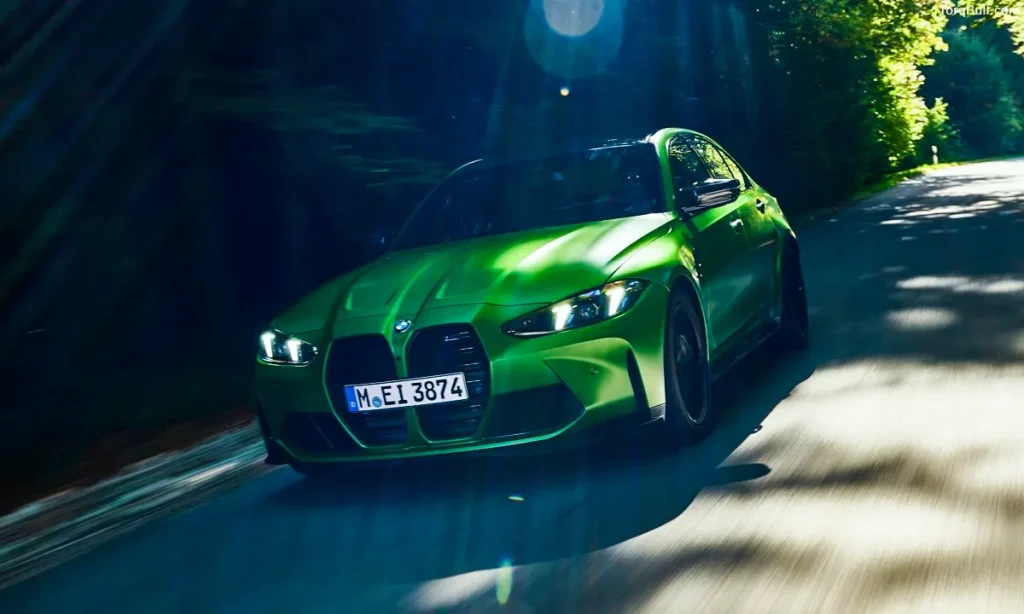
The xDrive M3 Competition reaches 60 MPH in 3.4 seconds — the same figure as the xDrive-equipped models from the generation that preceded the 2025 update. The RWD Competition completes the same sprint in approximately 3.8 to 3.9 seconds in optimal conditions, representing a difference of approximately 0.4 to 0.5 seconds.
This acceleration gap specifically reflects the xDrive’s launch capability advantage: dual-axle power distribution reduces wheel spin at launch, and the xDrive’s DSC calibration enables more aggressive launch control engagement. In wet or low-grip conditions, the xDrive’s advantage over the rear-drive variant widens to over half a second — because the rear-only drive of the RWD model is more susceptible to traction limitations at launch in degraded grip conditions.
The practical significance of this 0.4-second gap depends entirely on the context. At the circuit, where full-throttle acceleration from low-speed corners determines lap times, this advantage is meaningful and directly measurable in lap timing. In everyday driving, this difference is rarely engaged at maximum effort and is largely academic — both variants feel startlingly quick when the throttle is applied with intent.
Handling Character: The Professional Back-to-Back Verdict
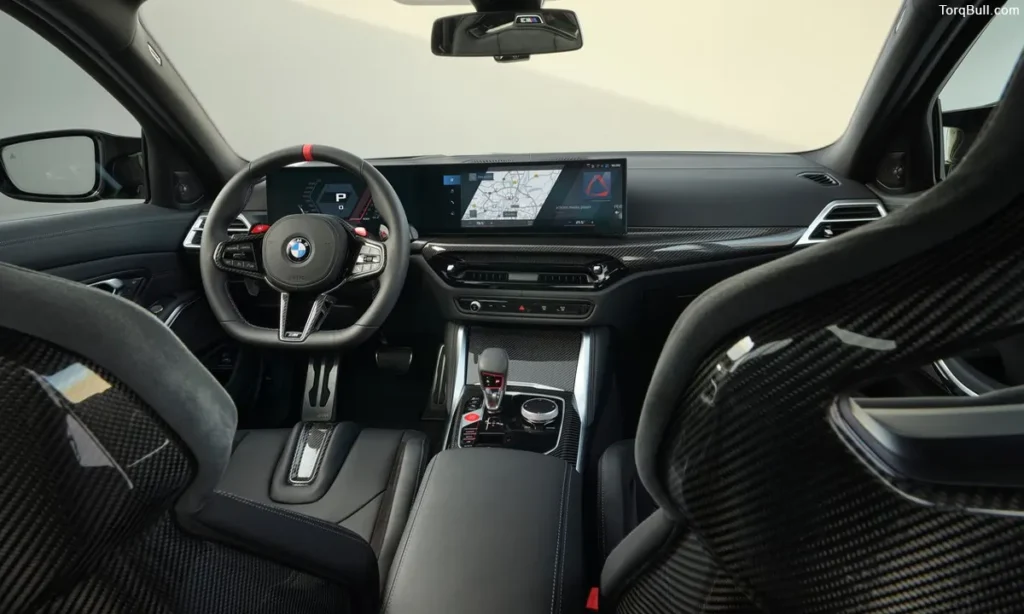
The most revealing comparison between the M3 xDrive and RWD comes from professional evaluation of both variants driven consecutively on the same roads and circuits — and the verdict challenges the assumption that RWD always provides the more engaging dynamic character.
In everyday driving, professional evaluation found no noticeable difference between the two configurations in typical road use. Both are similarly firm in urban areas, both exhibit the same directional precision at moderate highway speeds and both deliver the same fundamental M3 character in the conditions that daily driving actually produces. The xDrive adds approximately 50 kilograms over the nose from the front driveshafts and centre differential — a weight addition that is detectable only when specifically looking for it during turn-in on roundabouts.
At the circuit and in Sport Plus driving mode with the xDrive’s rear-biased configuration active, the professional assessment produced a counterintuitive finding: the xDrive is more oversteer-ready than the rear-drive version. The front-axle torque distribution that xDrive provides specifically enables the rear to break loose more controllably in track conditions, because the front wheels maintain forward momentum even as the rear rotates — creating a more adjustable and more recoverable oversteer experience than the RWD version’s less assisted slides. This finding led professional evaluation to specifically recommend xDrive — not because it is more stable, but because it suits this generation of M3 better overall.
The RWD model provides the more direct steering feedback and the more immediate mechanical connection to throttle inputs that traditional performance driving philosophy values. Without front-axle plumbing, the RWD delivers a purer transmission of surface information through the steering — a characteristic that experienced track drivers who specifically value sensory richness over lap times will find more rewarding.
Read: BMW M3 Insurance Cost 2026. Complete Analysis for Performance Car Buyers
Track Performance: xDrive’s Measurable Advantage
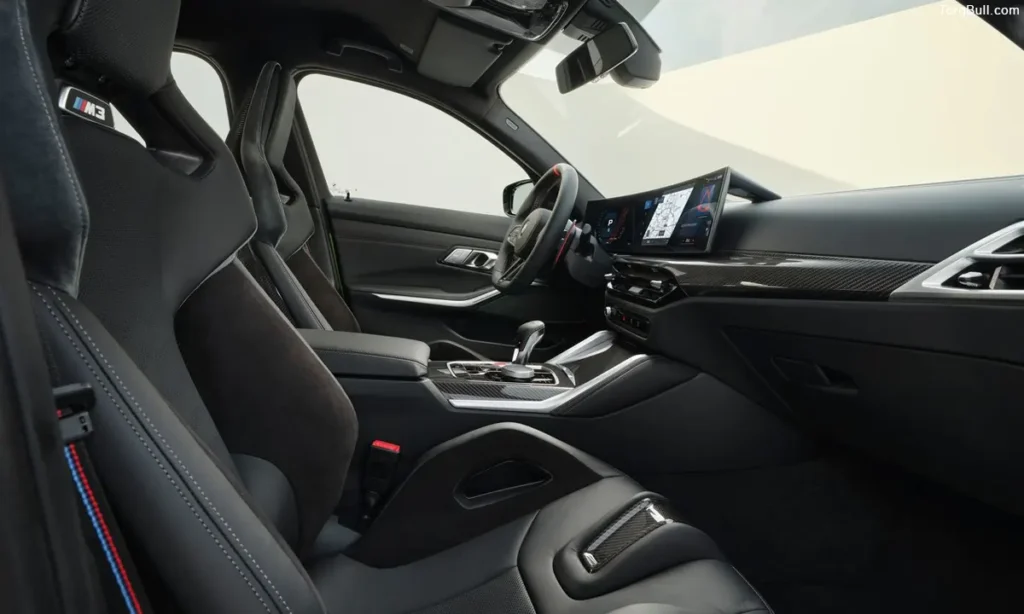
At Virginia International Raceway’s Lightning Lap evaluation, the M3 Competition xDrive recorded a 2:53.5 lap time — a result that beat competing performance sedans specifically through the AWD traction advantage at corner exits and on acceleration zones that determine sector times.
The xDrive system’s ability to apply full power earlier at corner exits than the RWD variant can manage without traction compromise produced a specific and measurable sector advantage in the technical sections of the circuit. At the Climbing Esses section, the xDrive arrived doing 134.1 MPH — 6.4 MPH faster than the competing rear-drive alternative — creating a sector lead that compounded into the final lap time margin.
The xDrive’s circuit advantage is most pronounced in mixed-weather testing — the conditions where variable grip produces the largest lap time differential between all-wheel-drive and rear-drive configurations. On dry, high-grip circuits with predictable traction, the gap between xDrive and RWD lap times narrows considerably as the RWD model’s traction limitations become less relevant to lap time.
2025 BMW M3 xDrive vs RWD — Complete Specification and Cost Chart
| Specification | M3 Standard | M3 Competition RWD | M3 Competition xDrive | Notes |
| Starting Price (including destination) | $76,996 | $81,995 | $86,295 | xDrive costs $4,300 more than RWD Competition |
| Engine | S58 3.0L Twin-Turbo | S58 3.0L Twin-Turbo | S58 3.0L Twin-Turbo | Identical base architecture |
| Horsepower | 473 HP | 503 HP | 523 HP | xDrive received 20 HP increase for 2025 |
| Torque | 406 lb-ft | 479 lb-ft | 479 lb-ft | Same torque output |
| Transmission Options | 6-speed manual or 8-speed auto | 6-speed manual or 8-speed auto | 8-speed automatic only | Manual exclusive to RWD variants |
| Drivetrain | Rear-wheel drive | Rear-wheel drive | All-wheel drive (xDrive) | xDrive adds approximately 50 kg |
| 0 to 60 MPH | Approximately 4.1 sec (manual) | Under 4 seconds | 3.4 seconds | Wet conditions widen xDrive gap |
| Weight Difference | Baseline | Baseline | Plus approximately 50 kg (110 lb) | Weight concentrated over front axle |
| Circuit Advantage | Baseline | Baseline | Measurable in mixed conditions | AWD allows earlier throttle application |
| Oversteer Character | Available | More direct | Unexpectedly available in track mode | Professional evaluation confirmed |
| Daily Usability Difference | Same | Same | No perceptible difference in normal driving | Back to back professional comparison confirmed |
| Manual Transmission Available | Yes | Yes | No | RWD only for manual gearbox |
The Price Difference: Is $4,300 for xDrive Justified?
The $4,300 premium for xDrive over the RWD Competition represents the most straightforward financial question in the comparison — and the answer is specifically related to how and where the buyer intends to use the car.
For buyers in northern states, mountain regions or anywhere that winter driving forms a meaningful portion of annual mileage, the xDrive’s all-weather capability transforms the M3 from a seasonally limited performance car into a year-round daily driver. The $4,300 premium pays for itself in convenience value across a single winter season of confident driving that the RWD variant cannot match without winter tyres and significantly more driver attentiveness in adverse conditions.
For buyers whose M3 use is concentrated in mild climates with consistent dry-weather conditions, the xDrive’s weather advantage is less frequently engaged and the financial case rests on the circuit performance advantage and the 20-horsepower premium over the RWD model.
Read: 2026 BMW M3 Hidden Features You Won’t Find in the Brochure
Who Should Choose Each Variant: The Honest Recommendation
The xDrive is the right choice for buyers who want the most powerful standard M3 available, who drive in variable weather conditions that benefit from AWD confidence, who specifically want the 3.4-second sprint capability and who are comfortable with the automatic-only transmission. Professional evaluation specifically recommends xDrive not because it is tamer, but because it suits the current generation M3 better overall.
The RWD is the right choice for buyers whose M3 purchase is motivated specifically by the six-speed manual transmission experience — the only path to manual engagement in the M3 lineup — and for buyers who place the highest value on the purest possible feedback through the steering and the most direct rear-drive character that the M3’s traditional identity has always represented.