BMW M7 Super Sedan: The Dream Machine BMW Never Built
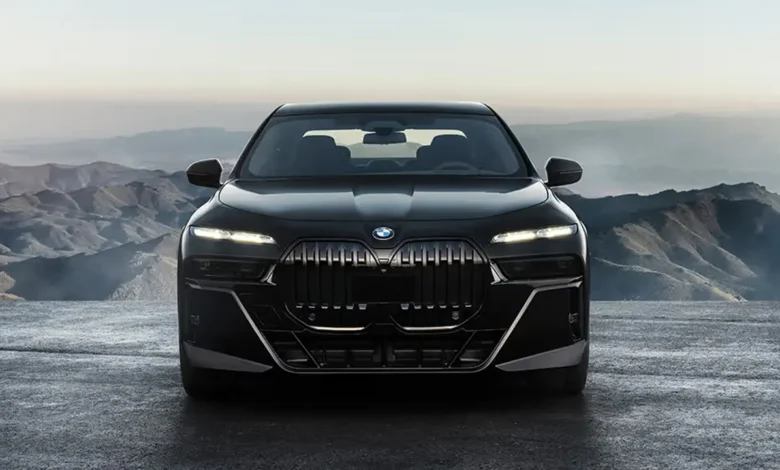
In the ever-evolving world of high-performance luxury sedans, the term “super sedan” has become synonymous with brands like Mercedes-AMG and Audi Sport. Yet one key name seems missing from that elite list — the BMW M7.
Despite decades of speculation, renderings, and enthusiast hopes, the BMW M7 remains a car that exists only in imagination — a “what-if” masterpiece that represents the perfect blend of power, luxury, and M-division performance.
But why has BMW never built an M7? And what would such a machine look and feel like if it ever left the drawing board?
Let’s explore the dream of the BMW M7 Super Sedan — the car that might be too good to be real.
A Dream Deferred: The M7 That Never Was
For decades, BMW’s M division has delivered some of the world’s most thrilling cars — from the high-revving M3 to the iconic M5 super sedan. But when it comes to the company’s flagship 7 Series, a full M variant has never materialized.
Sure, BMW has teased the idea. We’ve seen the M760Li, powered by a twin-turbo V12, and the Alpina B7, which redefined performance luxury. But these weren’t true M cars — they lacked the hardcore chassis tuning, weight-saving measures, and pure performance DNA that define an “M” badge.
For enthusiasts, that absence has always felt like unfinished business.
Renderings of a hypothetical BMW M7 have flooded automotive forums and design studios — muscular, aggressive interpretations of BMW’s ultimate luxury sedan. One look at these digital masterpieces, and it’s easy to see why fans keep asking: Why doesn’t this exist?
What the Renderings Reveal: A Glimpse Into the Impossible
Imagined by designers like Kelsonik and Autoevolution’s creative team, the M7 renderings reveal a machine that could redefine what a luxury performance sedan looks like.
Design Philosophy: Bold, Brutal, and Beautiful
The conceptual BMW M7 blends the elegance of the current 7 Series with the ferocity of the M5 CS.
It features:
- A more aggressive front fascia, with a redesigned kidney grille that’s blacked out and more compact.
- Massive air intakes integrated into a sculpted bumper — functional and fierce.
- Carbon fiber accents along the hood and mirror caps.
- Quad exhausts, diffuser fins, and sculpted M-style side skirts.
From the rear, the design flows into a wide stance with flared arches, a sleek spoiler lip, and slim LED taillights — unmistakably M-inspired but with executive poise.
The proportions are athletic yet graceful — more powerful than an i7, more elegant than an M5. In short, the M7 would be BMW’s most dominant sedan yet.
Under the Hood: Imagining the Powertrain
What would power a BMW M7 worthy of the badge?
Speculation suggests a combination of twin-turbocharged V8 muscle and hybrid electric assistance, much like BMW’s new XM SUV.
If BMW built an M7 today, it would likely use the S68 4.4-liter twin-turbo V8 engine — the same unit found in the XM Label Red, paired with an electric motor for a staggering 738 horsepower and 738 lb-ft of torque.
That would make it not just the fastest 7 Series ever built, but potentially the most powerful BMW sedan in history.
Performance estimates for such a powertrain could include:
- 0–60 mph: 3.1 seconds
- Top speed: 190–200 mph (limited)
- Transmission: 8-speed M Steptronic with xDrive all-wheel drive
Those numbers would put the M7 squarely against the Mercedes-AMG S63 E Performance and Audi RS e-tron GT — a trio of German engineering dominance.
Interior: Where M Performance Meets Executive Luxury
Step inside the imagined M7, and the experience would be nothing short of opulent aggression.
While maintaining the craftsmanship of the 7 Series, the cabin would integrate M-specific features:
- M Carbon bucket seats with illuminated logos and Alcantara upholstery.
- A driver-focused cockpit with M-colored stitching and performance data integrated into the curved digital display.
- M Drive modes and a red push-start button, straight from the M5 CS playbook.
- High-end materials — carbon fiber, brushed aluminum, Nappa leather, and open-pore wood — seamlessly blending performance with luxury.
The ambient lighting and 14.9-inch curved infotainment system would carry BMW’s latest iDrive 8.5, but with performance telemetry and M sound design.
Rear passengers? They’d be treated to first-class luxury — reclining heated seats, touchscreen entertainment, and perhaps even M branding stitched into the headrests.
In essence, the M7 would feel like a private jet that thinks it’s a race car.
Engineering Perfection: Chassis, Dynamics & Handling
If BMW M built this car, it wouldn’t just slap on badges — it would re-engineer the chassis from the ground up.
The M7’s chassis tuning would likely include:
- Adaptive M suspension with active anti-roll stabilization
- Rear-wheel steering for agility
- Carbon-ceramic brakes for fade-free stopping power
- M xDrive system with rear-biased torque distribution
- Lightweight construction using aluminum and CFRP (carbon fiber reinforced plastic)
These enhancements would transform the 7 Series’ smooth cruiser demeanor into something sharper, more dynamic — a driver’s luxury car rather than just a luxury car that can drive fast.
BMW’s engineers could also introduce M Track Mode, allowing the driver to unlock the full potential of the powertrain and chassis — something unimaginable in a standard executive sedan.
Comparing the Hypothetical M7: How It Stacks Up
| Model | Power (hp) | Torque (lb-ft) | 0–60 mph (sec) | Drivetrain |
| BMW i7 M70 xDrive | 650 | 748 | 3.5 | AWD (Electric) |
| BMW M5 CS (2025) | 718 | 750 | 3.0 | AWD (Hybrid) |
| BMW M7 (Concept) | 738 (est.) | 738 (est.) | 3.1 (est.) | AWD (Hybrid) |
| Mercedes-AMG S63 E Performance | 791 | 1,055 | 3.2 | AWD (Hybrid) |
| Audi S8 | 563 | 590 | 3.8 | AWD (Gasoline) |
A fully realized M7 would fit neatly at the top — a symbol of both performance and precision.
Why BMW Hasn’t Built It (Yet)
So, if the concept is this appealing, why doesn’t BMW make it?
The answer lies in strategy and sustainability.
- BMW’s Electrification Push
The brand’s focus is firmly on electric mobility — with the i7, i5 M60, and XM representing the future. A petrol-powered M7 might not align with BMW’s sustainability roadmap. - Market Overlap
The M760Li, i7 M70, and Alpina B7 already cover most of the market that an M7 would target. Building an all-new variant could cannibalize sales. - Consumer Shift
Ultra-luxury performance sedans now compete with high-performance SUVs like the XM and X7 M60i. The demand for a low-slung executive super sedan is waning. - Regulatory Hurdles
Emission standards in Europe and the U.S. make developing a high-output V8 hybrid even more complex and costly.
In short — the M7 makes emotional sense, but not economic sense.
The Closest We’ve Come: The i7 M70
For now, the i7 M70 xDrive stands in as the spiritual successor to the M7 that never was.
This all-electric luxury sedan delivers 650 horsepower and 748 lb-ft of torque, sprinting to 60 mph in just 3.5 seconds. It may not have the growl of a twin-turbo V8, but it delivers instantaneous torque and silent authority.
BMW calls it “the most powerful 7 Series ever,” and in a sense, it’s the M7 for the EV era.
It’s clean, it’s cutting-edge, and it shows where the future of performance luxury is headed.
Why Enthusiasts Still Want a True M7
Despite the technological brilliance of the i7, purists continue to crave a combustion-powered M7.
Why? Because emotion still matters.
The roar of a V8, the snarl of a downshift, the tactile feel of mechanical perfection — these sensations can’t be replaced by silence and software.
A true M7 wouldn’t just be a performance sedan — it would be a statement of passion.
It would remind the world that even in an electric future, there’s still room for soul.
If It Were Built: The Perfect BMW M7
To make the BMW M7 a reality, here’s what enthusiasts dream of seeing:
- Powertrain: S68 twin-turbo V8 + electric motor hybrid (~740 hp)
- Transmission: 8-speed M Steptronic, rear-biased AWD
- Chassis: M-tuned adaptive suspension, active roll control
- Brakes: Carbon ceramics with blue or gold M calipers
- Interior: M carbon seats, performance displays, ambient M lighting
- Special Editions: M7 CS and M7 Competition
- Price: ~$200,000 (USD)
It would be BMW’s ultimate expression of performance luxury — the car that could redefine what it means to drive a flagship sedan.
Final Thoughts: The Dream Lives On
The BMW M7 remains a concept confined to imagination, digital renderings, and wish lists — but the idea of it continues to inspire.
In a world dominated by EVs and autonomous cars, the M7 represents something beautifully human — the desire for power, precision, and connection.
Perhaps one day BMW will surprise us with a hybrid M7 that honors its M heritage while embracing the future. Until then, the renderings, the speculation, and the dreams will keep the legend alive.
Because some cars, even when unreal, remind us what driving truly means.
Read: 6 BMW Cars That Prove the V8 Engine Still Rules the Road
Frequently Asked Questions (FAQ)
Q1: Does BMW make an M7?
No — BMW has never officially produced a full M7. However, the M760Li and i7 M70 serve as its spiritual successors.
Q2: What would power a BMW M7 if it were built?
Most likely a twin-turbo V8 hybrid similar to the XM, producing around 740 hp.
Q3: How fast could a BMW M7 be?
Estimates suggest 0–60 mph in about 3.1 seconds, with a top speed near 200 mph.
Q4: Why hasn’t BMW built it?
Due to market overlap, emissions regulations, and a focus on electrification, BMW has prioritized the i7 and XM instead.
Q5: Will there ever be an electric M7?
Possibly — the i7 M70 already hints at a fully electric M-flagship, blending performance and sustainability.