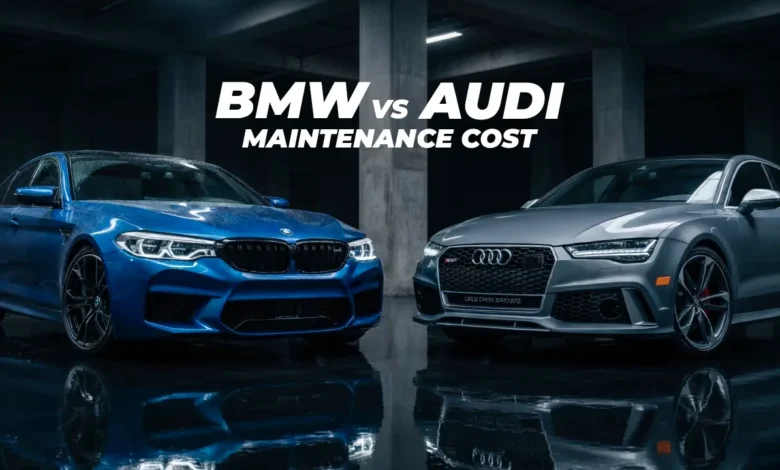
BMW vs Audi Maintenance Cost Comparison 2026. The German Premium Maintenance Reality
- Annual service costs and maintenance intervals
- Dealer vs independent repair pricing differences
- Common failure points and long-term repair frequency
- Ownership cost comparison between BMW and Audi
- Real financial commitment of long-term German luxury ownership
BMW vs Audi Maintenance Cost: The decision between BMW and Audi is one that the automotive enthusiast community discusses endlessly in terms of driving dynamics, interior quality and design philosophy — and one that the financially prudent buyer must also examine through the lens of the ownership costs that follow the purchase agreement’s signature for years or decades beyond the initial transaction. Both manufacturers produce vehicles of genuine quality whose ownership experience justifies the premium over mainstream alternatives. Both also produce vehicles whose maintenance costs, in real-world ownership conditions across extended timelines, diverge from each other in ways whose financial significance compounds meaningfully across the ownership periods that sensible vehicle purchase decisions should account for before the showroom visit rather than after.
The BMW versus Audi maintenance cost comparison in 2026 is not a simple verdict in favour of one manufacturer — it is a context-dependent assessment whose outcome varies between model families, powertrain configurations, ownership patterns and the specific service approach that the owner adopts across their vehicle’s working life. Understanding the variables that determine which manufacturer’s ownership costs favour the specific buyer’s circumstances requires examining the comparison across every dimension that real-world maintenance costs reflect.
Scheduled Maintenance: Intervals and Costs
BMW’s condition-based service system — whose oil change interval determination through the onboard oil quality monitoring system produces intervals of 10,000 to 15,000 miles between services rather than the fixed calendar-based intervals that previous-generation vehicles required — provides the first significant maintenance cost variable in the BMW versus Audi comparison. The condition-based approach’s flexibility benefits high-mileage drivers whose oil quality degrades more rapidly through use but whose annual mileage justifies the extended interval, and penalises low-mileage drivers whose calendar-based oil degradation occurs before the mileage threshold that triggers the service indicator.
BMW’s standard scheduled maintenance cost at an authorised dealer — whose labour rate in most major American markets ranges from $150 to $200 per hour — produces annual service costs of approximately $800 to $1,200 for models in the 3 Series and 5 Series range under typical 12,000 to 15,000 annual mileage patterns. The major service whose spark plug replacement, air filter renewal and brake fluid change requirements arrive at 60,000-mile intervals adds approximately $400 to $600 to the scheduled maintenance cost in the years it falls due.
Audi’s fixed service interval approach — whose 10,000-mile oil service schedule and the additional inspection service that alternates with the oil change — produces annual service costs of approximately $700 to $1,100 at authorised dealers for A4 and A6 models under equivalent annual mileage patterns. The fixed interval’s predictability provides budgeting certainty that the condition-based approach’s variability cannot offer with equivalent precision — a planning advantage whose value the owner whose annual maintenance budget requires consistent forecasting weights more heavily than the driver comfortable with variable service timing.
The scheduled maintenance cost differential between BMW and Audi at dealer rates is therefore modest — typically within $100 to $200 per year in either direction depending on specific model, mileage pattern and the service items that each year’s visit includes. The more significant cost differentiation emerges in the unscheduled repair category whose frequency and expense the long-term ownership data reveals more honestly than the scheduled service comparison alone.
Unscheduled Repairs: Where the Real Cost Difference Lives
The unscheduled repair frequency data — whose collection across large ownership populations by platforms tracking real-world maintenance events provides the most honest available comparison between manufacturers whose scheduled service costs are broadly comparable — reveals meaningful differences between BMW and Audi in the specific systems and components whose failure rates and repair costs create the total ownership cost differential that the scheduled service comparison obscures.
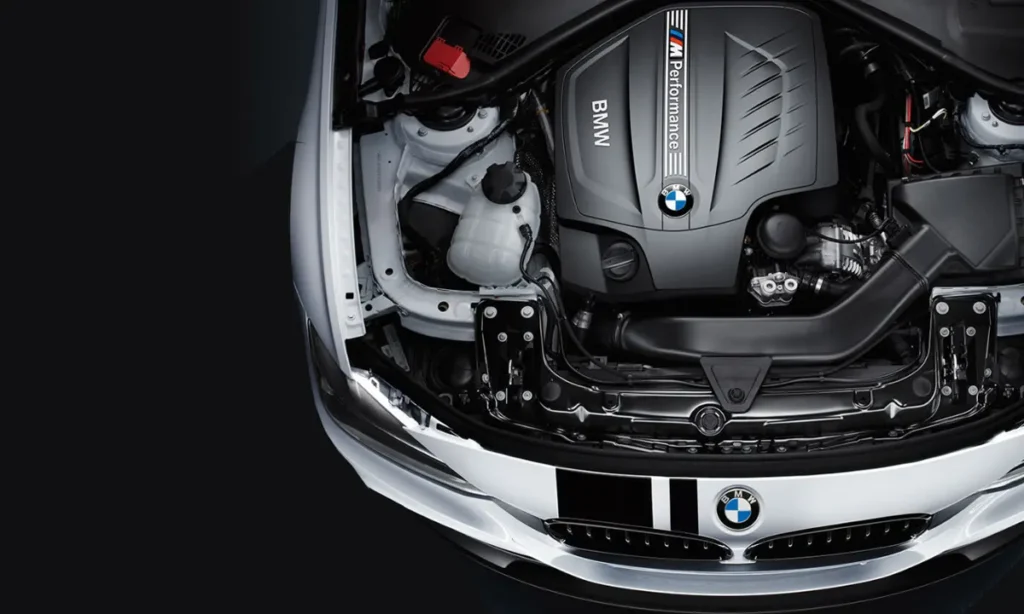
BMW’s turbocharged engines — particularly the N20 2.0-litre and N55 3.0-litre units whose production predates the current B-series engines — demonstrate documented failure patterns in the timing chain tensioner, coolant system components and valve cover gaskets whose repair costs at dealer rates range from $800 to $2,500 depending on the specific failure and the labour access its rectification requires. The current B48 2.0-litre and B58 3.0-litre engines have demonstrated improved long-term reliability relative to their predecessors — but the ownership population’s collective experience across five or more years of production has not yet accumulated the high-mileage reliability data that older engine families’ extensive real-world evidence provides.
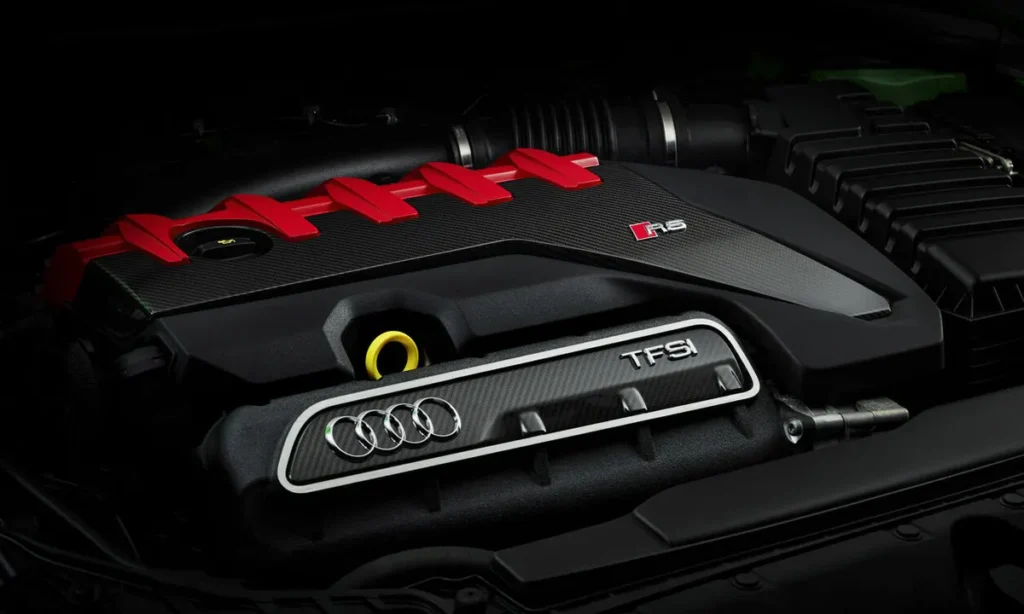
Audi’s TFSI engines — whose direct injection carbon buildup on intake valves represents the most widely documented recurring maintenance issue across the turbocharged four-cylinder and six-cylinder lineup — require periodic intake valve cleaning whose professional service cost of $400 to $800 at authorised dealers represents a recurring maintenance event that Audi’s scheduled service programme does not include but whose neglect produces drivability symptoms and long-term engine health implications that the conscientious owner cannot responsibly ignore. The DSG dual-clutch transmission’s fluid service requirement — arriving at 40,000-mile intervals and costing approximately $300 to $500 at dealer rates — adds to the Audi ownership cost in a manner that BMW’s ZF eight-speed automatic’s less frequent fluid service requirement does not replicate with equivalent cost or frequency.
Parts Pricing: Dealer vs Independent Network
The parts pricing differential between BMW and Audi — whose OEM component costs at authorised dealers reflect each manufacturer’s specific parts pricing strategy rather than the underlying manufacturing cost that both brands’ shared European premium positioning might suggest is similar — represents a meaningful variable in the total ownership cost equation whose significance increases as the vehicle’s age moves it from warranty coverage toward the independent service network that mature vehicles’ maintenance economics favour.
BMW’s parts pricing at authorised dealers consistently runs approximately 10 to 20 percent above Audi’s equivalent components for directly comparable items — brake rotors, filters, gaskets and the electronic components whose manufacturer-sourced pricing reflects the commercial relationship between the manufacturer and its authorised parts supply chain. The differential narrows significantly in the independent aftermarket whose OEM-specification alternative parts pricing reduces both manufacturers’ component costs to comparable levels whose specific comparison depends on the part category and the aftermarket supplier’s quality tier.
The independent specialist network’s BMW coverage — whose depth in the American market reflects the brand’s historical popularity and the mechanic community’s accumulated BMW-specific knowledge — provides the competitive alternative to dealer servicing whose labour rate advantage typically ranges from 30 to 50 percent below dealer pricing. The Audi independent specialist network’s equivalent depth provides comparable pricing alternatives — with the specific regional variation in independent specialist availability affecting the actual cost comparison for individual owners whose geographic location determines the competitive options available to them.
Read: The Most Powerful Audi Ever Built Runs Entirely on Electricity and It’s Breathtaking
Long-Term Cost: The 5-Year Ownership Reality
Aggregating scheduled maintenance, unscheduled repair frequency data and parts pricing across a five-year, 60,000-mile ownership period — the typical ownership cycle for a financed or leased premium vehicle in the American market — produces a total maintenance cost picture whose comparison between equivalent BMW and Audi models reveals the financial reality behind the manufacturer comparison that purchase-price-focused showroom discussions rarely address.
RepairPal and YourMechanic aggregated data for equivalent BMW and Audi models — 3 Series versus A4, 5 Series versus A6 — consistently places BMW’s five-year maintenance cost approximately $800 to $1,500 above the Audi equivalent across comparable model generations. The differential reflects the BMW turbocharged engine’s documented repair frequency for specific failure modes, the parts pricing premium and the labour cost that the engine bay packaging on certain BMW models imposes through access difficulty rather than the repair’s inherent complexity.
The Audi five-year ownership advantage — whose financial expression in the $800 to $1,500 range represents a meaningful but not decisive cost differential — is partially offset by the DSG transmission service requirement’s recurring cost and the TFSI intake valve cleaning whose periodic need the Audi’s lower repair frequency in other areas does not fully absorb in the five-year total comparison.
Read: BMW X7 vs Audi Q7, Which One Should You Buy?
BMW vs Audi Maintenance Cost — 2026 Comparison Chart
| Category | BMW 3 Series / 5 Series | Audi A4 / A6 | Notes |
| Annual Scheduled Service (Dealer) | $800–$1,200 | $700–$1,100 | BMW condition-based / Audi fixed |
| Oil Change Interval | 10,000–15,000 miles | 10,000 miles | BMW variable / Audi fixed |
| Major Service (60K miles) | $400–$600 additional | $350–$550 additional | Spark plugs / filters / brake fluid |
| DSG/Transmission Service | N/A (ZF 8-speed, less frequent) | $300–$500 per 40K miles | Audi DSG-specific |
| TFSI Intake Valve Cleaning | N/A | $400–$800 periodic | Audi direct injection issue |
| Timing Chain Issues (Risk) | Moderate (N-series engines) | Low (Current TFSI) | Model year dependent |
| Parts Premium vs Mainstream | ~60–80% higher | ~50–70% higher | BMW parts slightly more expensive |
| Independent Labour Saving | 30–50% vs dealer | 30–50% vs dealer | Similar specialist network depth |
| 5-Year Total Maintenance | ~$6,500–$9,500 | ~$5,800–$8,500 | RepairPal aggregated data |
| Most Expensive Repair Risk | Timing chain / Coolant system | Intake valves / DSG fluid | Model-specific variation |
| Reliability Rating (Consumer Reports) | Above Average | Above Average | Similar overall scores |
| Best Ownership Cost Strategy | Independent specialist | Independent specialist | Both benefit equally |