Bugatti W16 Mistral: The Final Evolution of the Legendary W16 Engine
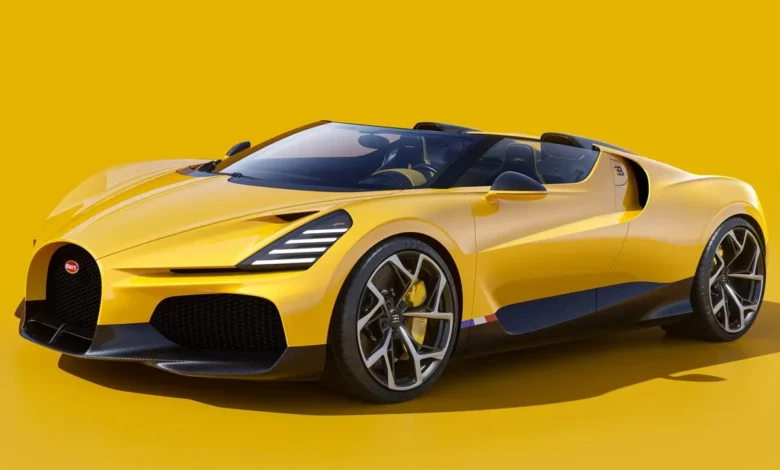
The Bugatti W16 Mistral represents one of the most important milestones in modern hypercar history. As the last Bugatti model powered by the brand’s iconic quad-turbocharged 8.0-litre W16 engine, the Mistral stands as a culmination of two decades of engineering mastery. Bugatti has used the W16 platform since the launch of the original Veyron in 2005, a powertrain that redefined what was possible in terms of speed, stability, mechanical complexity and sheer automotive emotion. With the W16 Mistral, Bugatti closes the chapter on the most powerful internal combustion engine ever fitted to a production road car, offering a breathtaking, roofless tribute that blends timeless design, extreme performance and unparalleled exclusivity.
The Mistral is not merely a derivative of the Chiron but an entirely reimagined open-top hypercar created to celebrate the end of an era. Its purpose is symbolic as much as it is technical. In the era of electrification, Bugatti chose to deliver one final showcase of internal combustion brilliance before transitioning into a new hybrid future under Bugatti Rimac. The Mistral is therefore a definitive statement car: a farewell to the W16 and a demonstration of the engineering philosophy that has made Bugatti one of the world’s most desirable performance marques. This article explores the Bugatti W16 Mistral’s design language, powertrain performance, aerodynamics, structural engineering, interior craftsmanship, driving character, historical significance, ownership appeal and overall position within the hypercar world.
Gallery: Bugatti W16 Mistral
Exterior Design: A Sculpture of Speed and Open-Air Emotion
The Bugatti W16 Mistral demonstrates a new interpretation of Bugatti’s design philosophy, shaped by the need to control airflow in a roofless hypercar capable of speeds exceeding 420 km/h. Removing the roof from a vehicle of this calibre presents extreme aerodynamic challenges. Stability, noise management and cooling efficiency all require solutions grounded in advanced engineering. Bugatti’s designers employed the brand’s “form follows performance” ethos to craft an aesthetic identity that not only looks striking but functions with purpose.
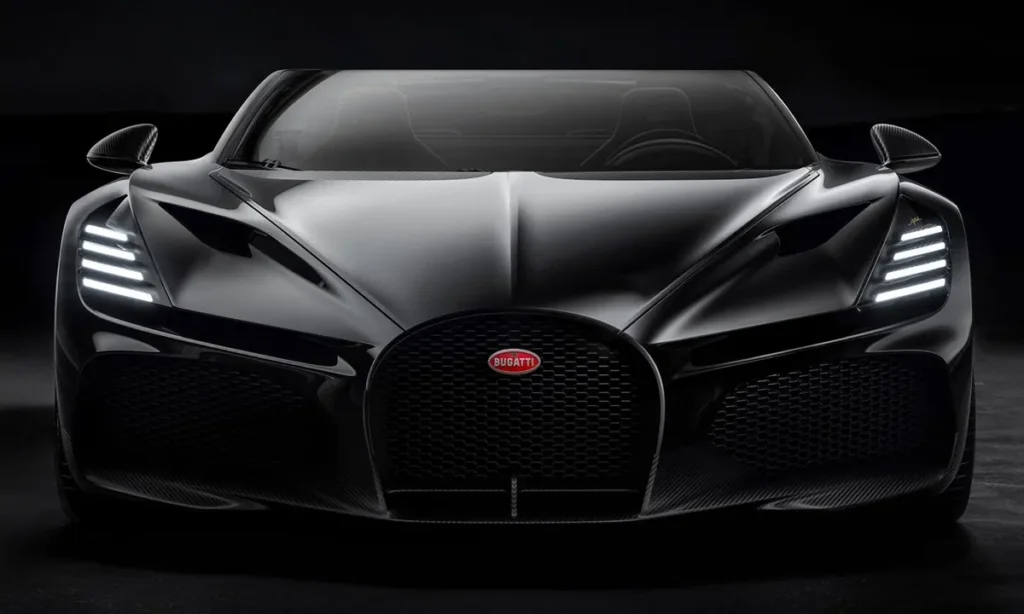
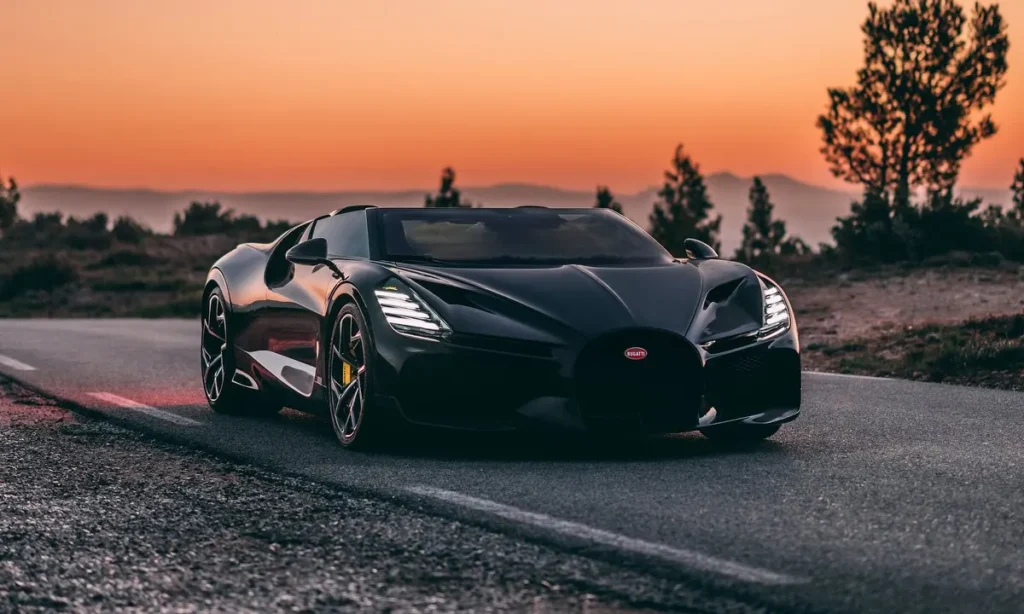
The front of the Mistral features a revised horseshoe grille that is wider and more angular than the Chiron’s, allowing greater airflow into the high-capacity radiators. The headlight design uses four distinct light elements arranged vertically, forming a visual homage to the car’s structural shoulder lines while improving airflow extraction. Every external surface conveys movement, with concave sculpting along the doors that channels air into the rear intakes. This is essential, as the W16 engine requires enormous cooling capability to sustain peak performance under maximum load.
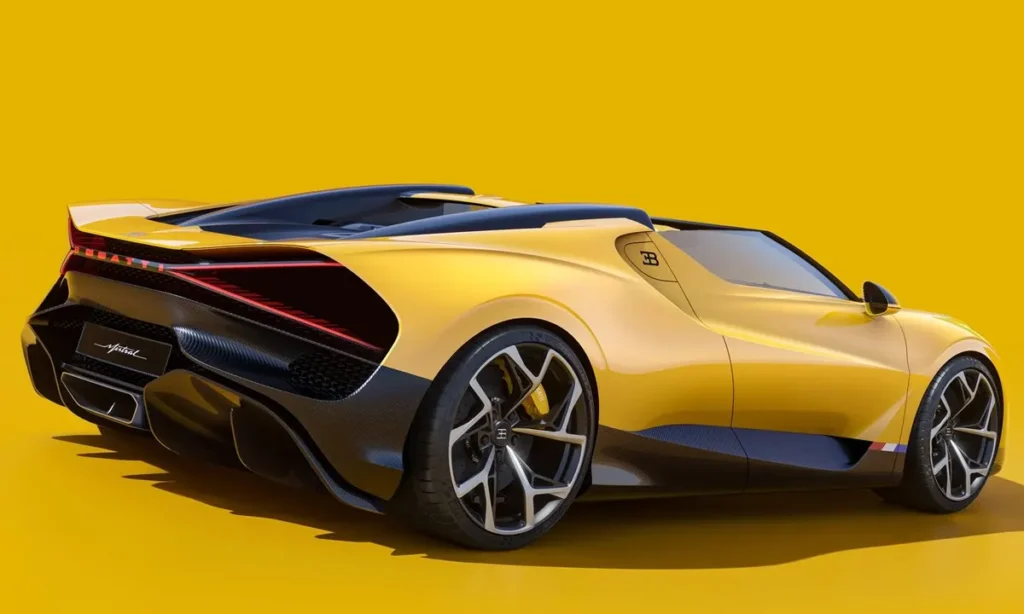
The rear of the Mistral is among the most dramatic ever seen on a Bugatti. A full-width X-shaped tail-light structure forms a futuristic signature that doubles as an aerodynamic venting system. The hollowed-out surfaces allow hot air from the engine bay to escape efficiently without compromising drag or stability. The dual central exhaust outlets, derived from the Chiron Super Sport’s advanced titanium system, contribute to weight savings and optimise gas flow.
Most notably, the absence of a fixed roof creates a new visual profile that differentiates the Mistral from all earlier W16 models. This open-air design transforms the hypercar’s personality, emphasising elegance and emotion over strict aerodynamics while still delivering extraordinary stability. The result is a masterpiece of sculptural engineering—intense, purposeful and unmistakably Bugatti.
Powertrain: The Final Form of the Quad-Turbo W16
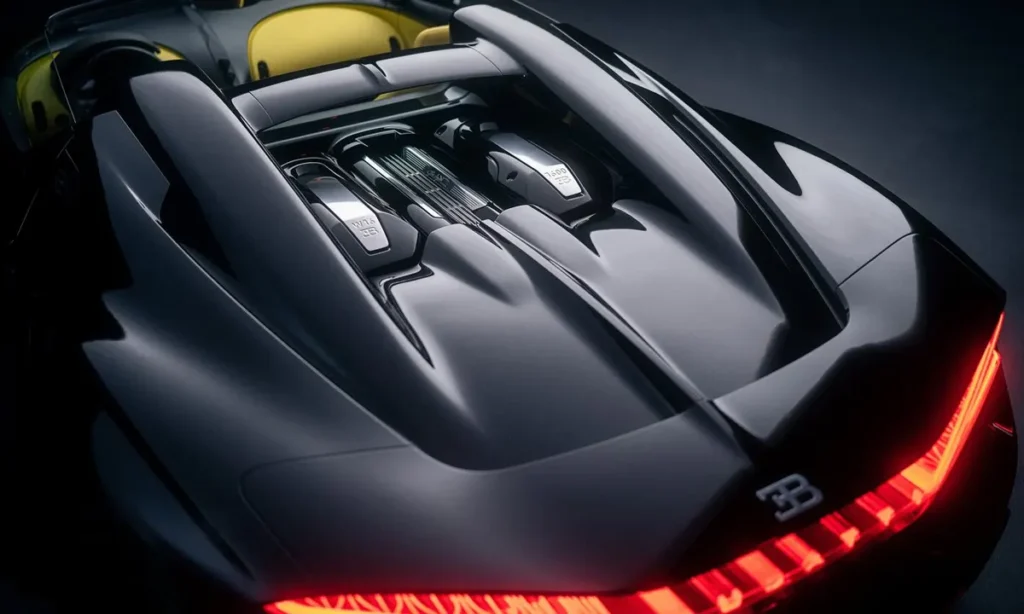
At the heart of the Bugatti W16 Mistral lies the most potent version of the brand’s legendary 8.0-litre quad-turbo W16 engine. Generating 1,578 horsepower (1,600 PS), the Mistral shares its powertrain with the Chiron Super Sport 300+, the first production car to exceed 300 mph. This engine represents the pinnacle of combustion-based hypercar engineering and delivers performance unmatched by any naturally aspirated or turbocharged competitor.
The W16 engine is a feat of mechanical integration, combining four turbochargers, a complex cooling system, advanced lubrication channels and an exceptional air intake arrangement. The Mistral’s engineers refined the intake geometry to maintain boost pressure and optimise airflow during open-roof driving, compensating for turbulence and pressure fluctuations. The sophisticated seven-speed dual-clutch transmission has been recalibrated to deliver smooth power transitions under extreme load, while the all-wheel-drive system ensures unshakeable traction whether launching from a standstill or accelerating at high speeds.
Performance figures for the Mistral are extraordinary. Although Bugatti has not publicly confirmed the final top-speed record attempt, the company has stated that the Mistral is engineered to be the world’s fastest roadster. This suggests a top speed surpassing previous convertible records. Acceleration remains brutal, with an expected 0–100 km/h time of around 2.4 seconds and equally rapid progression beyond that.
This engine’s departure marks the end of an era. The W16 defined the hypercar segment for two decades and became an icon of mechanical excess in an increasingly electrified world. The Mistral honours this legacy by giving the W16 its most exhilarating, emotional send-off in an open-top configuration.
Aerodynamics: Stability and Cooling at Extreme Speeds
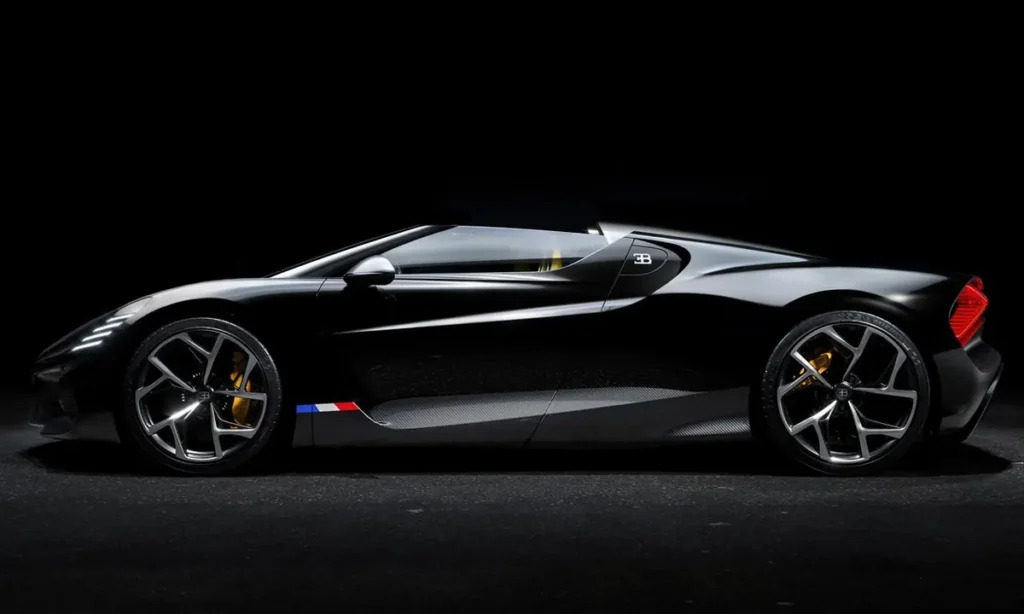
The Bugatti W16 Mistral’s aerodynamic sophistication reflects the unique challenges of building a roofless hypercar with a 1,600-horsepower engine. Without a roof, air pressure entering the cabin increases exponentially at high speeds. Bugatti’s engineers crafted a multi-stage airflow system that reduces buffeting and directs clean air over the cockpit.
The Mistral employs advanced air-column management using seamlessly integrated deflectors and a specially shaped wraparound windshield that gently curves airflow over the cabin. The side intakes behind the occupants are enlarged to increase cooling capacity. These intakes feed air through high-flow channels into the W16’s massive turbochargers and intercoolers.
The X-tail design allows hot air to escape efficiently, reducing thermal load on the powertrain. This is critical because the Mistral produces more heat than any previous Bugatti roadster. The diffuser and underbody surfaces have been sculpted to deliver high-speed stability through ground effect while minimising drag. This architectural integration of airflow, cooling and structural geometry allows the Mistral to achieve remarkable aerodynamic balance without the stability challenges that typically plague high-speed convertibles.
Chassis, Handling and Structural Engineering
The structural integrity of the W16 Mistral required unprecedented levels of engineering. The absence of a fixed roof reduces torsional rigidity, which must be restored through enhancements to the carbon-fibre monocoque. Bugatti developed a revised chassis structure that matches the stiffness of the Chiron while remaining lightweight and balanced. This is essential to preserve driving precision and safety.
Adaptive dampers, active ride-height systems and electronically controlled anti-roll mechanisms allow the Mistral to transition seamlessly between comfort-oriented grand touring and extreme high-performance driving. Despite its immense power, the Mistral maintains Bugatti’s philosophy of effortless speed, meaning the car remains composed at high velocity and easy to control even for non-professional drivers.
The braking system, derived from the Chiron Super Sport, features massive carbon-ceramic discs capable of withstanding extreme temperatures. Brake cooling ducts and advanced air-channeling strategies ensure fade resistance, even under repeated high-speed deceleration. The steering calibration provides precision while maintaining stability, allowing the driver to experience the car’s athleticism without unpredictability.
Interior Design: Craftsmanship and Open-Air Luxury
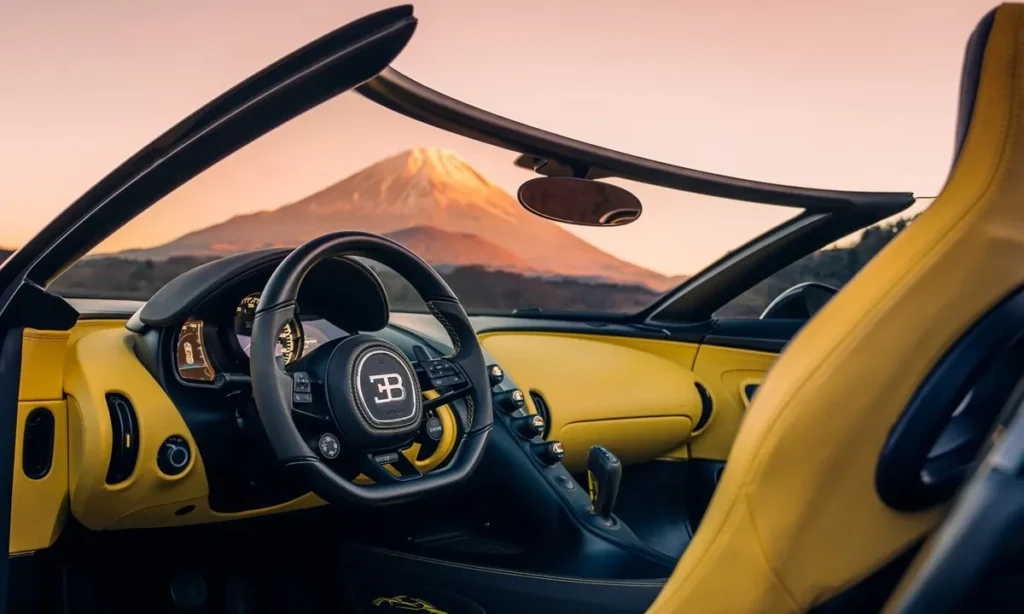
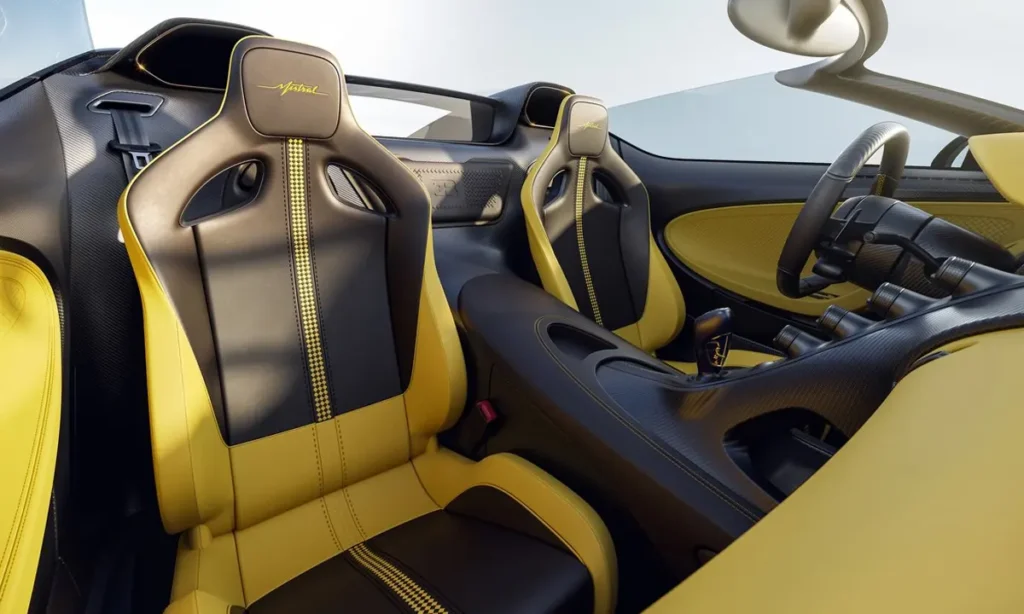
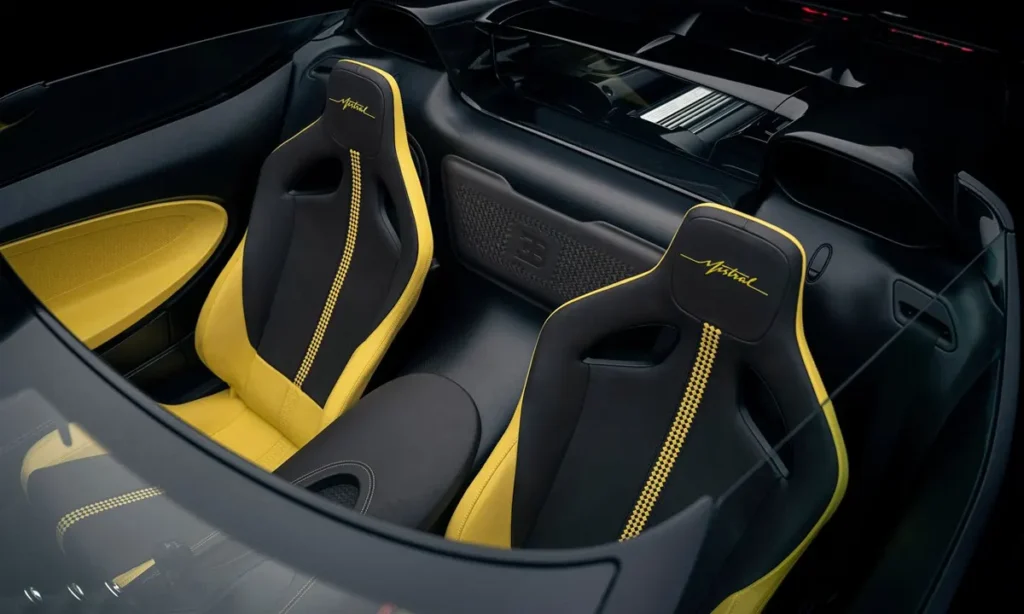
The interior of the Bugatti W16 Mistral reflects Bugatti’s dedication to luxury craftsmanship, material artistry and ergonomic perfection. The cabin architecture blends modernity with traditional hand-finished detailing. Premium leather upholsteries, carbon-fibre elements and polished aluminum surround the occupants, while innovative features such as woven leather door panels elevate the design beyond conventional supercar interiors.
The open-top design creates a sensory experience unlike any previous Bugatti. The sound of the W16 engine becomes part of the cabin’s emotional identity, delivering an immersive soundtrack that varies depending on speed, throttle position and road environment. The interior materials are chosen to withstand open-air exposure without fading or losing structural integrity.
The centre console houses a refined control interface with milled-aluminum switches inspired by mechanical watchmaking. A custom instrument cluster displays digital readouts framed by physical craftsmanship. Bugatti also offers extensive personalization through its Sur Mesure program, allowing owners to commission bespoke colour schemes, materials and insignias.
Driving Experience: A Sensory and Emotional Hypercar
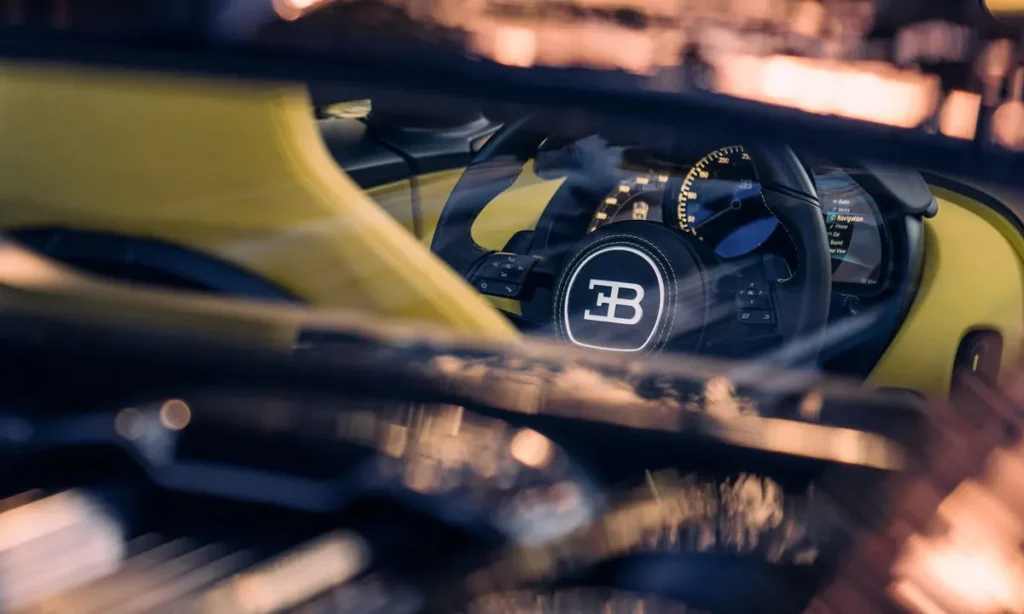
Driving the Bugatti W16 Mistral is an emotional experience unmatched by any other hypercar. The quad-turbo V16’s surge of power, combined with the wind rushing into the open cockpit, creates a dynamic connection between driver and machine. Acceleration is instantaneous and brutal, yet the vehicle remains refined and balanced thanks to the advanced all-wheel-drive system and carefully tuned chassis.
The steering is communicative without being overly heavy, and the suspension adapts seamlessly to varying road surfaces. Even at cruising speeds, the Mistral exhibits a sense of poise that belies its extreme capabilities. Yet with a single throttle press, the car transforms into a ferocious force capable of delivering spine-compressing acceleration.
Unlike many hypercars that prioritise track performance, the Mistral emphasizes emotional engagement and grand-touring comfort. It offers a rare combination of usability and extreme performance, making it equally suited for scenic open-road drives and high-speed events.
Historical Significance: The End of the W16 Era
The significance of the Bugatti W16 Mistral extends beyond its performance figures and exclusivity. It marks the end of the world’s most ambitious combustion engine. The W16 engine defined the hypercar category and shattered expectations regarding what a road car could achieve. As Bugatti transitions into a hybrid future, the Mistral becomes a collector’s masterpiece and a historical artefact representing the pinnacle of pre-electrification performance technology.
Read: This Rolls-Royce Phantom Centenary Is a Masterpiece of Pure Luxury
Conclusion
The Bugatti W16 Mistral is more than a hypercar. It is a work of mechanical art, a farewell tribute to an unmatched engine architecture, and a celebration of open-air motoring at the highest level of performance. Its design, engineering, craftsmanship and emotional identity make it one of the most important automotive creations of the decade. The Mistral solidifies Bugatti’s reputation for excellence while honouring the past and preparing the brand for its next chapter. As the final W16-powered Bugatti, it will forever be remembered as a landmark achievement that combines raw mechanical intensity with timeless elegance.
Bugatti W16 Mistral – Specifications Chart
| Specification | Detail |
| Engine | 8.0-litre Quad-Turbo W16 |
| Power Output | 1,578 hp (1,600 PS) |
| Torque | 1,600 Nm (approx.) |
| Transmission | 7-Speed Dual-Clutch Automatic |
| Drivetrain | All-Wheel Drive |
| 0–100 km/h | Approx. 2.4 seconds |
| Top Speed | 420+ km/h (engineered to be world’s fastest roadster) |
| Body | Carbon-Fibre Monocoque with Reinforcements |
| Aerodynamic System | Active Airflow, X-Tail Venting |
| Seating | Two-Seat Roadster |
| Production | 99 units (all sold) |
| Price | Approx. $5 Million USD (base) |