The End of Charging Anxiety! BYD Flash Charging System Explained
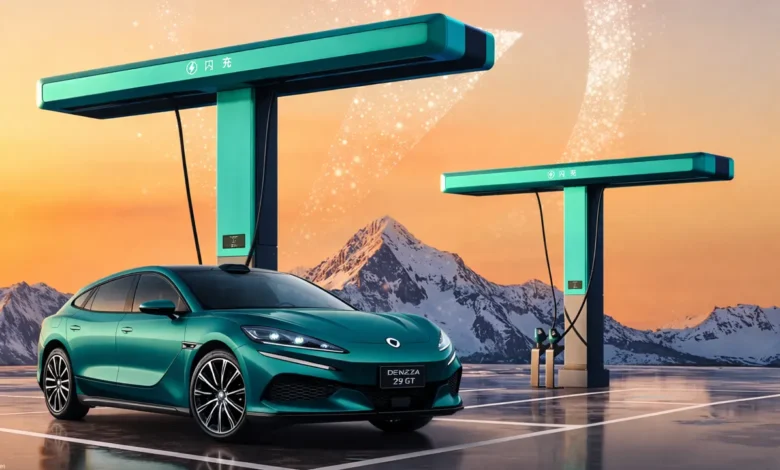
- 1,000 kW peak charging power capability
- 400 km of range added in just 5 minutes
- Dedicated megawatt-class charging infrastructure network
- Advanced battery chemistry engineered for extreme high-speed charging
- Breakthrough in next-generation electric mobility technology
BYD Flash Charging System: There are technological inflection points that divide an industry’s history into a before and an after — moments when a single development makes the assumptions of the previous era feel not merely outdated but fundamentally misconceived. The internal combustion engine’s displacement of the horse. The lithium-ion battery’s displacement of nickel-metal hydride in consumer electronics. The Tesla Supercharger’s demonstration that fast charging infrastructure could be built as a vertically integrated network rather than an afterthought. BYD’s Flash charging system is that kind of moment for the electric vehicle industry — a development that does not merely accelerate the charging process but dissolves the foundational objection that has defined every serious conversation about electric vehicle adoption since the category’s inception.
Charging anxiety — the concern that an electric vehicle cannot be replenished quickly enough to serve as a genuine replacement for a petrol-powered car across every real-world use case — has been the electric vehicle industry’s most persistent commercial obstacle for fifteen years. BYD’s Flash charging system is the most direct and most technically credible answer that any manufacturer has yet provided to that specific objection, and understanding what it achieves, how it achieves it and what it demands of the infrastructure and battery architecture that support it is essential context for understanding why the global automotive industry is paying closer attention to a Chinese manufacturer’s charging announcement than to almost any other single technical development of the current era.
What Is BYD Flash Charging and What Does It Actually Deliver
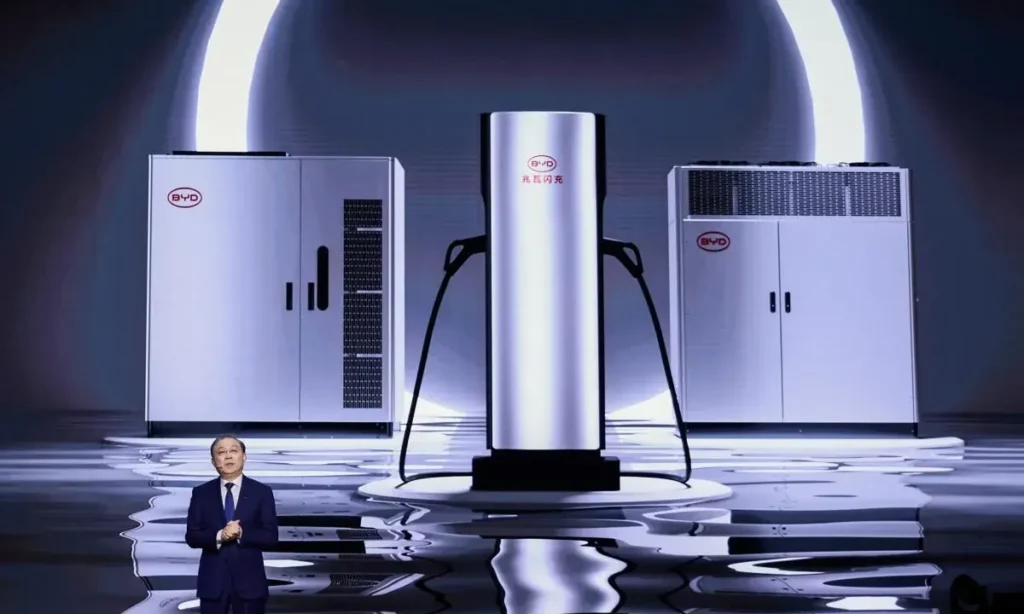
BYD’s Flash charging system — unveiled in March 2025 alongside the Han L and Tang L as the first production vehicles equipped to receive it — operates at a peak charging rate of 1,000 kilowatts. To contextualise that figure meaningfully: the Tesla Supercharger V3, which represented the global standard for accessible ultra-fast charging at its introduction, operates at a maximum of 250 kilowatts. Porsche’s 800-volt Taycan, whose charging architecture was considered the benchmark for premium electric vehicle charging performance at its launch, accepts power at up to 320 kilowatts under optimal conditions. BYD’s Flash system operates at more than three times that figure — a difference not of degree but of category.
The practical consequence of that charging rate, in combination with the battery architecture designed to receive it, is a charging experience that delivers approximately 400 kilometres of CLTC-rated range in five minutes of connection time. At a compatible Flash charging station, a BYD vehicle equipped with the system can be replenished from a critically low state of charge to a range figure sufficient for the overwhelming majority of real-world daily driving requirements in the time it takes to use a service station facility and purchase a coffee. The comparison to a petrol refuelling stop — historically the benchmark against which electric vehicle charging has always fallen short — is no longer a concession that BYD needs to make.
The Battery Technology That Makes Flash Charging Possible
Peak charging rates are meaningless without a battery architecture capable of accepting them safely and sustainably. The fundamental limiting factor in ultra-fast charging is not the charger’s output capability but the battery’s ability to receive current at extreme rates without generating heat that degrades cell chemistry, accelerates capacity loss and, in worst-case scenarios, creates thermal safety risks. This is precisely why most electric vehicles with nominal 800-volt architectures cannot approach their theoretical maximum charging rates in sustained real-world conditions — the battery management system throttles incoming current to protect cell integrity long before the charger’s output ceiling is reached.
BYD’s engineering response to this constraint is the second-generation blade battery — an evolution of the prismatic cell format that made the original Blade Battery one of the most discussed energy storage innovations in the automotive industry when it was introduced in 2020. The second-generation architecture achieves a charge rate capability of 10C — meaning the battery can accept a charge equivalent to its full capacity in one-tenth of an hour under optimal conditions. The thermal management system integrated into the battery pack uses a direct cooling architecture — bringing the thermal regulation medium into direct contact with the cell surfaces rather than relying on indirect cooling through the pack structure — to manage the heat generated during extreme charging rates with sufficient effectiveness to maintain cell temperatures within the range that preserves long-term chemistry integrity.
BYD has stated that the second-generation blade battery retains over 80 percent of its original capacity after 3,000 charge cycles under Flash charging conditions — a longevity claim whose verification across real-world ownership conditions will accumulate over time but whose engineering foundation in the thermal management architecture is technically credible.
The Infrastructure Challenge: Building a Megawatt-Class Charging Network
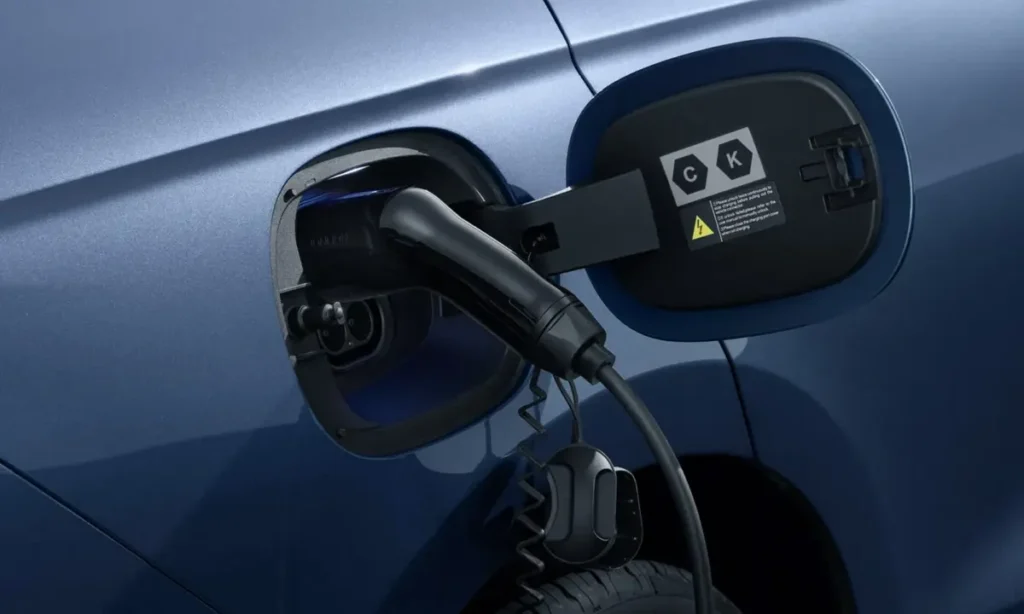
Delivering 1,000 kilowatts to a vehicle requires infrastructure of a fundamentally different specification than the charging equipment that currently populates most public charging networks. A 1,000-kilowatt charger draws power from the electrical grid at a rate that equals or exceeds the peak demand of a small commercial building — a load profile that requires grid connection capacity, transformer infrastructure and site electrical installation specifications that most existing charging locations were not designed to accommodate.
BYD’s response to this infrastructure challenge is a parallel investment in a dedicated Flash charging network whose site selection, grid connection and equipment specification are engineered specifically for megawatt-class power delivery. The company announced a commitment to deploy 4,000 Flash charging stations across China in 2025, with each station designed to provide multiple simultaneous 1,000-kilowatt connections rather than the single high-power stall surrounded by lower-power alternatives that characterises most current ultra-fast charging deployments.
The liquid-cooled charging cables that the Flash system requires — a necessary engineering response to the heat generated by passing 1,000 kilowatts through a connection between charger and vehicle — represent a component innovation whose cost and complexity have historically been barriers to ultra-high-power charging deployment. BYD’s manufacturing scale and vertical integration provide cost advantages in producing these components at the volume that a 4,000-station network requires — an advantage that smaller charging network operators and manufacturers without BYD’s manufacturing breadth cannot easily replicate.
Flash Charging vs the Global Competition
The global context in which BYD’s Flash system arrives matters enormously for understanding its significance. In Europe, the Combined Charging System standard and the growing Ionity network have established 350-kilowatt charging as the current high-water mark for publicly accessible ultra-fast charging — a figure that the Flash system triples. In North America, Tesla’s Supercharger V4 operates at up to 350 kilowatts, while the NACS standard’s adoption by major manufacturers has created a more coherent charging ecosystem than previously existed without approaching Flash charging’s performance envelope.
CATL — BYD’s primary Chinese battery competitor and the world’s largest battery manufacturer by volume — has developed its own Superfast charging architecture capable of 600-kilowatt peak rates, representing the most direct Chinese competitor to the Flash system’s performance claims. The gap between CATL’s 600-kilowatt capability and BYD’s 1,000-kilowatt achievement reflects a meaningful engineering differentiation rather than a marginal specification distinction, and positions BYD as the credible holder of the ultra-fast charging performance benchmark at the moment when that benchmark is attracting global commercial and regulatory attention.
Read: 2026 BYD Sealion 7: China’s Next-Generation Premium Electric SUV Redefined
What Flash Charging Means for Electric Vehicle Adoption
The commercial significance of BYD’s Flash charging system extends considerably beyond the technical achievement itself. Range anxiety has functioned as the electric vehicle industry’s most durable adoption barrier not because the mathematics of electric vehicle range are genuinely inadequate for most real-world driving patterns — they are not — but because the psychological experience of charging uncertainty is qualitatively different from the certainty that a petrol station’s ubiquity provides. A charging system that reduces replenishment time to five minutes eliminates that psychological distinction far more effectively than any increase in battery range achievable within current energy density constraints.
If a Flash-equipped BYD can be recharged in the time a petrol car requires for a fuel stop, the last meaningful experiential distinction between electric and combustion vehicle ownership collapses. The implications for consumer adoption rates, for competitive pressure on manufacturers still developing their ultra-fast charging responses and for the infrastructure investment decisions of charging network operators across markets where BYD’s commercial presence is growing are all significant and all point in the same direction.
The electric vehicle industry has spent fifteen years explaining why charging is not the problem it appears to be. BYD’s Flash charging system is the first development that makes that explanation unnecessary.
Read: 2026 BYD Seal 08 Reveals BYD’s Next Generation Electric Sedan
BYD Flash Charging System Key Specifications
| Category | Specification |
| Peak Charging Power | 1,000 Kilowatts (1 Megawatt) |
| Range Added in 5 Minutes | Approx. 400 Kilometres (CLTC) |
| Battery Technology | Second-Generation Blade Battery |
| Cell Charge Rate | 10C |
| Thermal Management | Direct Liquid Cooling (Cell-Level) |
| Battery Longevity | 80%+ Capacity After 3,000 Cycles |
| System Voltage | 1,000 Volts |
| Cable Type | Liquid-Cooled High-Power |
| First Compatible Vehicles | BYD Han L / BYD Tang L |
| Announced Infrastructure | 4,000 Stations (China, 2025) |
| Charger Power vs Tesla V3 | 4× Tesla Supercharger V3 (250 kW) |
| Charger Power vs Porsche | 3× Taycan Peak Accept Rate (320 kW) |
| Primary Market (Launch) | China |
| Unveiled | March 2025 |