Cheapest Electric SUV in the USA With Tax Credit
From the Federal Government's Clean Vehicle Credit Framework and Its $7,500 Maximum Incentive to the Five Most Compelling Affordable Electric SUVs Available to American Buyers in 2025 — This Guide Examines Not Just the Sticker Price But the True After-Incentive Cost, the Engineering Value and the Real-World Ownership Case for Each Contender in the Segment That Is Reshaping the American Automotive Market
There is a version of the electric SUV conversation that most mainstream coverage presents in a way that obscures more than it illuminates — a version dominated by range figures, zero-to-sixty times and design language at the expense of the single question that the majority of American buyers actually need answered when they walk into a dealership: what is this going to cost me, truly, after every available incentive has been applied, and what am I getting for that money? The federal Clean Vehicle Credit, which offered qualifying buyers a tax incentive of up to $7,500 on eligible new electric vehicles purchased before September 30, 2025, represented the most significant government intervention in the personal vehicle market in decades — and its interaction with the electric SUV segment produced a purchasing environment whose value propositions, when understood correctly, made certain electric SUVs genuinely competitive with their internal combustion equivalents on a total-cost basis for the first time in the technology’s mainstream history. This guide addresses the segment honestly and completely: the tax credit framework that defined it, the five vehicles that made the most compelling case for buyers within it, and the after-incentive arithmetic that every prospective buyer needs to understand before making a decision of this financial significance.
Understanding the Federal Tax Credit Framework Before Choosing a Vehicle
The foundation of any honest conversation about affordable electric SUVs in the American market is a clear understanding of how the federal Clean Vehicle Credit functioned in practice — because the difference between a vehicle that qualified for the full $7,500 incentive and one that qualified for nothing could be the difference between an affordable purchase and an overpriced one. The credit applied to new electric vehicles acquired on or before September 30, 2025, following the enactment of provisions in what became known as the One Big Beautiful Bill, which accelerated the credit’s termination from its originally scheduled 2032 expiration. Vehicles must have been finally assembled in North America, carried an MSRP at or below $80,000 for SUVs, vans and pickup trucks, and met battery component and critical mineral sourcing requirements specifying minimum percentages of domestically manufactured or free-trade-agreement-sourced materials. Income thresholds also applied: single filers were required to have a modified adjusted gross income below $150,000, with the limit set at $225,000 for heads of household and $300,000 for joint filers.
A significant and buyer-friendly provision introduced beginning January 1, 2024, allowed the credit to be transferred directly to a registered dealer at the point of sale — meaning a qualifying buyer could receive the full $7,500 as an immediate reduction in purchase price rather than waiting to claim it when filing their annual tax return. This point-of-sale transfer mechanism transformed the tax credit from an abstract future financial benefit into a concrete, immediate price reduction that made the arithmetic of electric SUV ownership substantially more accessible. Understanding which vehicles qualified under all applicable criteria — assembly location, price cap, battery sourcing and buyer income — was therefore the essential first step in any purchase decision, and the vehicles that consistently cleared every qualifying hurdle provided the most straightforward access to the full incentive value.
Chevrolet Equinox EV: The Segment’s Most Compelling Value Argument
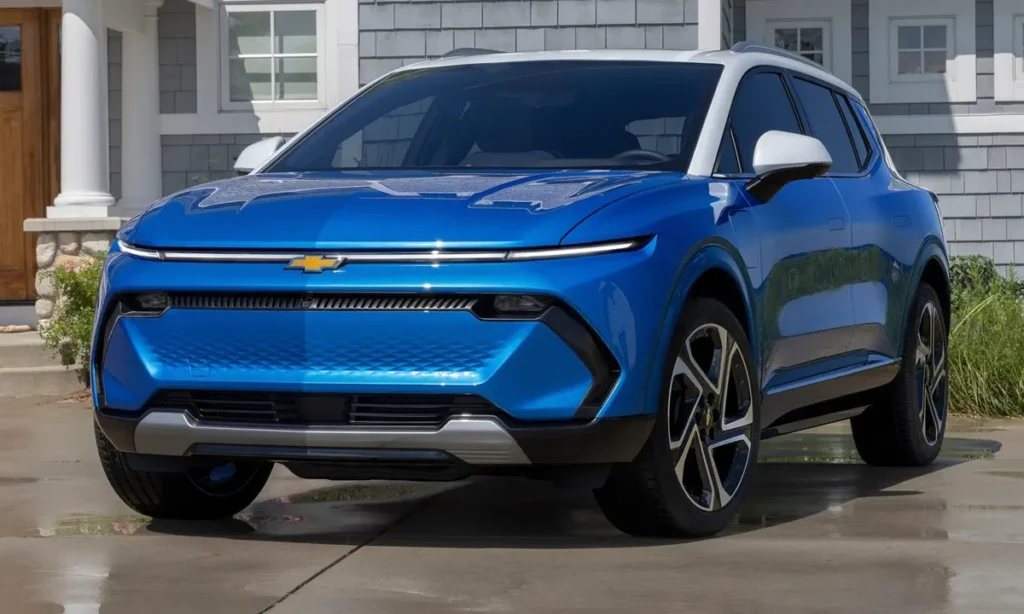
No electric SUV made a more persuasive case for the affordable segment during the tax credit window than the Chevrolet Equinox EV, and its argument rested on the combination of a starting price below $35,000, North American assembly that satisfied the credit’s manufacturing requirements, and a real-world range capability that matched or exceeded vehicles priced thousands of dollars higher. With a base MSRP of approximately $34,995 for the front-wheel-drive LT trim and eligibility for the full $7,500 federal tax credit, the Equinox EV’s effective after-incentive entry price fell to the high $27,000 range — a figure that placed a genuinely capable, 319-mile electric SUV in a price bracket that gas-powered compact crossovers had previously occupied without serious electric competition.
The engineering underpinning that value proposition was substantive and honest. The front-wheel-drive configuration produced 220 horsepower and 243 pound-feet of torque — adequate rather than exhilarating, but entirely appropriate for the practical daily-transportation role the vehicle is designed to serve. EPA-rated range of 319 miles for the front-wheel-drive variant placed the Equinox EV at or near the top of its price class for range capability, and real-world testing by independent automotive evaluators produced results that exceeded the EPA figure under moderate driving conditions. DC fast charging at up to 150 kilowatts, combined with access to Tesla’s Supercharger network via an included North American Charging Standard adapter, gave the Equinox EV a charging infrastructure footprint that meaningfully exceeded what its price point had historically been able to command. The interior provided 38 inches of rear legroom and 57 cubic feet of cargo volume with the rear seats folded — practical numbers that confirmed the vehicle’s real-world utility rather than its aspirational positioning.
Hyundai Kona Electric: The Subcompact Segment’s Affordable Champion
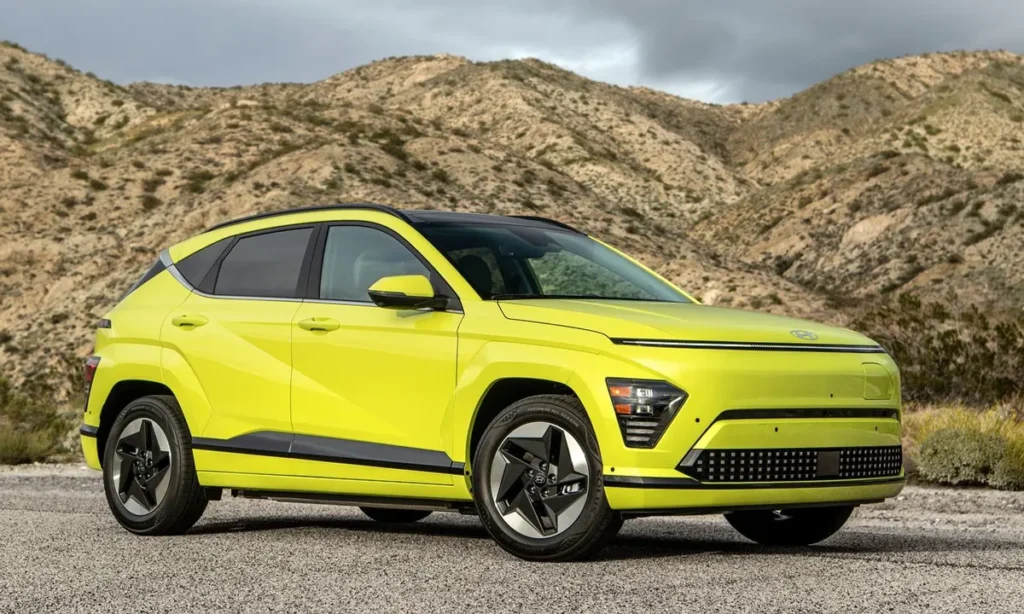
For buyers whose priorities placed maximum efficiency and minimum upfront expenditure ahead of interior volume, the Hyundai Kona Electric made the case for the subcompact electric SUV segment with a starting price of approximately $34,470 and a range of up to 261 miles — numbers that, combined with Hyundai’s class-leading 10-year, 100,000-mile battery warranty, constructed a value proposition whose longevity dimension distinguished it from competitors whose warranty terms were less generous. The Kona Electric’s efficiency credentials were particularly strong, with combined city and highway MPGe ratings that led the segment among vehicles at comparable price points. Its more compact exterior dimensions made it a natural fit for urban and suburban buyers whose parking environments were less accommodating of larger crossover footprints, and its interior, while more modest in absolute volume than the Equinox EV, was thoughtfully appointed with technology features that would have commanded a premium in earlier electric vehicle generations.
The Kona Electric’s tax credit eligibility during the qualifying period made its after-incentive pricing among the most accessible in the entire electric SUV category. Hyundai’s commitment to its 10-year warranty coverage on battery and powertrain components gave buyers a level of long-term financial protection that the federal government’s minimum eight-year requirement did not require — an engineering confidence statement whose practical value for a buyer intending to own the vehicle for the full warranty period was measurable in the thousands of dollars of potential repair cost it contractually protected against.
Ford Mustang Mach-E: Performance Credentials at an Accessible Entry Point
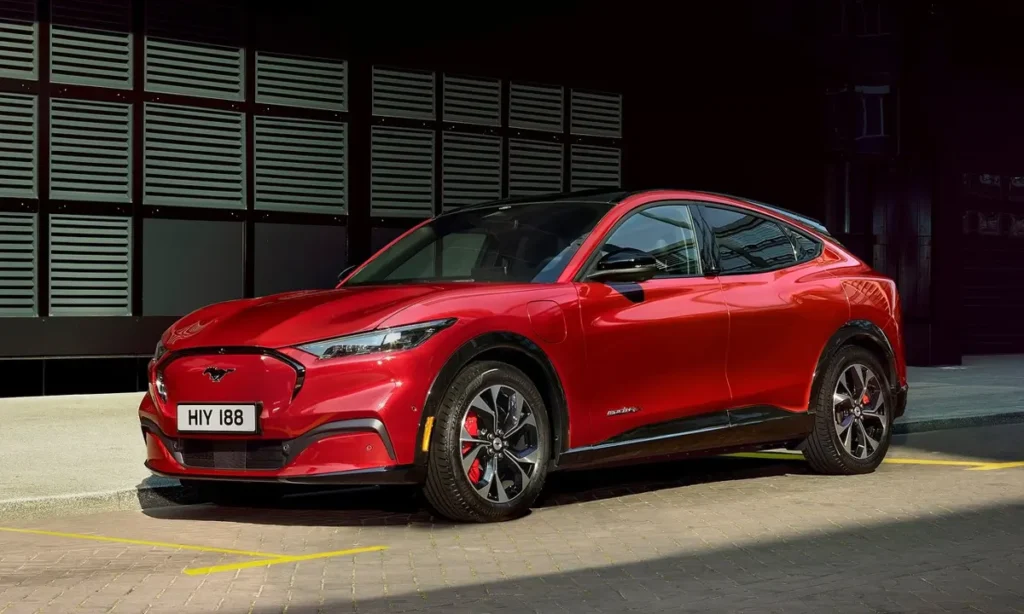
The Ford Mustang Mach-E occupied a different position in the affordable electric SUV conversation — one defined not by the lowest possible entry price but by the breadth of capability available at its base trim level relative to the competition at equivalent pricing. With the Select trim starting at approximately $36,495 and eligibility for the full $7,500 federal tax credit on qualifying configurations, the Mach-E’s after-incentive entry price fell to approximately $29,000 — a figure that delivered 264 horsepower, 387 pound-feet of torque and a driving character that reviewers consistently identified as more engaging than the segment average. Available range extended to approximately 300 miles on longer-range configurations, with both rear-wheel-drive and all-wheel-drive layouts available across the lineup.
The Mach-E’s interior was defined by a 15.5-inch vertically oriented touchscreen running Ford’s Sync 4A infotainment system — a technology investment that gave the cabin a visual and functional sophistication that its base price might not have implied. Standard equipment across the range included a comprehensive driver assistance suite, LED lighting and a 360-degree camera system. For buyers whose ownership experience would include occasional longer journeys requiring public charging, the Mach-E’s DC fast-charging capability and compatibility with a growing North American charging network provided the infrastructure access that practical long-distance electric travel demands.
Hyundai Ioniq 5: Premium Engineering at a Value-Adjusted Price
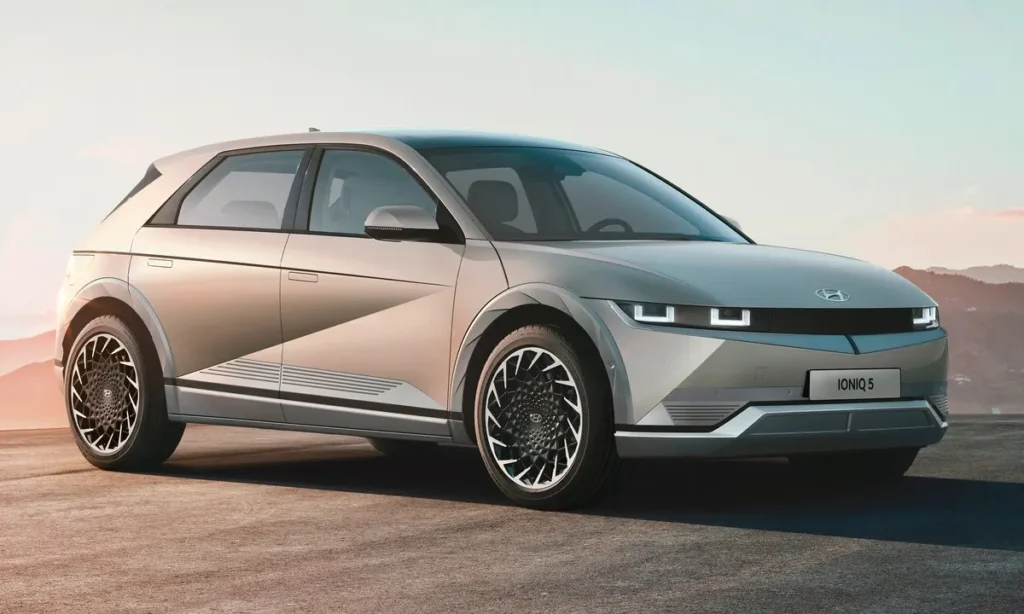
The Hyundai Ioniq 5 represented the most technically sophisticated option in the affordable electric SUV segment, and its inclusion in a guide to value-oriented choices reflected the degree to which federal tax credit eligibility could transform the real-money cost of a vehicle whose engineering genuinely reflected a higher developmental investment than its after-incentive price suggested. Starting at approximately $36,600 and eligible for the full $7,500 credit on qualifying trims, the Ioniq 5 offered buyers access to an 800-volt electrical architecture — a specification more commonly associated with vehicles at twice its adjusted price — that enabled DC fast charging at up to 350 kilowatts. The practical consequence of this architecture was the ability to add approximately 100 miles of range in approximately 18 minutes under optimal charging conditions, a speed that meaningfully narrowed the convenience gap between electric and gasoline refuelling for drivers who regularly used public fast-charging infrastructure.
Maximum EPA-rated range of 318 miles, a spacious flat-floor interior whose rear legroom was generous enough to satisfy genuine five-passenger family use, and a distinctive retro-futurist exterior design language that attracted attention typically reserved for vehicles at substantially higher price points completed a package that the Ioniq 5’s after-incentive pricing made one of the most straightforward value arguments in the segment.
Kia Niro EV: The Efficiency Specialist for Budget-Conscious Commuters
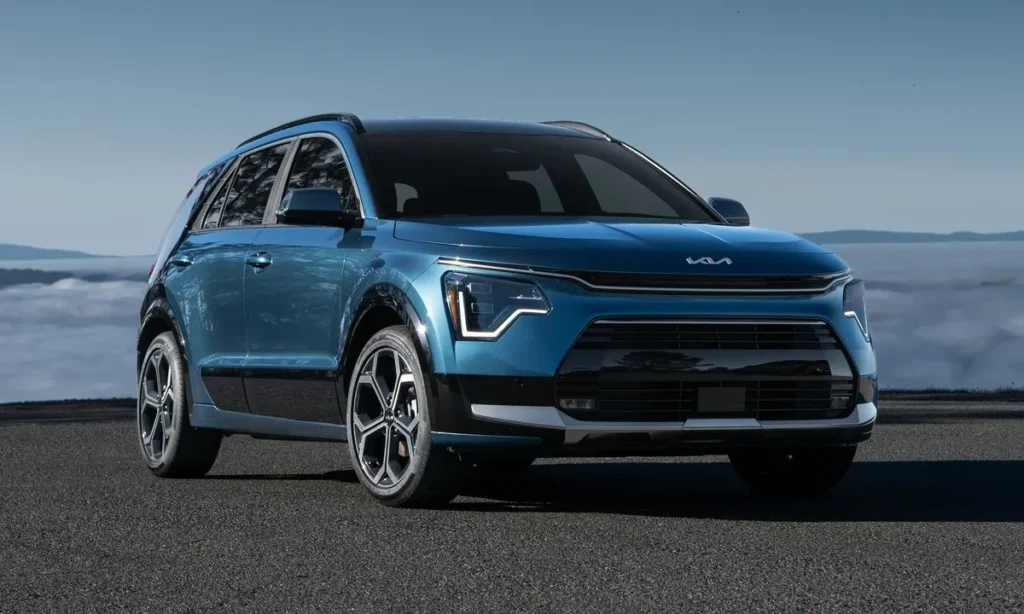
The Kia Niro EV addressed a specific and underserved buyer profile within the affordable electric SUV segment — the primarily urban or suburban commuter whose daily mileage was modest, whose garage provided consistent Level 2 charging access and whose priority was maximum efficiency and minimum operating cost rather than maximum range or performance credentials. With a starting price of approximately $31,920 and tax credit eligibility that brought its effective entry cost below $25,000 for qualifying buyers, the Niro EV offered an efficiency rating among the highest in its price class and a driving experience that prioritised smoothness and predictability over outright acceleration. Its range of approximately 253 miles was adequate for the vast majority of American daily driving scenarios while its interior, though more modest in ambition than the Ioniq 5, provided the essential comfort and technology features that the modern compact electric SUV buyer rightly expects as standard.
The Niro EV’s mechanical relationship with Hyundai’s group engineering portfolio gave it access to the same battery management technology and warranty discipline that distinguished the Kona Electric and Ioniq 5 — benefits that manifested in real-world ownership reliability data and in the Kia brand’s competitive 10-year, 100,000-mile battery warranty coverage.
How the After-Incentive Numbers Change the Conversation
The transformative effect of the federal tax credit on the affordable electric SUV segment is most clearly visible when the comparison is conducted at the after-incentive price level rather than at sticker price — because the sticker price comparison, while useful for understanding a vehicle’s market positioning, obscures the genuine purchase economics that determined what American buyers were actually being asked to spend. A Chevrolet Equinox EV at $34,995 before incentives becomes approximately $27,495 after the full $7,500 credit for a qualifying buyer — a price at which no gasoline-powered compact SUV with equivalent interior space, technology content and driving capability was available in the 2025 model year market. The Hyundai Ioniq 5 at $36,600 before incentives becomes approximately $29,100 after credit — a price at which its 800-volt charging architecture, 318-mile range and genuinely spacious interior would have been considered implausible by the standards of any previous electric vehicle generation.
| Model | Starting MSRP | Federal Tax Credit | Effective After-Incentive Price | Max Range |
| Kia Niro EV | ~$31,920 | $7,500 | ~$24,420 | 253 miles |
| Hyundai Kona Electric | ~$34,470 | $7,500 | ~$26,970 | 261 miles |
| Chevrolet Equinox EV | ~$34,995 | $7,500 | ~$27,495 | 319 miles |
| Ford Mustang Mach-E | ~$36,495 | $7,500 | ~$28,995 | 300 miles |
| Hyundai Ioniq 5 | ~$36,600 | $7,500 | ~$29,100 | 318 miles |
The State Incentive Layer That Further Changes the Arithmetic
The federal credit, significant as it was, did not represent the complete available incentive picture for American electric SUV buyers in 2025. State-level programmes added further layers of financial benefit in numerous states, with the specifics varying considerably by jurisdiction. New York offered qualifying buyers a state rebate of up to $2,000 on top of the federal credit. California’s programme provided carpool lane access to qualifying electric vehicles — a benefit whose economic value in heavily congested metropolitan areas was real and quantifiable in daily commute time saved. Multiple other states maintained their own rebate structures, income-qualified purchase assistance programmes or utility company incentives that reduced the effective cost of electric SUV ownership still further for buyers who invested the modest research effort required to identify what their specific state and utility offered. The cumulative effect of federal and state incentives in the most generous states could reduce the effective purchase price of a qualifying electric SUV by $10,000 or more from its sticker price — a discount magnitude that fundamentally repositioned these vehicles relative to their gasoline-powered competitors on a straightforward purchase-cost comparison.
Read: 2026 Toyota RAV4 vs 2026 Honda CR-V Reliability Test. Which Compact SUV Will Last Longer?
The Value Case That the Tax Credit Era Proved
The federal Clean Vehicle Credit’s interaction with the affordable electric SUV segment between 2023 and September 2025 produced a body of evidence whose conclusion is difficult to dispute: that properly incentivised, well-engineered electric SUVs from committed mainstream manufacturers could be made genuinely competitive with comparable gasoline vehicles on purchase price while remaining superior on operating cost, energy efficiency and technological sophistication. The Chevrolet Equinox EV at an effective $27,495 after credit, the Hyundai Ioniq 5 at an effective $29,100 and the Kia Niro EV at an effective $24,420 were not marginal, compromise-laden entries into a market they aspired to join. They were fully realised vehicles whose after-incentive pricing removed the premium that had historically constituted electric mobility’s primary barrier to mainstream adoption. The tax credit era’s most lasting contribution to American automotive history may be precisely this: that it demonstrated, with the evidence of hundreds of thousands of actual transactions, that the price barrier between electric and gasoline transportation was not structural but circumstantial — and that when the circumstances were right, American buyers chose electric in numbers that no previous market cycle had been able to produce.