The Real Cost of Owning a Porsche 911 in the United States. Maintenance, Insurance, Reliability and Everything
From $4,270 in Annual Insurance Premiums and $5,000 to $10,000 in Five-Year Maintenance Costs to an IMS Bearing That Once Threatened Engines and a Resale Value That Can Turn Early Depreciation Into Long-Term Financial Gain — Here Is the Complete and Honest Ownership Cost Picture for America's Most Beloved German Sports Car
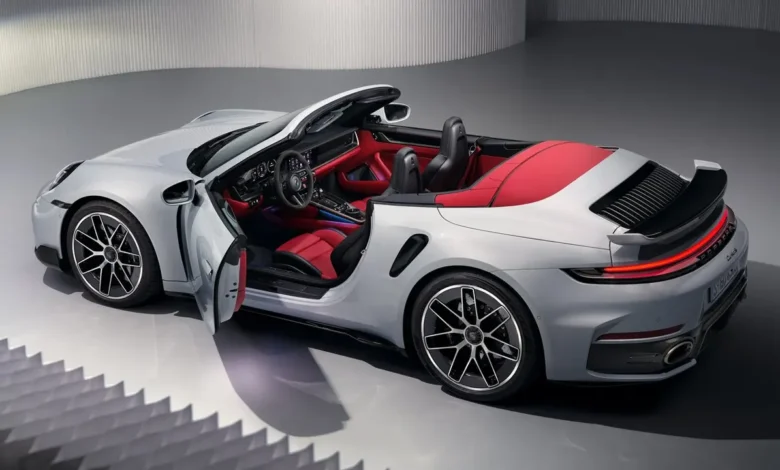
The Porsche 911 occupies a position in the American automotive landscape that no other sports car has consistently maintained across six decades of continuous production. It is simultaneously the most respected daily-driveable sports car in the world and one of the most sophisticated and technically accomplished performance vehicles available at its price point, a car that rewards its owners with an engagement and a longevity that most of its competitors cannot match across the full arc of long-term ownership. It is also, as any honest assessment of the ownership experience must acknowledge, a car that costs meaningfully more to maintain, insure and operate than the national average for new vehicles — and one whose ownership cost profile contains enough complexity, enough variance and enough dependence on individual ownership habits to make budgeting without research a genuinely risky proposition. This article provides that research — examining every dimension of Porsche 911 ownership costs in the United States with the specificity and the honesty that buyers considering a purchase at this price level deserve.
The Purchase Price: Where the Cost Calculation Begins
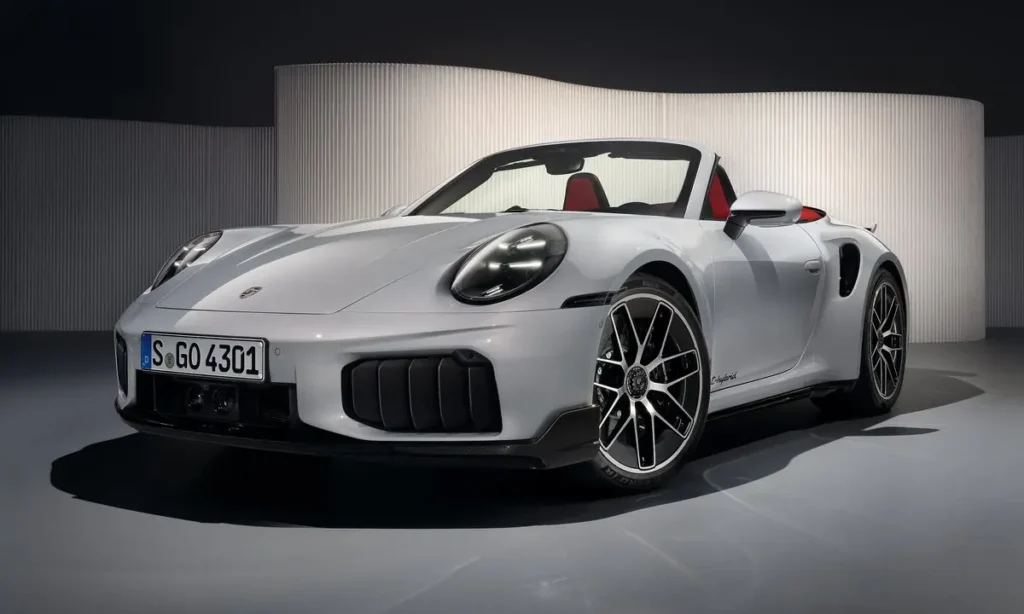
Understanding the cost of owning a Porsche 911 begins with understanding the range of entry prices across the model’s contemporary lineup, because the purchase price anchors every subsequent ownership cost calculation in a vehicle of this complexity. The 2025 Porsche 911 Carrera begins at $114,100 in the United States market — a figure that reflects the car’s positioning as a genuine luxury performance vehicle rather than a mainstream sports car. The Carrera S adds approximately $18,000 over the base Carrera for its more powerful engine and wider body, while the all-wheel-drive Carrera 4 and 4S variants add the additional traction confidence that many buyers in northern or mountainous markets regard as essential at a comparable premium. At the top of the naturally aspirated range sits the GTS, whose combination of the more powerful engine, wider body and standard sports exhaust creates the most comprehensively equipped non-turbo 911 at approximately $148,000. The turbocharged variants — the Carrera T, the Turbo and the Turbo S — extend the range further, with the Turbo S reaching approximately $220,800 before the options catalogue begins its inevitable work.
These purchase prices are the starting point of a five-year total cost of ownership calculation that encompasses depreciation, financing, insurance, maintenance, repairs and fuel — and whose aggregate results, as documented by Edmunds, CarEdge and independent automotive financial analysts, paint a picture of ownership that is meaningful in its cost but considerably more favourable in its long-term value retention than many buyers unfamiliar with the 911’s strong residual value performance might assume.
Depreciation: The 911’s Most Pleasant Ownership Surprise
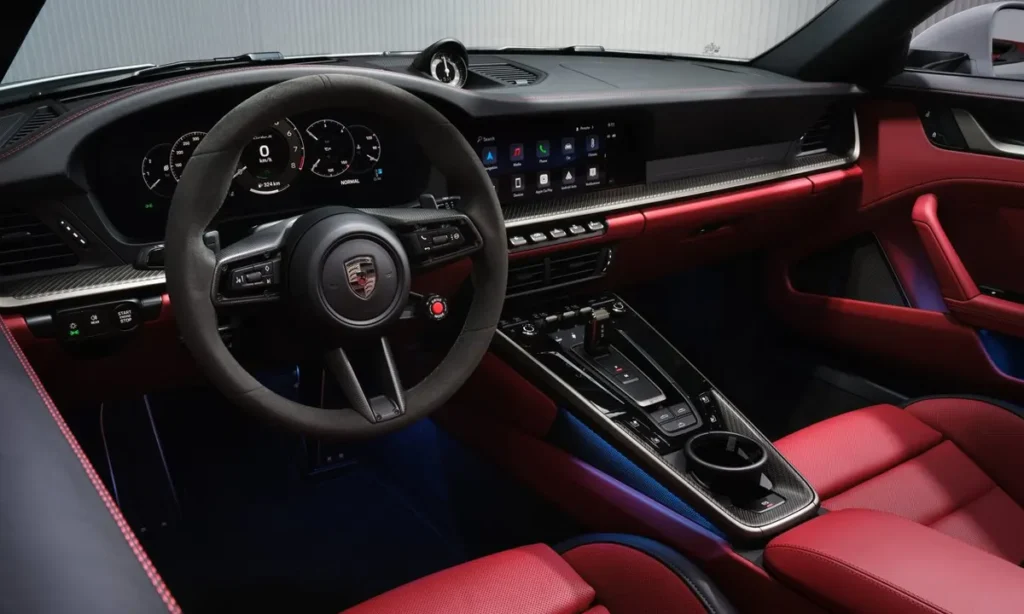
Of all the ownership costs associated with the Porsche 911, depreciation is the one that most consistently surprises buyers who approach the car’s financial profile through the lens of conventional automotive depreciation assumptions. Most vehicles in the $100,000 to $150,000 price range depreciate at a rate of 15 to 25 percent in their first year of ownership and continue declining at comparable rates across a five-year ownership period. The 911, across most of its model lineup, defies this pattern with a consistency and a conviction that reflects the extraordinary depth of demand that the nameplate commands in the global used sports car market. Standard Carrera variants retain their value at rates that Edmunds estimates are among the best in the luxury performance segment, and certain high-performance variants — the GT3, GT3 RS and GT3 Touring — have, in specific market conditions, appreciated above their original purchase prices in the years immediately following their production. A more typical ownership scenario for a standard Carrera involves a five-year depreciation of approximately 20 to 30 percent from purchase price — a figure that translates to between $23,000 and $34,000 on a $114,000 car over five years, comparing very favourably with the depreciation profile of comparable German luxury sports cars from BMW and Mercedes-Benz.
Insurance: The Significant Annual Premium That Every Budget Must Include
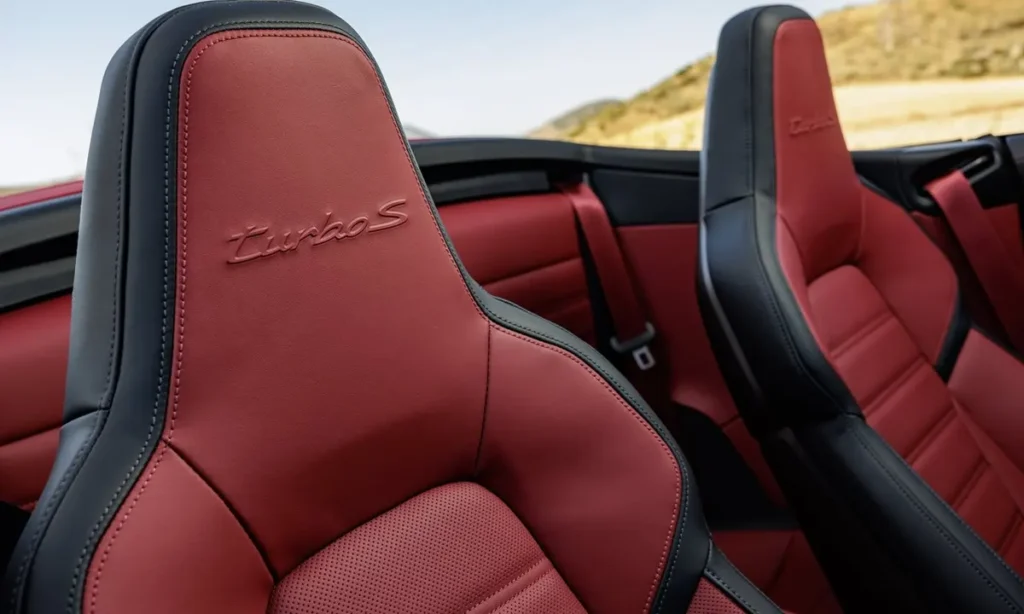
Full coverage insurance for a 2025 Porsche 911 costs an average of approximately $4,270 per year, or roughly $356 per month — a figure that is significantly above the national average for new vehicle insurance and one that reflects the combination of factors that insurers use to calculate premiums for high-performance luxury sports cars. The 911’s powerful engines, the elevated cost of replacement parts, the labour intensity of Porsche-specific repair work and the car’s classification as a sports car with an elevated risk profile all contribute to insurance costs that buyers must budget explicitly rather than assuming will be comparable to the premiums they currently pay on more conventional vehicles.
The variation in insurance costs across different 911 variants is substantial and practically important for buyers choosing between specifications. The average insurance cost for a 911 Carrera is $4,021 per year for full coverage for a 30-year-old driver, while the 911 Turbo S costs $4,475 per year on average — a premium of approximately $450 annually that reflects the Turbo S’s higher purchase price, its greater performance capability and the elevated replacement part costs that its more complex powertrain architecture implies. The variation across insurance providers is equally significant and provides meaningful scope for cost management through competitive comparison. Farm Bureau offers the most competitive rates for Porsche 911 Carrera drivers at approximately $1,805 per year, while Progressive charges $5,627 per year — a difference of nearly $3,822 annually for identical coverage that makes comparison shopping among insurers one of the most financially productive investments of time available to any prospective 911 owner.
Several factors beyond the vehicle itself significantly influence the actual premium a specific buyer will pay. Drivers over 40 with clean driving records consistently pay meaningfully less than younger drivers or those with violations. Geographic location carries significant weight — states with higher population densities, higher rates of vehicle theft or higher medical cost environments impose higher base premium requirements regardless of the individual driver’s record. Garage storage rather than street parking, the installation of tracking devices and membership in Porsche Club of America can each contribute to premium reductions that, in aggregate, bring the effective annual insurance cost meaningfully below the market average for buyers who approach coverage procurement strategically.
Maintenance: Scheduled Service Costs and the Porsche Premium
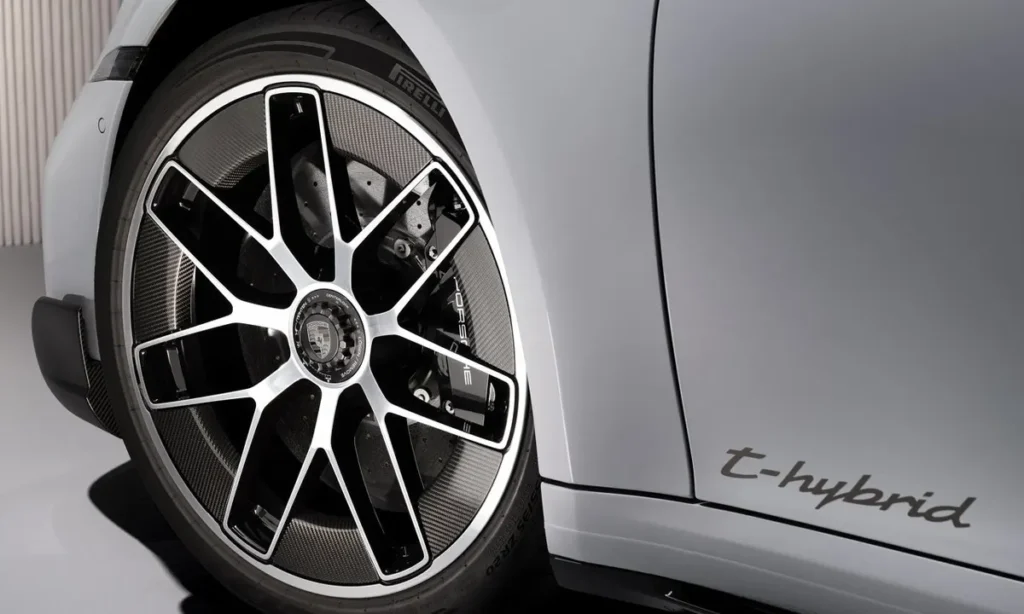
The Porsche 911’s scheduled maintenance requirements reflect the precision engineering standards of a German sports car and the service intervals appropriate to a vehicle intended for spirited road use and, in many cases, occasional track day deployment. Porsche’s recommended service schedule calls for an oil change every 10,000 miles or once annually — whichever comes first — using approved synthetic motor oil in Porsche-specific grades whose cost per change, performed at a Porsche dealer, runs between $250 and $400 depending on the variant. Minor service intervals incorporating fluid checks, filter replacements, brake inspection and tyre condition assessment typically cost between $400 and $700 at a dealer. Major service intervals — typically at 20,000 miles and incorporating spark plug replacement, air filter service, coolant flush and a comprehensive inspection — range from $1,200 to $2,500 depending on the model year and the specific components requiring attention.
Maintenance and repair costs are broadly consistent with most luxury and performance brands — buyers should anticipate between $5,000 and $10,000 across a five-year ownership period, with variance depending significantly on how the car is driven and what it is used for. This range is meaningfully lower than many prospective buyers assume and reflects the 911’s genuine reputation for mechanical reliability rather than the inflated ownership cost narrative that surrounds performance cars as a category. Track day use, aggressive driving habits and deferred maintenance all push costs toward and potentially beyond the upper end of this range. Conservative road use and conscientious adherence to service schedules keep costs toward the lower end, and the availability of independent Porsche specialists in most metropolitan areas — offering dealer-quality work at independent shop rates — provides meaningful cost management options for owners outside their warranty period.
The major expense that independent 911 ownership most commonly produces is tyre replacement — a cost whose magnitude is determined by both the 911’s standard tyre specifications and the performance-focused rubber that owners of sportier variants typically specify. The standard Carrera’s 235/40 ZR19 front and 295/35 ZR19 rear fitment carries a per-tyre replacement cost of approximately $250 to $450 depending on tyre brand, and a complete four-tyre replacement runs between $1,000 and $1,800 for most variants before mounting, balancing and alignment costs are added. GT variants running Michelin Pilot Sport Cup 2 or Cup 2 R tyres face per-tyre costs of $350 to $600, making a complete tyre replacement cycle for a GT3 RS a $1,400 to $2,400 exercise whose frequency depends entirely on driving style and circuit use.
Reliability: The Historical Context and the Modern Reality
The Porsche 911’s reliability narrative is one of the most dramatic transformation stories in the history of the sports car. Earlier air-cooled and early water-cooled generations carried genuine reliability concerns — most notably the Intermediate Shaft bearing issue that affected 986, 987 and early 997-generation Porsche models produced between 1997 and 2008, a failure mode whose catastrophic consequences included complete engine failure and whose resolution typically cost between $8,000 and $15,000 in engine replacement or rebuild. This issue, the IMS bearing failure, created a justified reputation for engine vulnerability that persisted in the public automotive consciousness long after Porsche had redesigned the affected component and the problematic production period had concluded.
The modern 911 — specifically from the 991 generation introduced in 2011 onward, encompassing the current 992 generation — carries no equivalent systematic reliability concern. J.D. Power reliability assessments, Consumer Reports owner surveys and the comprehensive long-term reliability data accumulated across the 992 generation’s production period collectively present a vehicle whose mechanical dependability is above average for the luxury sports car segment and genuinely impressive for a vehicle of its performance capability. The transition to the PDK dual-clutch transmission, which replaced the traditional manual gearbox as the primary choice for most buyers seeking optimal performance, eliminated the clutch replacement cycle that manual gearbox ownership imposes. The naturally aspirated engines of the current GTS, GT3 and GT3 RS variants have demonstrated exceptional durability across high-mileage ownership examples, and the turbocharged Carrera engines’ reliability record across the 992 generation has provided no systematic concerns at comparable levels to the IMS issue that affected their predecessors.
Repair costs, when they do arise outside scheduled maintenance, reflect the Porsche-specific labour rates and parts pricing that specialty manufacturers charge consistently. A water pump replacement on a 992 Carrera runs between $800 and $1,500 at a dealer. Brake caliper service or replacement ranges from $400 to $1,200 per axle depending on whether the car is equipped with optional PCCB carbon-ceramic brakes — whose pad replacement alone runs $600 to $1,200 for a full set. The PDK transmission requires no routine fluid maintenance in most service scenarios but can cost between $3,000 and $5,000 to overhaul if it is subjected to sustained abuse or neglect. These are not unexpected expenses in the context of a $114,000 to $220,000 vehicle — they are calibrated to the car’s specification and manufacturing cost, and buyers who maintain awareness of their likelihood and their cost range will find them manageable within a thoughtfully constructed ownership budget.
Fuel Costs: The Price of Performance
A 2025 Porsche 911 Carrera costs approximately $2,900 annually in fuel, and across five years, a 911 owner will spend around $6,000 more in fuel than the average new vehicle owner. The standard Carrera’s EPA fuel economy rating of 20 miles per gallon city and 28 miles per gallon highway reflects a genuine balance between performance capability and everyday efficiency — one that allows owners who maintain moderate highway speeds and avoid sustained hard acceleration to achieve real-world fuel economy approaching the EPA highway figure. Premium fuel is required across all 911 variants, whose turbocharged and high-compression naturally aspirated engines are calibrated specifically for 91 to 93 octane fuel — a requirement whose cost premium over regular unleaded adds approximately $200 to $400 annually depending on mileage and regional fuel prices.
The Five-Year Ownership Cost Summary
Buyers considering a 2025 Porsche 911 Carrera at its $114,100 base price can use the following framework for a realistic five-year cost projection, assuming 12,000 to 15,000 miles of annual use and conservative driving habits.
Depreciation across five years represents the most substantial single cost — approximately $23,000 to $34,000 for a standard Carrera in typical market conditions. Financing on a 10 percent down payment at prevailing rates adds approximately $15,000 to $18,000 in interest across a 60-month loan term. Insurance at an average of $4,270 annually totals approximately $21,350 across five years, with meaningful savings available through competitive insurer comparison. Maintenance and repairs fall within the $5,000 to $10,000 range for owners adhering to scheduled service and avoiding track day use. Fuel costs add approximately $14,500 to $15,000 over five years assuming 15,000 miles annually. The aggregate five-year ownership cost — excluding purchase price — falls in the approximate range of $75,000 to $98,000, representing a total ownership cost of $189,000 to $212,000 before the vehicle’s residual value is subtracted from the calculation.
Ownership Cost Quick-Reference Chart
| Cost Category | Annual Estimate | 5-Year Total |
| Depreciation (Carrera) | $4,600–$6,800 | $23,000–$34,000 |
| Insurance (Full Coverage Avg.) | $3,700–$4,800 | $18,500–$24,000 |
| Scheduled Maintenance | $800–$1,500 | $4,000–$7,500 |
| Unscheduled Repairs | $200–$500 | $1,000–$2,500 |
| Tyre Replacement (Avg. Cycle) | $300–$600 | $1,500–$3,000 |
| Fuel (15,000 Miles / Year) | $2,900–$3,100 | $14,500–$15,500 |
| Financing Interest (10% Down) | $3,000–$3,600 | $15,000–$18,000 |
| Registration and Taxes | $500–$2,000 | $2,500–$10,000 |
| Total Estimated Running Cost | $16,000–$22,900 | $79,000–$114,500 |
Is the Porsche 911 Worth the Cost?
The honest answer to this question is the same one that serious automotive journalists, long-term 911 owners and financial advisors who specialise in enthusiast vehicle ownership have consistently provided across decades of assessment — it depends entirely on what the buyer values and what they expect from the experience. For buyers who prioritise financial efficiency above all other considerations, the 911’s maintenance premiums, insurance costs and fuel requirements make it a poor choice relative to mainstream alternatives. For buyers who value the specific combination of daily usability, long-term mechanical reliability, extraordinary driving engagement and strong residual value that no other sports car in this price range consistently provides across all four dimensions simultaneously, the Porsche 911 represents one of the most rational and most rewarding performance car purchases available in the current American market. The costs are real. So is everything they purchase.