The Dark Side of BYD Cars Nobody Is Talking About: What the Hype Leaves Out
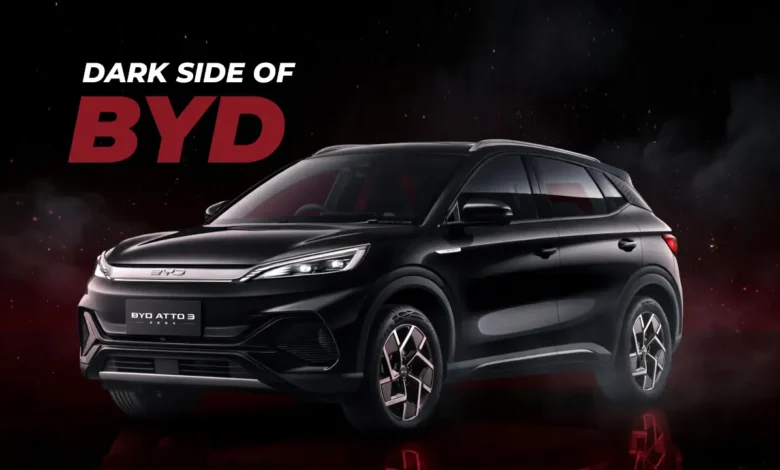
The narrative around BYD in 2026 is one of triumph, disruption and technological inevitability. The Chinese automaker outsold Tesla by approximately 600,000 units in 2025 to claim the title of the world’s largest electric vehicle manufacturer. Its Blade Battery technology is genuinely innovative. Its price points in China are genuinely compelling. Its expansion across Southeast Asia, Europe, Australia and Latin America is genuinely rapid. The coverage is overwhelmingly celebratory — and that is precisely the problem. Because beneath the sales records, the battery patents and the geopolitical narrative of Chinese automotive ascendancy, a collection of serious, documented and largely under-reported issues with BYD cars has been accumulating across multiple markets and multiple model lines. This is the dark side of BYD that the hype leaves out — told through owner experiences, regulatory data, industry analysis and the brand’s own admissions.
The God’s Eye Safety Scandal: A $160,000 Car That Tried to Drive Into Traffic
The most alarming issue currently afflicting BYD’s product lineup involves a driver-assistance system whose marketing ambition dramatically exceeded its engineering readiness — and whose deployment at extraordinary scale has produced safety consequences that are impossible to dismiss as isolated incidents. BYD branded its advanced driver-assistance system “God’s Eye” when it rolled it out across its lineup in 2025, a name that implied a level of omniscient reliability that the technology has demonstrably failed to deliver. Unlike Tesla’s Full Self-Driving package, which is an optional purchase on specific models, BYD made God’s Eye standard across nearly its entire range — from budget hatchbacks priced below $10,000 to the flagship Yangwang U8 luxury SUV costing the equivalent of $160,000. That decision installed the system in more than 2.5 million vehicles before the software had been adequately validated at population scale.
The consequences have been severe and publicly documented. Bloomberg’s investigation into God’s Eye complaints revealed an entrepreneur who paid 1.1 million yuan for the Yangwang U8 only to experience his vehicle accelerating spontaneously from 60 kilometres per hour to 93 kilometres per hour on a public road — well above the posted speed limit — before veering toward a roadside median without driver input. On a subsequent occasion, the same vehicle performed what owners have described as a “ghost” steering manoeuvre, lurching into an adjacent lane toward oncoming traffic. Automotive News’ coverage identified a pattern of phantom braking events, unprompted lane changes, navigation errors and infotainment system failures across multiple BYD models. Chinese social media platforms documented thousands of complaints about missed exits, inconsistent steering behaviour and navigation commands that directed vehicles into dangerous positions.
What makes this situation particularly troubling is not that BYD has experienced driver-assistance failures — every manufacturer that deploys such technology at scale encounters problems — but that BYD’s decision to make God’s Eye standard across such a diverse range of vehicles, using different hardware configurations for different model tiers, created a fragmented technology architecture that makes diagnosing and resolving issues considerably more complex. Some models receive LiDAR sensor arrays, others rely on camera and radar-only configurations, and the software stack managing each must be calibrated differently. Tracking down and correcting failures across that heterogeneous fleet is substantially harder than managing a uniform system deployed consistently across a single lineup. Analysts reviewing the pattern of complaints have suggested that BYD accelerated the God’s Eye rollout before the software was genuinely ready, prioritising the marketing advantage of offering autonomous features as standard equipment over the engineering discipline of ensuring those features were reliable.
Build Quality Complaints: What Arrives in Showrooms Around the World
The quality of BYD vehicles delivered to international markets has been the subject of documented complaints across multiple continents — a pattern that extends beyond the typical teething issues of a new entrant and reflects systemic challenges in manufacturing consistency and export logistics that the brand has publicly acknowledged. Reports covering BYD’s European market expansion identified vehicles arriving from Chinese factories with chipped paint and warped roof panels. In Australia, where BYD grew explosively in 2023 and 2024, owners documented mold growing inside vehicles during transit because the cars had not received the anti-humidity treatment required for long sea voyages. In Thailand, complaints of peeling paint and flaking plastic trim accumulated to the point of public controversy. In Israel, BYD EVs were reported to have structurally deformed under standard roof rack loading.
Owner forums across markets where BYD has expanded rapidly — Australia, the United Kingdom, Scandinavia — consistently document a cluster of recurring hardware and software issues that suggest quality control is not yet at the standard of the established manufacturers BYD is competing against. The BYD Atto 3, one of the brand’s most widely sold international models, has generated substantial documented complaints around dashboard rattles, 12-volt battery drain causing dead vehicles upon return after parking, Apple CarPlay and Android Auto connectivity that disconnects unpredictably, infotainment screens that become unresponsive or spontaneously restart during operation, and sunroof mechanism noise in a car whose near-silent electric powertrain makes every minor interior sound conspicuous. None of these individually represent catastrophic failures. Collectively, from a manufacturer positioning itself as a premium alternative to European and Japanese brands, they represent a quality perception gap that is measurably affecting consumer confidence in markets where BYD has staked significant commercial ambitions.
Videos circulating on Chinese social media platforms within China itself show owners pointing to interior door panels described as being filled with foam rather than structural material, crash protection beams described as thin enough to bend by hand, and suspension components characterised as inadequate for the vehicle’s weight class. BYD’s own chairman Wang Chuanfu acknowledged in December 2025 that the company had “unresolved user pain points” — corporate language for exactly the quality complaints that owners had been documenting publicly for months.
The After-Sales Service Crisis: Months-Long Waits and Stranded Owners
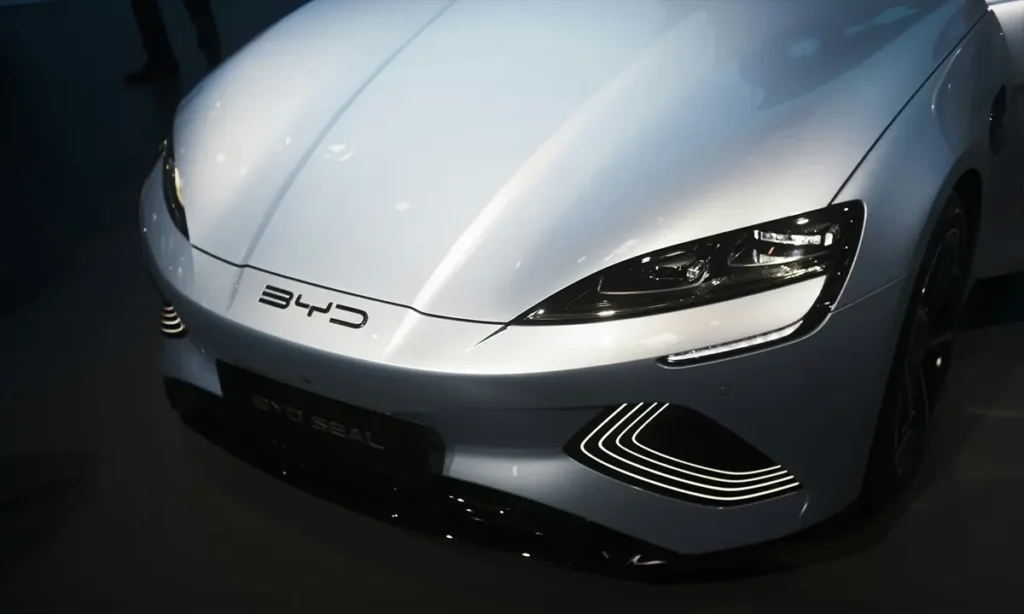
For the BYD owner whose vehicle requires a repair, the experience in many international markets has exposed a structural failure in the brand’s expansion strategy — a focus on sales volume that has dramatically outpaced the development of the service, parts and technician network required to support the vehicles already on the road. In Australia, where BYD surged to mainstream market penetration with remarkable speed, owner groups and forums accumulated thousands of posts documenting waits of six months or more for replacement parts, unanswered warranty emails and phone calls going unreturned from customer support, and service centres that lacked either the trained technicians or the specialist tools required to work on BYD’s electric systems.
BYD Australia’s own Chief Operating Officer Stephen Collins acknowledged the problem with unusual directness in early 2026, stating publicly that the brand had been “bursting at the seams just running to catch up with the parts and service and training.” Collins noted that in the early stages of BYD’s Australian expansion, service centres partnered through third-party arrangements lacked EV repair experience, specialist tooling and access to technical training — meaning that even when parts were available, the repair competence to use them was frequently absent. BYD’s response — a new 20,000-square-metre parts warehouse in Melbourne, plans for additional regional facilities and investment in technician training infrastructure — represents the kind of investment that should have preceded rather than followed the sales push that created the problem. For the owner whose car has been off the road for months waiting for a part, the warehouse announcement provides cold comfort.
The Data Privacy Question That Western Governments Are Asking
The question of what data BYD vehicles collect, where it is stored and who has access to it is one that Western governments have been increasingly unwilling to leave unanswered — and one that BYD has not addressed with the transparency that the volume and sensitivity of modern vehicle data collection demands. Contemporary connected vehicles collect extraordinary quantities of data: location history, driving behaviour patterns, biometric data from driver monitoring systems, cabin audio from voice-activated systems, and imagery from the multiple cameras that modern ADAS systems require to function. For a vehicle manufacturer with deep ties to the Chinese government through years of state subsidies, operating within a regulatory environment where Chinese law can require companies to share data with government agencies upon request, the question of what happens to that data is not paranoia — it is a legitimate governance concern.
The United States has effectively blocked BYD from its market through a combination of 27.5 percent tariffs on Chinese EVs and the broader framework of technology security regulation that has restricted Chinese telecommunications equipment, software and connected devices. The European Union launched an anti-subsidy investigation into Chinese EV imports and has implemented additional tariff measures, citing both fair competition concerns and the broader question of supply chain security. India rejected a $1 billion BYD factory proposal. Australia has seen growing legislative discussion around the data practices of connected vehicles from Chinese manufacturers. None of these regulatory actions constitute proof of BYD engaging in data misuse — but they reflect a level of institutional concern that potential buyers deserve to understand before making a purchase decision, particularly as vehicle connectivity deepens and the data generated by daily driving becomes progressively more sensitive.
Read: Will the Tesla Cybercab Be Cheaper Than Owning A Car In The USA? A Complete Cost Breakdown for 2026
The Sales Decline Nobody Is Acknowledging
Perhaps the most telling dark side of the BYD story in 2026 is what has happened to its own sales figures since the record-setting year of 2025. BYD recorded five consecutive months of sales decline entering 2026 — an extraordinary reversal for a brand that had been treated as commercially invincible. In September 2025, BYD lost its position as China’s best-selling automaker to state-owned SAIC Motor, and the company posted its second consecutive quarterly profit decline in the same period. BYD’s own chairman acknowledged declining sales at an extraordinary shareholders’ meeting in December 2025, citing reduced competitive advantages and unresolved product issues.
The causes are interrelated and reinforce the concerns documented throughout this article. The God’s Eye complaints generated negative media coverage and social media discussion that damaged buyer confidence in China precisely when the domestic market was already experiencing cooling EV demand. The quality issues that had accumulated across international markets created a perception problem that is measurably harder to reverse than a simple price adjustment. The combination of regulatory barriers in the United States, the EU’s tariff investigation, India’s rejection and Mexico’s withdrawal of factory incentives has constrained the international expansion that BYD’s domestic sales targets had assumed would compensate for any domestic slowdown.
Read: The End of Charging Anxiety! BYD Flash Charging System Explained
What BYD Owners and Potential Buyers Actually Need to Know
None of the issues documented in this article constitute a case that BYD vehicles are uniformly dangerous, comprehensively unreliable or fundamentally dishonest products. Many BYD owners report entirely positive experiences. The Blade Battery technology is a genuine engineering achievement. The price-to-specification ratio in markets where BYD competes freely is genuinely impressive. The brand’s ambition and its resources are beyond doubt.
What this article does establish is that BYD’s extraordinary growth has created gaps between its marketing claims and its operational reality that are material to the purchase decision of any buyer considering a BYD vehicle. A driver-assistance system that has generated documented, publicly reported safety incidents including unintended acceleration and unexpected steering inputs deserves more scrutiny than its enthusiastic launch marketing received. A parts and service network that has left owners without their vehicles for six months in multiple markets deserves more weight in the ownership cost calculation than the sticker price alone suggests. And the data governance questions that Western governments are asking — about what connected Chinese vehicles collect, store and transmit — deserve honest engagement rather than dismissal as geopolitical paranoia.
The hype around BYD has been extraordinary. The full picture is considerably more complicated — and every potential buyer deserves access to it.