Ferrari 296 GTB The Most Exciting Mid-Engine Supercar of Its Generation Redefines What a V6 Can Achieve
819 Horsepower, a Revolutionary 120-Degree Twin-Turbocharged V6, Plug-In Hybrid Mastery and Race-Derived Aerodynamics Make the Ferrari 296 GTB the Most Emotionally Complete Berlinetta Ferrari Has Ever Produced
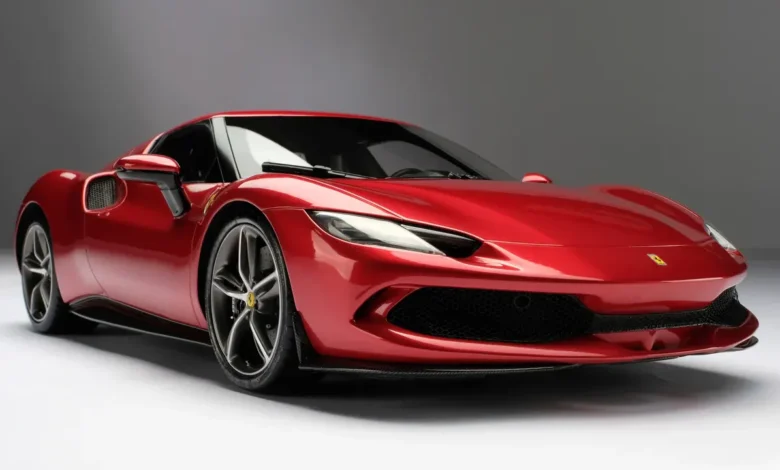
There is a particular kind of courage required to replace one of the most celebrated engines in the modern supercar world with something smaller, newer and entirely unproven. When Ferrari retired its twin-turbocharged V8 mid-engine berlinetta lineage and replaced it with a brand-new 120-degree twin-turbocharged V6 hybrid system, the automotive world watched with a mixture of fascination and genuine scepticism. The Ferrari 296 GTB has since rendered that scepticism completely irrelevant. Introduced in 2022 and continuing into 2025 with its fundamental character unchanged and its status among drivers and critics alike firmly established, the 296 GTB is not merely a worthy successor to the F8 Tributo. It is, by almost every credible measure, the finest mid-engine Ferrari berlinetta ever produced — a car that combines technology of extraordinary sophistication with a driving experience of such organic, communicative brilliance that it has redefined what a supercar in this price and performance bracket can and should feel like.
Gallery: Ferrari 296 GTB
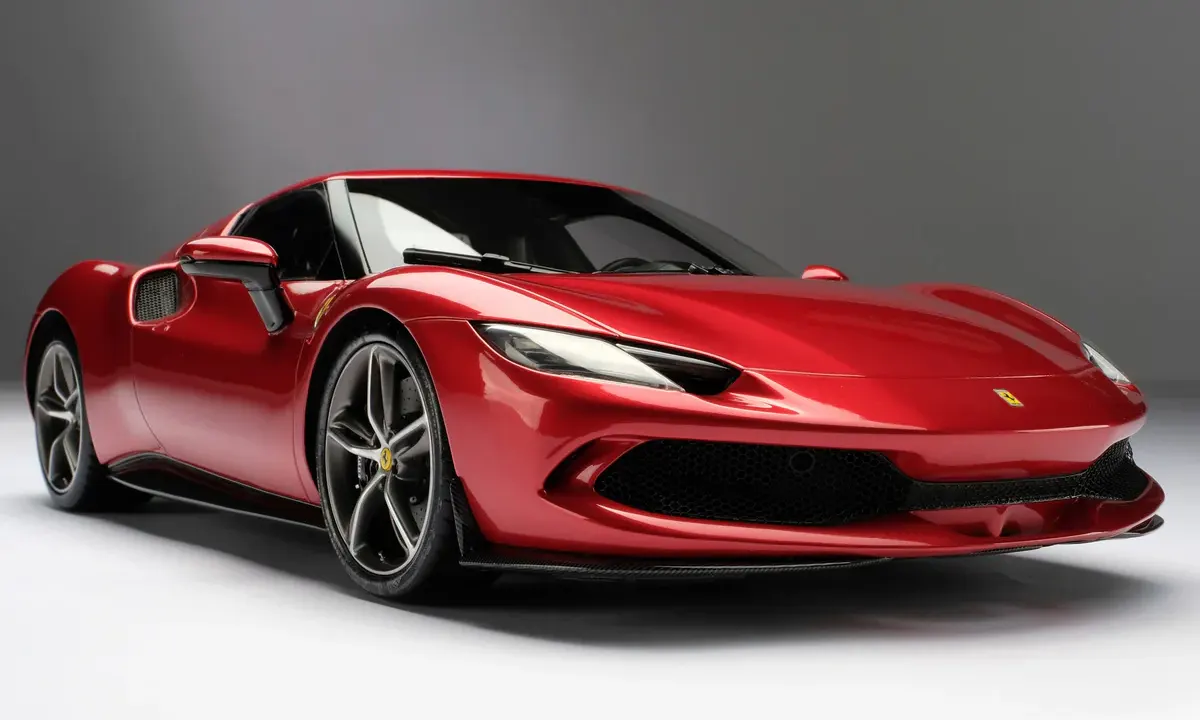
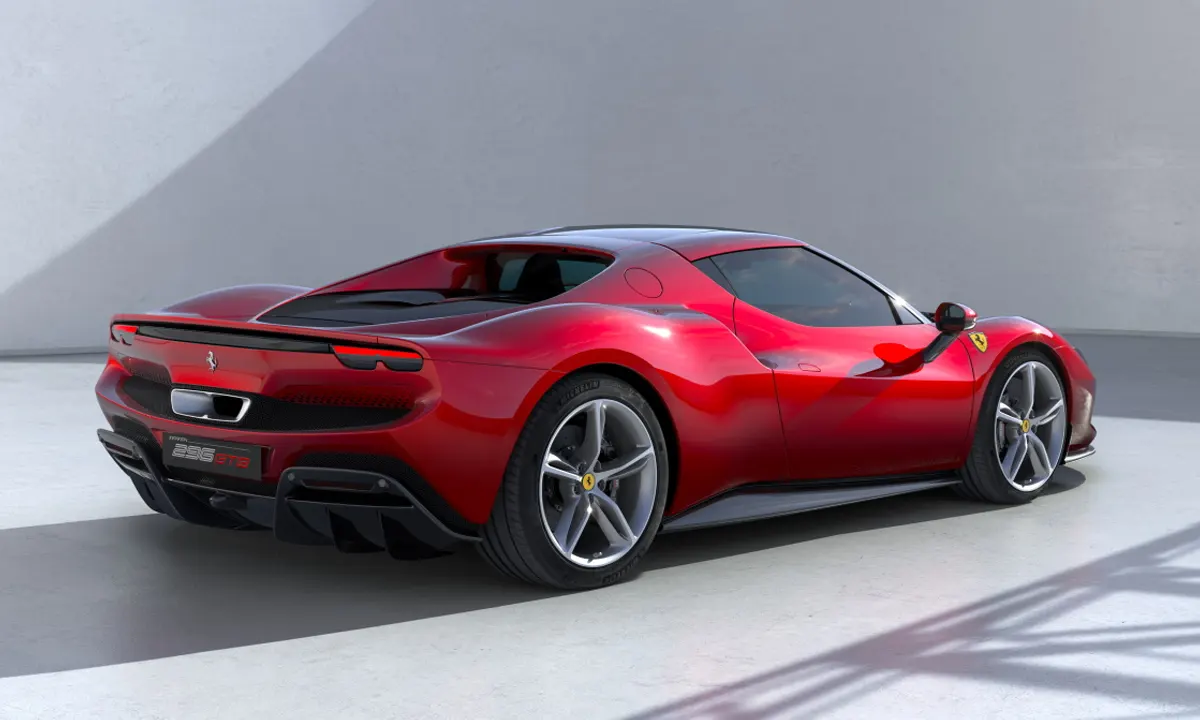
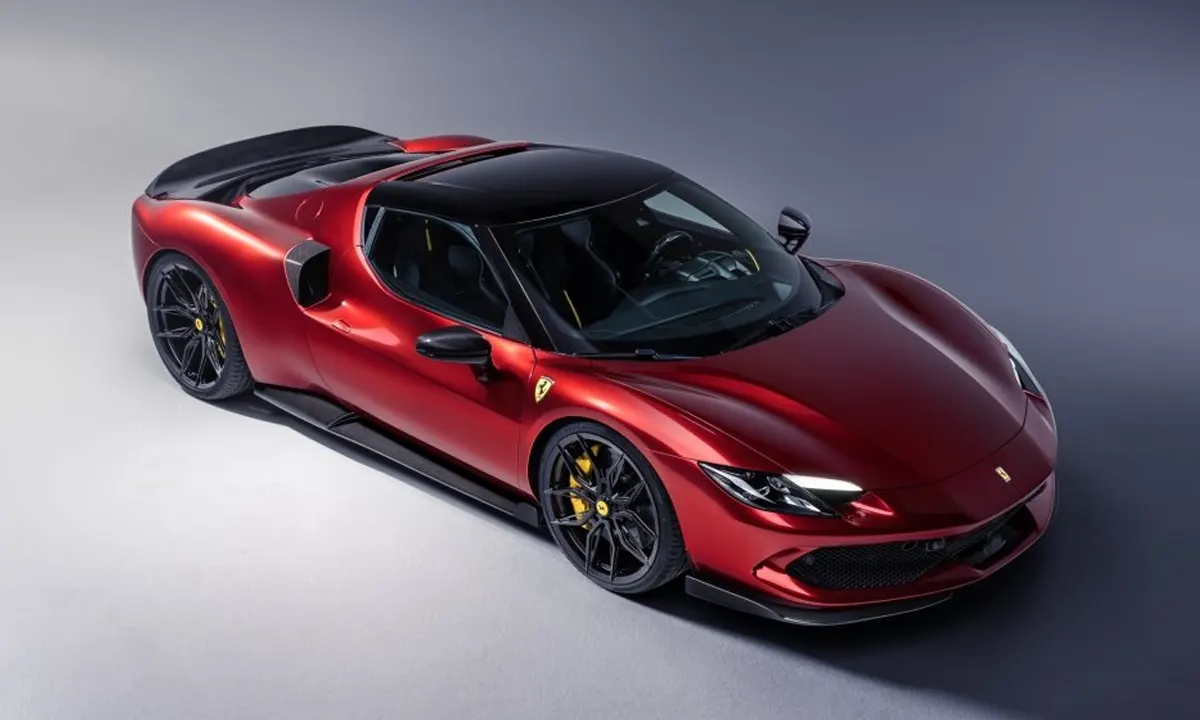
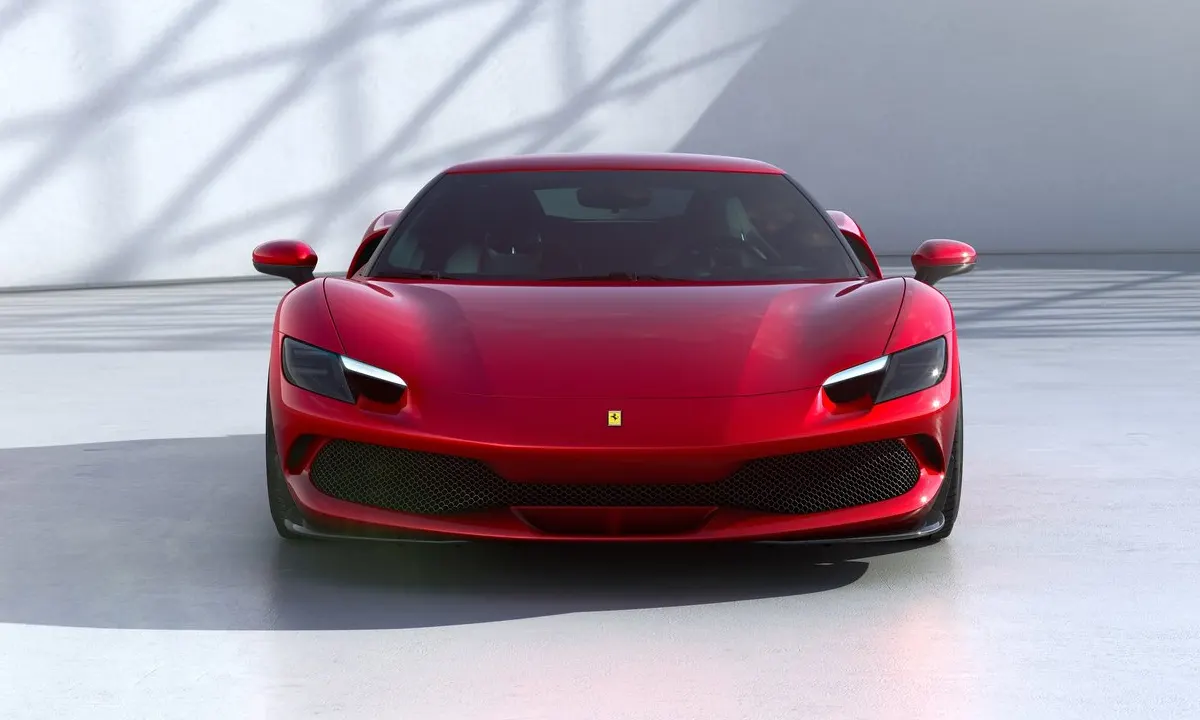
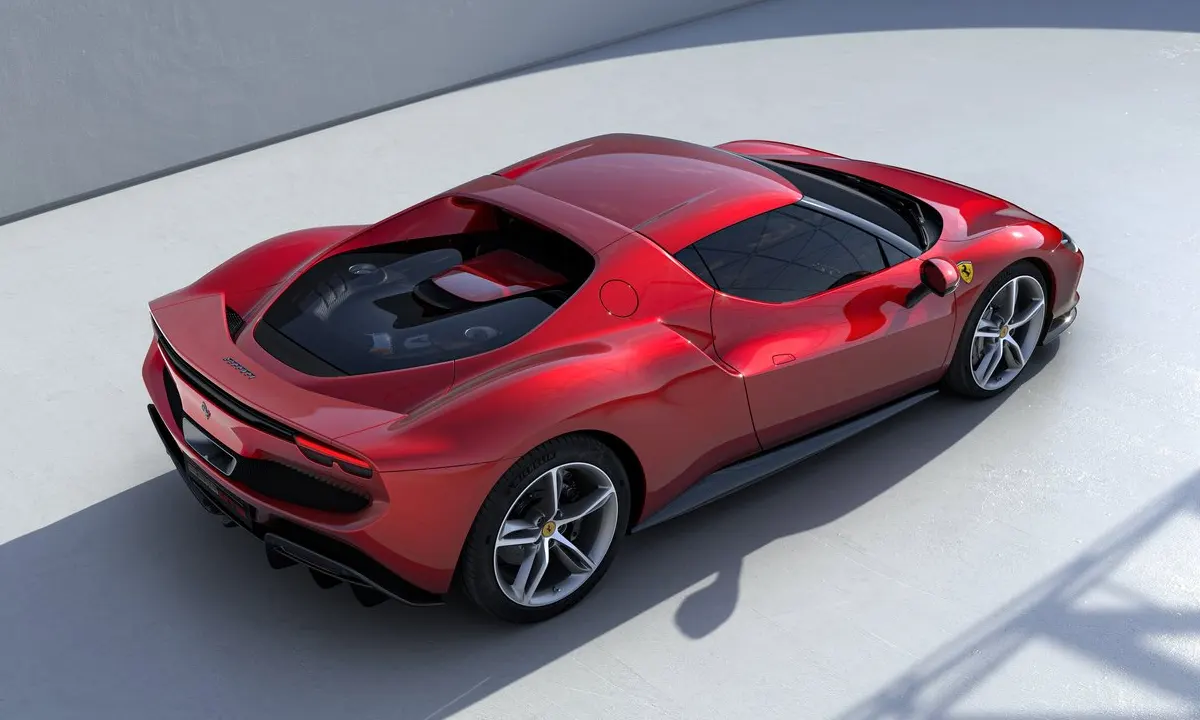
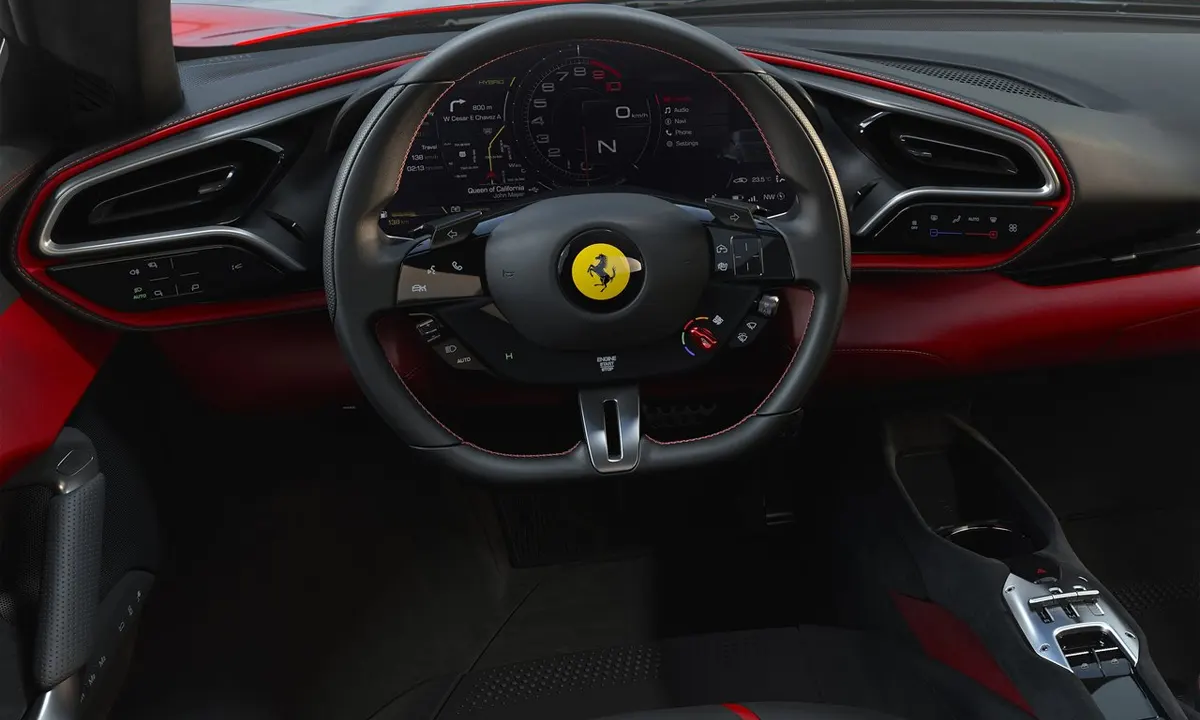
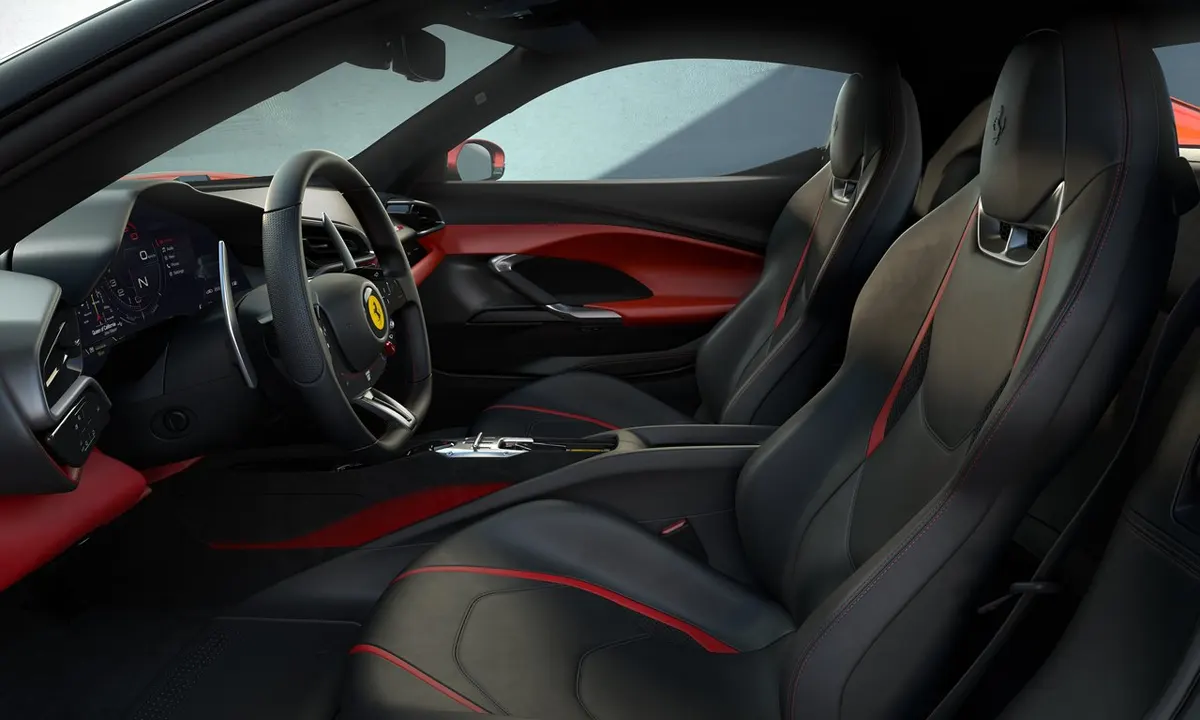
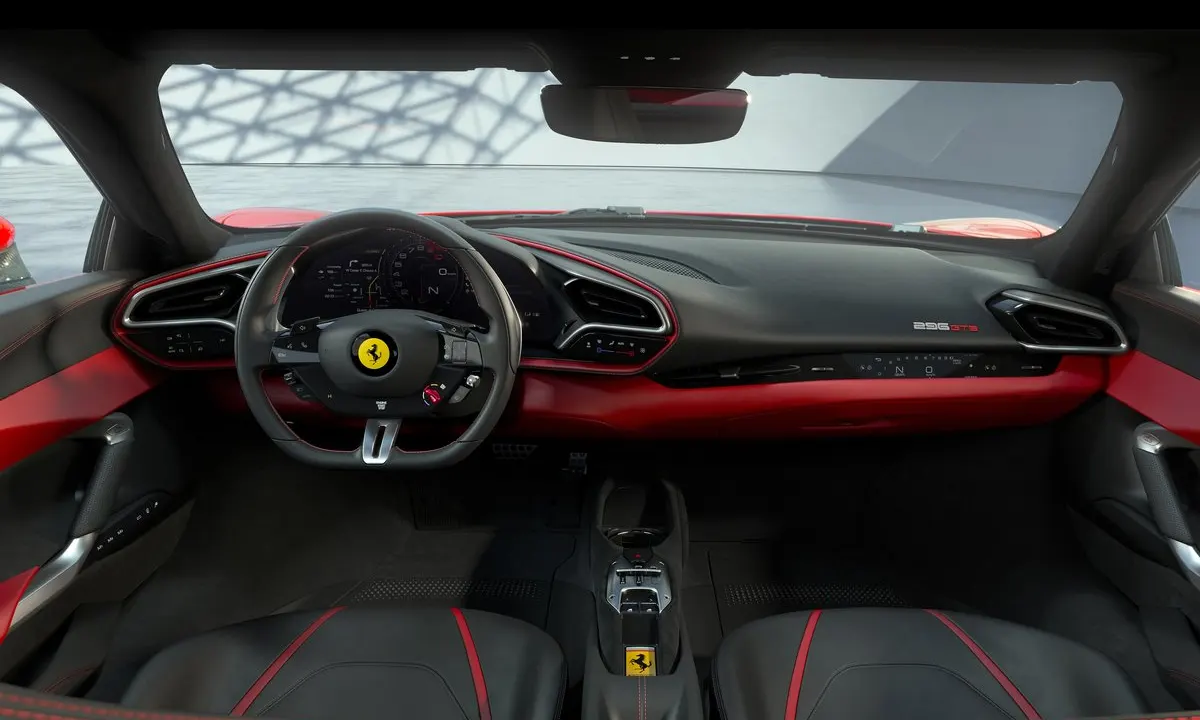
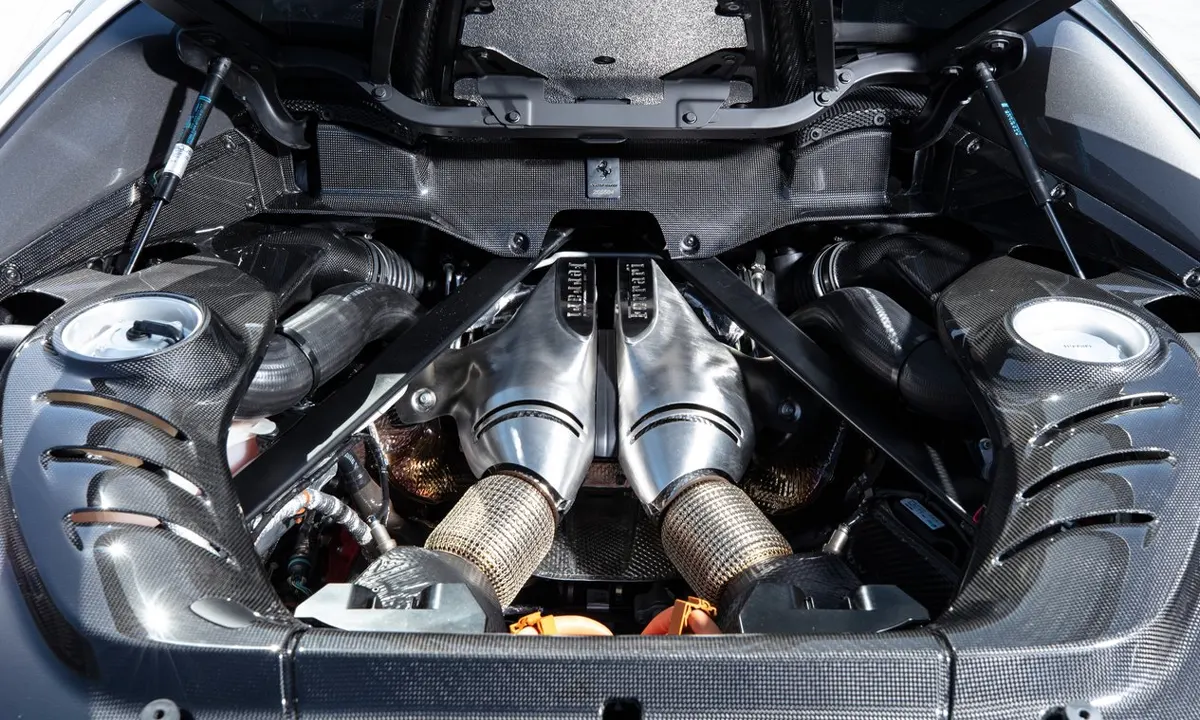
The 296 designation is a deliberate and meaningful homage to Ferrari’s naming conventions, combining the engine’s 2,992cc displacement with its six cylinders — an approach that directly echoes the original Dino 246’s naming logic and signals Ferrari’s intention to position the 296 as a genuine heir to a lineage of compact, driver-focused, mid-engine Ferrari berlinettas that reaches back through decades of iconic road and race car history. Starting at $346,950 in the United States, the 296 GTB is priced as a serious collector’s and enthusiast’s investment, and every minute spent in its company confirms that the engineering ambition and emotional reward the car delivers are fully proportionate to that asking price.
A Design That Breathes Performance Through Every Surface
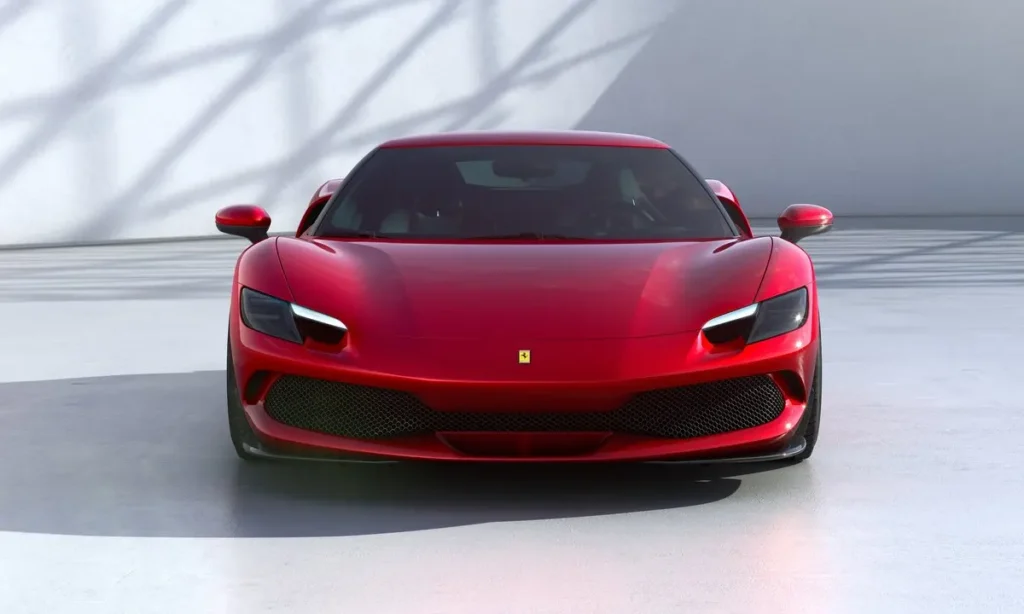
The exterior design of the Ferrari 296 GTB is a masterclass in form serving function without ever sacrificing beauty — a balance that Ferrari’s designers have pursued across every generation of mid-engine berlinetta and achieved here with particular conviction. The 296 GTB’s proportions are compact and muscular, with a notably shorter wheelbase than the F8 Tributo it succeeds — a 50mm reduction that concentrates the car’s visual mass and gives it a dense, coiled energy even at standstill. The low, sweeping nose flows into deeply sculpted flanks, with large air intakes carved into the bodywork ahead of the rear wheels channelling cooling air to the twin-turbocharged V6 with purposeful efficiency.
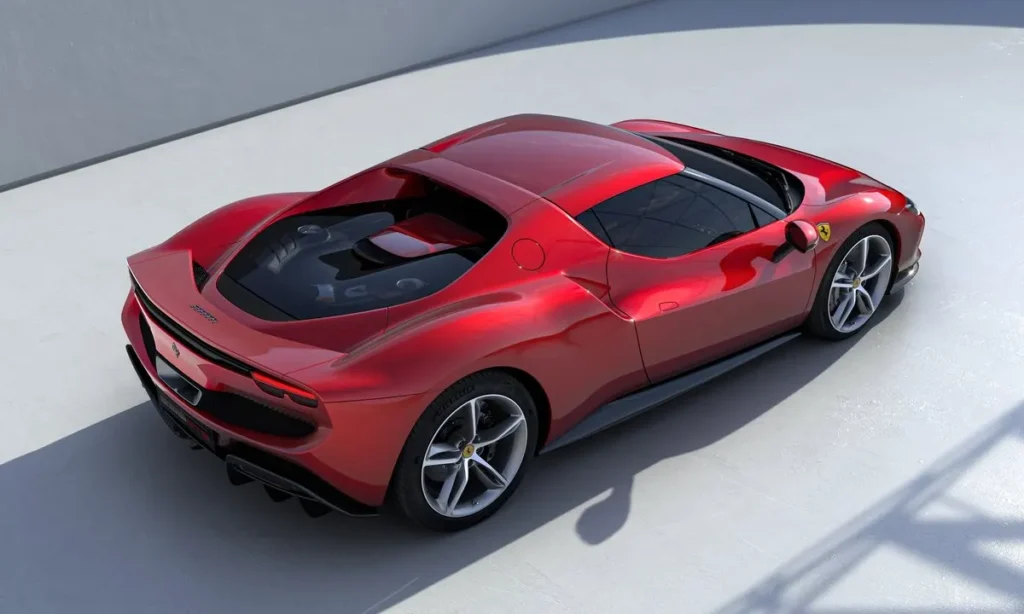
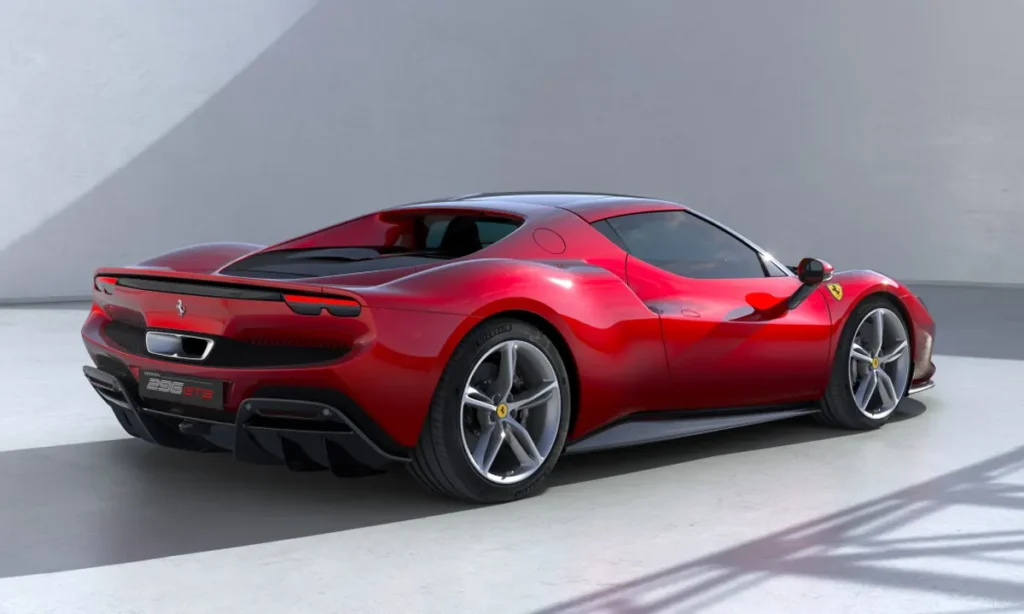
The rear of the 296 GTB introduces one of its most visually striking and aerodynamically significant design elements — a distinctive gap between the roofline and the rear bonnet that is typically associated with open spider body styles rather than closed berlinettas. Ferrari’s designers adopted this architectural detail deliberately, using it to create a wing profile that surmounts the roof and extends into two fins that frame the rear bonnet. The aerodynamic dividend of this approach is substantial: the 296 GTB generates more downforce in low-drag configuration than any previous Ferrari berlinetta in its class, with the optional Assetto Fiorano package’s active rear spoiler — integrated invisibly into the rear bumper and deployed automatically when acceleration exceeds a defined threshold — capable of generating up to 360 kilograms of rear downforce at 250 kilometres per hour. This is not aerodynamic theatre. It is a measurable, lap-time-reducing contribution to the car’s dynamic capability, derived directly from Ferrari’s Formula 1 and endurance racing programme.
The Assetto Fiorano package, available as a factory option, further distinguishes its recipients with lightweight Lexan rear side windows, carbon fibre bodywork elements, Multimatic shock absorbers and Michelin Pilot Sport Cup 2R tyres — a combination that reduces overall weight and sharpens the 296 GTB’s already exceptional dynamic character for buyers who intend to use the car in track environments with regularity. Twenty-inch alloy wheels are standard across the range, available in multiple finishes, and LED headlights and taillights complete an exterior presentation that is simultaneously modern and unmistakably, gloriously Ferrari.
The V6 That Changed Everything: 819 Horsepower From an All-New Architecture
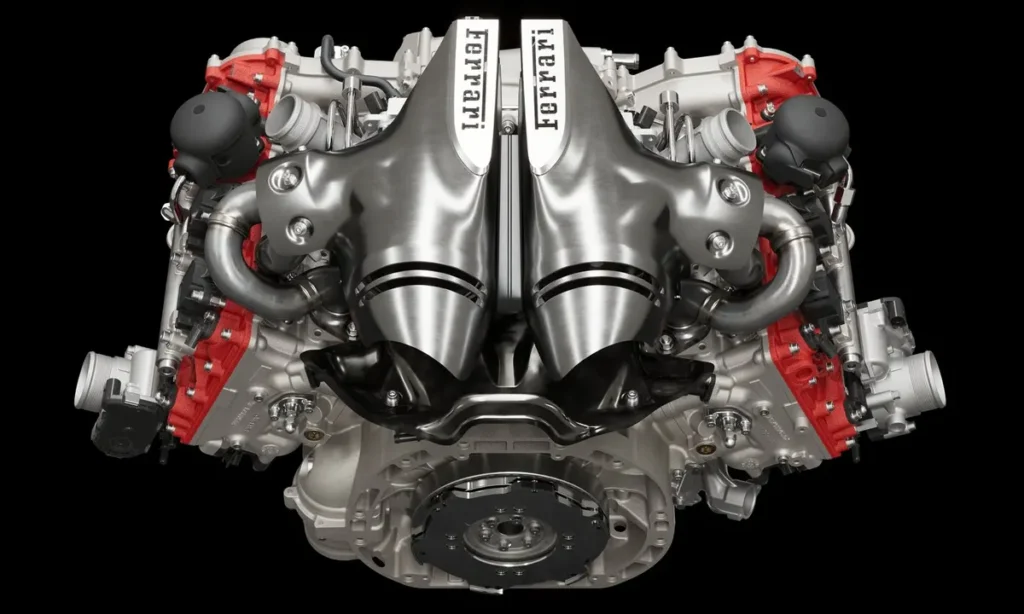
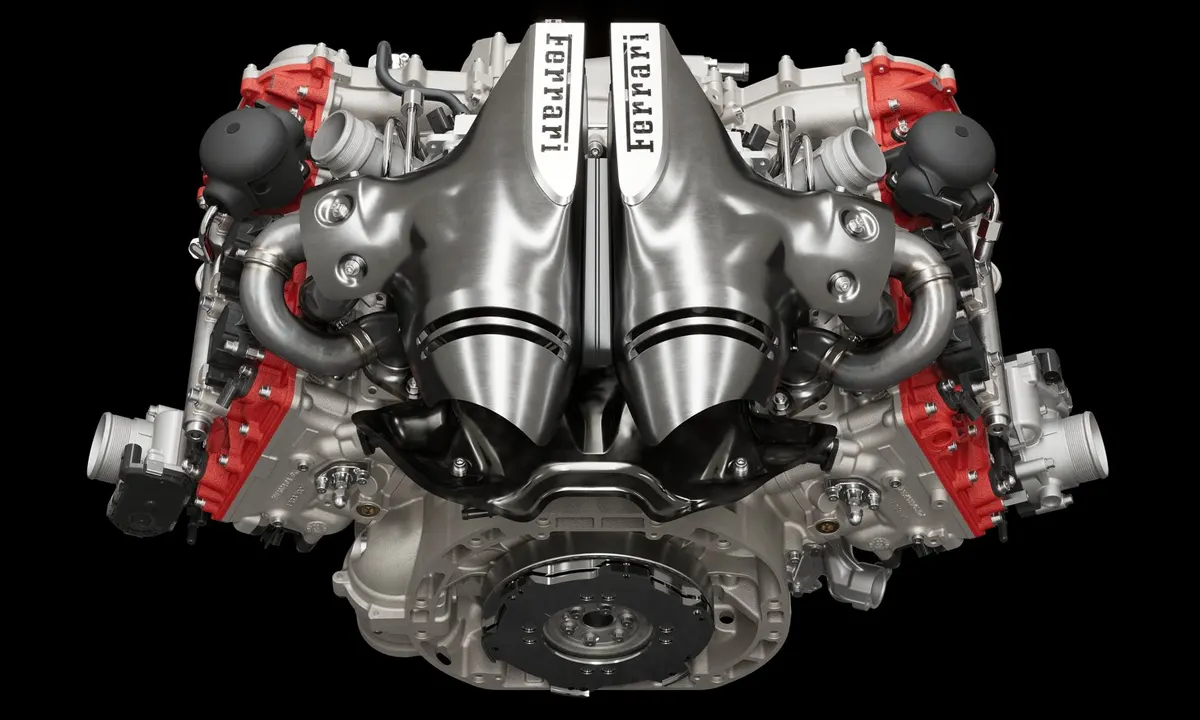
The engine at the heart of the Ferrari 296 GTB is one of the most significant new powerplants Ferrari has developed in decades, and its achievements deserve the recognition that the automotive press has enthusiastically extended since the car’s introduction. The F163 BC is a 2,992cc twin-turbocharged V6 with a 120-degree bank angle — an unusual configuration chosen specifically to enable the turbochargers to be positioned in the hot vee between the cylinder banks, a packaging solution derived directly from Ferrari’s Formula 1 technology that dramatically reduces turbo lag and concentrates the engine’s mass low and centrally within the car’s aluminium chassis. On its own, without electric assistance, this engine produces 654 horsepower at 8,000 rpm and 546 pound-feet of torque — figures that would have been extraordinary from a naturally aspirated V12 just fifteen years ago, delivered here from a unit less than three litres in displacement.
The electric motor integrated between the engine and the eight-speed dual-clutch transmission adds a further 165 horsepower and 232 pound-feet of torque, drawing energy from a 7.45-kilowatt-hour battery pack mounted under the floor to deliver an integrated system output of 819 horsepower and 546 pound-feet of combined torque at 6,250 rpm. The performance implications of this system are immediate and visceral. The 296 GTB accelerates from zero to 60 miles per hour in 2.6 seconds and covers the quarter mile in 9.8 seconds at 147 miles per hour — figures that place it among the fastest accelerating road cars available at any price. Top speed is electronically limited to 205 miles per hour, a figure that represents the absolute limit of what the car’s tyres and aerodynamic configuration can safely manage.
What makes the 296 GTB’s powertrain truly exceptional, however, is not these numbers but the manner in which it delivers its performance. The integration of the electric motor with the combustion engine is seamless, natural and entirely free from the intrusive character that hybrid systems in earlier supercars often imposed on the driving experience. The electric motor fills the torque band instantaneously from rest, eliminating the brief hesitation that turbocharging would otherwise introduce at low revs, while the combustion engine builds in intensity and urgency as revs climb toward the 8,500 rpm redline. The transition between these modes is imperceptible in normal driving and deeply engaging at the limit — creating a power delivery that feels organic rather than engineered, alive rather than calculated.
The 296 GTB offers an electric-only driving mode, designated eMode, that allows the car to travel up to approximately 15 miles on battery power alone at speeds up to 84 miles per hour. This capability is practically useful in urban zero-emission zones and adds a dimension of everyday versatility that was entirely absent from the naturally aspirated supercars the 296 GTB has displaced. Fuel economy on the combined cycle reaches 35.6 miles per gallon equivalent in hybrid mode, a figure that is remarkable in the context of 819 combined horsepower and one that demonstrates the genuine efficiency dividend that intelligent electrification can deliver even in the most performance-focused applications.
Dynamic Brilliance: The Most Driver-Focused Ferrari Berlinetta in Years
The Ferrari 296 GTB’s driving dynamics represent the area where the car has most comprehensively exceeded expectations and most definitively established its reputation among the automotive press and supercar community. The car handles with a clarity, balance and communicative precision that has led multiple credible publications to describe it as among the finest handling road cars they have ever driven — praise that carries particular weight given the extraordinary competition the 296 GTB faces at its price point.
The shortened wheelbase compared to the F8 Tributo contributes directly to the 296 GTB’s sharp, responsive turn-in and its willingness to rotate on corner entry with a naturalness and predictability that inspires confidence rather than anxiety. Weight distribution is biased toward the rear at 40.5 percent front and 59.5 percent rear, a configuration that gives the car the rear-led, driver-focused character that defines Ferrari’s approach to supercar dynamics. The standard adaptive suspension system manages body movements with exceptional control across a wide range of road conditions, maintaining composure over imperfect surfaces in Comfort mode while delivering the firm, body-motion-minimising platform that the car’s aerodynamics and tyres demand in Sport and ESC-off configurations.
Four driving modes — Qualify, Sport, Wet and eMode — allow drivers to configure the car’s powertrain delivery, traction control intervention and suspension character according to their preference and the driving environment. The transition between modes is immediate and clearly defined, with each delivering a meaningfully distinct character rather than the incremental changes that lesser systems often provide. In Qualify mode, with stability and traction systems operating at their least interventionist setting, the 296 GTB reveals a playfulness and adjustability at the limit that rewards skilled drivers with a depth of engagement that is genuinely rare at any price. The rear axle can be coaxed into controllable, telegraphed oversteer with a progressiveness and predictability that communicates trust between driver and machine — the defining quality of a great Ferrari, present here in exceptional measure.
Braking performance is outstanding, with carbon-ceramic discs delivering fade-resistant, confidence-inspiring stopping power under repeated heavy use. The brake pedal feel is firm and progressive, complemented by regenerative braking integration that recovers energy without disrupting the pedal’s natural progression. The eight-speed dual-clutch transmission executes both full-throttle upshifts and trail-braking downshifts with a speed and decisiveness that is entirely appropriate to the car’s performance character, while also managing low-speed traffic with sufficient composure to make the 296 GTB a genuinely usable road car in everyday conditions.
An Interior Where Technology Meets Italian Passion
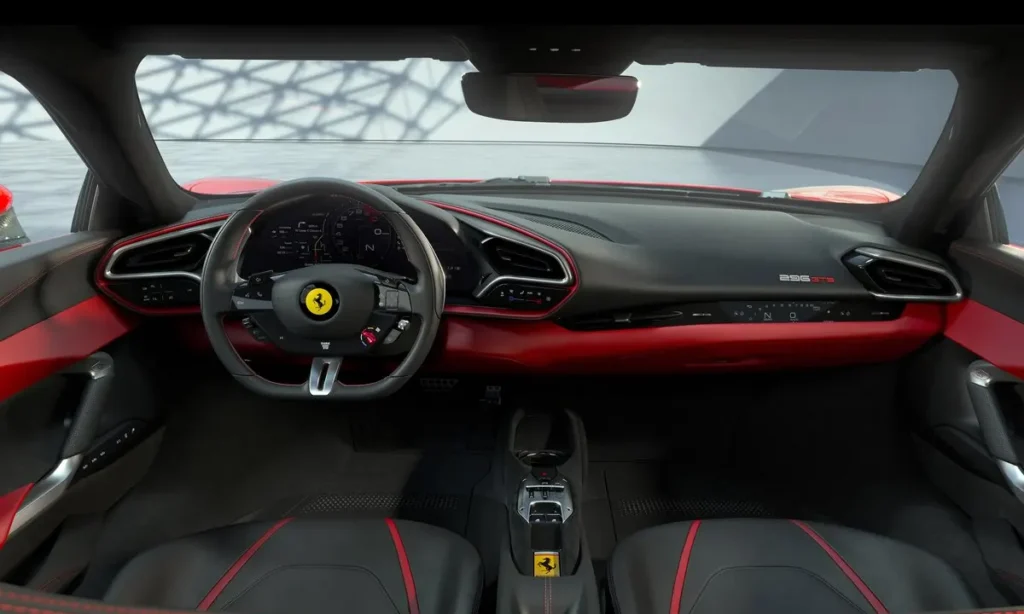
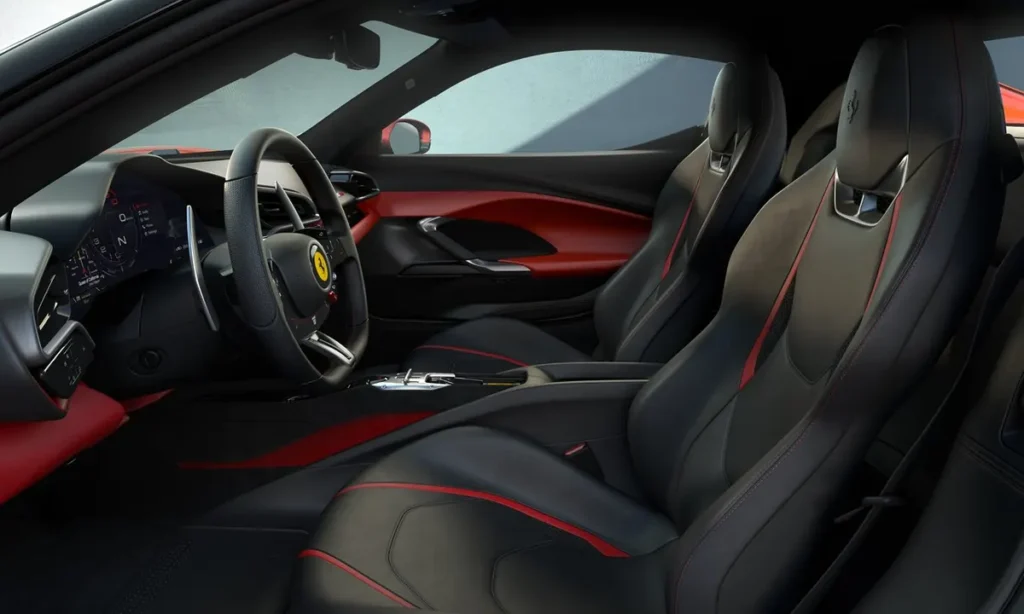
The cabin of the Ferrari 296 GTB is an environment that balances Ferrari’s current digital-first interface philosophy with the tactile, driver-focused intimacy that has always characterised great mid-engine Ferrari berlinettas. The architecture is shared substantially with the SF90 Stradale — a relationship that provides the 296 GTB with access to Ferrari’s most advanced human-machine interface technology while benefiting from the learnings and refinements that the SF90 programme delivered. The driving position is low, enveloping and immediately purposeful, with the driver seated close to the centre of the car’s mass in a posture that communicates the car’s intentions clearly and instinctively.
The 16-inch digital instrument cluster is the primary information interface for the driver, displaying speed, gear position, powertrain status, driving mode and a comprehensive suite of vehicle data in a crisp, high-resolution presentation. The steering wheel incorporates Ferrari’s haptic touch controls for driving mode selection, turn signals, windshield wipers and other frequently used functions — a system that has attracted criticism from some reviewers for its complexity and occasional inconsistency of response, and that criticism is not entirely without merit. The learning curve for the 296 GTB’s digital interface is steeper than that of more conventional control layouts, and owners who spend time configuring their preferences and familiarising themselves with the system’s logic will find it significantly more satisfying than those who approach it without patience.
Standard equipment for a car at this price level is appropriately comprehensive, encompassing premium leather upholstery, four-way power-adjustable seats, dual-zone automatic climate control, a six-speaker audio system with AM/FM and satellite radio, navigation and remote keyless entry. Cargo capacity is modest at seven cubic feet — the 296 GTB is a sports car first and a touring machine second — but the quality of every surface and material within the cabin reinforces the sense of occasion and craftsmanship that buyers at this price point rightly expect. Available carbon fibre interior trim, racing harnesses and carbon fibre racing seats from the options catalogue allow buyers to configure the interior to reflect their preferred balance between road comfort and track readiness.
The 296 Speciale: When Extraordinary Is Not Enough
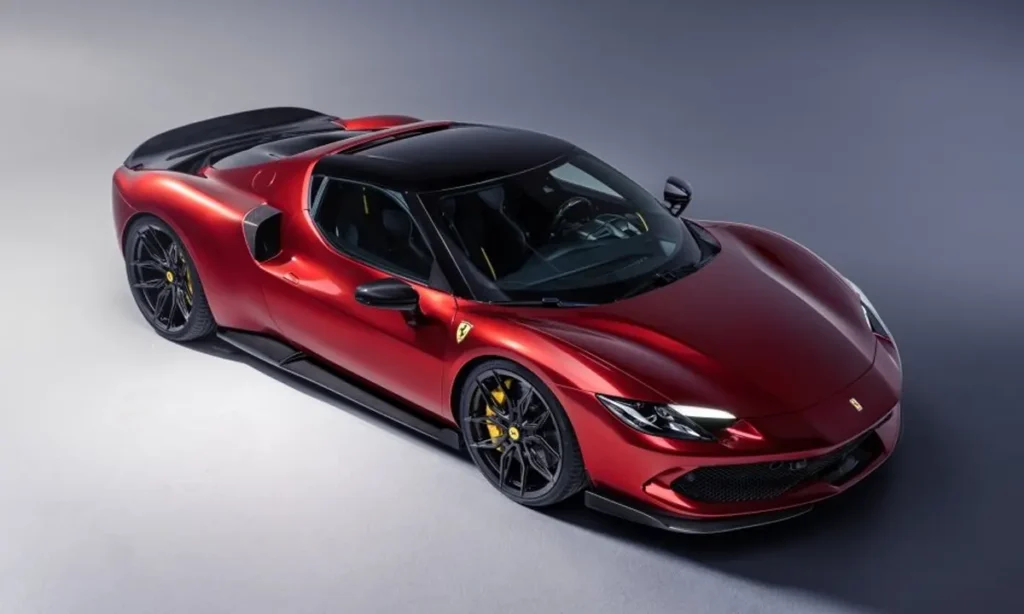
For buyers whose appetite for performance exceeds what the already-extraordinary standard 296 GTB can provide, Ferrari introduced the 296 Speciale in April 2025 — a higher-performance variant that elevates the powertrain output to 868 combined horsepower through revised engine calibration, reduced weight and an extensively developed aerodynamic package. The 296 Speciale represents Ferrari’s traditional Versione Speciale formula applied to the 296 platform — stripping weight, sharpening dynamics and extracting the last reserves of performance from a powertrain and chassis that were already operating at an exceptionally high level. It follows in the footsteps of the 360 Challenge Stradale, the F430 Scuderia and the 488 Pista as one of Ferrari’s most focused and most celebrated production berlinettas, and early assessments from the automotive press have confirmed that it delivers on its considerable promise with the conviction and completeness that the Versione Speciale lineage demands.
Racing Heritage, GT3 Glory and a Legacy Already Assured
The Ferrari 296 GTB’s identity is inseparable from its extraordinary success in global motorsport competition through the 296 GT3 race variant. The 296 GT3 has accumulated victories across the most prestigious GT racing series in the world, including the GT World Challenge Europe and the FIA GT World Cup, and continues to demonstrate the fundamental soundness and development potential of the 296’s technical architecture in the most demanding competitive environments available. A 296 GT3 Evo was announced in June 2025, featuring revised gear ratios, improved cooling, updated aerodynamics and a new rear wing structure — developments that will extend the racing programme’s competitiveness through 2026 and beyond.
This motorsport success is not merely a marketing footnote. It reflects the depth of engineering integrity in the 296 platform and the confidence that Ferrari’s racing programme places in the fundamental architecture that underpins the road car. Buyers of the 296 GTB are purchasing a car whose engineering lineage is validated at the highest levels of international competition, and that validation adds a dimension of credibility and desirability to the ownership experience that money cannot simply purchase elsewhere.
A Berlinetta for the Ages
The Ferrari 296 GTB is one of those rare automobiles that arrives at a moment of genuine technological transition and navigates it not merely competently but brilliantly — creating something that honours the past, embraces the future and delivers a driving experience that is better than anything that preceded it. Its 819-horsepower plug-in hybrid powertrain is a technical masterpiece. Its chassis is one of the finest and most communicative mid-engine platforms ever developed for a road car. Its design is beautiful, purposeful and aerodynamically advanced. And its driving experience — in every mode, on every road, at every speed — is one of the most rewarding and emotionally engaging available from any supercar manufacturer at any price. The Ferrari 296 GTB does not ask the question of whether a V6 Ferrari can be a great Ferrari. It answers it, emphatically and definitively, every single time it moves.
Read: The Most Powerful Audi Ever Built Runs Entirely on Electricity and It’s Breathtaking
Ferrari 296 GTB – Specifications & Performance Chart
| Category | Specification |
| Vehicle Type | Mid-Engine Plug-In Hybrid Berlinetta (PHEV) |
| Engine | 2,992cc Twin-Turbocharged 120° V6 (F163 BC) |
| Engine Configuration | Mid-Mounted, Rear-Wheel Drive |
| V6 Output | 654 hp @ 8,000 rpm / 546 lb-ft Torque |
| Electric Motor Output | 165 hp / 232 lb-ft Torque |
| Combined System Output | 819 Horsepower |
| Combined Torque | 546 lb-ft @ 6,250 rpm |
| Redline | 8,500 rpm |
| Transmission | 8-Speed Dual-Clutch (DCT) |
| Battery Capacity | 7.45 kWh |
| Electric-Only Range | Approx. 15 Miles (up to 84 mph) |
| 0–60 mph | 2.6 Seconds |
| Quarter Mile | 9.8 Seconds @ 147 mph |
| Top Speed | 205 mph (electronically limited) |
| Fuel Economy (Hybrid Mode) | 35.6 MPGe Combined |
| Aerodynamics (HD Mode) | Up to 360 kg Downforce at 250 km/h |
| Drag Coefficient | 0.38 |
| Curb Weight | 3,532 lbs |
| Weight Distribution | 40.5% Front / 59.5% Rear |
| Wheelbase | 102.4 inches |
| Length / Width / Height | 179.7 in / 77.1 in / 46.7 in |
| Wheels | 20-Inch Alloy (Standard) |
| Brakes | Carbon-Ceramic (CCM) |
| Driving Modes | Qualify, Sport, Wet, eMode |
| Suspension | Adaptive (Standard) / Multimatic (Assetto Fiorano) |
| Interior Display | 16-Inch Digital Instrument Cluster |
| Seating | 2 Passengers |
| Cargo Capacity | 7 Cubic Feet |
| Starting MSRP (US) | $346,950 |
| 296 Speciale Output | 868 Combined Horsepower |
| Assembly | Maranello, Italy |