Freelander Concept 97: The Complete Story of a Legend Reborn. From the 1997 Frankfurt Debut to The 2026 Global Revival
Europe's Best-Selling 4x4 for Five Consecutive Years After Its 1997 Launch, Retired in 2015 and Silent for Over a Decade — The Freelander Name Returns in 2026 Not Merely as a New Model But as an Entirely New Electrified Brand Born from a JLR-Chery Partnership and Announced to the World Through the Extraordinary Concept 97
Freelander Concept 97: Few names in the history of British motoring carry the cultural and commercial weight of Freelander. When Land Rover unveiled the original CB40 project at the 1997 Frankfurt Motor Show, it did something the brand had never previously attempted — it built a compact, unibody SUV with car-like driving manners, genuine off-road capability and an accessible price point that connected the Land Rover heritage to a generation of buyers who had never owned a body-on-frame four-wheel-drive in their lives. The result was the most commercially successful compact four-wheel-drive vehicle in European history, selling over 540,000 units in its first generation alone and holding the title of Europe’s best-selling 4×4 for five consecutive years after its launch. When Land Rover quietly retired the nameplate in 2015 — eventually replaced by the Discovery Sport and the Range Rover Evoque in the compact and family SUV segments respectively — the Freelander left a vacuum in automotive culture that no successor has fully occupied. Until now. On 31 March 2026, at a launch event in Shanghai, the Freelander name returned to global automotive conversation — not as a new Land Rover model, but as the opening statement of an entirely new brand, announced through the dramatic Concept 97.
Gallery: Freelander Concept 97
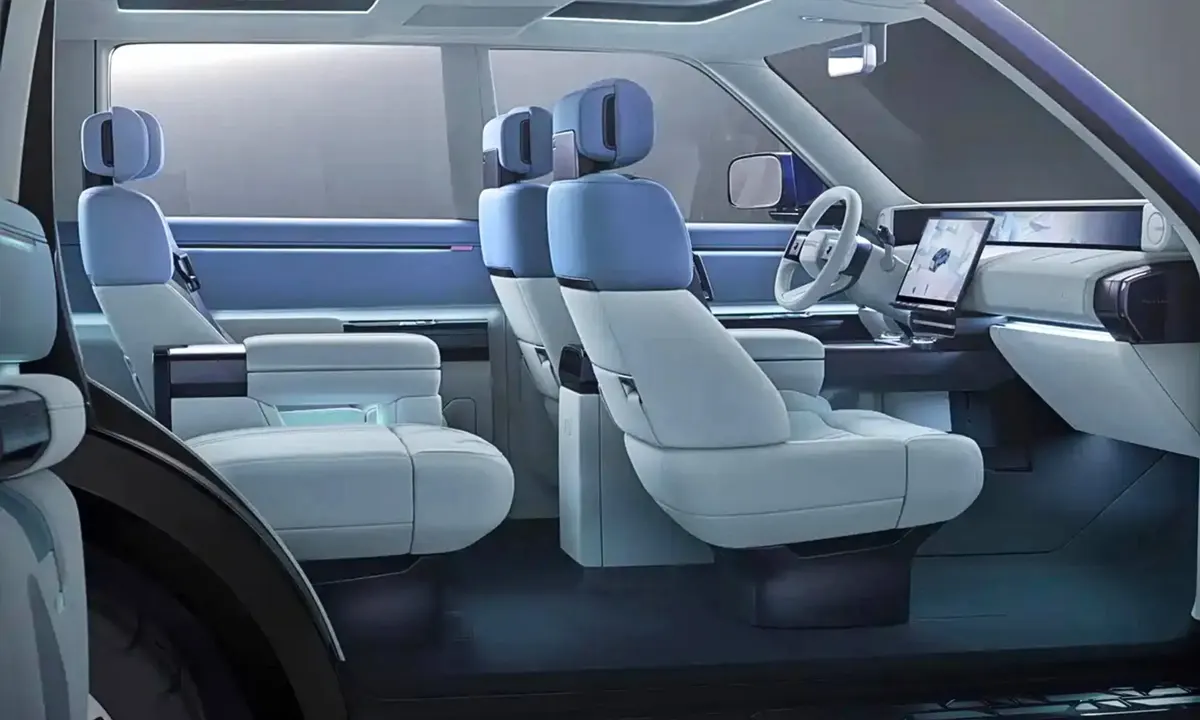
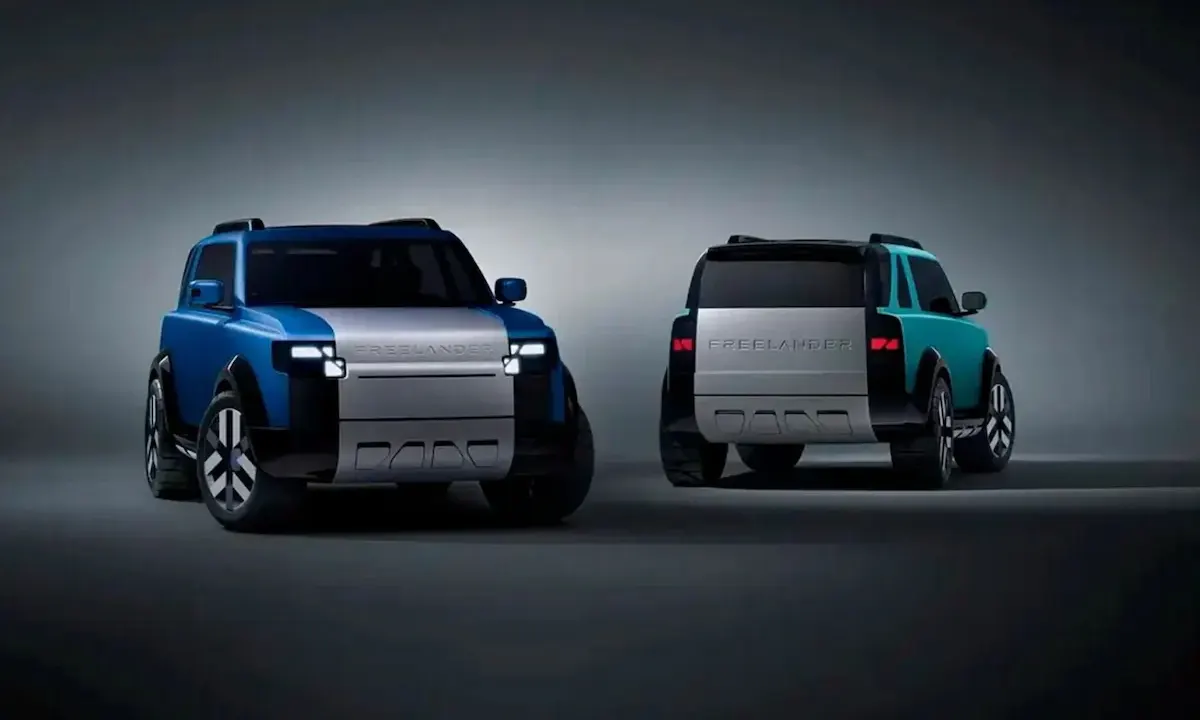
The Original Freelander: Where the Legend Began in 1997
To understand why the Concept 97’s revival carries the weight it does, it is necessary to understand precisely how significant the original Freelander’s arrival was in 1997 — because the car that debuted at Frankfurt that September was genuinely revolutionary by the standards of what Land Rover had produced in the preceding half century. Having built exclusively body-on-frame four-wheel-drive vehicles since the original Series I Land Rover of 1948, the Freelander represented the brand’s first-ever monocoque, or unibody, construction — a fundamental departure from the engineering philosophy that had defined Land Rover’s entire production history. The project, internally codenamed CB40 after Canley Building 40 where the concept was initially developed, had been approved in the late 1980s when British Aerospace acquired the Rover Group and pooled resources across the Rover and Land Rover brands in a manner that made a smaller, more accessible Land Rover commercially and technically attainable.
The production Freelander was offered in three-door and five-door configurations — including the distinctive three-door Softback semi-convertible that became one of its most recognisable and most sought-after variants — with a range of engines that reflected the engineering partnerships of its era: a 1.8-litre four-cylinder petrol from Rover’s K-series, a 2.0-litre turbodiesel, and ultimately the 2.5-litre V6 KV6 petrol unit that powered the North American market specification from 2001 onward. The Freelander’s off-road capability was achieved without the low-range transfer case or locking differentials that traditional Land Rover products employed, relying instead on a Hill Descent Control system and a specifically calibrated ABS system from Wabco to deliver traction performance that the vast majority of its owners never needed to push beyond. It was, in the precise and intended sense of that phrase, a Land Rover for a new kind of driver — one who lived in a city or suburb, who valued the elevated seating position and the SUV aesthetic, and who wanted the reassurance of genuine four-wheel-drive capability without the operational complexity that Land Rover’s larger products demanded.
The market’s response was swift and unambiguous. The Freelander became Europe’s best-selling 4×4 almost immediately after its launch, a position it held for five consecutive years. It participated in the 1998 Camel Trophy alongside Land Rover’s more traditional flagship models, validating its off-road credentials in the most demanding competitive context available. And in 2016, Land Rover formally recognised its significance by designating the original Freelander as one of its official Heritage Vehicles — an honour that places it alongside the Series I, the Range Rover and the Defender in the canonical history of what Land Rover has built and what it means.
The Freelander’s Decade of Silence: 2015 to 2026
The second generation Freelander — known in North America and the Middle East as the LR2 — debuted at the 2006 British International Motor Show and introduced the Ford EUCD platform architecture, a significantly more refined interior and the Terrain Response system that would become a hallmark of Land Rover’s approach to intelligent all-terrain driving across its model range. Under Ford’s ownership of Land Rover and subsequently under the Indian conglomerate Tata Motors, which acquired the brand in 2008, the second-generation Freelander served its market capably through a period of significant change in the compact SUV segment. But the nameplate’s commercial fate was ultimately sealed by the introduction of the Range Rover Evoque in 2011 and the Discovery Sport in 2015 — two vehicles whose positioning directly overlapped with the Freelander’s and whose newer platforms, fresher designs and stronger brand identities within Tata’s reorganised Land Rover portfolio made the continuation of a separate Freelander model commercially redundant. Production of the Freelander 2 ended on 7 October 2014, and the nameplate fell silent — until 2026.
The JLR-Chery Partnership: The Alliance That Brought Freelander Back
The commercial architecture behind the Freelander’s revival is as significant as the car itself — because the vehicle announced in Shanghai in March 2026 is not a Land Rover product in the conventional sense. In June 2024, Jaguar Land Rover and Chery Automobile signed a strategic cooperation agreement that authorised Chery Jaguar Land Rover, the existing joint venture between the two companies that had operated in China since 2012, to use the Freelander brand for the production of electric and electrified vehicles. The terms of this partnership establish a precise and deliberate division of responsibility: Chery provides the platform technology, the electric and intelligent driving systems, the manufacturing infrastructure and the local market knowledge; JLR contributes the brand heritage, the design leadership and the global luxury positioning that the Freelander name inherits from its Land Rover parentage.
The investment in this partnership is substantial. Both shareholders committed approximately 3 billion yuan — equivalent to around $420 million — to upgrade the production facilities at the Chery Jaguar Land Rover plant in Changshu, Jiangsu Province, which served as JLR’s first manufacturing facility outside the United Kingdom. Crucially, Freelander operates as an entirely independent brand — it uses neither the Land Rover logo nor the Land Rover name on its products, and it sits outside JLR’s existing brand portfolio of Range Rover, Defender, Discovery and Jaguar, as well as outside Chery’s own brand family. Its global headquarters is established in Shanghai, with design work conducted jointly between JLR’s Gaydon Global Design Centre in Warwickshire and a dedicated Shanghai design team.
Freelander Concept 97: Every Design Detail Explained
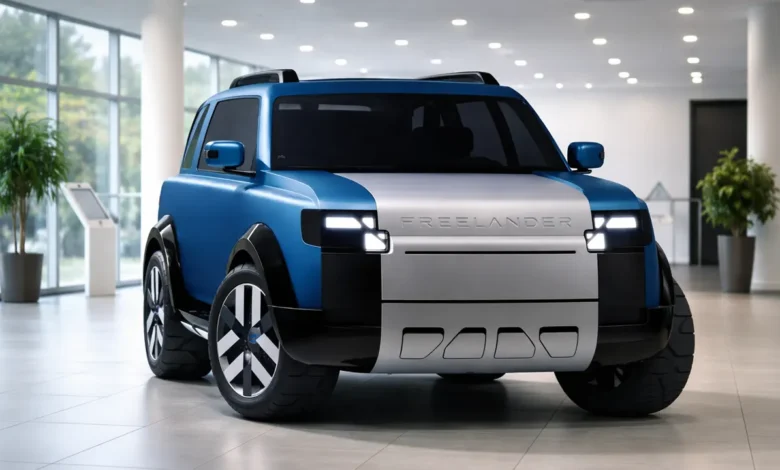
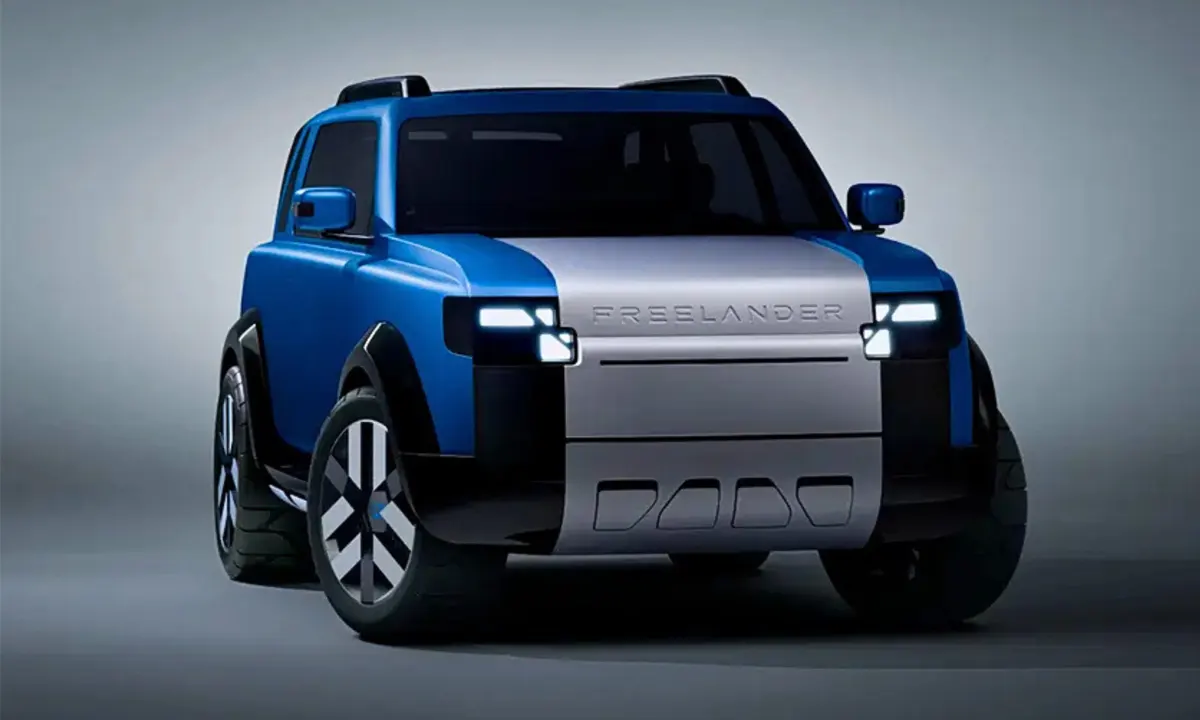
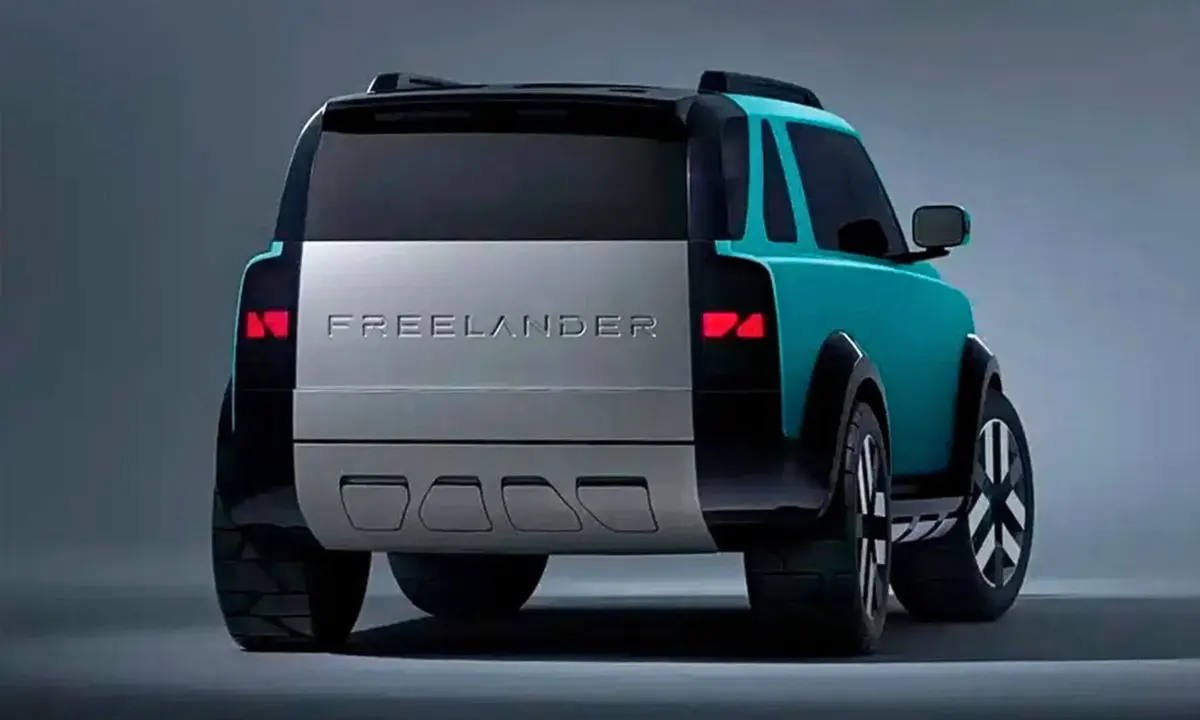
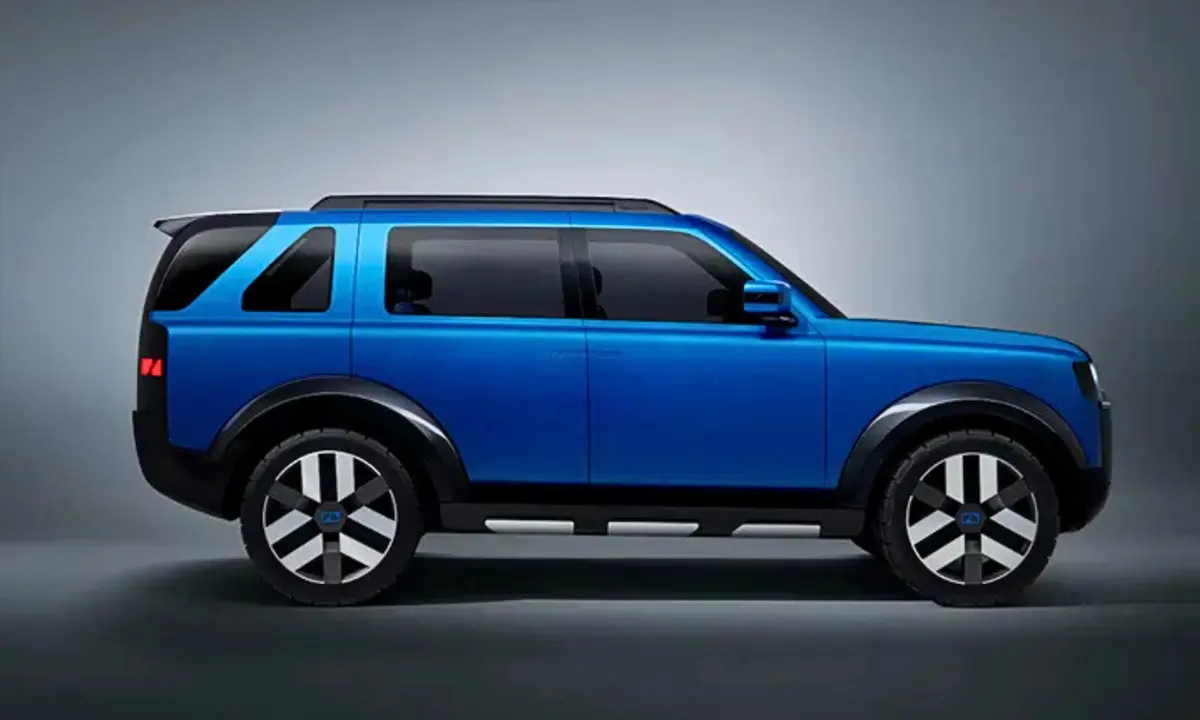
The Concept 97 — whose name directly references the year of the original Freelander’s 1997 Frankfurt debut — is a vehicle of considerable physical presence and deliberate design restraint, the restraint of a car that is confident enough in the power of its heritage references to deploy them precisely rather than exhaustively. At 5.1 metres in length with a wheelbase exceeding 3 metres, the Concept 97 is emphatically not the compact baby Land Rover that the original Freelander represented — it is a full-sized, three-row, six-seat family SUV that places itself in a segment far above the original’s footprint while referencing the original’s design language with genuine intelligence.
The upright, boxy silhouette is the Concept 97’s most immediately powerful connection to its predecessor — the vertical front fascia, the square shoulder line, the minimal front and rear overhangs all evoking the original’s honest, functional proportions while translating them into the dimensional and aesthetic expectations of the contemporary premium SUV market. The circular wheel arch protectors, finished in gloss black plastic, are a direct quotation from the original Freelander’s most distinctive exterior detail. The flat door sides punctuated by a rounded shoulder line, and the distinctive triangular rear quarter windows — bisected by the diagonal C-pillar — reference the original three-door model’s removable hardtop graphic, a design motif that the Concept 97 also encodes into its brand logo: two interlocking triangles forming the initials FL, appearing in the lighting signature, the roof trim, the wheel caps and even the seatbelt buckles.
The front face features rectangular LED headlights connected by black bars that span the full width of the bumper, with the Freelander name embossed in relief across the front face rather than a traditional grille — a design decision that recalls the original’s front lettering treatment while signalling the radiator-free architecture of the electric powertrain beneath. The opposing, pillarless suicide doors — which open without a B-pillar to produce an entirely unobstructed entry to all three rows of seating — are acknowledged as a concept car theatre element unlikely to survive to production unchanged, but the core silhouette, the dimensional envelope and the interior’s six-seat 2+2+2 layout, including a second-row zero-gravity captain’s seat, are all considered close to production-ready by automotive analysts who have examined the concept.
Technology Platform: 800 Volts, Huawei AI and the i-ATS Terrain System
The Freelander Concept 97’s technical specification is as ambitious as its design heritage is distinguished. The new iMAX platform — built specifically for Freelander and not shared with any existing Chery product — supports three powertrain configurations: a pure battery-electric system, a plug-in hybrid and a range-extender electric variant using a 1.5-litre turbocharged petrol unit as a generator. All variants are built on an 800-volt high-voltage architecture, enabling the CATL-developed Freevoy battery to accept charging at up to 360 kilowatts — a 6C charging rate that represents the fastest available in any production or near-production passenger vehicle at this writing. In tri-motor configuration, the system produces a combined 554 horsepower, with energy consumption estimated at 12 kilowatt-hours per 100 kilometres in BEV specification.
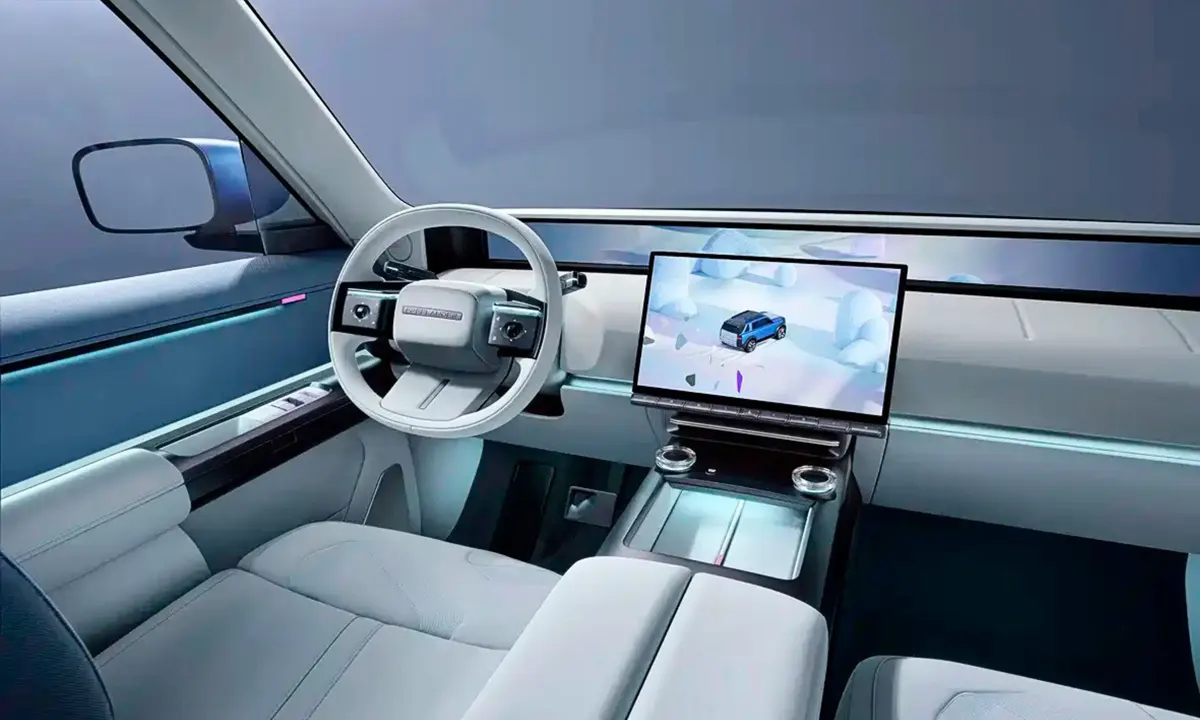
The intelligent systems integrated into the Concept 97 reflect Chery’s deep partnership with two of China’s most advanced technology companies. Huawei contributes the Qiankun ADS 4.0 advanced driver assistance system, which incorporates a 896-line LiDAR sensor — the highest-resolution unit currently deployed in any production or concept vehicle — alongside the i-ATS intelligent all-terrain system developed jointly with Huawei that adapts to terrain conditions using predictive shock absorbers and three differential locks, including a front mechanical differential lock and a rear electronic limited-slip differential. Qualcomm provides the world’s first deployment of the Snapdragon 8397 automotive-grade processor, powering the full-width panoramic digital display across the dashboard and the large central infotainment screen.
Read: Why Toyota Cars Are Known for Bulletproof Reliability?
Freelander as a Global Brand: What Happens Next
The Concept 97 is the first of six planned Freelander models to be launched over the next five years, with the brand committed to introducing a new model every six months — an extraordinary product cadence for any manufacturer, and a signal of the commercial ambition that the JLR-Chery partnership is investing in the Freelander revival. The first production model is planned to go on sale in China in the second half of 2026, priced at approximately 400,000 yuan — equivalent to around $57,900 — through a retail network targeting 100 stores across 60 Chinese cities by year-end. Global expansion follows China’s launch, with the Middle East confirmed as the first international market and Europe next in line, with each regional variant to be specifically calibrated for local requirements rather than simply adapted from the China specification.
The Freelander Concept 97 is, at its most fundamental level, a statement about the enduring power of a name that connected with drivers across four decades and multiple continents because it offered something the automotive world had not previously seen — a Land Rover that anyone could live with, every day, everywhere. The Concept 97 makes that promise again, in the electric idiom of the mid-2020s, backed by technology that the original’s engineers could not have imagined and designed by a team that clearly understands why the name still resonates nearly three decades after it first appeared at Frankfurt. The original Freelander competed for a century — and the new one intends to do precisely the same.
Read: How Toyota Became the Global Leader in Hybrid Technology
Freelander Concept 97 Key Specifications at a Glance
| Specification | Detail |
| Concept Name | Freelander Concept 97 |
| Revealed | 31 March 2026, Shanghai |
| Brand Structure | Independent — JLR + Chery Joint Venture |
| Length | 5,100 mm (approx. 201 inches) |
| Wheelbase | Over 3,000 mm (approx. 118 inches) |
| Seating | 6 (2+2+2 layout) |
| Platform | iMAX (New, purpose-built) |
| Powertrain Options | BEV / PHEV / Range-Extender (EREV) |
| Electrical Architecture | 800 Volt |
| Peak Output (Tri-motor) | 554 hp |
| Charging Speed | 360 kW (6C) |
| Battery Partner | CATL (Freevoy battery) |
| ADAS | Huawei Qiankun ADS 4.0 / 896-line LiDAR |
| Processor | Qualcomm Snapdragon 8397 |
| Terrain System | i-ATS (Huawei co-developed) |
| Differential Locks | 3 (Front mechanical + Rear e-LSD) |
| Production Location | Changshu, Jiangsu Province, China |
| China Sale Start | Second Half 2026 |
| Estimated China Price | ~CNY 400,000 (~$57,900) |
| Design | Gaydon Design Centre (UK) + Shanghai Design Team |