The Pivot That Stunned the Industry. Honda Cancelled Its EV Future
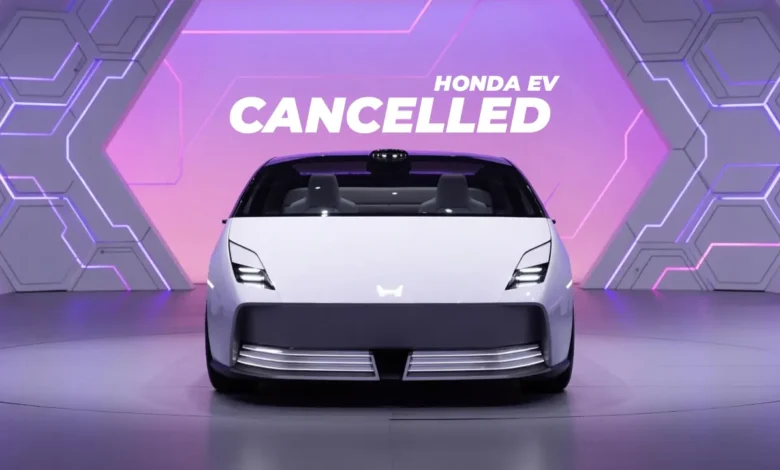
- $65 billion electrification investment announced in 2021
- Short-lived Honda–Nissan EV partnership
- Slowing global EV demand forcing timeline reassessment
- Shift from all-electric 2040 vision to hybrid-focused strategy
- Honda navigating a critical strategic transition in its modern era
There are corporate announcements that reshape industry expectations — commitments whose ambition signals a manufacturer’s direction with sufficient conviction that the automotive world reorganises its competitive assumptions around them. And then there are the retractions, the recalibrations and the quiet strategic reversals that arrive without press conferences and whose significance the industry absorbs with a mixture of vindication and concern depending on where each observer stood on the original commitment’s credibility. Honda’s electrification retreat — whose full dimensions have emerged across a series of announcements, partnership dissolutions and strategic realignments beginning in late 2024 and continuing through 2025 — belongs emphatically in the second category. Understanding what actually happened, why it happened and what it means for Honda’s competitive position in the decade ahead requires examining the decisions with the honesty that the gap between Honda’s stated ambitions and its current trajectory demands.
What Honda Actually Announced and What It Is Now Walking Back
Honda’s electrification commitment as publicly stated in 2021 was among the most ambitious in the global automotive industry — a pledge to invest approximately $65 billion in electrification and software development through 2030, to launch 30 electric vehicle models globally by 2030 and to achieve complete transition to zero-emission vehicle sales by 2040. These commitments were made in the context of an industry-wide electrification momentum whose pace the global EV market’s subsequent development has failed to sustain, and whose targets were calibrated against demand projections that have proven optimistic across every major market.
The Honda-Nissan merger discussions — announced in December 2024 as a potential combination whose scale would have created the world’s third-largest automotive manufacturer — represented the strategic response to the competitive pressure that Chinese EV manufacturers were imposing on both Japanese brands in Asian markets. The partnership’s dissolution in February 2025, after months of negotiations that failed to resolve the fundamental strategic and cultural differences between the two manufacturers, eliminated the scale advantage that the combination would have provided and left both companies to address the Chinese competitive challenge independently.
The practical consequence of these developments is a Honda electrification timeline whose 2040 complete transition target has been effectively abandoned in favour of a more pragmatic approach — one that maintains hybrid technology as the primary near-term decarbonisation pathway, reduces the pace of full battery-electric vehicle introduction and acknowledges that the market conditions required to support Honda’s original electrification ambition do not currently exist and may not exist within the timeframe that the 2040 target implied.
Why the Global EV Market Failed to Meet Honda’s Projections
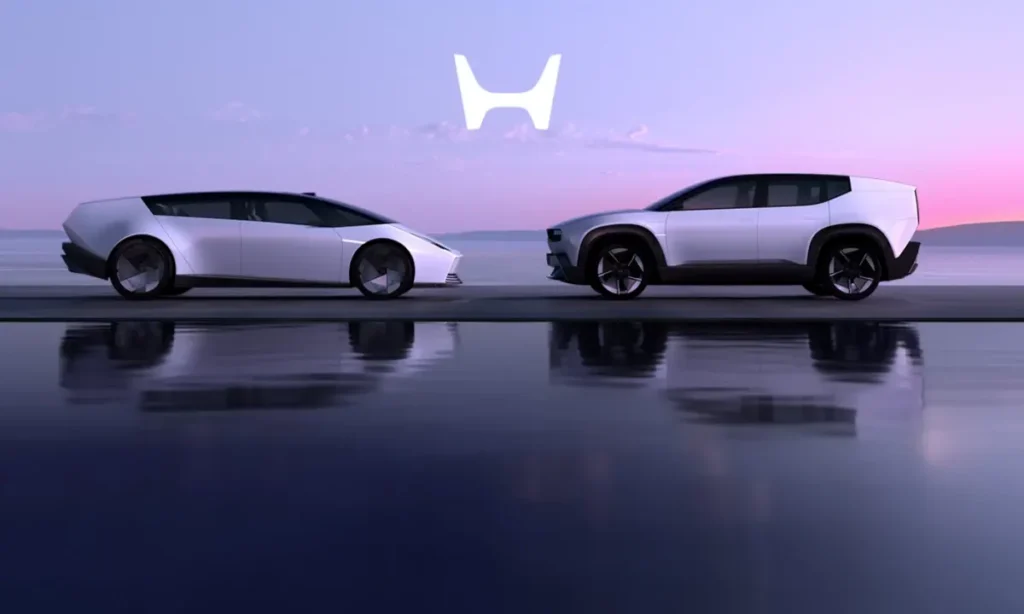
The strategic recalibration that Honda is executing is most accurately understood not as a Honda-specific failure but as a manufacturer-specific response to a market reality that has affected every traditional automotive manufacturer that committed to aggressive electrification timelines during the 2020 to 2022 period when EV demand growth rates appeared to support the projections that informed those commitments.
Global electric vehicle demand growth decelerated significantly from 2023 onward — not because consumer interest in electric vehicles declined but because the early adopter market whose enthusiasm drove the initial growth phase was exhausted before the mainstream buyer population whose purchase decisions require lower prices, denser charging infrastructure and longer real-world range demonstration had been sufficiently converted to sustain the growth rates that manufacturers’ production investment had anticipated. The crossing of the chasm between early adopter enthusiasm and mainstream adoption has proven slower, more complex and more price-sensitive than the demand curves of 2021 and 2022 suggested it would be.
Honda’s specific vulnerability to this market deceleration reflects the company’s traditional strength — whose hybrid technology leadership, demonstrated across decades of Accord, Civic and CR-V hybrid sales, positioned it exceptionally well for a world where electrification progressed at the measured pace that consumer behaviour actually supports rather than the accelerated pace that policy ambition described.
The Honda-Nissan Partnership: What Went Wrong
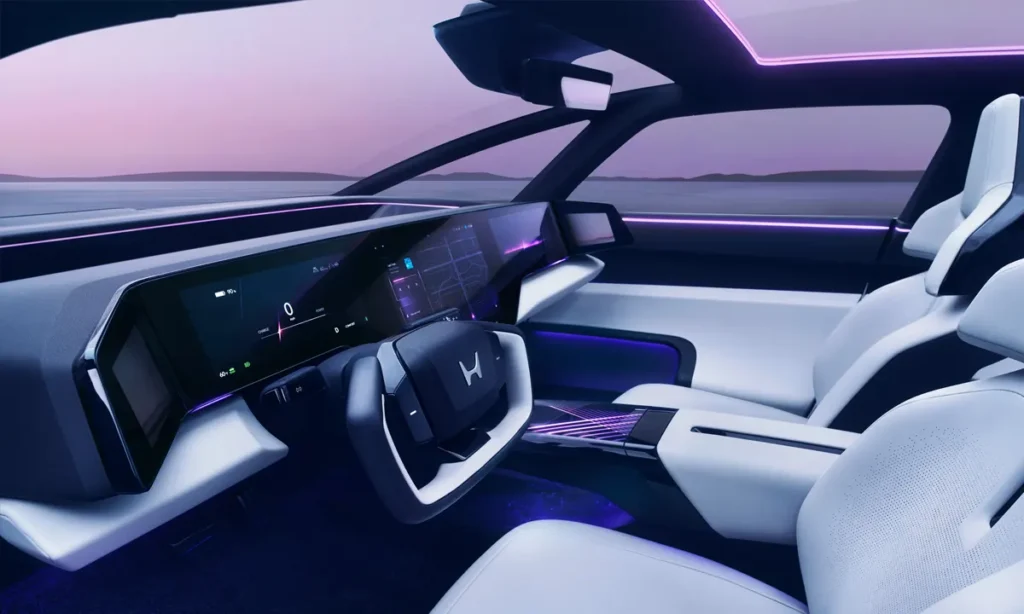
The Honda-Nissan merger’s failure deserves examination beyond the diplomatic language of the official dissolution announcement — because the strategic logic that motivated the discussions remained valid after the talks concluded, and understanding why the partnership failed illuminates the structural challenges that both manufacturers face independently.
The fundamental tension in the Honda-Nissan discussions was cultural and strategic rather than financial. Honda’s engineering-led, quality-focused corporate culture and Nissan’s more volume-oriented, alliance-dependent approach — shaped by two decades of Renault-Nissan-Mitsubishi Alliance membership — created governance and strategic priority conflicts whose resolution proved impossible within the timeline that the competitive pressure from Chinese manufacturers made available. The merger would have required compromises from both manufacturers that neither was willing to make on the terms the other required — producing a dissolution whose inevitability, in retrospect, was visible in the structural incompatibility that the announcement’s optimism temporarily obscured.
Both manufacturers now face the Chinese competitive challenge without the scale advantages that combination would have provided — a strategic reality whose consequences will unfold across the next decade’s market share data in Asian markets where BYD, Geely and SAIC are competing with increasing effectiveness at price points that Honda and Nissan’s cost structures struggle to match.
What Honda Is Doing Instead: The Hybrid Pivot
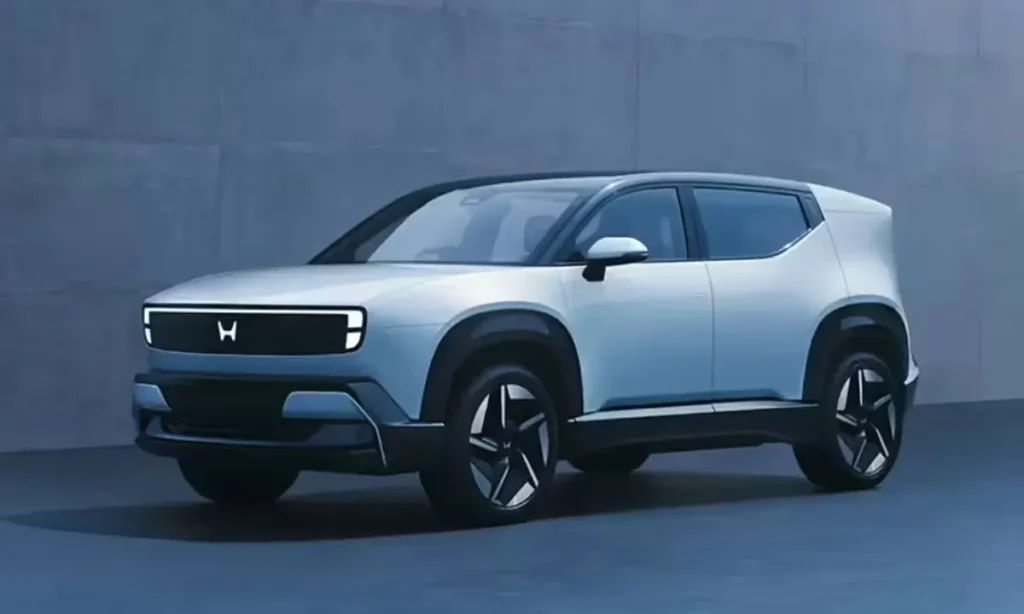
Honda’s strategic response to the electrification retreat is a recommitment to hybrid technology whose depth reflects genuine competitive advantage rather than default positioning. The e:HEV hybrid system — whose application across the Civic, CR-V, Accord and HR-V has accumulated real-world reliability and customer satisfaction data whose quality no competitor’s equivalent hybrid system can currently match — provides Honda with a decarbonisation pathway whose market acceptance is demonstrated, whose manufacturing cost is declining and whose technology continues to develop toward the plug-in hybrid configurations that bridge conventional hybrid efficiency and full battery-electric capability.
The plug-in hybrid investment that Honda is accelerating — with PHEV versions of its most important volume models planned across the 2025 to 2028 period — represents a pragmatic middle path between the full electrification commitment that market conditions no longer support and the combustion-only position that regulatory requirements across major markets make commercially untenable beyond the near term. For Honda’s core buyer demographic — practical, value-conscious, reliability-prioritising owners of Civic, CR-V and Accord variants — the PHEV proposition’s combination of electric efficiency for daily use and combustion range for long-distance travel addresses the real-world ownership calculus more directly than a full battery-electric alternative at current charging infrastructure density and battery cost levels.
Read: Toyota vs Hyundai vs Honda: Which Brand Is Better in 2026 in the US?
What Honda’s EV Cancellation Means for the Industry
Honda’s electrification retreat carries significance beyond the company’s own strategic trajectory — because it represents the most explicit acknowledgement from a major manufacturer that the industry’s collective electrification timeline was calibrated against a market future that has not arrived on schedule and may not arrive on the timeline that policy commitments described.
The manufacturers that will emerge from this period of electrification recalibration most competitively are those whose strategic response combines genuine honesty about current market conditions with sustained investment in the technology capabilities — battery chemistry, software architecture, charging infrastructure — that will determine competitive positioning when the mainstream adoption phase that the market’s current deceleration has delayed eventually arrives. Honda’s hybrid strength provides the near-term commercial foundation that sustained EV development investment requires — if the company deploys the revenue that hybrid sales generate toward the battery and software development that its eventual full electrification will demand.
The EV future Honda announced in 2021 has not been cancelled. It has been rescheduled — and the honesty of that rescheduling, however uncomfortable its acknowledgement, is the foundation of a strategy whose pragmatism may ultimately serve Honda’s competitive position better than the original timeline’s ambition would have.
Honda Electrification Timeline Then vs Now
| Milestone | Original Commitment | Current Status |
| EV Investment | $65 Billion through 2030 | Reduced / Redirected |
| EV Models by 2030 | 30 Global Models | Significantly Reduced |
| Zero-Emission by 2040 | Complete Sales Transition | Effectively Abandoned |
| Honda-Nissan Merger | Announced Dec 2024 | Dissolved Feb 2025 |
| Primary Near-Term Strategy | Full Battery-Electric | Hybrid / PHEV Led |
| e:HEV Hybrid Commitment | Supplementary | Primary Decarbonisation Path |
| PHEV Development | Limited | Accelerated |
| Chinese Market Response | EV Partnership (with Nissan) | Independent Strategy |
| North American EV Launch | Prologue (2024) | Continues — Reduced Pace |
| Software Development | $65B Combined Investment | Ongoing — Scaled Back |