How the Chevrolet Corvette Competes With European Sports Cars
From a $68,300 Starting Price That Humiliates Porsche's Entry Costs to 1,064 Horsepower That Breaks Ferrari's Track Records — The C8 Corvette Has Permanently Redrawn the Map of Global Performance Car Competition
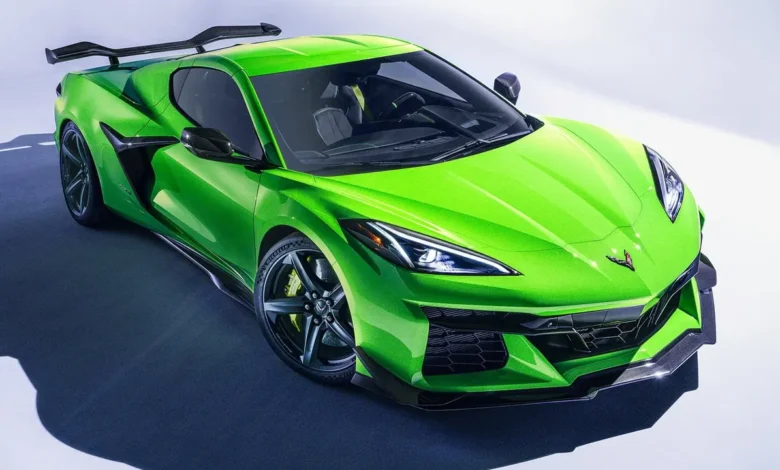
For most of the Corvette’s seventy-year history, the car existed in a kind of honourable isolation — admired by Americans, respected by enthusiasts worldwide, but never quite taken seriously in the highest tiers of European-dominated performance car culture. It was fast, yes. It was relatively affordable, certainly. But it was not, in the estimation of the European sports car establishment, a genuine peer of the Porsche 911, the Ferrari 488 or the McLaren 570S. The argument was always about more than lap times. It was about engineering sophistication, about brand heritage, about the depth of the driving experience rather than the headline horsepower number. The front-engined, pushrod V8 Corvette — no matter how quick it ran — could always be dismissed as a muscle car wearing a sports car’s clothes rather than the real thing.
The C8 generation eliminated that argument entirely. When Chevrolet moved the engine behind the driver for the first time in 2020, adopting the mid-engine layout that Ferrari, McLaren and Lamborghini had always used for their fastest cars, the Corvette crossed a philosophical boundary that no specification sheet alone could have crossed. It stopped being a fast American car. It started being a legitimate supercar — one that happens to be built in Bowling Green, Kentucky, and priced with a generosity that makes its European peers look not merely expensive but almost embarrassingly so. The C8 Corvette’s competitive challenge to European sports cars is the most consequential story in the performance car world over the last half decade, and understanding how it has been waged — across price, technology, track performance and driving experience — requires examining every front on which the battle has been fought.
The Price Argument: The One That Started Everything
The conversation about how the Corvette competes with European sports cars almost always begins with price, and it should — because the price argument is both the Corvette’s most obvious competitive weapon and, for enthusiasts who care most deeply about performance per dollar, its most devastating one. The 2026 Chevrolet Corvette Stingray starts at $68,300 and covers the 0-60 mph sprint in 2.9 seconds — a figure that, even in the entry-level 495-horsepower configuration, matches or surpasses the straight-line acceleration of sports cars costing two, three and even four times as much. The Porsche 911 Carrera, the Corvette’s most natural European comparator in terms of market positioning and cultural prestige, starts at approximately $120,000 and is, in its base configuration, measurably slower in a straight line than the base Corvette Stingray. That is not a performance enthusiast’s conspiracy theory — it is a published comparison from independent testing organisations that has been reproduced across dozens of evaluation programmes since the C8’s introduction.
The Corvette Z06, with its 670-horsepower naturally aspirated 5.5-litre flat-plane crank V8 — the most powerful naturally aspirated engine ever produced for a production sports car — adds a further dimension to the price argument. Starting at approximately $110,000 with its standard equipment, the Z06 produces more power than the Porsche 911 GT3 RS, more power than the McLaren Artura, and competes directly in track performance with cars wearing the Ferrari 296 GTB’s badge. A Porsche 911 GT3 costs approximately $235,000 at base price. A McLaren Artura starts above $240,000. A Ferrari 296 GTB begins at approximately $330,000. The Z06’s price advantage over these specific rivals ranges from approximately $125,000 to $220,000 — sums that could purchase a second Corvette with meaningful optional equipment remaining. This is not marginal price competitiveness. It is structural disruption of the performance car value hierarchy, and every European manufacturer in this segment is aware of it.
The Engineering Argument: Mid-Engine Changes Everything
The C8’s shift to a mid-engine layout is not merely a marketing decision or a response to the perception that mid-engine cars are more exotic than front-engined ones. It is a fundamental engineering choice that changes the Corvette’s dynamic capability in ways that the most sophisticated suspension tuning cannot fully overcome in a front-engined architecture. By placing the engine behind the driver and ahead of the rear axle, the C8 achieves a weight distribution that approaches the ideal balance between front and rear — the same structural dynamic advantage that has always given Ferrari, McLaren and Lamborghini their cornering capability advantages over traditional front-engined sports cars regardless of power output.
The mid-engine layout contributes directly to the C8 Stingray’s cornering precision, the Z06’s ability to sustain high lateral acceleration loads for extended periods, and the overall chassis balance that reviewers who approach the Corvette with European benchmarks consistently describe with versions of the same phrase: it drives like a European supercar. The Magnetic Ride Control adaptive damping system — one of the most advanced production damping technologies available, employing magnetorheological fluid that changes viscosity in response to electrical current within milliseconds — provides the Corvette family with a ride and handling balance that was previously achievable only through manual suspension adjustment between track and road settings. The result is a car that remains genuinely comfortable during daily driving and genuinely capable on a circuit without requiring any mechanical compromise between those two objectives.
The Z06’s flat-plane crankshaft V8 — a configuration borrowed from the tradition of Ferrari’s high-revving V8s and previously unseen in any American production car — redlines at 8,600 rpm and produces its 670 horsepower with the kind of screaming, high-frequency intensity that has historically been the exclusive province of Italian manufacturers. Porsche’s enthusiasts claimed, not unreasonably, that the 911 GT3’s flat-six was the finest naturally aspirated sports car engine in production. The Z06’s LT6 has entered that conversation with immediate credibility, producing 670 horsepower without a single turbocharger from 5.5 litres — a specific output of 121.8 horsepower per litre that places it among the most efficient naturally aspirated production engines in automotive history.
The Track Argument: Record Books Rewritten
Abstract performance figures and price comparisons provide context. Track records provide proof. The C8 ZR1’s arrival with 1,064 horsepower from a twin-turbocharged version of the Z06’s LT6 V8 — the same flat-plane crank unit tuned to hypercar power levels — produced results at racing circuits across North America that rewrote the accepted hierarchy of production car track performance with a speed and thoroughness that the European sports car establishment found impossible to ignore.
At Road Atlanta, the C8 ZR1 set a production car lap record that was two full seconds faster than the Porsche 911 GT2 RS’s previous benchmark — a car that had long been considered among the fastest road-legal production vehicles ever to turn a wheel at that circuit. At Road America, the ZR1’s lap time of 2 minutes 8.6 seconds was five full seconds faster than the Porsche 911 GT3 RS’s record at the same venue — again, a car that represented the absolute pinnacle of Porsche’s non-racing production sports car engineering. At Virginia International Raceway, the ZR1 outpaced the McLaren Senna — a vehicle designed primarily as a track-focused road car that started at $1.2 million before a single option was added. The ZR1’s own starting price: $175,000. The McLaren’s: $1.2 million.
These are not incremental performance improvements at the margins of the existing hierarchy. They are categorical reclassifications of what a Corvette represents in the context of global high-performance car competition. The 911 GT2 RS, the 911 GT3 RS and the McLaren Senna are among the most capable and most expensive production sports cars their manufacturers have ever offered. The ZR1 surpassed all of them at sanctioned circuits with verified timing equipment, at a price that undercuts even the least expensive of its victims by a factor of approximately seven. The track records are the most honest and most durable argument in the Corvette’s competitive case against European sports cars, because they cannot be explained away by price positioning, production volume or cultural prestige. They are numbers on timing screens.
The ZR1X — introduced for the 2026 model year — takes this performance further still, combining the 1,064-horsepower twin-turbocharged V8 with a front electric motor for a combined system output of 1,250 horsepower and a 0-60 mph time that brings it into genuine competition with the Bugatti Chiron in acceleration terms, at a price point that represents a tiny fraction of Bugatti’s asking price. Whether the ZR1X’s hybrid system fundamentally changes the Corvette’s character in the way that purists prefer is a separate conversation — but the performance argument it makes against European hypercars is beyond any reasonable objection.
The Brand Argument: The One Corvette Has Not Won
Having made the case for the Corvette’s competitive credentials across price, engineering and track performance with the conviction those areas deserve, honesty requires acknowledging the dimension in which the C8 has not yet closed the gap with its European rivals: brand prestige and the experiential depth that comes with it. A Porsche 911 GT3, a Ferrari 296 GTB or a McLaren Artura are not simply performance instruments. They are expressions of cultural heritage, of racing history and of the kind of brand association that buyers in this segment place significant personal value on — values that cannot be replicated by technical specifications regardless of how impressively those specifications read.
Arriving at a social gathering in a Corvette ZR1 is a different experience from arriving in a Ferrari, regardless of the fact that the Corvette is faster and costs less. Ferrari’s history at Le Mans, Formula 1, the Mille Miglia and every corner of global motorsport for the better part of a century has created a brand aura that Chevrolet’s Corvette Racing program — which has itself won Le Mans class victories and built an enormous competitive racing pedigree — has not fully translated into mainstream cultural currency at the highest level of the luxury sports car market. The C8’s interior, while dramatically improved over the C7 and genuinely competitive at its price point, does not match the material quality and tactile precision of Porsche’s or Ferrari’s cabins at their respective asking prices. The infotainment system and connectivity experience lag behind what European manufacturers — particularly Porsche — have established as the expected standard for driver-facing technology.
These are real limitations, and they explain why buyers who can genuinely afford a Ferrari 296 GTB or a Porsche 911 GT3 RS frequently choose them over the faster, cheaper Corvette. The brand argument is not irrational. It is simply a different kind of value calculation from the performance-per-dollar one — and it is one in which the Corvette currently concedes ground to the establishment it outperforms on track.
The Verdict: Where the Corvette Stands in 2026
The Chevrolet Corvette’s competitive challenge to European sports cars in the C8 generation represents the most successful value disruption in the history of the performance car segment. No other manufacturer has simultaneously offered the mid-engine layout, a naturally aspirated 670-horsepower flat-plane V8, a 1,064-horsepower twin-turbocharged option and a 1,250-horsepower hybrid hypercar variant at price points that consistently undercut European rivals by $100,000 to $1,000,000 or more while producing track records that surpass the most capable vehicles those rivals manufacture. The C8 has not merely competed with European sports cars. It has beaten most of them, in the ways that are most objectively measurable, for less money than any of them cost to buy.
What the Corvette has not yet achieved is the intangible cultural status that the best European sports cars carry effortlessly — and that intangible status will remain the frontier of the competitive battle for the generation that follows the C8. For buyers who measure performance in seconds and dollars, the Corvette wins this argument completely. For buyers who measure it in heritage, brand prestige and showroom exclusivity, the argument remains open. Both are legitimate ways of assigning value. The Corvette’s achievement is in having made its case so convincingly on the first set of terms that the second set of terms is the only remaining ground its competitors can credibly defend.
Read: America’s Greatest Hybrid Sports Car Is Here and The 2027 Corvette Grand Sport X Proves It
Corvette C8 Lineup vs European Rivals — Performance and Price Chart
| Model | Horsepower | 0–60 mph | Top Speed | Starting Price (USD) |
| Corvette Stingray (LT2 V8) | 495 hp | 2.9 sec | 194 mph | $68,300 |
| Corvette E-Ray (Hybrid AWD) | 655 hp | 2.5 sec | 186 mph | $107,995 |
| Corvette Z06 (LT6 Flat-Plane V8) | 670 hp | 2.6 sec | 195 mph | ~$110,000 |
| Corvette ZR1 (Twin-Turbo LT6) | 1,064 hp | 2.4 sec | 233 mph | ~$175,000 |
| Corvette ZR1X (Hybrid Hypercar) | 1,250 hp | Sub-2.5 sec | 233 mph+ | ~$250,000+ |
| Porsche 911 Carrera (Base) | 379 hp | 3.9 sec | 182 mph | ~$120,000 |
| Porsche 911 GT3 | 502 hp | 3.2 sec | 198 mph | ~$235,000 |
| Porsche 911 GT3 RS | 518 hp | 3.0 sec | 184 mph | ~$250,000 |
| Porsche 911 GT2 RS | 700 hp | 2.7 sec | 211 mph | ~$295,000 |
| Porsche 911 Turbo S (2026) | 640 hp | 2.4 sec | 205 mph | ~$235,000 |
| Ferrari 296 GTB | 819 hp (Hybrid) | 2.9 sec | 205 mph | ~$330,000 |
| Ferrari 12Cilindri | 819 hp (NA V12) | 2.9 sec | 211+ mph | ~$423,000 |
| McLaren Artura | 671 hp (Hybrid) | 3.0 sec | 205 mph | ~$240,000 |
| McLaren 750S | 740 hp | 2.8 sec | 206 mph | ~$320,000 |
| McLaren Senna | 789 hp | 2.8 sec | 208 mph | ~$1,200,000 |
| Lamborghini Revuelto | 1,001 hp (Hybrid) | 2.5 sec | 218 mph | ~$608,000 |
| Aston Martin DB12 | 671 hp | 3.6 sec | 202 mph | ~$250,000 |
| ZR1 Track Record (Road Atlanta) | 2 sec Faster Than 911 GT2 RS | — | — | $175,000 |
| ZR1 Track Record (Road America) | 5 sec Faster Than 911 GT3 RS | — | — | $175,000 |
| ZR1 vs McLaren Senna (VIR) | ZR1 Won | — | — | $1.2M vs $175K |